

Mindful Photographer
 |
Description
Book Introduction
Click! The brief moment of pressing the shutter, a moment to rediscover the "way of seeing."
With the meditators of photography such as Henri Cartier-Bresson, Saul Leiter, Teju Cole, and Rinko Kawauchi
Mindful Photography Stories from the Founding Curator of "The School of Life"
“The more time you spend looking, the more often you discover hidden gifts in the world that is plain to see.” - From the ‘Preface’
Tens of millions of photos are uploaded to online apps every day (95 million on average on Instagram, 2016 statistics), while exhibitions by the photography group Magnum attract tens of thousands of visitors (130,000, Seoul Arts Center, 2019).
In an age where anyone can take and share photos at any time, what meaning and value can a single photograph hold? "Mindful Photographer, Photography for Life" emphasizes "discoverability," one of the essences of photography, and challenges conventional wisdom about viewing and taking photos.
It guides everyone to 'see' through photography, helping us regain the ability we have lost.
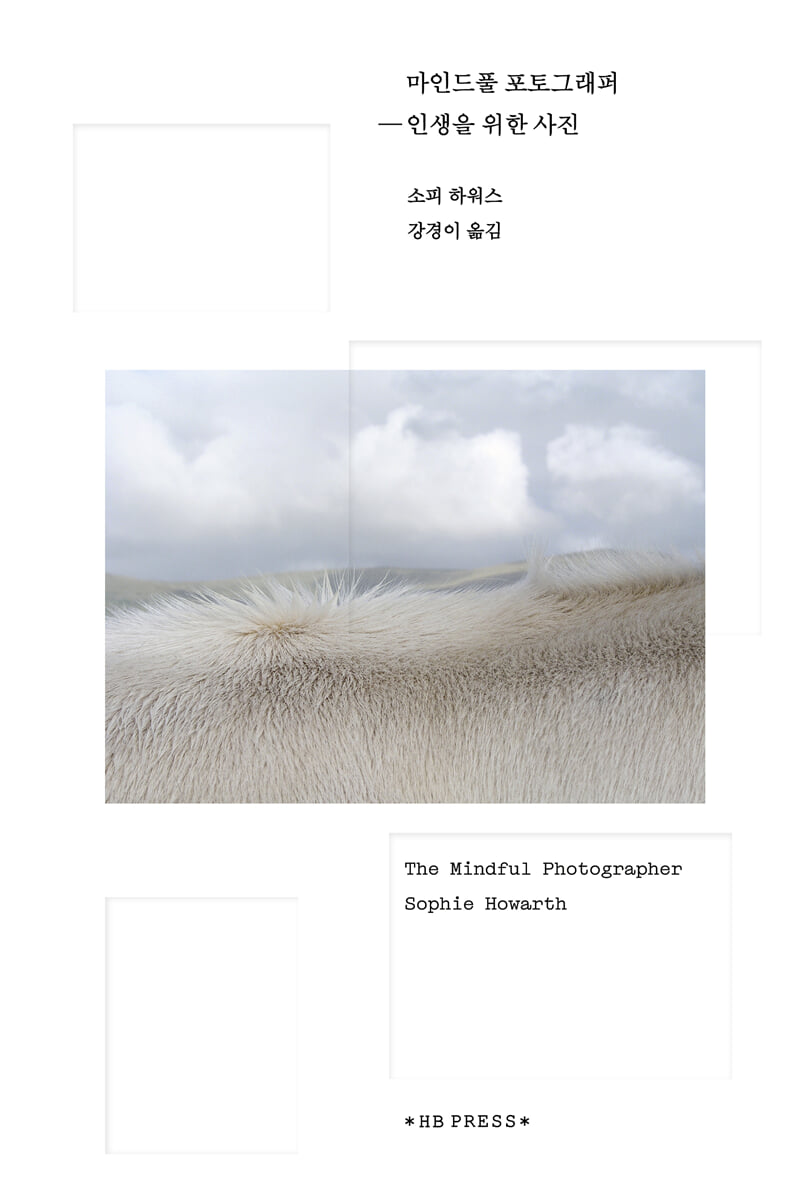
(Let's start by properly recognizing the cover photo, which at first glance looks like a wide field landscape.)
With the meditators of photography such as Henri Cartier-Bresson, Saul Leiter, Teju Cole, and Rinko Kawauchi
Mindful Photography Stories from the Founding Curator of "The School of Life"
“The more time you spend looking, the more often you discover hidden gifts in the world that is plain to see.” - From the ‘Preface’
Tens of millions of photos are uploaded to online apps every day (95 million on average on Instagram, 2016 statistics), while exhibitions by the photography group Magnum attract tens of thousands of visitors (130,000, Seoul Arts Center, 2019).
In an age where anyone can take and share photos at any time, what meaning and value can a single photograph hold? "Mindful Photographer, Photography for Life" emphasizes "discoverability," one of the essences of photography, and challenges conventional wisdom about viewing and taking photos.
It guides everyone to 'see' through photography, helping us regain the ability we have lost.
(Let's start by properly recognizing the cover photo, which at first glance looks like a wide field landscape.)
- You can preview some of the book's contents.
Preview
index
Preface (Marguerite Bornoser)
Clarity - Foundational Meditation (Rebecca Norris Webb, Robert Adams)
Curiosity - A Beginner's Perspective (Sian Davey, Teju Cole, Rinko Kawauchi)
Devotion - Contemplation (Thomas Merton, Edward Weston)
Confidence - A Letter to Fear (Tamsin Kalidas)
Humility - Appreciating Myself Properly (Dorothea Lange, Fazal Sheikh)
Cultural Sensitivity - Dealing with Unconscious Bias (Kali Spitzer)
Gratitude - Thank the Camera (Matt Stewart, Jim Brandenburg, Todd McClellan)
Acceptance - Photographic Fishing (Melanie Ainzig, Minor White, Henri Cartier-Bresson)
Ambiguity - Becoming Like Water (Saul Leiter, Kate Kirkwood, Nadav Kander, Uta Bas, Susan Derges)
Playing - Improvisation (Matt Stewart, Ernst Haas, Georgi Pinkasov)
Patience - Beware of Foot-Slips (Trent Park, Alex Webb, Rebecca Norris-Webb)
Compassion - Widening the Circle of Compassion (Lechisia Bauvirzis, Giles Dooley)
Honesty - A Photographer's Body Scan (Jenny Lewis, John Coplance)
Embracing - Welcoming the Unwelcome (David Ulrich)
Generosity - Give What You Can (Natasha Lithgow)
Free - Memento Mori (Sally Mann, Sarkar Protic, Sarah Lucas)
Review - Elliot Erwitt
Clarity - Foundational Meditation (Rebecca Norris Webb, Robert Adams)
Curiosity - A Beginner's Perspective (Sian Davey, Teju Cole, Rinko Kawauchi)
Devotion - Contemplation (Thomas Merton, Edward Weston)
Confidence - A Letter to Fear (Tamsin Kalidas)
Humility - Appreciating Myself Properly (Dorothea Lange, Fazal Sheikh)
Cultural Sensitivity - Dealing with Unconscious Bias (Kali Spitzer)
Gratitude - Thank the Camera (Matt Stewart, Jim Brandenburg, Todd McClellan)
Acceptance - Photographic Fishing (Melanie Ainzig, Minor White, Henri Cartier-Bresson)
Ambiguity - Becoming Like Water (Saul Leiter, Kate Kirkwood, Nadav Kander, Uta Bas, Susan Derges)
Playing - Improvisation (Matt Stewart, Ernst Haas, Georgi Pinkasov)
Patience - Beware of Foot-Slips (Trent Park, Alex Webb, Rebecca Norris-Webb)
Compassion - Widening the Circle of Compassion (Lechisia Bauvirzis, Giles Dooley)
Honesty - A Photographer's Body Scan (Jenny Lewis, John Coplance)
Embracing - Welcoming the Unwelcome (David Ulrich)
Generosity - Give What You Can (Natasha Lithgow)
Free - Memento Mori (Sally Mann, Sarkar Protic, Sarah Lucas)
Review - Elliot Erwitt
Detailed image

Into the book
Art educator Sister Corita Kent taught her students to see the world through new eyes, one piece at a time, using a "finder" made from a 35mm slide holder with no film loaded or a rectangular piece of cardstock cut out of it.
These exercises show that the discovery aspect of photography is more helpful than the documentary aspect in sharpening our senses.
As French photographer Elliot Erwitt said, “No amount of technology can replace the inability to notice.”
--- p.8, from the "Preface"
The goal of this play is to break free from the interpretations we quickly attach to objects or events, and to re-experience the fleeting moments of direct perception that precede the stage of understanding.
The only thing we need is the camera we always carry with us, our eyes.
--- p.25, from “A Beginner’s Perspective”
For Ernst Haas, playfulness is inextricably linked to freedom.
Haas was of Jewish descent and was taken to a German labor camp early in World War II.
When the war ended, he was unwilling to give up his freedom, no matter what.
When Life offered him a job a few years after he started taking pictures, he turned it down.
“I need freedom.
“That’s how I can put my ideas into action… There aren’t many editors who would give me the assignments I give myself.”
--- p.83, from "Like Playing"
Jenny Lewis also takes an honest look at the realities of aging in her project, 100 Years.
The project collected portraits and interviews of people living in East London, starting at one year old and progressing by one year at a time up to one hundred.
Together, these images record a simple, yet often uncomfortable, truth.
The truth is that we grow, we will probably grow old, and we will inevitably die.
--- p.108, from "Honesty"
But often, simply noticing and being grateful is enough.
In “The Camera and the Darkroom,” Kent Reno writes, “Even if you don’t take pictures all the time, just carrying a camera around and looking for things to photograph will sharpen your observation and help you experience more of life.”
These exercises show that the discovery aspect of photography is more helpful than the documentary aspect in sharpening our senses.
As French photographer Elliot Erwitt said, “No amount of technology can replace the inability to notice.”
--- p.8, from the "Preface"
The goal of this play is to break free from the interpretations we quickly attach to objects or events, and to re-experience the fleeting moments of direct perception that precede the stage of understanding.
The only thing we need is the camera we always carry with us, our eyes.
--- p.25, from “A Beginner’s Perspective”
For Ernst Haas, playfulness is inextricably linked to freedom.
Haas was of Jewish descent and was taken to a German labor camp early in World War II.
When the war ended, he was unwilling to give up his freedom, no matter what.
When Life offered him a job a few years after he started taking pictures, he turned it down.
“I need freedom.
“That’s how I can put my ideas into action… There aren’t many editors who would give me the assignments I give myself.”
--- p.83, from "Like Playing"
Jenny Lewis also takes an honest look at the realities of aging in her project, 100 Years.
The project collected portraits and interviews of people living in East London, starting at one year old and progressing by one year at a time up to one hundred.
Together, these images record a simple, yet often uncomfortable, truth.
The truth is that we grow, we will probably grow old, and we will inevitably die.
--- p.108, from "Honesty"
But often, simply noticing and being grateful is enough.
In “The Camera and the Darkroom,” Kent Reno writes, “Even if you don’t take pictures all the time, just carrying a camera around and looking for things to photograph will sharpen your observation and help you experience more of life.”
--- p.134, from “Afterword”
Publisher's Review
In each moment of life, where should we focus?
“Realize.
Be curious.
Find beauty.
Talk about something different.
Notice the change of seasons.
“Whether it’s on your way to work, at lunch, or talking to a friend, savor the moment.” - New Economics Foundation, “Five Guidelines for a Healthy Life”
Elliot Erwitt, the legendary Magnum photographer who was still active (and won the 2023 Leica Photographer of the Year) until his death at 95, said, “All the technology in the world can replace the inability to notice.”
But what about the world? It heats up at a frightening pace, fights and rages, and eventually burns out.
So I can't help but ask this:
Can't you slow down?
The New Economics Foundation, a global think tank, suggests five behaviors that form the foundation of health and happiness.
One of them is to pay full attention to what is around us.
A very simple action, yet one that has become so distant from our lives.
But what if, during the brief moment of taking a photo, you focused your attention on the act of seeing? Many photographers say it's possible to experience the fullness and freedom of directly perceiving the world through the camera.
It is said that if we use the camera well, we can tune in more delicately to the world around us, whether we are holding the camera or not.
Photographer Dorothea Lange put it succinctly:
“The camera is a tool that teaches people how to see without a camera.”
If you are constantly distracted by trivial things and lose the time to savor life,
“How many colors does a baby see when he plays in the grass without knowing what green is?” - Stan Brakhage, film director
As the title suggests, “Mindful Photographer, Photography for Life” is a guide to life and creativity led by mindfulness and photography.
Mindfulness, commonly translated as 'mindfulness', means 'being awake/aware of every moment.'
But any photographer would agree that awareness is a skill that can be trained.
The more time we spend looking, the sharper our eyes become and the more often we discover hidden treasures in the world we see.
College photography departments often have photography classes that don't involve pressing the shutter.
It's a class where you see the world one piece at a time, with a new perspective, using a camera without film, and even a viewfinder made by punching a square hole in the middle of a piece of cardboard.
This exercise shows that the discovery aspect of photography is more helpful than the documentary aspect in sharpening our senses.
"Life's Photo Exhibition" featuring over 50 masterpieces from top photographers, and "Photographer's Meditation"
“Photography is about capturing life intensely, savoring every single one-hundredth of a second.” - Marc Riboud, photographer
《Mindful Photographer》 guides readers into the lives, philosophies, and photoshoots of photographers, with over 50 photos ranging from the works of masters to recent Instagram photos.
You come to understand that their lives and philosophies are reflected in their photos, which move us and sometimes bring a small smile to our faces.
Readers who want to take a good photo, a photo of their life, should follow the special photography lecture in the book, 'The Photographer's Meditation Method.'
No special incense or meditation app needed.
There are times when a camera is needed, but the most important thing to prepare is the camera we always have with us: our eyes.
You didn't need a big SLR camera to take the great photos in this book.
Author Sophie Haworth is an artist and social entrepreneur who founded The School of Life with writer Alain de Botton.
At the Tate Modern Museum in the UK, we planned a public participation program and aimed to create art that breathes together with the audience, which received a positive response.
The books “Family Photography Today” and “Street Photography Today”, which help spread the meaning and fun of photography, were published by Thames & Hudson in the UK, and “Seeing Trees” was recently published by Hoxton Mini Press, a London-based independent photography publisher.
Her photo books, which seem to be exhibitions translated into books, are contributing to the widespread love of these wonderful and historical photographs beyond a small group of enthusiasts.
Her first Korean-language debut, "Mindful Photographer," is also an exhibition-like book that introduces the masterpieces of top photographers in a novel way.
The Amateur Photographer, a British photography media with a 140-year tradition, recommended this book as “a good book to read when you need inspiration.”
Editor's Note
“When I see a beautiful scene, I don’t want to take my eyes off the camera.
I don't want to stay there.
And here.” A book that brings to mind the words photographer Sean O’Connell said to Walter in the gentle climax of the movie “The Uncanny Counter.”
I wish I could spend more time looking at life with gratitude.
“Realize.
Be curious.
Find beauty.
Talk about something different.
Notice the change of seasons.
“Whether it’s on your way to work, at lunch, or talking to a friend, savor the moment.” - New Economics Foundation, “Five Guidelines for a Healthy Life”
Elliot Erwitt, the legendary Magnum photographer who was still active (and won the 2023 Leica Photographer of the Year) until his death at 95, said, “All the technology in the world can replace the inability to notice.”
But what about the world? It heats up at a frightening pace, fights and rages, and eventually burns out.
So I can't help but ask this:
Can't you slow down?
The New Economics Foundation, a global think tank, suggests five behaviors that form the foundation of health and happiness.
One of them is to pay full attention to what is around us.
A very simple action, yet one that has become so distant from our lives.
But what if, during the brief moment of taking a photo, you focused your attention on the act of seeing? Many photographers say it's possible to experience the fullness and freedom of directly perceiving the world through the camera.
It is said that if we use the camera well, we can tune in more delicately to the world around us, whether we are holding the camera or not.
Photographer Dorothea Lange put it succinctly:
“The camera is a tool that teaches people how to see without a camera.”
If you are constantly distracted by trivial things and lose the time to savor life,
“How many colors does a baby see when he plays in the grass without knowing what green is?” - Stan Brakhage, film director
As the title suggests, “Mindful Photographer, Photography for Life” is a guide to life and creativity led by mindfulness and photography.
Mindfulness, commonly translated as 'mindfulness', means 'being awake/aware of every moment.'
But any photographer would agree that awareness is a skill that can be trained.
The more time we spend looking, the sharper our eyes become and the more often we discover hidden treasures in the world we see.
College photography departments often have photography classes that don't involve pressing the shutter.
It's a class where you see the world one piece at a time, with a new perspective, using a camera without film, and even a viewfinder made by punching a square hole in the middle of a piece of cardboard.
This exercise shows that the discovery aspect of photography is more helpful than the documentary aspect in sharpening our senses.
"Life's Photo Exhibition" featuring over 50 masterpieces from top photographers, and "Photographer's Meditation"
“Photography is about capturing life intensely, savoring every single one-hundredth of a second.” - Marc Riboud, photographer
《Mindful Photographer》 guides readers into the lives, philosophies, and photoshoots of photographers, with over 50 photos ranging from the works of masters to recent Instagram photos.
You come to understand that their lives and philosophies are reflected in their photos, which move us and sometimes bring a small smile to our faces.
Readers who want to take a good photo, a photo of their life, should follow the special photography lecture in the book, 'The Photographer's Meditation Method.'
No special incense or meditation app needed.
There are times when a camera is needed, but the most important thing to prepare is the camera we always have with us: our eyes.
You didn't need a big SLR camera to take the great photos in this book.
Author Sophie Haworth is an artist and social entrepreneur who founded The School of Life with writer Alain de Botton.
At the Tate Modern Museum in the UK, we planned a public participation program and aimed to create art that breathes together with the audience, which received a positive response.
The books “Family Photography Today” and “Street Photography Today”, which help spread the meaning and fun of photography, were published by Thames & Hudson in the UK, and “Seeing Trees” was recently published by Hoxton Mini Press, a London-based independent photography publisher.
Her photo books, which seem to be exhibitions translated into books, are contributing to the widespread love of these wonderful and historical photographs beyond a small group of enthusiasts.
Her first Korean-language debut, "Mindful Photographer," is also an exhibition-like book that introduces the masterpieces of top photographers in a novel way.
The Amateur Photographer, a British photography media with a 140-year tradition, recommended this book as “a good book to read when you need inspiration.”
Editor's Note
“When I see a beautiful scene, I don’t want to take my eyes off the camera.
I don't want to stay there.
And here.” A book that brings to mind the words photographer Sean O’Connell said to Walter in the gentle climax of the movie “The Uncanny Counter.”
I wish I could spend more time looking at life with gratitude.
GOODS SPECIFICS
- Date of issue: April 23, 2024
- Format: Hardcover book binding method guide
- Page count, weight, size: 144 pages | 504g | 156*223*20mm
- ISBN13: 9791190314312
You may also like
카테고리
korean


korean

![GQ KOREA Mark (Monthly): December [2025]](http://librairie.coreenne.fr/cdn/shop/files/8ef265dbbfbf186523ed75ba7319009d.jpg?v=1765340328&width=3840)


