

Reading When Buckwheat Flowers Bloom with the Teacher
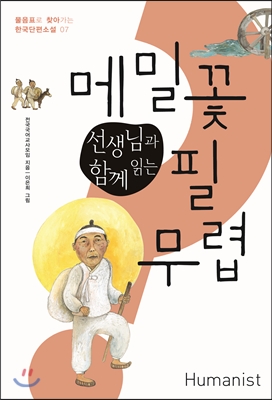 |
Description
Book Introduction
The seventh book in the 'Korean Short Stories with Question Marks' series is Lee Hyo-seok's 'When Buckwheat Flowers Bloom.'
It is structured as 'Reading a Novel - Reading Deeply - Reading Broadly', so that you can internalize the work in various ways while reading and broaden your understanding of the work.
And by introducing other works with similar materials or themes through ‘linked reading,’ we were able to broaden the reading experience and the scope of literary appreciation.
"When Buckwheat Flowers Bloom" was published in 1936 and is based on two stories: "Meeting and Parting Between a Man and a Woman" and "Confirmation of Paternity," and deals with the life and sorrows of Jang Dol-lim, who lives his life on the road.
With the commentary included in the book, the author helps us resolve our curiosity about the relationship and love between Seong Seo-bang's daughter and Heo Saeng-won.
Along with in-depth reflections on life, you will also discover memories, family, and the meaning of life.
It is structured as 'Reading a Novel - Reading Deeply - Reading Broadly', so that you can internalize the work in various ways while reading and broaden your understanding of the work.
And by introducing other works with similar materials or themes through ‘linked reading,’ we were able to broaden the reading experience and the scope of literary appreciation.
"When Buckwheat Flowers Bloom" was published in 1936 and is based on two stories: "Meeting and Parting Between a Man and a Woman" and "Confirmation of Paternity," and deals with the life and sorrows of Jang Dol-lim, who lives his life on the road.
With the commentary included in the book, the author helps us resolve our curiosity about the relationship and love between Seong Seo-bang's daughter and Heo Saeng-won.
Along with in-depth reflections on life, you will also discover memories, family, and the meaning of life.
- You can preview some of the book's contents.
Preview
index
Publishing the series 'Korean Short Stories with Question Marks'
preface
Reading the work "When Buckwheat Flowers Bloom" by Lee Hyo-seok
Reading Deeply, Asking and Answering Questions in "When Buckwheat Flowers Bloom"
1_ A life of wandering around
· What was the market scene like?
· What kind of person is Jang Dol-lim?
· Where are Bongpyeong, Daehwa, and Jecheon?
· What kind of place is Chungjutjip?
· What kind of animal is a donkey?
· How far is seventy ri?
· Why couldn't Mr. Heo save money?
2_ The unforgettable love of Heo Saeng-won
· What do buckwheat flowers look like?
· What does a water mill do?
· Why did the young woman of the saints say she would not get married?
· Why did Seong Seo-bang run away to Jecheon?
· Did Seong Seo-bang's daughter love Heo Saeng-won?
· What is the purpose of ‘Moonlight’?
3_ The journey of three unexpected characters
· Is 'Heo Saeng-won' your name?
· Can't left-handed people hit people?
· How did Heo Saeng-won and Dong-i reconcile?
· What is the role of the senior advisor?
· What was Dong-i's childhood like?
· Is Dong-i Heo Saeng-won's son?
· Did this story really happen?
Reading broadly: A look into the world beyond the work
Author Story - A Chronology of Lee Hyo-seok's Life and Works, Learn More About the Author
A Story of the Times - 1930s: A Look at the World Through Advertising
Interwoven Reading - Family, Love, and the Road
Reader Stories - Write a Diary as a Character
References
preface
Reading the work "When Buckwheat Flowers Bloom" by Lee Hyo-seok
Reading Deeply, Asking and Answering Questions in "When Buckwheat Flowers Bloom"
1_ A life of wandering around
· What was the market scene like?
· What kind of person is Jang Dol-lim?
· Where are Bongpyeong, Daehwa, and Jecheon?
· What kind of place is Chungjutjip?
· What kind of animal is a donkey?
· How far is seventy ri?
· Why couldn't Mr. Heo save money?
2_ The unforgettable love of Heo Saeng-won
· What do buckwheat flowers look like?
· What does a water mill do?
· Why did the young woman of the saints say she would not get married?
· Why did Seong Seo-bang run away to Jecheon?
· Did Seong Seo-bang's daughter love Heo Saeng-won?
· What is the purpose of ‘Moonlight’?
3_ The journey of three unexpected characters
· Is 'Heo Saeng-won' your name?
· Can't left-handed people hit people?
· How did Heo Saeng-won and Dong-i reconcile?
· What is the role of the senior advisor?
· What was Dong-i's childhood like?
· Is Dong-i Heo Saeng-won's son?
· Did this story really happen?
Reading broadly: A look into the world beyond the work
Author Story - A Chronology of Lee Hyo-seok's Life and Works, Learn More About the Author
A Story of the Times - 1930s: A Look at the World Through Advertising
Interwoven Reading - Family, Love, and the Road
Reader Stories - Write a Diary as a Character
References
Detailed image

Publisher's Review
Dreaming of a literature class overflowing with wild imaginations and lively questions!
The National Korean Language Teachers Association has been thinking about how to make literature classes more exciting and fun.
And finally, I came up with the idea of 'finding with a question mark'.
This is not a literature class that has been conducted so far, that is, a class that provides students with uniform and mechanical information about the work, but a method that provides answers to the questions that students actually have after reading the work.
Through this, we aimed to establish a foundation for a user-centered literature class that allows students to understand and empathize with the work, rather than a one-sided literature class that was consistently focused on fragmentary understanding and forced memorization.
The series 'Korean Short Stories with Question Marks' can be considered a guide to help this type of literature class take root in schools.
'Korean Short Stories with Question Marks' selected short stories from middle and high school Korean language and literature textbooks that have been widely read by many people for a long time.
After reading these selected works directly to the students, I collected all the questions they had.
Among them, we selected those that were frequently asked, meaningful, novel, and original, and created a list of questions in a set manner.
Then, current Korean language teachers answered the questions based on what they had studied by searching through numerous books and papers.
It was written in simple language for students to read, and illustrations, photos, and reference materials were placed appropriately.
In this way, I tried to approach the more universal meaning of the work.
'Question Marks for Korean Short Stories' is a new, unprecedented content that provides reading materials and information that can elicit diverse and profound thoughts.
It will not only open up the horizon of 'student-centered novel appreciation' but also provide students with an opportunity to become closer to literary works.
Discover Korea's representative short stories from textbooks in a single, deep and broad volume!
'Finding Korean Short Stories with Question Marks' was born from the sorrow of the educational reality in which children are increasingly moving away from literature due to memorization-based and problem-solving-based literature classes.
And it is being created with the will and passion of teachers who want to make literary works come alive and breathe close to children.
This book goes far beyond the fragmentary interpretation and understanding of novels found in existing textbooks or reference books.
Because it covers historical, cultural, social, and literary information in an easy and fun way based on questions that students actually ask when reading the work, it will be of great help in fully understanding a single work.
This book is structured as 'Reading Novels - Reading Deeply - Reading Broadly'.
'Deep Reading' is filled with meaningful questions that children have while reading the work, selected from among them, and teachers' answers to them.
It focuses on the background, characters, events, and themes related to the work itself, and allows readers to internalize the work in various ways while reading.
'Reading Broadly' aims to broaden the understanding of a work by examining the elements surrounding the work, such as the author and the circumstances of the time.
Additionally, the results of students' reading and activities on the work were included, allowing students to get a glimpse into their peers' thoughts on the work.
And by introducing other works with similar materials or themes through ‘linked reading,’ we were able to broaden the reading experience and the scope of literary appreciation.
"When Buckwheat Flowers Bloom," Jang Dol-lim's life connecting the past and present!
"(Reading with a Teacher) When Buckwheat Flowers Bloom" is the seventh book in the "Korean Short Stories with Question Marks" series planned by the National Association of Korean Language Teachers.
"When Buckwheat Flowers Bloom" was published in 1936 and is based on two stories: "Meeting and Parting Between a Man and a Woman" and "Confirmation of Paternity," and deals with the life and sorrows of Jang Dol-lim, who lives his entire life on the road.
As you read this novel, you'll likely find yourself asking yourself many questions: "Where did Seong Seo-bang's daughter go? Did the woman who spent the night with Heo Seong-won become pregnant? Where was the market where Heo Seong-won wandered? Why is the story about Heo Seong-won titled "When Buckwheat Flowers Bloom"? Did Seong Seo-bang's daughter love Heo Seong-won? Is Dong-i Heo Seong-won's son?"
『(Reading with a Teacher) When Buckwheat Flowers Bloom』 contains writings that can resolve these questions.
I hope that by reading this book, you can experience the true flavor of “When Buckwheat Flowers Bloom.”
I hope you will further discover memories, family, and the meaning of life.
The National Korean Language Teachers Association has been thinking about how to make literature classes more exciting and fun.
And finally, I came up with the idea of 'finding with a question mark'.
This is not a literature class that has been conducted so far, that is, a class that provides students with uniform and mechanical information about the work, but a method that provides answers to the questions that students actually have after reading the work.
Through this, we aimed to establish a foundation for a user-centered literature class that allows students to understand and empathize with the work, rather than a one-sided literature class that was consistently focused on fragmentary understanding and forced memorization.
The series 'Korean Short Stories with Question Marks' can be considered a guide to help this type of literature class take root in schools.
'Korean Short Stories with Question Marks' selected short stories from middle and high school Korean language and literature textbooks that have been widely read by many people for a long time.
After reading these selected works directly to the students, I collected all the questions they had.
Among them, we selected those that were frequently asked, meaningful, novel, and original, and created a list of questions in a set manner.
Then, current Korean language teachers answered the questions based on what they had studied by searching through numerous books and papers.
It was written in simple language for students to read, and illustrations, photos, and reference materials were placed appropriately.
In this way, I tried to approach the more universal meaning of the work.
'Question Marks for Korean Short Stories' is a new, unprecedented content that provides reading materials and information that can elicit diverse and profound thoughts.
It will not only open up the horizon of 'student-centered novel appreciation' but also provide students with an opportunity to become closer to literary works.
Discover Korea's representative short stories from textbooks in a single, deep and broad volume!
'Finding Korean Short Stories with Question Marks' was born from the sorrow of the educational reality in which children are increasingly moving away from literature due to memorization-based and problem-solving-based literature classes.
And it is being created with the will and passion of teachers who want to make literary works come alive and breathe close to children.
This book goes far beyond the fragmentary interpretation and understanding of novels found in existing textbooks or reference books.
Because it covers historical, cultural, social, and literary information in an easy and fun way based on questions that students actually ask when reading the work, it will be of great help in fully understanding a single work.
This book is structured as 'Reading Novels - Reading Deeply - Reading Broadly'.
'Deep Reading' is filled with meaningful questions that children have while reading the work, selected from among them, and teachers' answers to them.
It focuses on the background, characters, events, and themes related to the work itself, and allows readers to internalize the work in various ways while reading.
'Reading Broadly' aims to broaden the understanding of a work by examining the elements surrounding the work, such as the author and the circumstances of the time.
Additionally, the results of students' reading and activities on the work were included, allowing students to get a glimpse into their peers' thoughts on the work.
And by introducing other works with similar materials or themes through ‘linked reading,’ we were able to broaden the reading experience and the scope of literary appreciation.
"When Buckwheat Flowers Bloom," Jang Dol-lim's life connecting the past and present!
"(Reading with a Teacher) When Buckwheat Flowers Bloom" is the seventh book in the "Korean Short Stories with Question Marks" series planned by the National Association of Korean Language Teachers.
"When Buckwheat Flowers Bloom" was published in 1936 and is based on two stories: "Meeting and Parting Between a Man and a Woman" and "Confirmation of Paternity," and deals with the life and sorrows of Jang Dol-lim, who lives his entire life on the road.
As you read this novel, you'll likely find yourself asking yourself many questions: "Where did Seong Seo-bang's daughter go? Did the woman who spent the night with Heo Seong-won become pregnant? Where was the market where Heo Seong-won wandered? Why is the story about Heo Seong-won titled "When Buckwheat Flowers Bloom"? Did Seong Seo-bang's daughter love Heo Seong-won? Is Dong-i Heo Seong-won's son?"
『(Reading with a Teacher) When Buckwheat Flowers Bloom』 contains writings that can resolve these questions.
I hope that by reading this book, you can experience the true flavor of “When Buckwheat Flowers Bloom.”
I hope you will further discover memories, family, and the meaning of life.
GOODS SPECIFICS
- Date of publication: October 25, 2012
- Page count, weight, size: 128 pages | 244g | 153*224*20mm
- ISBN13: 9788958625476
- ISBN10: 8958625473
You may also like
카테고리
korean


korean

![GQ KOREA Mark (Monthly): December [2025]](http://librairie.coreenne.fr/cdn/shop/files/8ef265dbbfbf186523ed75ba7319009d.jpg?v=1765340328&width=3840)


