

Egon Schiele
 |
Description
Book Introduction
From the Renaissance to the present day,
A basic art series where you can meet the masters of art history!
Returning with larger format and illustrations
The Basic Art Series began in 1985 with a collection of Picasso works and has since grown into a best-selling art book collection.
Since then, over 200 concise and thin books by each author have been produced and published in over 20 languages.
The series has excellent production values, excellent artwork, and intelligent content.
The thematic awareness of each book is vibrant yet accessible, making it easy to approach.
It has been republished 15 years after the first Korean edition was published in 2005.
This [Basic Art 2.0] series delivers more vivid images of the artwork to readers with larger formats and illustrations than before.
The naked truth
A form that fundamentally reveals everything
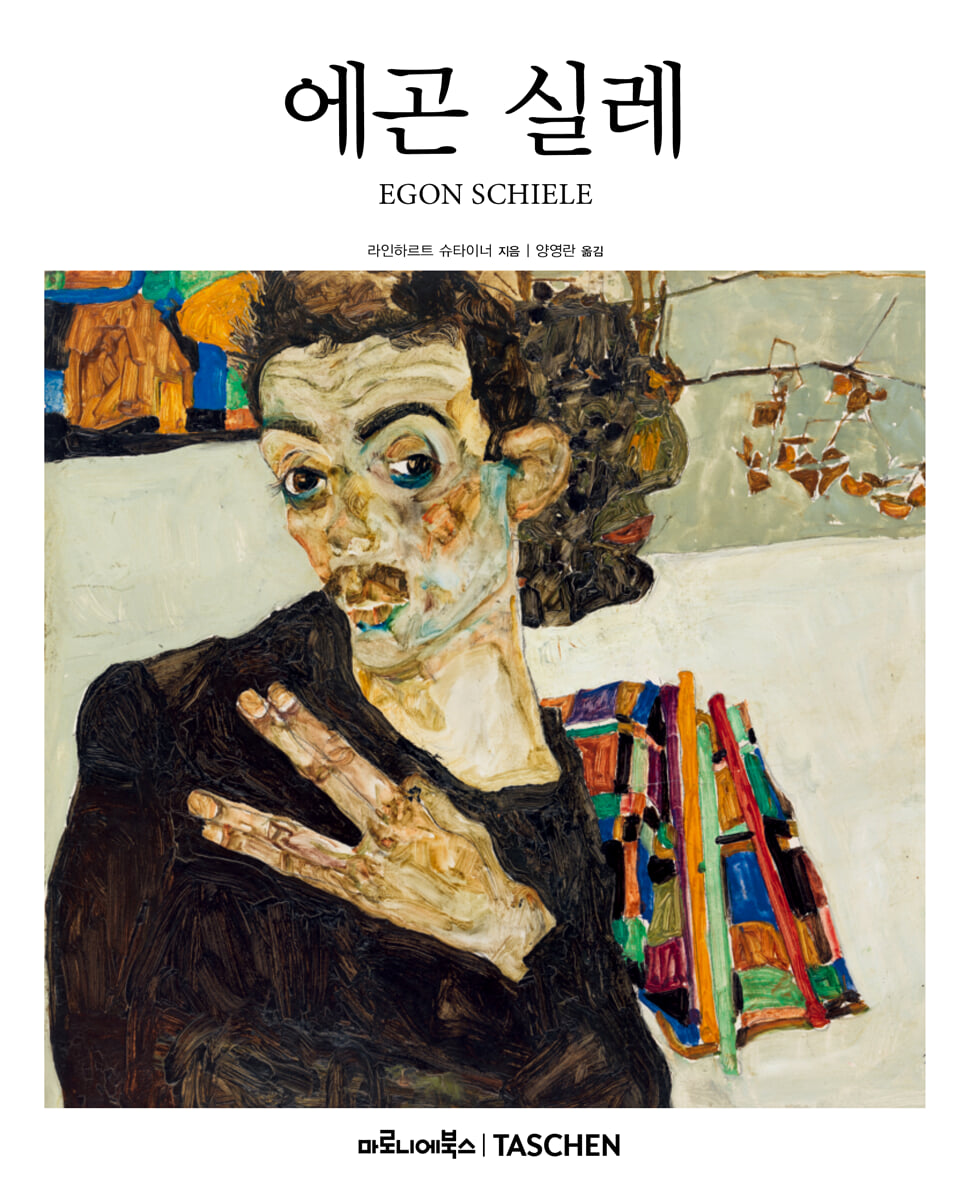
Egon Schiele (1890-1918) was a leading figure of Austrian Expressionism and one of the most striking portrait painters of the 20th century, known for his graphic style, distortion of the human form, and rebellion against traditional standards of beauty.
Schiele, who was mentored by Gustav Klimt, was inspired by the flamboyant Art Nouveau style and presented an aesthetic that was much rougher and more confrontational, with sharp lines, dark colors, and unnatural subjects.
His various portraits and self-portraits portrayed the Vienna establishment in an unprecedented way, shocking both psychologically and sexually.
In the work, the artist or the models are seen languidly stretching their legs and glaring at the viewer, in a highly erotic and revealing, unstable pose with their genitals exposed.
His models sometimes appear skeletal and sickly, but to others they appear intense and sensual.
Many of his contemporaries considered Schiele's work to be unsightly and morally objectionable, and he was briefly imprisoned in 1912 on charges of obscenity.
Today, his works are renowned for their innovative approach to the human figure and their direct, passionate, almost angry drawing skills.
This book showcases the artist's short but rapidly growing career, showcasing key works that highlight her profound contributions to contemporary artists such as Tracey Emin and Jenny Saville.
A basic art series where you can meet the masters of art history!
Returning with larger format and illustrations
The Basic Art Series began in 1985 with a collection of Picasso works and has since grown into a best-selling art book collection.
Since then, over 200 concise and thin books by each author have been produced and published in over 20 languages.
The series has excellent production values, excellent artwork, and intelligent content.
The thematic awareness of each book is vibrant yet accessible, making it easy to approach.
It has been republished 15 years after the first Korean edition was published in 2005.
This [Basic Art 2.0] series delivers more vivid images of the artwork to readers with larger formats and illustrations than before.
The naked truth
A form that fundamentally reveals everything
Egon Schiele (1890-1918) was a leading figure of Austrian Expressionism and one of the most striking portrait painters of the 20th century, known for his graphic style, distortion of the human form, and rebellion against traditional standards of beauty.
Schiele, who was mentored by Gustav Klimt, was inspired by the flamboyant Art Nouveau style and presented an aesthetic that was much rougher and more confrontational, with sharp lines, dark colors, and unnatural subjects.
His various portraits and self-portraits portrayed the Vienna establishment in an unprecedented way, shocking both psychologically and sexually.
In the work, the artist or the models are seen languidly stretching their legs and glaring at the viewer, in a highly erotic and revealing, unstable pose with their genitals exposed.
His models sometimes appear skeletal and sickly, but to others they appear intense and sensual.
Many of his contemporaries considered Schiele's work to be unsightly and morally objectionable, and he was briefly imprisoned in 1912 on charges of obscenity.
Today, his works are renowned for their innovative approach to the human figure and their direct, passionate, almost angry drawing skills.
This book showcases the artist's short but rapidly growing career, showcasing key works that highlight her profound contributions to contemporary artists such as Tracey Emin and Jenny Saville.
index
Page 6
The Artist and His Ego
Page 20
“I followed Klimt’s path.”
Page 32
The body as a medium of expression
Page 54
Prophetic symbolism in Schiele's work
Page 78
Landscape with soul
Page 94
Egon Schiele (1890-1918)
Life and Works
The Artist and His Ego
Page 20
“I followed Klimt’s path.”
Page 32
The body as a medium of expression
Page 54
Prophetic symbolism in Schiele's work
Page 78
Landscape with soul
Page 94
Egon Schiele (1890-1918)
Life and Works
Detailed image

Into the book
With a staggering number of self-portraits—over 100—we can confidently say that Egon Schiele was one of the artists who observed himself most intently.
This fact is enough to make one believe that he had a narcissistic personality.
In fact, Schiele observed himself closely and liked to record his expressions and poses through observation.
However, we should not be quick to judge his attitude, as this attitude is in fact a long-standing tradition in the history of art.
A brief look at the tradition of self-portraiture in art history may help us avoid jumping to conclusions.
--- p.7, from “The Artist and His Ego”
While Schiele was studying at the Vienna Academy of Fine Arts, Klimt was his idol, whom he revered until his death.
It is easy to guess that this behavior stemmed from a backlash against Gripenkerl and the Academy's outdated academic style.
Instead of a naturalistic depiction of the human body and perspective, Schiele adopted Klimt's method of emphasizing the canvas above all else, and his innate drawing ability and strategy of replacing decorative aspects with a sense of space effectively helped him in this endeavor.
Schiele's affection for Klimt is clearly revealed in his 1907 painting, "Water Spirits I" (p. 28).
--- p.25, from “I Followed Klimt’s Trajectory”
What is most surprising about Schiele's work is his disregard for conventional perspective.
If he had followed the rules of perspective, the poses of the models would have looked much more reasonable (p. 10).
Schiele, who thoroughly rejected academicism and was faithful to the senses of his fingertips, devised angles and perspectives that could make the models in his paintings appear twisted or distorted.
The reason his watercolor or gouache drawings look strange is not necessarily because of the subject matter itself or the extreme exposure of the model.
From a formal point of view, this stems from Schiele's placement of his models in the center of the picture plane, facing them directly, or all-encompassingly.
--- p.34, from “The Body as a Medium of Expression”
Schiele considered himself a kind of priest and prophet, possessing a capacity for introspection bordering on mysticism, which he believed enabled him to see prophetic visions and express them in his paintings.
(…) Schiele’s view can be incorporated into the 19th-century tradition of regarding artists as a kind of prophet, saint, or martyr (p. 19).
He is also in line with Ferdinand Hodler, who was influenced by the Pink Cross, a similar religious group, and created mystical and pessimistic works such as “The Disappointed,” “The Path of the Chosen Souls,” and “The Chosen One.”
This fact is enough to make one believe that he had a narcissistic personality.
In fact, Schiele observed himself closely and liked to record his expressions and poses through observation.
However, we should not be quick to judge his attitude, as this attitude is in fact a long-standing tradition in the history of art.
A brief look at the tradition of self-portraiture in art history may help us avoid jumping to conclusions.
--- p.7, from “The Artist and His Ego”
While Schiele was studying at the Vienna Academy of Fine Arts, Klimt was his idol, whom he revered until his death.
It is easy to guess that this behavior stemmed from a backlash against Gripenkerl and the Academy's outdated academic style.
Instead of a naturalistic depiction of the human body and perspective, Schiele adopted Klimt's method of emphasizing the canvas above all else, and his innate drawing ability and strategy of replacing decorative aspects with a sense of space effectively helped him in this endeavor.
Schiele's affection for Klimt is clearly revealed in his 1907 painting, "Water Spirits I" (p. 28).
--- p.25, from “I Followed Klimt’s Trajectory”
What is most surprising about Schiele's work is his disregard for conventional perspective.
If he had followed the rules of perspective, the poses of the models would have looked much more reasonable (p. 10).
Schiele, who thoroughly rejected academicism and was faithful to the senses of his fingertips, devised angles and perspectives that could make the models in his paintings appear twisted or distorted.
The reason his watercolor or gouache drawings look strange is not necessarily because of the subject matter itself or the extreme exposure of the model.
From a formal point of view, this stems from Schiele's placement of his models in the center of the picture plane, facing them directly, or all-encompassingly.
--- p.34, from “The Body as a Medium of Expression”
Schiele considered himself a kind of priest and prophet, possessing a capacity for introspection bordering on mysticism, which he believed enabled him to see prophetic visions and express them in his paintings.
(…) Schiele’s view can be incorporated into the 19th-century tradition of regarding artists as a kind of prophet, saint, or martyr (p. 19).
He is also in line with Ferdinand Hodler, who was influenced by the Pink Cross, a similar religious group, and created mystical and pessimistic works such as “The Disappointed,” “The Path of the Chosen Souls,” and “The Chosen One.”
--- p.57~59, from “Prophetic Symbolism in Schiele’s Works”
GOODS SPECIFICS
- Date of issue: December 1, 2023
- Format: Hardcover book binding method guide
- Page count, weight, size: 96 pages | 616g | 220*265*12mm
- ISBN13: 9788960536494
- ISBN10: 8960536490
You may also like
카테고리
korean


korean

![GQ KOREA Mark (Monthly): December [2025]](http://librairie.coreenne.fr/cdn/shop/files/8ef265dbbfbf186523ed75ba7319009d.jpg?v=1765340328&width=3840)


