

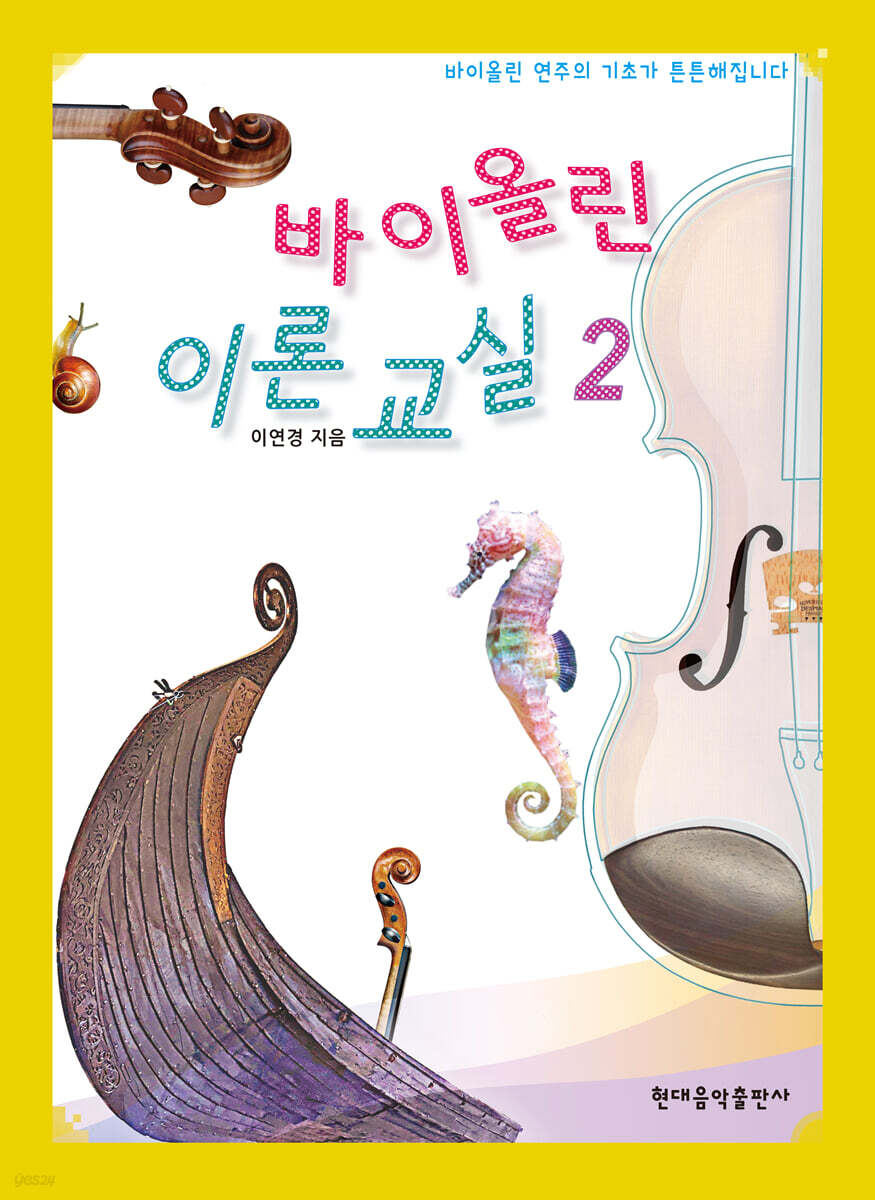
Violin Theory Class 2
 |
Description
Book Introduction
This is a theory practice book for children who are learning the violin for the first time.
We practice the basic theories essential for playing the violin basic textbooks 1 and 2.
In Volume 2, you will learn the difference between whole tones and semitones on the fretboard.
Next, learn the major scale and learn the fingering in the order of A, D, G, and C major, and draw the key signature.
Learn slurs, ties, eighth notes, sixteenth notes, and triplets.
Practice the fingering when sharps (#) and flats (b) are used as occasional notes.
In the second half, you will learn the fingerings of F, Bb, and Eb major with flats, dotted notes, and dotted rests.
The content is well suited to the characteristics of the violin instrument, so children can easily learn it by following along, and important content is systematically repeated to help with actual lessons.
We practice the basic theories essential for playing the violin basic textbooks 1 and 2.
In Volume 2, you will learn the difference between whole tones and semitones on the fretboard.
Next, learn the major scale and learn the fingering in the order of A, D, G, and C major, and draw the key signature.
Learn slurs, ties, eighth notes, sixteenth notes, and triplets.
Practice the fingering when sharps (#) and flats (b) are used as occasional notes.
In the second half, you will learn the fingerings of F, Bb, and Eb major with flats, dotted notes, and dotted rests.
The content is well suited to the characteristics of the violin instrument, so children can easily learn it by following along, and important content is systematically repeated to help with actual lessons.
index
Review Volume 1
Whole tones and semitones
Learning the major scale
Sound name
A Major
D Major
G Major
Sharp of the key
C Major
Intermediate Practice Problems
Drawing a column of notes
slur
tie
Learning eighth notes
Learning 16th notes
Tie the note tail
Learning the 8th rest
Learning the 16th rest
Learning triplets
musical symbol
Temporary table - Sharp
Temporary table - local table
Intermediate Practice Problems
Learning dotted quarter notes
Learning dotted eighth notes
Learning the dotted quarter comma
Learn the dotted eighth comma
Temporary table - Flat
Flat key signature
F Major
B♭ Major
E♭ Major
Intermediate Practice Problems
Summary problem
Whole tones and semitones
Learning the major scale
Sound name
A Major
D Major
G Major
Sharp of the key
C Major
Intermediate Practice Problems
Drawing a column of notes
slur
tie
Learning eighth notes
Learning 16th notes
Tie the note tail
Learning the 8th rest
Learning the 16th rest
Learning triplets
musical symbol
Temporary table - Sharp
Temporary table - local table
Intermediate Practice Problems
Learning dotted quarter notes
Learning dotted eighth notes
Learning the dotted quarter comma
Learn the dotted eighth comma
Temporary table - Flat
Flat key signature
F Major
B♭ Major
E♭ Major
Intermediate Practice Problems
Summary problem
Into the book
"A major scale is a scale in which the 3rd to 4th notes and the 7th to 8th notes are semitones from the tonic."
"Notes that are semitones should be played with your fingers together."
"F Major"
"Which note is followed by the letter b in the key of F major?"
"Draw the key signature of the key of F major."
"Draw the F major scale on the fretboard."
"Notes that are semitones should be played with your fingers together."
"F Major"
"Which note is followed by the letter b in the key of F major?"
"Draw the key signature of the key of F major."
"Draw the F major scale on the fretboard."
--- From the text
Publisher's Review
▶ Summary
joint, tie
Characteristics of whole tones, semitones, and the major scale
Fingering and key signatures for A major, D major, G major, C major, Eb major, F major, and Bb major
The pronunciation of the note with the temporary sign, the place sign
Notes and rests: eighth notes, sixteenth notes, note tails, triplets, eighth rests, sixteenth rests
Staccato, accent, tenuto
Dotted quarter note, dotted eighth note, dotted quarter rest, dotted eighth rest
▶ Author's Note
This is a textbook designed to help you learn the key names and music theory necessary to learn Suzuki's songs in volumes 1 and 2.
The violin is a very different instrument from the piano.
With a piano, you can find the notes by looking at the keys, but with a violin, you have to rely on the feel of your hands and arms to produce the right notes.
The purpose of this book is to help beginners practice quickly converting notes in sheet music to fingerings, as they often find it takes a long time for them to become accustomed to pronouncing the notes on the four strings.
If you can look at the sheet music and pick out the notes right away without fumbling around, lessons will become that much easier.
At the same time, the concept of notes and rests was introduced so that students could understand and apply them to their performance.
After the basic fingering became somewhat familiar, practice problems were added to ensure that the students could accurately play the notes indicated in the score by looking at the accidentals and musical notations. In addition, the students were asked to practice the key signatures and fingerings for frequently appearing keys one by one.
joint, tie
Characteristics of whole tones, semitones, and the major scale
Fingering and key signatures for A major, D major, G major, C major, Eb major, F major, and Bb major
The pronunciation of the note with the temporary sign, the place sign
Notes and rests: eighth notes, sixteenth notes, note tails, triplets, eighth rests, sixteenth rests
Staccato, accent, tenuto
Dotted quarter note, dotted eighth note, dotted quarter rest, dotted eighth rest
▶ Author's Note
This is a textbook designed to help you learn the key names and music theory necessary to learn Suzuki's songs in volumes 1 and 2.
The violin is a very different instrument from the piano.
With a piano, you can find the notes by looking at the keys, but with a violin, you have to rely on the feel of your hands and arms to produce the right notes.
The purpose of this book is to help beginners practice quickly converting notes in sheet music to fingerings, as they often find it takes a long time for them to become accustomed to pronouncing the notes on the four strings.
If you can look at the sheet music and pick out the notes right away without fumbling around, lessons will become that much easier.
At the same time, the concept of notes and rests was introduced so that students could understand and apply them to their performance.
After the basic fingering became somewhat familiar, practice problems were added to ensure that the students could accurately play the notes indicated in the score by looking at the accidentals and musical notations. In addition, the students were asked to practice the key signatures and fingerings for frequently appearing keys one by one.
GOODS SPECIFICS
- Date of issue: September 1, 2023
- Page count, weight, size: 84 pages | 220*300*15mm
- ISBN13: 9788948311891
- ISBN10: 8948311891
You may also like
카테고리
korean


korean

![GQ KOREA Mark (Monthly): December [2025]](http://librairie.coreenne.fr/cdn/shop/files/8ef265dbbfbf186523ed75ba7319009d.jpg?v=1765340328&width=3840)


