

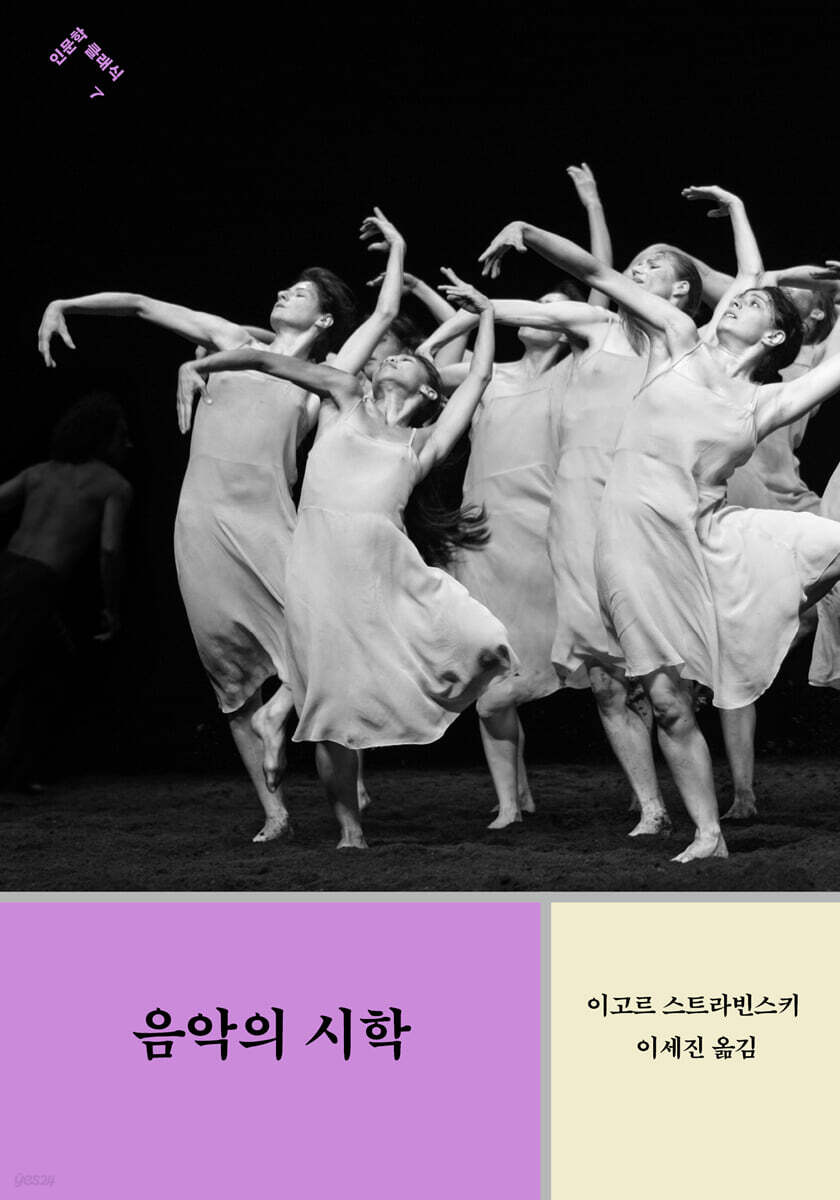
Poetics of Music
 |
Description
Book Introduction
Where does 'creative imagination' come from for artists?
“Innovation can be productive only when it goes hand in hand with tradition.” —Irvine Stravinsky
“Stravinsky found order without sacrificing originality.” —Peter Gay
Stravinsky, who turned the Parisian music world upside down with "The Firebird" at the age of 29 and "The Rite of Spring" at 31, and became an icon of innovation in 20th-century classical music through continuous transformation until his old age, was able to enjoy "total newness" and "complete freedom of form" because he had his own unique "creative imagination."
But the music master emphasizes that “tradition guarantees the continuity of creation.”
“The more controlled art is, the freer it becomes.”
"The Poetics of Music" is a valuable record left by Stravinsky himself on the role of the creator, and is also an interesting prose piece that tells the story of the musical world of great composers such as Mozart, Brahms, and Tchaikovsky.
The ability to create is never given to me alone.
This ability always goes hand in hand with the gift of observation.
And true creators have a way of discovering elements worth noting in the most ordinary and insignificant things around them.
―Igor Stravinsky, from The Poetics of Music
“Innovation can be productive only when it goes hand in hand with tradition.” —Irvine Stravinsky
“Stravinsky found order without sacrificing originality.” —Peter Gay
Stravinsky, who turned the Parisian music world upside down with "The Firebird" at the age of 29 and "The Rite of Spring" at 31, and became an icon of innovation in 20th-century classical music through continuous transformation until his old age, was able to enjoy "total newness" and "complete freedom of form" because he had his own unique "creative imagination."
But the music master emphasizes that “tradition guarantees the continuity of creation.”
“The more controlled art is, the freer it becomes.”
"The Poetics of Music" is a valuable record left by Stravinsky himself on the role of the creator, and is also an interesting prose piece that tells the story of the musical world of great composers such as Mozart, Brahms, and Tchaikovsky.
The ability to create is never given to me alone.
This ability always goes hand in hand with the gift of observation.
And true creators have a way of discovering elements worth noting in the most ordinary and insignificant things around them.
―Igor Stravinsky, from The Poetics of Music
- You can preview some of the book's contents.
Preview
index
1 Musical Confessions
2 Hours of Music as Art
3 The composer's creative imagination
4 The Roles of Dionysus and Apollo
5 Innovations in Russian Music
6 Differences between performance and interpretation
Epilogue
Masters of Our Time (George Seferis)
Note
Author's chronology
Translator's Note
2 Hours of Music as Art
3 The composer's creative imagination
4 The Roles of Dionysus and Apollo
5 Innovations in Russian Music
6 Differences between performance and interpretation
Epilogue
Masters of Our Time (George Seferis)
Note
Author's chronology
Translator's Note
Publisher's Review
Aristotle's Poetics for tragedy, Stravinsky's Poetics for music
Stravinsky's "Petrushka" and "The Rite of Spring" are both works that came out in an era marked by great changes.
These changes confused many, but they eventually succeeded in pushing out the existing ones and establishing themselves as a 'masterpiece'.
In particular, the premiere of "The Rite of Spring" was a chaotic scene due to its groundbreaking music, and the historical scene was well documented in the film "Chanel and Stravinsky."
Ironically, however, Stravinsky, known as an unconventional composer, emphasizes tradition in his creations.
Brahms followed Beethoven's tradition without borrowing a single thing from Beethoven's wardrobe.
“We restore tradition in order to create something new.” Tradition ensures the continuity of creation.
─Igor Stravinsky, from The Poetics of Music
The role of the creator is to sift through the elements he has received.
The more art is controlled, restricted, and laborious, the more free it becomes.
─Igor Stravinsky, from The Poetics of Music
Even if unconditional freedom makes me anxious, I can escape from it because I can always appeal directly to concrete things.
─Igor Stravinsky, from The Poetics of Music
Stravinsky's poetics emphasizes "taming the Dionysian elements before intoxicating them with inspiration."
Stravinsky also says that the purpose of music is ultimately to “help man to unite with his neighbors and with all existence, and to reach spiritual communion with them.”
Still, I know there is more music inside me.
I have to give it up.
You can't live a life where you just receive.
─Igor Stravinsky, from The Poetics of Music
The world of music from a senior master, as told directly by the master himself.
『The Poetics of Music』 is a very rare text in which the composer and conductor Stravinsky himself tells the world of music by masters of music.
The part where Stravinsky compares Wagner and Verdi is particularly interesting.
I would argue that there is more genuine creativity and substance in the arias from Verdi's "La Femme" than in the rhetoric and rage of the Ring trilogy.
Wagner's operas display constant exaggeration.
Verdi's works are filled with a humble yet aristocratic creativity.
─Igor Stravinsky, from The Poetics of Music
If you want to fully enjoy the conquests of your boldness, you must desire that your boldness operate in unclouded light.
To denounce all the plagiarism that seeks to usurp the place of boldness is to elevate boldness.
Unnecessary exaggeration ruins any material.
─Igor Stravinsky, from The Poetics of Music
Stravinsky especially praises Mozart and Haydn as masters who created another tradition by creating miracles with their own originality on top of tradition.
Meanwhile, Stravinsky began studying composition under Rimsky-Korsakov, but he admired Tchaikovsky, whom his teacher most disliked, throughout his life.
Stravinsky also speaks of the tension between the composer's intention and the performer's interpretation.
For example, the composer criticizes Bach's "St. Matthew Passion" as "arrogance" and "greed" to mobilize hundreds of performers today when the work was intended for a choir of only thirty-five.
A "humanities classic" that creates new value together with readers.
Classics must be constantly rediscovered.
Minumsa seeks to create new values based on tradition together with its readers.
Liberal arts classics, encompassing literature, art, philosophy, and history, open new windows to our thinking.
By listening to the works and concerns of masters, we aim to open up a world of rich interpretation and infinite possibilities.
Stravinsky's "Petrushka" and "The Rite of Spring" are both works that came out in an era marked by great changes.
These changes confused many, but they eventually succeeded in pushing out the existing ones and establishing themselves as a 'masterpiece'.
In particular, the premiere of "The Rite of Spring" was a chaotic scene due to its groundbreaking music, and the historical scene was well documented in the film "Chanel and Stravinsky."
Ironically, however, Stravinsky, known as an unconventional composer, emphasizes tradition in his creations.
Brahms followed Beethoven's tradition without borrowing a single thing from Beethoven's wardrobe.
“We restore tradition in order to create something new.” Tradition ensures the continuity of creation.
─Igor Stravinsky, from The Poetics of Music
The role of the creator is to sift through the elements he has received.
The more art is controlled, restricted, and laborious, the more free it becomes.
─Igor Stravinsky, from The Poetics of Music
Even if unconditional freedom makes me anxious, I can escape from it because I can always appeal directly to concrete things.
─Igor Stravinsky, from The Poetics of Music
Stravinsky's poetics emphasizes "taming the Dionysian elements before intoxicating them with inspiration."
Stravinsky also says that the purpose of music is ultimately to “help man to unite with his neighbors and with all existence, and to reach spiritual communion with them.”
Still, I know there is more music inside me.
I have to give it up.
You can't live a life where you just receive.
─Igor Stravinsky, from The Poetics of Music
The world of music from a senior master, as told directly by the master himself.
『The Poetics of Music』 is a very rare text in which the composer and conductor Stravinsky himself tells the world of music by masters of music.
The part where Stravinsky compares Wagner and Verdi is particularly interesting.
I would argue that there is more genuine creativity and substance in the arias from Verdi's "La Femme" than in the rhetoric and rage of the Ring trilogy.
Wagner's operas display constant exaggeration.
Verdi's works are filled with a humble yet aristocratic creativity.
─Igor Stravinsky, from The Poetics of Music
If you want to fully enjoy the conquests of your boldness, you must desire that your boldness operate in unclouded light.
To denounce all the plagiarism that seeks to usurp the place of boldness is to elevate boldness.
Unnecessary exaggeration ruins any material.
─Igor Stravinsky, from The Poetics of Music
Stravinsky especially praises Mozart and Haydn as masters who created another tradition by creating miracles with their own originality on top of tradition.
Meanwhile, Stravinsky began studying composition under Rimsky-Korsakov, but he admired Tchaikovsky, whom his teacher most disliked, throughout his life.
Stravinsky also speaks of the tension between the composer's intention and the performer's interpretation.
For example, the composer criticizes Bach's "St. Matthew Passion" as "arrogance" and "greed" to mobilize hundreds of performers today when the work was intended for a choir of only thirty-five.
A "humanities classic" that creates new value together with readers.
Classics must be constantly rediscovered.
Minumsa seeks to create new values based on tradition together with its readers.
Liberal arts classics, encompassing literature, art, philosophy, and history, open new windows to our thinking.
By listening to the works and concerns of masters, we aim to open up a world of rich interpretation and infinite possibilities.
GOODS SPECIFICS
- Date of issue: May 30, 2023
- Page count, weight, size: 208 pages | 322g | 140*200*13mm
- ISBN13: 9788937470271
- ISBN10: 8937470276
You may also like
카테고리
korean


korean

![GQ KOREA Mark (Monthly): December [2025]](http://librairie.coreenne.fr/cdn/shop/files/8ef265dbbfbf186523ed75ba7319009d.jpg?v=1765340328&width=3840)


