

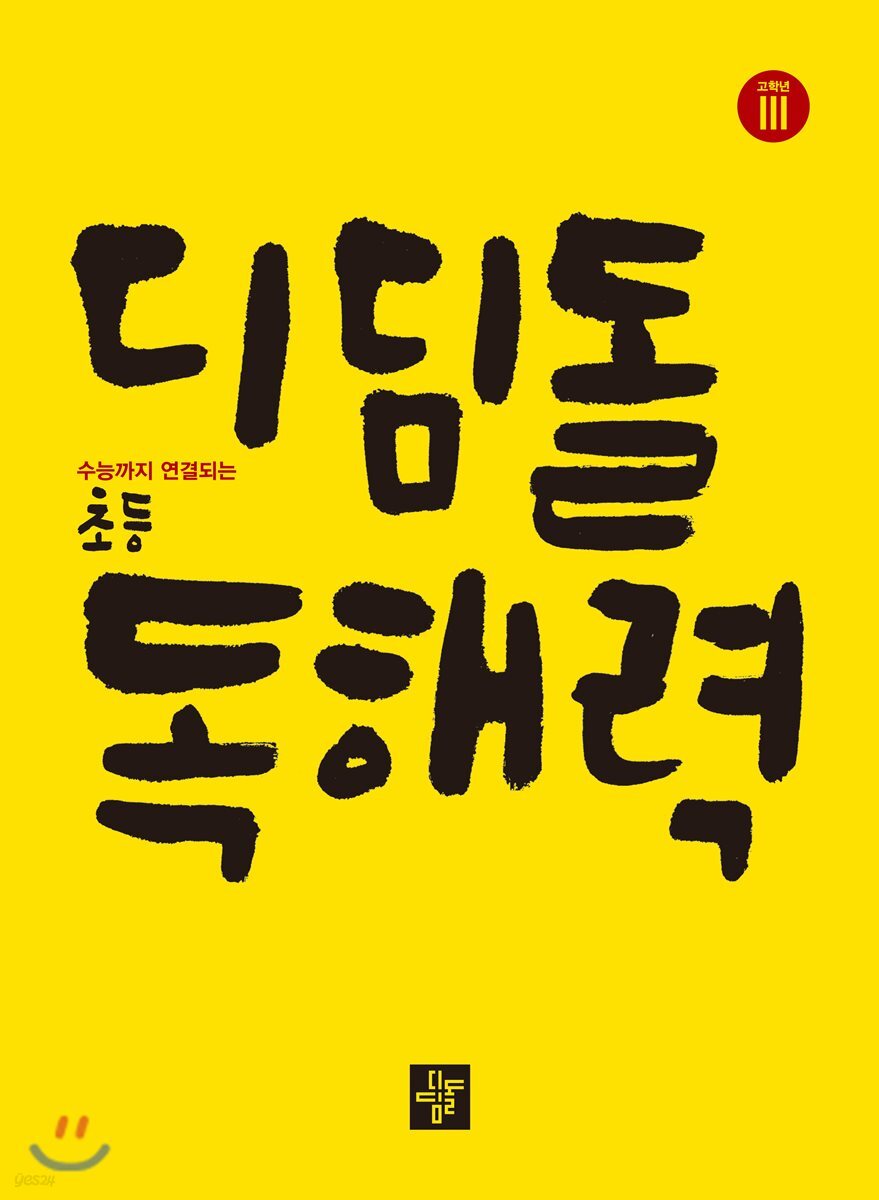
Elementary Upper Grade Stepping Stone Reading Comprehension Level 3
 |
Description
Book Introduction
Reading comprehension skills that lead to the college entrance exam and are a stepping stone for upper elementary school students
This book is structured so that you can acquire reading comprehension methods and concepts through the process of consistent, practical reading.
The areas covered in the CSAT have been subdivided into humanities, philosophy, society, economics, science, technology, language, culture, art, and environment to enable broad reading comprehension.
The entire series is divided into four levels of difficulty that elementary school upper grades can handle, and the difficulty level increases systematically, allowing students to feel confident and a sense of accomplishment while reading.
This book is structured so that you can acquire reading comprehension methods and concepts through the process of consistent, practical reading.
The areas covered in the CSAT have been subdivided into humanities, philosophy, society, economics, science, technology, language, culture, art, and environment to enable broad reading comprehension.
The entire series is divided into four levels of difficulty that elementary school upper grades can handle, and the difficulty level increases systematically, allowing students to feel confident and a sense of accomplishment while reading.
index
[Humanities]
01 Adler's [The Art of Reading] 6
02 The Usefulness of Uselessness 10
03 The Wings of Icarus 14
04 Living with Thought 18
Reading Comprehension Special Lecture 1: Understanding the Structure of a Text Will Make You Read Faster! 22
[history]
05 Joseon's Code of Law, [Gyeongguk Daejeon] 24
06 The History of Silla's Royal Titles 28
07 The Origin of Tonkatsu 32
08 The Truth About the Turtle Ship 36
[society]
09 BBC Disaster Reporting Guidelines 40
10 Citizen Participation Trials 44
Reading Comprehension Special Lecture 2: Predict the content based on the given information! 48
11 Poverty 50
12 Syrian Civil War 54
[economy]
13 Direct and Indirect Taxes 58
14 Moral hazard 62
15 External effects 66
16 New Perspectives on Production and Consumption 70
[creature]
17 Invasive species 74
18 Carnivorous Plants 78
19 Face 82
20 Microorganisms 86
Reading Comprehension Special Lecture 3: Overturn the Familiar to See Something New! 90
[science]
21 The Poison of Sugar 92
22 North and South Poles 96
23 Principles of the Stethoscope 100
24 Types of Stars 104
[technology]
25 Biomimicry 108
26 Privacy in the Future Society 112
Reading Comprehension Special Lecture 4: Distinguish between Important and Irrelevant Information! 116
27 Tteoksal 118
28 Joseon Dynasty Yangban House 122
[culture]
28 UNESCO World Heritage Sites 126
30 The Alhambra Palace in Granada 130
31 Attitudes toward Understanding Culture 134
32 Mass Media and Popular Culture 138
[art]
33 Folk Songs, Folk Songs 142
34 Components of Ballet 146
35 Characteristics of the play 150
36 Renaissance Paintings 154
life
37 Rock, Paper, Scissors 158
38 Earworm Phenomenon 162
39 Color temperature 166
40 Smombie 170
Reading Comprehension Special Lecture 5: Critical Reading Begins with Understanding Perspectives! 176
01 Adler's [The Art of Reading] 6
02 The Usefulness of Uselessness 10
03 The Wings of Icarus 14
04 Living with Thought 18
Reading Comprehension Special Lecture 1: Understanding the Structure of a Text Will Make You Read Faster! 22
[history]
05 Joseon's Code of Law, [Gyeongguk Daejeon] 24
06 The History of Silla's Royal Titles 28
07 The Origin of Tonkatsu 32
08 The Truth About the Turtle Ship 36
[society]
09 BBC Disaster Reporting Guidelines 40
10 Citizen Participation Trials 44
Reading Comprehension Special Lecture 2: Predict the content based on the given information! 48
11 Poverty 50
12 Syrian Civil War 54
[economy]
13 Direct and Indirect Taxes 58
14 Moral hazard 62
15 External effects 66
16 New Perspectives on Production and Consumption 70
[creature]
17 Invasive species 74
18 Carnivorous Plants 78
19 Face 82
20 Microorganisms 86
Reading Comprehension Special Lecture 3: Overturn the Familiar to See Something New! 90
[science]
21 The Poison of Sugar 92
22 North and South Poles 96
23 Principles of the Stethoscope 100
24 Types of Stars 104
[technology]
25 Biomimicry 108
26 Privacy in the Future Society 112
Reading Comprehension Special Lecture 4: Distinguish between Important and Irrelevant Information! 116
27 Tteoksal 118
28 Joseon Dynasty Yangban House 122
[culture]
28 UNESCO World Heritage Sites 126
30 The Alhambra Palace in Granada 130
31 Attitudes toward Understanding Culture 134
32 Mass Media and Popular Culture 138
[art]
33 Folk Songs, Folk Songs 142
34 Components of Ballet 146
35 Characteristics of the play 150
36 Renaissance Paintings 154
life
37 Rock, Paper, Scissors 158
38 Earworm Phenomenon 162
39 Color temperature 166
40 Smombie 170
Reading Comprehension Special Lecture 5: Critical Reading Begins with Understanding Perspectives! 176
Detailed image

Publisher's Review
For upper elementary school students, full-scale reading training
Keep improving your reading skills!
The real reading comprehension for the CSAT should start in the upper elementary grades!
The upper elementary school years, which are “preliminary to middle school,” are the time when serious reading comprehension begins.
If you laid the foundation for reading comprehension in the lower grades of elementary school with a focus on factual reading, in the upper grades you need to advance to the more comprehensive thinking skills assessed in the CSAT, such as inferential reading, critical reading, and creative reading. This is true reading comprehension.
Especially in the upper grades of elementary school, students' thinking skills are greatly enhanced, so sufficient practice can significantly improve their reading comprehension skills.
To improve your reading skills, you need to practice by gradually increasing the level.
Reading comprehension skills gradually deepen as you read texts that are slightly higher in level than your own.
Therefore, if you start reading comprehension considering your level and steadily practice by gradually increasing the level of the text, your skills will naturally improve.
The four-volume series is divided into sections based on the length of the text, the level of the writing, and the vocabulary level, and the difficulty level gradually increases, allowing you to build your reading skills.
▶ Special features of [Elementary Upper Grade Stepping Stone Reading Comprehension]
First, select a text from the essential areas that appear on the CSAT.
Four texts are included for each essential subject: humanities, philosophy, society, economics, science, technology, language, culture, art, and environment, according to the level of each text.
Second, it includes problems that embody the thinking styles asked in the CSAT.
All questions that can appear in the text are covered thoroughly, including content comprehension, development method, inference, criticism, case application, vocabulary, and one-line summary.
Additionally, we have created a 'College Scholastic Ability Test Connection' corner below the questions so that you can check the study direction that is connected to the College Scholastic Ability Test, such as concept words and problem types.
Third, a special lecture on reading comprehension is included to learn the principles of reading comprehension.
We have included a special lecture on reading comprehension, filled with diverse content, so that you can easily learn the principles related to reading comprehension, such as the concepts, methods, and types of problems.
Keep improving your reading skills!
The real reading comprehension for the CSAT should start in the upper elementary grades!
The upper elementary school years, which are “preliminary to middle school,” are the time when serious reading comprehension begins.
If you laid the foundation for reading comprehension in the lower grades of elementary school with a focus on factual reading, in the upper grades you need to advance to the more comprehensive thinking skills assessed in the CSAT, such as inferential reading, critical reading, and creative reading. This is true reading comprehension.
Especially in the upper grades of elementary school, students' thinking skills are greatly enhanced, so sufficient practice can significantly improve their reading comprehension skills.
To improve your reading skills, you need to practice by gradually increasing the level.
Reading comprehension skills gradually deepen as you read texts that are slightly higher in level than your own.
Therefore, if you start reading comprehension considering your level and steadily practice by gradually increasing the level of the text, your skills will naturally improve.
The four-volume series is divided into sections based on the length of the text, the level of the writing, and the vocabulary level, and the difficulty level gradually increases, allowing you to build your reading skills.
▶ Special features of [Elementary Upper Grade Stepping Stone Reading Comprehension]
First, select a text from the essential areas that appear on the CSAT.
Four texts are included for each essential subject: humanities, philosophy, society, economics, science, technology, language, culture, art, and environment, according to the level of each text.
Second, it includes problems that embody the thinking styles asked in the CSAT.
All questions that can appear in the text are covered thoroughly, including content comprehension, development method, inference, criticism, case application, vocabulary, and one-line summary.
Additionally, we have created a 'College Scholastic Ability Test Connection' corner below the questions so that you can check the study direction that is connected to the College Scholastic Ability Test, such as concept words and problem types.
Third, a special lecture on reading comprehension is included to learn the principles of reading comprehension.
We have included a special lecture on reading comprehension, filled with diverse content, so that you can easily learn the principles related to reading comprehension, such as the concepts, methods, and types of problems.
GOODS SPECIFICS
- Date of issue: February 25, 2019
- Page count, weight, size: 216 pages | 220*300*20mm
- ISBN13: 9788926156858
- ISBN10: 8926156850
- Reference book for use in grades: 6th grade
- Reference book usage semester: Common semester
- Reference Difficulty: Hard Reference Difficulty Guide
- KC Certification: Certification Type: Conformity Confirmation
You may also like
카테고리
korean


korean

![GQ KOREA Mark (Monthly): December [2025]](http://librairie.coreenne.fr/cdn/shop/files/8ef265dbbfbf186523ed75ba7319009d.jpg?v=1765340328&width=3840)


