

The world of cryptography is more fun when you know it.
 |
Description
Book Introduction
Only those who crack the code will survive!
A high-level brain game played by those who hide and try to reveal
A mystery journey to find secret messages throughout history.
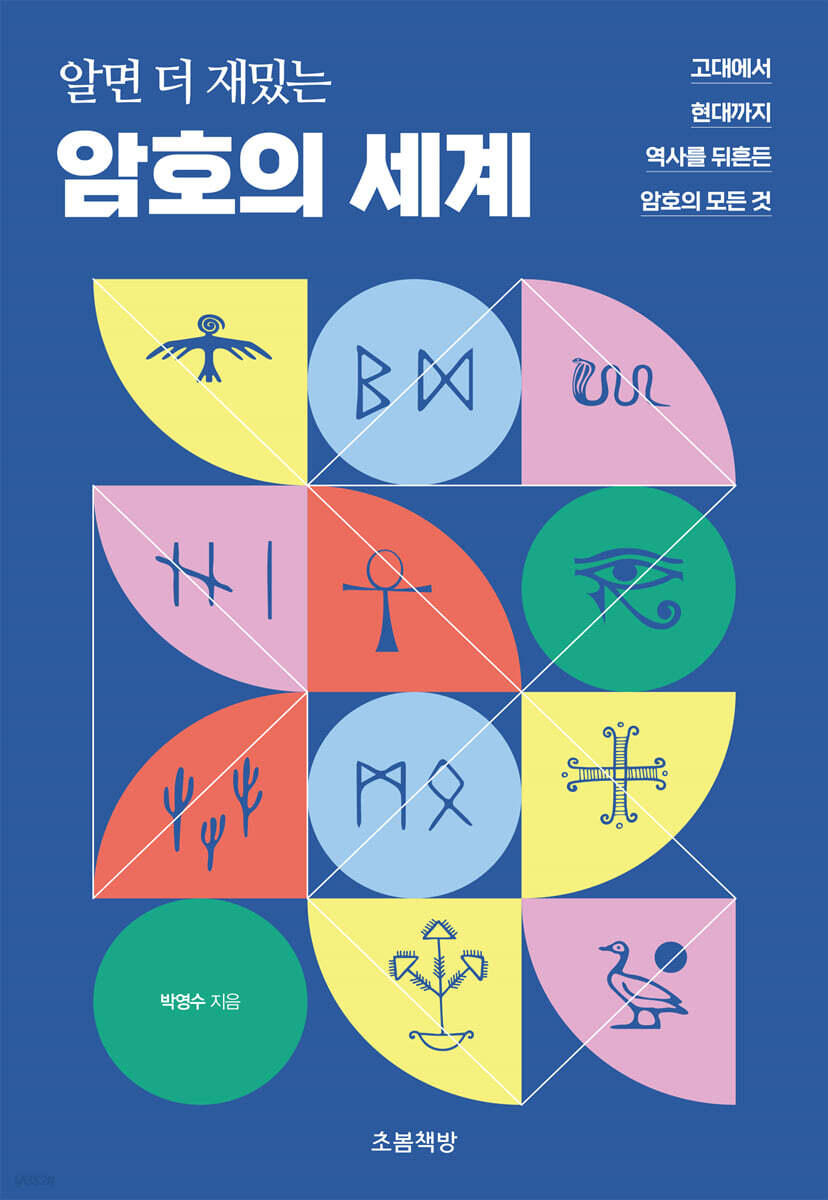
This book, "The World of Cryptography: More Fun When You Know It," is a humanities textbook that covers everything about cryptography from ancient times to the present.
But what comes to mind when you think of password?
Doesn't the negative image that seems to suggest a hidden conspiracy come to mind first?
Is that really true?
Now, passwords serve as a safety net that protects our lives and have a positive function.
As soon as you open your eyes, don't you wake up your smartphone with a password to connect to the world?
When you turn on your computer, visit a website, do phone banking, or even open the front door…
We cannot live without 'passwords' even for a single moment now.
While storing multiple passwords in memory that you have to use without even trying.
In fact, the cryptography that has such enormous influence is not a product of modern society.
So when, where, and how did this kind of password come into existence?
《The World of Cryptography: More Fun When You Know It》 starts from the birth of cryptography and introduces you to the world of modern, cutting-edge cryptography.
This book provides a taste of the basics of cryptography by unraveling the various cryptographic worlds that have appeared throughout world history.
Of course, I hope that the secrets of humanity that have not yet been solved will be uncovered.
How did a code that was just a play on words evolve into a decisive code that determines the outcome of a war?
This book unfolds the fascinating and mysterious world of cryptography, chronicling the pivotal events that changed history because of cryptography.
The world of codes, a high-level brain game for those who try to hide and solve them.
This book contains everything about these passwords.
A high-level brain game played by those who hide and try to reveal
A mystery journey to find secret messages throughout history.
This book, "The World of Cryptography: More Fun When You Know It," is a humanities textbook that covers everything about cryptography from ancient times to the present.
But what comes to mind when you think of password?
Doesn't the negative image that seems to suggest a hidden conspiracy come to mind first?
Is that really true?
Now, passwords serve as a safety net that protects our lives and have a positive function.
As soon as you open your eyes, don't you wake up your smartphone with a password to connect to the world?
When you turn on your computer, visit a website, do phone banking, or even open the front door…
We cannot live without 'passwords' even for a single moment now.
While storing multiple passwords in memory that you have to use without even trying.
In fact, the cryptography that has such enormous influence is not a product of modern society.
So when, where, and how did this kind of password come into existence?
《The World of Cryptography: More Fun When You Know It》 starts from the birth of cryptography and introduces you to the world of modern, cutting-edge cryptography.
This book provides a taste of the basics of cryptography by unraveling the various cryptographic worlds that have appeared throughout world history.
Of course, I hope that the secrets of humanity that have not yet been solved will be uncovered.
How did a code that was just a play on words evolve into a decisive code that determines the outcome of a war?
This book unfolds the fascinating and mysterious world of cryptography, chronicling the pivotal events that changed history because of cryptography.
The world of codes, a high-level brain game for those who try to hide and solve them.
This book contains everything about these passwords.
- You can preview some of the book's contents.
Preview
index
Preface ··· 4
PART 1: The Origin and History of Cryptography... 13
Greek cipher | Scytale cipher, the ancestor of roman ciphers | Nomenclator, the cipher of Vatican documents |
The 16th-Century Beheading of Mary Queen of Scots and the Code | War and Codes | Election Campaigns and Codes | The Principles of Codemaking
The Composition of Cryptography: Metaphorical Expressions | Alphabet Hangul (Hwanja) (換字) ··· 29
PART 2: Celebrities and Ciphers · Caesar's Cipher... 33
Cicero and Caesar | The Background of Caesar's Assassination | Ignoring the Warning
The Composition of Ciphers: Enigma... 39
· Eyes of the Day, Mata Hari... 40
The Life of Mata Hari | Spy Mata Hari and the Sheet Music Code | The Final Moment That Gave Birth to a Myth
The Principle of Cryptography: Substitution of Musical Characters... 47
· Queen Mary, who put a period on the single-alphabet patient... 48
The password Mary used
The Composition Principle of Ciphers: Single Alphabet Ciphers... 52
Morse Code and Funkspiel... 53
Telegraphs and Modern Cryptography | The Story of Morse Code | Germany's Funkspiel
The Composition of Cryptography: Morse Code... 61
· Magician Houdini's Code... 62
The Master of Escape Magic | The Battle Between a Medium and a Magician | Why Houdini Hated Mediums |
Houdini tried to convey the spirit world through code
The Principle of Cryptography: Word Alphabet Substitution... 72
PART 3: War and Codes · Disc Ciphers and the Double-Ended Alphabet... 75
The Alberti Story | The Double Alphabet Patient Method | The American Civil War and Ciphers | How to Decipher Alphabetic and Numerical Code Discs
The Composition of Cryptography: Disk Ciphers... 82
· Code Operations During World War I... 83
German spies | British codebreakers | Zimmermann's code expert | Codebreaking to induce American involvement in the war
The Composition of Cryptography: Human Body Pictograms... 96
· Wind Code and the Pearl Harbor Attack... 97
Why Japan Launched a Preemptive Strike on the United States | Why They Set the Wind Code | Heading for Hawaii |
The US Navy's Codebreaking | The Declaration of War | Japan's Surprise Attack
The Composition Principle of Ciphers: Wind Ciphers... 111
· U.S. Cryptography Strategy During World War II... 112
Actions taken by American censors | Victory at Midway | Eliminate Yamamoto
The Composition of Cryptography: Chinese Character Cryptography... 122
· PA-K2 and J series, and Purple Code... 123
Japan's Distrust of Intelligence | Japan's Cryptography System | Until the Purple Code Was Cracked
The Composition of Cryptography: Dokkaebi Character Cryptography... 132
Native American Navajo Code... 133
The Last of the Yahi Natives | Why the Navajo Language Was Adopted as a Code |
Why Native American Soldiers Were Deployed in US Military Bases | Why the Navajo Code Was Abolished After the War
The Composition of Codes: Navajo Language Codes... 142
PART 4: Letters and Codes · Why Did the Sumerians Invent Cuneiform? ··· 145
Why did the Sumerians represent things symbolically? | Why were the letters on clay tablets wedge-shaped? |
The Gilgamesh Story, Predating the Bible's Record of a Great Flood and a Wicked Serpent | Why Was Cuneiform Written Later?
The Principles of Cryptography: Using Symbols | Using Watermark Symbols... 158
The Mystery of the Persepolis Inscriptions... 159
Why was the Persepolis Palace Destroyed? | The Secret of Cuneiform Writing | The Mystery of the Great King, the King of Kings, and the King's Son
The Composition of Cryptography: Using Riddles... 167
· Egyptian script and the Rosetta Stone... 168
The Rosetta Stone Discovery | Three Types of Egyptian Writing | Champollion's Challenge | The Preconceptions Left Behind by Evil Books |
The clue to deciphering lies in a surprising place | Focus on the cartouche | The sun god 'Ra' | How to read Egyptian hieroglyphs
The Principles of Cryptography: Using Egyptian Hieroglyphs... 188
· Phoenician script and alphabet... 189
The Cinderella of Phonetic Writing: The Alphabet | The World's First Circumnavigation of Africa | The Origin of the Alphabet | Characteristics of the Greek Alphabet
The Principle of Cipher Composition: Alphabetical Vowel Omission... 197
Inca rope script... 198
Why the Incas Didn't Use Writing | How to Read the Final Script
The Principles of Cryptography: Using the Inca Final Letters...
PART 5 Our country's cryptographic culture
Shoot the Geomungo shell | Jeongeupsa Temple's 'Eogiya Jeun? I? Deu? Iyolshera' | Joseon Dynasty password | Password recorded in the Annals of the Joseon Dynasty |
The Mute Ghost's Code Transmission | Codes Through Decoding | The Palace Maid's Code
Cryptography Principles: Korean Consonant-Number Substitution Method | Alphabetic-Number Substitution Method... 227
PART 6: Various Cryptographic Techniques and Flows · Anagrams ··· 231
Why Galileo So Favored Anagrams | Anagrams in Film and Novels
The Composition Principle of Ciphers: Anagrams... 236
· Sentence Codes and Kremlin Knowledge... 237
I just received a beautiful Siamese doll | NULL password | Kremlinology and the power shift
The Composition Principle of Ciphers: Sentence Ciphers... 245
· Random number table encryption... 246
What is a random number table? | Why spies listen to broadcasts at night.
The Composition Principle of Cryptography: Random Number Table Cryptography... 252
· Their own language, slang... 253
Namsadangpae slang | Youth slang
The Composition of Ciphers: Code Ciphers... 259
· The secrets of your resident registration number and credit card number... 260
The Secret of Your Resident Registration Number | The Verification Code Hidden in Your Credit Card Number
The Composition Principle of Cryptography: Check Number... 264
· Modern cryptography... 265
PART 1: The Origin and History of Cryptography... 13
Greek cipher | Scytale cipher, the ancestor of roman ciphers | Nomenclator, the cipher of Vatican documents |
The 16th-Century Beheading of Mary Queen of Scots and the Code | War and Codes | Election Campaigns and Codes | The Principles of Codemaking
The Composition of Cryptography: Metaphorical Expressions | Alphabet Hangul (Hwanja) (換字) ··· 29
PART 2: Celebrities and Ciphers · Caesar's Cipher... 33
Cicero and Caesar | The Background of Caesar's Assassination | Ignoring the Warning
The Composition of Ciphers: Enigma... 39
· Eyes of the Day, Mata Hari... 40
The Life of Mata Hari | Spy Mata Hari and the Sheet Music Code | The Final Moment That Gave Birth to a Myth
The Principle of Cryptography: Substitution of Musical Characters... 47
· Queen Mary, who put a period on the single-alphabet patient... 48
The password Mary used
The Composition Principle of Ciphers: Single Alphabet Ciphers... 52
Morse Code and Funkspiel... 53
Telegraphs and Modern Cryptography | The Story of Morse Code | Germany's Funkspiel
The Composition of Cryptography: Morse Code... 61
· Magician Houdini's Code... 62
The Master of Escape Magic | The Battle Between a Medium and a Magician | Why Houdini Hated Mediums |
Houdini tried to convey the spirit world through code
The Principle of Cryptography: Word Alphabet Substitution... 72
PART 3: War and Codes · Disc Ciphers and the Double-Ended Alphabet... 75
The Alberti Story | The Double Alphabet Patient Method | The American Civil War and Ciphers | How to Decipher Alphabetic and Numerical Code Discs
The Composition of Cryptography: Disk Ciphers... 82
· Code Operations During World War I... 83
German spies | British codebreakers | Zimmermann's code expert | Codebreaking to induce American involvement in the war
The Composition of Cryptography: Human Body Pictograms... 96
· Wind Code and the Pearl Harbor Attack... 97
Why Japan Launched a Preemptive Strike on the United States | Why They Set the Wind Code | Heading for Hawaii |
The US Navy's Codebreaking | The Declaration of War | Japan's Surprise Attack
The Composition Principle of Ciphers: Wind Ciphers... 111
· U.S. Cryptography Strategy During World War II... 112
Actions taken by American censors | Victory at Midway | Eliminate Yamamoto
The Composition of Cryptography: Chinese Character Cryptography... 122
· PA-K2 and J series, and Purple Code... 123
Japan's Distrust of Intelligence | Japan's Cryptography System | Until the Purple Code Was Cracked
The Composition of Cryptography: Dokkaebi Character Cryptography... 132
Native American Navajo Code... 133
The Last of the Yahi Natives | Why the Navajo Language Was Adopted as a Code |
Why Native American Soldiers Were Deployed in US Military Bases | Why the Navajo Code Was Abolished After the War
The Composition of Codes: Navajo Language Codes... 142
PART 4: Letters and Codes · Why Did the Sumerians Invent Cuneiform? ··· 145
Why did the Sumerians represent things symbolically? | Why were the letters on clay tablets wedge-shaped? |
The Gilgamesh Story, Predating the Bible's Record of a Great Flood and a Wicked Serpent | Why Was Cuneiform Written Later?
The Principles of Cryptography: Using Symbols | Using Watermark Symbols... 158
The Mystery of the Persepolis Inscriptions... 159
Why was the Persepolis Palace Destroyed? | The Secret of Cuneiform Writing | The Mystery of the Great King, the King of Kings, and the King's Son
The Composition of Cryptography: Using Riddles... 167
· Egyptian script and the Rosetta Stone... 168
The Rosetta Stone Discovery | Three Types of Egyptian Writing | Champollion's Challenge | The Preconceptions Left Behind by Evil Books |
The clue to deciphering lies in a surprising place | Focus on the cartouche | The sun god 'Ra' | How to read Egyptian hieroglyphs
The Principles of Cryptography: Using Egyptian Hieroglyphs... 188
· Phoenician script and alphabet... 189
The Cinderella of Phonetic Writing: The Alphabet | The World's First Circumnavigation of Africa | The Origin of the Alphabet | Characteristics of the Greek Alphabet
The Principle of Cipher Composition: Alphabetical Vowel Omission... 197
Inca rope script... 198
Why the Incas Didn't Use Writing | How to Read the Final Script
The Principles of Cryptography: Using the Inca Final Letters...
PART 5 Our country's cryptographic culture
Shoot the Geomungo shell | Jeongeupsa Temple's 'Eogiya Jeun? I? Deu? Iyolshera' | Joseon Dynasty password | Password recorded in the Annals of the Joseon Dynasty |
The Mute Ghost's Code Transmission | Codes Through Decoding | The Palace Maid's Code
Cryptography Principles: Korean Consonant-Number Substitution Method | Alphabetic-Number Substitution Method... 227
PART 6: Various Cryptographic Techniques and Flows · Anagrams ··· 231
Why Galileo So Favored Anagrams | Anagrams in Film and Novels
The Composition Principle of Ciphers: Anagrams... 236
· Sentence Codes and Kremlin Knowledge... 237
I just received a beautiful Siamese doll | NULL password | Kremlinology and the power shift
The Composition Principle of Ciphers: Sentence Ciphers... 245
· Random number table encryption... 246
What is a random number table? | Why spies listen to broadcasts at night.
The Composition Principle of Cryptography: Random Number Table Cryptography... 252
· Their own language, slang... 253
Namsadangpae slang | Youth slang
The Composition of Ciphers: Code Ciphers... 259
· The secrets of your resident registration number and credit card number... 260
The Secret of Your Resident Registration Number | The Verification Code Hidden in Your Credit Card Number
The Composition Principle of Cryptography: Check Number... 264
· Modern cryptography... 265
Into the book
The meaning cannot be understood by reading a single vertical sentence, but the meaning is conveyed through sentences that are arranged horizontally so that they do not overlap.
This wooden stick was called a skeetail, so it is called the 'skeetail cipher'.
It is the ancestor of electronic encryption that changes the order of letters in a sentence.
--- p.18
World War I also served as a turning point in the cryptographic war.
Until then, cryptography had played only a secondary role in the conduct of war.
However, this reality has secured a leading role through several incidents.
--- p.94
At 7:53 a.m. on Sunday, December 7th (Hawaii time), the slang telegram "Tora Tora Tora (虎 虎 虎)" was transmitted to the Combined Fleet Command from the Japanese fleet that had entered the waters near Pearl Harbor.
The code word that the Japanese military gave to the surprise attack force as a signal for the surprise attack on Pearl Harbor was "Nidakayama nobore (Climb the new high mountain)." The slang code word used to report the success of the surprise attack on Pearl Harbor to the Japanese government was "Tora tora tora."
--- p.107
Champollion unfolded the next cartouche, filled with joy and tension.
Indeed, here too we were able to decipher the name of another famous pharaoh: 'Totomes'.
Champollion immediately ran to his brother Jacques, who was working at the French Academy.
He ran into his brother's room in a panic and immediately fainted and collapsed after shouting, "I'm done!"
--- p.183
The '北(North)' written at first does not mean 'north', but rather shows two people turning their backs to each other.
'比(kyunjul bi)' does not mean 'to compare', but rather it seems like one of the men or women is courting the other.
'臼(jeolgu gu)' does not mean 'jeolgu', but rather expresses the appearance of two people embracing each other.
For example, it can be said that the psychological and physical changes in the two people's situations are cleverly expressed in the form of letters.
This wooden stick was called a skeetail, so it is called the 'skeetail cipher'.
It is the ancestor of electronic encryption that changes the order of letters in a sentence.
--- p.18
World War I also served as a turning point in the cryptographic war.
Until then, cryptography had played only a secondary role in the conduct of war.
However, this reality has secured a leading role through several incidents.
--- p.94
At 7:53 a.m. on Sunday, December 7th (Hawaii time), the slang telegram "Tora Tora Tora (虎 虎 虎)" was transmitted to the Combined Fleet Command from the Japanese fleet that had entered the waters near Pearl Harbor.
The code word that the Japanese military gave to the surprise attack force as a signal for the surprise attack on Pearl Harbor was "Nidakayama nobore (Climb the new high mountain)." The slang code word used to report the success of the surprise attack on Pearl Harbor to the Japanese government was "Tora tora tora."
--- p.107
Champollion unfolded the next cartouche, filled with joy and tension.
Indeed, here too we were able to decipher the name of another famous pharaoh: 'Totomes'.
Champollion immediately ran to his brother Jacques, who was working at the French Academy.
He ran into his brother's room in a panic and immediately fainted and collapsed after shouting, "I'm done!"
--- p.183
The '北(North)' written at first does not mean 'north', but rather shows two people turning their backs to each other.
'比(kyunjul bi)' does not mean 'to compare', but rather it seems like one of the men or women is courting the other.
'臼(jeolgu gu)' does not mean 'jeolgu', but rather expresses the appearance of two people embracing each other.
For example, it can be said that the psychological and physical changes in the two people's situations are cleverly expressed in the form of letters.
--- p.224
Publisher's Review
How far has cryptography evolved from the invention of writing to its current state?
With the advancement of advanced communications, the importance of encryption has grown even more in modern times.
The history of cryptography began with the invention of ancient writing.
The invention of writing was a groundbreaking event in human history.
Because it became possible to impart knowledge.
However, letters served as a medium that could unite the nation and allowed individuals to enjoy the play of language.
Also, the text attracted attention for its unique charm as a ‘secret record.’
The first cryptograms appeared in an era when religious leaders were rulers, using a vague and mysterious language to emphasize mystery.
On the one hand, it was developed as a technique to increase the efficiency of military operations.
Park Young-su, the author of this book, “The World of Codes: More Fun When You Know It,” said that while unraveling the world of codes, he explored ancient characters like an archaeologist.
It was based on the idea that 'unreadable characters are like a password.'
He believes that by unraveling the enigmatic ancient script, we can also learn how to decipher its codes.
Even from a modern perspective, cryptography is extremely important.
Because exposing your password will soon lead to exposing your privacy.
For example, look at Stendhal, the author of The Red and the Black.
It is said that he went bald from a young age and did all kinds of research to attract women's attention.
When he wrote his diary, he recorded women's names in codes like V?A?M?C?G just in case.
In modern society, where the method of identity verification is changing from 'face' to 'password', passwords are becoming more and more important.
As communication develops, the importance of encryption is increasing day by day.
In particular, cryptography is emerging as a very important task.
The encryption process is collectively called 'Magic'.
Senior U.S. government officials read magic information, discuss it in meetings, and make policy decisions based on it.
For example, the creation of the US Army Far East Command, commanded by General MacArthur, was based on intercepted Magic intelligence in early 1941.
The United States established the Far East Command in response to intelligence that Germany was planning to incite Japan to attack British territories in Asia and, ultimately, to draw the United States into war.
Cryptography is never an easy task.
If you don't know the principles or standards set by the author, it's difficult to understand the content.
Let's look at some cryptographic techniques.
There is a 'transformation' that changes the order of the letters in "My boss is angry right now" to "Forbidden lyrics, um-na-t-hwa."
There is also a 'character exchange' method that maintains the order of plaintext elements and expresses them as different objects or groups, such as "My boss is angry right now" or "Mt. Baekdu is spitting fire right now."
There is also a 'multiplication cipher' in which electrons and letters are exchanged serially, and there is also a 'foreign language cipher' which is the most difficult method as it adds the difficulty of using a foreign language to the above method.
This book traces the origins and history of cryptography, and also tells the stories of cryptography related to famous people we know, such as Caesar and Mata Hari.
In fact, Caesar ignored the warning to “beware of assassins” and passed away, leaving behind the words “Even you, Brutus…”
In this book, we also encounter the fact that Mata Hari, who first comes to mind as a slutty woman, was actually an incompetent spy.
Above all, when it comes to cryptography, it is related to war.
It also details how the fate of World War I and II was determined by the breathtaking code-breaking operations of deception and deception.
In addition, this book examines the history of cryptography in our country and examines in detail how cryptography has evolved.
In addition, we did not leave out the story of modern cryptocurrencies such as cryptocurrencies.
preface
Ancient people left records in writing.
The invention of writing was a groundbreaking event in human history.
Because it became possible to impart knowledge.
However, writing did not function only as a boundary between prehistoric times and historical times.
It served as a medium that could unite the nation and allowed individuals to enjoy the play of language.
The text also received more attention because of its unique charm, which is its 'secret record'.
By using letters, that is, by using 'codes' to record certain things, it became possible to hide the contents even if they were exposed to others.
The first cryptograms appeared in an era when religious leaders were rulers, using a vague and mysterious language to emphasize mystery.
On the one hand, it was developed as a technique to increase the efficiency of military operations.
Some peoples left behind difficult records in their own writings to boast of their glorious deeds to their descendants.
Fortunately, the nations whose history has continued to this day have all these things in common, but the nations that have perished have ended up taking their language to the grave.
The reason I studied ancient texts while discussing cryptography in this book was because I thought, 'Unreadable texts are like cryptography.'
The fact that many ancient texts have been deciphered today, and that secrets have thus been brought to light to some extent, is entirely due to the dedicated efforts of outstanding archaeologists.
In fact, ancient texts are as difficult as riddles.
Therefore, if we look closely at the process of deciphering ancient texts, we can learn some of the methods of deciphering the code.
Even from a modern perspective, encryption is extremely important.
Because exposing your password will soon lead to exposing your privacy.
For example, Stendhal, the author of "The Red and the Black," was not confident in his appearance, having gone bald since he was young, but he did a lot of research to attract the attention of women and actually dated many women.
When he wrote his diary, he recorded women's names in codes like V?A?M?C?G just in case.
In modern society, where the method of identity verification is changing from 'face' to 'password', passwords are becoming more and more important.
In particular, with the development of communication, the importance of encryption is increasing day by day, and accordingly, cryptanalysis is emerging as a very important task.
In the field of cryptography, this encryption process is collectively called 'Magic'.
Senior U.S. government officials read magic information, discuss it in meetings, and make policy decisions based on it.
For example, the creation of the US Army Far East Command, commanded by General MacArthur, was decided in early 1941 based on intercepted magic information.
This information suggested that Germany planned to incite Japan to attack British territories in Asia and, by extension, to draw the United States into war.
In preparation for this, the United States established the Far East Command.
Cryptography is never an easy task.
This is because it is difficult to understand the content without knowing the principles or standards set by the author.
Let's look at some cryptographic techniques.
The easiest way is to change the order of the letters.
This is called 'translation'.
For example, in the sentence 'My boss is angry right now', you can change the word order to 'The boss is angry right now' by reversing the words while keeping the word order the same.
Naturally, the parties exchanging the ciphertext must agree in advance on how to 'encrypt' and 'decrypt' the text.
‘Text exchange’ is also a frequently used method.
Change the elements of the plaintext into different objects or groups, while keeping the order of the elements intact.
For example, “My boss is angry right now” can be rephrased as “Mt. Baekdu is spitting fire right now.”
'Gopamho' is a slightly more advanced method.
The exchange of electrons and characters takes place serially.
In the multiplication cipher, the plaintext symbols are first converted into various symbols to create ciphertext, and then the order is changed and the ciphertext is encrypted again.
This method is not easy to analyze and therefore has a wide range of applications.
The most difficult thing is the 'foreign language code'.
The method above is even more difficult because it adds the difficulty of being in a different language.
When it comes to foreign language cryptography, cryptography translators are required to put in a similar level of intellectual effort as cryptography experts.
This is because the original text is just a list of syllables, so we have to match them to create meaningful language.
Text with no punctuation at all is also an obstacle to deciphering.
Yet, the cycle continues, with passwords being cracked and made more difficult again.
If readers can gain a comprehensive understanding of the world of cryptography through this book, acquire the fundamentals of cryptography, and even uncover the secrets of humanity that have yet to be solved, I could not ask for more.
2025.
5.
Park Young-soo
With the advancement of advanced communications, the importance of encryption has grown even more in modern times.
The history of cryptography began with the invention of ancient writing.
The invention of writing was a groundbreaking event in human history.
Because it became possible to impart knowledge.
However, letters served as a medium that could unite the nation and allowed individuals to enjoy the play of language.
Also, the text attracted attention for its unique charm as a ‘secret record.’
The first cryptograms appeared in an era when religious leaders were rulers, using a vague and mysterious language to emphasize mystery.
On the one hand, it was developed as a technique to increase the efficiency of military operations.
Park Young-su, the author of this book, “The World of Codes: More Fun When You Know It,” said that while unraveling the world of codes, he explored ancient characters like an archaeologist.
It was based on the idea that 'unreadable characters are like a password.'
He believes that by unraveling the enigmatic ancient script, we can also learn how to decipher its codes.
Even from a modern perspective, cryptography is extremely important.
Because exposing your password will soon lead to exposing your privacy.
For example, look at Stendhal, the author of The Red and the Black.
It is said that he went bald from a young age and did all kinds of research to attract women's attention.
When he wrote his diary, he recorded women's names in codes like V?A?M?C?G just in case.
In modern society, where the method of identity verification is changing from 'face' to 'password', passwords are becoming more and more important.
As communication develops, the importance of encryption is increasing day by day.
In particular, cryptography is emerging as a very important task.
The encryption process is collectively called 'Magic'.
Senior U.S. government officials read magic information, discuss it in meetings, and make policy decisions based on it.
For example, the creation of the US Army Far East Command, commanded by General MacArthur, was based on intercepted Magic intelligence in early 1941.
The United States established the Far East Command in response to intelligence that Germany was planning to incite Japan to attack British territories in Asia and, ultimately, to draw the United States into war.
Cryptography is never an easy task.
If you don't know the principles or standards set by the author, it's difficult to understand the content.
Let's look at some cryptographic techniques.
There is a 'transformation' that changes the order of the letters in "My boss is angry right now" to "Forbidden lyrics, um-na-t-hwa."
There is also a 'character exchange' method that maintains the order of plaintext elements and expresses them as different objects or groups, such as "My boss is angry right now" or "Mt. Baekdu is spitting fire right now."
There is also a 'multiplication cipher' in which electrons and letters are exchanged serially, and there is also a 'foreign language cipher' which is the most difficult method as it adds the difficulty of using a foreign language to the above method.
This book traces the origins and history of cryptography, and also tells the stories of cryptography related to famous people we know, such as Caesar and Mata Hari.
In fact, Caesar ignored the warning to “beware of assassins” and passed away, leaving behind the words “Even you, Brutus…”
In this book, we also encounter the fact that Mata Hari, who first comes to mind as a slutty woman, was actually an incompetent spy.
Above all, when it comes to cryptography, it is related to war.
It also details how the fate of World War I and II was determined by the breathtaking code-breaking operations of deception and deception.
In addition, this book examines the history of cryptography in our country and examines in detail how cryptography has evolved.
In addition, we did not leave out the story of modern cryptocurrencies such as cryptocurrencies.
preface
Ancient people left records in writing.
The invention of writing was a groundbreaking event in human history.
Because it became possible to impart knowledge.
However, writing did not function only as a boundary between prehistoric times and historical times.
It served as a medium that could unite the nation and allowed individuals to enjoy the play of language.
The text also received more attention because of its unique charm, which is its 'secret record'.
By using letters, that is, by using 'codes' to record certain things, it became possible to hide the contents even if they were exposed to others.
The first cryptograms appeared in an era when religious leaders were rulers, using a vague and mysterious language to emphasize mystery.
On the one hand, it was developed as a technique to increase the efficiency of military operations.
Some peoples left behind difficult records in their own writings to boast of their glorious deeds to their descendants.
Fortunately, the nations whose history has continued to this day have all these things in common, but the nations that have perished have ended up taking their language to the grave.
The reason I studied ancient texts while discussing cryptography in this book was because I thought, 'Unreadable texts are like cryptography.'
The fact that many ancient texts have been deciphered today, and that secrets have thus been brought to light to some extent, is entirely due to the dedicated efforts of outstanding archaeologists.
In fact, ancient texts are as difficult as riddles.
Therefore, if we look closely at the process of deciphering ancient texts, we can learn some of the methods of deciphering the code.
Even from a modern perspective, encryption is extremely important.
Because exposing your password will soon lead to exposing your privacy.
For example, Stendhal, the author of "The Red and the Black," was not confident in his appearance, having gone bald since he was young, but he did a lot of research to attract the attention of women and actually dated many women.
When he wrote his diary, he recorded women's names in codes like V?A?M?C?G just in case.
In modern society, where the method of identity verification is changing from 'face' to 'password', passwords are becoming more and more important.
In particular, with the development of communication, the importance of encryption is increasing day by day, and accordingly, cryptanalysis is emerging as a very important task.
In the field of cryptography, this encryption process is collectively called 'Magic'.
Senior U.S. government officials read magic information, discuss it in meetings, and make policy decisions based on it.
For example, the creation of the US Army Far East Command, commanded by General MacArthur, was decided in early 1941 based on intercepted magic information.
This information suggested that Germany planned to incite Japan to attack British territories in Asia and, by extension, to draw the United States into war.
In preparation for this, the United States established the Far East Command.
Cryptography is never an easy task.
This is because it is difficult to understand the content without knowing the principles or standards set by the author.
Let's look at some cryptographic techniques.
The easiest way is to change the order of the letters.
This is called 'translation'.
For example, in the sentence 'My boss is angry right now', you can change the word order to 'The boss is angry right now' by reversing the words while keeping the word order the same.
Naturally, the parties exchanging the ciphertext must agree in advance on how to 'encrypt' and 'decrypt' the text.
‘Text exchange’ is also a frequently used method.
Change the elements of the plaintext into different objects or groups, while keeping the order of the elements intact.
For example, “My boss is angry right now” can be rephrased as “Mt. Baekdu is spitting fire right now.”
'Gopamho' is a slightly more advanced method.
The exchange of electrons and characters takes place serially.
In the multiplication cipher, the plaintext symbols are first converted into various symbols to create ciphertext, and then the order is changed and the ciphertext is encrypted again.
This method is not easy to analyze and therefore has a wide range of applications.
The most difficult thing is the 'foreign language code'.
The method above is even more difficult because it adds the difficulty of being in a different language.
When it comes to foreign language cryptography, cryptography translators are required to put in a similar level of intellectual effort as cryptography experts.
This is because the original text is just a list of syllables, so we have to match them to create meaningful language.
Text with no punctuation at all is also an obstacle to deciphering.
Yet, the cycle continues, with passwords being cracked and made more difficult again.
If readers can gain a comprehensive understanding of the world of cryptography through this book, acquire the fundamentals of cryptography, and even uncover the secrets of humanity that have yet to be solved, I could not ask for more.
2025.
5.
Park Young-soo
GOODS SPECIFICS
- Date of issue: May 1, 2025
- Page count, weight, size: 268 pages | 418g | 145*210*17mm
- ISBN13: 9791198503091
You may also like
카테고리
korean


korean

![GQ KOREA Mark (Monthly): December [2025]](http://librairie.coreenne.fr/cdn/shop/files/8ef265dbbfbf186523ed75ba7319009d.jpg?v=1765340328&width=3840)


