

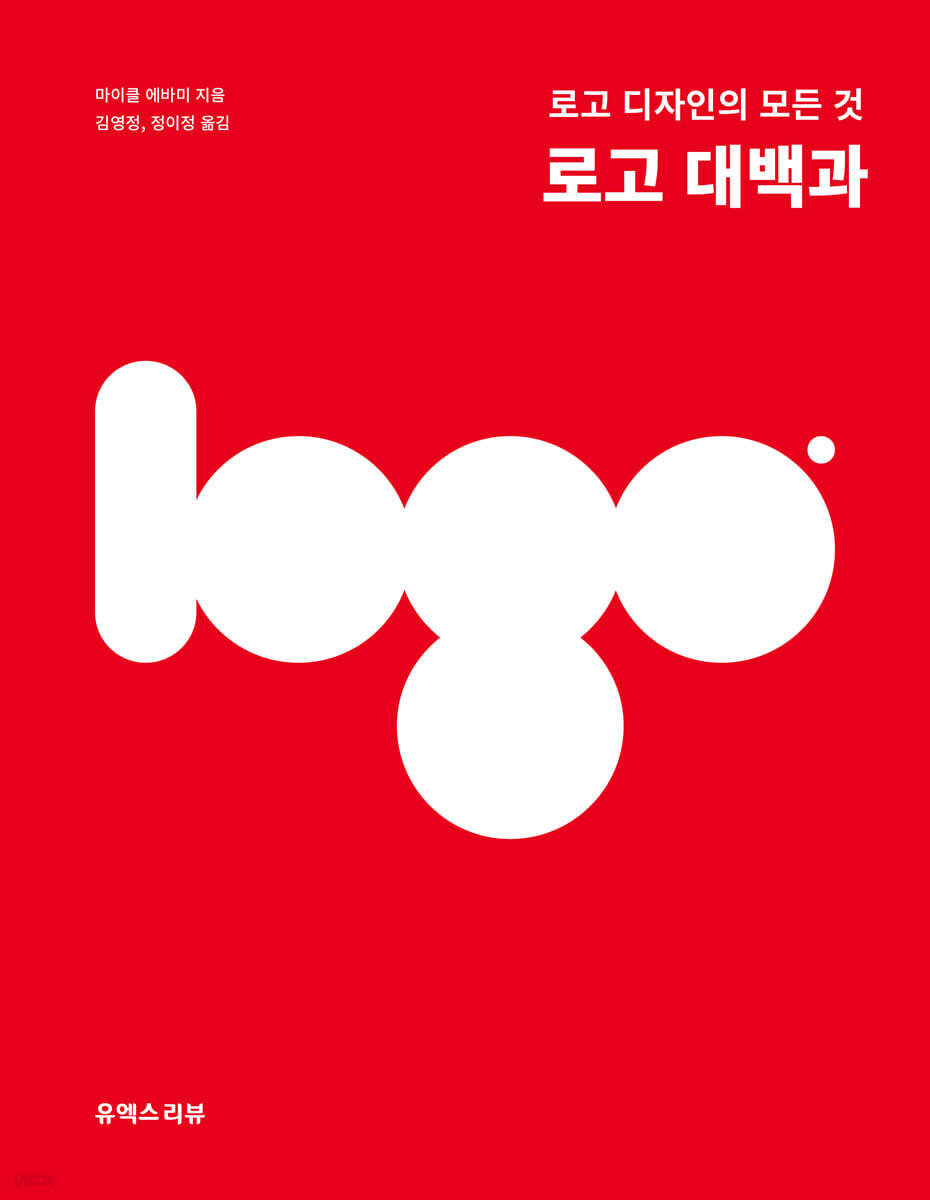
Logo Encyclopedia
 |
Description
Book Introduction
The world's most authoritative logo encyclopedia—a must-read for artists and designers.
A book filled with over 1,600 carefully selected, sparkling logos.
The 'Logo Encyclopedia', a global bestseller and beloved by countless designers for over a decade, has returned in a revised and expanded edition.
A veritable logo archive for every designer, this book compiles over 1,600 of the best logos, including 300 new identities! By delving into this book, you'll develop a keen appreciation for logos, the visual delights they bring to people and the imprint of brand imagery on their hearts and minds.
All logos are neatly categorized into over 80 shape categories, including crosses, stars, crowns, and animals, and the colors are removed to allow you to focus solely on the visual form.
Additionally, it includes a wide range of symbols from small design firms to global brands such as LG, Apple, Amazon, and 3M, allowing readers to naturally learn the core elements and principles of logo design.
The moment you open the book, a world of rich inspiration unfolds for those seeking meaningful design ideas.
It will serve as a great reference to help you work more efficiently on your brand design, and you'll be able to keep it with you for a long time.
A book filled with over 1,600 carefully selected, sparkling logos.
The 'Logo Encyclopedia', a global bestseller and beloved by countless designers for over a decade, has returned in a revised and expanded edition.
A veritable logo archive for every designer, this book compiles over 1,600 of the best logos, including 300 new identities! By delving into this book, you'll develop a keen appreciation for logos, the visual delights they bring to people and the imprint of brand imagery on their hearts and minds.
All logos are neatly categorized into over 80 shape categories, including crosses, stars, crowns, and animals, and the colors are removed to allow you to focus solely on the visual form.
Additionally, it includes a wide range of symbols from small design firms to global brands such as LG, Apple, Amazon, and 3M, allowing readers to naturally learn the core elements and principles of logo design.
The moment you open the book, a world of rich inspiration unfolds for those seeking meaningful design ideas.
It will serve as a great reference to help you work more efficiently on your brand design, and you'll be able to keep it with you for a long time.
index
1.
Logotype and text
Wordmark and initials
1.1 Logo using only fonts
1.2 Handwritten Logo
1.3 Connecting
1.4 Linked and embedded characters
1.5 Character Merge
1.6 Inserting words within words
1.7 Talking Characters
1.8 Separating
1.9 Repeat
1.10 Incomplete characters
1.11 Negative Space
1.12 Cut
1.13 Absence
1.14 Flip and Rotate
1.15 Symmetry and Ambigrams
1.16 Stacking
1.17 Up and Down
1.18 space
1.19 Won-gong-hyeong
1.20 Modular
1.21 Stencil
1.22 Minimal
1.23 Brutalism
1.24 3D
1.25 granular
1.26 Passing the letters
1.27 Extension
1.28 Decorating
1.29 Retro
typographic elements
1.30 If one character is used
If you use the number 1.31
1.32 and
1.33 Punctuation and typographic marks
2.
symbol
abstract
2.1 Square
2.2 Rectangle
2.3 Triangles and polygons
2.4 Circles and Points
2.5 Oval and oval
2.6 Radial
2.7 Concentric circles
2.8 rotations
2.9 Dot pattern
2.10 Horizontal lines
2.11 Vertical lines
2.12 Converging
2.13 Arches and Boomerangs
2.14 Things without a definite form
Figurative
2.15 Cross mark
2.16 Arrow
2.17 Thoughts and Words
2.18 Wave
2.19 Fiber
2.20 Light and Sound
2.21 district
2.22 The Sun and the Stars
2.23 Leaves
2.24 Flowers
2.25 tree
2.26 Scenery
2.27 Products of Nature
2.28 Water-related matters
2.29 Winged insects
2.30 New
2.31 Wild Animals
2.32 words
2.33 Cats and Dogs
2.34 Myth
2.35 Body
2.36 Hands and Feet
2.37 head
2.38 Eyes and Face
2.39 smile
2.40 Heart Shape
3.
Family and Sequence
3.0 Family
Logotype and text
Wordmark and initials
1.1 Logo using only fonts
1.2 Handwritten Logo
1.3 Connecting
1.4 Linked and embedded characters
1.5 Character Merge
1.6 Inserting words within words
1.7 Talking Characters
1.8 Separating
1.9 Repeat
1.10 Incomplete characters
1.11 Negative Space
1.12 Cut
1.13 Absence
1.14 Flip and Rotate
1.15 Symmetry and Ambigrams
1.16 Stacking
1.17 Up and Down
1.18 space
1.19 Won-gong-hyeong
1.20 Modular
1.21 Stencil
1.22 Minimal
1.23 Brutalism
1.24 3D
1.25 granular
1.26 Passing the letters
1.27 Extension
1.28 Decorating
1.29 Retro
typographic elements
1.30 If one character is used
If you use the number 1.31
1.32 and
1.33 Punctuation and typographic marks
2.
symbol
abstract
2.1 Square
2.2 Rectangle
2.3 Triangles and polygons
2.4 Circles and Points
2.5 Oval and oval
2.6 Radial
2.7 Concentric circles
2.8 rotations
2.9 Dot pattern
2.10 Horizontal lines
2.11 Vertical lines
2.12 Converging
2.13 Arches and Boomerangs
2.14 Things without a definite form
Figurative
2.15 Cross mark
2.16 Arrow
2.17 Thoughts and Words
2.18 Wave
2.19 Fiber
2.20 Light and Sound
2.21 district
2.22 The Sun and the Stars
2.23 Leaves
2.24 Flowers
2.25 tree
2.26 Scenery
2.27 Products of Nature
2.28 Water-related matters
2.29 Winged insects
2.30 New
2.31 Wild Animals
2.32 words
2.33 Cats and Dogs
2.34 Myth
2.35 Body
2.36 Hands and Feet
2.37 head
2.38 Eyes and Face
2.39 smile
2.40 Heart Shape
3.
Family and Sequence
3.0 Family
Detailed image

Into the book
While significant investments have been made in brand experience, digital marketing, and holistic brand relationships, the logo remains the core of any identity program.
A logo provides the most concise visual index in graphic design.
The elements that changed design practices were first and most widely revealed to people in logos.
--- p.
9
A corporate logo allows us to distinguish one organization from another.
To achieve this, the logo should visually reflect the activities, values, and attributes that best represent the organization from the leader's perspective.
A logo can create expectations about a new business or service, but it doesn't change opinions about a business that have already been formed through personal experience.
It is our personal experiences that give our logos real associations and meaning.
--- p.
12
Sol Bass is a designer who believes that 'there has to be a little bit of a symbolic element'.
He argued that visual ambiguity is what keeps people interested.
The three-leafed design he created for Minolta and Adidas demonstrates the value of logos that contain a bit of mystery.
A logo provides the most concise visual index in graphic design.
The elements that changed design practices were first and most widely revealed to people in logos.
--- p.
9
A corporate logo allows us to distinguish one organization from another.
To achieve this, the logo should visually reflect the activities, values, and attributes that best represent the organization from the leader's perspective.
A logo can create expectations about a new business or service, but it doesn't change opinions about a business that have already been formed through personal experience.
It is our personal experiences that give our logos real associations and meaning.
--- p.
12
Sol Bass is a designer who believes that 'there has to be a little bit of a symbolic element'.
He argued that visual ambiguity is what keeps people interested.
The three-leafed design he created for Minolta and Adidas demonstrates the value of logos that contain a bit of mystery.
--- p.
291
291
Publisher's Review
The most important logo in a brand!
Now let's get inspired by the best references!
Have you ever thought about the importance of logos? We encounter countless logos in our daily lives.
From businesses and organizations to political parties and schools, logos are ubiquitous in our daily lives.
A logo is more than just a symbol; it serves as a medium that easily conveys a company's identity.
LG's smiling red circle, Apple's bitten apple, Starbucks' green siren... we unconsciously associate brands with their logos.
Logos, one of the most important elements of branding, permeate people's minds and evoke powerful associations all over the world.
The power that logos have in the design world is overwhelming.
The author, a renowned designer and professional writer, has compiled a wealth of logo design and in-depth insights into logos into one book.
It consists of three parts: 'Logotypes and Letters', 'Symbols', and 'Families and Sequences', and includes not only trendy 21st century logos but also logos that date back more than a century.
The moment you open the book, readers will be captivated by the visual appeal of the colorful logos, and will naturally come to understand the visual principles of brand identity design.
Logo for logo by logo of logo…
A book that explores “form,” the core of logo design!
Apple's now famous apple-shaped logo.
Did you know that Apple's pre-revised logo from the mid-1990s was completely unattractive? Did you know that Nike's famous swoosh logo was actually a hastily created request from a friend? Nike founder Phil Knight reportedly wasn't initially impressed with the hastily created swoosh logo.
Whether born of a sudden flash of inspiration or the result of thorough research and long-term refinement, a logo is one of the most powerful weapons and assets organizations across a wide range of industries can wield to capture people's attention.
In other words, the logo is the center of the brand identity system and the key to getting people to accept the identity.
The goal of this book is to provide readers with a high-level reference for design practice and to allow them to reflect on the forms of logo design.
The author presents the meaning of logos, the history and development of logo design, and provides excellent examples to help readers naturally understand the key components and expressive techniques of brand identity design.
For each logo, a brief description is provided along with the designer who created the logo, the time it was designed, and the company category, making it very useful for those who need to create logos for specific industries.
This book presents logos without color to focus on their unique morphological characteristics, and categorizes them into over 80 morphological types based on their main visual characteristics and characteristics, making it easy to look up logo components and patterns like a dictionary.
Among the various logo works contained in the book are those of familiar graphic designers and masters such as Paul Rand, Saul Bass, and Alan Fletcher.
Another advantage of this book is that it provides an English index of design studios that participated in logo design at the end of the book, making it easy to grasp the current status of companies engaged in branding business at a glance.
As you read the book, you will not only develop a keen eye for logos, but you will also feel your mind filled with creative inspiration.
This is truly a complete and practical logo guide for all designers and artists, enabling deep insight into logos.
For readers seeking meaningful design ideas, this book will be a wonderful archive to keep close at hand.
Now let's get inspired by the best references!
Have you ever thought about the importance of logos? We encounter countless logos in our daily lives.
From businesses and organizations to political parties and schools, logos are ubiquitous in our daily lives.
A logo is more than just a symbol; it serves as a medium that easily conveys a company's identity.
LG's smiling red circle, Apple's bitten apple, Starbucks' green siren... we unconsciously associate brands with their logos.
Logos, one of the most important elements of branding, permeate people's minds and evoke powerful associations all over the world.
The power that logos have in the design world is overwhelming.
The author, a renowned designer and professional writer, has compiled a wealth of logo design and in-depth insights into logos into one book.
It consists of three parts: 'Logotypes and Letters', 'Symbols', and 'Families and Sequences', and includes not only trendy 21st century logos but also logos that date back more than a century.
The moment you open the book, readers will be captivated by the visual appeal of the colorful logos, and will naturally come to understand the visual principles of brand identity design.
Logo for logo by logo of logo…
A book that explores “form,” the core of logo design!
Apple's now famous apple-shaped logo.
Did you know that Apple's pre-revised logo from the mid-1990s was completely unattractive? Did you know that Nike's famous swoosh logo was actually a hastily created request from a friend? Nike founder Phil Knight reportedly wasn't initially impressed with the hastily created swoosh logo.
Whether born of a sudden flash of inspiration or the result of thorough research and long-term refinement, a logo is one of the most powerful weapons and assets organizations across a wide range of industries can wield to capture people's attention.
In other words, the logo is the center of the brand identity system and the key to getting people to accept the identity.
The goal of this book is to provide readers with a high-level reference for design practice and to allow them to reflect on the forms of logo design.
The author presents the meaning of logos, the history and development of logo design, and provides excellent examples to help readers naturally understand the key components and expressive techniques of brand identity design.
For each logo, a brief description is provided along with the designer who created the logo, the time it was designed, and the company category, making it very useful for those who need to create logos for specific industries.
This book presents logos without color to focus on their unique morphological characteristics, and categorizes them into over 80 morphological types based on their main visual characteristics and characteristics, making it easy to look up logo components and patterns like a dictionary.
Among the various logo works contained in the book are those of familiar graphic designers and masters such as Paul Rand, Saul Bass, and Alan Fletcher.
Another advantage of this book is that it provides an English index of design studios that participated in logo design at the end of the book, making it easy to grasp the current status of companies engaged in branding business at a glance.
As you read the book, you will not only develop a keen eye for logos, but you will also feel your mind filled with creative inspiration.
This is truly a complete and practical logo guide for all designers and artists, enabling deep insight into logos.
For readers seeking meaningful design ideas, this book will be a wonderful archive to keep close at hand.
GOODS SPECIFICS
- Date of issue: April 8, 2022
- Page count, weight, size: 432 pages | 190*245*30mm
- ISBN13: 9791192143217
- ISBN10: 1192143213
You may also like
카테고리
korean


korean

![GQ KOREA Mark (Monthly): December [2025]](http://librairie.coreenne.fr/cdn/shop/files/8ef265dbbfbf186523ed75ba7319009d.jpg?v=1765340328&width=3840)


