

But beautiful
 |
Description
Book Introduction
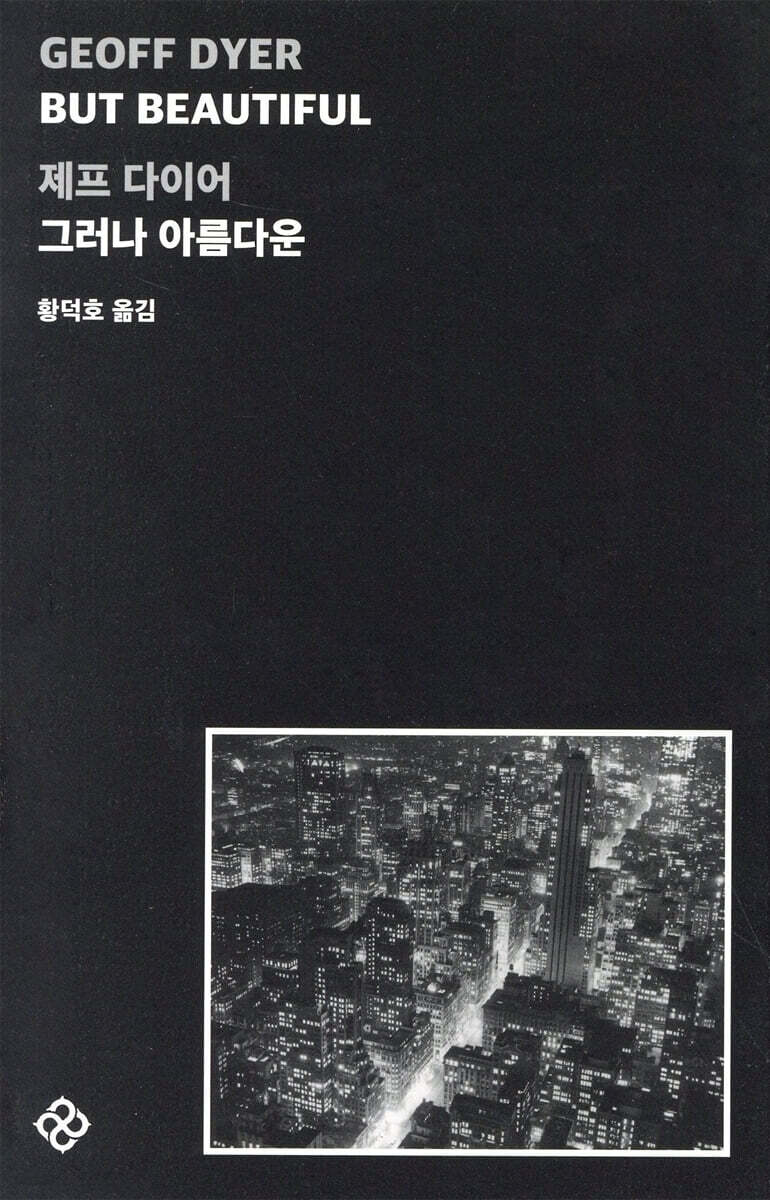
“I simply could not help but translate this book.” _ Haruki Murakami This book is one of Jeff Dyer's representative works and is a collection of imaginative critiques of jazz musicians. The lives of jazz musicians who represented the 1940s and 1950s, including Thelonious Monk, Bud Powell, Charles Mingus, Chet Baker, and Duke Ellington, are reinterpreted in a new way, crossing between reality and fiction. These stories sometimes read like biographies, sometimes like essays or novels. As the saying goes, “Jeff Dyer is a genre,” Dyer created his own genre of written music. Through the author's writing, readers delve deep into the life of a jazz musician as he navigates a turbulent moment in his life. And there, familiar yet unfamiliar jazz melodies begin to be heard. Jazz critic Hwang Deok-ho faithfully translated this work, which won the Somerset Maugham Medal, a leading British literary award, into Korean. |
- You can preview some of the book's contents.
Preview
index
introduction
About the photo
But beautiful
Reviews: Tradition, Influence, and Innovation
Acknowledgements
main
References
Recommended albums
About the photo
But beautiful
Reviews: Tradition, Influence, and Innovation
Acknowledgements
main
References
Recommended albums
Detailed image
.jpg)
Into the book
Is it true that you were just drunk when the police surrounding you were just looking for an excuse to smash your delicate head?
You were screaming and begging at the same time, tears streaming down your nostrils, and you felt that the situation was spiraling out of control.
As we walk, as we take brisk strides, a hand suddenly approaches us, grabs our arm, and pushes us into the middle of something that is always happening.
Some events in life are like that.
It just so happened that they were waiting for us to arrive.
I was waiting patiently, like a sudden rain shower.
--- p.108
The rattling of the train and the whistle continued to enter his music.
Especially in Louisiana, the blues sung by firefighters with the sound of train whistles in the background was as sticky and captivating as a woman's song at night.
The railroad runs through his work just as it runs through the history of African-Americans.
Black people built the railroads, worked on the railroads, traveled on the railroads, and ultimately, like Duke, composed music on the railroads.
It was a tradition he inherited.
--- p.132
The idea of contributing to music, of dedicating something to it, led me to discover my own sound, whether it was the trumpet, the piano, or whatever.
The friends who came after felt they had to take responsibility for the future of music.
They felt they had to do something about the changes that would occur over the next ten years.
Until six months later someone comes along and changes everything again.
Every note they played was filled with agony, and whatever they did with the trumpet, it sought a new sound that, if not a shrill scream, would strangle them.
Music had become so complex that you had to go to three or four years of school before you could even hope to play anything.
But jazz wasn't that difficult for Ben.
Jazz wasn't something to be wrestled with, it was something to be reconstructed in one's own image.
Jazz was just playing your saxophone.
--- p.155
But then, for a moment, he stumbles.
Forgetting what you're playing, you grab the eighth or ninth railing of the count.
Then he calls everything together and rises to the highest note.
Eventually, we reach that note, very precisely.
It flies cleanly.
At the very top of the leap, before gravity kicks in again, there comes a moment of perfect weightlessness, a moment of brilliance, clarity, and tranquility.
Then it falls again.
Drawing beautiful curves.
As it fades into the deep sighs of the blues.
The prisoners realize what the performance has been all about.
Dream of falling.
--- p.259
People who live among alcohol, drugs, discrimination, tiring journeys, and wasted time are bound to have somewhat lower expectations from life than those who live a more peaceful life.
But if this is the damage done to jazz musicians, we cannot help but wonder what their lives would have been like if the terrible toll had not been exacted from the people who created jazz.
You were screaming and begging at the same time, tears streaming down your nostrils, and you felt that the situation was spiraling out of control.
As we walk, as we take brisk strides, a hand suddenly approaches us, grabs our arm, and pushes us into the middle of something that is always happening.
Some events in life are like that.
It just so happened that they were waiting for us to arrive.
I was waiting patiently, like a sudden rain shower.
--- p.108
The rattling of the train and the whistle continued to enter his music.
Especially in Louisiana, the blues sung by firefighters with the sound of train whistles in the background was as sticky and captivating as a woman's song at night.
The railroad runs through his work just as it runs through the history of African-Americans.
Black people built the railroads, worked on the railroads, traveled on the railroads, and ultimately, like Duke, composed music on the railroads.
It was a tradition he inherited.
--- p.132
The idea of contributing to music, of dedicating something to it, led me to discover my own sound, whether it was the trumpet, the piano, or whatever.
The friends who came after felt they had to take responsibility for the future of music.
They felt they had to do something about the changes that would occur over the next ten years.
Until six months later someone comes along and changes everything again.
Every note they played was filled with agony, and whatever they did with the trumpet, it sought a new sound that, if not a shrill scream, would strangle them.
Music had become so complex that you had to go to three or four years of school before you could even hope to play anything.
But jazz wasn't that difficult for Ben.
Jazz wasn't something to be wrestled with, it was something to be reconstructed in one's own image.
Jazz was just playing your saxophone.
--- p.155
But then, for a moment, he stumbles.
Forgetting what you're playing, you grab the eighth or ninth railing of the count.
Then he calls everything together and rises to the highest note.
Eventually, we reach that note, very precisely.
It flies cleanly.
At the very top of the leap, before gravity kicks in again, there comes a moment of perfect weightlessness, a moment of brilliance, clarity, and tranquility.
Then it falls again.
Drawing beautiful curves.
As it fades into the deep sighs of the blues.
The prisoners realize what the performance has been all about.
Dream of falling.
--- p.259
People who live among alcohol, drugs, discrimination, tiring journeys, and wasted time are bound to have somewhat lower expectations from life than those who live a more peaceful life.
But if this is the damage done to jazz musicians, we cannot help but wonder what their lives would have been like if the terrible toll had not been exacted from the people who created jazz.
--- p.289
Publisher's Review
Winner of the Somerset Maugham Award, Britain's leading literary award
The life of a jazz musician, born anew through the combination of reality and fiction.
Lester Young slowly dying in his hotel room, Thelonious Monk getting his hands slapped by a cop while he's holding onto the steering wheel, Charles Mingus venting his anger on a battered bicycle through the streets of New York… … .
Jeff Dyer reconstructs the life of a struggling jazz musician through a series of anecdotes, drawing on the way he listened to music.
The main characters are representative musicians who led jazz in the 1940s and 1950s, such as Lester Young, Thelonious Monk, Bud Powell, Charles Mingus, Ben Webster, Chet Baker, Art Pepper, and Duke Ellington.
It captures moments of self-destruction, sadness and loneliness, anxiety and emptiness, and downfall that emerge from alcohol, drugs, discrimination, and the arduous journey.
At that moment, jazz is born.
The anecdotes in this book are both real events and fiction created by the author.
Geoff Dyer describes his writing, which combines nonfiction and fiction, as "imaginative criticism."
Scenes in the book are based on well-known or legendary stories.
A representative example is the story of Chet Baker having all his teeth knocked out.
Such well-known repertoires are what jazz calls "standards," where the artist briefly mentions established facts and then improvises around them, sometimes creating his own version that completely departs from the facts.
Scenes that retain the formal privilege of improvisation appear like completely new 'original compositions'.
Jeff Dyer's unique way of inviting readers into the world of jazz.
The author does not present a chronological history of jazz or suggest methods of appreciation.
Instead, it invites readers into the world of jazz by describing, based on facts, what kind of lives jazz musicians lived and what style of music they created and played, along with some imagination.
Jeff Dyer didn't specify exactly what he was referring to when he included what someone actually said in the book.
Jazz musicians often quote other musicians in their solos.
Whether or not the listener notices the quotation depends on his or her musical knowledge.
Likewise, the events that appear in 『But Beautiful』 are things that have been changed beyond what was created or quoted, and they show not the musician's actual appearance, but the author's view.
For example, rather than depicting musicians solely through their work, the author portrays the lives of jazz musicians by projecting them onto the moment they first heard the music.
Therefore, it is entirely up to the reader to perceive the 'atmosphere' of jazz that this book presents.
There is no right answer or set answer here.
Just like jazz itself.
The story of Bud Powell, who suffered a nervous breakdown due to drug addiction, flows through his consciousness in a dreamlike hazy manner, while the story of Charles Mingus, who expresses his anger with his heavy body, changes scenes rhythmically.
Duke Ellington's story of spending countless hours on the road while touring is as free and romantic as his wanderings.
The sad and strange moment of craving drugs, being confined to mental hospitals and prisons, and ultimately being unable to even think of a life outside of music, is finally brought to life in Dyer's writing, and jazz begins to play in the still photographs.
Beautiful sentences embroidered by non-experts,
Music told through words
In this book, "But Beautiful," which begins with a tribute to John Berger, the author ironically states that not being able to play an instrument is actually a condition for being able to write, showing how a non-expert can embroider beautiful sentences among experts.
Just as John Berger describes scenes in words in greater detail than photographs in his book, Geoff Dyer presents music through words in this book.
With this, he once again proves that “Jeff Dyer is a genre.”
With this work, he won the Somerset Maugham Medal, a literary award representing the UK, and joined the ranks of world-renowned writers. He still enjoys a solid reputation as a writer beloved by writers such as Haruki Murakami and Alain de Botton.
This book was first introduced in Korea in 2013, but the regret over the translation followed it like a shadow.
Along with Jeff Dyer's photo critique collection, Moments of Duration, and the author's new work, Sea/Saw, which is being introduced in Korea for the first time, Eulyoo Publishing presents one of Jeff Dyer's anthologies, but beautiful, which has been translated by jazz critic Hwang Deok-ho to enhance its completeness.
“The best jazz photographs are full of the sounds of the people in them,” says Dyer.
For example, in Carol Leaf's photograph of Chet Baker on stage at Birdland, we hear not only the performer's voice within the frame of the small stage, but also the chatter and clinking of glasses that fill the nightclub.
"But Beautiful" is also filled with the voices of the protagonist in the text.
In the anecdotes of each musician, including Duke Ellington, Lester Young, and Art Pepper, the reader is not merely observed by the author, but is deeply immersed in their lives.
There, we hear the familiar commotion of life that is likely to be around us.
The life of a jazz musician, born anew through the combination of reality and fiction.
Lester Young slowly dying in his hotel room, Thelonious Monk getting his hands slapped by a cop while he's holding onto the steering wheel, Charles Mingus venting his anger on a battered bicycle through the streets of New York… … .
Jeff Dyer reconstructs the life of a struggling jazz musician through a series of anecdotes, drawing on the way he listened to music.
The main characters are representative musicians who led jazz in the 1940s and 1950s, such as Lester Young, Thelonious Monk, Bud Powell, Charles Mingus, Ben Webster, Chet Baker, Art Pepper, and Duke Ellington.
It captures moments of self-destruction, sadness and loneliness, anxiety and emptiness, and downfall that emerge from alcohol, drugs, discrimination, and the arduous journey.
At that moment, jazz is born.
The anecdotes in this book are both real events and fiction created by the author.
Geoff Dyer describes his writing, which combines nonfiction and fiction, as "imaginative criticism."
Scenes in the book are based on well-known or legendary stories.
A representative example is the story of Chet Baker having all his teeth knocked out.
Such well-known repertoires are what jazz calls "standards," where the artist briefly mentions established facts and then improvises around them, sometimes creating his own version that completely departs from the facts.
Scenes that retain the formal privilege of improvisation appear like completely new 'original compositions'.
Jeff Dyer's unique way of inviting readers into the world of jazz.
The author does not present a chronological history of jazz or suggest methods of appreciation.
Instead, it invites readers into the world of jazz by describing, based on facts, what kind of lives jazz musicians lived and what style of music they created and played, along with some imagination.
Jeff Dyer didn't specify exactly what he was referring to when he included what someone actually said in the book.
Jazz musicians often quote other musicians in their solos.
Whether or not the listener notices the quotation depends on his or her musical knowledge.
Likewise, the events that appear in 『But Beautiful』 are things that have been changed beyond what was created or quoted, and they show not the musician's actual appearance, but the author's view.
For example, rather than depicting musicians solely through their work, the author portrays the lives of jazz musicians by projecting them onto the moment they first heard the music.
Therefore, it is entirely up to the reader to perceive the 'atmosphere' of jazz that this book presents.
There is no right answer or set answer here.
Just like jazz itself.
The story of Bud Powell, who suffered a nervous breakdown due to drug addiction, flows through his consciousness in a dreamlike hazy manner, while the story of Charles Mingus, who expresses his anger with his heavy body, changes scenes rhythmically.
Duke Ellington's story of spending countless hours on the road while touring is as free and romantic as his wanderings.
The sad and strange moment of craving drugs, being confined to mental hospitals and prisons, and ultimately being unable to even think of a life outside of music, is finally brought to life in Dyer's writing, and jazz begins to play in the still photographs.
Beautiful sentences embroidered by non-experts,
Music told through words
In this book, "But Beautiful," which begins with a tribute to John Berger, the author ironically states that not being able to play an instrument is actually a condition for being able to write, showing how a non-expert can embroider beautiful sentences among experts.
Just as John Berger describes scenes in words in greater detail than photographs in his book, Geoff Dyer presents music through words in this book.
With this, he once again proves that “Jeff Dyer is a genre.”
With this work, he won the Somerset Maugham Medal, a literary award representing the UK, and joined the ranks of world-renowned writers. He still enjoys a solid reputation as a writer beloved by writers such as Haruki Murakami and Alain de Botton.
This book was first introduced in Korea in 2013, but the regret over the translation followed it like a shadow.
Along with Jeff Dyer's photo critique collection, Moments of Duration, and the author's new work, Sea/Saw, which is being introduced in Korea for the first time, Eulyoo Publishing presents one of Jeff Dyer's anthologies, but beautiful, which has been translated by jazz critic Hwang Deok-ho to enhance its completeness.
“The best jazz photographs are full of the sounds of the people in them,” says Dyer.
For example, in Carol Leaf's photograph of Chet Baker on stage at Birdland, we hear not only the performer's voice within the frame of the small stage, but also the chatter and clinking of glasses that fill the nightclub.
"But Beautiful" is also filled with the voices of the protagonist in the text.
In the anecdotes of each musician, including Duke Ellington, Lester Young, and Art Pepper, the reader is not merely observed by the author, but is deeply immersed in their lives.
There, we hear the familiar commotion of life that is likely to be around us.
GOODS SPECIFICS
- Date of issue: March 5, 2022
- Page count, weight, size: 336 pages | 384g | 130*200*25mm
- ISBN13: 9788932474618
- ISBN10: 8932474613
You may also like
카테고리
korean


korean

![GQ KOREA Mark (Monthly): December [2025]](http://librairie.coreenne.fr/cdn/shop/files/8ef265dbbfbf186523ed75ba7319009d.jpg?v=1765340328&width=3840)


