

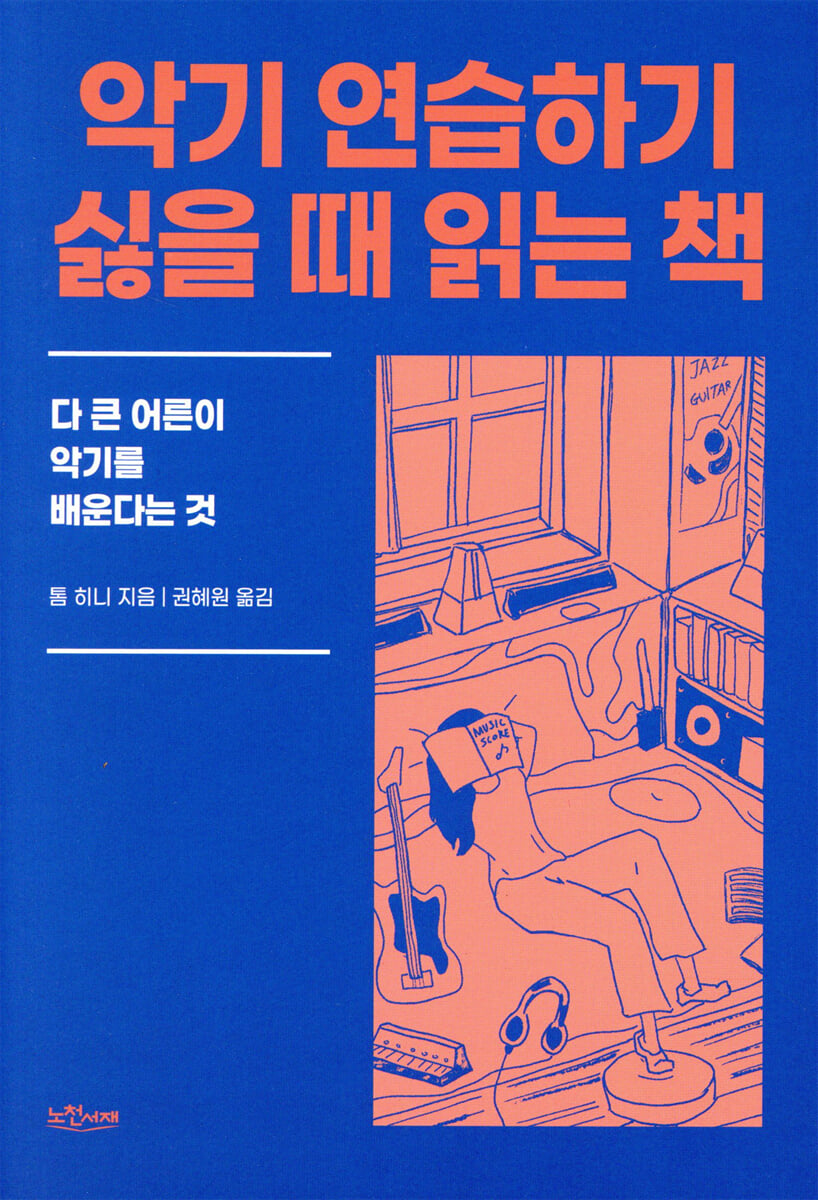
A book to read when you don't feel like practicing an instrument
 |
Description
Book Introduction
When you know the joy of practice, life becomes music.
People who know how to play an instrument look different.
When you see a friend who only studied playing bass in a band, when your boss who always seemed like an old fart says he's been playing piano as a hobby for a long time, when a contestant who only sang on a singer audition show comes out with a guitar, they don't seem the same as before.
Some people are drawn to the power of instruments, which can even act as attractive transformation tools, and they find the courage to take on the challenge of learning an instrument.
But even if you bravely approach the instrument, you soon find yourself stopping, panicking, and thinking about various things.
This is the moment when you face the huge mountain called practice.
In fact, everyone knows that practice is important when learning something.
So, does knowing the importance of practicing a musical instrument mean everyone will be willing to practice? Of course not.
Whether you learn on your own or take lessons, it's really difficult to get to a certain level through enough practice.
It's not just children who hate practicing who learn at the urging or pressure of their parents.
Even adults who started learning on their own without being told to do so eventually reach a point where they start to feel less inclined to practice.
They started out because it seemed cool, but they got frustrated with themselves for only making sounds that weren't cool at all, and then they started to come up with ridiculous excuses to not practice, saying that schoolwork, work, etc. were the priority.
And then, before you know it, you move away from the instrument.
How can we practice without becoming so detached from our instruments? How can we overcome frustration and annoyance and become more musical? Are there any tips that can be applied to both beginners who are just learning an instrument, and those who already know how to play but want to take it to the next level? Will better days come if we keep going even when our passion wanes? "Reading When You Don't Want to Practice" offers refreshing answers to these questions.
This book is a 'Guide to Enjoying Practice' written by a musician who has been active as a guitarist and songwriter.
In this book, which sometimes deals with the technical aspects of practicing an instrument and sometimes with the philosophical aspects of the act of practicing, the author discusses why one should focus on movement rather than music, the art of strategic repetition, how to understand with one's hands rather than one's head, and the mindset necessary for those who take up an instrument as an adult.
This presents an interesting way to develop the mindset and habits necessary for practice, not just playing, and to move beyond learning music to enjoying it.
The author's writing naturally reminds us that practicing an instrument can be just as enjoyable, and will help us discover how to incorporate it into our lives without becoming bored.
So, it will help you enjoy life more and endure more, not just practice.
People who know how to play an instrument look different.
When you see a friend who only studied playing bass in a band, when your boss who always seemed like an old fart says he's been playing piano as a hobby for a long time, when a contestant who only sang on a singer audition show comes out with a guitar, they don't seem the same as before.
Some people are drawn to the power of instruments, which can even act as attractive transformation tools, and they find the courage to take on the challenge of learning an instrument.
But even if you bravely approach the instrument, you soon find yourself stopping, panicking, and thinking about various things.
This is the moment when you face the huge mountain called practice.
In fact, everyone knows that practice is important when learning something.
So, does knowing the importance of practicing a musical instrument mean everyone will be willing to practice? Of course not.
Whether you learn on your own or take lessons, it's really difficult to get to a certain level through enough practice.
It's not just children who hate practicing who learn at the urging or pressure of their parents.
Even adults who started learning on their own without being told to do so eventually reach a point where they start to feel less inclined to practice.
They started out because it seemed cool, but they got frustrated with themselves for only making sounds that weren't cool at all, and then they started to come up with ridiculous excuses to not practice, saying that schoolwork, work, etc. were the priority.
And then, before you know it, you move away from the instrument.
How can we practice without becoming so detached from our instruments? How can we overcome frustration and annoyance and become more musical? Are there any tips that can be applied to both beginners who are just learning an instrument, and those who already know how to play but want to take it to the next level? Will better days come if we keep going even when our passion wanes? "Reading When You Don't Want to Practice" offers refreshing answers to these questions.
This book is a 'Guide to Enjoying Practice' written by a musician who has been active as a guitarist and songwriter.
In this book, which sometimes deals with the technical aspects of practicing an instrument and sometimes with the philosophical aspects of the act of practicing, the author discusses why one should focus on movement rather than music, the art of strategic repetition, how to understand with one's hands rather than one's head, and the mindset necessary for those who take up an instrument as an adult.
This presents an interesting way to develop the mindset and habits necessary for practice, not just playing, and to move beyond learning music to enjoying it.
The author's writing naturally reminds us that practicing an instrument can be just as enjoyable, and will help us discover how to incorporate it into our lives without becoming bored.
So, it will help you enjoy life more and endure more, not just practice.
- You can preview some of the book's contents.
Preview
index
Introduction
From someone who learns an instrument to someone who makes a living practicing an instrument
Chapter 1.
The mindset needed for non-boring practice
If you can't enjoy it, you have to change it until you can enjoy it.
ㆍPracticing an instrument itself is meaningful.
ㆍIf you practice movement, the music will follow.
ㆍPractice is different from performance.
If your hands don't know, you don't know.
ㆍIf you focus on one thing, everything changes.
ㆍDon't worry about the difficult parts
ㆍAdapt your hands and ears to perfection
Chapter 2.
Habits that help you sound better
ㆍAlways keep your body comfortable
ㆍApproach honestly
ㆍThink optimistically
ㆍHang on persistently
ㆍContinue
ㆍSlow down
ㆍCreating musical sounds
Chapter 3.
Even practice requires weapons.
How to use a metronome properly
Things to remember to adapt to the beat
ㆍStrategic repetition called looping
ㆍHow should I cut it?
The trap of 'from beginning to end'
Chapter 4.
Even musicians have plans
ㆍPractice plans change practice.
ㆍThings that should be included in the task list
ㆍBetween learning and practice
ㆍTo move things on paper by hand
Chapter 5.
For me, who doesn't have time to practice
ㆍOvercome the mountains of time and concentration
ㆍWhen taking lessons or learning on your own
ㆍDuring practice time, practice first
Chapter 6.
Adults learning to play an instrument
ㆍThere is no rule that says you have to practice an instrument while you are alive.
ㆍCan you live your whole life practicing?
ㆍPerforming or joining a band
From someone who learns an instrument to someone who makes a living practicing an instrument
Chapter 1.
The mindset needed for non-boring practice
If you can't enjoy it, you have to change it until you can enjoy it.
ㆍPracticing an instrument itself is meaningful.
ㆍIf you practice movement, the music will follow.
ㆍPractice is different from performance.
If your hands don't know, you don't know.
ㆍIf you focus on one thing, everything changes.
ㆍDon't worry about the difficult parts
ㆍAdapt your hands and ears to perfection
Chapter 2.
Habits that help you sound better
ㆍAlways keep your body comfortable
ㆍApproach honestly
ㆍThink optimistically
ㆍHang on persistently
ㆍContinue
ㆍSlow down
ㆍCreating musical sounds
Chapter 3.
Even practice requires weapons.
How to use a metronome properly
Things to remember to adapt to the beat
ㆍStrategic repetition called looping
ㆍHow should I cut it?
The trap of 'from beginning to end'
Chapter 4.
Even musicians have plans
ㆍPractice plans change practice.
ㆍThings that should be included in the task list
ㆍBetween learning and practice
ㆍTo move things on paper by hand
Chapter 5.
For me, who doesn't have time to practice
ㆍOvercome the mountains of time and concentration
ㆍWhen taking lessons or learning on your own
ㆍDuring practice time, practice first
Chapter 6.
Adults learning to play an instrument
ㆍThere is no rule that says you have to practice an instrument while you are alive.
ㆍCan you live your whole life practicing?
ㆍPerforming or joining a band
Into the book
The joy of doing something skillfully with your hands
There is great joy in moving your hands.
Building model airplanes, knitting, cooking, building furniture, repairing cars, juggling, and card tricks are all good examples.
Let's take a closer look at people who do this.
They enjoy the feeling of doing something as much as the results they get after doing it.
The same goes for music.
--- p.27
Practice is not playing
Performing is an artistic and emotional activity.
When playing, the performer wants to be as conscious as possible.
I think it's better to think less and go with the flow.
Meanwhile, practice is an analytical activity.
Practice requires a completely different mental attitude.
A person who practices breaks down the object of practice into parts and studies them.
And pay attention to the song you are studying, the movement of your fingers, and the results you get from practicing.
When you practice, you should try to understand how all these pieces fit together.
And you have to think like a mechanic.
--- p.46
Music comes from movement
As our movements improve, we get better.
As you get better, all your hands, arms, legs, ears, etc. that move to the music will begin to work more smoothly and efficiently.
Once that happens, the scale will be smooth and efficient.
Arpeggios are also played smoothly and efficiently.
'Stairway to Heaven' is also played smoothly and efficiently.
--- p.60~61
Just because you sit down in front of an instrument doesn't mean you're practicing.
Most people give up practicing easily.
Or, instead of practicing the songs you can't play yet, just play the songs you already know.
Sometimes I just look at the movements while stumbling through a song.
Or you practice over and over again without even concentrating.
That's not practice.
It's wandering.
(syncopation)
People who lift weights know.
True progress happens when you keep going a little longer, after your body and mind tell you to stop because the weight is too much.
The same goes for practicing a musical instrument.
You have to be persistent.
--- p.90~91
Don't think about it, just wait for your body to react.
When you hear the metronome, you should be able to feel when it is about to make the next 'tick' sound.
When you intend to, your hands must be able to produce the sound accurately.
It is important to distinguish whether or not a sound was made on time and to apply that distinction to the next sound.
And you have to keep repeating this.
You have to do it in real time, without stopping, without thinking.
--- p.110
It becomes easier when you split it up and divide it.
As long as you're practicing a piece that doesn't significantly exceed your current playing ability, there are usually two reasons why a particular section may be difficult.
First, you are practicing at too fast a pace.
Second, I still don't understand it.
(Omitted) Both of these sections that are bothering us can be fixed through looping.
But playing the whole song over and over again won't fix anything.
--- p.130
Problems Adults Face When Practicing a Musical Instrument
Things are different when adults learn to play an instrument.
Because I am in a position where I have to try to balance my practice with my family and professional obligations.
So adults are left with a somewhat philosophical question:
ㆍHow much better will I be if I do this?
ㆍI will never earn a penny playing music.
But why am I doing this?
--- p.179
When you come out of the corner of the room, your enthusiasm changes.
To get a new mindset, it's also good to play with other people.
Actually, there is nothing better than this.
Let's think about it for a moment.
Is practicing shooting hoops alone more fun than playing basketball? Is talking into a recorder more fun than talking to someone? Is practicing dance steps more fun than dancing with someone?
Even when preparing for a solo performance, it's no exception, but when playing in a band with other people, you have to prepare.
When a performance comes up, decide what you want to play and what you can play.
It also makes me think about repertoire.
Playing with others is as stressful as playing in front of others.
It forces you to get out of the mindset of practicing and into the mindset of playing.
There is great joy in moving your hands.
Building model airplanes, knitting, cooking, building furniture, repairing cars, juggling, and card tricks are all good examples.
Let's take a closer look at people who do this.
They enjoy the feeling of doing something as much as the results they get after doing it.
The same goes for music.
--- p.27
Practice is not playing
Performing is an artistic and emotional activity.
When playing, the performer wants to be as conscious as possible.
I think it's better to think less and go with the flow.
Meanwhile, practice is an analytical activity.
Practice requires a completely different mental attitude.
A person who practices breaks down the object of practice into parts and studies them.
And pay attention to the song you are studying, the movement of your fingers, and the results you get from practicing.
When you practice, you should try to understand how all these pieces fit together.
And you have to think like a mechanic.
--- p.46
Music comes from movement
As our movements improve, we get better.
As you get better, all your hands, arms, legs, ears, etc. that move to the music will begin to work more smoothly and efficiently.
Once that happens, the scale will be smooth and efficient.
Arpeggios are also played smoothly and efficiently.
'Stairway to Heaven' is also played smoothly and efficiently.
--- p.60~61
Just because you sit down in front of an instrument doesn't mean you're practicing.
Most people give up practicing easily.
Or, instead of practicing the songs you can't play yet, just play the songs you already know.
Sometimes I just look at the movements while stumbling through a song.
Or you practice over and over again without even concentrating.
That's not practice.
It's wandering.
(syncopation)
People who lift weights know.
True progress happens when you keep going a little longer, after your body and mind tell you to stop because the weight is too much.
The same goes for practicing a musical instrument.
You have to be persistent.
--- p.90~91
Don't think about it, just wait for your body to react.
When you hear the metronome, you should be able to feel when it is about to make the next 'tick' sound.
When you intend to, your hands must be able to produce the sound accurately.
It is important to distinguish whether or not a sound was made on time and to apply that distinction to the next sound.
And you have to keep repeating this.
You have to do it in real time, without stopping, without thinking.
--- p.110
It becomes easier when you split it up and divide it.
As long as you're practicing a piece that doesn't significantly exceed your current playing ability, there are usually two reasons why a particular section may be difficult.
First, you are practicing at too fast a pace.
Second, I still don't understand it.
(Omitted) Both of these sections that are bothering us can be fixed through looping.
But playing the whole song over and over again won't fix anything.
--- p.130
Problems Adults Face When Practicing a Musical Instrument
Things are different when adults learn to play an instrument.
Because I am in a position where I have to try to balance my practice with my family and professional obligations.
So adults are left with a somewhat philosophical question:
ㆍHow much better will I be if I do this?
ㆍI will never earn a penny playing music.
But why am I doing this?
--- p.179
When you come out of the corner of the room, your enthusiasm changes.
To get a new mindset, it's also good to play with other people.
Actually, there is nothing better than this.
Let's think about it for a moment.
Is practicing shooting hoops alone more fun than playing basketball? Is talking into a recorder more fun than talking to someone? Is practicing dance steps more fun than dancing with someone?
Even when preparing for a solo performance, it's no exception, but when playing in a band with other people, you have to prepare.
When a performance comes up, decide what you want to play and what you can play.
It also makes me think about repertoire.
Playing with others is as stressful as playing in front of others.
It forces you to get out of the mindset of practicing and into the mindset of playing.
--- p.188~189
Publisher's Review
My dream is to play my favorite songs on an instrument.
Why didn't it come true?
- Playing and practicing are different.
- Practicing an instrument isn't inherently boring.
- Stop thinking, 'Why am I doing this at this age?'
- There's no need to make excuses about not having talent for music or not having time to practice.
- At some point, get out of your corner and be with other people!
The author, a guitarist and songwriter, shares his story of practicing instruments for life.
You should focus on movement rather than music.
If what we should be doing is practicing an instrument, not appreciating music.
Wanting to become a person who plays an instrument means wanting to become a more 'musical' person.
I want to go beyond just listening to music and create music, I want to let others hear the sounds I make with my own hands, and I want to be someone who sings with an instrument as an accompaniment, rather than someone who only sings when they have a karaoke machine.
And the act that makes that feeling most real is not a lesson or a YouTube video.
It's practice.
But practice is different from playing.
The author of this book points out that while playing can be said to be an emotional and artistic act, practicing is closer to an analytical activity.
So, somewhat paradoxically, it tells those who want to become musicians and practice an instrument that they need to focus more on something other than music first.
First of all, if what we are doing is practicing an instrument rather than listening to music, we must focus on movement.
If you sit down or hold an instrument to practice, you will have to move certain body parts—your fingers, arms, feet, lips—before you can figure out which movements produce better sounds.
The author, who has been practicing and playing regularly for a long time, says in this book, “Practice is the act of finding and fully mastering the ideal movements necessary to play music.”
And while phrasing, style, and rhythm are all important, I can assure you that none of these can be salvaged when your fingers don't move the way you want them to.
In other words, if you practice the movements, the music will follow.
Practicing movement and focusing on the sensations in your body can also help you overcome boredom.
If you've ever experienced a moment when you got bored while practicing an instrument, think about it.
Would simply following the notes and musical symbols on the score and filling up practice time help you discover the joy of practice? Probably not.
However, if you focus on the movement, you will gradually acquire the 'taste of practice'.
This is because, unlike when you only focus on the song itself, you can pay attention to the subtle reactions of your body and adjust something.
When I hit a note wrong, I analyze it from various angles to see how my fingers moved and how my wrists and shoulders moved to improve the sound.
You will also diligently explore how to hold the pick, bow, or stick to make it feel better, and how to lift your foot off the pedal to make it sound better.
By following the advice in this book and engaging in active, analytical practice while becoming more aware of your own body, you will become more effectively immersed in the movement itself, reducing the chances of boredom.
In this way, the practice becomes more and more multi-layered and interesting.
Dorothy Taubman, a piano pedagogy expert, said:
“There’s something really sweet about the feeling of a movement being executed correctly.” Later, we’ll delve deeper into other reasons to focus on movement, but for now, let’s just say it’s about joy.
_From Chapter 1, “If you can’t enjoy it, you have to change it until you can enjoy it”
Adults taking on the challenge of learning a musical instrument,
How to not get tired on that difficult journey
As we live, there are days when our eyes are drawn to musical instruments.
There are those who gave up on playing an instrument after being forced to attend an academy when they were young, and those who wanted to learn from a young age but were unable to due to financial difficulties, but at some point as adults, they all think, "Should I give it a try?"
The same goes for people who know how to play an instrument to some extent.
Sometimes, I suddenly feel like taking out my instrument again after a long time and playing a song I've been enjoying lately.
At this time, those who know how to gather their souls and put their execution skills into practice look for academies or watch lecture videos to fuel their will.
But this courageous group soon split into two.
Practice is a mountain that can be overcome by those who maintain their enthusiasm and get closer to a more musical life, and those who cannot overcome that mountain and return to a life without an instrument.
The problem is that adult life is very hectic.
So, time for practice often takes a backseat to work, school, housework, caring for family, exercise, socializing, etc.
After spending a lot of time on your smartphone or television, it's fortunate that you don't finally think about your instrument.
Even those who learn an instrument as a hobby while working in a non-musical field, and even those with a career related to music, find it difficult to find ample time to practice in their daily lives.
The author also expresses it this way in the book.
“The world is not set up to allow us enough practice time.”
Besides being busy, there is another big obstacle.
The thing is, maintaining a passion for an instrument is never easy.
Children taking instrument lessons may have difficulty overcoming their reluctance to practice or being discouraged by the difficulty of the piece, but adults are different.
Unless they discover their extraordinary talents late in life, most adult beginners often feel embarrassed by their own stumbling along with even easy nursery rhymes.
Even if you practice, you will easily feel inferior because you will only be producing sounds that are completely different from the music you have always liked.
If you don't quickly overcome this experience, you're likely to fall into a fundamental sense of doubt, as follows:
'How much will I improve if I practice this now? I'm not even going to play for a living, so why should I learn this much? ... .'
For those who find the sound of their own instrument sounding pathetic and keep putting off practice time, this book offers meaningful encouragement and harsh criticism.
The author's candid writing about why difficult parts remain difficult, how to hear music differently, and the benefits of taking a break from your instrument will help reignite your waning enthusiasm.
The direct advice that practice should be our most important thing during the hour we decide to practice, whether it's 15 minutes or eight hours a day, is something that adults who make excuses about being busy should take to heart.
Meanwhile, for those who find it more difficult to overcome frustration than to make time for practice, the author's teaching that if you enjoy learning an instrument and that fact alone is enough, nothing else matters will serve as a useful frustration prevention measure.
As an adult, you can play golf and tennis.
You can also watch a soccer game.
That's good.
But singing? Playing in a band? Taking lessons? Then these questions might follow.
“Even at that age?”
It doesn't matter why such strange prejudices arise.
Actually, our answer is simple.
“What does it matter?” is the answer.
_In Chapter 6, “There is no rule that says you have to practice an instrument in life,”
How to use a metronome, looping techniques, how to create a practice plan, and more.
Practical Strategies for Creating a More Musical Sound
Many people think that the sound of musical instruments is simply beautiful.
Of course.
This is because I have only heard the sounds of people who are good at playing.
But anyone who practices an instrument knows.
Depending on who plays it, the instrument can produce anything from elegant sounds that you want to hear over and over again to bizarre noises that test your patience.
Practice is also the process of changing sounds you don't want to hear into sounds you find better to hear.
On that arduous and arduous journey, skill and technique are also important.
This book provides practical practice strategies that can be used by anyone, regardless of skill level, by covering in detail how to utilize looping, how to synchronize your body to the sound of a metronome, and what to keep in mind when creating a practice plan.
Among them, the explanation of looping is especially noteworthy for those who are sticking to incorrect practice methods.
The author describes looping as "the act of repeating a short section of a task over and over again, paying close attention to everything, with a specific task in mind."
And through this looping, that is, rather than blindly repeating the entire song or a long section, he reveals that by practicing cutting difficult parts short and repeating them slowly, you can create a better sound.
When practicing a favorite song, people usually want to go through the entire song.
Moreover, I want to follow the original song in terms of speed.
However, the author asserts that nothing can be fixed by simply practicing a song quickly from beginning to end.
Ultimately, if you are practicing to get a more pleasant sound, you should keep in mind 'playing correctly' rather than 'playing until the end', and looping is an essential method to play correctly.
In addition to the strategic repetition of looping, the author presents a variety of practical techniques that can be applied immediately.
While some talk about the benefits of visualizing yourself playing well, others suggest making plans to get out of the room and play in front of people or with others at some point.
These seemingly small but effective suggestions not only provide practical help in creating more musical sounds, but can even give you a new perspective on your practice.
This book, which talks about the difficulties faced by adults when taking on a musical instrument and how to overcome them, will surely add passion to some people's lives.
If you've decided to become an instrumentalist, if you've decided to try playing your favorite songs yourself, you need to dedicate yourself and persist, as this book advises.
There is no need to ask for encouragement from friends who ask if you are trying to learn an instrument at that age, or from acquaintances who only show interest in stocks, dating, childcare, or golf.
Just focus on the process of getting closer to a musical life.
Why didn't it come true?
- Playing and practicing are different.
- Practicing an instrument isn't inherently boring.
- Stop thinking, 'Why am I doing this at this age?'
- There's no need to make excuses about not having talent for music or not having time to practice.
- At some point, get out of your corner and be with other people!
The author, a guitarist and songwriter, shares his story of practicing instruments for life.
You should focus on movement rather than music.
If what we should be doing is practicing an instrument, not appreciating music.
Wanting to become a person who plays an instrument means wanting to become a more 'musical' person.
I want to go beyond just listening to music and create music, I want to let others hear the sounds I make with my own hands, and I want to be someone who sings with an instrument as an accompaniment, rather than someone who only sings when they have a karaoke machine.
And the act that makes that feeling most real is not a lesson or a YouTube video.
It's practice.
But practice is different from playing.
The author of this book points out that while playing can be said to be an emotional and artistic act, practicing is closer to an analytical activity.
So, somewhat paradoxically, it tells those who want to become musicians and practice an instrument that they need to focus more on something other than music first.
First of all, if what we are doing is practicing an instrument rather than listening to music, we must focus on movement.
If you sit down or hold an instrument to practice, you will have to move certain body parts—your fingers, arms, feet, lips—before you can figure out which movements produce better sounds.
The author, who has been practicing and playing regularly for a long time, says in this book, “Practice is the act of finding and fully mastering the ideal movements necessary to play music.”
And while phrasing, style, and rhythm are all important, I can assure you that none of these can be salvaged when your fingers don't move the way you want them to.
In other words, if you practice the movements, the music will follow.
Practicing movement and focusing on the sensations in your body can also help you overcome boredom.
If you've ever experienced a moment when you got bored while practicing an instrument, think about it.
Would simply following the notes and musical symbols on the score and filling up practice time help you discover the joy of practice? Probably not.
However, if you focus on the movement, you will gradually acquire the 'taste of practice'.
This is because, unlike when you only focus on the song itself, you can pay attention to the subtle reactions of your body and adjust something.
When I hit a note wrong, I analyze it from various angles to see how my fingers moved and how my wrists and shoulders moved to improve the sound.
You will also diligently explore how to hold the pick, bow, or stick to make it feel better, and how to lift your foot off the pedal to make it sound better.
By following the advice in this book and engaging in active, analytical practice while becoming more aware of your own body, you will become more effectively immersed in the movement itself, reducing the chances of boredom.
In this way, the practice becomes more and more multi-layered and interesting.
Dorothy Taubman, a piano pedagogy expert, said:
“There’s something really sweet about the feeling of a movement being executed correctly.” Later, we’ll delve deeper into other reasons to focus on movement, but for now, let’s just say it’s about joy.
_From Chapter 1, “If you can’t enjoy it, you have to change it until you can enjoy it”
Adults taking on the challenge of learning a musical instrument,
How to not get tired on that difficult journey
As we live, there are days when our eyes are drawn to musical instruments.
There are those who gave up on playing an instrument after being forced to attend an academy when they were young, and those who wanted to learn from a young age but were unable to due to financial difficulties, but at some point as adults, they all think, "Should I give it a try?"
The same goes for people who know how to play an instrument to some extent.
Sometimes, I suddenly feel like taking out my instrument again after a long time and playing a song I've been enjoying lately.
At this time, those who know how to gather their souls and put their execution skills into practice look for academies or watch lecture videos to fuel their will.
But this courageous group soon split into two.
Practice is a mountain that can be overcome by those who maintain their enthusiasm and get closer to a more musical life, and those who cannot overcome that mountain and return to a life without an instrument.
The problem is that adult life is very hectic.
So, time for practice often takes a backseat to work, school, housework, caring for family, exercise, socializing, etc.
After spending a lot of time on your smartphone or television, it's fortunate that you don't finally think about your instrument.
Even those who learn an instrument as a hobby while working in a non-musical field, and even those with a career related to music, find it difficult to find ample time to practice in their daily lives.
The author also expresses it this way in the book.
“The world is not set up to allow us enough practice time.”
Besides being busy, there is another big obstacle.
The thing is, maintaining a passion for an instrument is never easy.
Children taking instrument lessons may have difficulty overcoming their reluctance to practice or being discouraged by the difficulty of the piece, but adults are different.
Unless they discover their extraordinary talents late in life, most adult beginners often feel embarrassed by their own stumbling along with even easy nursery rhymes.
Even if you practice, you will easily feel inferior because you will only be producing sounds that are completely different from the music you have always liked.
If you don't quickly overcome this experience, you're likely to fall into a fundamental sense of doubt, as follows:
'How much will I improve if I practice this now? I'm not even going to play for a living, so why should I learn this much? ... .'
For those who find the sound of their own instrument sounding pathetic and keep putting off practice time, this book offers meaningful encouragement and harsh criticism.
The author's candid writing about why difficult parts remain difficult, how to hear music differently, and the benefits of taking a break from your instrument will help reignite your waning enthusiasm.
The direct advice that practice should be our most important thing during the hour we decide to practice, whether it's 15 minutes or eight hours a day, is something that adults who make excuses about being busy should take to heart.
Meanwhile, for those who find it more difficult to overcome frustration than to make time for practice, the author's teaching that if you enjoy learning an instrument and that fact alone is enough, nothing else matters will serve as a useful frustration prevention measure.
As an adult, you can play golf and tennis.
You can also watch a soccer game.
That's good.
But singing? Playing in a band? Taking lessons? Then these questions might follow.
“Even at that age?”
It doesn't matter why such strange prejudices arise.
Actually, our answer is simple.
“What does it matter?” is the answer.
_In Chapter 6, “There is no rule that says you have to practice an instrument in life,”
How to use a metronome, looping techniques, how to create a practice plan, and more.
Practical Strategies for Creating a More Musical Sound
Many people think that the sound of musical instruments is simply beautiful.
Of course.
This is because I have only heard the sounds of people who are good at playing.
But anyone who practices an instrument knows.
Depending on who plays it, the instrument can produce anything from elegant sounds that you want to hear over and over again to bizarre noises that test your patience.
Practice is also the process of changing sounds you don't want to hear into sounds you find better to hear.
On that arduous and arduous journey, skill and technique are also important.
This book provides practical practice strategies that can be used by anyone, regardless of skill level, by covering in detail how to utilize looping, how to synchronize your body to the sound of a metronome, and what to keep in mind when creating a practice plan.
Among them, the explanation of looping is especially noteworthy for those who are sticking to incorrect practice methods.
The author describes looping as "the act of repeating a short section of a task over and over again, paying close attention to everything, with a specific task in mind."
And through this looping, that is, rather than blindly repeating the entire song or a long section, he reveals that by practicing cutting difficult parts short and repeating them slowly, you can create a better sound.
When practicing a favorite song, people usually want to go through the entire song.
Moreover, I want to follow the original song in terms of speed.
However, the author asserts that nothing can be fixed by simply practicing a song quickly from beginning to end.
Ultimately, if you are practicing to get a more pleasant sound, you should keep in mind 'playing correctly' rather than 'playing until the end', and looping is an essential method to play correctly.
In addition to the strategic repetition of looping, the author presents a variety of practical techniques that can be applied immediately.
While some talk about the benefits of visualizing yourself playing well, others suggest making plans to get out of the room and play in front of people or with others at some point.
These seemingly small but effective suggestions not only provide practical help in creating more musical sounds, but can even give you a new perspective on your practice.
This book, which talks about the difficulties faced by adults when taking on a musical instrument and how to overcome them, will surely add passion to some people's lives.
If you've decided to become an instrumentalist, if you've decided to try playing your favorite songs yourself, you need to dedicate yourself and persist, as this book advises.
There is no need to ask for encouragement from friends who ask if you are trying to learn an instrument at that age, or from acquaintances who only show interest in stocks, dating, childcare, or golf.
Just focus on the process of getting closer to a musical life.
GOODS SPECIFICS
- Publication date: February 22, 2022
- Page count, weight, size: 192 pages | 128*188*18mm
- ISBN13: 9791197765308
- ISBN10: 1197765301
You may also like
카테고리
korean


korean

![GQ KOREA Mark (Monthly): December [2025]](http://librairie.coreenne.fr/cdn/shop/files/8ef265dbbfbf186523ed75ba7319009d.jpg?v=1765340328&width=3840)


