

Audio, Life, Design
 |
Description
Book Introduction
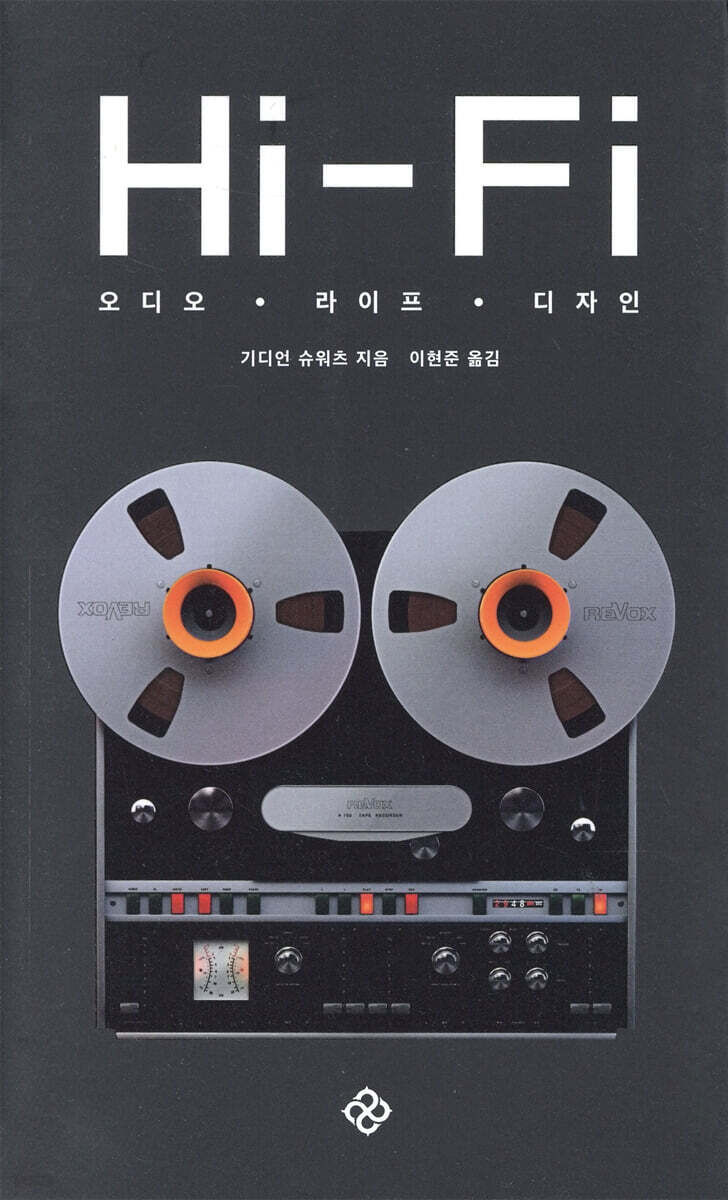
I wrote this book as a tribute to audio. The captivating design, the ecstasy of sound, and the designer's outstanding inspiration. I send you my endless praise. ─ Gideon Schwartz Author Gideon Schwartz left his successful law job to pursue his audio dreams and founded Audioarts, finally presenting the fruits of his years of experience and passion in a book. "Audio, Life, Design" is the story of audio from its beginnings to the present, as told by an audiophile. It is also an homage to innovators who overcame prejudice and limitations, from Edison, who invented the world's first audio, to Mark Levinson, who ushered in the era of high-end audio. It is also interesting to see the tastes of celebrities such as Frank Sinatra, Hugh Hefner, and Steve Jobs who enjoyed high-end audio life, and above all, it is full of illustrations that will be of interest not only to audiophiles but also to readers who love music and design. |
- You can preview some of the book's contents.
Preview
index
preface
Introduction
Chapter 1: Utopia in the Audio Industry
Chapter 2 Sensual Stereo
Chapter 3: The Birth of High-End Audio
Chapter 4: Audio Renaissance
Chapter 5: The Return of the Vacuum Tube
Chapter 6: The New Analog Revolution
Translator's Note
Americas
Photo source
Search
Introduction
Chapter 1: Utopia in the Audio Industry
Chapter 2 Sensual Stereo
Chapter 3: The Birth of High-End Audio
Chapter 4: Audio Renaissance
Chapter 5: The Return of the Vacuum Tube
Chapter 6: The New Analog Revolution
Translator's Note
Americas
Photo source
Search
Detailed image

Into the book
Meanwhile, Jobs' audio is no ordinary audio.
This equipment satisfies the most demanding audiophiles who want to enjoy music exactly as the artist intended.
This product is produced in extremely limited quantities and incorporates the best technology of its time.
This is the fruit of aspiration, Haifa.
Jobs' speakers are from Acoustat, a company based in Florida.
The company, which had been working on developing electrostatic units that produce sound through the action of electrostatic fields without woofers or tweeters, has now unveiled a remarkable technology that produces sound from a thin, invisible electrostatic panel without any moving parts.
At the time this old device was designed, it required enormous technology and resources.
--- p.7
The fundamental goal of any high-end audio system is the faithful reproduction of music.
The artist's intentions conveyed through the recording must be preserved as accurately and undistorted as possible.
This belief has become a solid audio philosophy.
Since then, countless audio design engineers have challenged themselves with more delicate and nuanced audio philosophies.
For them (and audiophiles), the goal of high-end audio is not just to faithfully reproduce the performance, but to recreate the music more affectionately, meticulously, and elegantly.
That is, the ideal process of embellishment is to add texture and fullness to the artist's original intention.
This often appears alien to artists and studio workers.
Audiophiles have long debated how this reproduction differs from faithful reproduction.
--- p.44
Designed by Arnold Wolf, who became the president of JBL in 1970, and inspired by Richard Ranger's design, the Paragon was the most expensive and luxurious speaker at the time.
The price in 1958 was $1,830.
In the 1960s, JBL claimed that it took 112 hours of handwork to complete this speaker.
Paragon was available in a choice of oak, walnut, mahogany, birch, teak, rosewood, ebony, or antique white finish.
During the 25 years of Paragon production, JBL maintained a dedicated production line for this product.
Having captured the tastes (and wallets) of audio design-conscious consumers, Paragon is today considered by audio professionals around the world as one of the most collectible audio products.
Even the art world was captivated.
The highlight of the exhibition “Living in a Modern Way: California Design, 1930–1965” at the Los Angeles County Museum of Art (LACMA) in 2011–2012 was undoubtedly the Paragon.
--- p.104
As we recall the circumstances of that era, it is time to go back to 1982 and meet again with Steve Jobs, the young founder of Apple.
The young man who, when taking photos for Time magazine, chose a high-end audio system as the only piece of furniture in his room.
Jobs' audio system consisted of Acoustic electrostatic speakers, a threshold amplifier, a Mitchell Engineering turntable, and a Denon tuner.
The audio system, carefully selected by Jobs, is a representative device of the American audio industry in the 1980s, and suggests the importance of music playback.
--- p.169
The revival of the vacuum tube was not simply a modern interpretation of the past.
After years of neglect, NOSNew Old Stock vacuum tubes have become in high demand, along with exotic and rare single-ended triode (SET) amplifiers, leading to a hoarding phenomenon.
The appeal of this product was not just its fragrance, but its rich sound.
Each vacuum tube has its own unique sound, leading listeners into a world of wide auditory interpretation and art.
However, these devices had one drawback: low output.
The enthusiasm for low-power vacuum tubes was not without its obstacles.
In the 1980s, low-efficiency speakers dominated the market, requiring powerful solid-state amplifiers.
These did not work well with low-power vacuum tubes.
The revival of vacuum tubes ultimately gave rise to a new horn speaker culture, and the combination of the two created a new heyday for high-end audio.
--- p.225
The revival of analog was achieved by vinyl manufacturers and artists harnessing the magic of analog recording, and it became a key element of crisis management in the high-end audio market.
Record Store Day, held annually, is a celebration of all things analog.
This was unimaginable in the 1990s, when CDs dominated.
With the recent decline of CDs and MP3 streaming becoming the dominant digital music format, the market is increasingly gravitating towards vinyl as a physical medium.
What is fueling the revival of analog is the sensory quality of analog and related devices (notably LPs) and the human desire for tangible art forms.
This equipment satisfies the most demanding audiophiles who want to enjoy music exactly as the artist intended.
This product is produced in extremely limited quantities and incorporates the best technology of its time.
This is the fruit of aspiration, Haifa.
Jobs' speakers are from Acoustat, a company based in Florida.
The company, which had been working on developing electrostatic units that produce sound through the action of electrostatic fields without woofers or tweeters, has now unveiled a remarkable technology that produces sound from a thin, invisible electrostatic panel without any moving parts.
At the time this old device was designed, it required enormous technology and resources.
--- p.7
The fundamental goal of any high-end audio system is the faithful reproduction of music.
The artist's intentions conveyed through the recording must be preserved as accurately and undistorted as possible.
This belief has become a solid audio philosophy.
Since then, countless audio design engineers have challenged themselves with more delicate and nuanced audio philosophies.
For them (and audiophiles), the goal of high-end audio is not just to faithfully reproduce the performance, but to recreate the music more affectionately, meticulously, and elegantly.
That is, the ideal process of embellishment is to add texture and fullness to the artist's original intention.
This often appears alien to artists and studio workers.
Audiophiles have long debated how this reproduction differs from faithful reproduction.
--- p.44
Designed by Arnold Wolf, who became the president of JBL in 1970, and inspired by Richard Ranger's design, the Paragon was the most expensive and luxurious speaker at the time.
The price in 1958 was $1,830.
In the 1960s, JBL claimed that it took 112 hours of handwork to complete this speaker.
Paragon was available in a choice of oak, walnut, mahogany, birch, teak, rosewood, ebony, or antique white finish.
During the 25 years of Paragon production, JBL maintained a dedicated production line for this product.
Having captured the tastes (and wallets) of audio design-conscious consumers, Paragon is today considered by audio professionals around the world as one of the most collectible audio products.
Even the art world was captivated.
The highlight of the exhibition “Living in a Modern Way: California Design, 1930–1965” at the Los Angeles County Museum of Art (LACMA) in 2011–2012 was undoubtedly the Paragon.
--- p.104
As we recall the circumstances of that era, it is time to go back to 1982 and meet again with Steve Jobs, the young founder of Apple.
The young man who, when taking photos for Time magazine, chose a high-end audio system as the only piece of furniture in his room.
Jobs' audio system consisted of Acoustic electrostatic speakers, a threshold amplifier, a Mitchell Engineering turntable, and a Denon tuner.
The audio system, carefully selected by Jobs, is a representative device of the American audio industry in the 1980s, and suggests the importance of music playback.
--- p.169
The revival of the vacuum tube was not simply a modern interpretation of the past.
After years of neglect, NOSNew Old Stock vacuum tubes have become in high demand, along with exotic and rare single-ended triode (SET) amplifiers, leading to a hoarding phenomenon.
The appeal of this product was not just its fragrance, but its rich sound.
Each vacuum tube has its own unique sound, leading listeners into a world of wide auditory interpretation and art.
However, these devices had one drawback: low output.
The enthusiasm for low-power vacuum tubes was not without its obstacles.
In the 1980s, low-efficiency speakers dominated the market, requiring powerful solid-state amplifiers.
These did not work well with low-power vacuum tubes.
The revival of vacuum tubes ultimately gave rise to a new horn speaker culture, and the combination of the two created a new heyday for high-end audio.
--- p.225
The revival of analog was achieved by vinyl manufacturers and artists harnessing the magic of analog recording, and it became a key element of crisis management in the high-end audio market.
Record Store Day, held annually, is a celebration of all things analog.
This was unimaginable in the 1990s, when CDs dominated.
With the recent decline of CDs and MP3 streaming becoming the dominant digital music format, the market is increasingly gravitating towards vinyl as a physical medium.
What is fueling the revival of analog is the sensory quality of analog and related devices (notably LPs) and the human desire for tangible art forms.
--- p.277
Publisher's Review
Analog Audio Life in the Pandemic Era
As the pandemic has increased the amount of time spent at home, turntables and LPs are regaining popularity not only among the generation that experienced LPs in the past, but also among the MZ generation that is leading the retro trend.
Articles reporting that online turntable sales increased by 30 percent and LP sales soared by over 70 percent last year clearly show the lives of people of all generations living in the pandemic era.
Even in the US, LPs reportedly outsold CDs in the first half of 2020.
Hobbies and consumption patterns that had previously been primarily directed outside have finally moved inside the home.
The consumer market, which had been shrinking for a while, is gradually moving toward the high end over time.
Many people are willing to open their wallets to enjoy high-end tastes such as interior design, designer furniture, and audio.
Listening to music through analog audio is no longer limited to a select few, but is becoming a culture that can be enjoyed by everyone.
In a world dominated by digital, people are turning to analog. Thanks to the popularity of LPs, albums by old-time singers are being re-released on vinyl, and it's becoming a trend for even today's artists to release albums on LP.
Limited editions frequently sell out and can fetch high prices on the secondhand market. For those who have purchased LPs, the next step is audio.
『AudioㆍLifeㆍDesign』 is a book that will satisfy anyone with analog tastes.
Audiophiles and those new to the world of audio will find the author's knowledgeable and friendly guidance satisfying, as he even quit his job as a lawyer to open an audio shop.
Readers looking for equipment that will reproduce their favorite music in excellent sound quality will find this book a great introduction to the various audio brands featured, including Braun, JBL, Marantz, FM Acoustics, and Goldmund.
Readers interested in design will thrill at the sight of speakers that stand tall like objects, amplifiers with champagne-colored metal finishes, and delicately designed vacuum tubes.
Audio is a collection of lights, buttons, and dials
From the Phonograph to Mark Levinson, the Art of Innovation: 145 Years
Author Gideon Schwartz begins by asking:
“Is audio simply a device that reproduces sound?” To answer this question, the person he summoned was none other than Steve Jobs.
As is well known, Steve Jobs amassed a fortune through Apple's successful IPO in 1980, and then developed his sense by purchasing the best luxury goods of the time, including George Nakashima, Porsche 911s, and BMW bikes.
The background of the iPhone's birth is not unrelated to this.
In 1982, a Time magazine reporter photographed Jobs at his home in California, where he was sitting on a wooden floor in a room filled with high-end audio equipment and records.
At the time, Jobs' audio was a product produced in extremely small quantities and contained the best technology of the time.
From its inception to the present, audio has been constantly innovating to faithfully reproduce the sound the artist intended.
Should we view these devices solely from a practical perspective, as devices that simply reproduce sound? The author argues:
“The audio is a medley of lights, buttons, and dials that work to convey Nina Simone’s mournful voice, Deadmau5’s intense electronic sounds, and Itzhak Perlman’s exquisite violin tone.”
Based on this awareness, Schwartz follows the footsteps of audio.
From the phonograph invented by Edison in 1877 to Emil Berliner, who improved upon it and laid the foundation for record distribution, Bell Laboratories, which developed the triode and transistor, and conductor Leopold Stokowski, who improved the sound quality of records, Dieter Rams of Braun, an icon of audio design, and Jakob Jensen of Bang & Olufsen, and founder James B.
JBL, which achieved great success after appointing industrial designer Arnold Wolff as CEO following Lansing's suicide, Bose, which boldly placed its units in all directions, and Mark Levinson, which ushered in the era of high-end audio.
This book meticulously documents audio innovators who overcame prejudice and limitations.
A great reference to awaken your artistic sense
『AudioㆍLifeㆍDesign』 is an excellent reference for audio and design.
The book is filled with photographs that cannot be found in Korea, including advertising posters from the 1800s, photos of Bang & Olufsen's early employees working in the company's first workshop in the early 20th century, photos of Frank Sinatra's mansion filled with audio systems and LPs covering the walls, and photos of Rudy van Gelder's studio in the 1950s. It also contains a wealth of photographs of amplifiers, tuners, cartridges, speakers, and turntables from various audio brands from the 1950s, which led to the utopia of the audio industry, to the present, when a new analog revolution is taking place.
Hyunjun Lee, CEO of Audio Magazine, who has been an audio critic for over 20 years, faithfully translated the emotions of the original book into Korean.
“What is fueling the revival of analog is the sensory quality of analog and its related devices (notably LPs) and the human desire for tangible art forms.” As author Schwartz says, we are ultimately beings who desire material properties that can be artistically sensed.
In the digital age, where many things are compressed and sometimes eliminated, hi-fi is a constant and ongoing pursuit that awakens our senses.
Recommendation
“A new era of audiophiles is coming.”
- The New York Times
“The sound of Hi-Fi is, without a doubt, a ‘something.’”
- Guardian
“The audio pursues luxury, but it is not empty, and it overflows with joy.
“It is a joy that can be enjoyed if you have two ears.”
- New Yorker
“This quick and easy read is filled with photos that will keep you entertained.”
- Stereophile
“Audio, Life, Design” will delight anyone who enjoys listening to music and is curious about how the equipment we use to listen has evolved.
-Amazon Reader
As the pandemic has increased the amount of time spent at home, turntables and LPs are regaining popularity not only among the generation that experienced LPs in the past, but also among the MZ generation that is leading the retro trend.
Articles reporting that online turntable sales increased by 30 percent and LP sales soared by over 70 percent last year clearly show the lives of people of all generations living in the pandemic era.
Even in the US, LPs reportedly outsold CDs in the first half of 2020.
Hobbies and consumption patterns that had previously been primarily directed outside have finally moved inside the home.
The consumer market, which had been shrinking for a while, is gradually moving toward the high end over time.
Many people are willing to open their wallets to enjoy high-end tastes such as interior design, designer furniture, and audio.
Listening to music through analog audio is no longer limited to a select few, but is becoming a culture that can be enjoyed by everyone.
In a world dominated by digital, people are turning to analog. Thanks to the popularity of LPs, albums by old-time singers are being re-released on vinyl, and it's becoming a trend for even today's artists to release albums on LP.
Limited editions frequently sell out and can fetch high prices on the secondhand market. For those who have purchased LPs, the next step is audio.
『AudioㆍLifeㆍDesign』 is a book that will satisfy anyone with analog tastes.
Audiophiles and those new to the world of audio will find the author's knowledgeable and friendly guidance satisfying, as he even quit his job as a lawyer to open an audio shop.
Readers looking for equipment that will reproduce their favorite music in excellent sound quality will find this book a great introduction to the various audio brands featured, including Braun, JBL, Marantz, FM Acoustics, and Goldmund.
Readers interested in design will thrill at the sight of speakers that stand tall like objects, amplifiers with champagne-colored metal finishes, and delicately designed vacuum tubes.
Audio is a collection of lights, buttons, and dials
From the Phonograph to Mark Levinson, the Art of Innovation: 145 Years
Author Gideon Schwartz begins by asking:
“Is audio simply a device that reproduces sound?” To answer this question, the person he summoned was none other than Steve Jobs.
As is well known, Steve Jobs amassed a fortune through Apple's successful IPO in 1980, and then developed his sense by purchasing the best luxury goods of the time, including George Nakashima, Porsche 911s, and BMW bikes.
The background of the iPhone's birth is not unrelated to this.
In 1982, a Time magazine reporter photographed Jobs at his home in California, where he was sitting on a wooden floor in a room filled with high-end audio equipment and records.
At the time, Jobs' audio was a product produced in extremely small quantities and contained the best technology of the time.
From its inception to the present, audio has been constantly innovating to faithfully reproduce the sound the artist intended.
Should we view these devices solely from a practical perspective, as devices that simply reproduce sound? The author argues:
“The audio is a medley of lights, buttons, and dials that work to convey Nina Simone’s mournful voice, Deadmau5’s intense electronic sounds, and Itzhak Perlman’s exquisite violin tone.”
Based on this awareness, Schwartz follows the footsteps of audio.
From the phonograph invented by Edison in 1877 to Emil Berliner, who improved upon it and laid the foundation for record distribution, Bell Laboratories, which developed the triode and transistor, and conductor Leopold Stokowski, who improved the sound quality of records, Dieter Rams of Braun, an icon of audio design, and Jakob Jensen of Bang & Olufsen, and founder James B.
JBL, which achieved great success after appointing industrial designer Arnold Wolff as CEO following Lansing's suicide, Bose, which boldly placed its units in all directions, and Mark Levinson, which ushered in the era of high-end audio.
This book meticulously documents audio innovators who overcame prejudice and limitations.
A great reference to awaken your artistic sense
『AudioㆍLifeㆍDesign』 is an excellent reference for audio and design.
The book is filled with photographs that cannot be found in Korea, including advertising posters from the 1800s, photos of Bang & Olufsen's early employees working in the company's first workshop in the early 20th century, photos of Frank Sinatra's mansion filled with audio systems and LPs covering the walls, and photos of Rudy van Gelder's studio in the 1950s. It also contains a wealth of photographs of amplifiers, tuners, cartridges, speakers, and turntables from various audio brands from the 1950s, which led to the utopia of the audio industry, to the present, when a new analog revolution is taking place.
Hyunjun Lee, CEO of Audio Magazine, who has been an audio critic for over 20 years, faithfully translated the emotions of the original book into Korean.
“What is fueling the revival of analog is the sensory quality of analog and its related devices (notably LPs) and the human desire for tangible art forms.” As author Schwartz says, we are ultimately beings who desire material properties that can be artistically sensed.
In the digital age, where many things are compressed and sometimes eliminated, hi-fi is a constant and ongoing pursuit that awakens our senses.
Recommendation
“A new era of audiophiles is coming.”
- The New York Times
“The sound of Hi-Fi is, without a doubt, a ‘something.’”
- Guardian
“The audio pursues luxury, but it is not empty, and it overflows with joy.
“It is a joy that can be enjoyed if you have two ears.”
- New Yorker
“This quick and easy read is filled with photos that will keep you entertained.”
- Stereophile
“Audio, Life, Design” will delight anyone who enjoys listening to music and is curious about how the equipment we use to listen has evolved.
-Amazon Reader
GOODS SPECIFICS
- Date of issue: February 1, 2022
- Page count, weight, size: 348 pages | 436g | 132*215*20mm
- ISBN13: 9788932474601
- ISBN10: 8932474605
You may also like
카테고리
korean


korean

![GQ KOREA Mark (Monthly): December [2025]](http://librairie.coreenne.fr/cdn/shop/files/8ef265dbbfbf186523ed75ba7319009d.jpg?v=1765340328&width=3840)


