

Poetry Travelogue 1
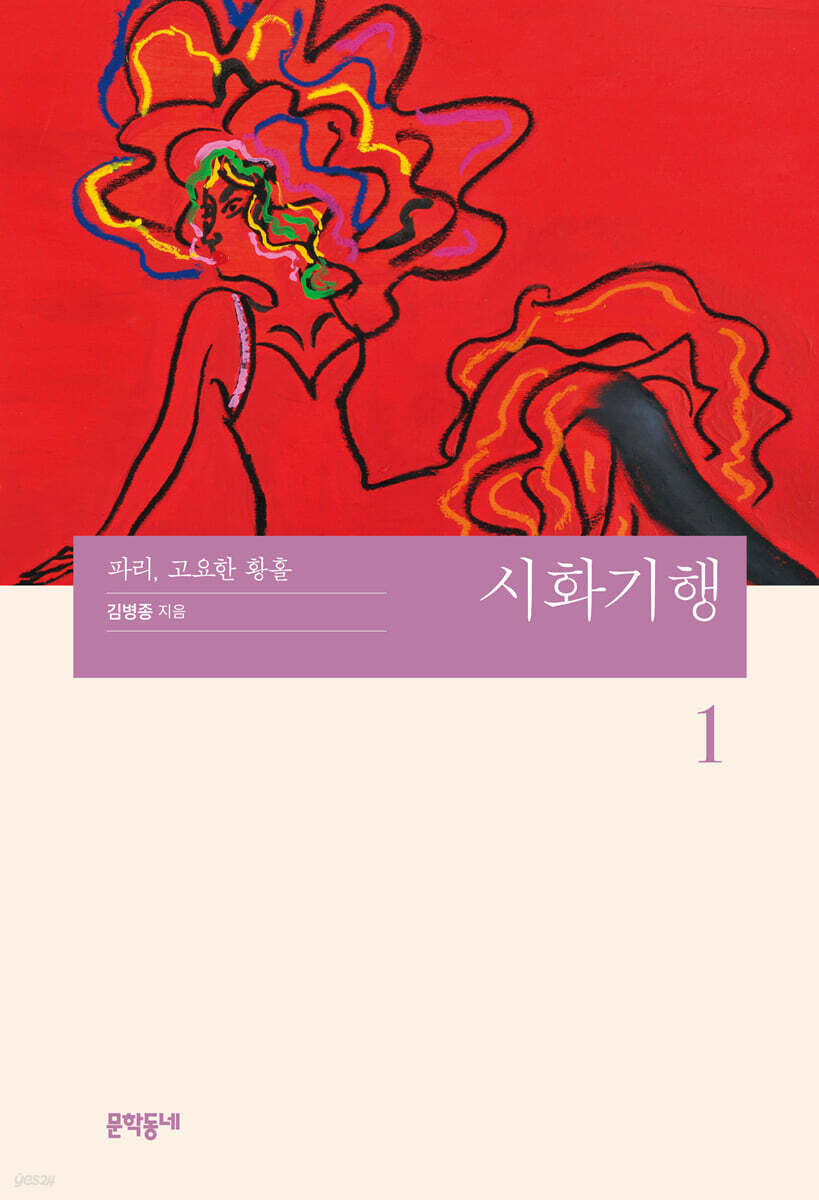 |
Description
Book Introduction
Seven years after 『Hwacheopgihaeng』,
Rediscover the essence of art travel, a fusion of poetry, calligraphy, and painting.
Approximately seven years after his art travelogue 『Hwacheopgihaeng』, which beautifully weaves together the humanities spirit and artistic soul, artist Kim Byeong-jong returns with 『Poetry and Painting Journey』.
While 『Hwacheopgihaeng』 unraveled the traces of domestic artists through words and pictures, 『Kim Byeong-jong's Poetry and Painting Journey』 begins a new journey by moving to places like Europe with the poems he has written so far.
Rather than simply examining the traces of artists, it also focuses on the cities where they developed their talents, conveying the organic relationship between space and artists through the delicate thoughts of artist Kim Byeong-jong.
Through the series 『Poetry and Painting Travels』, which will begin in Paris and then travel to Rome, New York, Dublin, and other locations, you will be able to enjoy the blessing of seeing not only the artist Kim Byeong-jong's all-round artistry, but also an artistic journey enriched by the harmony of poetry, calligraphy, and painting.
In 『Poetry Travelogue 1: Paris, Quiet Ecstasy』, we follow the footsteps of some 30 artists who developed their artistic skills in Paris, France, regardless of genre or era, including Rodin, Picasso, Lautrec, Balzac, Camus, Gustave Moreau, Edith Piaf, Robert Doisneau, and Saint-Exupéry.
Focusing on the Belle Epoque era, we piece together the trajectories of artists who have influenced each other in Paris from the past to the present, like a puzzle, and examine why Paris inevitably grew into a city of art.
As you stroll through Paris with artist Kim Byeong-jong, where figures who left their mark on the history of literature, philosophy, and art crossed borders and interacted, the city's soft lights become vivid and almost tangible.
For decades, people have pestered me with the same old, squeaky-squeaky words, telling me I should dig only one well, but I've come this far, embracing and rejecting neither the writings nor the pictures, which are like identical twins.
However, I used to write poetry alone without publishing it, and after repeating this process countless times, I also got a strange sense of pleasure from it.
It was much more secretive and thrilling than just announcing it in a shabby way and having it roll off my lips.
When the poems I wrote all night were torn out in the morning, I felt a sense of pleasure, like a maid in an old palace tearing silk.
Then, I started mixing poetry, painting, and travel together.
I hope that readers, through the window of my poetry and paintings, will be able to soothe the memories of a journey they have been unable to leave, or have already left.
Sometimes I hear the sound of the pages of life turning again, and I mutter to myself.
I am angry.
And he is a poet.
_In the introduction
Rediscover the essence of art travel, a fusion of poetry, calligraphy, and painting.
Approximately seven years after his art travelogue 『Hwacheopgihaeng』, which beautifully weaves together the humanities spirit and artistic soul, artist Kim Byeong-jong returns with 『Poetry and Painting Journey』.
While 『Hwacheopgihaeng』 unraveled the traces of domestic artists through words and pictures, 『Kim Byeong-jong's Poetry and Painting Journey』 begins a new journey by moving to places like Europe with the poems he has written so far.
Rather than simply examining the traces of artists, it also focuses on the cities where they developed their talents, conveying the organic relationship between space and artists through the delicate thoughts of artist Kim Byeong-jong.
Through the series 『Poetry and Painting Travels』, which will begin in Paris and then travel to Rome, New York, Dublin, and other locations, you will be able to enjoy the blessing of seeing not only the artist Kim Byeong-jong's all-round artistry, but also an artistic journey enriched by the harmony of poetry, calligraphy, and painting.
In 『Poetry Travelogue 1: Paris, Quiet Ecstasy』, we follow the footsteps of some 30 artists who developed their artistic skills in Paris, France, regardless of genre or era, including Rodin, Picasso, Lautrec, Balzac, Camus, Gustave Moreau, Edith Piaf, Robert Doisneau, and Saint-Exupéry.
Focusing on the Belle Epoque era, we piece together the trajectories of artists who have influenced each other in Paris from the past to the present, like a puzzle, and examine why Paris inevitably grew into a city of art.
As you stroll through Paris with artist Kim Byeong-jong, where figures who left their mark on the history of literature, philosophy, and art crossed borders and interacted, the city's soft lights become vivid and almost tangible.
For decades, people have pestered me with the same old, squeaky-squeaky words, telling me I should dig only one well, but I've come this far, embracing and rejecting neither the writings nor the pictures, which are like identical twins.
However, I used to write poetry alone without publishing it, and after repeating this process countless times, I also got a strange sense of pleasure from it.
It was much more secretive and thrilling than just announcing it in a shabby way and having it roll off my lips.
When the poems I wrote all night were torn out in the morning, I felt a sense of pleasure, like a maid in an old palace tearing silk.
Then, I started mixing poetry, painting, and travel together.
I hope that readers, through the window of my poetry and paintings, will be able to soothe the memories of a journey they have been unable to leave, or have already left.
Sometimes I hear the sound of the pages of life turning again, and I mutter to myself.
I am angry.
And he is a poet.
_In the introduction
- You can preview some of the book's contents.
Preview
index
Introducing the Seomun Poetry and Travelogue
Part 1: The City of Literature, Art, and Philosophy
Paris, the city that ages gracefully
The city of all 'fighters'
The wind blows, I must live
An art café in Montmartre, where flowers bloom only at night.
Part 2: Artists' Feast
The teacher is working today too
École des Beaux-Arts, the citadel of beauty
The Warrior of Fire, Picasso
Mirabeau Bridge, the distant side of life
A warm hand for the artist
Café La Rotonde and the Long-Necked Lady
Chagall, Writing Poetry with Color
Nabu in a Happy Bottle
Song, painful song
From Paris to Menton, the night sun
Café Les Deux Magots, a citadel of philosophy
Stealing a glimpse of the hand of God
Love, I cry
Sorry, I outlived Jesus by a year.
He who looks upon the mountain of mother or god
The Bois de Boulogne and Time Travel
A white sailboat in the forest
Part 3: The City of Light and Darkness
I can even hear breathing
Balzac, the Picasso of literature
The Wounded Notre Dame
Between Guernsey and the Boju Square
Shakespeare and Company, a citadel of ancient knowledge
There are no evil flowers, the fly of fallen angels
The Life of a Poet or a Vagabond
The Stranger on the Border, Albert Camus
The house where time returns, Buk Hotel
The clown who dreams forever
Do you still like Brahms?
Woodcuts of Time in the City
Worship of the moment
House of Light, or Village of Souls
Part 4: Flowers Blooming Outside Paris
A huge landscape, a small brush
A crooked apple
Happy Su-ryeon Mountain Lodge Owner
Drawing Happiness, Matisse Museum
House of Light, Wind, and Clouds
Love, I cry
The sky is my land
Part 1: The City of Literature, Art, and Philosophy
Paris, the city that ages gracefully
The city of all 'fighters'
The wind blows, I must live
An art café in Montmartre, where flowers bloom only at night.
Part 2: Artists' Feast
The teacher is working today too
École des Beaux-Arts, the citadel of beauty
The Warrior of Fire, Picasso
Mirabeau Bridge, the distant side of life
A warm hand for the artist
Café La Rotonde and the Long-Necked Lady
Chagall, Writing Poetry with Color
Nabu in a Happy Bottle
Song, painful song
From Paris to Menton, the night sun
Café Les Deux Magots, a citadel of philosophy
Stealing a glimpse of the hand of God
Love, I cry
Sorry, I outlived Jesus by a year.
He who looks upon the mountain of mother or god
The Bois de Boulogne and Time Travel
A white sailboat in the forest
Part 3: The City of Light and Darkness
I can even hear breathing
Balzac, the Picasso of literature
The Wounded Notre Dame
Between Guernsey and the Boju Square
Shakespeare and Company, a citadel of ancient knowledge
There are no evil flowers, the fly of fallen angels
The Life of a Poet or a Vagabond
The Stranger on the Border, Albert Camus
The house where time returns, Buk Hotel
The clown who dreams forever
Do you still like Brahms?
Woodcuts of Time in the City
Worship of the moment
House of Light, or Village of Souls
Part 4: Flowers Blooming Outside Paris
A huge landscape, a small brush
A crooked apple
Happy Su-ryeon Mountain Lodge Owner
Drawing Happiness, Matisse Museum
House of Light, Wind, and Clouds
Love, I cry
The sky is my land
Publisher's Review
Paris, a city like a crimson pomegranate
Meet the young artists who lived there
Following the flow of capital, the art market moved to New York, and with the emergence of modern art, the standards of beauty also changed rapidly.
But when it comes to art cities, Paris is still the first city that comes to mind for many people.
Paris, which still enjoys the glory of being the center of art history, including Impressionism, Fauvism, Realism, and Naturalism, holds the title of 'City of Beauty.'
Artist Kim Byeong-jong finds the secret in the exchanges between artists across genres.
Because Paris is not a large city, artists gathered in similar places, and thanks to its developed nightlife, it was possible to naturally exchange literature, art, and ideological discourse.
He reflects on his own artistic life of over 40 years as a painter and writer, counting the names of pioneers who silently walked the arduous path of beauty, connecting the lightness and melancholy, despair and loneliness of Paris, and despair and loneliness, as well as the flexibility of artists.
He recalls his teenage years when he was criticized here and there for holding his first solo exhibition at a welfare cafe in front of Namwon Station with paintings inspired by Françoise Sagan's "Goodbye to Sorrow." He also discovers a portrait of his childhood in the figure of novelist André Gide, who grew up under a strict Protestant single mother, and overlaps his own image of Gustave Moreau, a professor and painter at the École des Beaux-Arts, with that of himself, who taught students at Seoul National University's College of Fine Arts.
In addition, it commemorates the lives of artists who sublimated their wounds, tears, loneliness, and pain into art and then became nothing, such as Camille Claudel, who exchanged love and hate with Rodin; Cézanne, who returned to his hometown and eventually rose from failure; Lautrec, who was despised for having a disability in his lower body but became famous as a documentary painter at the Moulin Rouge; and Marcel Proust, who used art as an escape and left behind “In Search of Lost Time.”
When I go out at night in the city of Paris, I think of it as a crimson pomegranate.
Clean, light pink seeds visible within the blood-red shell.
When darkness falls, they all turn on their lights to create a luxurious time, but inside that splendid and sturdy exterior, there are fragile and lonely beings like pomegranate seeds gathered together.
All the 'artists' that people call artists... ...artists, writers, entertainers, and clowns.
In a corner of this splendid city, those who appear splendid on the outside but weep on the inside are gathered.
They seem to be creating language, colors, and musical scores for someone, but in reality, they are all just gestures of self-comfort.
It's just something I do because I'm lonely.
Page 23
Paris, a mecca for artists who are constantly evolving
Reading the changes of the times and art there
Artist Kim Byeong-jong, who claims to have been born with the temperament of a double horse, has traveled to countless cities both domestically and internationally.
But, “no matter how much I travel, I’m still hungry for Paris.
“Whenever I turn around, I miss that place again,” he confesses, still captivated by Paris.
Why Paris? First of all, it's easy to encounter the legacy of beauty left behind by artists in Paris.
Although it is only about one-sixth the size of Seoul, Paris is home to over 130 art galleries and museums, demonstrating its everyday connection with beauty.
Artist Kim Byung-jong visits museums such as the Rodin Museum and the Gustave Moreau Museum to observe the works and workspaces of artists, and to personally visit the locations depicted in the works, vividly connecting the past and present.
And in the process, he added the pleasure of reinterpreting works by Modigliani and Delacroix in his own style and comparing them with the originals.
『Poetry Travels』 also focuses on the spatiality of the city that numerous artists have passed through.
As we stroll through the Montmartre hills where countless artists have left their impressions on canvas, including Café La Rotonde, which is intertwined with the stories of Modigliani and Jeanne Hebuterne, Café Les Deux Magots where Sartre and Beauvoir built a fortress of ideas, the Stein Salon where artists of the Belle Époque gathered, the Mirabeau Bridge, which has become famous as a backdrop for art pieces, the Hotel de l'Orsay, and the Paris City Hall, we fondly recall the artistic spirit of artists who have passed away like a river.
He keeps up with the times by consistently releasing new works and putting his work up for auction at NFTs, but as an active artist, he also faces his own concerns.
Artist Kim Byeong-jong learns how to approach the twilight of his life in Paris.
He reveals that while he sought answers to the question of "how to teach" at the École des Beaux-Arts during his professorship, he now ponders "how to live as an artist." He also bids farewell to things that have disappeared first at Père Lachaise, which clearly demonstrates that "an artist's life continues even after death," and considers the path he will take one day.
Amazingly, in that darkest and most gloomy of times, a new bud of creation sprouted from a corner of the land of ruins and darkness.
A group of painters and sculptors flocked to this place.
The only reason they came in droves was because the rent was cheap.
No one in their right mind would have made a nest in that bloody and vibrating place of death.
Painter, sculptor.
They are generally a very strong race.
Didn't the fifteen-year-old boy who was excommunicated for strangely drawing a woman's face in a country teahouse in the old days eat cold rice mixed with rice in the morning, take a local train, get off at Seoul Station, and knock on the artist's door?
Picasso, who crossed the distant Pyrenees Mountains with a single bag and a single piercing gaze, also headed to Montmartre, and Van Gogh, a Dutch missionary, also came here in search of a cheap house.
Even Lautrec, who was despised for his lower body disability, was popular with the dancers of the Moulin Rouge.
People became the scenery, and the scenery blended in to become people again.
It was a power of culture that could not even be dreamed of amidst the flurry of ideological flags, gunshots, cries of anger, and political slogans shouted by everyone.
Truly, it is in the darkest moments that the seeds of creation sprout and culture blossoms.
Politics is temporarily powerful.
But art has a long-lasting power.
_Pages 32~4
Meet the young artists who lived there
Following the flow of capital, the art market moved to New York, and with the emergence of modern art, the standards of beauty also changed rapidly.
But when it comes to art cities, Paris is still the first city that comes to mind for many people.
Paris, which still enjoys the glory of being the center of art history, including Impressionism, Fauvism, Realism, and Naturalism, holds the title of 'City of Beauty.'
Artist Kim Byeong-jong finds the secret in the exchanges between artists across genres.
Because Paris is not a large city, artists gathered in similar places, and thanks to its developed nightlife, it was possible to naturally exchange literature, art, and ideological discourse.
He reflects on his own artistic life of over 40 years as a painter and writer, counting the names of pioneers who silently walked the arduous path of beauty, connecting the lightness and melancholy, despair and loneliness of Paris, and despair and loneliness, as well as the flexibility of artists.
He recalls his teenage years when he was criticized here and there for holding his first solo exhibition at a welfare cafe in front of Namwon Station with paintings inspired by Françoise Sagan's "Goodbye to Sorrow." He also discovers a portrait of his childhood in the figure of novelist André Gide, who grew up under a strict Protestant single mother, and overlaps his own image of Gustave Moreau, a professor and painter at the École des Beaux-Arts, with that of himself, who taught students at Seoul National University's College of Fine Arts.
In addition, it commemorates the lives of artists who sublimated their wounds, tears, loneliness, and pain into art and then became nothing, such as Camille Claudel, who exchanged love and hate with Rodin; Cézanne, who returned to his hometown and eventually rose from failure; Lautrec, who was despised for having a disability in his lower body but became famous as a documentary painter at the Moulin Rouge; and Marcel Proust, who used art as an escape and left behind “In Search of Lost Time.”
When I go out at night in the city of Paris, I think of it as a crimson pomegranate.
Clean, light pink seeds visible within the blood-red shell.
When darkness falls, they all turn on their lights to create a luxurious time, but inside that splendid and sturdy exterior, there are fragile and lonely beings like pomegranate seeds gathered together.
All the 'artists' that people call artists... ...artists, writers, entertainers, and clowns.
In a corner of this splendid city, those who appear splendid on the outside but weep on the inside are gathered.
They seem to be creating language, colors, and musical scores for someone, but in reality, they are all just gestures of self-comfort.
It's just something I do because I'm lonely.
Page 23
Paris, a mecca for artists who are constantly evolving
Reading the changes of the times and art there
Artist Kim Byeong-jong, who claims to have been born with the temperament of a double horse, has traveled to countless cities both domestically and internationally.
But, “no matter how much I travel, I’m still hungry for Paris.
“Whenever I turn around, I miss that place again,” he confesses, still captivated by Paris.
Why Paris? First of all, it's easy to encounter the legacy of beauty left behind by artists in Paris.
Although it is only about one-sixth the size of Seoul, Paris is home to over 130 art galleries and museums, demonstrating its everyday connection with beauty.
Artist Kim Byung-jong visits museums such as the Rodin Museum and the Gustave Moreau Museum to observe the works and workspaces of artists, and to personally visit the locations depicted in the works, vividly connecting the past and present.
And in the process, he added the pleasure of reinterpreting works by Modigliani and Delacroix in his own style and comparing them with the originals.
『Poetry Travels』 also focuses on the spatiality of the city that numerous artists have passed through.
As we stroll through the Montmartre hills where countless artists have left their impressions on canvas, including Café La Rotonde, which is intertwined with the stories of Modigliani and Jeanne Hebuterne, Café Les Deux Magots where Sartre and Beauvoir built a fortress of ideas, the Stein Salon where artists of the Belle Époque gathered, the Mirabeau Bridge, which has become famous as a backdrop for art pieces, the Hotel de l'Orsay, and the Paris City Hall, we fondly recall the artistic spirit of artists who have passed away like a river.
He keeps up with the times by consistently releasing new works and putting his work up for auction at NFTs, but as an active artist, he also faces his own concerns.
Artist Kim Byeong-jong learns how to approach the twilight of his life in Paris.
He reveals that while he sought answers to the question of "how to teach" at the École des Beaux-Arts during his professorship, he now ponders "how to live as an artist." He also bids farewell to things that have disappeared first at Père Lachaise, which clearly demonstrates that "an artist's life continues even after death," and considers the path he will take one day.
Amazingly, in that darkest and most gloomy of times, a new bud of creation sprouted from a corner of the land of ruins and darkness.
A group of painters and sculptors flocked to this place.
The only reason they came in droves was because the rent was cheap.
No one in their right mind would have made a nest in that bloody and vibrating place of death.
Painter, sculptor.
They are generally a very strong race.
Didn't the fifteen-year-old boy who was excommunicated for strangely drawing a woman's face in a country teahouse in the old days eat cold rice mixed with rice in the morning, take a local train, get off at Seoul Station, and knock on the artist's door?
Picasso, who crossed the distant Pyrenees Mountains with a single bag and a single piercing gaze, also headed to Montmartre, and Van Gogh, a Dutch missionary, also came here in search of a cheap house.
Even Lautrec, who was despised for his lower body disability, was popular with the dancers of the Moulin Rouge.
People became the scenery, and the scenery blended in to become people again.
It was a power of culture that could not even be dreamed of amidst the flurry of ideological flags, gunshots, cries of anger, and political slogans shouted by everyone.
Truly, it is in the darkest moments that the seeds of creation sprout and culture blossoms.
Politics is temporarily powerful.
But art has a long-lasting power.
_Pages 32~4
GOODS SPECIFICS
- Publication date: December 10, 2021
- Page count, weight, size: 384 pages | 724g | 153*224*20mm
- ISBN13: 9788954680158
- ISBN10: 8954680151
You may also like
카테고리
korean


korean

![GQ KOREA Mark (Monthly): December [2025]](http://librairie.coreenne.fr/cdn/shop/files/8ef265dbbfbf186523ed75ba7319009d.jpg?v=1765340328&width=3840)


