

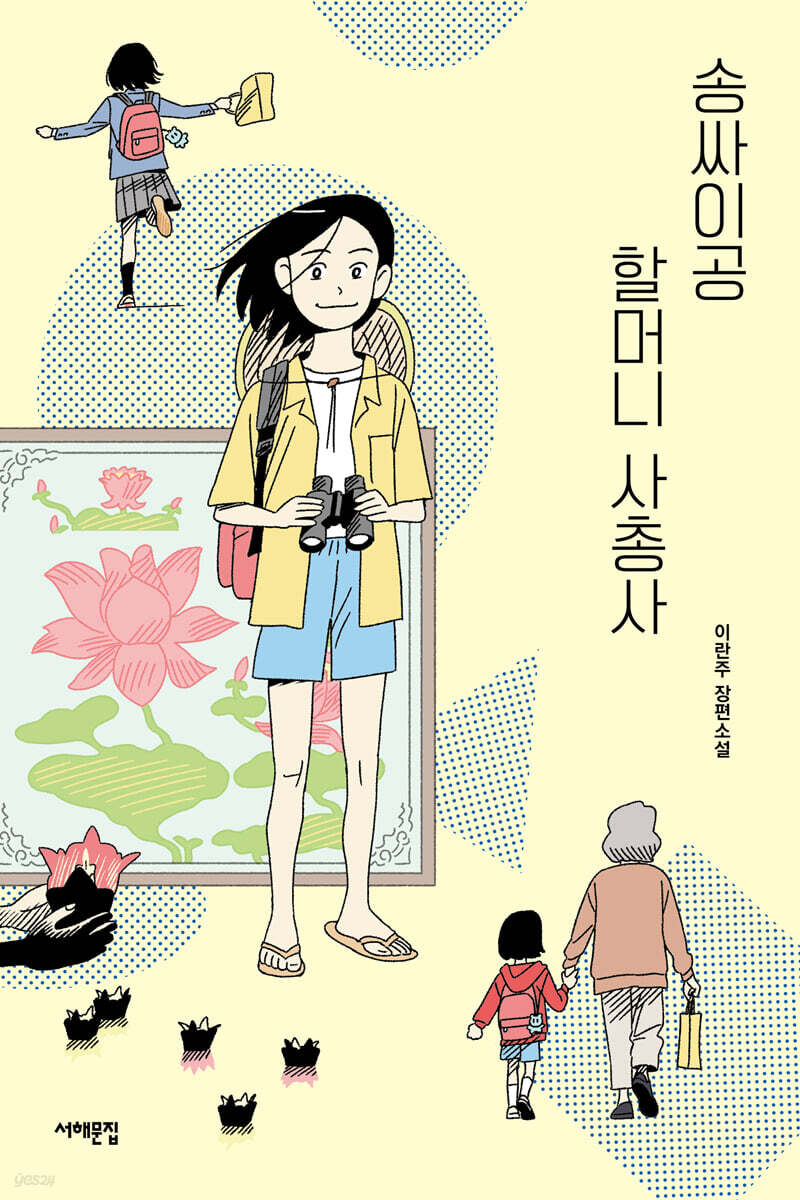
Song Saigong Grandma's Four Musketeers
 |
Description
Book Introduction
『Speak, Chandra』 『Rosina No, Gina』 The second young adult novel by Iranju, who documents the lives of immigrants by accompanying them. Sua, a sixteen-year-old middle school student who speaks Vietnamese and Korean fluently, is a reliable interpreter at 'Song Saigon', a store selling Vietnamese food and ingredients in Dangun Market.
Working with her grandmother, Thao, Phuong, and Lan become her ears and mouth, and often help solve the problems of customers who visit the store. Then one day, Su-ah tells her grandmothers the story of a Korean grandfather who came to Song Sai Gong with a cane. Grandpa takes deep breaths and speaks slowly, and Grandma Phuong, who has been listening to him while chopping vegetables with a calm expression, suddenly drops the knife. A cutting board stained red. A hand dripping with blood. The old man, who had been watching the commotion with a pained face, leaves the store and disappears. Afterwards, the grandfather's daughter comes to find Song Sai Gong, and Su-ah, who hears the details of the incident, faces the truth about it during a trip to see her grandmother who returned to Vietnam six months later... |
- You can preview some of the book's contents.
Preview
index
Part 1
Song Sai Gong
Parenting Master
Korean baby
Kung an, Kung eo, Kung lam
One month feast
Grandma Tao's new clothes
The Story of Uncle Bantu
Beyond Dangun Market
Bora's kimbap, Jihoo's water bottle
1968
forced deportation
Whether it's the future or the future
Part 2
Special envoy to visit Ka Mau
I met Haibin again
Take the sleeper bus
Hero Certificate
Nice to meet you, Seongjin
Wishing well
Hamimaeul
Memories of sandy beaches and poplar trees
My grandmothers
Author's Note
Song Sai Gong
Parenting Master
Korean baby
Kung an, Kung eo, Kung lam
One month feast
Grandma Tao's new clothes
The Story of Uncle Bantu
Beyond Dangun Market
Bora's kimbap, Jihoo's water bottle
1968
forced deportation
Whether it's the future or the future
Part 2
Special envoy to visit Ka Mau
I met Haibin again
Take the sleeper bus
Hero Certificate
Nice to meet you, Seongjin
Wishing well
Hamimaeul
Memories of sandy beaches and poplar trees
My grandmothers
Author's Note
Detailed image
Into the book
Why are you investigating?
I need to eat to live too.
I need some help.
You have to sell chicken to make money.
see.
see.
It's clean.
It doesn't smell.
Why are you reporting it?
Vietnamese people don't like chicken porridge.
Cook it and sell it, just sell it, it's the same.
What's different?
Between the complaints, the sound of chopping! The sound of chopping!
A snicker came out.
Did those two grandmothers practice? They're really in sync.
Two unfamiliar faces were listening to the complaint with troubled expressions.
--- p.10
My uncle was a guitar player.
My hands are so damaged that I can't even play the guitar anymore.
As if reading my thoughts, my uncle said:
“You can’t play guitar anymore, right? You’re not very good at singing, so you can’t do vocals.
“I think I should quit music.”
I couldn't think of anything to say in response.
Is there an instrument that can be played without using your hands?
Nothing came to mind.
"it is delicious.
“Eat quickly.”
I urged my uncle to change the mood.
“I heard there’s something called an air guitar competition in Finland.”
“Air guitar?”
“Yeah, it’s just pretending to play the guitar without a guitar.
“People from many countries around the world are participating.”
--- p.66
“Grandma probably doesn’t like Koreans.”
“What do you mean you don’t like it? I love Bora so much!”
Grandma Phuong continued, hugging Bora.
“I will never forget that even after I die.
Will a frozen heart be relieved by death?
But that doesn't mean you can blame and hate just any Korean.
And I can't just move on as if nothing happened.
I don't even know my own mind.
It's just complicated.
But I still love Bora.”
I need to eat to live too.
I need some help.
You have to sell chicken to make money.
see.
see.
It's clean.
It doesn't smell.
Why are you reporting it?
Vietnamese people don't like chicken porridge.
Cook it and sell it, just sell it, it's the same.
What's different?
Between the complaints, the sound of chopping! The sound of chopping!
A snicker came out.
Did those two grandmothers practice? They're really in sync.
Two unfamiliar faces were listening to the complaint with troubled expressions.
--- p.10
My uncle was a guitar player.
My hands are so damaged that I can't even play the guitar anymore.
As if reading my thoughts, my uncle said:
“You can’t play guitar anymore, right? You’re not very good at singing, so you can’t do vocals.
“I think I should quit music.”
I couldn't think of anything to say in response.
Is there an instrument that can be played without using your hands?
Nothing came to mind.
"it is delicious.
“Eat quickly.”
I urged my uncle to change the mood.
“I heard there’s something called an air guitar competition in Finland.”
“Air guitar?”
“Yeah, it’s just pretending to play the guitar without a guitar.
“People from many countries around the world are participating.”
--- p.66
“Grandma probably doesn’t like Koreans.”
“What do you mean you don’t like it? I love Bora so much!”
Grandma Phuong continued, hugging Bora.
“I will never forget that even after I die.
Will a frozen heart be relieved by death?
But that doesn't mean you can blame and hate just any Korean.
And I can't just move on as if nothing happened.
I don't even know my own mind.
It's just complicated.
But I still love Bora.”
--- p.181
Publisher's Review
Even if you don't know Korean, you can still live with your in-laws
A place where life is embraced with a strong hand
Warm rice noodles and crispy banh mi
A place to taste sweet sugarcane juice
Song Saigon, the hideout of the majestic and invincible grandmothers
Growing up there and seeing the world through those eyes
Stories Sua encountered
Su-a, a sixteen-year-old middle school student, takes care of her younger siblings Bora and Eun-gyu and does housework instead of her mother, who takes care of her hospitalized father every day.
Still, there's no need to worry.
Because there is a maternal grandmother who comes to look after the three siblings.
My grandmother is Vietnamese.
Work with Grandma Thao, Phuong, and Lan at Song Saigon, a shop selling rice noodles, banh mi, and Vietnamese ingredients.
Even though the Song Sai-gong Grandmothers' Four Musketeers don't know Korean, they're so bold that they can easily buy a pig's front leg.
He does his early morning business with a loud voice, and sends the children to school as requested by mothers on their way to work.
We comfort those who are hurt and gather together to celebrate the Vietnamese holiday.
We will work tirelessly to solve problems for Vietnamese people working and studying in Korea, from food to employment, industrial accidents, domestic conflicts, and visa issues.
“A new circle has been created among Vietnamese people living in Korea” (page 20).
“There is nothing to see differently.
“We just have to help each other and live.”
In Su-ah's eyes, the grandmother is not just a Vietnamese grandmother, but a grandmother of all of us who holds her grandchildren in her arms, cuddles them, feeds them, clothes them, and loves them with all her might.
The magnanimous Grandma Thao, the anti-American Grandma Phuong, the quiet and deep-hearted Grandma Lan, the witty Uncle Bantu, the crybaby Aunt Jang, the mischievous Jihoo who meows with Bora every day, and Aunt Bai who bravely raises Mirae on her own also become our warm neighbors.
The stories of those living in Korea, each in their own way, are a mixture of sadness and happiness, anger and hope.
Su-a who provides Vietnamese postpartum care food for Auntie Jang who has just given birth but cannot eat seaweed soup; Auntie Huyen who provides a plane ticket to Hai Binh who is stuck at the immigration office so that she can quickly go to Vietnam; the grandmother who adds a perfect beat to the argument between Grandma Thao and the sanitation officials with a chopping board…
The warmth of these affectionate, cheerful, and strong people who comfort a sore heart is the greatest charm of "Song Sai-gong Grandma's Musketeers."
As readers follow Su-ah's footsteps as she crosses the border between Vietnam and Korea, they will become curious about the taste of her grandmother's pho and sugarcane juice, and will also be moved to tears by the words, "I hate it because it smells" and "It's a store run by a Vietnamese woman."
Speak, Chandra Rosina No, Gina
Recording the lives of immigrants by accompanying them
Iranju's second young adult novel
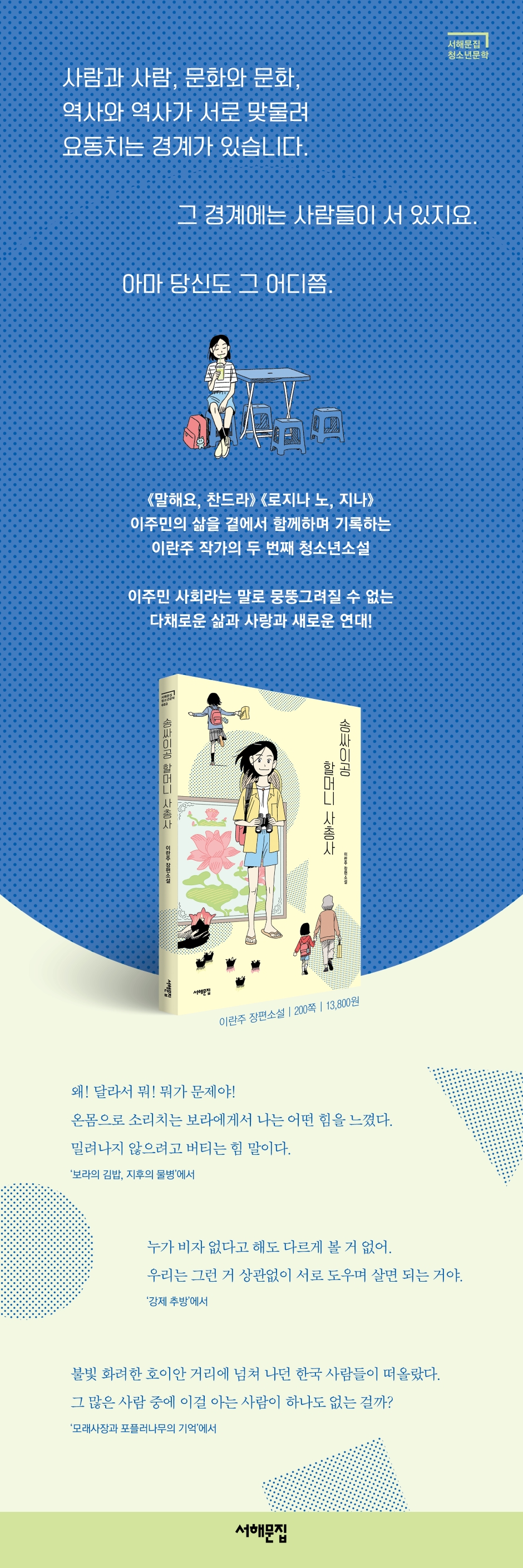
People and people, culture and culture, history and historian
Illuminating the interlocking and fluctuating boundaries
True Light
Iranian novels depict diverse lives, loves, and new solidarities that cannot be lumped together under the rubric of immigrant society.
This is a masterpiece that stands out for its excellent depiction of multicultural families, migrant workers, and undocumented children without objectifying them.
The honest stories of these characters, each of whom seems to live and breathe alongside us as individual 'human beings', exquisitely encompass both vibrant daily life and heavy topics.
And it clearly illuminates the history that Korea must remember and repent for.
In June 2024, the Girl of Peace statue was installed in Italy despite protests from Japan.
Next to the statue of the girl, an inscription was erected that read, "The Japanese military forced countless women into sexual slavery, and the Japanese government denies this."
Many in Korea welcomed Italy's decision.
The pain left by brutal violence cannot be easily washed away.
This is why history must be remembered, and the violence committed by Korea is no exception.
"Song Sai-gong Grandma's Musketeers" points out this very point.
“Just when you’re turning the pages and thinking you want to be friends with them, Iranju puts out ‘The Vietnam War.’
My heart, which had always believed that an unbiased perspective was essential for friendship between Koreans and immigrants, was shaken at this moment.
Why is the truth that, above all, one must have the 'courage to admit one's mistakes' to become friends so easily forgotten in the 'national-immigrant' structure?
“He leads readers with candid stories that force them to face the truth.” (Kim Young-hee, teacher at Mulkkobang, Reading Education Division, National Association of Korean Language Teachers)
A place where life is embraced with a strong hand
Warm rice noodles and crispy banh mi
A place to taste sweet sugarcane juice
Song Saigon, the hideout of the majestic and invincible grandmothers
Growing up there and seeing the world through those eyes
Stories Sua encountered
Su-a, a sixteen-year-old middle school student, takes care of her younger siblings Bora and Eun-gyu and does housework instead of her mother, who takes care of her hospitalized father every day.
Still, there's no need to worry.
Because there is a maternal grandmother who comes to look after the three siblings.
My grandmother is Vietnamese.
Work with Grandma Thao, Phuong, and Lan at Song Saigon, a shop selling rice noodles, banh mi, and Vietnamese ingredients.
Even though the Song Sai-gong Grandmothers' Four Musketeers don't know Korean, they're so bold that they can easily buy a pig's front leg.
He does his early morning business with a loud voice, and sends the children to school as requested by mothers on their way to work.
We comfort those who are hurt and gather together to celebrate the Vietnamese holiday.
We will work tirelessly to solve problems for Vietnamese people working and studying in Korea, from food to employment, industrial accidents, domestic conflicts, and visa issues.
“A new circle has been created among Vietnamese people living in Korea” (page 20).
“There is nothing to see differently.
“We just have to help each other and live.”
In Su-ah's eyes, the grandmother is not just a Vietnamese grandmother, but a grandmother of all of us who holds her grandchildren in her arms, cuddles them, feeds them, clothes them, and loves them with all her might.
The magnanimous Grandma Thao, the anti-American Grandma Phuong, the quiet and deep-hearted Grandma Lan, the witty Uncle Bantu, the crybaby Aunt Jang, the mischievous Jihoo who meows with Bora every day, and Aunt Bai who bravely raises Mirae on her own also become our warm neighbors.
The stories of those living in Korea, each in their own way, are a mixture of sadness and happiness, anger and hope.
Su-a who provides Vietnamese postpartum care food for Auntie Jang who has just given birth but cannot eat seaweed soup; Auntie Huyen who provides a plane ticket to Hai Binh who is stuck at the immigration office so that she can quickly go to Vietnam; the grandmother who adds a perfect beat to the argument between Grandma Thao and the sanitation officials with a chopping board…
The warmth of these affectionate, cheerful, and strong people who comfort a sore heart is the greatest charm of "Song Sai-gong Grandma's Musketeers."
As readers follow Su-ah's footsteps as she crosses the border between Vietnam and Korea, they will become curious about the taste of her grandmother's pho and sugarcane juice, and will also be moved to tears by the words, "I hate it because it smells" and "It's a store run by a Vietnamese woman."
Speak, Chandra Rosina No, Gina
Recording the lives of immigrants by accompanying them
Iranju's second young adult novel
People and people, culture and culture, history and historian
Illuminating the interlocking and fluctuating boundaries
True Light
Iranian novels depict diverse lives, loves, and new solidarities that cannot be lumped together under the rubric of immigrant society.
This is a masterpiece that stands out for its excellent depiction of multicultural families, migrant workers, and undocumented children without objectifying them.
The honest stories of these characters, each of whom seems to live and breathe alongside us as individual 'human beings', exquisitely encompass both vibrant daily life and heavy topics.
And it clearly illuminates the history that Korea must remember and repent for.
In June 2024, the Girl of Peace statue was installed in Italy despite protests from Japan.
Next to the statue of the girl, an inscription was erected that read, "The Japanese military forced countless women into sexual slavery, and the Japanese government denies this."
Many in Korea welcomed Italy's decision.
The pain left by brutal violence cannot be easily washed away.
This is why history must be remembered, and the violence committed by Korea is no exception.
"Song Sai-gong Grandma's Musketeers" points out this very point.
“Just when you’re turning the pages and thinking you want to be friends with them, Iranju puts out ‘The Vietnam War.’
My heart, which had always believed that an unbiased perspective was essential for friendship between Koreans and immigrants, was shaken at this moment.
Why is the truth that, above all, one must have the 'courage to admit one's mistakes' to become friends so easily forgotten in the 'national-immigrant' structure?
“He leads readers with candid stories that force them to face the truth.” (Kim Young-hee, teacher at Mulkkobang, Reading Education Division, National Association of Korean Language Teachers)
GOODS SPECIFICS
- Date of issue: July 5, 2024
- Page count, weight, size: 200 pages | 274g | 140*210*11mm
- ISBN13: 9791192988757
You may also like
카테고리
korean


korean

![GQ KOREA Mark (Monthly): December [2025]](http://librairie.coreenne.fr/cdn/shop/files/8ef265dbbfbf186523ed75ba7319009d.jpg?v=1765340328&width=3840)


