

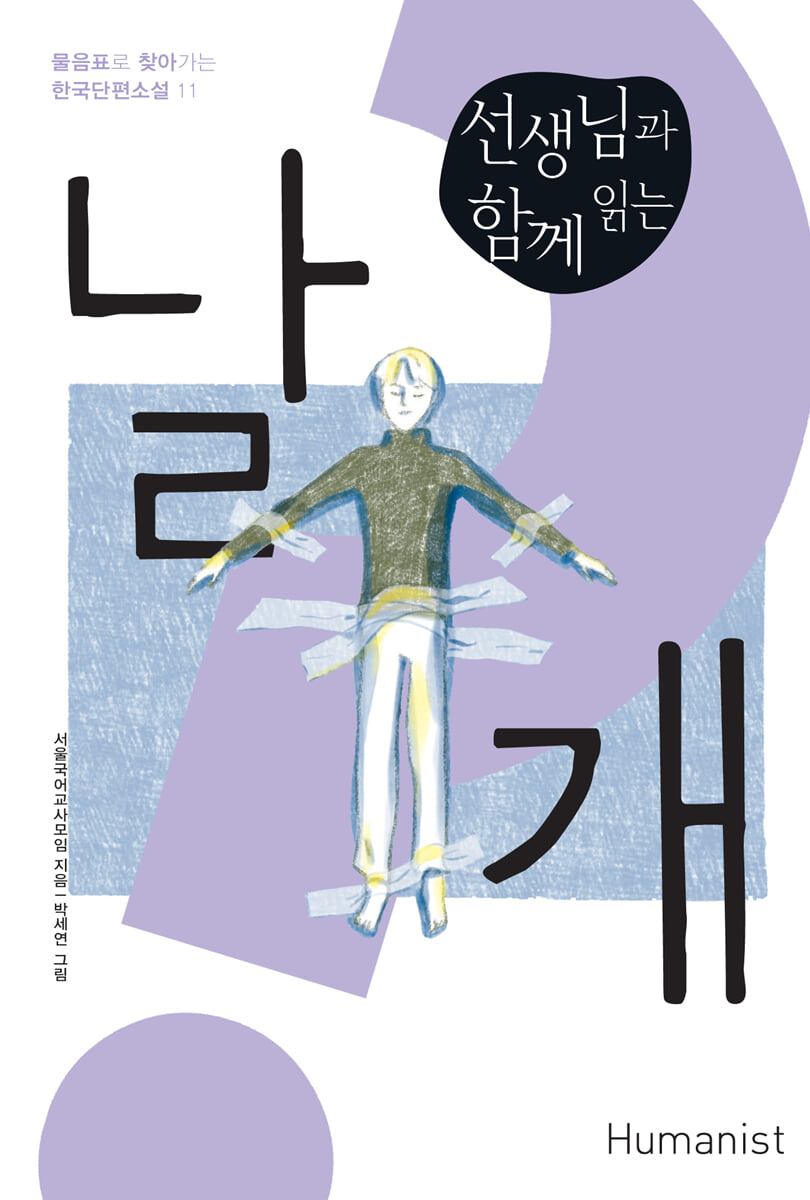
Reading Wings with the Teacher
 |
Description
Book Introduction
A guide to appreciating short stories in textbooks, planned by the National Korean Language Teachers Association.
The 'Question Marks Guide to Korean Short Stories' series
"Reading Wings with a Teacher" is the eleventh book in the "Korean Short Stories with Question Marks" series, planned by the National Association of Korean Language Teachers.
"Wings," published in 1936, is considered a masterpiece by Yi Sang, a representative modernist writer of modern Korea and a highly regarded pioneer of psychological novels.
"Wings" is a work written using the stream of consciousness technique, and the main character, "I," symbolizes an intellectual from the Japanese colonial period who is trapped in his room, overwhelmed by helplessness, while also projecting the image of the author, Lee Sang.
Through repeated outings, 'I' gradually escape from the confined space and my wife's control, and hope to fly again like before.
This book is filled with meaningful questions raised by students after reading "Wings" by Lee Sang, and Korean language teachers' answers to those questions.
How to interpret the difficult prologue that appears at the beginning of the work, what are 'wit', 'paradox', and 'irony', why 'I' sleep all day, why I keep going out, why I wish my wings would grow again... ... .
These questions and answers provide an easy-to-understand explanation of the essential information needed to fully understand the work "Wings."
In addition, it includes various reading materials, such as the life and literary world of Lee Sang, the circumstances of the time when the work was written, an introduction to works worth reading, and the content of students reading and discussing "Wings" in an actual class setting.
The 'Question Marks Guide to Korean Short Stories' series
"Reading Wings with a Teacher" is the eleventh book in the "Korean Short Stories with Question Marks" series, planned by the National Association of Korean Language Teachers.
"Wings," published in 1936, is considered a masterpiece by Yi Sang, a representative modernist writer of modern Korea and a highly regarded pioneer of psychological novels.
"Wings" is a work written using the stream of consciousness technique, and the main character, "I," symbolizes an intellectual from the Japanese colonial period who is trapped in his room, overwhelmed by helplessness, while also projecting the image of the author, Lee Sang.
Through repeated outings, 'I' gradually escape from the confined space and my wife's control, and hope to fly again like before.
This book is filled with meaningful questions raised by students after reading "Wings" by Lee Sang, and Korean language teachers' answers to those questions.
How to interpret the difficult prologue that appears at the beginning of the work, what are 'wit', 'paradox', and 'irony', why 'I' sleep all day, why I keep going out, why I wish my wings would grow again... ... .
These questions and answers provide an easy-to-understand explanation of the essential information needed to fully understand the work "Wings."
In addition, it includes various reading materials, such as the life and literary world of Lee Sang, the circumstances of the time when the work was written, an introduction to works worth reading, and the content of students reading and discussing "Wings" in an actual class setting.
- You can preview some of the book's contents.
Preview
index
Reading the work: "Wings" _Lee Sang
Reading Deeply: Reading Wings through Questions and Answers
1_ Getting familiar with the work
What on earth does the first part of the novel mean?
What does 'stuffed genius' mean?
What are 'wit', 'paradox', and 'irony'?
Why are you trying to blockade the 19th century?
What do 'queen's crown' and 'widow' mean?
There's a particularly difficult sentence in the prologue. How do I interpret it?
2_ Getting to know the characters in the work
Is it okay for my wife to do this?
Why do I sleep all day?
Why do I keep going out?
Why do I wish to grow wings again?
How did 'I' and 'my wife' meet?
3_ Take a look at the background in the work
Why '33rd Street'?
What kind of place is a brothel?
Why did the siren sound at noon?
What did Gyeongseong look like at that time?
Reading Broadly: A Look Beyond the Work
Author Story - A Chronology of Lee Sang's Life and Works, Learn More About the Author
A Tale of the Times - A Look at the 1930s
A Reading List - Apathetic Youth in the 1930s
Reader's Story - Will I be able to live well with my wife after returning home?
Reading Deeply: Reading Wings through Questions and Answers
1_ Getting familiar with the work
What on earth does the first part of the novel mean?
What does 'stuffed genius' mean?
What are 'wit', 'paradox', and 'irony'?
Why are you trying to blockade the 19th century?
What do 'queen's crown' and 'widow' mean?
There's a particularly difficult sentence in the prologue. How do I interpret it?
2_ Getting to know the characters in the work
Is it okay for my wife to do this?
Why do I sleep all day?
Why do I keep going out?
Why do I wish to grow wings again?
How did 'I' and 'my wife' meet?
3_ Take a look at the background in the work
Why '33rd Street'?
What kind of place is a brothel?
Why did the siren sound at noon?
What did Gyeongseong look like at that time?
Reading Broadly: A Look Beyond the Work
Author Story - A Chronology of Lee Sang's Life and Works, Learn More About the Author
A Tale of the Times - A Look at the 1930s
A Reading List - Apathetic Youth in the 1930s
Reader's Story - Will I be able to live well with my wife after returning home?
Detailed image

Publisher's Review
A guide to appreciating short stories in textbooks, planned by the National Korean Language Teachers Association.
The 'Question Marks Guide to Korean Short Stories' series
1.
I dream of a literature class overflowing with wild imaginations and lively questions!
The 'Korean Short Stories with Question Marks' series is a book planned by the National Korean Language Teachers Association, which dreams of 'exciting and fun literature classes.'
It began with a reflection on literature classes designed for entrance exams and examinations, that is, literature classes that provide students with uniform and mechanical information about works, and was created with the intention of informing students about what they actually wonder about after reading the works.
Through this, we aimed to break away from one-sided literature classes that were consistent with fragmentary understanding and forced memorization, and to establish a foundation for a user-centered literature class that allows students to understand and empathize with the work.
The "Question Marks Guide to Korean Short Stories" series features short stories that have been widely read for a long time among those included in middle and high school Korean language and literature textbooks.
After reading these selected works directly to the students, I collected all the questions they had.
Among them, we selected those that were frequent, meaningful, novel, and original.
Then, the Korean language teachers looked up books and papers and answered the questions based on what they had studied.
It was explained in simple language so that students can read it easily, and pictures, photos, and reference materials were also included.
In this way, I tried to approach the more universal meaning of the work.
The 'Question Marks Guide to Korean Short Stories' series is unprecedented content that can elicit diverse and profound thoughts.
This series will not only open up a new horizon of "student-centered novel appreciation," but will also serve as a stepping stone for students to become more familiar with literary works.
2.
Read representative Korean short stories from textbooks in a single book, both deeply and broadly!
The 'Question Marks to Find Korean Short Stories' series originated from the regret over the current educational reality where students are increasingly moving away from literature due to memorization-based, problem-solving-based literature classes.
And it is being created with the will and passion of teachers who want to make literary works come alive and breathe for students.
This book goes far beyond the fragmentary interpretation and understanding of novels found in existing textbooks or reference books.
Because it covers historical, cultural, social, and literary information in an easy and fun way based on questions that students actually ask when reading the work, it is of great help in fully understanding a single work.
This book is structured as 'reading the work - reading deeply - reading broadly'.
'Reading the Work' is literally a section that contains the entire novel.
It is composed with pictures that can stimulate fun and imagination.
'Deep Reading' is filled with meaningful questions that students have while reading the work, selected from among them, and teachers' answers to them.
It focuses on the background, characters, events, and themes related to the work itself, allowing readers to internalize the work in various ways while reading.
'Reading Broadly' broadens the understanding of the work by examining the elements surrounding the work, the author's life, and the circumstances of the time.
Additionally, by including the results of students reading and working on the work, we were able to get a glimpse into the thoughts of their peers on the work.
And by introducing other works with similar materials or themes through ‘linked reading,’ we were able to broaden the reading experience and the scope of literary appreciation.
3.
〈Wings〉 - I hope I can spread these wings once again.
“Wings” is a novel published in the magazine “Jogwang” in September 1936.
The protagonist, 'I', spends his days locked up in the 7th room of house number 33, which is quiet during the day and becomes fancy at night, doing nothing.
My wife goes out often and welcomes guests, but I don't know exactly what she does.
The guests returned after giving money to my wife, and 'I' live off the money my wife earned that way.
Then one day, I started going out and happened to see my wife with guests several times.
Then, my wife comes back from the rain and gives me sleeping pills, pretending they are fever reducers, while I am sick.
When I found out about that, I got angry and left the house, but then I went back thinking that I might have misunderstood.
At that time, 'I' ended up witnessing my wife's prostitution scene.
The 'I' who ran away wandered around and ended up on the roof of Mitsukoshi, and when the noon siren sounded, I thought about flying once again.
"Wings" is a work that left a great mark on the history of Korean literature by reflecting a shift in literary technique that projects the problems of reality into the inner world of psychological consciousness.
The protagonist, 'I', is a character that reflects the author's consciousness, and clearly shows the divided self of a powerless intellectual who can do nothing in the dark days of Japanese colonial rule.
It is the first psychological novel in modern Korean literature, and its content and form are difficult and unconventional, making it difficult to fully interpret and understand its meaning, not only at the time but even in modern times.
This book contains fifteen questions from students about “Wings” and the teacher’s answers to them.
We also included background information that will help you understand the work, such as reference materials related to the question, the times when the work was written, and the author's life.
In addition, we introduced the possibility of reading other works with similar materials or themes through 'linked reading', and we designed it to broaden the scope of appreciation by including the thoughts and discussions that peers had after reading 'Wings' in actual classroom settings.
If you read it carefully, you will be able to get one step closer to the world of Lee Sang's works, which previously felt difficult and strange.
The 'Question Marks Guide to Korean Short Stories' series
1.
I dream of a literature class overflowing with wild imaginations and lively questions!
The 'Korean Short Stories with Question Marks' series is a book planned by the National Korean Language Teachers Association, which dreams of 'exciting and fun literature classes.'
It began with a reflection on literature classes designed for entrance exams and examinations, that is, literature classes that provide students with uniform and mechanical information about works, and was created with the intention of informing students about what they actually wonder about after reading the works.
Through this, we aimed to break away from one-sided literature classes that were consistent with fragmentary understanding and forced memorization, and to establish a foundation for a user-centered literature class that allows students to understand and empathize with the work.
The "Question Marks Guide to Korean Short Stories" series features short stories that have been widely read for a long time among those included in middle and high school Korean language and literature textbooks.
After reading these selected works directly to the students, I collected all the questions they had.
Among them, we selected those that were frequent, meaningful, novel, and original.
Then, the Korean language teachers looked up books and papers and answered the questions based on what they had studied.
It was explained in simple language so that students can read it easily, and pictures, photos, and reference materials were also included.
In this way, I tried to approach the more universal meaning of the work.
The 'Question Marks Guide to Korean Short Stories' series is unprecedented content that can elicit diverse and profound thoughts.
This series will not only open up a new horizon of "student-centered novel appreciation," but will also serve as a stepping stone for students to become more familiar with literary works.
2.
Read representative Korean short stories from textbooks in a single book, both deeply and broadly!
The 'Question Marks to Find Korean Short Stories' series originated from the regret over the current educational reality where students are increasingly moving away from literature due to memorization-based, problem-solving-based literature classes.
And it is being created with the will and passion of teachers who want to make literary works come alive and breathe for students.
This book goes far beyond the fragmentary interpretation and understanding of novels found in existing textbooks or reference books.
Because it covers historical, cultural, social, and literary information in an easy and fun way based on questions that students actually ask when reading the work, it is of great help in fully understanding a single work.
This book is structured as 'reading the work - reading deeply - reading broadly'.
'Reading the Work' is literally a section that contains the entire novel.
It is composed with pictures that can stimulate fun and imagination.
'Deep Reading' is filled with meaningful questions that students have while reading the work, selected from among them, and teachers' answers to them.
It focuses on the background, characters, events, and themes related to the work itself, allowing readers to internalize the work in various ways while reading.
'Reading Broadly' broadens the understanding of the work by examining the elements surrounding the work, the author's life, and the circumstances of the time.
Additionally, by including the results of students reading and working on the work, we were able to get a glimpse into the thoughts of their peers on the work.
And by introducing other works with similar materials or themes through ‘linked reading,’ we were able to broaden the reading experience and the scope of literary appreciation.
3.
〈Wings〉 - I hope I can spread these wings once again.
“Wings” is a novel published in the magazine “Jogwang” in September 1936.
The protagonist, 'I', spends his days locked up in the 7th room of house number 33, which is quiet during the day and becomes fancy at night, doing nothing.
My wife goes out often and welcomes guests, but I don't know exactly what she does.
The guests returned after giving money to my wife, and 'I' live off the money my wife earned that way.
Then one day, I started going out and happened to see my wife with guests several times.
Then, my wife comes back from the rain and gives me sleeping pills, pretending they are fever reducers, while I am sick.
When I found out about that, I got angry and left the house, but then I went back thinking that I might have misunderstood.
At that time, 'I' ended up witnessing my wife's prostitution scene.
The 'I' who ran away wandered around and ended up on the roof of Mitsukoshi, and when the noon siren sounded, I thought about flying once again.
"Wings" is a work that left a great mark on the history of Korean literature by reflecting a shift in literary technique that projects the problems of reality into the inner world of psychological consciousness.
The protagonist, 'I', is a character that reflects the author's consciousness, and clearly shows the divided self of a powerless intellectual who can do nothing in the dark days of Japanese colonial rule.
It is the first psychological novel in modern Korean literature, and its content and form are difficult and unconventional, making it difficult to fully interpret and understand its meaning, not only at the time but even in modern times.
This book contains fifteen questions from students about “Wings” and the teacher’s answers to them.
We also included background information that will help you understand the work, such as reference materials related to the question, the times when the work was written, and the author's life.
In addition, we introduced the possibility of reading other works with similar materials or themes through 'linked reading', and we designed it to broaden the scope of appreciation by including the thoughts and discussions that peers had after reading 'Wings' in actual classroom settings.
If you read it carefully, you will be able to get one step closer to the world of Lee Sang's works, which previously felt difficult and strange.
GOODS SPECIFICS
- Date of issue: April 29, 2024
- Page count, weight, size: 136 pages | 152*225*20mm
- ISBN13: 9791170871484
- ISBN10: 1170871488
- KC Certification: Certification Type: Conformity Confirmation
You may also like
카테고리
korean


korean

![GQ KOREA Mark (Monthly): December [2025]](http://librairie.coreenne.fr/cdn/shop/files/8ef265dbbfbf186523ed75ba7319009d.jpg?v=1765340328&width=3840)


