

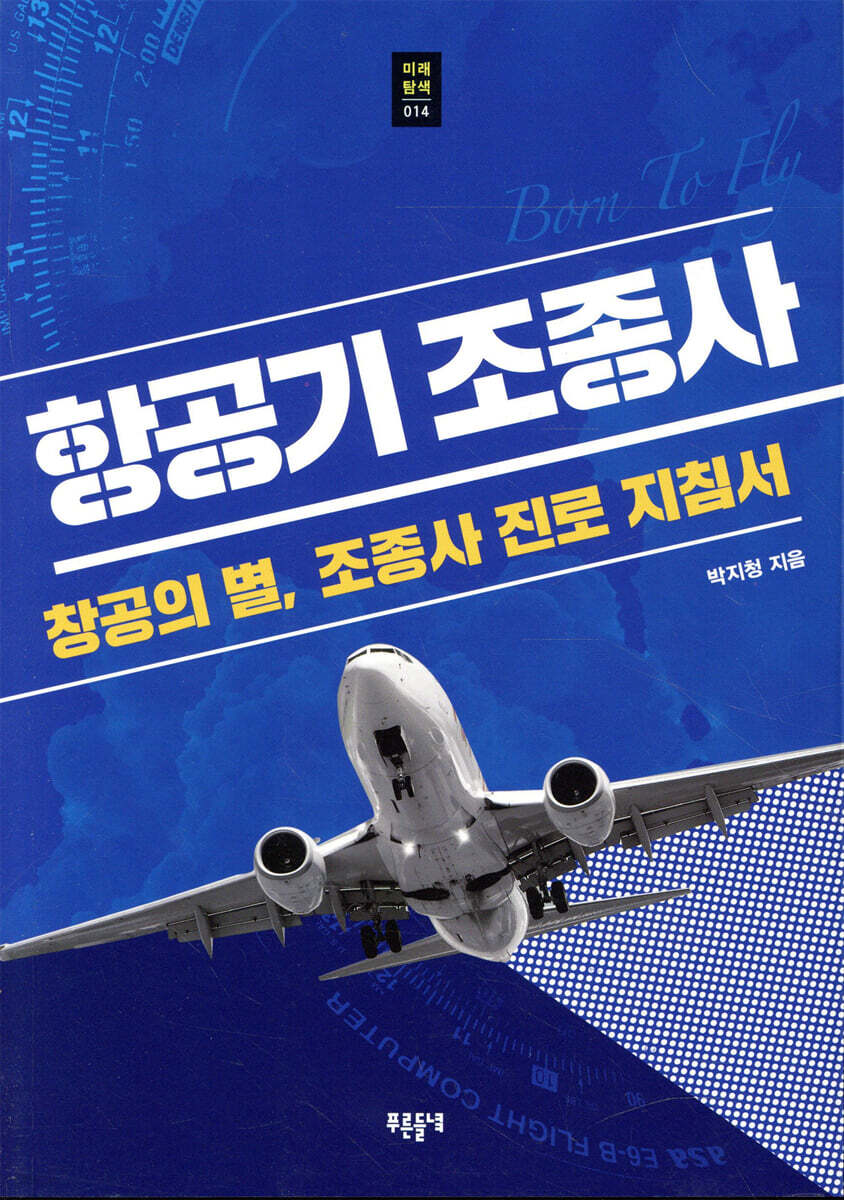
Airline pilot
 |
Description
Book Introduction
The path of a pilot is long and arduous, but the value and meaning of the profession are eternal!
We introduce the work that pilots do by aircraft type and the changes in the role of aircraft pilots after the pandemic.
A complete guide that provides all the qualifications, conditions, and latest test preparation tips at a glance!!
Many people want to become pilots.
It's because they think the salary is high and they look cool.
What is the real life of a pilot like, or is it as perceived from the outside? The author of this book has long been a pilot himself, and has since met numerous applicants as an interviewer.
Then I realized that people who truly want to become pilots have different eyes.
On the other hand, there were many who gave conventional answers, but the author confesses that he wrote this book because he felt sorry that people were not thinking deeply about 'life as a pilot' even though they were at a crossroads in their lives.
Despite the various pieces of information I shared while meeting students from diverse backgrounds, I regretted it, thinking, “I missed this story,” or “I should have talked more in detail and concretely.” This very point is the author’s second motivation for writing this book.
There are many people who dream of becoming pilots, not only middle and high school students, but also college students and ordinary office workers. However, I felt that the information available in existing books and on the Internet was not enough to quench their curiosity and thirst.
The author left his life as an Air Force pilot for about 20 years and joined Asiana Airlines in 2018.
After working as an Air Force fighter pilot for a long time, he took on the role of co-pilot for a civilian airline.
While fighter pilots' main job is to carry out given air operation missions, civilian airline pilots' main job is to safely and comfortably transport passengers to their destination.
In 2020, he became a professor at the Department of Aeronautics at a university to realize the author's dream, which he had had since childhood.
Through these diverse experiences, the second edition was able to more fully describe experiences that were not covered in the first edition, such as the training process for a private pilot, life as a co-pilot, and the course of a professor in the aviation management department at a general university.
Additionally, we have provided more detailed information on the rapidly changing admission requirements and selection procedures for aviation operations departments following the pandemic, which will provide more accurate guidance to those aspiring to become pilots.
This book will serve as an accurate and reliable compass for those preparing to make their dream of becoming a pilot a reality and for many who are enduring the arduous training process and envisioning their vision. It will also provide a clear and reliable compass for those preparing to make their dream of becoming a pilot a reality and for those who are enduring the arduous training process and envisioning their future.
We introduce the work that pilots do by aircraft type and the changes in the role of aircraft pilots after the pandemic.
A complete guide that provides all the qualifications, conditions, and latest test preparation tips at a glance!!
Many people want to become pilots.
It's because they think the salary is high and they look cool.
What is the real life of a pilot like, or is it as perceived from the outside? The author of this book has long been a pilot himself, and has since met numerous applicants as an interviewer.
Then I realized that people who truly want to become pilots have different eyes.
On the other hand, there were many who gave conventional answers, but the author confesses that he wrote this book because he felt sorry that people were not thinking deeply about 'life as a pilot' even though they were at a crossroads in their lives.
Despite the various pieces of information I shared while meeting students from diverse backgrounds, I regretted it, thinking, “I missed this story,” or “I should have talked more in detail and concretely.” This very point is the author’s second motivation for writing this book.
There are many people who dream of becoming pilots, not only middle and high school students, but also college students and ordinary office workers. However, I felt that the information available in existing books and on the Internet was not enough to quench their curiosity and thirst.
The author left his life as an Air Force pilot for about 20 years and joined Asiana Airlines in 2018.
After working as an Air Force fighter pilot for a long time, he took on the role of co-pilot for a civilian airline.
While fighter pilots' main job is to carry out given air operation missions, civilian airline pilots' main job is to safely and comfortably transport passengers to their destination.
In 2020, he became a professor at the Department of Aeronautics at a university to realize the author's dream, which he had had since childhood.
Through these diverse experiences, the second edition was able to more fully describe experiences that were not covered in the first edition, such as the training process for a private pilot, life as a co-pilot, and the course of a professor in the aviation management department at a general university.
Additionally, we have provided more detailed information on the rapidly changing admission requirements and selection procedures for aviation operations departments following the pandemic, which will provide more accurate guidance to those aspiring to become pilots.
This book will serve as an accurate and reliable compass for those preparing to make their dream of becoming a pilot a reality and for many who are enduring the arduous training process and envisioning their vision. It will also provide a clear and reliable compass for those preparing to make their dream of becoming a pilot a reality and for those who are enduring the arduous training process and envisioning their future.
index
Author's Note: People with clear dreams have different eyes.
01 Prologue: This is how I became a pilot
From coincidence to inevitability
Meeting a Stranger │ An Unexpected Aspiring Pilot Becomes an Interviewer
My Pilot Chronicles
1994, Entered the Air Force Academy │ 1998, Graduated from the Air Force Academy and entered the flight training course │ 1999, Became a fighter pilot │ 2001, Lost a colleague │ 2007, Ranked first in the advanced tactical training course │ 2008, Graduate school at Yonsei University │ 2010, Assigned to the Evaluation Division of the Air Force Southern Combat Command (now Air Combat Command) │ October 2010, Entered the Command and General Staff College in Turkey │ 2012, Diagnosed squadron organizational culture at the Leadership Center │ 2013, Served as a squadron leader at a squadron at Cheongju Air Base │ 2015, Became a rotating professor at the Air Force Academy │ 2018, Joined Asiana Airlines │ 2019, First officer at Asiana Airlines Became a professor in the Department of Aviation and Aeronautics at a university in 2020
Dreams come true when you put effort into romance.
Information gathering is a necessary and sufficient condition for choosing a career. Even a pilot's path requires navigation.
02 Anyone can become a pilot
The pilot's outlook is bright
Why is being an airline pilot such a sought-after profession? │ Pilots are a rare commodity, but Korea must consider the stagnation of pilots in commercial airlines for the next year or two.
This is what pilots do
What Pilots Do │ Military Pilots
A Live Interview with a Civilian Pilot (Air Force Academy Graduate)
Live Interview with a Civilian Pilot (University Graduate)
A Vivid Interview with a 20-Year Veteran Fighter Pilot
Live Interview with an Air Force Transport Pilot
Live Interview with an Air Force Helicopter Pilot
Tips: How to Become a Pilot Preview
03 Becoming a Civil Aviation Pilot
Status of civil aviation pilots by origin
The process of becoming a civil aircraft pilot
Obtaining a basic license │ Joining an airline │ JET RATING (CITATION) │ Airline JTS (Jet Transportaion Simulator) training course │ Aircraft type assignment & Type Rating acquisition and simulator training course │ OE (Operation Experience) training
Method 1: Enter the Department of Aviation Management at a university
Conquer the University's Aviation Operations Department │ Status of Aviation Operations Departments by University (2023.
(As of May)
Method 2: Go to a flight school
Attack the Flight Schools │ Current Status of Flight Schools │ Uljin Flight School (Korea Aerospace University & Korea Aviation College) │ Taean Flight School (Hanseo University students/general public flight training course)
Method 3: Overseas flight process
Attending a university abroad │ Overseas flight school
04 Becoming a Military Pilot
The process of becoming an Air Force pilot
Course to become an Air Force pilot │ Introductory course │ Basic course │ Advanced course
Method 1_Air Force
The Path to Becoming an Air Force Pilot │ Air Force Academy │ ROTC (Aviation University, Hanseo University, Korea Transportation University, Yonsei University) │ Air Force Designated University Pilot Scholarship Students │ Bachelor's Degree Officer Candidates (General University Graduates)
Method 2_Navy
Becoming a Naval Pilot │ Naval Pilot Course
Method 3_Army
Becoming a Helicopter Pilot │ Selection Schedule
05 Pilot Qualities
Are there any specific aptitudes required for an airplane pilot?
Check your aptitude and personality │ Seek advice from experts
Draw your own pilot image
Let's analyze ourselves objectively │ The aptitudes and abilities required for a pilot
Passion and humility
Passion makes evaluators dance │ Humility is the fruit of wisdom
A meticulous personality is better than a careless personality.
A job requiring careful attention │ A pilot's meticulousness is vital.
Pilots think about safety even when they sleep.
Train your sense of safety in everyday life │ Safety awareness corrects dangerous moments.
English is a basic skill for a pilot.
Why English is the Globally Used Aviation Terminology │ English is a Key Pilot Qualification
Always think positively
The Power of Positivity │ A positive mindset that shines in a crisis
06 Know-how to Pass the Pilot Exam
Know-how to pass the physical examination
Understand the criteria for physical examinations accurately │ The most important criterion for physical examination grades is eyesight │ How to protect eyesight │ Avoid excessive exercise and bad posture │ Precautions before physical examination │ Summary of physical examinations │ Major reasons for failure in selection for 1st class airborne personnel │ FAQ for airborne personnel physical examinations │ Current status of medical institutions conducting aviation physical examinations
Know-how to pass the physical fitness test (Air Force Academy, Air Force pilot scholarship student)
The Significance of Physical Fitness Tests During the Pilot Selection Process │ Preparations Before the Physical Fitness Test
Tips for passing an interview
First impressions matter │ Check the interview evaluation criteria │ What questions do interviewers ask?
Air Force Academy 1st Examination (Korean, English, Math) Trends
Types and characteristics of the Air Force Academy exam │ Korean language assessment │ English assessment │ Mathematics assessment
How to Pass the Air Force Pilot Training Course
Strengthen your aviation knowledge (academics) │ Focus on flight practice │ Develop your character through daily life
How to Pass the Civil Aviation Pilot Training Course
The most important thing is to follow the flight rules and procedures. │ To avoid repeating mistakes, always summarize the main points. │ Remember that flying is a collaborative effort. │ Draw the overall picture of the flight. │ Be good at managing stress.
07 A Thorough Guide for Aspiring Pilots
Department of Aviation Operations, Aerospace University
Course and Career Path │ Physical Examination
Hanseo University Department of Aviation Operations
Course and Career Path │ Physical Examination
Air Force Academy
Air Force Academy Curriculum and Career Path │ Air Force Academy Admission Guidelines │ Air Force Academy Cadet Life │ Air Force Academy Pilot Curriculum and Career Path
Air Force Pilot Officer [Designated Recruiting University, Reserve Officers' Training Corps (ROTC), Bachelor's Officer (General University)]
The Path to Becoming an Air Force Pilot Officer │ Air Force Designated Recruiting University │ Air Force Reserve Officers' Training Corps (ROTC)
08 Epilogue: Uncover the Secrets of the Pilot World
To become a pilot
I want to be a pilot.
What are the options? │ What are the conditions for employment at a private airline? │ Do pilots need to be fluent in English?
Benefits and salary level
What are the benefits and challenges of being a pilot? │ I'm curious about the salary level of a pilot.
demanding conditions
Is the civil aviation pilot physical exam difficult? │ I'd like to know more about the Air Force pilot physical exam.
│ Is it difficult for women to become pilots? │ Can I become a pilot if I have a fear of heights?
Various facts about the Republic of Korea Air Force
What kind of team is the Air Force's "Black Eagles"? │ Do only Republic of Korea Air Force pilots wear red scarves?
Truth or Rumor in Pilot World
Are there special paths for airplanes in the sky? │ What happens if a fighter jet gets struck by lightning while in flight? │ They say fighter jets can't fly backwards? │ Is there a secret hidden in the pilot's suit? │ How do you go to the bathroom during a flight?
Conclusion: Become the protagonist of happiness
Appendix: A Taste of Pilot World Terminology
01 Prologue: This is how I became a pilot
From coincidence to inevitability
Meeting a Stranger │ An Unexpected Aspiring Pilot Becomes an Interviewer
My Pilot Chronicles
1994, Entered the Air Force Academy │ 1998, Graduated from the Air Force Academy and entered the flight training course │ 1999, Became a fighter pilot │ 2001, Lost a colleague │ 2007, Ranked first in the advanced tactical training course │ 2008, Graduate school at Yonsei University │ 2010, Assigned to the Evaluation Division of the Air Force Southern Combat Command (now Air Combat Command) │ October 2010, Entered the Command and General Staff College in Turkey │ 2012, Diagnosed squadron organizational culture at the Leadership Center │ 2013, Served as a squadron leader at a squadron at Cheongju Air Base │ 2015, Became a rotating professor at the Air Force Academy │ 2018, Joined Asiana Airlines │ 2019, First officer at Asiana Airlines Became a professor in the Department of Aviation and Aeronautics at a university in 2020
Dreams come true when you put effort into romance.
Information gathering is a necessary and sufficient condition for choosing a career. Even a pilot's path requires navigation.
02 Anyone can become a pilot
The pilot's outlook is bright
Why is being an airline pilot such a sought-after profession? │ Pilots are a rare commodity, but Korea must consider the stagnation of pilots in commercial airlines for the next year or two.
This is what pilots do
What Pilots Do │ Military Pilots
A Live Interview with a Civilian Pilot (Air Force Academy Graduate)
Live Interview with a Civilian Pilot (University Graduate)
A Vivid Interview with a 20-Year Veteran Fighter Pilot
Live Interview with an Air Force Transport Pilot
Live Interview with an Air Force Helicopter Pilot
Tips: How to Become a Pilot Preview
03 Becoming a Civil Aviation Pilot
Status of civil aviation pilots by origin
The process of becoming a civil aircraft pilot
Obtaining a basic license │ Joining an airline │ JET RATING (CITATION) │ Airline JTS (Jet Transportaion Simulator) training course │ Aircraft type assignment & Type Rating acquisition and simulator training course │ OE (Operation Experience) training
Method 1: Enter the Department of Aviation Management at a university
Conquer the University's Aviation Operations Department │ Status of Aviation Operations Departments by University (2023.
(As of May)
Method 2: Go to a flight school
Attack the Flight Schools │ Current Status of Flight Schools │ Uljin Flight School (Korea Aerospace University & Korea Aviation College) │ Taean Flight School (Hanseo University students/general public flight training course)
Method 3: Overseas flight process
Attending a university abroad │ Overseas flight school
04 Becoming a Military Pilot
The process of becoming an Air Force pilot
Course to become an Air Force pilot │ Introductory course │ Basic course │ Advanced course
Method 1_Air Force
The Path to Becoming an Air Force Pilot │ Air Force Academy │ ROTC (Aviation University, Hanseo University, Korea Transportation University, Yonsei University) │ Air Force Designated University Pilot Scholarship Students │ Bachelor's Degree Officer Candidates (General University Graduates)
Method 2_Navy
Becoming a Naval Pilot │ Naval Pilot Course
Method 3_Army
Becoming a Helicopter Pilot │ Selection Schedule
05 Pilot Qualities
Are there any specific aptitudes required for an airplane pilot?
Check your aptitude and personality │ Seek advice from experts
Draw your own pilot image
Let's analyze ourselves objectively │ The aptitudes and abilities required for a pilot
Passion and humility
Passion makes evaluators dance │ Humility is the fruit of wisdom
A meticulous personality is better than a careless personality.
A job requiring careful attention │ A pilot's meticulousness is vital.
Pilots think about safety even when they sleep.
Train your sense of safety in everyday life │ Safety awareness corrects dangerous moments.
English is a basic skill for a pilot.
Why English is the Globally Used Aviation Terminology │ English is a Key Pilot Qualification
Always think positively
The Power of Positivity │ A positive mindset that shines in a crisis
06 Know-how to Pass the Pilot Exam
Know-how to pass the physical examination
Understand the criteria for physical examinations accurately │ The most important criterion for physical examination grades is eyesight │ How to protect eyesight │ Avoid excessive exercise and bad posture │ Precautions before physical examination │ Summary of physical examinations │ Major reasons for failure in selection for 1st class airborne personnel │ FAQ for airborne personnel physical examinations │ Current status of medical institutions conducting aviation physical examinations
Know-how to pass the physical fitness test (Air Force Academy, Air Force pilot scholarship student)
The Significance of Physical Fitness Tests During the Pilot Selection Process │ Preparations Before the Physical Fitness Test
Tips for passing an interview
First impressions matter │ Check the interview evaluation criteria │ What questions do interviewers ask?
Air Force Academy 1st Examination (Korean, English, Math) Trends
Types and characteristics of the Air Force Academy exam │ Korean language assessment │ English assessment │ Mathematics assessment
How to Pass the Air Force Pilot Training Course
Strengthen your aviation knowledge (academics) │ Focus on flight practice │ Develop your character through daily life
How to Pass the Civil Aviation Pilot Training Course
The most important thing is to follow the flight rules and procedures. │ To avoid repeating mistakes, always summarize the main points. │ Remember that flying is a collaborative effort. │ Draw the overall picture of the flight. │ Be good at managing stress.
07 A Thorough Guide for Aspiring Pilots
Department of Aviation Operations, Aerospace University
Course and Career Path │ Physical Examination
Hanseo University Department of Aviation Operations
Course and Career Path │ Physical Examination
Air Force Academy
Air Force Academy Curriculum and Career Path │ Air Force Academy Admission Guidelines │ Air Force Academy Cadet Life │ Air Force Academy Pilot Curriculum and Career Path
Air Force Pilot Officer [Designated Recruiting University, Reserve Officers' Training Corps (ROTC), Bachelor's Officer (General University)]
The Path to Becoming an Air Force Pilot Officer │ Air Force Designated Recruiting University │ Air Force Reserve Officers' Training Corps (ROTC)
08 Epilogue: Uncover the Secrets of the Pilot World
To become a pilot
I want to be a pilot.
What are the options? │ What are the conditions for employment at a private airline? │ Do pilots need to be fluent in English?
Benefits and salary level
What are the benefits and challenges of being a pilot? │ I'm curious about the salary level of a pilot.
demanding conditions
Is the civil aviation pilot physical exam difficult? │ I'd like to know more about the Air Force pilot physical exam.
│ Is it difficult for women to become pilots? │ Can I become a pilot if I have a fear of heights?
Various facts about the Republic of Korea Air Force
What kind of team is the Air Force's "Black Eagles"? │ Do only Republic of Korea Air Force pilots wear red scarves?
Truth or Rumor in Pilot World
Are there special paths for airplanes in the sky? │ What happens if a fighter jet gets struck by lightning while in flight? │ They say fighter jets can't fly backwards? │ Is there a secret hidden in the pilot's suit? │ How do you go to the bathroom during a flight?
Conclusion: Become the protagonist of happiness
Appendix: A Taste of Pilot World Terminology
Into the book
In this way, many people choose a career path without even having access to easy-to-understand information about piloting, or in many cases, they don't even try because they don't know about the process itself.
This book contains advice and know-how from pilots, physical examination doctors, physical examination officers, interviewers, and flight training instructors who are actually working in civilian and military airlines.
We have tried to provide an easy, accurate, and useful path to becoming a pilot for those who know nothing about pilots. We have covered vivid interviews with pilots about their direct experiences and lives in detail, interview know-how for some courses, tips for physical and fitness tests, and even the secrets to passing civil aviation and military pilot courses.
This book will serve as a valuable navigation for those seeking a personalized course that suits them and those who wish to make vague longings a reality, safely navigating their way through the secret forest.
--- From "Chapter 1 Prologue"
Regardless of the coronavirus, many people around the world still prefer the career of a pilot.
In 2023, the world's most desired job was "pilot" in all countries, from the US to the UK and Australia.
A world map showing the world's most popular jobs has been released, created from 12 months of Google search data, with each country's name replaced with the occupation its residents are most interested in when considering a career change.
Search terms like 'how to become a pilot' were most searched for in 25 countries, including the UK, the US and Australia, with a total of 930,630 search results.
Even from an economic standpoint, the profession of pilot remains attractive.
Currently, the top 10 economically stable and high-paying occupations in Korea are doctors, dentists, lawyers, financiers, and airline pilots.
Among them, aircraft pilots are attracting attention as a profession with a high annual salary, with a starting salary of approximately 80 million won.
You can enjoy various welfare benefits and even get special opportunities to travel to various countries.
According to the World Economic Forum's "The Future of Jobs," artificial intelligence, IoT, and 3D printing
It is said that many jobs, including doctors, tax accountants, and accountants, will disappear due to the 4th industrial revolution led by technologies such as Ting.
However, according to a survey by the Ministry of Science and ICT, pilots are ranked high along with lawyers and asset managers in occupations with a low skill replacement rate in 2025.
As such, piloting can be seen as a stable job in the future.
--- From "Chapter 2: Anyone Can Become a Pilot"
To become a pilot, you must obtain all of the basic licenses: Private Pilot License (PPL), Instrument Rating (IR), and Commercial Pilot License (CPL).
To achieve this, you must study at a private flight training institution, and the acquisition standards and process for each license are different.
As an airline applicant, you will be hired after going through interviews, oral tests, and simulator tests.
After joining the company, you will receive training on the airline's aircraft types along with company training provided by the airline.
Through this, you will learn how to operate the aircraft, safety procedures, etc., and eventually begin full-scale flight work.
Pilots play a very important role throughout the flight.
Therefore, the expertise and experience of pilots are very important for the safe operation of aircraft.
A pilot's top priority is to gain flight training and experience and to continuously perform safe and smooth flights.
--- From "Chapter 3: Becoming a Civil Aviation Pilot"
You must complete a training course consisting of three stages: the first stage, the introductory flight training course, the basic course, and the advanced course.
Flight training students and student pilots grow into Air Force pilots after receiving all theoretical education, flight training, physical and mental training related to flight.
The Air Force pilot training course in the table below is the same as the training course that Air Force Academy, Reserve Officer Training Corps (ROTC), designated recruiting universities, and bachelor's degree officer candidates (general university graduates) receive after graduating from university.
--- From "Chapter 4 Becoming a Military Pilot"
Pilots are required to be meticulous and “perform everything perfectly” without missing anything.
When I look at flight training, I often see people with good personalities and who get along well with everyone drop out midway.
This is a case where you fail after being scolded countless times by the professor for being careless in everything.
This result may seem like a great despair to you in the short term, but looking into the distant future, it could actually be considered a blessing.
When you are in a fighter squadron, you occasionally encounter large and small flight accidents.
Although some accidents are caused by defects in the aircraft itself, many accidents are also caused by small mistakes made by the pilot.
To become a pilot who survives until the end without causing an accident due to human factors, that is, human error, one must have a meticulous personality above all else.
--- From "Chapter 5 Pilot's Qualities"
Pneumothorax surgery_If air exists in the space between the lung and the ribs without any trauma or other diseases in the lung parenchyma or air passage, it is called idiopathic (spontaneous) pneumothorax, and this is a factor that disqualifies the patient regardless of whether surgery is performed.
When performing a thoracoscopy on a person with idiopathic (spontaneous) pneumothorax, the presence of lung blebs is often found, which implies the possibility of a recurrence of pneumothorax in the future. In addition, the possibility of recurrence may increase in a high-altitude environment due to changes in atmospheric pressure.
Hepatitis carriers_For hepatitis carriers (types B and C), they are considered disqualified from piloting in the preliminary physical examination.
If you were a previous holder but recovered naturally or disappeared through treatment, you may pass (limited to those who tested negative for hepatitis antigen during the preliminary physical examination).
Atopic dermatitis_Active atopic dermatitis in specific areas such as the face, neck, elbow joints, and knee joints is considered a disqualification factor for pilot training, and if there are residual lesions of atopic dermatitis, the decision is made based on the judgment of the military doctor in charge.
Tattoos_If the tattoo is less than 7cm in diameter on one part of the body, or less than 5 tattoos on two or more parts of the body with a total area of less than 30cm2, you may pass the exam.
If there are more than 6 spots on the body, it is disqualified regardless of the total area.
Flatfoot_Rigid flatfoot is a disqualification factor, and in the case of flexible flatfoot, symptomatic flatfoot or a direct lateral X-ray examination showing an angle of 15 degrees or more between the longitudinal axis of the talus and the longitudinal axis of the first metatarsal (Talo-1st Metatarsal angle) is a disqualification factor.
If your flat feet are mild, you may pass.
Herniated disc_A history of definite herniated disc or having undergone surgical treatment or chemonucleolysis due to it is a disqualifying factor.
An exception is made in cases where there are no neurological signs and radiographic evidence of disc bulge.
However, if there were any troops, it would be a disqualification factor.
--- From "Chapter 6: Know-how to Pass the Pilot Exam"
The joy of being accepted to the Air Force Academy is so great that it melts even the bitter cold of January.
The moment students step into the military academy with pounding hearts, their hearts are moved by a sight they have never seen before.
This is because seniors line up on the way to school and applaud to welcome us.
At this time, freshmen look at their seniors dressed neatly and dream, “Someday, I will become as cool as my seniors.”
But moments of emotion are always short-lived.
Anyone who sits in a barbershop and sees their hair being cut off without even having time to adjust to the combat uniform they are wearing for the first time in their life will realize the reality and say, “I really came to the military academy!”
From this point on, the arduous path of a cadet begins.
During the four-week training schedule, you will often find yourself regretting, "Why did I come here?" as you undergo unfamiliar military training such as roll calls, bayonet techniques, guerrilla warfare, and individual combat.
As the four weeks of training that seemed like they would never pass by come to an end, the chilling jokes and laughter of the training instructor, who had been so scary, melt away my body tired from training.
After completing the difficult basic military training, an initiation ceremony is held where you can become a proud officer cadet, not just a member of the academy.
Only then will the seniors and even the student himself acknowledge that he is a cadet.
Finally, you begin your life as a real cadet.
This book contains advice and know-how from pilots, physical examination doctors, physical examination officers, interviewers, and flight training instructors who are actually working in civilian and military airlines.
We have tried to provide an easy, accurate, and useful path to becoming a pilot for those who know nothing about pilots. We have covered vivid interviews with pilots about their direct experiences and lives in detail, interview know-how for some courses, tips for physical and fitness tests, and even the secrets to passing civil aviation and military pilot courses.
This book will serve as a valuable navigation for those seeking a personalized course that suits them and those who wish to make vague longings a reality, safely navigating their way through the secret forest.
--- From "Chapter 1 Prologue"
Regardless of the coronavirus, many people around the world still prefer the career of a pilot.
In 2023, the world's most desired job was "pilot" in all countries, from the US to the UK and Australia.
A world map showing the world's most popular jobs has been released, created from 12 months of Google search data, with each country's name replaced with the occupation its residents are most interested in when considering a career change.
Search terms like 'how to become a pilot' were most searched for in 25 countries, including the UK, the US and Australia, with a total of 930,630 search results.
Even from an economic standpoint, the profession of pilot remains attractive.
Currently, the top 10 economically stable and high-paying occupations in Korea are doctors, dentists, lawyers, financiers, and airline pilots.
Among them, aircraft pilots are attracting attention as a profession with a high annual salary, with a starting salary of approximately 80 million won.
You can enjoy various welfare benefits and even get special opportunities to travel to various countries.
According to the World Economic Forum's "The Future of Jobs," artificial intelligence, IoT, and 3D printing
It is said that many jobs, including doctors, tax accountants, and accountants, will disappear due to the 4th industrial revolution led by technologies such as Ting.
However, according to a survey by the Ministry of Science and ICT, pilots are ranked high along with lawyers and asset managers in occupations with a low skill replacement rate in 2025.
As such, piloting can be seen as a stable job in the future.
--- From "Chapter 2: Anyone Can Become a Pilot"
To become a pilot, you must obtain all of the basic licenses: Private Pilot License (PPL), Instrument Rating (IR), and Commercial Pilot License (CPL).
To achieve this, you must study at a private flight training institution, and the acquisition standards and process for each license are different.
As an airline applicant, you will be hired after going through interviews, oral tests, and simulator tests.
After joining the company, you will receive training on the airline's aircraft types along with company training provided by the airline.
Through this, you will learn how to operate the aircraft, safety procedures, etc., and eventually begin full-scale flight work.
Pilots play a very important role throughout the flight.
Therefore, the expertise and experience of pilots are very important for the safe operation of aircraft.
A pilot's top priority is to gain flight training and experience and to continuously perform safe and smooth flights.
--- From "Chapter 3: Becoming a Civil Aviation Pilot"
You must complete a training course consisting of three stages: the first stage, the introductory flight training course, the basic course, and the advanced course.
Flight training students and student pilots grow into Air Force pilots after receiving all theoretical education, flight training, physical and mental training related to flight.
The Air Force pilot training course in the table below is the same as the training course that Air Force Academy, Reserve Officer Training Corps (ROTC), designated recruiting universities, and bachelor's degree officer candidates (general university graduates) receive after graduating from university.
--- From "Chapter 4 Becoming a Military Pilot"
Pilots are required to be meticulous and “perform everything perfectly” without missing anything.
When I look at flight training, I often see people with good personalities and who get along well with everyone drop out midway.
This is a case where you fail after being scolded countless times by the professor for being careless in everything.
This result may seem like a great despair to you in the short term, but looking into the distant future, it could actually be considered a blessing.
When you are in a fighter squadron, you occasionally encounter large and small flight accidents.
Although some accidents are caused by defects in the aircraft itself, many accidents are also caused by small mistakes made by the pilot.
To become a pilot who survives until the end without causing an accident due to human factors, that is, human error, one must have a meticulous personality above all else.
--- From "Chapter 5 Pilot's Qualities"
Pneumothorax surgery_If air exists in the space between the lung and the ribs without any trauma or other diseases in the lung parenchyma or air passage, it is called idiopathic (spontaneous) pneumothorax, and this is a factor that disqualifies the patient regardless of whether surgery is performed.
When performing a thoracoscopy on a person with idiopathic (spontaneous) pneumothorax, the presence of lung blebs is often found, which implies the possibility of a recurrence of pneumothorax in the future. In addition, the possibility of recurrence may increase in a high-altitude environment due to changes in atmospheric pressure.
Hepatitis carriers_For hepatitis carriers (types B and C), they are considered disqualified from piloting in the preliminary physical examination.
If you were a previous holder but recovered naturally or disappeared through treatment, you may pass (limited to those who tested negative for hepatitis antigen during the preliminary physical examination).
Atopic dermatitis_Active atopic dermatitis in specific areas such as the face, neck, elbow joints, and knee joints is considered a disqualification factor for pilot training, and if there are residual lesions of atopic dermatitis, the decision is made based on the judgment of the military doctor in charge.
Tattoos_If the tattoo is less than 7cm in diameter on one part of the body, or less than 5 tattoos on two or more parts of the body with a total area of less than 30cm2, you may pass the exam.
If there are more than 6 spots on the body, it is disqualified regardless of the total area.
Flatfoot_Rigid flatfoot is a disqualification factor, and in the case of flexible flatfoot, symptomatic flatfoot or a direct lateral X-ray examination showing an angle of 15 degrees or more between the longitudinal axis of the talus and the longitudinal axis of the first metatarsal (Talo-1st Metatarsal angle) is a disqualification factor.
If your flat feet are mild, you may pass.
Herniated disc_A history of definite herniated disc or having undergone surgical treatment or chemonucleolysis due to it is a disqualifying factor.
An exception is made in cases where there are no neurological signs and radiographic evidence of disc bulge.
However, if there were any troops, it would be a disqualification factor.
--- From "Chapter 6: Know-how to Pass the Pilot Exam"
The joy of being accepted to the Air Force Academy is so great that it melts even the bitter cold of January.
The moment students step into the military academy with pounding hearts, their hearts are moved by a sight they have never seen before.
This is because seniors line up on the way to school and applaud to welcome us.
At this time, freshmen look at their seniors dressed neatly and dream, “Someday, I will become as cool as my seniors.”
But moments of emotion are always short-lived.
Anyone who sits in a barbershop and sees their hair being cut off without even having time to adjust to the combat uniform they are wearing for the first time in their life will realize the reality and say, “I really came to the military academy!”
From this point on, the arduous path of a cadet begins.
During the four-week training schedule, you will often find yourself regretting, "Why did I come here?" as you undergo unfamiliar military training such as roll calls, bayonet techniques, guerrilla warfare, and individual combat.
As the four weeks of training that seemed like they would never pass by come to an end, the chilling jokes and laughter of the training instructor, who had been so scary, melt away my body tired from training.
After completing the difficult basic military training, an initiation ceremony is held where you can become a proud officer cadet, not just a member of the academy.
Only then will the seniors and even the student himself acknowledge that he is a cadet.
Finally, you begin your life as a real cadet.
--- From "Chapter 7: A Thorough Guide for Prospective Pilots"
GOODS SPECIFICS
- Date of issue: April 12, 2024
- Page count, weight, size: 352 pages | 148*210*30mm
- ISBN13: 9791159258473
- ISBN10: 1159258473
You may also like
카테고리
korean


korean

![GQ KOREA Mark (Monthly): December [2025]](http://librairie.coreenne.fr/cdn/shop/files/8ef265dbbfbf186523ed75ba7319009d.jpg?v=1765340328&width=3840)


