

A History of Economics for Youth
 |
Description
Book Introduction
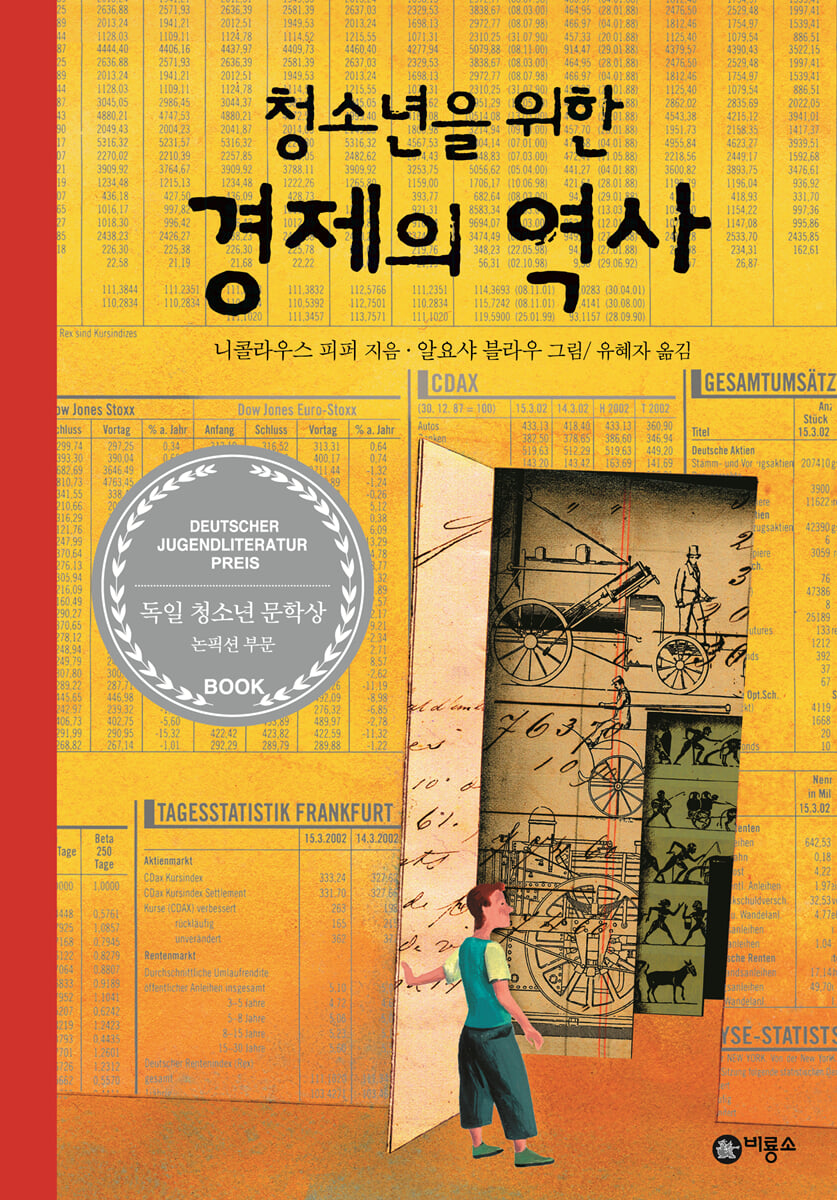
Nikolaus Pfeiffer, author of the youth novel Felix Loves Money, which explains the economy in the easiest way to understand, has revised and published 『A History of Economics for Young People』 by Biryongso.
This book, winner of the German Youth Literature Award in the nonfiction category, explains the principles, concepts, and origins of economics in an easy and fun way through 34 important events in world history.
You can see at a glance everything from the agricultural revolution, the first economic activity in human history, to economic activities in ancient and medieval times, the establishment and development of capitalism, and the future of the world economy.
The chapters begin with quirky questions about economics and history, such as, "What was humanity's first job?", "Did slavery help the economy?", "What should the government do in a recession?", and "How did the two world wars affect the economy?"
It is structured in a way that provides clear answers to questions in an easy-to-read, story-like format.
The appendix, “Economic Common Sense at a Glance,” provides clear and easy-to-understand explanations of confusing economic terms.
The revised edition published this time is a convenient paperback book for readers to carry around and read.
Additionally, we have applied the latest spelling and refined the sentences to make them easier to read.
This book, winner of the German Youth Literature Award in the nonfiction category, explains the principles, concepts, and origins of economics in an easy and fun way through 34 important events in world history.
You can see at a glance everything from the agricultural revolution, the first economic activity in human history, to economic activities in ancient and medieval times, the establishment and development of capitalism, and the future of the world economy.
The chapters begin with quirky questions about economics and history, such as, "What was humanity's first job?", "Did slavery help the economy?", "What should the government do in a recession?", and "How did the two world wars affect the economy?"
It is structured in a way that provides clear answers to questions in an easy-to-read, story-like format.
The appendix, “Economic Common Sense at a Glance,” provides clear and easy-to-understand explanations of confusing economic terms.
The revised edition published this time is a convenient paperback book for readers to carry around and read.
Additionally, we have applied the latest spelling and refined the sentences to make them easier to read.
- You can preview some of the book's contents.
Preview
index
Chapter 1: The Ancient and Medieval Economy
When did humans start engaging in economic activities?
What was the first profession of mankind?
How did people get what they needed in the old days?
Why did people have to be ruled by kings?
Why did merchants write contracts?
Why did the Sumerians make coins?
How has private property affected the economy?
The Roman Empire that dominated the world economy
Labor is something only slaves do?
How is the market price determined?
The Crusades that enriched the European economy
Changes in economic life since the invention of the clock
Chapter 2: The Establishment and Development of Capitalism
Why were spices so expensive?
Why did the price revolution and commercial revolution occur?
Did slavery help the economy?
Can you borrow money based on credit alone?
Europe's greatest capitalist who shook the throne
The tulip mania that swept the Netherlands
Exports are good, imports are bad?
The flow of the economy, like blood circulation
Leave the market to the invisible hand!
The winds of change brought about by the Industrial Revolution
Who is the richest person in the world?
Why did people have to go to the factories?
Chapter 3: The Future of the World Economy
What changes did mass production bring?
What are the economic causes of imperialism?
What should the government do during a recession?
Why did the planned economy fail?
The power of the market economy that created the Miracle on the Rhine
What role will economic institutions play?
What if taxes increase because of welfare policies?
How much does a CEO earn?
The era of financial markets has begun
The future of the global economy
Author's Note: Knowing history reveals the economy.
Appendix: Economic Common Sense at a Glance
When did humans start engaging in economic activities?
What was the first profession of mankind?
How did people get what they needed in the old days?
Why did people have to be ruled by kings?
Why did merchants write contracts?
Why did the Sumerians make coins?
How has private property affected the economy?
The Roman Empire that dominated the world economy
Labor is something only slaves do?
How is the market price determined?
The Crusades that enriched the European economy
Changes in economic life since the invention of the clock
Chapter 2: The Establishment and Development of Capitalism
Why were spices so expensive?
Why did the price revolution and commercial revolution occur?
Did slavery help the economy?
Can you borrow money based on credit alone?
Europe's greatest capitalist who shook the throne
The tulip mania that swept the Netherlands
Exports are good, imports are bad?
The flow of the economy, like blood circulation
Leave the market to the invisible hand!
The winds of change brought about by the Industrial Revolution
Who is the richest person in the world?
Why did people have to go to the factories?
Chapter 3: The Future of the World Economy
What changes did mass production bring?
What are the economic causes of imperialism?
What should the government do during a recession?
Why did the planned economy fail?
The power of the market economy that created the Miracle on the Rhine
What role will economic institutions play?
What if taxes increase because of welfare policies?
How much does a CEO earn?
The era of financial markets has begun
The future of the global economy
Author's Note: Knowing history reveals the economy.
Appendix: Economic Common Sense at a Glance
Publisher's Review
A smart textbook that can be used to study both economics and world history.
In this book, the author chose ‘history’ as a tool to effectively explain the economy.
The first purpose of Columbus's exploration in 1492 was gold, and there is a historical background to this, which is that after the Crusades, Europeans began using gold as currency.
By learning specifically about how the history of Europeans' exploration of new sea routes is related to the use of currency, you can upgrade your knowledge of economic concepts as well as history.
Moreover, Keynes's 'modified capitalism' can be understood simply and clearly when connected to the historical event of the Great Depression of 1929.
With a quarter of all American workers unemployed and global trade volumes down 65 percent, "modified capitalism," which requires active government intervention in the market, was a necessary element for economic recovery.
The role of banking and the power of capital are explained through the Fugger family, who became the world's greatest bankers with their extraordinary information power. The case of Germany, which achieved remarkable economic growth after its defeat in two world wars, so remarkable that it was called the "Miracle on the Rhine," provides an insight into the meaning and principles of a market economy.
It also clearly exposes the problems and contradictions of capitalism, such as the gap between the rich and the poor and class conflict, to help young people develop a balanced perspective on the economy.
An essential textbook that fosters diverse perspectives through the background of economic phenomena.
To truly understand the economy, you must look at and understand the politics, society, and culture of the time.
This book presents young people with diverse perspectives on social phenomena by tying together the historical significance, developmental processes, and outcomes of each economic phenomenon into a single narrative, fostering their ability to integrate and think about them as a single whole.
In the section "Did Slavery Benefit the Economy?", the author introduces historical facts, such as the causes of slavery and the development of the slave trade, along with the perspectives of world-renowned economists on slavery.
By presenting the slave system from various perspectives, including the perspective of Europe, which enjoyed enormous economic prosperity by utilizing the labor of cheap black slaves, as well as the perspective of the countless black slaves who lost their lives while working tirelessly in inhumane conditions, it persuasively tells the story of the injustice of slavery and human dignity.
In these days when integrated education is emphasized, the ability to examine a phenomenon from multiple perspectives is a key skill that young people must possess.
By reading through the 34 chapters of this book, readers will have the opportunity to grasp the fundamentals, principles, and origins of economic concepts while simultaneously gaining a chronological understanding of world history.
In this book, the author chose ‘history’ as a tool to effectively explain the economy.
The first purpose of Columbus's exploration in 1492 was gold, and there is a historical background to this, which is that after the Crusades, Europeans began using gold as currency.
By learning specifically about how the history of Europeans' exploration of new sea routes is related to the use of currency, you can upgrade your knowledge of economic concepts as well as history.
Moreover, Keynes's 'modified capitalism' can be understood simply and clearly when connected to the historical event of the Great Depression of 1929.
With a quarter of all American workers unemployed and global trade volumes down 65 percent, "modified capitalism," which requires active government intervention in the market, was a necessary element for economic recovery.
The role of banking and the power of capital are explained through the Fugger family, who became the world's greatest bankers with their extraordinary information power. The case of Germany, which achieved remarkable economic growth after its defeat in two world wars, so remarkable that it was called the "Miracle on the Rhine," provides an insight into the meaning and principles of a market economy.
It also clearly exposes the problems and contradictions of capitalism, such as the gap between the rich and the poor and class conflict, to help young people develop a balanced perspective on the economy.
An essential textbook that fosters diverse perspectives through the background of economic phenomena.
To truly understand the economy, you must look at and understand the politics, society, and culture of the time.
This book presents young people with diverse perspectives on social phenomena by tying together the historical significance, developmental processes, and outcomes of each economic phenomenon into a single narrative, fostering their ability to integrate and think about them as a single whole.
In the section "Did Slavery Benefit the Economy?", the author introduces historical facts, such as the causes of slavery and the development of the slave trade, along with the perspectives of world-renowned economists on slavery.
By presenting the slave system from various perspectives, including the perspective of Europe, which enjoyed enormous economic prosperity by utilizing the labor of cheap black slaves, as well as the perspective of the countless black slaves who lost their lives while working tirelessly in inhumane conditions, it persuasively tells the story of the injustice of slavery and human dignity.
In these days when integrated education is emphasized, the ability to examine a phenomenon from multiple perspectives is a key skill that young people must possess.
By reading through the 34 chapters of this book, readers will have the opportunity to grasp the fundamentals, principles, and origins of economic concepts while simultaneously gaining a chronological understanding of world history.
GOODS SPECIFICS
- Date of issue: January 30, 2024
- Page count, weight, size: 248 pages | 322g | 143*205*20mm
- ISBN13: 9788949187358
- ISBN10: 8949187353
You may also like
카테고리
korean


korean

![GQ KOREA Mark (Monthly): December [2025]](http://librairie.coreenne.fr/cdn/shop/files/8ef265dbbfbf186523ed75ba7319009d.jpg?v=1765340328&width=3840)


