

All About Nuclear Weapons
 |
Description
Book Introduction
The fourth story in the Illustoria series
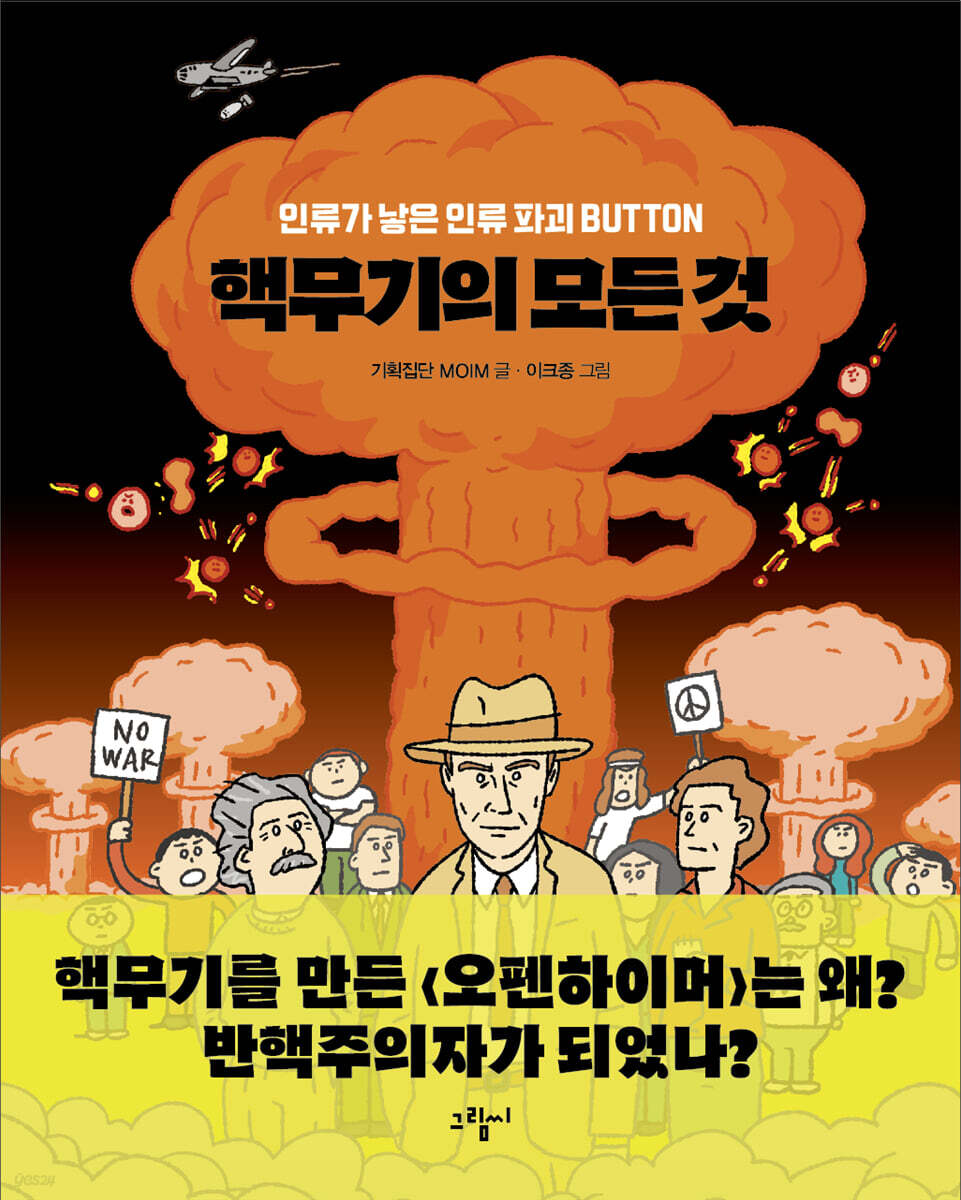
All About Nuclear Weapons
We've unraveled the essential stories we need to know as we navigate the present and future, all with illustrations! "Illustratoria" (a series name created by combining "illustration" with the Italian word for history, "storia") is written in short, easy-to-read pages, while the lively and sophisticated illustrations enrich the story, enhancing immersion.
This is how the Illustratoria series was born! The first is "The Selma March, the 87km that Changed the World," the second is "The Secret of Clothes Made Quickly and Discarded Quickly, Fast Fashion," the third is "The European Colonial Wars that Changed the Map, the Scramble for Africa," and the fourth is "The Button for Human Destruction Created by Humanity, Everything About Nuclear Weapons," which tells the story of the world's nuclear weapons, illustrated by cartoonist Ikjong, who creates cartoons that make you feel good just by looking at them.
"All About Nuclear Weapons" contains everything we need to know about nuclear weapons, from their birth to the threat they pose to us living on the Korean Peninsula today, and to all of humanity around the world.
While going through the principles of nuclear weapons and the history of their development step by step, it also explains how nuclear weapons, created by the greatest scientists of the time, including Oppenheimer, Richard Feynman, and Enrico Fermi, functioned in the international community when they fell into the hands of politicians, and why the world's major countries desperately sought to possess nuclear weapons, through the background of each country's nuclear weapons development.
It also addresses why our country could not possess nuclear weapons and how we should view North Korea's nuclear issue.
If we look at history through the lens of 'nuclear power,' we will realize that the desire of each country to seize the initiative was condensed into nuclear weapons, and that we must not overlook the 'anti-nuclear' cry of Oppenheimer, who, after successfully developing nuclear weapons, rebuked himself and cried out, "I am now death, the destroyer of worlds."
This book was written with the hope that we would have a critical perspective on the nuclear weapons that threaten us and not lose interest in them.
And this story, which can feel as complex as a nuclear weapon with countless principles, will be read with ease thanks to the lighthearted and concise illustrations of author Ikjong.
All About Nuclear Weapons
We've unraveled the essential stories we need to know as we navigate the present and future, all with illustrations! "Illustratoria" (a series name created by combining "illustration" with the Italian word for history, "storia") is written in short, easy-to-read pages, while the lively and sophisticated illustrations enrich the story, enhancing immersion.
This is how the Illustratoria series was born! The first is "The Selma March, the 87km that Changed the World," the second is "The Secret of Clothes Made Quickly and Discarded Quickly, Fast Fashion," the third is "The European Colonial Wars that Changed the Map, the Scramble for Africa," and the fourth is "The Button for Human Destruction Created by Humanity, Everything About Nuclear Weapons," which tells the story of the world's nuclear weapons, illustrated by cartoonist Ikjong, who creates cartoons that make you feel good just by looking at them.
"All About Nuclear Weapons" contains everything we need to know about nuclear weapons, from their birth to the threat they pose to us living on the Korean Peninsula today, and to all of humanity around the world.
While going through the principles of nuclear weapons and the history of their development step by step, it also explains how nuclear weapons, created by the greatest scientists of the time, including Oppenheimer, Richard Feynman, and Enrico Fermi, functioned in the international community when they fell into the hands of politicians, and why the world's major countries desperately sought to possess nuclear weapons, through the background of each country's nuclear weapons development.
It also addresses why our country could not possess nuclear weapons and how we should view North Korea's nuclear issue.
If we look at history through the lens of 'nuclear power,' we will realize that the desire of each country to seize the initiative was condensed into nuclear weapons, and that we must not overlook the 'anti-nuclear' cry of Oppenheimer, who, after successfully developing nuclear weapons, rebuked himself and cried out, "I am now death, the destroyer of worlds."
This book was written with the hope that we would have a critical perspective on the nuclear weapons that threaten us and not lose interest in them.
And this story, which can feel as complex as a nuclear weapon with countless principles, will be read with ease thanks to the lighthearted and concise illustrations of author Ikjong.
- You can preview some of the book's contents.
Preview
index
prolog
What on earth have we created?
Part 1: The Birth of Nuclear Weapons
Atoms and nuclei
nuclear fission
All About Uranium
nuclear weapons development
-Step 1: Highly enriched uranium and nuclear reprocessing
-Stage 2, detonator
Nuclear weapons are not meant to be used!
The first nuclear test, 'Trinity'
The Secret of Energy, E=mc²
Part 2: Nuclear weapons, are they really going to be launched?
Manhattan Project
Nuclear weapons, are you really going to fire them?
two atomic bombs
Who was the atomic bomb dropped on?
Part 3: Nuclear weapons, why should only you have them?
The beginning of the Cold War
Nuclear energy becomes an international issue
America's Monopoly and the World's Backlash
Bikini Atoll
The evolution of the nuclear weapons age
-The United States and the Soviet Union
-England and France
The hydrogen bomb race among the great powers
Part 4: Anti-nuclear movement by nuclear weapons developers
The atomic bomb developer accused of being a spy
Mechanism
The beginning of the anti-nuclear movement
Part 5: War, the Temptation of Nuclear Weapons
The Korean War and Nuclear Weapons
Lessons from War (?): China's Development
Vietnam War
Part 6: Nuclear weapons are banned from now on?
International Atomic Energy Agency
Nuclear Non-Proliferation Treaty
How could we have nuclear weapons after the NPT?
-India
-Pakistan
-Israel
Is a world without nuclear weapons possible?
Part 7: The Korean Peninsula and Nuclear Weapons
We were the first to develop nuclear weapons.
North Korea and nuclear weapons
Libya model
Is denuclearization of the Korean Peninsula possible?
-Geneva Agreement
-Six-party talks
We who live on the Korean Peninsula now…
What on earth have we created?
Part 1: The Birth of Nuclear Weapons
Atoms and nuclei
nuclear fission
All About Uranium
nuclear weapons development
-Step 1: Highly enriched uranium and nuclear reprocessing
-Stage 2, detonator
Nuclear weapons are not meant to be used!
The first nuclear test, 'Trinity'
The Secret of Energy, E=mc²
Part 2: Nuclear weapons, are they really going to be launched?
Manhattan Project
Nuclear weapons, are you really going to fire them?
two atomic bombs
Who was the atomic bomb dropped on?
Part 3: Nuclear weapons, why should only you have them?
The beginning of the Cold War
Nuclear energy becomes an international issue
America's Monopoly and the World's Backlash
Bikini Atoll
The evolution of the nuclear weapons age
-The United States and the Soviet Union
-England and France
The hydrogen bomb race among the great powers
Part 4: Anti-nuclear movement by nuclear weapons developers
The atomic bomb developer accused of being a spy
Mechanism
The beginning of the anti-nuclear movement
Part 5: War, the Temptation of Nuclear Weapons
The Korean War and Nuclear Weapons
Lessons from War (?): China's Development
Vietnam War
Part 6: Nuclear weapons are banned from now on?
International Atomic Energy Agency
Nuclear Non-Proliferation Treaty
How could we have nuclear weapons after the NPT?
-India
-Pakistan
-Israel
Is a world without nuclear weapons possible?
Part 7: The Korean Peninsula and Nuclear Weapons
We were the first to develop nuclear weapons.
North Korea and nuclear weapons
Libya model
Is denuclearization of the Korean Peninsula possible?
-Geneva Agreement
-Six-party talks
We who live on the Korean Peninsula now…
Detailed image
.jpg)
Into the book
The scientists working on the Manhattan Project, who witnessed the immense destructive power, realized that something was wrong.
The power of the new bomb was beyond their imagination, and if it were used, it was clear that the future of humanity would be doomed.
--- p.56
The possession of nuclear weapons on Earth is not a fight between justice and injustice, but a product of vested interests.
A world without nuclear weapons cannot be achieved through UN sanctions.
Because no country with nuclear weapons will give them up.
And as long as there are countries with nuclear weapons, there will inevitably be countries that want to have nuclear weapons.
The power of the new bomb was beyond their imagination, and if it were used, it was clear that the future of humanity would be doomed.
--- p.56
The possession of nuclear weapons on Earth is not a fight between justice and injustice, but a product of vested interests.
A world without nuclear weapons cannot be achieved through UN sanctions.
Because no country with nuclear weapons will give them up.
And as long as there are countries with nuclear weapons, there will inevitably be countries that want to have nuclear weapons.
--- p.147
Publisher's Review
People〉Buildings〉Cities〉Countries...
Next is Earth?
Human weapons have evolved from weapons that could initially kill one person (at a time), to weapons that could blow up a building, weapons that could reduce a city to ruins, and now weapons that could instantly destroy a nation.
Where will we go next? How powerful a weapon must humanity create before we are satisfied?
Now, some 68 years after the Manhattan Project and the first use of nuclear weapons, weapons of a power that is laughable in comparison to those of that time are being created.
When the United States dropped atomic weapons on Hiroshima and Nagasaki, Japan in 1945, the war ended, but the war between nuclear weapons and humanity began.
Discovery of new energy
It was the discovery of energy that mankind had never experienced before.
This energy, hidden within the uranium nucleus, is released simultaneously with fission, and its power is thousands of times greater than the energy previously used by mankind.
The energy discovered by German scientists was nuclear fission energy.
It is also the principle of the atomic bomb.
The Nazi regime, which started World War II, immediately focused on developing the atomic bomb.
Those who knew this fact and felt fear were not from the warring countries, but from scientists who had come to the United States to escape Nazi tyranny.
Scientists Einstein and Szilard sent a letter to the United States urging the development of nuclear weapons ahead of the Nazi regime, and when the United States entered the war after the Japanese attack on Pearl Harbor, it invested $22 billion in today's currency and started a nuclear weapons development project.
This is the 'Manhattan Project', which mobilized the greatest scientists of the 20th century, including Oppenheimer, Richard Feynman, Enrico Fermi, and Hans Beve.
From the hands of scientists to the hands of politicians
In July 1945, three years after the Manhattan Project began, a massive mushroom cloud rose over the New Mexico desert, signaling the successful development of the atomic bomb.
However, this nuclear weapon was transformed from the achievement of scientists into a weapon of the U.S. government, and on August 6 and 9, 1945, less than a month after the announcement of its successful development, it was dropped on Hiroshima and Nagasaki, Japan, ending World War II.
Did nuclear weapons truly end the war? Many scholars argue that the US dropping of the atomic bomb was a political measure, not a military necessity, as a warning to the Soviet Union, which would contend for global hegemony after World War II.
From now on, the world will enter a nuclear race!
After the end of World War II and the beginning of the Cold War, a nuclear arms race between the United States and the Soviet Union naturally emerged.
Because nothing was better suited as a card to subdue the opponent and ensure safety than nuclear weapons.
The world's major powers have jumped into the development of nuclear weapons, and are now working to develop even more powerful ones, even hydrogen bombs that are powerful enough to obliterate a country.
As a result, humanity can no longer escape the threat of nuclear weapons.
Scientists' Rebellion(?) Anti-Nuclear Movement by Nuclear Weapons Developers
Oppenheimer is a nuclear weapons developer known as the 'father of the atomic bomb.'
So he joined the anti-nuclear movement? It didn't take long for him to realize just how horrific the weapon he had created was.
The moment Oppenheimer confirmed the power of nuclear weapons and realized that 'nuclear weapons' would function as a threat rather than a means of peace, he opposed the development of the hydrogen bomb and joined the anti-nuclear movement. However, since nuclear weapons were already in the hands of politicians, his remarks were a thorn in the side of the U.S. government.
In the end, he became a victim of McCarthyism, the so-called eradication of communism.
However, the anti-nuclear movement of scientists did not stop, and scientists who participated in the Manhattan Project came together to form the Federation of American Scientists (FAS).
Einstein also founded the Pugwash Conference, a non-governmental international solidarity organization centered on scientists, together with British philosopher Russell.
Both organizations continue to pursue a world without nuclear weapons and war, and are working to halt nuclear testing and reduce nuclear weapons.
A hot potato for us: North Korea and nuclear weapons
For us living on the Korean Peninsula, the biggest concern is probably the nuclear weapons possessed by North Korea.
North Korea, which began developing nuclear weapons in 2006, conducted a total of six nuclear tests through 2017.
While enduring the backlash and pressure from the international community.
Currently, North Korea is demanding recognition as a nuclear power and is not stopping its nuclear development.
Because of this, we too live with the risk of an unintended nuclear war.
If you were to ask 50 million people how to resolve the North Korean nuclear issue, you might get 50 million different answers.
That's probably because the issues surrounding nuclear weapons are more complex than untangling them.
But one thing is self-evident.
Looking back at history, we see that in the 1970s, when North Korea did not have nuclear weapons, then-President Park Chung-hee was the first to develop nuclear weapons on the Korean Peninsula.
If we were the country that now possessed nuclear weapons, would we truly be afraid of them and oppose their development? Wouldn't we need to face this issue from a perspective that transcends our own country and serves all of humanity?
Next is Earth?
Human weapons have evolved from weapons that could initially kill one person (at a time), to weapons that could blow up a building, weapons that could reduce a city to ruins, and now weapons that could instantly destroy a nation.
Where will we go next? How powerful a weapon must humanity create before we are satisfied?
Now, some 68 years after the Manhattan Project and the first use of nuclear weapons, weapons of a power that is laughable in comparison to those of that time are being created.
When the United States dropped atomic weapons on Hiroshima and Nagasaki, Japan in 1945, the war ended, but the war between nuclear weapons and humanity began.
Discovery of new energy
It was the discovery of energy that mankind had never experienced before.
This energy, hidden within the uranium nucleus, is released simultaneously with fission, and its power is thousands of times greater than the energy previously used by mankind.
The energy discovered by German scientists was nuclear fission energy.
It is also the principle of the atomic bomb.
The Nazi regime, which started World War II, immediately focused on developing the atomic bomb.
Those who knew this fact and felt fear were not from the warring countries, but from scientists who had come to the United States to escape Nazi tyranny.
Scientists Einstein and Szilard sent a letter to the United States urging the development of nuclear weapons ahead of the Nazi regime, and when the United States entered the war after the Japanese attack on Pearl Harbor, it invested $22 billion in today's currency and started a nuclear weapons development project.
This is the 'Manhattan Project', which mobilized the greatest scientists of the 20th century, including Oppenheimer, Richard Feynman, Enrico Fermi, and Hans Beve.
From the hands of scientists to the hands of politicians
In July 1945, three years after the Manhattan Project began, a massive mushroom cloud rose over the New Mexico desert, signaling the successful development of the atomic bomb.
However, this nuclear weapon was transformed from the achievement of scientists into a weapon of the U.S. government, and on August 6 and 9, 1945, less than a month after the announcement of its successful development, it was dropped on Hiroshima and Nagasaki, Japan, ending World War II.
Did nuclear weapons truly end the war? Many scholars argue that the US dropping of the atomic bomb was a political measure, not a military necessity, as a warning to the Soviet Union, which would contend for global hegemony after World War II.
From now on, the world will enter a nuclear race!
After the end of World War II and the beginning of the Cold War, a nuclear arms race between the United States and the Soviet Union naturally emerged.
Because nothing was better suited as a card to subdue the opponent and ensure safety than nuclear weapons.
The world's major powers have jumped into the development of nuclear weapons, and are now working to develop even more powerful ones, even hydrogen bombs that are powerful enough to obliterate a country.
As a result, humanity can no longer escape the threat of nuclear weapons.
Scientists' Rebellion(?) Anti-Nuclear Movement by Nuclear Weapons Developers
Oppenheimer is a nuclear weapons developer known as the 'father of the atomic bomb.'
So he joined the anti-nuclear movement? It didn't take long for him to realize just how horrific the weapon he had created was.
The moment Oppenheimer confirmed the power of nuclear weapons and realized that 'nuclear weapons' would function as a threat rather than a means of peace, he opposed the development of the hydrogen bomb and joined the anti-nuclear movement. However, since nuclear weapons were already in the hands of politicians, his remarks were a thorn in the side of the U.S. government.
In the end, he became a victim of McCarthyism, the so-called eradication of communism.
However, the anti-nuclear movement of scientists did not stop, and scientists who participated in the Manhattan Project came together to form the Federation of American Scientists (FAS).
Einstein also founded the Pugwash Conference, a non-governmental international solidarity organization centered on scientists, together with British philosopher Russell.
Both organizations continue to pursue a world without nuclear weapons and war, and are working to halt nuclear testing and reduce nuclear weapons.
A hot potato for us: North Korea and nuclear weapons
For us living on the Korean Peninsula, the biggest concern is probably the nuclear weapons possessed by North Korea.
North Korea, which began developing nuclear weapons in 2006, conducted a total of six nuclear tests through 2017.
While enduring the backlash and pressure from the international community.
Currently, North Korea is demanding recognition as a nuclear power and is not stopping its nuclear development.
Because of this, we too live with the risk of an unintended nuclear war.
If you were to ask 50 million people how to resolve the North Korean nuclear issue, you might get 50 million different answers.
That's probably because the issues surrounding nuclear weapons are more complex than untangling them.
But one thing is self-evident.
Looking back at history, we see that in the 1970s, when North Korea did not have nuclear weapons, then-President Park Chung-hee was the first to develop nuclear weapons on the Korean Peninsula.
If we were the country that now possessed nuclear weapons, would we truly be afraid of them and oppose their development? Wouldn't we need to face this issue from a perspective that transcends our own country and serves all of humanity?
GOODS SPECIFICS
- Date of issue: September 11, 2023
- Format: Hardcover book binding method guide
- Page count, weight, size: 176 pages | 380g | 153*190*12mm
- ISBN13: 9791189231514
- ISBN10: 1189231514
You may also like
카테고리
korean


korean

![GQ KOREA Mark (Monthly): December [2025]](http://librairie.coreenne.fr/cdn/shop/files/8ef265dbbfbf186523ed75ba7319009d.jpg?v=1765340328&width=3840)


