

Jerusalem Electricity
 |
Description
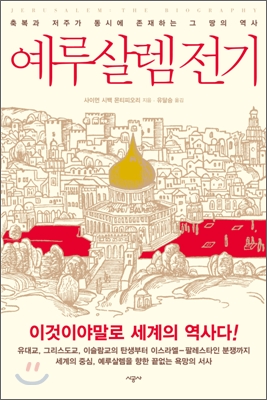
Book Introduction
A city where divine blessings and human greed coexist.
A narrative of endless desire for Jerusalem
This is a book that tells the entire history of the land of Jerusalem.
It contains the grand and sacred history of the land, as well as the history of the countless individuals and peoples who lived there, roamed there, and sought to possess it.
This book is not simply focused on religion or conflict, nor is it a teleological narrative that argues that all history was inevitable.
By chronicling the entire life of Jerusalem from ancient times to the present, it provides the deepest and broadest understanding of Jerusalem.
A comprehensive understanding of Jerusalem provides the most appropriate and clear answer to the question "why" about the world we live in.
Because the history of Jerusalem is the history of the world.
It would not be an exaggeration to say that almost all of the current international conflicts, terrorism, strife, and anguish originate in Jerusalem.
As such, Jerusalem holds a very important position in world history.
A proper understanding of Jerusalem leads to a proper understanding of the international community.
Jerusalem is no longer a sacred place only in the Bible.
Even for us living in the 21st century, that land still exists as a living, breathing, and speaking city, a sacred and desperate one.
A narrative of endless desire for Jerusalem
This is a book that tells the entire history of the land of Jerusalem.
It contains the grand and sacred history of the land, as well as the history of the countless individuals and peoples who lived there, roamed there, and sought to possess it.
This book is not simply focused on religion or conflict, nor is it a teleological narrative that argues that all history was inevitable.
By chronicling the entire life of Jerusalem from ancient times to the present, it provides the deepest and broadest understanding of Jerusalem.
A comprehensive understanding of Jerusalem provides the most appropriate and clear answer to the question "why" about the world we live in.
Because the history of Jerusalem is the history of the world.
It would not be an exaggeration to say that almost all of the current international conflicts, terrorism, strife, and anguish originate in Jerusalem.
As such, Jerusalem holds a very important position in world history.
A proper understanding of Jerusalem leads to a proper understanding of the international community.
Jerusalem is no longer a sacred place only in the Bible.
Even for us living in the 21st century, that land still exists as a living, breathing, and speaking city, a sacred and desperate one.
- You can preview some of the book's contents.
Preview
index
Introduction
Translator's Note
Prologue _ Dawn in Jerusalem
Part 1 Judaism
Chapter 1 David's World
Chapter 2: The Great Success of a Little One
Chapter 3: The Kingdom and the Temple
Chapter 4 Kings of Judah
Chapter 5 The Whore of Babylon
Chapter 6 The Persians
Chapter 7 The Macedonians
Chapter 8 The Maccabees
Chapter 9: The Rise of Rome
Chapter 10: The Herodian Dynasty
Chapter 11 Jesus Christ
Chapter 12 The End of the Herodian Dynasty
Chapter 13: The Death of Jerusalem
Part 2: Paganism
Chapter 14 The Jewish War Continues
Part 3 Christianity
Chapter 15: The Golden Age of Byzantium
Chapter 16: The Decline of Byzantium
Part 4 Islam
Chapter 17: The Arab Conquest Begins
Chapter 18: The Umayyad Dynasty and the Restoration of the Temple
Chapter 19: Abbasids, the distant monarchs
Chapter 20: Fatimid Family, Tolerance and Madness
Part 5: The Crusades
Chapter 21: Soldiers on a Pilgrimage
Chapter 22: The Rise of Outremer
Chapter 23: The Golden Age of Outremer
Chapter 24 Deadlock
Chapter 25: The Courage of the Leper King
Chapter 26: The Story of Saladin
Chapter 27: The Third Crusade
Chapter 28: The Saladin Dynasty
Part 6: Mamluk Dynasty
Chapter 29: The Sultan's Slave
Chapter 30: The Decline of the Mamluk Dynasty
Part 7: The Ottoman Empire
Chapter 31: Suleiman
Chapter 32: Myth and Messiah
Chapter 33: The Clans
Part 8 Empire
Chapter 34: Napoleon in Jerusalem
Chapter 35: Neo-Romanticism
Chapter 36: The Conquest of Albania
Chapter 37 Evangelicals
Chapter 38: The New City
Chapter 39: A New Religion
Chapter 40 Arab Cities, Imperial Cities
Chapter 41 Russia
Part 9 Zionism
Chapter 42: Zion, for their nation
Chapter 43: The Oud Player of Jerusalem
Chapter 44: World War
Chapter 45: The Balfour Declaration
Chapter 46: Christmas Presents
Chapter 47: The Victorious Nations and the Spoils of War
Chapter 48: The British Mandate
Chapter 49: The Arab Revolt
Chapter 50: The Dirty War
Chapter 51: Jewish Independence, Arab Disaster
Chapter 52: The Division of the Sects
Chapter 53: The Six-Day War, Reversals and Losses
Epilogue _ Morning in Jerusalem
Appendix (family tree, map, notes, bibliography, index)
Translator's Note
Prologue _ Dawn in Jerusalem
Part 1 Judaism
Chapter 1 David's World
Chapter 2: The Great Success of a Little One
Chapter 3: The Kingdom and the Temple
Chapter 4 Kings of Judah
Chapter 5 The Whore of Babylon
Chapter 6 The Persians
Chapter 7 The Macedonians
Chapter 8 The Maccabees
Chapter 9: The Rise of Rome
Chapter 10: The Herodian Dynasty
Chapter 11 Jesus Christ
Chapter 12 The End of the Herodian Dynasty
Chapter 13: The Death of Jerusalem
Part 2: Paganism
Chapter 14 The Jewish War Continues
Part 3 Christianity
Chapter 15: The Golden Age of Byzantium
Chapter 16: The Decline of Byzantium
Part 4 Islam
Chapter 17: The Arab Conquest Begins
Chapter 18: The Umayyad Dynasty and the Restoration of the Temple
Chapter 19: Abbasids, the distant monarchs
Chapter 20: Fatimid Family, Tolerance and Madness
Part 5: The Crusades
Chapter 21: Soldiers on a Pilgrimage
Chapter 22: The Rise of Outremer
Chapter 23: The Golden Age of Outremer
Chapter 24 Deadlock
Chapter 25: The Courage of the Leper King
Chapter 26: The Story of Saladin
Chapter 27: The Third Crusade
Chapter 28: The Saladin Dynasty
Part 6: Mamluk Dynasty
Chapter 29: The Sultan's Slave
Chapter 30: The Decline of the Mamluk Dynasty
Part 7: The Ottoman Empire
Chapter 31: Suleiman
Chapter 32: Myth and Messiah
Chapter 33: The Clans
Part 8 Empire
Chapter 34: Napoleon in Jerusalem
Chapter 35: Neo-Romanticism
Chapter 36: The Conquest of Albania
Chapter 37 Evangelicals
Chapter 38: The New City
Chapter 39: A New Religion
Chapter 40 Arab Cities, Imperial Cities
Chapter 41 Russia
Part 9 Zionism
Chapter 42: Zion, for their nation
Chapter 43: The Oud Player of Jerusalem
Chapter 44: World War
Chapter 45: The Balfour Declaration
Chapter 46: Christmas Presents
Chapter 47: The Victorious Nations and the Spoils of War
Chapter 48: The British Mandate
Chapter 49: The Arab Revolt
Chapter 50: The Dirty War
Chapter 51: Jewish Independence, Arab Disaster
Chapter 52: The Division of the Sects
Chapter 53: The Six-Day War, Reversals and Losses
Epilogue _ Morning in Jerusalem
Appendix (family tree, map, notes, bibliography, index)
Into the book
We also have to answer these questions:
Of all the places in the world, why Jerusalem? It's far from the Mediterranean trade routes, water is scarce, the sun is scorching in summer, the wind is biting in winter, and the rugged mountains are unsuitable for living.
However, the reasons for choosing Jerusalem as the city of the temple were somewhat decisive and personal, as well as ecological and evolutionary.
That is, because the city was sacred for so long, its divinity became increasingly stronger.
Holiness requires not only spirituality and faith, but also legality and tradition.
A radical prophet offering a new vision must account for the preceding centuries and, using the accepted language of holiness (the language of the prophets who had revealed before), justify his revelation in a place that had long been sacred.
---p.12, Introduction
During a new 'dark age' that lasted for three centuries, the Hebrews became known as a strange little people who worshipped one god and settled in the narrow land of Canaan, where they founded the kingdom of Israel.
The formation of the Israelite people is revealed in the stories of the creation of the world, their origins, and their relationship with God.
They passed down these oral records and later wrote them down in sacred Hebrew script.
It was later synthesized into the Pentateuch, or the five books of Moses (Genesis, Exodus, Leviticus, Numbers, and Deuteronomy at the beginning of the Old Testament), and became the first part of the Jewish scriptures, the Tanakh.
The Bible is the greatest book in the world, but it is not a single document.
It is a mysterious library of intertwined texts, written and edited by unknown authors in different eras, each with different purposes.
---pp.57~58, Part 1 Judaism
At the time, no one knew why he accepted Christianity.
Like many men with terrible self-confidence, he worshipped his mother, Helena, who was an early convert to Christianity.
If his personal conversion was as dramatic as Paul's on the road to Damascus, his political embrace of Christianity was gradual.
…but choosing Christ was not inevitable.
It was purely a personal whim of Constantine.
By 312, Manichaenism and Mithraism were more popular than Christianity.
Constantine could have easily chosen one of them.
If that were the case, Europe might have become a Manichaean or Mithraic country today.
---p.258, Part 3 Christianity
Muhammad was an inspired dreamer.
He preached universal revelation and the values of equality and justice, as well as obedience to the one God (Islam) in exchange for the virtue of a pure life, through easily acquired rituals and rules regarding life and death.
He welcomed converts.
They respected the Bible and considered David, Solomon, Moses, and Jesus to be prophets.
But his revelation surpassed the previous revelations.
The revelation about the fate of Jerusalem was also significant, and Muhammad emphasized the revelation of what he called the Judgment, the Last Day, or the Hour, and the sense of urgency that the revelation was about to come gave dynamism to early Islam.
The Quran says, “What will make you know that the judgment is near, which only God knows?”
All Jewish and Christian literature emphasizes that it can only happen in Jerusalem. ---p.297, Part 4 Islam
The Crusades were an idea that came from one man.
On November 27, 1095, Pope Urban II gathered the nobles and common people at Clermont and gave a speech calling for the conquest of Jerusalem and the liberation of the Church of the Holy Sepulchre.
Urban considered it his life's mission to restore the power and prestige of the Catholic Church.
He developed a new logic of holy war to revive Christianity and the papacy, and rationalized the elimination of paganism in exchange for the atonement of sin.
This was an unprecedented indulgence in Christianizing Muslim jihad, but it fit well with the popular veneration of Jerusalem.
In an age of religious madness, an age of miraculous signs, Jerusalem was the city of Christ, the supreme holy place and the heavenly kingdom.
Yet, it was a place familiar to all Christians, evoked through sermons, stories of pilgrims, the Passion play, paintings, and relics.
But Urban also fueled concerns about the safety of the Church of the Holy Sepulchre by reminding people of the massacre of pilgrims and the atrocities of the Turkmen.
---p.355, Part 5: The Crusades
On November 9, Balfour issued the declaration and included Lord Rothschild's name.
The contents of the declaration were as follows:
“Her Majesty’s Government welcomes the establishment of a Jewish autonomous region in Palestine.
"It is clear that we will do nothing that might infringe upon the civil or religious rights of existing non-Jewish communities." Britain was later condemned by the Arabs as a cynical betrayal.
Britain promised Palestine to the Sharif, the Zionists and the French simultaneously, and it became part of the myth of the 'Great Arab Revolt'.
It was certainly cynical, but the promises made to Arabs and Jews were all short-term, reckless, and wartime political expedients.
---p.686~687, Part 9 Zionism
The history of negotiations since 1993, and the mental disparity between polite words and acts of distrust and violence, suggests that neither side is willing to make the compromises necessary to permanently share Jerusalem.
Even in the best of times, the harmony of heaven, people, and emotions in Jerusalem is a labyrinthine puzzle.
There were over 40 plans for Jerusalem in the 20th century, all of which failed, and there are currently at least 13 different models for sharing the Temple Mount alone.
In 2010, President Obama, in collaboration with Barack, pressured Netanyahu, who wielded power behind the scenes, to temporarily halt settlement construction in Jerusalem.
At the cost of one of the most bitter moments in US-Israeli relations, Obama finally brought the two sides to the table, but the talks were icy and brief.
Of all the places in the world, why Jerusalem? It's far from the Mediterranean trade routes, water is scarce, the sun is scorching in summer, the wind is biting in winter, and the rugged mountains are unsuitable for living.
However, the reasons for choosing Jerusalem as the city of the temple were somewhat decisive and personal, as well as ecological and evolutionary.
That is, because the city was sacred for so long, its divinity became increasingly stronger.
Holiness requires not only spirituality and faith, but also legality and tradition.
A radical prophet offering a new vision must account for the preceding centuries and, using the accepted language of holiness (the language of the prophets who had revealed before), justify his revelation in a place that had long been sacred.
---p.12, Introduction
During a new 'dark age' that lasted for three centuries, the Hebrews became known as a strange little people who worshipped one god and settled in the narrow land of Canaan, where they founded the kingdom of Israel.
The formation of the Israelite people is revealed in the stories of the creation of the world, their origins, and their relationship with God.
They passed down these oral records and later wrote them down in sacred Hebrew script.
It was later synthesized into the Pentateuch, or the five books of Moses (Genesis, Exodus, Leviticus, Numbers, and Deuteronomy at the beginning of the Old Testament), and became the first part of the Jewish scriptures, the Tanakh.
The Bible is the greatest book in the world, but it is not a single document.
It is a mysterious library of intertwined texts, written and edited by unknown authors in different eras, each with different purposes.
---pp.57~58, Part 1 Judaism
At the time, no one knew why he accepted Christianity.
Like many men with terrible self-confidence, he worshipped his mother, Helena, who was an early convert to Christianity.
If his personal conversion was as dramatic as Paul's on the road to Damascus, his political embrace of Christianity was gradual.
…but choosing Christ was not inevitable.
It was purely a personal whim of Constantine.
By 312, Manichaenism and Mithraism were more popular than Christianity.
Constantine could have easily chosen one of them.
If that were the case, Europe might have become a Manichaean or Mithraic country today.
---p.258, Part 3 Christianity
Muhammad was an inspired dreamer.
He preached universal revelation and the values of equality and justice, as well as obedience to the one God (Islam) in exchange for the virtue of a pure life, through easily acquired rituals and rules regarding life and death.
He welcomed converts.
They respected the Bible and considered David, Solomon, Moses, and Jesus to be prophets.
But his revelation surpassed the previous revelations.
The revelation about the fate of Jerusalem was also significant, and Muhammad emphasized the revelation of what he called the Judgment, the Last Day, or the Hour, and the sense of urgency that the revelation was about to come gave dynamism to early Islam.
The Quran says, “What will make you know that the judgment is near, which only God knows?”
All Jewish and Christian literature emphasizes that it can only happen in Jerusalem. ---p.297, Part 4 Islam
The Crusades were an idea that came from one man.
On November 27, 1095, Pope Urban II gathered the nobles and common people at Clermont and gave a speech calling for the conquest of Jerusalem and the liberation of the Church of the Holy Sepulchre.
Urban considered it his life's mission to restore the power and prestige of the Catholic Church.
He developed a new logic of holy war to revive Christianity and the papacy, and rationalized the elimination of paganism in exchange for the atonement of sin.
This was an unprecedented indulgence in Christianizing Muslim jihad, but it fit well with the popular veneration of Jerusalem.
In an age of religious madness, an age of miraculous signs, Jerusalem was the city of Christ, the supreme holy place and the heavenly kingdom.
Yet, it was a place familiar to all Christians, evoked through sermons, stories of pilgrims, the Passion play, paintings, and relics.
But Urban also fueled concerns about the safety of the Church of the Holy Sepulchre by reminding people of the massacre of pilgrims and the atrocities of the Turkmen.
---p.355, Part 5: The Crusades
On November 9, Balfour issued the declaration and included Lord Rothschild's name.
The contents of the declaration were as follows:
“Her Majesty’s Government welcomes the establishment of a Jewish autonomous region in Palestine.
"It is clear that we will do nothing that might infringe upon the civil or religious rights of existing non-Jewish communities." Britain was later condemned by the Arabs as a cynical betrayal.
Britain promised Palestine to the Sharif, the Zionists and the French simultaneously, and it became part of the myth of the 'Great Arab Revolt'.
It was certainly cynical, but the promises made to Arabs and Jews were all short-term, reckless, and wartime political expedients.
---p.686~687, Part 9 Zionism
The history of negotiations since 1993, and the mental disparity between polite words and acts of distrust and violence, suggests that neither side is willing to make the compromises necessary to permanently share Jerusalem.
Even in the best of times, the harmony of heaven, people, and emotions in Jerusalem is a labyrinthine puzzle.
There were over 40 plans for Jerusalem in the 20th century, all of which failed, and there are currently at least 13 different models for sharing the Temple Mount alone.
In 2010, President Obama, in collaboration with Barack, pressured Netanyahu, who wielded power behind the scenes, to temporarily halt settlement construction in Jerusalem.
At the cost of one of the most bitter moments in US-Israeli relations, Obama finally brought the two sides to the table, but the talks were icy and brief.
---pp.843~844, Epilogue
Publisher's Review
A city where divine blessings and human greed coexist.
The first attempt to uncover the entire life of Jerusalem!
The home of one god, the capital of two peoples, the temple of three religions.
Such an adjective can be applied only to one city on earth, and that is Jerusalem.
The land has never known a single moment of lasting peace throughout its long history, and has experienced countless cycles of destruction and construction.
Those who owned Jerusalem wanted to keep it forever, and those who did not wanted to take it away.
Through so many changes of hands, Jerusalem has become one of the most fascinating and conflicted cities in the world.
But why did the land have to be so destined? What was it that made it such a possessive city?
The new book, Jerusalem: The Biography, tells the entire history of the land of Jerusalem.
It contains the grand and sacred history of the land, as well as the history of the countless individuals and peoples who lived there, roamed there, and sought to possess it.
This book is not simply focused on religion or conflict, nor is it a teleological narrative that argues that all history was inevitable.
By chronicling the entire life of Jerusalem from ancient times to the present, it provides the deepest and broadest understanding of Jerusalem.
A comprehensive understanding of Jerusalem provides the most appropriate and clear answer to the question "why" about the world we live in.
Because the history of Jerusalem is the history of the world.
It would not be an exaggeration to say that almost all of the current international conflicts, terrorism, strife, and anguish originate in Jerusalem.
As such, Jerusalem holds a very important position in world history.
A proper understanding of Jerusalem leads to a proper understanding of the international community.
Jerusalem is no longer a sacred place only in the Bible.
Even for us living in the 21st century, that land still exists as a living, breathing, and speaking city, a sacred and desperate one.
A story that has never been seen before,
Describing Jerusalem as it really was
The author, Simon Sebag Montefiore, is Jewish.
He had been wandering around Jerusalem since childhood, and had absorbed history as the most factual of facts.
The author is also a descendant of Sir Moses Montefiore, a Zionist pioneer who fought for Jerusalem and the Jewish people.
Therefore, the author is perhaps the best and only narrator to describe the history of Jerusalem.
Montefiore said that he had read numerous books about Jerusalem, but he could not find one that was closest to the truth and revealed the true nature of Jerusalem, so he took up the pen himself.
After deciding to write a book, I spent a long time doing extensive research.
I met and talked with professors, archaeologists, families, and politicians one by one, and I visited archaeological sites until my feet were worn out.
As a result, he was able to discover materials that had never been revealed to the world before or had never been utilized.
All of these things are well-mixed in this book.
The author confesses that he feels as if he has been preparing to write this book his entire life.
Jerusalem, a place that exists on earth and in heaven, governed by faith and emotion, and which cannot be concisely expressed in words, was reborn at his fingertips and expressed more vividly than ever before.
The three religions of Abraham,
Unfolding the history of desire for that land
In this book, "The History of Jerusalem," we encounter the origins, birth, and development of the three religions that dominate the world (Judaism, Christianity, and Islam) in the midst of a long history.
The image of people worshipping one god but being different from one another, pointing to the same place but calling it by different names, and being in the same place but being unaware of one another as if only their own sects existed is revealed without the slightest bias.
All three Abrahamic religions have a history of owning Jerusalem.
However, because the land has been repeatedly taken over and taken from each other, it is not clear which religion is the real owner of the land.
The Jews, as a chosen people, have resided in Jerusalem.
They had a firm belief in God's blessings, a belief that no one could undermine.
The Jews began to disperse abroad in earnest due to the division of the Roman Empire.
However, even while living in the diaspora (a Jewish community outside of Palestine that maintains Jewish religious norms and customs), they strengthened their belief that the Messiah would come to Zion, and finally attempted to re-enter Jerusalem in the late 19th century.
And they finally established their own country in that land.
Christianity began with the death and resurrection of Jesus.
Although many sects arose due to controversies over whether or not Jesus was God, it seemed to have a smooth future after being selected as the state religion of the Byzantine Empire.
Christianity, which later endured a history of oppression under Islamic rule, sought a rebound through the Crusades that began in Western society.
However, as time passed, the Crusades lost their original spirit and became the seeds of conflict.
Islam began with the founding of Muhammad.
Jerusalem was the place where he ascended to heaven to receive divine revelation.
Therefore, Jerusalem was a holy place for Islam and it had to be protected.
It was perhaps natural that the Palestinians, Muslim Arabs who had lived in Jerusalem for 1,500 years and were expanding their influence, could not tolerate the Jews who were invading their land with the blind belief in Zionism.
That's how the Palestinians began to resist, and the uncomfortable history between the two continues to this day.
The history of Jerusalem, which has been lived alongside three religions, is very colorful and complex.
It was more than just belief in God, perhaps faith was a tool for conquest.
Whatever the truth, what they have lived through is undoubtedly a history of struggle, a history of blood, and a history of tears.
This may come as a shock to those who vaguely thought of Jerusalem as a beautiful religious holy place.
But when you understand the truth, your faith will become more solid.
Even the story of Jerusalem this morning,
The unfinished period of repeating history
《Jerusalem Electricity》 expands the story to 21st century Jerusalem.
Beyond the stuffed history, this book concludes with the story of Jerusalem this morning, or rather, the coming tomorrow.
After the Balfour Declaration of 1917, in which the British Cabinet supported the establishment of a "homeland for the Jews" in Palestine, a full-scale modern conflict over ownership of Jerusalem began.
After that, the Middle East War and Intifada broke out between Israel and Palestine.
Since 1993, long and drawn-out negotiations have continued.
One thing that is clear from these lengthy negotiations is that neither side has any plans to share Jerusalem.
The 2010 meeting between President Obama and the two sides produced no results, only a chilling atmosphere.
Jerusalem's present is as complex and nuanced as its past, whether in the Herodian, Crusader, or British periods.
It is unclear whether peace will ever come to Jerusalem, or whether Jerusalem will still exist in a few decades.
Professor Yoo Dal-seung of Hankuk University of Foreign Studies, who translated the book, said in the translator's note that this book could perhaps be seen as a misguided love story that mistakes unconditional possession of someone for love.
A yearning and obsession with the land that has lasted for thousands of years.
It will remain an unquenchable spark and dominate the international community with its unquenchable desire.
That is why we must focus on Jerusalem and why Jerusalem is the center of the world.
Jerusalem still exists today!
The first attempt to uncover the entire life of Jerusalem!
The home of one god, the capital of two peoples, the temple of three religions.
Such an adjective can be applied only to one city on earth, and that is Jerusalem.
The land has never known a single moment of lasting peace throughout its long history, and has experienced countless cycles of destruction and construction.
Those who owned Jerusalem wanted to keep it forever, and those who did not wanted to take it away.
Through so many changes of hands, Jerusalem has become one of the most fascinating and conflicted cities in the world.
But why did the land have to be so destined? What was it that made it such a possessive city?
The new book, Jerusalem: The Biography, tells the entire history of the land of Jerusalem.
It contains the grand and sacred history of the land, as well as the history of the countless individuals and peoples who lived there, roamed there, and sought to possess it.
This book is not simply focused on religion or conflict, nor is it a teleological narrative that argues that all history was inevitable.
By chronicling the entire life of Jerusalem from ancient times to the present, it provides the deepest and broadest understanding of Jerusalem.
A comprehensive understanding of Jerusalem provides the most appropriate and clear answer to the question "why" about the world we live in.
Because the history of Jerusalem is the history of the world.
It would not be an exaggeration to say that almost all of the current international conflicts, terrorism, strife, and anguish originate in Jerusalem.
As such, Jerusalem holds a very important position in world history.
A proper understanding of Jerusalem leads to a proper understanding of the international community.
Jerusalem is no longer a sacred place only in the Bible.
Even for us living in the 21st century, that land still exists as a living, breathing, and speaking city, a sacred and desperate one.
A story that has never been seen before,
Describing Jerusalem as it really was
The author, Simon Sebag Montefiore, is Jewish.
He had been wandering around Jerusalem since childhood, and had absorbed history as the most factual of facts.
The author is also a descendant of Sir Moses Montefiore, a Zionist pioneer who fought for Jerusalem and the Jewish people.
Therefore, the author is perhaps the best and only narrator to describe the history of Jerusalem.
Montefiore said that he had read numerous books about Jerusalem, but he could not find one that was closest to the truth and revealed the true nature of Jerusalem, so he took up the pen himself.
After deciding to write a book, I spent a long time doing extensive research.
I met and talked with professors, archaeologists, families, and politicians one by one, and I visited archaeological sites until my feet were worn out.
As a result, he was able to discover materials that had never been revealed to the world before or had never been utilized.
All of these things are well-mixed in this book.
The author confesses that he feels as if he has been preparing to write this book his entire life.
Jerusalem, a place that exists on earth and in heaven, governed by faith and emotion, and which cannot be concisely expressed in words, was reborn at his fingertips and expressed more vividly than ever before.
The three religions of Abraham,
Unfolding the history of desire for that land
In this book, "The History of Jerusalem," we encounter the origins, birth, and development of the three religions that dominate the world (Judaism, Christianity, and Islam) in the midst of a long history.
The image of people worshipping one god but being different from one another, pointing to the same place but calling it by different names, and being in the same place but being unaware of one another as if only their own sects existed is revealed without the slightest bias.
All three Abrahamic religions have a history of owning Jerusalem.
However, because the land has been repeatedly taken over and taken from each other, it is not clear which religion is the real owner of the land.
The Jews, as a chosen people, have resided in Jerusalem.
They had a firm belief in God's blessings, a belief that no one could undermine.
The Jews began to disperse abroad in earnest due to the division of the Roman Empire.
However, even while living in the diaspora (a Jewish community outside of Palestine that maintains Jewish religious norms and customs), they strengthened their belief that the Messiah would come to Zion, and finally attempted to re-enter Jerusalem in the late 19th century.
And they finally established their own country in that land.
Christianity began with the death and resurrection of Jesus.
Although many sects arose due to controversies over whether or not Jesus was God, it seemed to have a smooth future after being selected as the state religion of the Byzantine Empire.
Christianity, which later endured a history of oppression under Islamic rule, sought a rebound through the Crusades that began in Western society.
However, as time passed, the Crusades lost their original spirit and became the seeds of conflict.
Islam began with the founding of Muhammad.
Jerusalem was the place where he ascended to heaven to receive divine revelation.
Therefore, Jerusalem was a holy place for Islam and it had to be protected.
It was perhaps natural that the Palestinians, Muslim Arabs who had lived in Jerusalem for 1,500 years and were expanding their influence, could not tolerate the Jews who were invading their land with the blind belief in Zionism.
That's how the Palestinians began to resist, and the uncomfortable history between the two continues to this day.
The history of Jerusalem, which has been lived alongside three religions, is very colorful and complex.
It was more than just belief in God, perhaps faith was a tool for conquest.
Whatever the truth, what they have lived through is undoubtedly a history of struggle, a history of blood, and a history of tears.
This may come as a shock to those who vaguely thought of Jerusalem as a beautiful religious holy place.
But when you understand the truth, your faith will become more solid.
Even the story of Jerusalem this morning,
The unfinished period of repeating history
《Jerusalem Electricity》 expands the story to 21st century Jerusalem.
Beyond the stuffed history, this book concludes with the story of Jerusalem this morning, or rather, the coming tomorrow.
After the Balfour Declaration of 1917, in which the British Cabinet supported the establishment of a "homeland for the Jews" in Palestine, a full-scale modern conflict over ownership of Jerusalem began.
After that, the Middle East War and Intifada broke out between Israel and Palestine.
Since 1993, long and drawn-out negotiations have continued.
One thing that is clear from these lengthy negotiations is that neither side has any plans to share Jerusalem.
The 2010 meeting between President Obama and the two sides produced no results, only a chilling atmosphere.
Jerusalem's present is as complex and nuanced as its past, whether in the Herodian, Crusader, or British periods.
It is unclear whether peace will ever come to Jerusalem, or whether Jerusalem will still exist in a few decades.
Professor Yoo Dal-seung of Hankuk University of Foreign Studies, who translated the book, said in the translator's note that this book could perhaps be seen as a misguided love story that mistakes unconditional possession of someone for love.
A yearning and obsession with the land that has lasted for thousands of years.
It will remain an unquenchable spark and dominate the international community with its unquenchable desire.
That is why we must focus on Jerusalem and why Jerusalem is the center of the world.
Jerusalem still exists today!
GOODS SPECIFICS
- Date of issue: May 30, 2012
- Format: Hardcover book binding method guide
- Page count, weight, size: 964 pages | 1,424g | 158*232*40mm
- ISBN13: 9788952765505
- ISBN10: 8952765508
You may also like
카테고리
korean


korean

![GQ KOREA Mark (Monthly): December [2025]](http://librairie.coreenne.fr/cdn/shop/files/8ef265dbbfbf186523ed75ba7319009d.jpg?v=1765340328&width=3840)


