

Am I me from the cells? When did I become me?
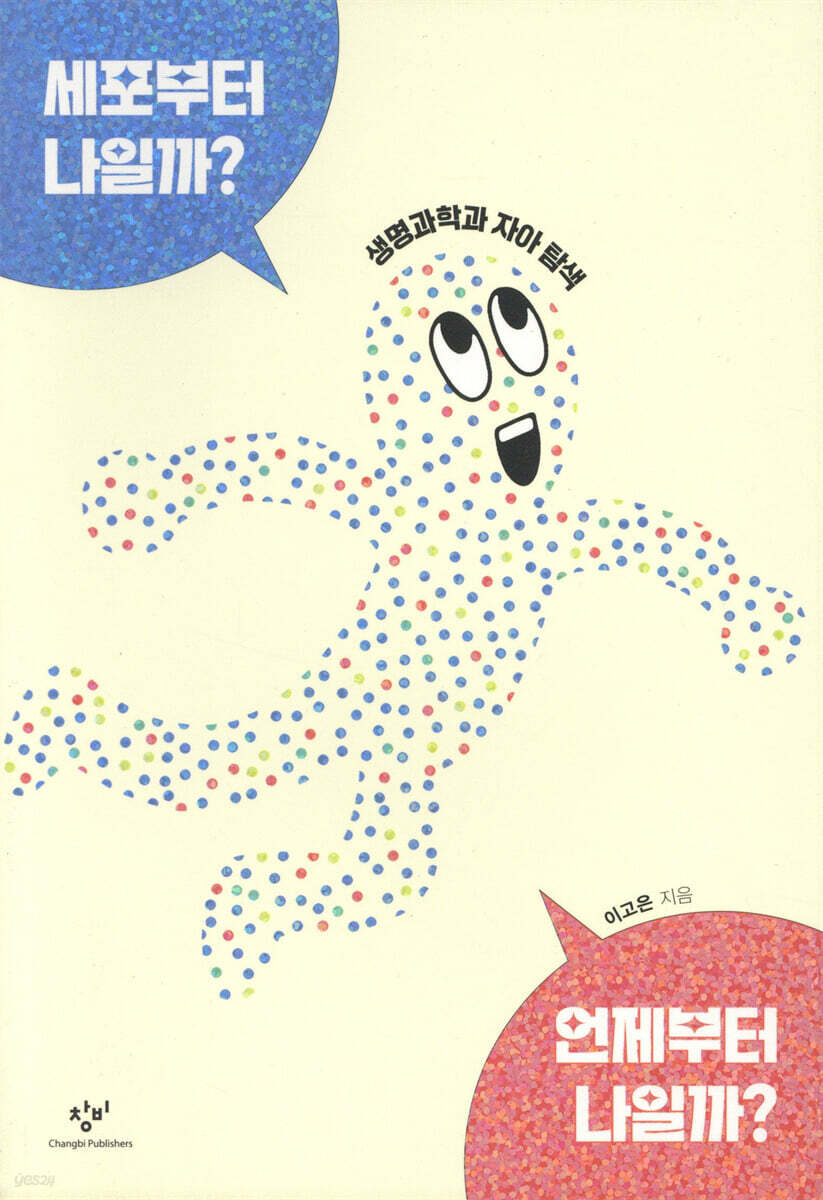 |
Description
Book Introduction
How old are my cells? If my body were cloned, would it be me?
10 Philosophical Questions About "I" and "We": Exploring Life Science
A new work by Changbi Youth Book Award winner Lee Go-eun
A creative, convergent science book has been created that answers the fundamental question, "Who am I?" through the fresh perspective of life science.
"Do I Start with My Cells? When Do I Begin to Become Me?" is the fourth volume in the "First Step to Discovery" series of new educational books that encourage career discovery and self-exploration. It is the latest work by author Lee Go-eun, who earned the trust and love of readers with "Life Science News," winner of the 10th Changbi Youth Book Award.
"Do I Start from My Cells? When Do I Become Me?" examines the concerns of adolescence, a period when concerns about self-identity become particularly profound, rather than those about the outside world, from a life science perspective, dividing them into two broad categories.
In Part 1, we explore 'me' by learning about self-identity, the beginning and origin of life, etc., and in Part 2, we explore 'us' by dealing with differences, equality, and the value of existence.
This book is a light and refreshing introduction to science, and at the same time, it will serve as a guide to help readers become familiar with reading non-fiction texts and write scientific essays without difficulty.
It is also suitable for learning how to raise philosophical questions through science by reading and discussing together in school settings.
10 Philosophical Questions About "I" and "We": Exploring Life Science
A new work by Changbi Youth Book Award winner Lee Go-eun
A creative, convergent science book has been created that answers the fundamental question, "Who am I?" through the fresh perspective of life science.
"Do I Start with My Cells? When Do I Begin to Become Me?" is the fourth volume in the "First Step to Discovery" series of new educational books that encourage career discovery and self-exploration. It is the latest work by author Lee Go-eun, who earned the trust and love of readers with "Life Science News," winner of the 10th Changbi Youth Book Award.
"Do I Start from My Cells? When Do I Become Me?" examines the concerns of adolescence, a period when concerns about self-identity become particularly profound, rather than those about the outside world, from a life science perspective, dividing them into two broad categories.
In Part 1, we explore 'me' by learning about self-identity, the beginning and origin of life, etc., and in Part 2, we explore 'us' by dealing with differences, equality, and the value of existence.
This book is a light and refreshing introduction to science, and at the same time, it will serve as a guide to help readers become familiar with reading non-fiction texts and write scientific essays without difficulty.
It is also suitable for learning how to raise philosophical questions through science by reading and discussing together in school settings.
- You can preview some of the book's contents.
Preview
index
Part 1 Who am I?
1.
Who is the owner of my body?
2.
Since when am I me?
3.
How much can I change and still be me?
4.
How old am I?
5.
Where did I come from?
Part 2 Who are we?
6.
Do you and I see the same thing?
7.
The illusion of purity
8.
The illusion of normalcy
9.
Are our genes selfish?
10.
What I can do, what you can do
In conclusion
References and Image Sources
1.
Who is the owner of my body?
2.
Since when am I me?
3.
How much can I change and still be me?
4.
How old am I?
5.
Where did I come from?
Part 2 Who are we?
6.
Do you and I see the same thing?
7.
The illusion of purity
8.
The illusion of normalcy
9.
Are our genes selfish?
10.
What I can do, what you can do
In conclusion
References and Image Sources
Detailed image

Publisher's Review
Answering philosophical questions from a life science perspective
Creative Convergence Science Book
"Do I Start from My Cells? When Do I Begin to Become Me?" is a fascinating book comprised of 10 chapters that helps readers understand the value of humanity and the preciousness of life.
For example, “When Do I Become Me?” discusses the point at which a fetus is recognized as a life.
Could it be from sperm and egg? I don't think it can be seen that way.
From the moment a fertilized egg and cell division occurs? From the moment the heart begins to beat? From the moment the brain awakens? The debate over the beginning of life is also intertwined with issues like the right to abortion.
Questions like these that require philosophical reflection do not have just one right answer.
This book helps young people answer philosophical questions on their own, with scientific grounding.
It makes us realize that science is an important foundation for engaging in in-depth social discussions.
Was my thumb a Tyrannosaurus?
The ecological cycle and humans within it, as explained by science
Also, “Where did I come from?” makes us think about the carbon that makes up the human body and its cycle, rather than vague and boring philosophical answers.
This is a passage that highlights the shift in thinking that allows us to view human existence not as something superior, but as a part of the ecosystem.
When a Tyrannosaurus dies and is buried in the ground, microorganisms decompose the carcass.
When these microbes breathe, they release the carbon that made up Tyrannosaurus's body back into the atmosphere in the form of carbon dioxide.
That very carbon, which was floating around in the atmosphere, will be stored in apples this summer through photosynthesis by apple trees, and you will be able to eat those apples.
And that carbon in the apple could be a component of my body that helps heal the paper cut on my thumb.
In this way, the Tyrannosaurus that lived on Earth 67 million years ago and we in the 2020s share the element called carbon, transcending a long period of time.
(Page 63)
How Science Explains Difference and Distinction
Part 2 is filled with examples that make us reflect on the differences and differences between various lives.
A Korean's genes contain 52 percent Korean genes, 30 percent Japanese genes, 16 percent Chinese genes, and 2 percent Mongolian genes.
It is interesting to note that the idea of a single ethnic group as pure was an illusion, not through the population composition of the community, but through the genetic makeup of one individual.
It also makes us aware that cases that deviate from “normality” naturally occur in this world, such as color vision deficiency, heterochromia, and albinism, and clearly presents the lesson that differences should not be treated as discrimination through impressive examples.
The 21st century will be a time when coexistence and mutual cooperation will become increasingly important, and convergent thinking and flexible strategies will be necessary.
"Do I Start from My Cells? When Do I Become Me?" is a book that begins with "me," sparking interest and moving on to "us" and others. It will serve as a guide for exploring the self in the world, equipping us with up-to-date evidence to make sound judgments.
Creative Convergence Science Book
"Do I Start from My Cells? When Do I Begin to Become Me?" is a fascinating book comprised of 10 chapters that helps readers understand the value of humanity and the preciousness of life.
For example, “When Do I Become Me?” discusses the point at which a fetus is recognized as a life.
Could it be from sperm and egg? I don't think it can be seen that way.
From the moment a fertilized egg and cell division occurs? From the moment the heart begins to beat? From the moment the brain awakens? The debate over the beginning of life is also intertwined with issues like the right to abortion.
Questions like these that require philosophical reflection do not have just one right answer.
This book helps young people answer philosophical questions on their own, with scientific grounding.
It makes us realize that science is an important foundation for engaging in in-depth social discussions.
Was my thumb a Tyrannosaurus?
The ecological cycle and humans within it, as explained by science
Also, “Where did I come from?” makes us think about the carbon that makes up the human body and its cycle, rather than vague and boring philosophical answers.
This is a passage that highlights the shift in thinking that allows us to view human existence not as something superior, but as a part of the ecosystem.
When a Tyrannosaurus dies and is buried in the ground, microorganisms decompose the carcass.
When these microbes breathe, they release the carbon that made up Tyrannosaurus's body back into the atmosphere in the form of carbon dioxide.
That very carbon, which was floating around in the atmosphere, will be stored in apples this summer through photosynthesis by apple trees, and you will be able to eat those apples.
And that carbon in the apple could be a component of my body that helps heal the paper cut on my thumb.
In this way, the Tyrannosaurus that lived on Earth 67 million years ago and we in the 2020s share the element called carbon, transcending a long period of time.
(Page 63)
How Science Explains Difference and Distinction
Part 2 is filled with examples that make us reflect on the differences and differences between various lives.
A Korean's genes contain 52 percent Korean genes, 30 percent Japanese genes, 16 percent Chinese genes, and 2 percent Mongolian genes.
It is interesting to note that the idea of a single ethnic group as pure was an illusion, not through the population composition of the community, but through the genetic makeup of one individual.
It also makes us aware that cases that deviate from “normality” naturally occur in this world, such as color vision deficiency, heterochromia, and albinism, and clearly presents the lesson that differences should not be treated as discrimination through impressive examples.
The 21st century will be a time when coexistence and mutual cooperation will become increasingly important, and convergent thinking and flexible strategies will be necessary.
"Do I Start from My Cells? When Do I Become Me?" is a book that begins with "me," sparking interest and moving on to "us" and others. It will serve as a guide for exploring the self in the world, equipping us with up-to-date evidence to make sound judgments.
GOODS SPECIFICS
- Date of issue: April 7, 2023
- Page count, weight, size: 132 pages | 232g | 152*210*10mm
- ISBN13: 9788936453244
- ISBN10: 8936453246
You may also like
카테고리
korean


korean

![GQ KOREA Mark (Monthly): December [2025]](http://librairie.coreenne.fr/cdn/shop/files/8ef265dbbfbf186523ed75ba7319009d.jpg?v=1765340328&width=3840)


