

Introduction to Cultural Geography
 |
Description
Book Introduction
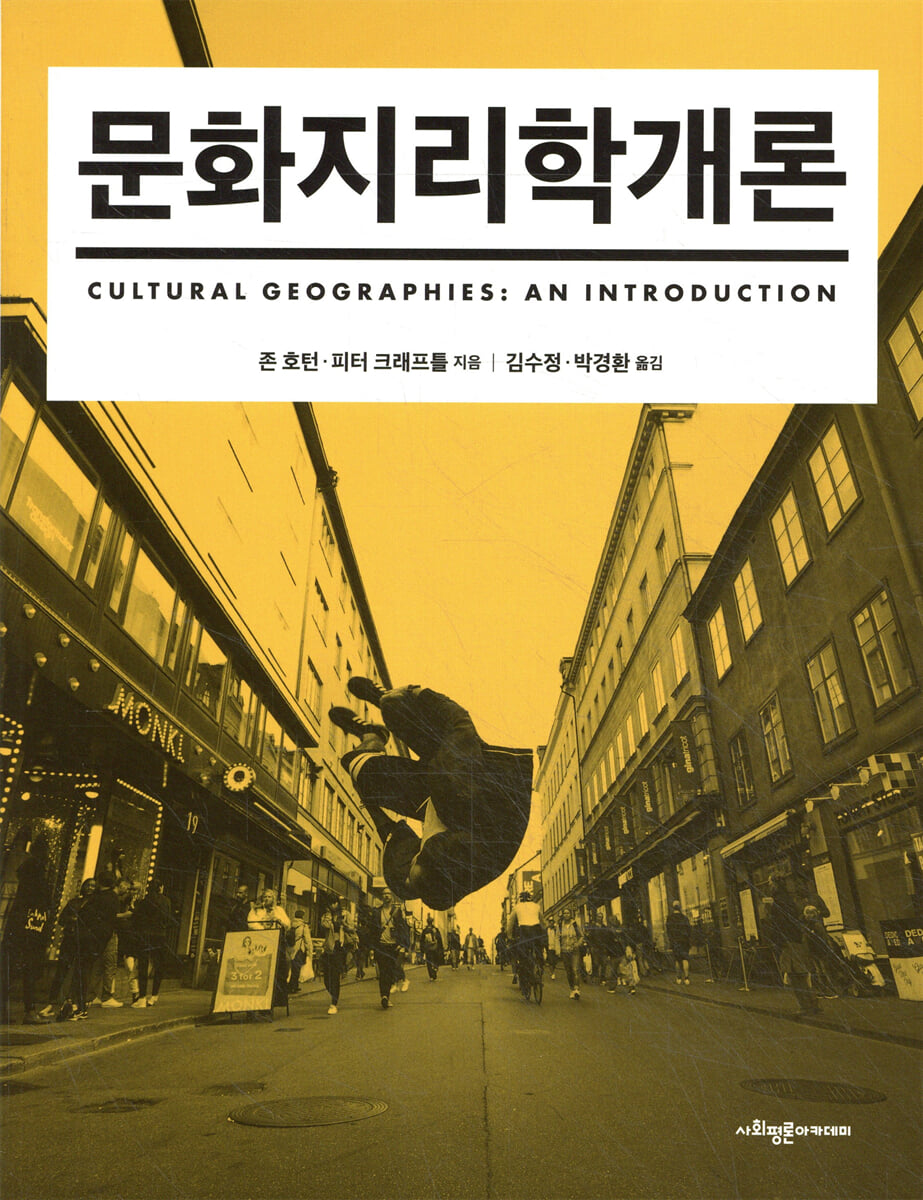
『Introduction to Cultural Geography』 is an introductory book that introduces cultural geography, a subfield of geography, particularly human geography.
This is an introductory book that describes various research methods and major research cases in cultural geography in three categories: △Cultural Practice and Politics △Cultural Objects, Texts, and Media △Social and Cultural Theory.
It systematically explains the core framework of cultural geography and introduces major issues and perspectives in recent cultural geography.
It introduces the past, present, and latest trends in cultural geography, and provides in-depth coverage of concepts, theories, and topics that are considered important in contemporary cultural geography, such as representation and non-representation, everyday life, emotion and affect, and materiality, with abundant case studies.
It can be used as an introductory text for undergraduate students majoring in geography education and geography, and as a research guide for graduate students.
This is an introductory book that describes various research methods and major research cases in cultural geography in three categories: △Cultural Practice and Politics △Cultural Objects, Texts, and Media △Social and Cultural Theory.
It systematically explains the core framework of cultural geography and introduces major issues and perspectives in recent cultural geography.
It introduces the past, present, and latest trends in cultural geography, and provides in-depth coverage of concepts, theories, and topics that are considered important in contemporary cultural geography, such as representation and non-representation, everyday life, emotion and affect, and materiality, with abundant case studies.
It can be used as an introductory text for undergraduate students majoring in geography education and geography, and as a research guide for graduate students.
index
Author's Note
Translator's Note
Chapter 1 Introduction
1.1 'Cultural Geography': Where to Start?
1.2 Starting Point: Using This Book (or, We Love Cultural Geography?)
1.3 The various meanings of 'culture'
1.4 Various versions of 'cultural geography'
1.5 Current State of Cultural Geography
Part 1: Cultural Process and Politics
Chapter 2 Cultural Production
2.1 Introduction: Producing Cultural Geography Textbooks
2.2 Questioning Cultural Production
2.3 Meaning, Discourse, and Taste-Making: Core Concepts in Cultural Studies
2.4 Geography of Cultural Production: Commodity Chains and Cultural Industries
2.5 Production and Regulation of Cultural Space
Chapter 3 Cultural Consumption
3.1 Introduction to Consumption
3.2 Consumption: Doing Culture
3.3 Geography of Cultural Consumption
3.4 Consumer Agency: Subculture and Resistance
3.5 Connecting Cultural Production and Consumption
Part 2 Some Cultural Geography
Chapter 4 Architectural Geography
4.1 Introduction: Focusing on Buildings
4.2 Why do cultural geographers study buildings?
4.3 What is a building and what does it do?
4.4 What are buildings made of?
4.5 What happens inside and around the building?
Chapter 5 Scenery
5.1 Introduction: Landscape as …
5.2 Defining 'landscape': A few puns
5.3 Landscape as Material
5.4 Landscape as Text
5.5 Landscape as Performance/Emotion
Chapter 6 Geography of Text
6.1 Introduction
6.2 Space/Text: Shifting Approaches to the Geography of Texts and Poststructural Challenges
6.3 Novel Geography
6.4 Policy Text and Discourse Analysis
6.5 Writing the World: Maps, Feminism, and Stories from Geographers
6.6 Concluding Reflections
Chapter 7: Geography of Practice
7.1 Introduction
7.2 Music Performance
7.3 Sports Performance
7.4 Dance and Performance Arts
7.5 Carrying out daily life
7.6 Conclusion: What exactly does it do?
Chapter 8 Identity
8.1 Introduction: The Complexity of Identity
8.2 Gathering Identity: Essentialism and Time-Space Specific Identity
8.3 Adding Complexity: Social Constructivist, Relational, and Performative Accounts of Identity
8.4 Social Construction of Identity
8.5 Relational Identity
8.6 Performativity of Identity
8.7 Conclusion
Part 3: Core Concepts for Cultural Geographers
Chapter 9: Geography of Everyday Life
9.1 Introduction: Waiting…
9.2 Understanding Everyday Geography
9.3 Why is daily life important?
9.4 'Escape' from the everyday
Chapter 10 Matter
10.1 Things are everywhere
10.2 'Following the Things' and Marxist Materialism
10.3 Study of Significant Objects and Material Culture
10.4 Inhuman Geography and Heterogeneous Materiality
Chapter 11: Geography of Emotions and Affect
11.1 Introduction: 'Emotional' Moments
11.2 Difficulty expressing ‘emotions’?
11.3 'Emotional' transition?
11.4 'Emotion' or 'Affect'?
11.5 Geography as Emotion and Affect
11.6 Emotional Practice
Chapter 12: Geography of the Body
12.1 Introduction: Exercising
12.2 Recognizing Your Body
12.3 Reproducing the Body
12.4 Physical Practice
12.5 Embodiment
Chapter 13 Space and Place
13.1 Introduction: Geography, Space, and Place
13.2 Space and Place: Definitions and Debates
13.3 Core Motif 1: Place (and Space) as Social Construction
13.4 Core Motif 2: Scale
13.5 Core Motif 3: Flow/Mobility
13.6 Discussion: Space and Place Where Next?
Chapter 14 Conclusion: Sharing Stories about Cultural Geography
14.1 Introduction
14.2 We... Still... Love Cultural Geography? Personal Reflections on Cultural Geography
14.3 Where is cultural geography headed next? Where will cultural geography take you?
References
Search
About the author and translator
Translator's Note
Chapter 1 Introduction
1.1 'Cultural Geography': Where to Start?
1.2 Starting Point: Using This Book (or, We Love Cultural Geography?)
1.3 The various meanings of 'culture'
1.4 Various versions of 'cultural geography'
1.5 Current State of Cultural Geography
Part 1: Cultural Process and Politics
Chapter 2 Cultural Production
2.1 Introduction: Producing Cultural Geography Textbooks
2.2 Questioning Cultural Production
2.3 Meaning, Discourse, and Taste-Making: Core Concepts in Cultural Studies
2.4 Geography of Cultural Production: Commodity Chains and Cultural Industries
2.5 Production and Regulation of Cultural Space
Chapter 3 Cultural Consumption
3.1 Introduction to Consumption
3.2 Consumption: Doing Culture
3.3 Geography of Cultural Consumption
3.4 Consumer Agency: Subculture and Resistance
3.5 Connecting Cultural Production and Consumption
Part 2 Some Cultural Geography
Chapter 4 Architectural Geography
4.1 Introduction: Focusing on Buildings
4.2 Why do cultural geographers study buildings?
4.3 What is a building and what does it do?
4.4 What are buildings made of?
4.5 What happens inside and around the building?
Chapter 5 Scenery
5.1 Introduction: Landscape as …
5.2 Defining 'landscape': A few puns
5.3 Landscape as Material
5.4 Landscape as Text
5.5 Landscape as Performance/Emotion
Chapter 6 Geography of Text
6.1 Introduction
6.2 Space/Text: Shifting Approaches to the Geography of Texts and Poststructural Challenges
6.3 Novel Geography
6.4 Policy Text and Discourse Analysis
6.5 Writing the World: Maps, Feminism, and Stories from Geographers
6.6 Concluding Reflections
Chapter 7: Geography of Practice
7.1 Introduction
7.2 Music Performance
7.3 Sports Performance
7.4 Dance and Performance Arts
7.5 Carrying out daily life
7.6 Conclusion: What exactly does it do?
Chapter 8 Identity
8.1 Introduction: The Complexity of Identity
8.2 Gathering Identity: Essentialism and Time-Space Specific Identity
8.3 Adding Complexity: Social Constructivist, Relational, and Performative Accounts of Identity
8.4 Social Construction of Identity
8.5 Relational Identity
8.6 Performativity of Identity
8.7 Conclusion
Part 3: Core Concepts for Cultural Geographers
Chapter 9: Geography of Everyday Life
9.1 Introduction: Waiting…
9.2 Understanding Everyday Geography
9.3 Why is daily life important?
9.4 'Escape' from the everyday
Chapter 10 Matter
10.1 Things are everywhere
10.2 'Following the Things' and Marxist Materialism
10.3 Study of Significant Objects and Material Culture
10.4 Inhuman Geography and Heterogeneous Materiality
Chapter 11: Geography of Emotions and Affect
11.1 Introduction: 'Emotional' Moments
11.2 Difficulty expressing ‘emotions’?
11.3 'Emotional' transition?
11.4 'Emotion' or 'Affect'?
11.5 Geography as Emotion and Affect
11.6 Emotional Practice
Chapter 12: Geography of the Body
12.1 Introduction: Exercising
12.2 Recognizing Your Body
12.3 Reproducing the Body
12.4 Physical Practice
12.5 Embodiment
Chapter 13 Space and Place
13.1 Introduction: Geography, Space, and Place
13.2 Space and Place: Definitions and Debates
13.3 Core Motif 1: Place (and Space) as Social Construction
13.4 Core Motif 2: Scale
13.5 Core Motif 3: Flow/Mobility
13.6 Discussion: Space and Place Where Next?
Chapter 14 Conclusion: Sharing Stories about Cultural Geography
14.1 Introduction
14.2 We... Still... Love Cultural Geography? Personal Reflections on Cultural Geography
14.3 Where is cultural geography headed next? Where will cultural geography take you?
References
Search
About the author and translator
Into the book
Everything would be a little easier if we could start with a clear, simple, and uncontroversial definition of 'cultural geography'.
However, presenting this kind of definition is misleading and problematic for several reasons.
First of all, there is the word 'culture'.
The terms 'culture' and 'cultural' have many meanings and are very difficult to define precisely.
Culture is one of those words that is very familiar, widely used, and taken for granted, but it is actually quite difficult to define.
---From "Chapter 1 Introduction"
We know that listening to a particular piece of music for even a short time can change a person's mood and influence their feelings about themselves and the spaces they occupy.
These examples demonstrate the potential for specific consumption habits to transform mood and experiences.
Listening to loud ska music can help you forget about your worries and responsibilities, and listening to your favorite music can make time pass more quickly when doing chores or homework.
Listening to music on headphones can transform a long trip, a shopping trip can lift your spirits or make you feel hopeless, a book or movie can stay in your head for days or change the way you see the world, a television program can be the basis for an ice-breaker conversation with a stranger, and shared cultural interests can form the foundation of a friendship or a romantic relationship.
As the previous examples show, consumption is often considered a natural part of everyday life, but consumption practices can sometimes change the geography of everyday life.
---From "Chapter 3 Cultural Consumption"
Each of the approaches described so far in this chapter can be used to create three distinct but overlapping geographies of the scene in the photograph.
To be clear, it is impossible to create a 'complete' geography of this train station.
But we are missing one element.
This is the practice we call 'inhabitation' of a building.
Advocates of political economic and materialist approaches to architecture urge attention to the everyday practices that play a crucial role in giving meaning to buildings.
Both approaches emphasize the importance of physical practices within buildings (Chapter 12): using the building, walking in it, sitting in it, redesigning it, cleaning it, or doing almost anything else you currently do in the building of your choice.
---From Chapter 4 Architectural Geography
So when we think about landscape, we almost always think of it in terms of perspective, a common but specific way of looking at things.
However, as Cosgrove argues, there are many problems with viewing landscapes in perspective.
(…) Looking again at Constable's 'Hay Wagon', it is clear that it is the landowning class that gazes upon the rural workers in the landscape, not the other way around.
Therefore, the concept of perspective is a kind of invention, and even an illusion.
Perspective is a particular way of seeing that has evolved over time, and upon closer examination, it has the potential to be understood as problematic and even oppressive.
---From "Chapter 5 Scenery"
Cohen's point is that the print media is partly responsible for the conflict between the two groups, not simply reproducing it but creating a series of "battles."
He argued that without these reports, the conflict between the two groups would have been far less severe and the resulting violence would not have occurred.
Cohen's case is just one of several approaches that question textual representation and the legitimacy of assuming that it merely represents reality.
In many ways, the geography of texts raises questions about who and what can (or cannot) represent.
---From "Chapter 6: Geography of Text"
But the situation is a little more complicated than this.
Over time, in some areas, certain types of skateboarding became an acceptable part of everyday public spaces.
Nolan shows that while skateboarding has an 'underground' image in Newcastle, Australia, skateboarding is permitted in a variety of public spaces.
In Newcastle, local councillors distinguish between 'good' and 'bad' skateboarding, with 'good' activity being using skateboards as a means of transport and 'bad' activity being performing tricks that cause damage to public or private property.
However, some shopping malls and parks are designated as "no skateboarding zones," so skateboarders simply passing through those zones are behaving both "in place" and "out of place."
Soon, it becomes acceptable behavior in the 'wrong' space.
---From "Chapter 7: Geography of Practice"
This created two problems for Rose.
First, this is the 'standard' that academic geographers assume when writing.
So the voices of geographers were predominantly male, white, and surprisingly narrow and homogeneous.
Second, this also meant that research in human geography (with very few exceptions) made little attempt to consider the diverse experiences of place felt by other social groups, particularly women, ethnic minorities, people with various disabilities, children, and gay, lesbian, or bisexual people.
---From "Chapter 8 Identity"
A conceptual framework called Actor-Network Theory (ANT) has played a crucial role for geographers thinking from this perspective. ANT is one way of looking at the world that "recognizes that societies, organizations, actors, and machines are all the product of patterned networks of diverse materials (not just humans)" (Law, 1992: 2).
That is, geographical issues and contexts (and almost everything in the world) are understood as complex and (to use ANT terminology) heterogeneous associations of humans and non-humans.
Heterogeneous means dissimilar, distinct, and composed of multiple components (i.e., the opposite of homogeneous).
---From "Chapter 10 Matter"
Emotions and feelings are not easily separated from the context of 'real life'.
In fact, these two are always mutually constitutive.
For example, socially constructed emotions often trigger physical affect (a corny love song might make you cry), whereas affective sensations lead to the social construction of emotions (a corny love song might make you cry).
Crucially, both emotions and affect are important to cultural geographers.
---From Chapter 11, Geography of Emotions and Affect
In this section we have examined the various ways in which places and spaces can be said to be socially constructed.
We can see that space and place are not entirely 'natural' or 'neutral' containers for social action, but that individuals and society intervene to shape space according to their needs.
Furthermore, Lefebvre's research on the production of space was instrumental in demonstrating that many spaces tend to represent the needs of dominant groups, particularly the professional elite.
Space is therefore something processual, vibrant, and continuous.
Space and place are always and already in progress.
However, presenting this kind of definition is misleading and problematic for several reasons.
First of all, there is the word 'culture'.
The terms 'culture' and 'cultural' have many meanings and are very difficult to define precisely.
Culture is one of those words that is very familiar, widely used, and taken for granted, but it is actually quite difficult to define.
---From "Chapter 1 Introduction"
We know that listening to a particular piece of music for even a short time can change a person's mood and influence their feelings about themselves and the spaces they occupy.
These examples demonstrate the potential for specific consumption habits to transform mood and experiences.
Listening to loud ska music can help you forget about your worries and responsibilities, and listening to your favorite music can make time pass more quickly when doing chores or homework.
Listening to music on headphones can transform a long trip, a shopping trip can lift your spirits or make you feel hopeless, a book or movie can stay in your head for days or change the way you see the world, a television program can be the basis for an ice-breaker conversation with a stranger, and shared cultural interests can form the foundation of a friendship or a romantic relationship.
As the previous examples show, consumption is often considered a natural part of everyday life, but consumption practices can sometimes change the geography of everyday life.
---From "Chapter 3 Cultural Consumption"
Each of the approaches described so far in this chapter can be used to create three distinct but overlapping geographies of the scene in the photograph.
To be clear, it is impossible to create a 'complete' geography of this train station.
But we are missing one element.
This is the practice we call 'inhabitation' of a building.
Advocates of political economic and materialist approaches to architecture urge attention to the everyday practices that play a crucial role in giving meaning to buildings.
Both approaches emphasize the importance of physical practices within buildings (Chapter 12): using the building, walking in it, sitting in it, redesigning it, cleaning it, or doing almost anything else you currently do in the building of your choice.
---From Chapter 4 Architectural Geography
So when we think about landscape, we almost always think of it in terms of perspective, a common but specific way of looking at things.
However, as Cosgrove argues, there are many problems with viewing landscapes in perspective.
(…) Looking again at Constable's 'Hay Wagon', it is clear that it is the landowning class that gazes upon the rural workers in the landscape, not the other way around.
Therefore, the concept of perspective is a kind of invention, and even an illusion.
Perspective is a particular way of seeing that has evolved over time, and upon closer examination, it has the potential to be understood as problematic and even oppressive.
---From "Chapter 5 Scenery"
Cohen's point is that the print media is partly responsible for the conflict between the two groups, not simply reproducing it but creating a series of "battles."
He argued that without these reports, the conflict between the two groups would have been far less severe and the resulting violence would not have occurred.
Cohen's case is just one of several approaches that question textual representation and the legitimacy of assuming that it merely represents reality.
In many ways, the geography of texts raises questions about who and what can (or cannot) represent.
---From "Chapter 6: Geography of Text"
But the situation is a little more complicated than this.
Over time, in some areas, certain types of skateboarding became an acceptable part of everyday public spaces.
Nolan shows that while skateboarding has an 'underground' image in Newcastle, Australia, skateboarding is permitted in a variety of public spaces.
In Newcastle, local councillors distinguish between 'good' and 'bad' skateboarding, with 'good' activity being using skateboards as a means of transport and 'bad' activity being performing tricks that cause damage to public or private property.
However, some shopping malls and parks are designated as "no skateboarding zones," so skateboarders simply passing through those zones are behaving both "in place" and "out of place."
Soon, it becomes acceptable behavior in the 'wrong' space.
---From "Chapter 7: Geography of Practice"
This created two problems for Rose.
First, this is the 'standard' that academic geographers assume when writing.
So the voices of geographers were predominantly male, white, and surprisingly narrow and homogeneous.
Second, this also meant that research in human geography (with very few exceptions) made little attempt to consider the diverse experiences of place felt by other social groups, particularly women, ethnic minorities, people with various disabilities, children, and gay, lesbian, or bisexual people.
---From "Chapter 8 Identity"
A conceptual framework called Actor-Network Theory (ANT) has played a crucial role for geographers thinking from this perspective. ANT is one way of looking at the world that "recognizes that societies, organizations, actors, and machines are all the product of patterned networks of diverse materials (not just humans)" (Law, 1992: 2).
That is, geographical issues and contexts (and almost everything in the world) are understood as complex and (to use ANT terminology) heterogeneous associations of humans and non-humans.
Heterogeneous means dissimilar, distinct, and composed of multiple components (i.e., the opposite of homogeneous).
---From "Chapter 10 Matter"
Emotions and feelings are not easily separated from the context of 'real life'.
In fact, these two are always mutually constitutive.
For example, socially constructed emotions often trigger physical affect (a corny love song might make you cry), whereas affective sensations lead to the social construction of emotions (a corny love song might make you cry).
Crucially, both emotions and affect are important to cultural geographers.
---From Chapter 11, Geography of Emotions and Affect
In this section we have examined the various ways in which places and spaces can be said to be socially constructed.
We can see that space and place are not entirely 'natural' or 'neutral' containers for social action, but that individuals and society intervene to shape space according to their needs.
Furthermore, Lefebvre's research on the production of space was instrumental in demonstrating that many spaces tend to represent the needs of dominant groups, particularly the professional elite.
Space is therefore something processual, vibrant, and continuous.
Space and place are always and already in progress.
---From "Chapter 13: Places of Overlook"
Publisher's Review
Focusing on the key words ‘culture’ and ‘geography’
An introductory book to cultural geography that explores and analyzes various cultural phenomena.
『Introduction to Cultural Geography』 is an introductory book that introduces cultural geography, a subfield of geography, particularly human geography.
This is an introductory book that describes various research methods and major research cases in cultural geography in three categories: △Cultural Practice and Politics △Cultural Objects, Texts, and Media △Social and Cultural Theory.
Professors Kim Su-jeong and Park Gyeong-hwan of the Department of Geography Education at Chonnam National University translated 『Cultural Geographies: An Introduction』(Routledge), co-authored by Professor John Horton of the University of Northampton and Professor Peter Kraftl of the University of Birmingham.
Although cultural geography is classified as a sub-discipline, its breadth and depth are as wide and deep as any other higher-level discipline, considering the diversity and dynamism of the cultural phenomena it deals with.
Cultural geography is the study of human actions, human formations, and the spaces in which humans live, that is, the meanings, phenomena, and practices related to human life.
This is why many geographers use the term cultural geography in the plural.
Cultural geographers have engaged in major debates in geography, from shifting perspectives on landscape to the role of artistic and literary representation in understanding social inequality, and from debates about affect, performance, and materiality to the experience of identity and subculture.
Based on these debates, this book systematically explains the core framework of cultural geography and introduces key issues and perspectives in recent cultural geography.
It introduces the past, present, and latest trends in cultural geography, and provides in-depth coverage of concepts, theories, and topics that are considered important in contemporary cultural geography, such as representation and non-representation, everyday life, emotion and affect, and materiality, with abundant case studies.
Therefore, this book can be used as an introductory text for undergraduate students majoring in geography education and geography, and as a research guide for graduate students.
The book is divided into three parts and 14 chapters.
Chapter 1, Introduction, briefly introduces the various meanings of culture and cultural geography, as well as the academic trends of cultural geography.
Part 1 discusses how cultural objects and spaces are produced and encountered, maintaining the view that cultural production and consumption are not separate but rather interconnected and intertwined.
Chapter 2, which deals with cultural production, discusses how and where cultural objects are created, and how cultural spaces are produced and regulated.
Chapter 3 introduces the concept of cultural consumption, addressing the importance of consumption in everyday spaces and the geographical complexity of consumption.
Part 2 addresses the representation of cultural objects, texts, and media, discussing five key themes: architecture, landscape, text, performance, and identity.
Chapter 4 introduces theories and case studies of traditional cultural geography and new cultural geography on architecture, buildings, design, and planning.
Chapter 5, which discusses landscape, introduces various ways and cases of conceptualizing landscape in cultural geography.
Chapters 6 and 7 introduce the importance of text and performativity, including novels, policy discourse, music and sports, dance and performance art, and examples.
Chapter 8 discusses various perspectives surrounding identity, including essentialism, the social construction of identity, relational identity, and performativity.
Part 3 examines the intersections of social and cultural theory and cultural geography, focusing on five themes: everydayness, materiality, emotions and affect, the body, and space and place.
Chapter 9 examines the importance of everyday spaces, practices, and events in cultural geography, and introduces the theory of non-representation in geography in relation to the difficulty of representing everyday life.
Chapter 10 discusses various approaches to material objects through Marxist materialism, material culture, and actor-network theory.
Chapters 11 and 12 present research from geography and the social sciences that argues that all human geography is affective and bodily.
Chapter 13 discusses the complexity and diversity of the concepts of space and place, which are core terms in geography, and reiterates the importance of exploring the spatiality of cultural processes and geography.
The final 14 chapters provide information about the future of cultural geography and offer reflections on what research can be done in and through cultural geography.
An introductory book to cultural geography that explores and analyzes various cultural phenomena.
『Introduction to Cultural Geography』 is an introductory book that introduces cultural geography, a subfield of geography, particularly human geography.
This is an introductory book that describes various research methods and major research cases in cultural geography in three categories: △Cultural Practice and Politics △Cultural Objects, Texts, and Media △Social and Cultural Theory.
Professors Kim Su-jeong and Park Gyeong-hwan of the Department of Geography Education at Chonnam National University translated 『Cultural Geographies: An Introduction』(Routledge), co-authored by Professor John Horton of the University of Northampton and Professor Peter Kraftl of the University of Birmingham.
Although cultural geography is classified as a sub-discipline, its breadth and depth are as wide and deep as any other higher-level discipline, considering the diversity and dynamism of the cultural phenomena it deals with.
Cultural geography is the study of human actions, human formations, and the spaces in which humans live, that is, the meanings, phenomena, and practices related to human life.
This is why many geographers use the term cultural geography in the plural.
Cultural geographers have engaged in major debates in geography, from shifting perspectives on landscape to the role of artistic and literary representation in understanding social inequality, and from debates about affect, performance, and materiality to the experience of identity and subculture.
Based on these debates, this book systematically explains the core framework of cultural geography and introduces key issues and perspectives in recent cultural geography.
It introduces the past, present, and latest trends in cultural geography, and provides in-depth coverage of concepts, theories, and topics that are considered important in contemporary cultural geography, such as representation and non-representation, everyday life, emotion and affect, and materiality, with abundant case studies.
Therefore, this book can be used as an introductory text for undergraduate students majoring in geography education and geography, and as a research guide for graduate students.
The book is divided into three parts and 14 chapters.
Chapter 1, Introduction, briefly introduces the various meanings of culture and cultural geography, as well as the academic trends of cultural geography.
Part 1 discusses how cultural objects and spaces are produced and encountered, maintaining the view that cultural production and consumption are not separate but rather interconnected and intertwined.
Chapter 2, which deals with cultural production, discusses how and where cultural objects are created, and how cultural spaces are produced and regulated.
Chapter 3 introduces the concept of cultural consumption, addressing the importance of consumption in everyday spaces and the geographical complexity of consumption.
Part 2 addresses the representation of cultural objects, texts, and media, discussing five key themes: architecture, landscape, text, performance, and identity.
Chapter 4 introduces theories and case studies of traditional cultural geography and new cultural geography on architecture, buildings, design, and planning.
Chapter 5, which discusses landscape, introduces various ways and cases of conceptualizing landscape in cultural geography.
Chapters 6 and 7 introduce the importance of text and performativity, including novels, policy discourse, music and sports, dance and performance art, and examples.
Chapter 8 discusses various perspectives surrounding identity, including essentialism, the social construction of identity, relational identity, and performativity.
Part 3 examines the intersections of social and cultural theory and cultural geography, focusing on five themes: everydayness, materiality, emotions and affect, the body, and space and place.
Chapter 9 examines the importance of everyday spaces, practices, and events in cultural geography, and introduces the theory of non-representation in geography in relation to the difficulty of representing everyday life.
Chapter 10 discusses various approaches to material objects through Marxist materialism, material culture, and actor-network theory.
Chapters 11 and 12 present research from geography and the social sciences that argues that all human geography is affective and bodily.
Chapter 13 discusses the complexity and diversity of the concepts of space and place, which are core terms in geography, and reiterates the importance of exploring the spatiality of cultural processes and geography.
The final 14 chapters provide information about the future of cultural geography and offer reflections on what research can be done in and through cultural geography.
GOODS SPECIFICS
- Date of issue: March 4, 2025
- Page count, weight, size: 412 pages | 192*252*30mm
- ISBN13: 9791167071804
- ISBN10: 1167071808
You may also like
카테고리
korean


korean

![GQ KOREA Mark (Monthly): December [2025]](http://librairie.coreenne.fr/cdn/shop/files/8ef265dbbfbf186523ed75ba7319009d.jpg?v=1765340328&width=3840)


