

Tokyo Kitsaten Tour
 |
Description
Book Introduction
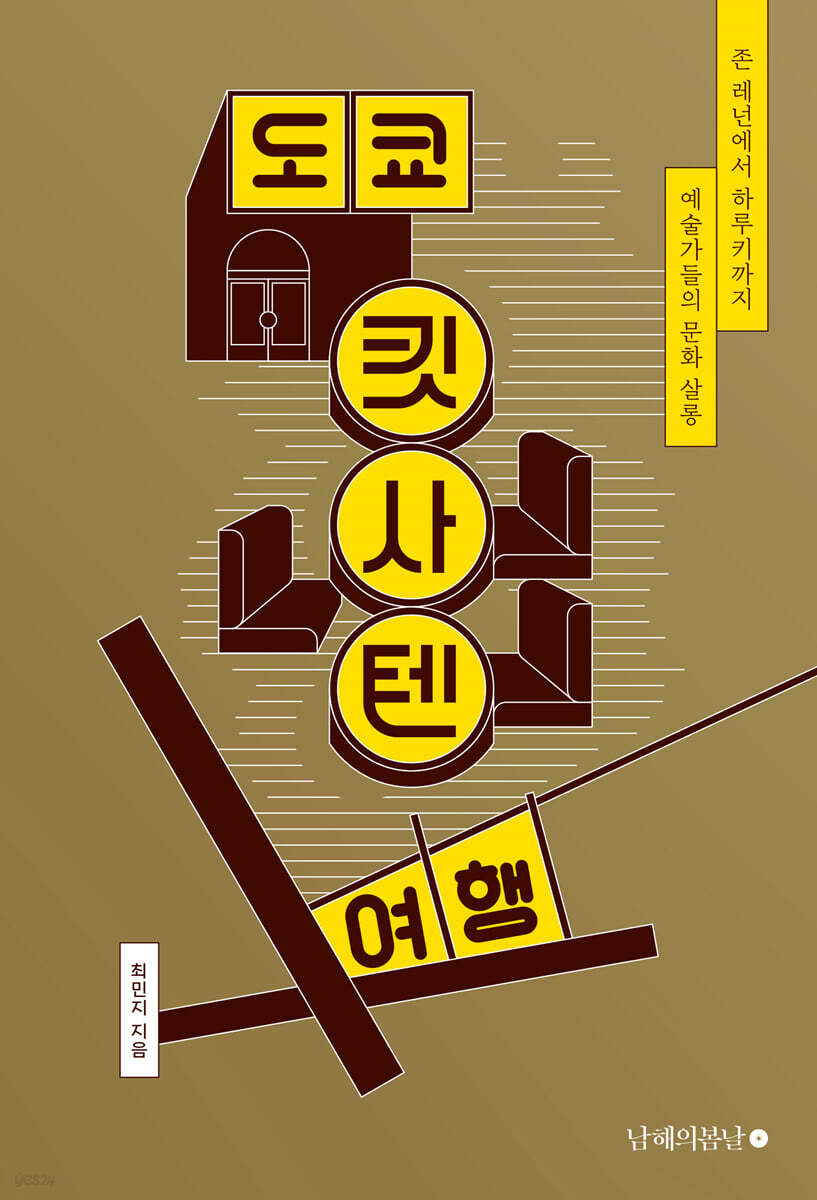
A journey to a retro cultural salon where social interaction and art flourish.
People meet people, tastes meet tastes
Tokyo Kitsa, a space where time has accumulated and become culture!
If in Paris there is Les Du Magots, where Hemingway wrote and Picasso frequented, and Café de Flore, where Sartre was a regular, then in Korea there is Haklim Dabang, beloved by writers and artists.
So, what about Tokyo? Kitsaten, with its retro vibe, is a space steeped in history and story.
From Aokido, beloved by Natsume Soseki, to Ranbo, a regular haunt of Osamu Dazai, to Tokyo's oldest Kissaten Paulista, which became even more famous after being visited by John Lennon and Yoko Ono, this book introduces Kissaten as a cultural salon beloved by artists.
Kitsaten was sometimes a meeting place for publishers, sometimes a hideout for independence activists and anarchists, a space where painters and musicians could conceive their works and writers could interact with one another, and a cradle where works of art were born.
People meet people, tastes meet tastes
Tokyo Kitsa, a space where time has accumulated and become culture!
If in Paris there is Les Du Magots, where Hemingway wrote and Picasso frequented, and Café de Flore, where Sartre was a regular, then in Korea there is Haklim Dabang, beloved by writers and artists.
So, what about Tokyo? Kitsaten, with its retro vibe, is a space steeped in history and story.
From Aokido, beloved by Natsume Soseki, to Ranbo, a regular haunt of Osamu Dazai, to Tokyo's oldest Kissaten Paulista, which became even more famous after being visited by John Lennon and Yoko Ono, this book introduces Kissaten as a cultural salon beloved by artists.
Kitsaten was sometimes a meeting place for publishers, sometimes a hideout for independence activists and anarchists, a space where painters and musicians could conceive their works and writers could interact with one another, and a cradle where works of art were born.
- You can preview some of the book's contents.
Preview
index
Prologue - Tea Time for a Time Slip
Kitsaten in Ueno
1.
Cafe aside, Kitsaten - Impure Kitsadope, Gahisakan
Yanesen's Kissaten
2.
The story you hear only when you open the door to the long-established Kissaten - Kayaba Coffee, Nantendo
Hongo's Kissaten
3.
Natsume Soseki also likes Kissaten - Luo, Aoki too
Kitsaten of Jinbocho
4.
Following Osamu Dazai's Paintings to Kitsaten on the Old Bookstore Street - Ladrio, Ranbo
Ginza's Kitsaten
5.
Fujiya's Past That Peko-chan Doesn't Tell You - Fujiya
6.
Why John Lennon and Yoko Ono Went to Café Paulista - Cafe Paulista
Kitsaten in Shinjuku
7.
Even in the rain, Kitsaten - Tsubakiya Coffee, Monami
8.
The reason the independence activist went to Shinjuku Kitsaten - Nakamura
9.
What Ryuichi Sakamoto and Haruki Murakami Have in Common - Doug, Fugetsudo
Shibuya's Kissaten
10.
In the famous song Kitsa, you don't have to say anything - Ryan
Kitsaten in Ikebukuro
11.
Kitsaten by painters, cartoonists, and artists - Liliom, Kohitei, Eden
Kitsaten on the Chuo Line
12.
Murakami Ryu and the Era of Sixty Nine - Honya Rado
Epilogue - Even as time passes, Kitsaten remains forever.
Kitsaten in Ueno
1.
Cafe aside, Kitsaten - Impure Kitsadope, Gahisakan
Yanesen's Kissaten
2.
The story you hear only when you open the door to the long-established Kissaten - Kayaba Coffee, Nantendo
Hongo's Kissaten
3.
Natsume Soseki also likes Kissaten - Luo, Aoki too
Kitsaten of Jinbocho
4.
Following Osamu Dazai's Paintings to Kitsaten on the Old Bookstore Street - Ladrio, Ranbo
Ginza's Kitsaten
5.
Fujiya's Past That Peko-chan Doesn't Tell You - Fujiya
6.
Why John Lennon and Yoko Ono Went to Café Paulista - Cafe Paulista
Kitsaten in Shinjuku
7.
Even in the rain, Kitsaten - Tsubakiya Coffee, Monami
8.
The reason the independence activist went to Shinjuku Kitsaten - Nakamura
9.
What Ryuichi Sakamoto and Haruki Murakami Have in Common - Doug, Fugetsudo
Shibuya's Kissaten
10.
In the famous song Kitsa, you don't have to say anything - Ryan
Kitsaten in Ikebukuro
11.
Kitsaten by painters, cartoonists, and artists - Liliom, Kohitei, Eden
Kitsaten on the Chuo Line
12.
Murakami Ryu and the Era of Sixty Nine - Honya Rado
Epilogue - Even as time passes, Kitsaten remains forever.
Detailed image

Into the book
The place where the poem that was almost lost to the world with the death of Kenji Miyazawa was discovered, and the regular restaurant that Natsume Soseki used as the setting for his novel, was also Kitsaten.
Before becoming a writer, Haruki Murakami was the owner of a jazz bar.
Kitsaten was a cultural salon where social interaction and art flourished.
People who shared a space called Kitsaten for the price of a cup of coffee, met, talked, and sometimes even debated loudly, each leaving behind their own stories.
Knowing that story will make walking around the city of Tokyo and spending time at Kitsaten feel deeper and broader.
---p.7 From "Prologue - Tea Time for Time Slip"
The reason why old kitsaten are interesting is because they remember and tell the little tastes and anecdotes of the so-called master writers.
While Lu Xun enjoyed milkshakes, Natsume Soseki was also known for his love of sweets, and at Aokido, he is said to have often sought out traditional Japanese sweets rather than buttery Western sweets.
---p.73 From “Kissaten Aoki-do Engraved in Japanese Literature”
Osamu Dazai's watercolors, which left the hands of the bookstore owner and settled in Aomori, contain people.
The person was Moriya Hitoshi, who ran a publishing company called 'Shoushinsha' in Jinbocho, Tokyo's bookstore district, and opened up one room of the publishing company to create a kitsaten called Ranbo.
It was a truly progressive Kitsaten, full of writers, editors, and bookmakers.
---p.89 From “Treasures Found in a Used Bookstore”
Starting with the Great Kanto Earthquake, young writers began to create a new literature, and they were given the name of the "New Sensation School."
At this time, Fujiya served as a hideout for new sensibility writers, including Yasunari Kawabata and Riichi Yokomitsu, and as an editorial office where the publication of Bungei Shidae was discussed.
Through the newly launched “Bungei Shidae,” one of Yasunari Kawabata’s masterpieces, “The Izu Dancer,” was published. Could it be that the magazine “Bungei Shidae” and the Fujiya Kissaten were the incubators that gave birth to Japan’s first Nobel Prize-winning work in literature?
---p.124 From “When the Nobel Prize in Literature Master Was Young and New”
If Parisian art originated in Le Procope, modern Tokyo's art blossomed here, in Paulista.
John Lennon and Yoko Ono, who visited Japan, also did not miss Paulista.
John Lennon and Yoko Ono visited Japan three consecutive years starting in 1977, staying for periods ranging from one month to five months.
The year he signed the Paulista coffee cup was 1987. Even though it was Paulista's policy not to approach or bother famous guests, he asked for a photo and autograph because two people came for three days in a row.
What kind of place was Paulista that John Lennon and Yoko Ono stamped their passports at work?
---p.137 From “Until Coffee Became Everyone’s Drink”
If the memorial service for Kenji Miyazawa had not been held at Monami, we would have lived without knowing about the existence of this writer.
The manuscript discovered at the Genji memorial service became known to the world when it was published as the Complete Works of Kenji Miyazawa, and "Undeterred by Rain" also became a Japanese national poem that moistened people's hearts.
Just as cultural artifacts used in the royal palace are unearthed near the old capital, perhaps literature that was almost buried is being unearthed in Kitsaten, a place frequented by artists.
---p.168 From “Handwritten Manuscripts Brought Up from Kitsaten”
In fact, the boss was an Indian independence activist.
He entered Japan with the poet Tagore, famous for "The Lamp of the East," to find weapons to fight against the British. However, when he tried to send the weapons he obtained to India, he was discovered by the British and faced the risk of being expelled from Japan.
The place where he hid and deceived the police was Shinjuku Nakamura.
At that time, Nakamuraya was a base for activities of Indian independence activists who had fled abroad.
But in the process, he fell in love with the Soma couple's daughter, Toshiko, and ended up getting married.
This is why Nakamuraya introduces curry as “the taste of love and revolution.”
---p.184 From "The Taste of Love and Revolution"
Haruki, who loves jazz and has been collecting records since he was thirteen, started a jazz kit after marrying his wife during his college years.
At the time, it was widely believed among Japanese college students that getting a job at a company was degrading, so he chose to run Kitsaten instead of getting a job. After his debut as a writer, he ran Kitsaten for a few years, but decided to become a full-time writer in order to devote himself more to writing.
He said that he later tried to return to jazz kitsa when life became difficult, but he couldn't return to being a kitsaten master because the book sold well.
Instead, since he features jazz kitsa in his work, it seems that Haruki Murakami loves jazz kitsa in the way of a writer, not a master of kitsaten.
Before becoming a writer, Haruki Murakami was the owner of a jazz bar.
Kitsaten was a cultural salon where social interaction and art flourished.
People who shared a space called Kitsaten for the price of a cup of coffee, met, talked, and sometimes even debated loudly, each leaving behind their own stories.
Knowing that story will make walking around the city of Tokyo and spending time at Kitsaten feel deeper and broader.
---p.7 From "Prologue - Tea Time for Time Slip"
The reason why old kitsaten are interesting is because they remember and tell the little tastes and anecdotes of the so-called master writers.
While Lu Xun enjoyed milkshakes, Natsume Soseki was also known for his love of sweets, and at Aokido, he is said to have often sought out traditional Japanese sweets rather than buttery Western sweets.
---p.73 From “Kissaten Aoki-do Engraved in Japanese Literature”
Osamu Dazai's watercolors, which left the hands of the bookstore owner and settled in Aomori, contain people.
The person was Moriya Hitoshi, who ran a publishing company called 'Shoushinsha' in Jinbocho, Tokyo's bookstore district, and opened up one room of the publishing company to create a kitsaten called Ranbo.
It was a truly progressive Kitsaten, full of writers, editors, and bookmakers.
---p.89 From “Treasures Found in a Used Bookstore”
Starting with the Great Kanto Earthquake, young writers began to create a new literature, and they were given the name of the "New Sensation School."
At this time, Fujiya served as a hideout for new sensibility writers, including Yasunari Kawabata and Riichi Yokomitsu, and as an editorial office where the publication of Bungei Shidae was discussed.
Through the newly launched “Bungei Shidae,” one of Yasunari Kawabata’s masterpieces, “The Izu Dancer,” was published. Could it be that the magazine “Bungei Shidae” and the Fujiya Kissaten were the incubators that gave birth to Japan’s first Nobel Prize-winning work in literature?
---p.124 From “When the Nobel Prize in Literature Master Was Young and New”
If Parisian art originated in Le Procope, modern Tokyo's art blossomed here, in Paulista.
John Lennon and Yoko Ono, who visited Japan, also did not miss Paulista.
John Lennon and Yoko Ono visited Japan three consecutive years starting in 1977, staying for periods ranging from one month to five months.
The year he signed the Paulista coffee cup was 1987. Even though it was Paulista's policy not to approach or bother famous guests, he asked for a photo and autograph because two people came for three days in a row.
What kind of place was Paulista that John Lennon and Yoko Ono stamped their passports at work?
---p.137 From “Until Coffee Became Everyone’s Drink”
If the memorial service for Kenji Miyazawa had not been held at Monami, we would have lived without knowing about the existence of this writer.
The manuscript discovered at the Genji memorial service became known to the world when it was published as the Complete Works of Kenji Miyazawa, and "Undeterred by Rain" also became a Japanese national poem that moistened people's hearts.
Just as cultural artifacts used in the royal palace are unearthed near the old capital, perhaps literature that was almost buried is being unearthed in Kitsaten, a place frequented by artists.
---p.168 From “Handwritten Manuscripts Brought Up from Kitsaten”
In fact, the boss was an Indian independence activist.
He entered Japan with the poet Tagore, famous for "The Lamp of the East," to find weapons to fight against the British. However, when he tried to send the weapons he obtained to India, he was discovered by the British and faced the risk of being expelled from Japan.
The place where he hid and deceived the police was Shinjuku Nakamura.
At that time, Nakamuraya was a base for activities of Indian independence activists who had fled abroad.
But in the process, he fell in love with the Soma couple's daughter, Toshiko, and ended up getting married.
This is why Nakamuraya introduces curry as “the taste of love and revolution.”
---p.184 From "The Taste of Love and Revolution"
Haruki, who loves jazz and has been collecting records since he was thirteen, started a jazz kit after marrying his wife during his college years.
At the time, it was widely believed among Japanese college students that getting a job at a company was degrading, so he chose to run Kitsaten instead of getting a job. After his debut as a writer, he ran Kitsaten for a few years, but decided to become a full-time writer in order to devote himself more to writing.
He said that he later tried to return to jazz kitsa when life became difficult, but he couldn't return to being a kitsaten master because the book sold well.
Instead, since he features jazz kitsa in his work, it seems that Haruki Murakami loves jazz kitsa in the way of a writer, not a master of kitsaten.
---p.211 From "The owner of Jazz Kitsa is Haruki Murakami"
Publisher's Review
From the hidden story of the past Kitsaten,
Today, it's a great time to go to Kitsaten!
Kitsaten is no longer just a relic of the past; it has established itself as a hip space frequented by today's younger generation.
Traveling to find a kissaten that suits one's taste is popular among young Japanese people, and famous kissaten have long lines from early in the morning.
This book introduces cultural spaces that are worth visiting, including Kitsaten that disappeared in the past as well as Kitsaten in Tokyo that are worth visiting today.
Although they may seem old and ordinary, they are actually full of countless stories. After meeting these Tokyo Kitsaten, your walks through the city of Tokyo and the moments you spend at Kitsaten will become deeper and richer.
Today, it's a great time to go to Kitsaten!
Kitsaten is no longer just a relic of the past; it has established itself as a hip space frequented by today's younger generation.
Traveling to find a kissaten that suits one's taste is popular among young Japanese people, and famous kissaten have long lines from early in the morning.
This book introduces cultural spaces that are worth visiting, including Kitsaten that disappeared in the past as well as Kitsaten in Tokyo that are worth visiting today.
Although they may seem old and ordinary, they are actually full of countless stories. After meeting these Tokyo Kitsaten, your walks through the city of Tokyo and the moments you spend at Kitsaten will become deeper and richer.
GOODS SPECIFICS
- Date of issue: November 30, 2024
- Page count, weight, size: 296 pages | 322g | 128*188*17mm
- ISBN13: 9791193027387
- ISBN10: 1193027381
You may also like
카테고리
korean


korean

![GQ KOREA Mark (Monthly): December [2025]](http://librairie.coreenne.fr/cdn/shop/files/8ef265dbbfbf186523ed75ba7319009d.jpg?v=1765340328&width=3840)


