

Critique of Pure Reason 1
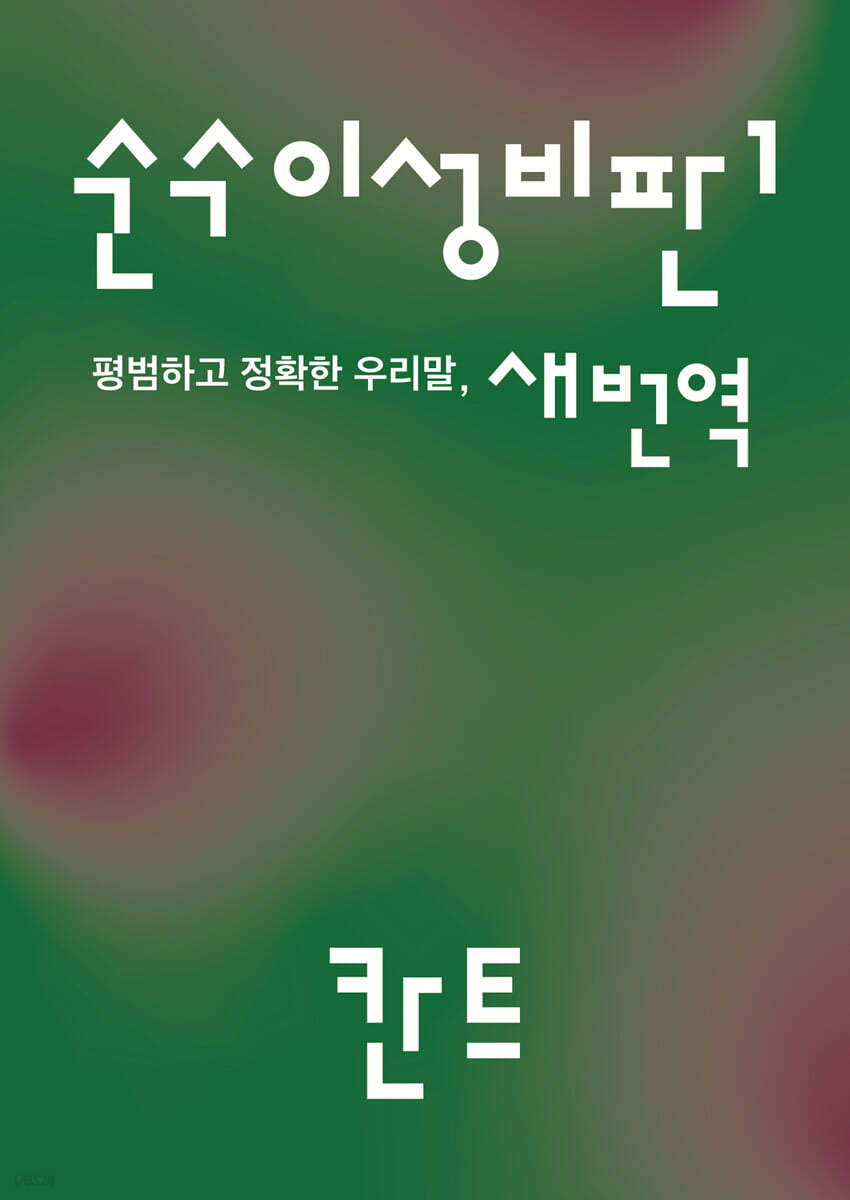 |
Description
Book Introduction
What and how far can humans know?
Kant's Critique of Pure Reason is the most thorough investigation into this question.
He first reveals the forms of consciousness, space and time, in the theory of emotions, and then traces how data are processed and handled through categories and outlines (schema) in the analysis section.
Half of this book is a detailed analysis of our consciousness, almost like modern science.
The following Apologetics deals with metaphysical topics such as the soul, the world, and God.
It sets the limits of human reason while insightfully discussing the leap of reason from eternity to eternity.
The Critique of Pure Reason is a book of metaphysics and a book of logic.
As a metaphysical book, it gives readers time to rethink topics that humanity has always pondered.
As a book on logic, the reader not only gains knowledge of logic, but also learns how to think more thoroughly.
The philosopher Schopenhauer said of reading Kant's Critique of Pure Reason that it fundamentally changes the human mind, comparable to a blind person undergoing eye surgery.
This is a book that Schopenhauer's words are not excessive.
Western philosophy is diverse, deep, and rich.
So it is difficult to view the whole thing and understand it systematically.
Kant's works are the most useful compass and reference point to help readers navigate the complexities of Western philosophy and gain insight.
And this new translation of the book shows how successful our language is in imparting knowledge.
Kant's Critique of Pure Reason is the most thorough investigation into this question.
He first reveals the forms of consciousness, space and time, in the theory of emotions, and then traces how data are processed and handled through categories and outlines (schema) in the analysis section.
Half of this book is a detailed analysis of our consciousness, almost like modern science.
The following Apologetics deals with metaphysical topics such as the soul, the world, and God.
It sets the limits of human reason while insightfully discussing the leap of reason from eternity to eternity.
The Critique of Pure Reason is a book of metaphysics and a book of logic.
As a metaphysical book, it gives readers time to rethink topics that humanity has always pondered.
As a book on logic, the reader not only gains knowledge of logic, but also learns how to think more thoroughly.
The philosopher Schopenhauer said of reading Kant's Critique of Pure Reason that it fundamentally changes the human mind, comparable to a blind person undergoing eye surgery.
This is a book that Schopenhauer's words are not excessive.
Western philosophy is diverse, deep, and rich.
So it is difficult to view the whole thing and understand it systematically.
Kant's works are the most useful compass and reference point to help readers navigate the complexities of Western philosophy and gain insight.
And this new translation of the book shows how successful our language is in imparting knowledge.
- You can preview some of the book's contents.
Preview
index
Translator to Reader (Page 13)
Critique of Pure Reason (p. 39)
Preface to Edition A (page 56)
Preface to Edition B (page 70)
Introduction to Edition A (100 pages)
Introduction to Edition B (page 112)
Volume 1: Transcendental Elements (p. 135)
Part 1: Transcendental Emotion (p. 144)
Chapter 1: On Space (page 149)
Chapter 2: On Time (page 160)
Part 2: Transcendental Logic (p. 196)
Part 1: Transcendental Analysis (p. 212)
Chapter 1: Analysis of Concepts (page 214)
Section 1: On the Guide to the Discovery of All Pure Concepts of Knowledge (p. 215)
Section 2: On the Deduction of the Concept of Pure Knowledge (p. 250)
Chapter 2: Analysis of Principles (p. 338)
Section 1: On the Outline Function of the Concept of Pure Knowledge (p. 346)
Section 2: The System of All Principles of Pure Knowledge (p. 361)
Section 3: On the basis for distinguishing between phenomena and private objects (p. 452)
On the ambiguity of the concept of discernment resulting from the confusion between empirical and transcendental uses of knowledge (p. 476)
Critique of Pure Reason (p. 39)
Preface to Edition A (page 56)
Preface to Edition B (page 70)
Introduction to Edition A (100 pages)
Introduction to Edition B (page 112)
Volume 1: Transcendental Elements (p. 135)
Part 1: Transcendental Emotion (p. 144)
Chapter 1: On Space (page 149)
Chapter 2: On Time (page 160)
Part 2: Transcendental Logic (p. 196)
Part 1: Transcendental Analysis (p. 212)
Chapter 1: Analysis of Concepts (page 214)
Section 1: On the Guide to the Discovery of All Pure Concepts of Knowledge (p. 215)
Section 2: On the Deduction of the Concept of Pure Knowledge (p. 250)
Chapter 2: Analysis of Principles (p. 338)
Section 1: On the Outline Function of the Concept of Pure Knowledge (p. 346)
Section 2: The System of All Principles of Pure Knowledge (p. 361)
Section 3: On the basis for distinguishing between phenomena and private objects (p. 452)
On the ambiguity of the concept of discernment resulting from the confusion between empirical and transcendental uses of knowledge (p. 476)
Detailed image

Into the book
Metaphysics enjoys the exceptional good fortune of being excluded from all other rational sciences that deal with objects (thanks to logic, which deals only with the forms of thought in general).
If metaphysics is placed on a firm path of scholarship by this critique, it will be able to fully encompass all the realms of knowledge within its reach, and thus, having accomplished all its tasks, it will be able to leave behind for posterity an invaluable asset.
This is possible because metaphysics deals only with principles, and, when principles are used, only with the limits imposed by the principles themselves.
Therefore, metaphysics, as a fundamental discipline, has a duty to achieve this perfection, and we must be able to say:
If there's work left to do, I don't think it's done yet.
--- p.81
So I had to deny knowledge to make room for faith.
--- p.86
Our desire to expand our perception, fascinated by anything that demonstrates the power of reason, is endless.
A white dove flying freely through the air feels the resistance of the air.
You might think that pigeons would fly much better in airless spaces.
Likewise, Plato left the world of senses behind, placing such narrow limits on our knowledge.
He rode on the wings of Idea and ventured into the world of peace, entering the empty space of pure knowledge.
He didn't know that despite all his efforts, he had made no progress.
--- p.118
In any case, let us give the name of sensibility to the receptivity of our brain to receive representations by being influenced.
Knowledge, on the other hand, is the ability to create representations ourselves, that is, the spontaneity of our cognition.
By our nature, intuition is nothing but sensory.
In other words, sensibility only encompasses the way we are affected by objects.
Knowledge, on the other hand, is the ability to think about the object of sense intuition.
None of these characteristics is superior to the other.
Without sensibility no object would be given to us, and without knowledge no object would be conceived.
Thoughts without content are empty, and intuition without concepts is blind.
--- p.197
Of these two eminent men, Locke opened the door wide to enthusiasm, for reason, once it had acquired such power, could no longer be restrained by vague counsels of moderation.
Hume was so completely succumbing to skepticism that he believed he had uncovered a widespread deception in our supposedly rational cognitive faculties.
We are now struggling between these two precipices to determine whether we are truly unable to safely guide human reason, whether we can set limits to it, and whether we can still open up areas where reason can perform its mission.
--- p.260
Thinking about an object and perceiving an object are not the same.
Because cognition contains two components: first, concepts (categories), through which objects in general are conceived; second, intuition, through which objects are given.
If no intuition corresponding to a concept can be given at all, the concept may be conceived formally, but it has no object, and therefore no cognition is possible by means of the concept.
--- p.308
Now it is clear that on the one hand it must be of the same kind as the category, on the other hand it must be of the same kind as the phenomenon, and on the other hand there must be something third that makes it possible to apply the category to the phenomenon.
The representations that play this mediating role must be pure (i.e., without any empirical content), intellectual on the one hand, and sensory on the other.
Such a representation is precisely the transcendent outline.
--- p.347
Now we have carefully examined the entire territory of pure knowledge, and thoroughly examined everything within it, assigning it its proper place.
But this land is an island, surrounded by nature itself and within unchangeable limits.
--- p.452
If we wish to apply categories to objects which are not considered phenomena, then we must assume some other intuition which is not sensuous, and then the objects will be things in the positive sense.
But such intuition is intellectual intuition and is absolutely outside our cognitive abilities.
Thus, too, the use of categories cannot extend beyond the boundaries within which the objects of experience are contained.
Indeed, there is undoubtedly a knowledge-being corresponding to the sense-beings, and also a knowledge-being with which our sensory intuition cannot have any relation; but our concept of knowledge, which is a mere form of thought about our sense-intuition, can never be extended to such beings.
Therefore, what we call private property should only mean private property in a negative sense.
--- p.468
Yet all judgment, indeed all comparison, requires discernment.
That is, they require a distinction of cognitive abilities to which a given concept belongs.
The act by which I carry the comparison of representations in general to the level of the cognitive faculty through which the comparison is made, and the act by which I distinguish whether the representations are compared because they belong to pure knowledge or because they belong to sense-intuition, I call this act transcendental discrimination.
The interrelationships in which concepts belong to one another in a certain state in the mind are the relationships between identity and difference, harmony and opposition, internal and external, and finally, the definable and the definitive (content and form).
If metaphysics is placed on a firm path of scholarship by this critique, it will be able to fully encompass all the realms of knowledge within its reach, and thus, having accomplished all its tasks, it will be able to leave behind for posterity an invaluable asset.
This is possible because metaphysics deals only with principles, and, when principles are used, only with the limits imposed by the principles themselves.
Therefore, metaphysics, as a fundamental discipline, has a duty to achieve this perfection, and we must be able to say:
If there's work left to do, I don't think it's done yet.
--- p.81
So I had to deny knowledge to make room for faith.
--- p.86
Our desire to expand our perception, fascinated by anything that demonstrates the power of reason, is endless.
A white dove flying freely through the air feels the resistance of the air.
You might think that pigeons would fly much better in airless spaces.
Likewise, Plato left the world of senses behind, placing such narrow limits on our knowledge.
He rode on the wings of Idea and ventured into the world of peace, entering the empty space of pure knowledge.
He didn't know that despite all his efforts, he had made no progress.
--- p.118
In any case, let us give the name of sensibility to the receptivity of our brain to receive representations by being influenced.
Knowledge, on the other hand, is the ability to create representations ourselves, that is, the spontaneity of our cognition.
By our nature, intuition is nothing but sensory.
In other words, sensibility only encompasses the way we are affected by objects.
Knowledge, on the other hand, is the ability to think about the object of sense intuition.
None of these characteristics is superior to the other.
Without sensibility no object would be given to us, and without knowledge no object would be conceived.
Thoughts without content are empty, and intuition without concepts is blind.
--- p.197
Of these two eminent men, Locke opened the door wide to enthusiasm, for reason, once it had acquired such power, could no longer be restrained by vague counsels of moderation.
Hume was so completely succumbing to skepticism that he believed he had uncovered a widespread deception in our supposedly rational cognitive faculties.
We are now struggling between these two precipices to determine whether we are truly unable to safely guide human reason, whether we can set limits to it, and whether we can still open up areas where reason can perform its mission.
--- p.260
Thinking about an object and perceiving an object are not the same.
Because cognition contains two components: first, concepts (categories), through which objects in general are conceived; second, intuition, through which objects are given.
If no intuition corresponding to a concept can be given at all, the concept may be conceived formally, but it has no object, and therefore no cognition is possible by means of the concept.
--- p.308
Now it is clear that on the one hand it must be of the same kind as the category, on the other hand it must be of the same kind as the phenomenon, and on the other hand there must be something third that makes it possible to apply the category to the phenomenon.
The representations that play this mediating role must be pure (i.e., without any empirical content), intellectual on the one hand, and sensory on the other.
Such a representation is precisely the transcendent outline.
--- p.347
Now we have carefully examined the entire territory of pure knowledge, and thoroughly examined everything within it, assigning it its proper place.
But this land is an island, surrounded by nature itself and within unchangeable limits.
--- p.452
If we wish to apply categories to objects which are not considered phenomena, then we must assume some other intuition which is not sensuous, and then the objects will be things in the positive sense.
But such intuition is intellectual intuition and is absolutely outside our cognitive abilities.
Thus, too, the use of categories cannot extend beyond the boundaries within which the objects of experience are contained.
Indeed, there is undoubtedly a knowledge-being corresponding to the sense-beings, and also a knowledge-being with which our sensory intuition cannot have any relation; but our concept of knowledge, which is a mere form of thought about our sense-intuition, can never be extended to such beings.
Therefore, what we call private property should only mean private property in a negative sense.
--- p.468
Yet all judgment, indeed all comparison, requires discernment.
That is, they require a distinction of cognitive abilities to which a given concept belongs.
The act by which I carry the comparison of representations in general to the level of the cognitive faculty through which the comparison is made, and the act by which I distinguish whether the representations are compared because they belong to pure knowledge or because they belong to sense-intuition, I call this act transcendental discrimination.
The interrelationships in which concepts belong to one another in a certain state in the mind are the relationships between identity and difference, harmony and opposition, internal and external, and finally, the definable and the definitive (content and form).
--- p.476
Publisher's Review
Immanuel Kant's Critique of Pure Reason, a classic among classics, the essence of Western philosophy and a gateway to modern thought, has been retranslated into plain 21st-century Korean!
From Kant, who you don't understand even if you read it, to Kant, who you understand when you read it.
The Critique of Pure Reason has long been considered a difficult book to approach without the guidance of a specialist.
The Enlightenment philosopher Kant boldly urged us to think for ourselves, but his readers did not dare to do so.
This new translation ends this crisis in plain and accurate Korean.
First of all, I corrected some translations.
Japanese-style Sino-Korean words that Koreans do not use in their daily lives were replaced with Korean-style Sino-Korean words that Koreans normally use.
By demonstrating that Kant can be translated more accurately into the language of ordinary people, it presents a model for democratizing philosophical knowledge and an example of philosophy in everyday life.
The result is not a Japanese-style mystic Kant, but rather Kant's true form as a Western thinker, clearly revealed in terms of metaphysics and logic.
If you read it, you will understand it and you will not fall into mistakes.
Rich notes and examples assist the reader.
There is no confusion as the German - English - Old Translation - New Translation comparison table is repeatedly presented.
In parts that seem difficult, various figures and tables are provided.
Exactly, kindly, that is the value of this translation.
Now, anyone who reads can read Kant for themselves and anyone can think about Kant for themselves.
Through the works of the master of mankind, readers can expect to improve their thinking and logical skills.
When philosophy is verbalized in our everyday language, we can sense how close it is to our lives.
The reading experience is also new.
B5 size, large text, generous margins, 180-degree opening binding, great for taking notes and reading.
Truly everything is new.
It is a welcome and enjoyable philosophical translation.
From Kant, who you don't understand even if you read it, to Kant, who you understand when you read it.
The Critique of Pure Reason has long been considered a difficult book to approach without the guidance of a specialist.
The Enlightenment philosopher Kant boldly urged us to think for ourselves, but his readers did not dare to do so.
This new translation ends this crisis in plain and accurate Korean.
First of all, I corrected some translations.
Japanese-style Sino-Korean words that Koreans do not use in their daily lives were replaced with Korean-style Sino-Korean words that Koreans normally use.
By demonstrating that Kant can be translated more accurately into the language of ordinary people, it presents a model for democratizing philosophical knowledge and an example of philosophy in everyday life.
The result is not a Japanese-style mystic Kant, but rather Kant's true form as a Western thinker, clearly revealed in terms of metaphysics and logic.
If you read it, you will understand it and you will not fall into mistakes.
Rich notes and examples assist the reader.
There is no confusion as the German - English - Old Translation - New Translation comparison table is repeatedly presented.
In parts that seem difficult, various figures and tables are provided.
Exactly, kindly, that is the value of this translation.
Now, anyone who reads can read Kant for themselves and anyone can think about Kant for themselves.
Through the works of the master of mankind, readers can expect to improve their thinking and logical skills.
When philosophy is verbalized in our everyday language, we can sense how close it is to our lives.
The reading experience is also new.
B5 size, large text, generous margins, 180-degree opening binding, great for taking notes and reading.
Truly everything is new.
It is a welcome and enjoyable philosophical translation.
GOODS SPECIFICS
- Date of issue: November 30, 2025
- Format: Guide to book binding methods for four-sided binding
- Page count, weight, size: 512 pages | 182*257*35mm
- ISBN13: 9791190844659
- ISBN10: 1190844656
You may also like
카테고리
korean


korean

![GQ KOREA Mark (Monthly): December [2025]](http://librairie.coreenne.fr/cdn/shop/files/8ef265dbbfbf186523ed75ba7319009d.jpg?v=1765340328&width=3840)


