

Trip to Italy 2
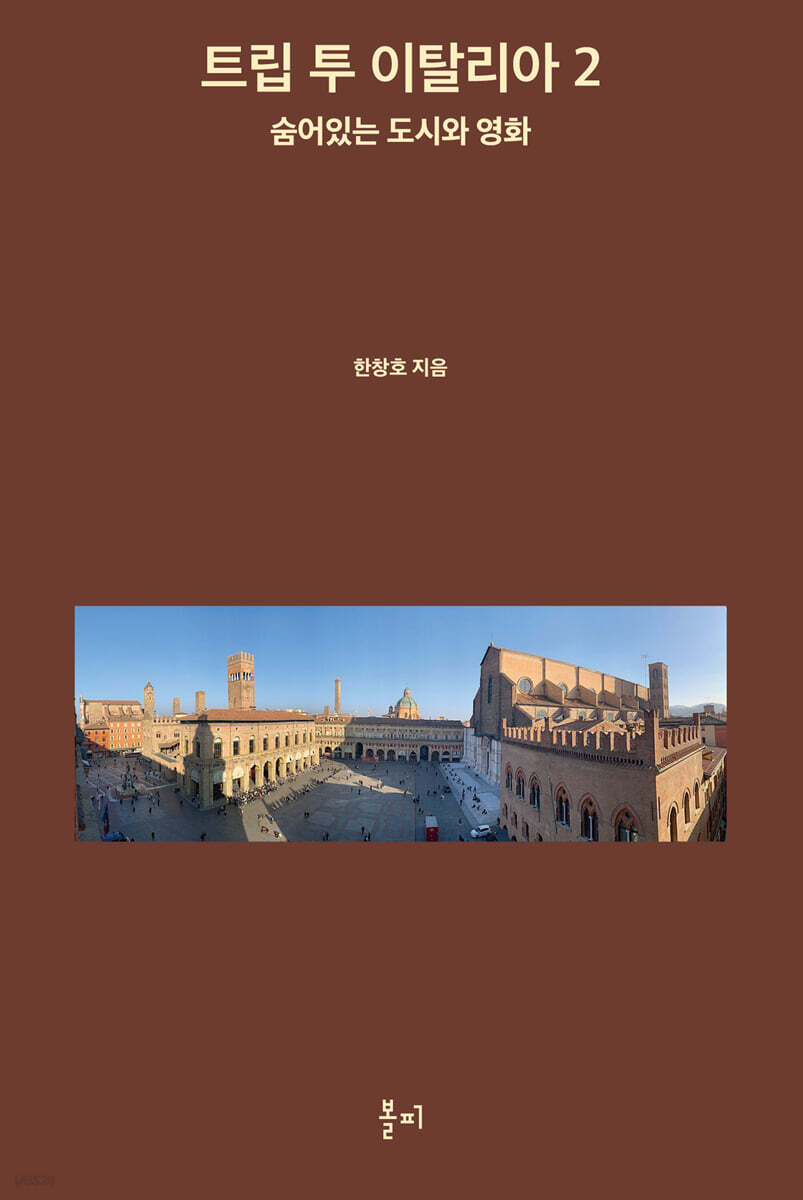 |
Description
Book Introduction
This is a travelogue of Italy read as a movie.
This is the second volume, following the previous volume.
The theme of Volume 1 is the known city, and the theme of Volume 2 is the hidden city.
For example, Volume 1 selects films set in world-famous cities like Rome, Florence, and Venice, conveying a humanistic understanding of Italy and the appeal of the films themselves.
In this second volume, we visit lesser-known cities such as Bologna, Vicenza, and Volterra.
The method is the same as Volume 1.
Travel through Italy through films shot in that region.
As the world becomes more and more alike, Italy is the country that has managed to maintain its relatively unique character in the West.
This can be seen in the fact that opera, which is considered the 'art of a class society,' is still loved, and that masterpieces created by hand by artisans are more highly valued.
Even in cutting-edge products like Ferrari and Lamborghini, the realm of handcrafting still remains.
So to speak, Italy is a country where individuality is relatively stronger than popularity.
In the hidden small towns, such Italian culture is even more evident.
This book is a travelogue that seeks out that unique Italian character.
This is the second volume, following the previous volume.
The theme of Volume 1 is the known city, and the theme of Volume 2 is the hidden city.
For example, Volume 1 selects films set in world-famous cities like Rome, Florence, and Venice, conveying a humanistic understanding of Italy and the appeal of the films themselves.
In this second volume, we visit lesser-known cities such as Bologna, Vicenza, and Volterra.
The method is the same as Volume 1.
Travel through Italy through films shot in that region.
As the world becomes more and more alike, Italy is the country that has managed to maintain its relatively unique character in the West.
This can be seen in the fact that opera, which is considered the 'art of a class society,' is still loved, and that masterpieces created by hand by artisans are more highly valued.
Even in cutting-edge products like Ferrari and Lamborghini, the realm of handcrafting still remains.
So to speak, Italy is a country where individuality is relatively stronger than popularity.
In the hidden small towns, such Italian culture is even more evident.
This book is a travelogue that seeks out that unique Italian character.
- You can preview some of the book's contents.
Preview
index
Header
# Part 1, Northern Italy
1.
Vicenza: City of Architecture
Senso, Ripley's Game, Don Giovanni
2.
Dolomites: The Italian Alps
007 For Your Eyes Only, The Ball at Castle, The Pink Panther, Cliffhanger
3.
Ferrara: City of Fog
Finch Contini's Garden, Beyond the Clouds, Shout
4.
Trieste: The Cradle of James Joyce's Literature
Dead, Nora, Best Offer
5.
Rimini and Ravenna: The Best Beaches in Eastern Italy
Red Desert, Amarcord, Vitelloni
6.
Mantua and Bergamo: Granaries of the Po River Valley
1900, wooden clogs
7.
Verona: Home of Romeo and Juliet
Romeo and Juliet, Letters to Juliet, Japanese food, Senso
8.
Sanremo: Where the Canzone Made Its Appearance
I Am Love, Ripley, I Am Innocent
9.
Brescia: The Specter of Fascism
Salo, The 120 Days of Sodom, Call Me by Your Name, Quantum of Solace
10.
Cremona: Home of Fine Stringed Instruments
Call Me by Your Name, The Red Violin, The Taxidermy
11.
Parma: Bertolucci's Cinematic Departure
The Eve of Revolution, Luna, and the Tragedy of a Fool
12.
Bobbio: Umberto Eco's Imaginary Monastery
Fist in my pocket, my flesh and blood
13.
Riccione: A seaside town that rivals Rimini
Woman with a Bag, Season of Passion, Parma Woman
14.
Udine: The Border Between German and Eastern European Cultures
The Great War, Hearts Without Borders, Sleeping Beauty
15.
Bologna 1: 'The Red City'
Oedipus the King, Salo, and the 120 Days of Sodom
16.
Bologna 2: 'University City'
School Trip, Christmas Present, My Heart Is Elsewhere, Giovanna's Dad
# Part 2, Central Italy
17.
Castelli Romani: Country Towns near Rome
The Two Popes, Nights of Cabiria, The Leopard, The Nanny, The Detective
18.
Volterra: Fate to be lost in the wind
New Moon, Faint Bear
19.
Sabaudia: The Fascist Regime's Propaganda City
Family Friends, Piera's Story, Girlfriends
20.
Viterbo 1: The City 'Discovered' by Orson Welles
Othello, The Hawk and the Sparrow, A Midsummer Night's Dream
21.
Viterbo 2: Fellini's Cinematic Hometown
Road, Vitelloni, Sweet Life
22.
Perugia and Assisi: The Holy Spirit of Saint Francis
Francis, the Fool of God, Saint Francis, Francis
23.
Ancona: a natural elbow-shaped harbor
The Son's Room, Obsession, and the Beautiful Young Man Giacomo Leopardi
24.
Grosseto: A Quiet Place in Tuscany
Kyung-i, all that's left is to cry, Chuwol
25.
Nanni Moretti's Hidden Rome: A Look at Everyday Life
April, My Mother, My Joyful Diary, We Have a Pope
26.
The Vatican and Film: Different Perspectives on the Holy Temple
Open City, Mamma Roma, We Have a Pope, The Godfather Part 3, A Bittersweet Life
27.
Italian Wine and Film: Italy's "Wine Brewing Towns"
Trip to Italy, Under the Tuscan Sun, Only You, and Stalwart Beauty
# Part 3, Southern Italy
28.
Bagheria: Home of Cinema Paradiso
The Godfather III, Varia, Cinema Paradiso
29.
Matera: The City of Rock Houses
The Passion of the Christ, Wonder Woman, The She-Wolf, The Gospel of Matthew, Ben-Hur
30.
Sardinia: D.
The Wasteland Through the Eyes of H. Lawrence
Padre Padrone, The Spy Who Loved Me, Sebastian, Red Desert, The Bandits of Orgosolo,
31.
Caserta: Italy's Versailles
Mission Impossible 3, Battle of Waterloo, Star Wars Episode I, Angels & Demons,
32.
Taormina: Greek Ruins in Sicily
Grand Blue, Mighty Aphrodite, and Jeongsa
33.
Pompeii: The Rise and Fall of the Roman Empire
The Last Days of Pompeii, Pompeii: The Last Days, Italian Travelogue
34.
Catania: The gateway to Mount Etna, Sicily
Italian Divorce, New World, and Shaking Earth
35.
Palermo: A Mafia Legend
A Hundred Steps, The Mafia Only Kills in Summer, The Traitor, The Godfather 3
36.
L'Aquila: A representative highland area in the south
The Name of the Rose, Then and Now, The American, Ladyhawke
37.
Lucania: meaning the southernmost point
Christ Stopped at Eboli, Italian Transcontinental Band
38.
Calabria and Puglia: Lands of Forgetfulness
Tale of Tales, April, Four, Hole
39.
Pasolini and Mount Etna: Reflections on Prehistory
Matthew, Theorem, Pigsty, Canterbury Tales
40.
A National Tour and Film in Italy: Exploring Italy's Regional Character
Trip to Italy, yesterday, today and tomorrow, we loved each other so much, everyone is doing well.
Reference books
Search
# Part 1, Northern Italy
1.
Vicenza: City of Architecture
Senso, Ripley's Game, Don Giovanni
2.
Dolomites: The Italian Alps
007 For Your Eyes Only, The Ball at Castle, The Pink Panther, Cliffhanger
3.
Ferrara: City of Fog
Finch Contini's Garden, Beyond the Clouds, Shout
4.
Trieste: The Cradle of James Joyce's Literature
Dead, Nora, Best Offer
5.
Rimini and Ravenna: The Best Beaches in Eastern Italy
Red Desert, Amarcord, Vitelloni
6.
Mantua and Bergamo: Granaries of the Po River Valley
1900, wooden clogs
7.
Verona: Home of Romeo and Juliet
Romeo and Juliet, Letters to Juliet, Japanese food, Senso
8.
Sanremo: Where the Canzone Made Its Appearance
I Am Love, Ripley, I Am Innocent
9.
Brescia: The Specter of Fascism
Salo, The 120 Days of Sodom, Call Me by Your Name, Quantum of Solace
10.
Cremona: Home of Fine Stringed Instruments
Call Me by Your Name, The Red Violin, The Taxidermy
11.
Parma: Bertolucci's Cinematic Departure
The Eve of Revolution, Luna, and the Tragedy of a Fool
12.
Bobbio: Umberto Eco's Imaginary Monastery
Fist in my pocket, my flesh and blood
13.
Riccione: A seaside town that rivals Rimini
Woman with a Bag, Season of Passion, Parma Woman
14.
Udine: The Border Between German and Eastern European Cultures
The Great War, Hearts Without Borders, Sleeping Beauty
15.
Bologna 1: 'The Red City'
Oedipus the King, Salo, and the 120 Days of Sodom
16.
Bologna 2: 'University City'
School Trip, Christmas Present, My Heart Is Elsewhere, Giovanna's Dad
# Part 2, Central Italy
17.
Castelli Romani: Country Towns near Rome
The Two Popes, Nights of Cabiria, The Leopard, The Nanny, The Detective
18.
Volterra: Fate to be lost in the wind
New Moon, Faint Bear
19.
Sabaudia: The Fascist Regime's Propaganda City
Family Friends, Piera's Story, Girlfriends
20.
Viterbo 1: The City 'Discovered' by Orson Welles
Othello, The Hawk and the Sparrow, A Midsummer Night's Dream
21.
Viterbo 2: Fellini's Cinematic Hometown
Road, Vitelloni, Sweet Life
22.
Perugia and Assisi: The Holy Spirit of Saint Francis
Francis, the Fool of God, Saint Francis, Francis
23.
Ancona: a natural elbow-shaped harbor
The Son's Room, Obsession, and the Beautiful Young Man Giacomo Leopardi
24.
Grosseto: A Quiet Place in Tuscany
Kyung-i, all that's left is to cry, Chuwol
25.
Nanni Moretti's Hidden Rome: A Look at Everyday Life
April, My Mother, My Joyful Diary, We Have a Pope
26.
The Vatican and Film: Different Perspectives on the Holy Temple
Open City, Mamma Roma, We Have a Pope, The Godfather Part 3, A Bittersweet Life
27.
Italian Wine and Film: Italy's "Wine Brewing Towns"
Trip to Italy, Under the Tuscan Sun, Only You, and Stalwart Beauty
# Part 3, Southern Italy
28.
Bagheria: Home of Cinema Paradiso
The Godfather III, Varia, Cinema Paradiso
29.
Matera: The City of Rock Houses
The Passion of the Christ, Wonder Woman, The She-Wolf, The Gospel of Matthew, Ben-Hur
30.
Sardinia: D.
The Wasteland Through the Eyes of H. Lawrence
Padre Padrone, The Spy Who Loved Me, Sebastian, Red Desert, The Bandits of Orgosolo,
31.
Caserta: Italy's Versailles
Mission Impossible 3, Battle of Waterloo, Star Wars Episode I, Angels & Demons,
32.
Taormina: Greek Ruins in Sicily
Grand Blue, Mighty Aphrodite, and Jeongsa
33.
Pompeii: The Rise and Fall of the Roman Empire
The Last Days of Pompeii, Pompeii: The Last Days, Italian Travelogue
34.
Catania: The gateway to Mount Etna, Sicily
Italian Divorce, New World, and Shaking Earth
35.
Palermo: A Mafia Legend
A Hundred Steps, The Mafia Only Kills in Summer, The Traitor, The Godfather 3
36.
L'Aquila: A representative highland area in the south
The Name of the Rose, Then and Now, The American, Ladyhawke
37.
Lucania: meaning the southernmost point
Christ Stopped at Eboli, Italian Transcontinental Band
38.
Calabria and Puglia: Lands of Forgetfulness
Tale of Tales, April, Four, Hole
39.
Pasolini and Mount Etna: Reflections on Prehistory
Matthew, Theorem, Pigsty, Canterbury Tales
40.
A National Tour and Film in Italy: Exploring Italy's Regional Character
Trip to Italy, yesterday, today and tomorrow, we loved each other so much, everyone is doing well.
Reference books
Search
Into the book
It is surprising that such a 'slow' country is included in the Group of Seven (G7) of Western countries, and perhaps that is Italy's charm.
‘Slowness’ is like a ‘pleasant indifference’ that is not harsh and does not strangle people.
The seven Western countries are the United States, the United Kingdom, Germany, France, Italy, Canada, and Japan.
These are usually countries with developed industries, fierce competition, and well-adapted to the capitalist order.
The G7 is, roughly speaking, a gathering of advanced countries led by the United States.
But the country that shows the most unfamiliar attitude here is Italy.
Italy is an outsider or a maverick in the G7.
It often shows moves that deviate from the US-led order.
In Italy, the Italian Communist Party was the second largest party until the fall of the Berlin Wall.
Italy is one of the leading countries in the market economy, but this means that there are quite a few groups with opposing views.
---From the "Preface"
Andrea Palladio, a master of the Renaissance, was able to display his architectural skills to such an extent because he had the support of the discerning citizens of Vicenza and the practical support of local nobles who allowed him to realize his imagination.
According to Palladio's records, the most common thing these nobles said when commissioning buildings was, "I have a responsibility to make my hometown beautiful."
‘Responsibility for beauty’, this would be the Italian ‘noblesse oblige’.
---From "Chapter 1, Vicenza"
Personally, I owe my discovery of the city of Ferrara entirely to Michelangelo Antonioni.
His hometown is Ferrara.
The foggy landscapes characteristic of Antonioni's films originated right here in Ferrara.
Antonioni grew up in the fog of Ferrara from an early age.
From the fluffy fog that envelops your entire body to the cold winter fog that stings your lungs, Ferrara, the representative city of the Po River basin, is always remembered with fog.
Greek director Theo Angelopoulos's Landscape in the Fog (1988) also owes a great deal to Antonioni.
For me, it was Antonioni's films and the scenery of Ferrara that drew me in with the charm of the fog.
After arriving in Rome, Italy, the first city I visited was Ferrara.
It was purely out of personal affection for Antonioni.
---From "Chapter 3, Ferrara"
Joyce finally began to become known as a writer after living in voluntary exile in Trieste, Italy.
There Joyce wrote Dubliners and A Portrait of the Artist as a Young Man.
After the outbreak of World War I, Joyce temporarily fled to Zurich, Switzerland to escape the war.
Joyce then reached his peak in Paris, a city as important to him literary as Trieste.
During his 20-year stay in Paris, Joyce completed his masterpiece, Ulysses, which he had conceived in Trieste, and followed it with Finnegans Wake.
The life of James Joyce, a master of modern literature, is completed through ten years in exile in Trieste and twenty years in Paris.
All that glorious history would not have existed if Joyce, then 22, had not gone to Trieste, a place so far from Ireland, in the northeastern tip of Italy.
Trieste will forever remain as 'Young Joyce's Challenge'.
---From "Chapter 4, Trieste"
Bologna is the capital of the Emilia-Romagna region in northern Italy.
Together with the three central regions of Tuscany, Umbria, and Marche, it is called Italy's "red region."
It has always been in a progressive position, and since the establishment of the Italian Republic after World War II, the left has almost always been in power in the regional governments here.
At the center of it all is Bologna.
Bologna is strongly linked to progressive parties.
In the past, it was a stronghold of the Italian Communist Party.
Like the progressive parties in Western Europe, their goal was to take power through elections.
The stronghold of the Italian Communist Party was Bologna.
For political reasons, Bologna is called 'La rossa' (The Red), meaning 'the red city'.
---From "Chapter 15, Bologna"
Among the Sicilian directors, the most popular one is probably Giuseppe Tornatore.
This is the decisive reason why Cinema Paradiso (1988) was loved worldwide.
Thanks to his second feature film, Cinema Paradiso, the then 32-year-old Sicilian youth suddenly emerged as a rising star in the world of cinema.
This largely autobiographical film, which follows the story of Toto, a boy from the Sicilian countryside, who becomes a famous director, marked the beginning of Tornatore's subsequent consistent theme of 'father-son love'.
The (pseudo)father-son relationship between the boy Toto and the projectionist Alfredo (Philippe Noiret) is an ideal father-son relationship that Tornatore repeatedly portrays.
This is also a unique Sicilian tradition about 'family', a story of parents making sacrifices and children being grateful for those sacrifices, which is natural, but can be seen as a 'myth'.
The space where this ideal relationship unfolds is Bagheria.
It is located about 20km to the right of Palermo, the capital of Sicily.
Bagheria is the hometown of Tornatore.
---From "Chapter 28, Bagheria"
British writer D.
H. Lawrence was relentlessly pursued by the British military during World War I on suspicion of being a German spy.
A major source of suspicion was that Lawrence's wife, Frieda Wickl, was German.
Frida was six years older and, unlike Lawrence, who was a "miner's son," was of noble birth.
The love that transcended the class gap between an upper-class woman and a hunting man depicted in Lawrence's seminal work, Lady Chatterley's Lover, was not much different from the author's own experience.
As they were not an ordinary couple, they were often the object of envy from those around them.
The Lawrences eventually go into voluntary exile, unable to withstand the military's investigative pressure.
They left England in 1919 and lived a wandering life until they settled in the United States in 1922.
The first place the Lawrences arrived after leaving England was Italy.
After traveling through central Italy, Capri, and Sicily, the final destination was Sardinia, an island in the western Mediterranean.
Here Lawrence began to realize that he was destined not for a 'journey' but for 'exile'.
Sardinia, in Lawrence's eyes, was 'a place lost between Europe and Africa, a wasteland that belonged nowhere.'
‘Slowness’ is like a ‘pleasant indifference’ that is not harsh and does not strangle people.
The seven Western countries are the United States, the United Kingdom, Germany, France, Italy, Canada, and Japan.
These are usually countries with developed industries, fierce competition, and well-adapted to the capitalist order.
The G7 is, roughly speaking, a gathering of advanced countries led by the United States.
But the country that shows the most unfamiliar attitude here is Italy.
Italy is an outsider or a maverick in the G7.
It often shows moves that deviate from the US-led order.
In Italy, the Italian Communist Party was the second largest party until the fall of the Berlin Wall.
Italy is one of the leading countries in the market economy, but this means that there are quite a few groups with opposing views.
---From the "Preface"
Andrea Palladio, a master of the Renaissance, was able to display his architectural skills to such an extent because he had the support of the discerning citizens of Vicenza and the practical support of local nobles who allowed him to realize his imagination.
According to Palladio's records, the most common thing these nobles said when commissioning buildings was, "I have a responsibility to make my hometown beautiful."
‘Responsibility for beauty’, this would be the Italian ‘noblesse oblige’.
---From "Chapter 1, Vicenza"
Personally, I owe my discovery of the city of Ferrara entirely to Michelangelo Antonioni.
His hometown is Ferrara.
The foggy landscapes characteristic of Antonioni's films originated right here in Ferrara.
Antonioni grew up in the fog of Ferrara from an early age.
From the fluffy fog that envelops your entire body to the cold winter fog that stings your lungs, Ferrara, the representative city of the Po River basin, is always remembered with fog.
Greek director Theo Angelopoulos's Landscape in the Fog (1988) also owes a great deal to Antonioni.
For me, it was Antonioni's films and the scenery of Ferrara that drew me in with the charm of the fog.
After arriving in Rome, Italy, the first city I visited was Ferrara.
It was purely out of personal affection for Antonioni.
---From "Chapter 3, Ferrara"
Joyce finally began to become known as a writer after living in voluntary exile in Trieste, Italy.
There Joyce wrote Dubliners and A Portrait of the Artist as a Young Man.
After the outbreak of World War I, Joyce temporarily fled to Zurich, Switzerland to escape the war.
Joyce then reached his peak in Paris, a city as important to him literary as Trieste.
During his 20-year stay in Paris, Joyce completed his masterpiece, Ulysses, which he had conceived in Trieste, and followed it with Finnegans Wake.
The life of James Joyce, a master of modern literature, is completed through ten years in exile in Trieste and twenty years in Paris.
All that glorious history would not have existed if Joyce, then 22, had not gone to Trieste, a place so far from Ireland, in the northeastern tip of Italy.
Trieste will forever remain as 'Young Joyce's Challenge'.
---From "Chapter 4, Trieste"
Bologna is the capital of the Emilia-Romagna region in northern Italy.
Together with the three central regions of Tuscany, Umbria, and Marche, it is called Italy's "red region."
It has always been in a progressive position, and since the establishment of the Italian Republic after World War II, the left has almost always been in power in the regional governments here.
At the center of it all is Bologna.
Bologna is strongly linked to progressive parties.
In the past, it was a stronghold of the Italian Communist Party.
Like the progressive parties in Western Europe, their goal was to take power through elections.
The stronghold of the Italian Communist Party was Bologna.
For political reasons, Bologna is called 'La rossa' (The Red), meaning 'the red city'.
---From "Chapter 15, Bologna"
Among the Sicilian directors, the most popular one is probably Giuseppe Tornatore.
This is the decisive reason why Cinema Paradiso (1988) was loved worldwide.
Thanks to his second feature film, Cinema Paradiso, the then 32-year-old Sicilian youth suddenly emerged as a rising star in the world of cinema.
This largely autobiographical film, which follows the story of Toto, a boy from the Sicilian countryside, who becomes a famous director, marked the beginning of Tornatore's subsequent consistent theme of 'father-son love'.
The (pseudo)father-son relationship between the boy Toto and the projectionist Alfredo (Philippe Noiret) is an ideal father-son relationship that Tornatore repeatedly portrays.
This is also a unique Sicilian tradition about 'family', a story of parents making sacrifices and children being grateful for those sacrifices, which is natural, but can be seen as a 'myth'.
The space where this ideal relationship unfolds is Bagheria.
It is located about 20km to the right of Palermo, the capital of Sicily.
Bagheria is the hometown of Tornatore.
---From "Chapter 28, Bagheria"
British writer D.
H. Lawrence was relentlessly pursued by the British military during World War I on suspicion of being a German spy.
A major source of suspicion was that Lawrence's wife, Frieda Wickl, was German.
Frida was six years older and, unlike Lawrence, who was a "miner's son," was of noble birth.
The love that transcended the class gap between an upper-class woman and a hunting man depicted in Lawrence's seminal work, Lady Chatterley's Lover, was not much different from the author's own experience.
As they were not an ordinary couple, they were often the object of envy from those around them.
The Lawrences eventually go into voluntary exile, unable to withstand the military's investigative pressure.
They left England in 1919 and lived a wandering life until they settled in the United States in 1922.
The first place the Lawrences arrived after leaving England was Italy.
After traveling through central Italy, Capri, and Sicily, the final destination was Sardinia, an island in the western Mediterranean.
Here Lawrence began to realize that he was destined not for a 'journey' but for 'exile'.
Sardinia, in Lawrence's eyes, was 'a place lost between Europe and Africa, a wasteland that belonged nowhere.'
---From "Chapter 30, Sardinia"
Publisher's Review
Introducing some of Italy's lesser-known and hidden cities.
Like the previous volume 1, it is through films shot in such cities.
Italy is one of the G7 countries, but it is a relatively individualistic country among them.
Most countries are becoming more like each other, a trend in the internet age, but Italy is a bit 'slow' in that direction.
This can be seen in the fact that items made slowly by hand by artisans are still more loved as luxury goods.
Even in luxury cars like Ferrari and Lamborghini, you can feel the craftsmen's 'stubborn fingers'.
This book explores the individuality of Italy as a country by visiting small cities where such 'slow and human' characteristics remain stronger.
Like the previous volume 1, it is through films shot in such cities.
Italy is one of the G7 countries, but it is a relatively individualistic country among them.
Most countries are becoming more like each other, a trend in the internet age, but Italy is a bit 'slow' in that direction.
This can be seen in the fact that items made slowly by hand by artisans are still more loved as luxury goods.
Even in luxury cars like Ferrari and Lamborghini, you can feel the craftsmen's 'stubborn fingers'.
This book explores the individuality of Italy as a country by visiting small cities where such 'slow and human' characteristics remain stronger.
GOODS SPECIFICS
- Date of issue: November 21, 2023
- Format: Hardcover book binding method guide
- Page count, weight, size: 288 pages | 128*188*20mm
- ISBN13: 9791197980824
- ISBN10: 1197980822
You may also like
카테고리
korean


korean

![GQ KOREA Mark (Monthly): December [2025]](http://librairie.coreenne.fr/cdn/shop/files/8ef265dbbfbf186523ed75ba7319009d.jpg?v=1765340328&width=3840)


