

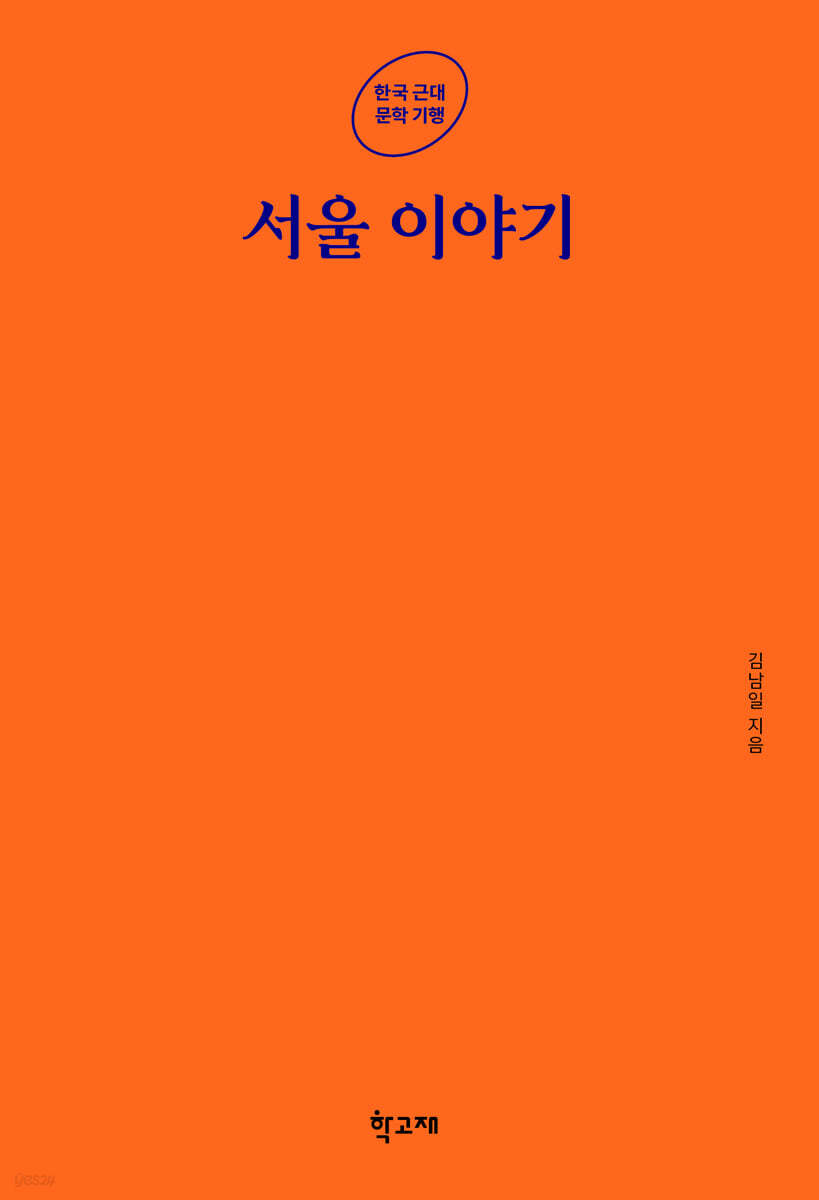
Seoul Story
 |
Description
Book Introduction
'Places' in modern literature,
And the 'dream' we had in the past
A bygone era where desires and thoughts were distant
Revived by the warmth of storyteller Kim Nam-il
"Seoul Stories," a journey that traces the path of modern literature.
Jongno and Cheonggyecheon, where novelist Gu Bo roamed, and the foothills of Bukak Mountain, where Lee Gwang-su, who called for the conscription of Koreans, lived.
The history of our literature and the landscape of colonial Gyeongseong, created by the ecstatic dreams and desperate sighs of countless writers in textbooks.
And the 'dream' we had in the past
A bygone era where desires and thoughts were distant
Revived by the warmth of storyteller Kim Nam-il
"Seoul Stories," a journey that traces the path of modern literature.
Jongno and Cheonggyecheon, where novelist Gu Bo roamed, and the foothills of Bukak Mountain, where Lee Gwang-su, who called for the conscription of Koreans, lived.
The history of our literature and the landscape of colonial Gyeongseong, created by the ecstatic dreams and desperate sighs of countless writers in textbooks.
- You can preview some of the book's contents.
Preview
index
Seoul Story: A Journey Through Modern Korean Literature
1 Changrangjeong is dyed in the sunset
2 Seoul, surprised by new civilization
3 Bukchon Jangma
4 Newspaper Hall, Choi Nam-seon's Modern Times
5 The Day Korea Disappeared
6. On the way to Seoul
7. The setting of "Heartless": Seoul
8 Spring in Seoul, 1919
9 Spring of Literature
10 Seoul is a graveyard
11 New Women Appear in Seoul
12 Gyeongbokgung Palace, the Shame and Fury of the Abandoned Capital
13 Hungry Seoul
14 Sooni at Jongno Intersection
15 Namchon, Sausage Street
16 A conservative from Seongbuk-dong
17 Lee Gwang-su and Hong Ji-dong Mountain Lodge
18 Walkers of 'Daekyungseong'
19 Mitsukoshi Department Store, Wings and Ideals
20 Seoul dialect and standard language
21 Chae Man-sik's Jongno Stroll
22 Kim Nam-cheon and Yamato Apartment
23 Lee Gwang-su of Jukcheomjeong Daehwasuk
24 Starry Night in Seoul
25 Fountain in the square in front of the Bank of Korea
26 Alice goes to Seodaemun Prison
27 Literature, Leaving Seoul
28 August 15, 16, 17, and…
1 Changrangjeong is dyed in the sunset
2 Seoul, surprised by new civilization
3 Bukchon Jangma
4 Newspaper Hall, Choi Nam-seon's Modern Times
5 The Day Korea Disappeared
6. On the way to Seoul
7. The setting of "Heartless": Seoul
8 Spring in Seoul, 1919
9 Spring of Literature
10 Seoul is a graveyard
11 New Women Appear in Seoul
12 Gyeongbokgung Palace, the Shame and Fury of the Abandoned Capital
13 Hungry Seoul
14 Sooni at Jongno Intersection
15 Namchon, Sausage Street
16 A conservative from Seongbuk-dong
17 Lee Gwang-su and Hong Ji-dong Mountain Lodge
18 Walkers of 'Daekyungseong'
19 Mitsukoshi Department Store, Wings and Ideals
20 Seoul dialect and standard language
21 Chae Man-sik's Jongno Stroll
22 Kim Nam-cheon and Yamato Apartment
23 Lee Gwang-su of Jukcheomjeong Daehwasuk
24 Starry Night in Seoul
25 Fountain in the square in front of the Bank of Korea
26 Alice goes to Seodaemun Prison
27 Literature, Leaving Seoul
28 August 15, 16, 17, and…
Into the book
In his novel “The Virgin Mary,” written in the mid-1930s, Lee Tae-jun depicts a classroom scene that is quite unfamiliar today.
Cheoljin, who had just started middle school, was telling his mother about his class, and she even spread out a geography map and started spitting.
“Mom? Well, in our class, there’s a kid from Jeju Island, and the kid sitting next to me is from Onseong, North Hamgyong Province.
Well, there are children from Jinju, Masan, and Busan in Gyeongsangnam-do, Sinuiju in Pyeonganbuk-do, and Kanggye, and they came by car, and they came out for two days to ride in the car…
“It’s not that far, is it, Mom?”
I'm just envious of those fingers that trace the map without hesitation.
--- p.5
Tokyo? Strictly speaking, the signifier "Tokyo"? Like it or not, it was the womb of our modern literature.
In fact, our modern era has had an inseparable relationship with Tokyo since the days of sending envoys.
Almost all of the major writers who have made their mark on the history of modern literature also had some form of connection with literature through Tokyo.
For example, Tokyo, which Choi Nam-seon was terrified to see when he first went there, was a completely different world from the one he had only seen in Seoul.
… Lee Gwang-su, who had not yet escaped his student status, was also a key writer for “Boy” and its follow-up, “Youth.”
The two have maintained a close relationship since their first meeting in Tokyo 40 years ago.
The culmination of that relationship cannot be discussed without mentioning Tokyo.
This is because there is a record of the conversation they had when they crossed over to Tokyo in 1944.
There, two leading Korean intellectuals demand that young Korean students studying in Tokyo shed their “obsession with Korea” and instead cultivate “the spirit of becoming the center and central figures of Greater East Asia.”
And yet, on the same page, they continue to reminisce about the time when they first came to Tokyo and opened their eyes to literature, and honestly reveal their inner thoughts about whether it is possible for them to imitate the "national language (Japanese)" that they have been writing in for decades as "foreigners."
--- p.8
When Isabella Bird Bishop first visited Seoul, she said that the Russian embassy on Jeongdong Hill was the most striking building in the city.
He added that although the highest mountain, Samgaksan, is only 800 meters high, it is not common to find a city that can boast of being able to hunt tigers and leopards within its walls.
That was in 1894.
More than a hundred years later, a writer of our time wrote about Seoul, the city where I live:
- Like an old biker trying to erase the tattoos on his body, Seoul is desperately trying to erase the memories of the modern era.
--- p.24
When he brushed his teeth in Seongbuk-dong in the morning while looking at the castle, when he watched the sunset in the evening, when he looked at the flowers in the garden, and when he looked at the writings and paintings of the old people, or even when he managed to find a bowl used by the old people and placed it on the chest to look at it, Sang-heo was no longer a colony person.
On days when Garam enjoyed the sight and fragrance of orchids with his friends, he was even more like an old Joseon scholar or scholar-official.
Seongbuk-dong is located in Seoul, but is quite distant from the reality of Seoul.
Sang-heo truly loved Seongbuk-dong.
--- p.230
Novelist Gubo thought that if he had the money to travel, he would be almost completely happy, at least for now.
He desperately wanted to see the changed Tokyo he had left behind.
But no matter what he did, Gubo would inevitably find himself thinking of the 'poor novelist and the poor poet' and 'my miserable country' again, and his heart would become dark.
He knew this fact so well that it was ingrained in his bones.
In this way, as a writer of the colony, Mr. Gubo simply walked around the colony.
--- p.265
It was on October 9 that Kim Hak-cheol, a prisoner of war in the Korean Volunteer Army, received an order for his release from General MacArthur's headquarters while serving time in Nagasaki Prison in Japan.
It was a long time later that he appeared in Seoul.
At that time, he was a one-legged man with a cane.
His wounded leg eventually had to be amputated because he did not receive proper treatment in prison.
He was about to take his first steps as a novelist with a unique background even in his soon-to-be-liberated homeland.
In his mind, memories of his childhood in Wonsan, his time in Seoul attending Boseong School, and the tumultuous years he spent in China were already croaking like a swarm of frogs in a rice field.
It was so difficult to even figure out which one to write first.
One thing was clear.
It's important to write in a fun way! His nature hasn't changed since his boyhood days in Wonsan, when he played naked in the water.
Even when writing about the most arduous path of struggle, the tip of his pen preferred the cheerful hope of victory that was sure to be grasped, rather than gloom and despair.
Cheoljin, who had just started middle school, was telling his mother about his class, and she even spread out a geography map and started spitting.
“Mom? Well, in our class, there’s a kid from Jeju Island, and the kid sitting next to me is from Onseong, North Hamgyong Province.
Well, there are children from Jinju, Masan, and Busan in Gyeongsangnam-do, Sinuiju in Pyeonganbuk-do, and Kanggye, and they came by car, and they came out for two days to ride in the car…
“It’s not that far, is it, Mom?”
I'm just envious of those fingers that trace the map without hesitation.
--- p.5
Tokyo? Strictly speaking, the signifier "Tokyo"? Like it or not, it was the womb of our modern literature.
In fact, our modern era has had an inseparable relationship with Tokyo since the days of sending envoys.
Almost all of the major writers who have made their mark on the history of modern literature also had some form of connection with literature through Tokyo.
For example, Tokyo, which Choi Nam-seon was terrified to see when he first went there, was a completely different world from the one he had only seen in Seoul.
… Lee Gwang-su, who had not yet escaped his student status, was also a key writer for “Boy” and its follow-up, “Youth.”
The two have maintained a close relationship since their first meeting in Tokyo 40 years ago.
The culmination of that relationship cannot be discussed without mentioning Tokyo.
This is because there is a record of the conversation they had when they crossed over to Tokyo in 1944.
There, two leading Korean intellectuals demand that young Korean students studying in Tokyo shed their “obsession with Korea” and instead cultivate “the spirit of becoming the center and central figures of Greater East Asia.”
And yet, on the same page, they continue to reminisce about the time when they first came to Tokyo and opened their eyes to literature, and honestly reveal their inner thoughts about whether it is possible for them to imitate the "national language (Japanese)" that they have been writing in for decades as "foreigners."
--- p.8
When Isabella Bird Bishop first visited Seoul, she said that the Russian embassy on Jeongdong Hill was the most striking building in the city.
He added that although the highest mountain, Samgaksan, is only 800 meters high, it is not common to find a city that can boast of being able to hunt tigers and leopards within its walls.
That was in 1894.
More than a hundred years later, a writer of our time wrote about Seoul, the city where I live:
- Like an old biker trying to erase the tattoos on his body, Seoul is desperately trying to erase the memories of the modern era.
--- p.24
When he brushed his teeth in Seongbuk-dong in the morning while looking at the castle, when he watched the sunset in the evening, when he looked at the flowers in the garden, and when he looked at the writings and paintings of the old people, or even when he managed to find a bowl used by the old people and placed it on the chest to look at it, Sang-heo was no longer a colony person.
On days when Garam enjoyed the sight and fragrance of orchids with his friends, he was even more like an old Joseon scholar or scholar-official.
Seongbuk-dong is located in Seoul, but is quite distant from the reality of Seoul.
Sang-heo truly loved Seongbuk-dong.
--- p.230
Novelist Gubo thought that if he had the money to travel, he would be almost completely happy, at least for now.
He desperately wanted to see the changed Tokyo he had left behind.
But no matter what he did, Gubo would inevitably find himself thinking of the 'poor novelist and the poor poet' and 'my miserable country' again, and his heart would become dark.
He knew this fact so well that it was ingrained in his bones.
In this way, as a writer of the colony, Mr. Gubo simply walked around the colony.
--- p.265
It was on October 9 that Kim Hak-cheol, a prisoner of war in the Korean Volunteer Army, received an order for his release from General MacArthur's headquarters while serving time in Nagasaki Prison in Japan.
It was a long time later that he appeared in Seoul.
At that time, he was a one-legged man with a cane.
His wounded leg eventually had to be amputated because he did not receive proper treatment in prison.
He was about to take his first steps as a novelist with a unique background even in his soon-to-be-liberated homeland.
In his mind, memories of his childhood in Wonsan, his time in Seoul attending Boseong School, and the tumultuous years he spent in China were already croaking like a swarm of frogs in a rice field.
It was so difficult to even figure out which one to write first.
One thing was clear.
It's important to write in a fun way! His nature hasn't changed since his boyhood days in Wonsan, when he played naked in the water.
Even when writing about the most arduous path of struggle, the tip of his pen preferred the cheerful hope of victory that was sure to be grasped, rather than gloom and despair.
--- p.392
Publisher's Review
The glory and frustration of modern Korean literature,
A navigation of our literary history that seeks out the hidden side of things without hiding anything.
Spaces that are currently unavailable to me unfold before my eyes like a dream.
Even though we still live there, the Seoul and Tokyo of a century ago, where time has passed and we cannot visit, or the mountains and rivers north of the Military Demarcation Line, which are blocked by a border that is not a border and cannot even be seen.
Novelist Kim Nam-il published four parts of the novel, “Seoul Stories,” “Pyeongan-do Stories,” “Hamgyeong-do Stories,” and “Tokyo Stories,” as part of a bold project titled “A Journey through Modern Korean Literature.”
Following his journey through Seoul and Tokyo, Kyoto and Okinawa, Saigon and Hanoi, Shanghai and Taipei, using modern Asian literature as a map through 『Yesterday There, Today Here』(2020), he now takes a determined step back to Korea, focusing solely on modern Korean literature.
In a time when the writers who shaped modern Korean literature were still struggling to shake off their sense of bewilderment, our land before the division, which served as the foundation and root of literature at that time, became the starting point and destination of a long journey.
Interest in and affection for our literature,
The starting point and destination of the 'Journey through Modern Korean Literature'
In an age where there is more to read and content more plentiful than ever before, our reading habits remain seriously biased towards the West.
Especially when it comes to modern literature, this is a fact that no one can deny.
Author Kim Nam-il, who has been writing novels for over 40 years, reflects, “Although I have read countless foreign works since my debut, I don’t remember putting any time or effort into reading Korean literature, aside from what I learned in middle and high school textbooks.”
This is the background for planning the '4-part travelogue of modern Korean literature'.
This series focuses on vividly showing where modern Korean literature is rooted and what face it has.
This is also the reason why I excluded the rigid framework of literary history theory from the beginning and adopted the format of a ‘literary travelogue.’
Just as I decided to look into the 'people' and 'life' contained in each scene by retracing the cities and villages, mountains and fields of novels using old literary works as coordinates, this extensive 'Travelogue of Modern Korean Literature' is also intended to be a 'story' that, while reading like a novel, will naturally allow one to draw the main lines of Korean literary history.
What did we dream of in the past?
In literary works, the stories of "people" come to life "in that place."
The outstanding poets and novelists of our literary history, whom we see and hear about in textbooks, actually traveled across the wider Korean peninsula under Japanese colonial rule, even more so than today.
Even amidst continued suppression of their language and spirit, they took a train from the south, crossed the Tumen and Yalu Rivers, and climbed Mount Baekdu. They wandered around Tokyo, torn by dreams and anxieties, amidst the Japanese who had experienced the civilized world of the creation of the heavens and the earth.
Just as author Kim Nam-il was a reader who followed in the footsteps of his predecessors in the modern era and immersed himself in their works, readers who turn the pages of “Seoul Stories,” “Pyeongan-do Stories,” “Hamgyeong-do Stories,” and “Tokyo Stories” follow in their footsteps and journey through the world of modern Korean literature.
Kim Nam-il carefully chews over the lines written by writers long ago.
Then, it vividly brings to our eyes the scenery of a snowy night in the north, when fist-sized snowflakes filled the sky, to the classroom in Seoul where exchange students from Hamheung and Jeju are mixed together.
The author, who has leaped over half a century of time and space, has revived scenes that could have been static landscapes into flowing, moving videos.
A road that has disappeared from the map, a place that is difficult to reach even when the heart is far away.
The modern landscape depicted in the words of novelist Kim Nam-il, who guides the way
'A Journey Through Modern Korean Literature' begins in Seoul, the birthplace and treasure trove of modern Korean literature.
Writers who felt the shock of enlightenment in the colonial city of Gyeongseong drew the world in the language of the time through novels and poetry.
The lifestyles and zeitgeist of the writers of the time reflect the extent of the "territory of Korean literature," spanning from Pyeongan Province and Hamgyeong Province to areas of North Korea that have disappeared from maps.
As the years of division have grown longer, and even the very meaning of "unification" has become meaningless, it would not be wrong to say that Kim So-wol's Yongbyon Yaksan, Baek Seok's Sinuiju Flow, and the Duman River, which was silent like an elephant before Lee Yong-ak's eyes, have become stuffed animals in print.
Author Kim Nam-il enriches and enhances these flattened texts.
The breath of the writers that flowed between the lines is now revived and pulsated as our own breath.
Even though I can travel across the sea to Tokyo and across the border to China and Russia in one go, I never get tired.
The steps to find those 'places' are busy, but not breathless, and the eyes that linger on the 'people' there become more and more excited the longer they are.
The phrase "humanities on the road," which has become a cliché, is the most appropriate expression to describe Kim Nam-il's four-part "Travelogue of Modern Korean Literature," in its literal sense rather than as a metaphor.
A navigation of our literary history that seeks out the hidden side of things without hiding anything.
Spaces that are currently unavailable to me unfold before my eyes like a dream.
Even though we still live there, the Seoul and Tokyo of a century ago, where time has passed and we cannot visit, or the mountains and rivers north of the Military Demarcation Line, which are blocked by a border that is not a border and cannot even be seen.
Novelist Kim Nam-il published four parts of the novel, “Seoul Stories,” “Pyeongan-do Stories,” “Hamgyeong-do Stories,” and “Tokyo Stories,” as part of a bold project titled “A Journey through Modern Korean Literature.”
Following his journey through Seoul and Tokyo, Kyoto and Okinawa, Saigon and Hanoi, Shanghai and Taipei, using modern Asian literature as a map through 『Yesterday There, Today Here』(2020), he now takes a determined step back to Korea, focusing solely on modern Korean literature.
In a time when the writers who shaped modern Korean literature were still struggling to shake off their sense of bewilderment, our land before the division, which served as the foundation and root of literature at that time, became the starting point and destination of a long journey.
Interest in and affection for our literature,
The starting point and destination of the 'Journey through Modern Korean Literature'
In an age where there is more to read and content more plentiful than ever before, our reading habits remain seriously biased towards the West.
Especially when it comes to modern literature, this is a fact that no one can deny.
Author Kim Nam-il, who has been writing novels for over 40 years, reflects, “Although I have read countless foreign works since my debut, I don’t remember putting any time or effort into reading Korean literature, aside from what I learned in middle and high school textbooks.”
This is the background for planning the '4-part travelogue of modern Korean literature'.
This series focuses on vividly showing where modern Korean literature is rooted and what face it has.
This is also the reason why I excluded the rigid framework of literary history theory from the beginning and adopted the format of a ‘literary travelogue.’
Just as I decided to look into the 'people' and 'life' contained in each scene by retracing the cities and villages, mountains and fields of novels using old literary works as coordinates, this extensive 'Travelogue of Modern Korean Literature' is also intended to be a 'story' that, while reading like a novel, will naturally allow one to draw the main lines of Korean literary history.
What did we dream of in the past?
In literary works, the stories of "people" come to life "in that place."
The outstanding poets and novelists of our literary history, whom we see and hear about in textbooks, actually traveled across the wider Korean peninsula under Japanese colonial rule, even more so than today.
Even amidst continued suppression of their language and spirit, they took a train from the south, crossed the Tumen and Yalu Rivers, and climbed Mount Baekdu. They wandered around Tokyo, torn by dreams and anxieties, amidst the Japanese who had experienced the civilized world of the creation of the heavens and the earth.
Just as author Kim Nam-il was a reader who followed in the footsteps of his predecessors in the modern era and immersed himself in their works, readers who turn the pages of “Seoul Stories,” “Pyeongan-do Stories,” “Hamgyeong-do Stories,” and “Tokyo Stories” follow in their footsteps and journey through the world of modern Korean literature.
Kim Nam-il carefully chews over the lines written by writers long ago.
Then, it vividly brings to our eyes the scenery of a snowy night in the north, when fist-sized snowflakes filled the sky, to the classroom in Seoul where exchange students from Hamheung and Jeju are mixed together.
The author, who has leaped over half a century of time and space, has revived scenes that could have been static landscapes into flowing, moving videos.
A road that has disappeared from the map, a place that is difficult to reach even when the heart is far away.
The modern landscape depicted in the words of novelist Kim Nam-il, who guides the way
'A Journey Through Modern Korean Literature' begins in Seoul, the birthplace and treasure trove of modern Korean literature.
Writers who felt the shock of enlightenment in the colonial city of Gyeongseong drew the world in the language of the time through novels and poetry.
The lifestyles and zeitgeist of the writers of the time reflect the extent of the "territory of Korean literature," spanning from Pyeongan Province and Hamgyeong Province to areas of North Korea that have disappeared from maps.
As the years of division have grown longer, and even the very meaning of "unification" has become meaningless, it would not be wrong to say that Kim So-wol's Yongbyon Yaksan, Baek Seok's Sinuiju Flow, and the Duman River, which was silent like an elephant before Lee Yong-ak's eyes, have become stuffed animals in print.
Author Kim Nam-il enriches and enhances these flattened texts.
The breath of the writers that flowed between the lines is now revived and pulsated as our own breath.
Even though I can travel across the sea to Tokyo and across the border to China and Russia in one go, I never get tired.
The steps to find those 'places' are busy, but not breathless, and the eyes that linger on the 'people' there become more and more excited the longer they are.
The phrase "humanities on the road," which has become a cliché, is the most appropriate expression to describe Kim Nam-il's four-part "Travelogue of Modern Korean Literature," in its literal sense rather than as a metaphor.
GOODS SPECIFICS
- Date of issue: April 18, 2023
- Page count, weight, size: 428 pages | 642g | 140*205*30mm
- ISBN13: 9788956254494
- ISBN10: 8956254494
You may also like
카테고리
korean


korean

![GQ KOREA Mark (Monthly): December [2025]](http://librairie.coreenne.fr/cdn/shop/files/8ef265dbbfbf186523ed75ba7319009d.jpg?v=1765340328&width=3840)


