

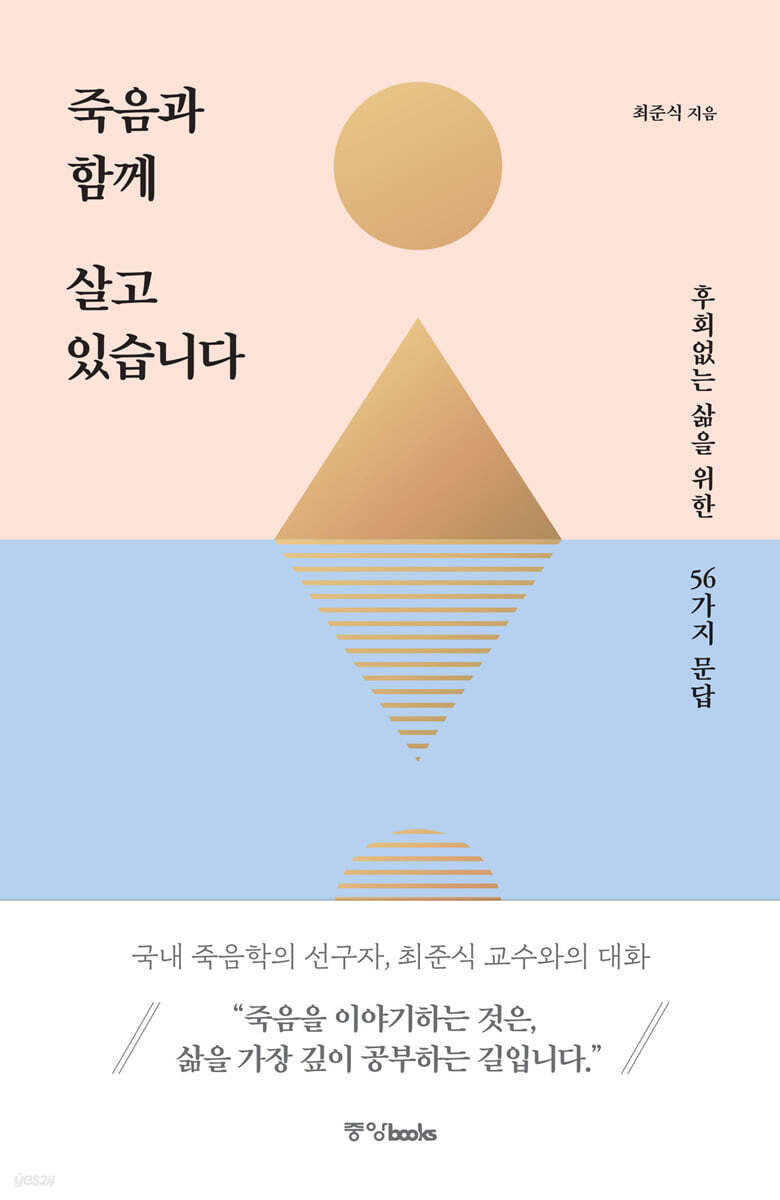
Living with death
 |
Description
Book Introduction
Sharing with Professor Choi Jun-sik, Korea's leading death scholar
56 Questions and Answers for a Life Without Regrets
Professor Choi Jun-sik, a leading Korean death scholar, has published a book titled “Living with Death,” which contains realistic life advice for modern people who find life difficult and constantly regret everything about their daily lives.
This book is a collection of dialogues based on the theme of 'death', which philosophically and realistically addresses the chronic social problems in Korea such as suicide, the futility of life, human relationships, and the study of the mind, through Professor Choi Jun-sik's long-term research and reflection.
Professor Choi Jun-sik, the only person in Korea to hold the title of "death scholar," has broadened the foundation of religious studies by studying Korea's unique religion, which had previously received little attention worldwide. He also founded the Korean Death Society in Korea, a barren land for death studies, and has produced numerous research achievements.
He has consistently explored fundamental issues of human existence, including death, the unconscious, superconsciousness, past life, and the afterlife.
The author, who has been exploring life and death for a long time, says in this new book that modern people who feel the burden of everyday life and even suicidal impulses can find the true reason to live only when they do not avoid or fear 'death', but rather accept death as a natural part of life.
56 Questions and Answers for a Life Without Regrets
Professor Choi Jun-sik, a leading Korean death scholar, has published a book titled “Living with Death,” which contains realistic life advice for modern people who find life difficult and constantly regret everything about their daily lives.
This book is a collection of dialogues based on the theme of 'death', which philosophically and realistically addresses the chronic social problems in Korea such as suicide, the futility of life, human relationships, and the study of the mind, through Professor Choi Jun-sik's long-term research and reflection.
Professor Choi Jun-sik, the only person in Korea to hold the title of "death scholar," has broadened the foundation of religious studies by studying Korea's unique religion, which had previously received little attention worldwide. He also founded the Korean Death Society in Korea, a barren land for death studies, and has produced numerous research achievements.
He has consistently explored fundamental issues of human existence, including death, the unconscious, superconsciousness, past life, and the afterlife.
The author, who has been exploring life and death for a long time, says in this new book that modern people who feel the burden of everyday life and even suicidal impulses can find the true reason to live only when they do not avoid or fear 'death', but rather accept death as a natural part of life.
- You can preview some of the book's contents.
Preview
index
Entering
Chapter 1: To You Who Have Ever Thought of Wanting to Die _ A Society That Encourages Suicide
Have you ever thought about dying because life was so hard?
What can we find in that desperate heart?
At the last moment, what rope can you hold on to?
Does everything really end when you die?
Can a person's life be cut off in an instant?
When I die, will I disappear immediately?
Are you perhaps living like an ostrich with its head buried in the ground?
What is it like to live like an eagle?
What is life like when you drop out of Earth School?
What comes after suicide?
Is suicide an act of stabbing the backs of those left behind?
Chapter 2: Life is never a one-room affair: On the nature of life and death
Why do we think our daily lives are not happy?
Why do we always feel pressured to succeed?
Why am I often unhappy?
Why do I always end up hating someone?
Is the other person really a mirror that reflects me?
Why do we always have to live thinking about death?
Is there anything you can take with you when you die?
Is it possible to live a life where you can embrace someone without attacking them?
Why are we reluctant to talk about death?
What should we know about the Confucian culture that has taken root in Korean society?
If Confucianism taboos death, why does it have a culture of ancestral rites and ancestral rites?
So where should we find hope?
What goals should we have in life?
Can religion really save humanity?
So then, how should we view those who serve God and are religious?
Does a life without possessions really make us happy?
Why are humans so obsessed with money and wealth?
What is the relationship between religion and desire?
Chapter 3: Developing the Strength to Live Alone: How to Free Yourself from the Hell of Others
Is hell really other people?
Can the wounds inflicted on us by others be resolved through conversation or advice?
What should I do when I feel lonely and insignificant?
Do you really need friends?
If you find it difficult to let go of your expectations of people
How to build self-esteem
Why do I keep saying I'm so lonely I could die?
If the conflict continues, the relationship needs to take a break.
Why do I always get deceived and feel disappointed by someone?
Why do we keep resenting someone?
What to do after a breakup
Have you ever imagined your funeral?
Chapter 4: What should I study until the very end? _About the study of the mind that I will not regret even if I die tomorrow.
Do you have a special routine that sustains your life?
What can we learn from nature?
What stories do animals tell humans?
What did you decide to study when you were having the hardest time?
Is meditation the best way to cultivate the mind?
How long does it take to meditate properly?
What can we gain from yoga and meditation?
What is the most effective way to focus your meditation?
What are chakras?
What are the basic breathing techniques?
Which book should I read?
Don't be a foolish spoon, what does that mean?
What should we study in the future?
What lessons did you learn from Ken Wilber?
Who is Yuji Krishnamurti, the modern-day Buddha?
Going out
Chapter 1: To You Who Have Ever Thought of Wanting to Die _ A Society That Encourages Suicide
Have you ever thought about dying because life was so hard?
What can we find in that desperate heart?
At the last moment, what rope can you hold on to?
Does everything really end when you die?
Can a person's life be cut off in an instant?
When I die, will I disappear immediately?
Are you perhaps living like an ostrich with its head buried in the ground?
What is it like to live like an eagle?
What is life like when you drop out of Earth School?
What comes after suicide?
Is suicide an act of stabbing the backs of those left behind?
Chapter 2: Life is never a one-room affair: On the nature of life and death
Why do we think our daily lives are not happy?
Why do we always feel pressured to succeed?
Why am I often unhappy?
Why do I always end up hating someone?
Is the other person really a mirror that reflects me?
Why do we always have to live thinking about death?
Is there anything you can take with you when you die?
Is it possible to live a life where you can embrace someone without attacking them?
Why are we reluctant to talk about death?
What should we know about the Confucian culture that has taken root in Korean society?
If Confucianism taboos death, why does it have a culture of ancestral rites and ancestral rites?
So where should we find hope?
What goals should we have in life?
Can religion really save humanity?
So then, how should we view those who serve God and are religious?
Does a life without possessions really make us happy?
Why are humans so obsessed with money and wealth?
What is the relationship between religion and desire?
Chapter 3: Developing the Strength to Live Alone: How to Free Yourself from the Hell of Others
Is hell really other people?
Can the wounds inflicted on us by others be resolved through conversation or advice?
What should I do when I feel lonely and insignificant?
Do you really need friends?
If you find it difficult to let go of your expectations of people
How to build self-esteem
Why do I keep saying I'm so lonely I could die?
If the conflict continues, the relationship needs to take a break.
Why do I always get deceived and feel disappointed by someone?
Why do we keep resenting someone?
What to do after a breakup
Have you ever imagined your funeral?
Chapter 4: What should I study until the very end? _About the study of the mind that I will not regret even if I die tomorrow.
Do you have a special routine that sustains your life?
What can we learn from nature?
What stories do animals tell humans?
What did you decide to study when you were having the hardest time?
Is meditation the best way to cultivate the mind?
How long does it take to meditate properly?
What can we gain from yoga and meditation?
What is the most effective way to focus your meditation?
What are chakras?
What are the basic breathing techniques?
Which book should I read?
Don't be a foolish spoon, what does that mean?
What should we study in the future?
What lessons did you learn from Ken Wilber?
Who is Yuji Krishnamurti, the modern-day Buddha?
Going out
Detailed image

Into the book
When things get so difficult and hard that you feel like you want to die, you have to realize that you have the courage to reach out and ask for help from anyone, even if they are not close to you.
--- p.2
If we could live like eagles, we could see a very wide range of things in life.
If we look at life from a different perspective, there comes a point where we can see that life is not just one time and completely over.
--- p.38
The reason why our lives are not happy and difficult is often because of people.
Often times, the main reason is the stress received from people.
There are various reasons for this in human relationships, such as breaking up with someone, being unhappy in your marriage, or having your self-esteem completely destroyed after being hurt by someone at work or around you.
The reason for this suffering can mostly be found in ‘love’.
--- p.59
If you want to know your worst traits, think of the person you hate the most.
Because that person is soon to be my shadow.
If you see a junior colleague or superior at work every day and they are a thorn in your side and you don't like them, consider whether they might be revealing a shadow of yourself that you're trying to hide.
Of course, it won't be easy to admit.
--- p.65
What can we take with us when we die?
You cannot take the physical body or material things with you.
There are only two things you can take with you: learning and love.
--- p.70
At the heart of all religions and philosophies lies the premise that the meaning and ethical consequences of life continue after death.
This belief is what gives humans the power to live morally and ethically.
When we believe that responsibility continues after death, we approach life more carefully.
--- p.87
Everyone has an innate frequency, and if you try to force yourself to hang out with someone whose wavelength doesn't match yours, you're bound to end up with problems or pain.
Rather than that, it is better to let things flow naturally.
This means that it is better to make friends with people who come to you naturally or meet you through the flow of time rather than trying to force yourself to make friends.
--- p.117
If you keep meeting and encountering people you don't like, the pain will double.
One side must avoid damage first.
There are guardians of peace who always make big mistakes in times like these.
These are people who step in and try to resolve the conflict.
The two people are in a situation where it is difficult to even see each other's faces, but they keep meeting and say they will set up a time to reconcile and apologize.
--- p.131
What is a funeral? A funeral is a ceremony to honor and remember the deceased.
However, the funerals I have seen in Korea so far have been more focused on formality than comfort and remembrance.
--- p.142
The moment you go up the mountain and step on the soil, the soft and firm feeling that spreads from the tips of your feet is different.
I feel connected to nature.
My mind is at ease and my body is relaxed.
This is precisely why we can say that if you want to be happy, you must get close to nature.
--- p.154
Reciting a prayer means reciting a prayer.
Whether you go to church, a cathedral, a temple, or even not, reciting a prayer that is easy for you to pronounce can be a great help in purifying your mind.
--- p.166
Our minds are sometimes likened to 'drunken monkeys'.
Our minds are always so restless and distracted.
So I can't think quietly for even a moment, and I always live as if I'm being chased by something.
But meditation has the same effect as making a drunken monkey sit quietly.
--- p.170
“I want to live well” and “I want to die well” are essentially the same thing.
Because in order to die well, you have to live well.
Especially spiritually.
Those who have not lived a faithful spiritual life will be afraid and confused when they face death, but those who have cultivated a spiritual life can change death from something they suffer to something they welcome.
--- p.2
If we could live like eagles, we could see a very wide range of things in life.
If we look at life from a different perspective, there comes a point where we can see that life is not just one time and completely over.
--- p.38
The reason why our lives are not happy and difficult is often because of people.
Often times, the main reason is the stress received from people.
There are various reasons for this in human relationships, such as breaking up with someone, being unhappy in your marriage, or having your self-esteem completely destroyed after being hurt by someone at work or around you.
The reason for this suffering can mostly be found in ‘love’.
--- p.59
If you want to know your worst traits, think of the person you hate the most.
Because that person is soon to be my shadow.
If you see a junior colleague or superior at work every day and they are a thorn in your side and you don't like them, consider whether they might be revealing a shadow of yourself that you're trying to hide.
Of course, it won't be easy to admit.
--- p.65
What can we take with us when we die?
You cannot take the physical body or material things with you.
There are only two things you can take with you: learning and love.
--- p.70
At the heart of all religions and philosophies lies the premise that the meaning and ethical consequences of life continue after death.
This belief is what gives humans the power to live morally and ethically.
When we believe that responsibility continues after death, we approach life more carefully.
--- p.87
Everyone has an innate frequency, and if you try to force yourself to hang out with someone whose wavelength doesn't match yours, you're bound to end up with problems or pain.
Rather than that, it is better to let things flow naturally.
This means that it is better to make friends with people who come to you naturally or meet you through the flow of time rather than trying to force yourself to make friends.
--- p.117
If you keep meeting and encountering people you don't like, the pain will double.
One side must avoid damage first.
There are guardians of peace who always make big mistakes in times like these.
These are people who step in and try to resolve the conflict.
The two people are in a situation where it is difficult to even see each other's faces, but they keep meeting and say they will set up a time to reconcile and apologize.
--- p.131
What is a funeral? A funeral is a ceremony to honor and remember the deceased.
However, the funerals I have seen in Korea so far have been more focused on formality than comfort and remembrance.
--- p.142
The moment you go up the mountain and step on the soil, the soft and firm feeling that spreads from the tips of your feet is different.
I feel connected to nature.
My mind is at ease and my body is relaxed.
This is precisely why we can say that if you want to be happy, you must get close to nature.
--- p.154
Reciting a prayer means reciting a prayer.
Whether you go to church, a cathedral, a temple, or even not, reciting a prayer that is easy for you to pronounce can be a great help in purifying your mind.
--- p.166
Our minds are sometimes likened to 'drunken monkeys'.
Our minds are always so restless and distracted.
So I can't think quietly for even a moment, and I always live as if I'm being chased by something.
But meditation has the same effect as making a drunken monkey sit quietly.
--- p.170
“I want to live well” and “I want to die well” are essentially the same thing.
Because in order to die well, you have to live well.
Especially spiritually.
Those who have not lived a faithful spiritual life will be afraid and confused when they face death, but those who have cultivated a spiritual life can change death from something they suffer to something they welcome.
--- p.206
Publisher's Review
About the nature of life and death
56 Wise Questions and Answers
The book consists of 56 questions and answers that offer a fresh perspective on the meaning of life and death.
The author and readers naturally discuss various topics under the shadow of death, such as suicide, human relationships, religion, Confucian culture, and the study of the mind.
The author, who says, “Asking about death is asking about life,” poses questions that readers should ask themselves: “Why am I unhappy?”, “What should I live to avoid regrets?”, and “Does consciousness exist after death?”
"Living with Death" is not an academic theory book, but a "humanities of life" written through the voice of Choi Jun-sik, a human being.
Instead of using the language of a long-time researcher, he calmly tells stories salvaged from the boundaries of life.
While criticizing the reality of Korean society, which has long regarded death as taboo, it also asks about the meaning of life in everyday language that readers can easily relate to.
The author says:
“Talking about death is the only way to study life most deeply.”
56 Wise Questions and Answers
The book consists of 56 questions and answers that offer a fresh perspective on the meaning of life and death.
The author and readers naturally discuss various topics under the shadow of death, such as suicide, human relationships, religion, Confucian culture, and the study of the mind.
The author, who says, “Asking about death is asking about life,” poses questions that readers should ask themselves: “Why am I unhappy?”, “What should I live to avoid regrets?”, and “Does consciousness exist after death?”
"Living with Death" is not an academic theory book, but a "humanities of life" written through the voice of Choi Jun-sik, a human being.
Instead of using the language of a long-time researcher, he calmly tells stories salvaged from the boundaries of life.
While criticizing the reality of Korean society, which has long regarded death as taboo, it also asks about the meaning of life in everyday language that readers can easily relate to.
The author says:
“Talking about death is the only way to study life most deeply.”
GOODS SPECIFICS
- Date of issue: October 30, 2025
- Page count, weight, size: 208 pages | 360g | 130*200*15mm
- ISBN13: 9788927881261
- ISBN10: 8927881265
You may also like
카테고리
korean


korean

![GQ KOREA Mark (Monthly): December [2025]](http://librairie.coreenne.fr/cdn/shop/files/8ef265dbbfbf186523ed75ba7319009d.jpg?v=1765340328&width=3840)


