

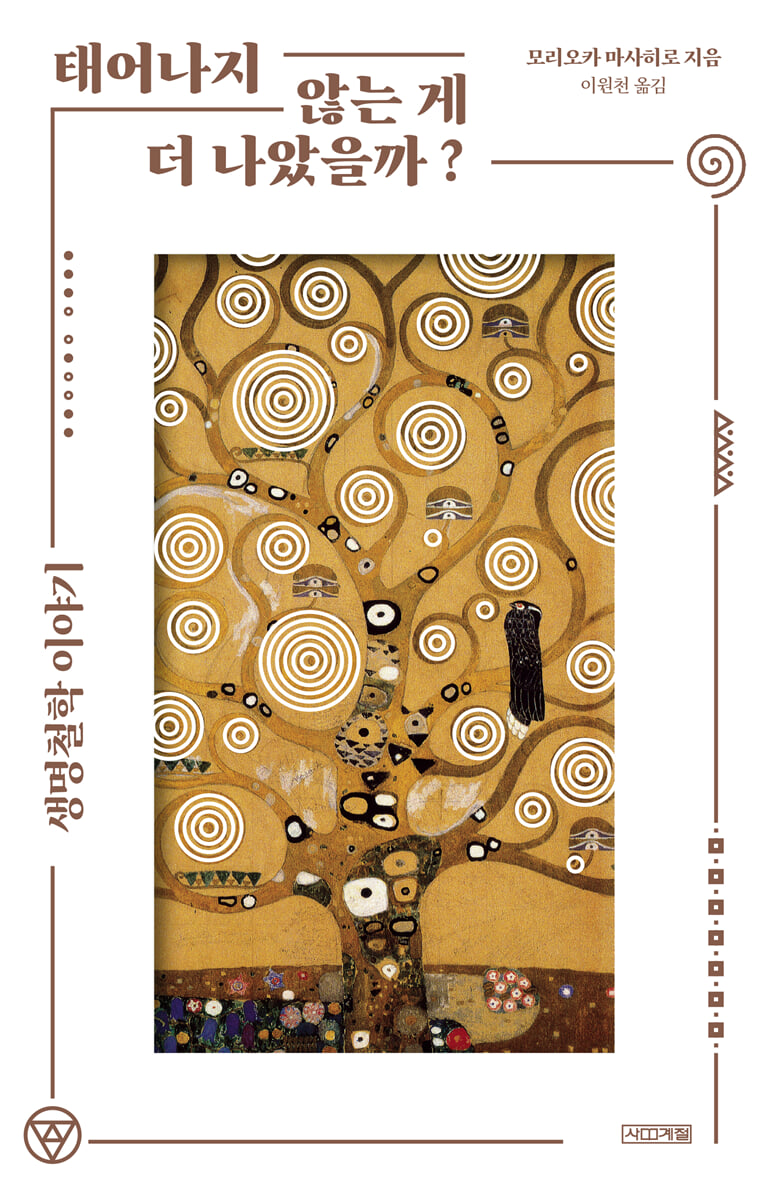
Would it have been better not to have been born?
 |
Description
Book Introduction
This book is a book in which Japanese philosopher Masahiro Morioka confronts head-on the fundamental questions of human existence: "Why was I born? And wouldn't it have been better not to have been born?"
The author traces the lineage of the idea of 'birth denial' from Oedipus in ancient Greece to Buddha, Schopenhauer, Nietzsche, and the modern anti-natalist philosopher Benedict.
Why do humans deny their own existence, and how can they overcome that denial? Morioka argues that we must somehow escape the darkness of "I wish I had never been born" and move toward the light of "I'm so glad I was born."
He calls this 'birth affirmation'.
It is not a forced belief that one must live since one is born, but a philosophical decision to affirm life even in the midst of pain and contradiction.
"Would It Have Been Better Never to Have Been Born?" is a book that crosses the boundaries of the West and the East, literature and philosophy, and asks again the meaning of "being alive."
It is a new starting point for modern philosophy of life, bringing a ray of hope from the abyss of despair.
The author traces the lineage of the idea of 'birth denial' from Oedipus in ancient Greece to Buddha, Schopenhauer, Nietzsche, and the modern anti-natalist philosopher Benedict.
Why do humans deny their own existence, and how can they overcome that denial? Morioka argues that we must somehow escape the darkness of "I wish I had never been born" and move toward the light of "I'm so glad I was born."
He calls this 'birth affirmation'.
It is not a forced belief that one must live since one is born, but a philosophical decision to affirm life even in the midst of pain and contradiction.
"Would It Have Been Better Never to Have Been Born?" is a book that crosses the boundaries of the West and the East, literature and philosophy, and asks again the meaning of "being alive."
It is a new starting point for modern philosophy of life, bringing a ray of hope from the abyss of despair.
- You can preview some of the book's contents.
Preview
index
introduction
Chapter 1 You must survive!
1.
Mephisto and the Negative Spirit
2.
You must survive!
3.
The saved soul of Faust
4.
Faust and the Denial of Birth
Chapter 2: Is Birth Harmful?
1.
Oedipus the King
2.
A curse on the world and life
3.
Beneta's theory of birth harm
4.
The Journey of Antinatalism
Chapter 3: Schopenhauer's Antinatalism
1.
Kant's philosophy transformed into vitalism
2.
Will to live
3.
All life is suffering
4.
The state of no will is the highest good.
5.
About suicide
6.
That which is not destroyed even by death
7.
Schopenhauer's influence
Chapter 4: The Immortal Atman in Transmigration
1.
The Birth of the Idea of Reincarnation
2.
Reaching Atman through deep sleep
3.
You are it
Chapter 5: How Did the Buddha Think About Birth?
1.
Everything is suffering
2.
A state of peace and tranquility
3.
Would it have been better not to have been born?
4.
Primitive Buddhism and Suicide
Chapter 6: Nietzsche: Can You Love the Fate You Were Born With?
1.
A life-affirming philosopher
2.
Eternal Return
3.
Fateful Love
4.
I want to be the person I am
5.
Nietzsche and the Affirmation of Birth
Chapter 7: Affirming Birth, Philosophizing Life
1.
Reconsidering the theory of birth harm
2.
Is it evil that evil arises from good?
3.
How should we think about having children?
4.
Responsiveness Principle
5.
With the philosophy of birth affirmation!
6.
To the philosophy of life!
Reviews
Americas
Chapter 1 You must survive!
1.
Mephisto and the Negative Spirit
2.
You must survive!
3.
The saved soul of Faust
4.
Faust and the Denial of Birth
Chapter 2: Is Birth Harmful?
1.
Oedipus the King
2.
A curse on the world and life
3.
Beneta's theory of birth harm
4.
The Journey of Antinatalism
Chapter 3: Schopenhauer's Antinatalism
1.
Kant's philosophy transformed into vitalism
2.
Will to live
3.
All life is suffering
4.
The state of no will is the highest good.
5.
About suicide
6.
That which is not destroyed even by death
7.
Schopenhauer's influence
Chapter 4: The Immortal Atman in Transmigration
1.
The Birth of the Idea of Reincarnation
2.
Reaching Atman through deep sleep
3.
You are it
Chapter 5: How Did the Buddha Think About Birth?
1.
Everything is suffering
2.
A state of peace and tranquility
3.
Would it have been better not to have been born?
4.
Primitive Buddhism and Suicide
Chapter 6: Nietzsche: Can You Love the Fate You Were Born With?
1.
A life-affirming philosopher
2.
Eternal Return
3.
Fateful Love
4.
I want to be the person I am
5.
Nietzsche and the Affirmation of Birth
Chapter 7: Affirming Birth, Philosophizing Life
1.
Reconsidering the theory of birth harm
2.
Is it evil that evil arises from good?
3.
How should we think about having children?
4.
Responsiveness Principle
5.
With the philosophy of birth affirmation!
6.
To the philosophy of life!
Reviews
Americas
Into the book
But there is no doubt that one day, the final destination called death will await us.
It's like trying to "inflate a soap bubble as long and as big as possible, knowing full well that it will eventually burst."
And if we look at the path of life toward death, we find ourselves constantly struggling in pain until we reach our goal, and then we are overcome by emptiness and boredom.
So life is nothing more than “a pendulum swinging between pain and boredom.”
--- p.76
Schopenhauer quotes Francesco Petrarch, who said, “A thousand pleasures cannot be compared with one pain,” and says, “Though thousands of people lived happily and joyfully, it would be impossible for them to relieve the agonizing anxiety and pain of death suffered by a single person.”
--- p.78
The Upanishads tell us that there is a way to escape the endless cycle of reincarnation and enter the immortal world.
It is said that when we properly recognize what Atman is, we shed our body like a snake shedding its skin and attain liberation.
So why did philosophers want to escape reincarnation? Because this world is filled with suffering and sorrow.
--- p.116
Primitive Buddhism believed that everything humans experience is suffering.
At that time, Indian society believed in reincarnation, so it was thought that one could not escape suffering even in the world of rebirth after death.
Furthermore, those who left home practiced with the hope that after death they would never be born again.
--- p.136
In the realm of Nirvana there is no fear of death.
It means not being obsessed with life, nor obsessed with death, but just calmly waiting for death to come.
Nirvana is a state where you no longer want to live, but at the same time, you no longer want to die.
It is truly the annihilation of desire and attachment to life.
--- p.149
Nietzsche believes that one cannot extract only pleasure from the world and affirm it.
This is because the pleasures we obtain in this world are always connected to the pain that prepared the pleasure, like an underground rhizome. When we draw out the pleasure, the pain that is connected to it is also drawn out.
This is a completely different way of thinking from Beneath, who thought that human pleasure and pain could be separated and their value compared.
--- p.179
For those who, having taken the ultimate fulfillment and happiness they feel in the prime of their old age as food and went down the steep slope of life's final slope thinking, "This is enough," even if a state of rottenness and evil is destined for them, it cannot necessarily be called evil.
Clearly, the steep downhill slope is a state of evil that has rotted and collapsed, but for me, who has the thought that 'this is enough,' the creation of a state of evil is also 'this is enough,' and is by no means a state of evil.
--- p.220
But I, who exist here now, cannot counterfactually imagine what it would be like if I had not been born.
Because in order to properly complete the counterfactual imagination of 'what if I had never been born', I would also have to erase my existence here and now, trying to perform that imagination.
It's like trying to "inflate a soap bubble as long and as big as possible, knowing full well that it will eventually burst."
And if we look at the path of life toward death, we find ourselves constantly struggling in pain until we reach our goal, and then we are overcome by emptiness and boredom.
So life is nothing more than “a pendulum swinging between pain and boredom.”
--- p.76
Schopenhauer quotes Francesco Petrarch, who said, “A thousand pleasures cannot be compared with one pain,” and says, “Though thousands of people lived happily and joyfully, it would be impossible for them to relieve the agonizing anxiety and pain of death suffered by a single person.”
--- p.78
The Upanishads tell us that there is a way to escape the endless cycle of reincarnation and enter the immortal world.
It is said that when we properly recognize what Atman is, we shed our body like a snake shedding its skin and attain liberation.
So why did philosophers want to escape reincarnation? Because this world is filled with suffering and sorrow.
--- p.116
Primitive Buddhism believed that everything humans experience is suffering.
At that time, Indian society believed in reincarnation, so it was thought that one could not escape suffering even in the world of rebirth after death.
Furthermore, those who left home practiced with the hope that after death they would never be born again.
--- p.136
In the realm of Nirvana there is no fear of death.
It means not being obsessed with life, nor obsessed with death, but just calmly waiting for death to come.
Nirvana is a state where you no longer want to live, but at the same time, you no longer want to die.
It is truly the annihilation of desire and attachment to life.
--- p.149
Nietzsche believes that one cannot extract only pleasure from the world and affirm it.
This is because the pleasures we obtain in this world are always connected to the pain that prepared the pleasure, like an underground rhizome. When we draw out the pleasure, the pain that is connected to it is also drawn out.
This is a completely different way of thinking from Beneath, who thought that human pleasure and pain could be separated and their value compared.
--- p.179
For those who, having taken the ultimate fulfillment and happiness they feel in the prime of their old age as food and went down the steep slope of life's final slope thinking, "This is enough," even if a state of rottenness and evil is destined for them, it cannot necessarily be called evil.
Clearly, the steep downhill slope is a state of evil that has rotted and collapsed, but for me, who has the thought that 'this is enough,' the creation of a state of evil is also 'this is enough,' and is by no means a state of evil.
--- p.220
But I, who exist here now, cannot counterfactually imagine what it would be like if I had not been born.
Because in order to properly complete the counterfactual imagination of 'what if I had never been born', I would also have to erase my existence here and now, trying to perform that imagination.
--- p.224
Publisher's Review
Anxiety, fear, isolation, inequality—is life designed to prevent us from feeling happy?
Climate crisis, war, pandemic, inequality, Hell Joseon, unemployment, broken relationships…
Most modern people live with psychological anxiety and fear in the face of these problems.
Then, suddenly, I ask myself the question, 'What does it mean to live?' and 'Wouldn't it have been better not to have been born?'
Life is so boring and painful that it seems like its purpose is to prevent us from feeling happy.
This sense of isolation naturally leads to anti-natalism.
People who are attracted to anti-natalism in a polarized society
Today, anti-natalist ideology is spreading throughout the world.
There is even a movement to take global environmental issues seriously and not have children.
The countless anonymous mutterings of "I wish I had never been born" that appear on the Internet are expressions of resentment from people who have lost hope and are oppressed and living in a polarized society.
‘Birth’ in this painful world is an event determined regardless of my will.
So, from the moment we are born, we live with resentment toward the world.
People who have lost the meaning of life like this are becoming fascinated with the anti-natalist ideology.
The pain of life is a long-standing fate of humanity that has persisted since ancient times.
Are the denial of birth, the pain of life, isolation, anxiety, and fear unique to modern people? What were people of the past like? Japanese philosopher Masahiro Morioka argues that human history is a grand drama of denial of birth and affirmation of life.
In Faust and Hamlet, it is said that the best thing is not to be born, and the next best thing is to quickly return to where you came from, which was a kind of zeitgeist in the intellectual world of ancient Greece.
Since ancient times, there has been a clear notion that birth is 'suffering'.
Why did so many philosophers, including Schopenhauer, Nietzsche, and Buddha, dwell on the question of human birth and the meaning of life? Because this world is filled with suffering and sorrow.
Would it have been better not to have been born? - From Denial of Birth to Affirmation of Birth
Japanese philosopher Masahiro Morioka went back to ancient times to uncover the essence of antinatalism, exploring the historical roots of whether it was better not to be born, crossing over Eastern and Western classics and philosophy.
He says that this is a meaningless argument because to properly complete the counterfactual imagination of 'what if I had never been born', I would also have to erase my existence here and now, trying to perform that imagination.
No matter how much I lament, 'It would have been better if I had never been born,' I cannot make it come true now.
Masahiro Morioka proposes that the question of “the meaning of life” be transformed into the question of “affirmation of birth” and pursued philosophically.
This is because setting it as a question of positivity rather than a question of meaning leads to more substantial results.
Comfort and courage to those who have lost the meaning of life and are wavering on the borderline.
This book is a philosophical book that explores the ‘meaning of life’ and the ‘meaning of birth.’
This is a concise textbook on life philosophy that anyone can easily read and find inspiration in.
It will offer courage and quiet but powerful intellectual comfort, especially to those who feel they have lost their purpose in life and those who waver on the border between life and death.
Climate crisis, war, pandemic, inequality, Hell Joseon, unemployment, broken relationships…
Most modern people live with psychological anxiety and fear in the face of these problems.
Then, suddenly, I ask myself the question, 'What does it mean to live?' and 'Wouldn't it have been better not to have been born?'
Life is so boring and painful that it seems like its purpose is to prevent us from feeling happy.
This sense of isolation naturally leads to anti-natalism.
People who are attracted to anti-natalism in a polarized society
Today, anti-natalist ideology is spreading throughout the world.
There is even a movement to take global environmental issues seriously and not have children.
The countless anonymous mutterings of "I wish I had never been born" that appear on the Internet are expressions of resentment from people who have lost hope and are oppressed and living in a polarized society.
‘Birth’ in this painful world is an event determined regardless of my will.
So, from the moment we are born, we live with resentment toward the world.
People who have lost the meaning of life like this are becoming fascinated with the anti-natalist ideology.
The pain of life is a long-standing fate of humanity that has persisted since ancient times.
Are the denial of birth, the pain of life, isolation, anxiety, and fear unique to modern people? What were people of the past like? Japanese philosopher Masahiro Morioka argues that human history is a grand drama of denial of birth and affirmation of life.
In Faust and Hamlet, it is said that the best thing is not to be born, and the next best thing is to quickly return to where you came from, which was a kind of zeitgeist in the intellectual world of ancient Greece.
Since ancient times, there has been a clear notion that birth is 'suffering'.
Why did so many philosophers, including Schopenhauer, Nietzsche, and Buddha, dwell on the question of human birth and the meaning of life? Because this world is filled with suffering and sorrow.
Would it have been better not to have been born? - From Denial of Birth to Affirmation of Birth
Japanese philosopher Masahiro Morioka went back to ancient times to uncover the essence of antinatalism, exploring the historical roots of whether it was better not to be born, crossing over Eastern and Western classics and philosophy.
He says that this is a meaningless argument because to properly complete the counterfactual imagination of 'what if I had never been born', I would also have to erase my existence here and now, trying to perform that imagination.
No matter how much I lament, 'It would have been better if I had never been born,' I cannot make it come true now.
Masahiro Morioka proposes that the question of “the meaning of life” be transformed into the question of “affirmation of birth” and pursued philosophically.
This is because setting it as a question of positivity rather than a question of meaning leads to more substantial results.
Comfort and courage to those who have lost the meaning of life and are wavering on the borderline.
This book is a philosophical book that explores the ‘meaning of life’ and the ‘meaning of birth.’
This is a concise textbook on life philosophy that anyone can easily read and find inspiration in.
It will offer courage and quiet but powerful intellectual comfort, especially to those who feel they have lost their purpose in life and those who waver on the border between life and death.
GOODS SPECIFICS
- Date of issue: October 31, 2025
- Page count, weight, size: 348 pages | 580g | 141*220*21mm
- ISBN13: 9791169813983
- ISBN10: 1169813984
You may also like
카테고리
korean


korean

![GQ KOREA Mark (Monthly): December [2025]](http://librairie.coreenne.fr/cdn/shop/files/8ef265dbbfbf186523ed75ba7319009d.jpg?v=1765340328&width=3840)


