

The language of flowers
 |
Description
Book Introduction
Korean edition of the Heritage Collection published by French publisher Hachette
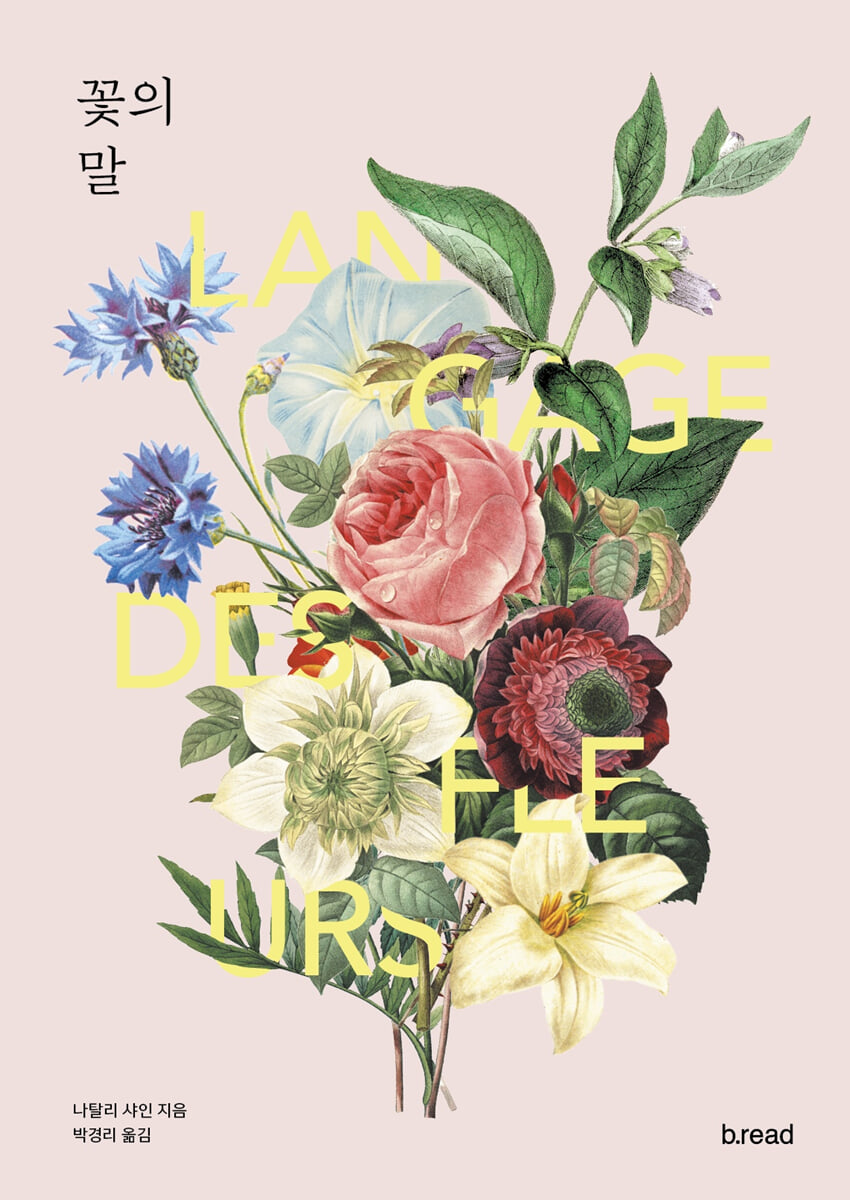
The Language of 80 Flowers, told with beautiful illustrations
From the moment the 18th-century Swedish botanist Carl Linnaeus first stirred the soil with his trowel, flowers have inspired human literature and mythology.
Flowers appear in countless legends, and humans have constantly tried to replicate their scent using the power of science.
If you listen to the 'language of flowers' that crosses literature, legend, history, and botany, you will be able to hear beautiful stories that have bloomed and withered in front of you and me, in a land long ago, and now here.
The Language of 80 Flowers, told with beautiful illustrations
From the moment the 18th-century Swedish botanist Carl Linnaeus first stirred the soil with his trowel, flowers have inspired human literature and mythology.
Flowers appear in countless legends, and humans have constantly tried to replicate their scent using the power of science.
If you listen to the 'language of flowers' that crosses literature, legend, history, and botany, you will be able to hear beautiful stories that have bloomed and withered in front of you and me, in a land long ago, and now here.
- You can preview some of the book's contents.
Preview
index
Introduction_The epic poem written by flowers
Galanthus
Poppy
Gwangnamu
chrysanthemum
gladiolus
marigold
wallflower
orchid
dahlia
daisy
Camellia
wild rose
rattan
foxglove
lilac
lemon tree
Rhododendron
marshmallow
convolvulus
Water parsley
Mimosa
zinnia
lily
begonia
Veronica Belladonna
Borage
copy tree
Flower powder
Iris
saffron
Hawthorn
hydrangea
cornflower
training
daffodil
cyclamen
anemone
Arum
maybe
Ivy
acacia
Aster
primrose
poppy
thistle
Edelweiss
Erica
lotus flower
orange tree
cucumber grass
bay tree
lily of the valley
Indongdengul
Peony
rose
Jasmine
hollyhock
geranium
violet
Valerian
bellflower
carnation
crocus
large-leaf vinca
clematis
time
Tuberose
tulip
pansy
poinsettia
Korean lotus flower
sunflower
heliotrope
Hemlock
Holly
hyacinth
Image copyright
Galanthus
Poppy
Gwangnamu
chrysanthemum
gladiolus
marigold
wallflower
orchid
dahlia
daisy
Camellia
wild rose
rattan
foxglove
lilac
lemon tree
Rhododendron
marshmallow
convolvulus
Water parsley
Mimosa
zinnia
lily
begonia
Veronica Belladonna
Borage
copy tree
Flower powder
Iris
saffron
Hawthorn
hydrangea
cornflower
training
daffodil
cyclamen
anemone
Arum
maybe
Ivy
acacia
Aster
primrose
poppy
thistle
Edelweiss
Erica
lotus flower
orange tree
cucumber grass
bay tree
lily of the valley
Indongdengul
Peony
rose
Jasmine
hollyhock
geranium
violet
Valerian
bellflower
carnation
crocus
large-leaf vinca
clematis
time
Tuberose
tulip
pansy
poinsettia
Korean lotus flower
sunflower
heliotrope
Hemlock
Holly
hyacinth
Image copyright
Detailed image

Into the book
Flowers emit a unique fragrance that human knowledge of chemistry has constantly attempted to replicate.
So it's no surprise that flowers appear in countless legends.
From the moment 18th-century Swedish botanist Carl von Linne first stirred the soil with his trowel, flowers have inspired human literature and mythology.
--- p.6
People used to make their own so-called 'flower bouquets', which was as difficult as writing a poem.
They wanted to fully convey the complex emotions of love with the help of flower language, which is already classified like a dictionary.
Although this language has been simplified over time, flowers still remain a special means of expressing the most delicate emotions and their sparkle.
--- p.12
Today, giving poppies as a gift symbolizes offering comfort to those suffering from worry and anxiety.
The poppy, which is believed to soothe sadness along with sleep, also has another widely known property.
It has a large number of seeds, so it is not picky about any soil, and it can easily take root even in freshly plowed areas. It even grows well on roadsides, making it a symbol of life.
--- p.21
Gladiolus, which blooms from summer to early fall, symbolizes intense and unstoppable love and is also the ideal birth flower for August.
However, it is not suitable as a gift for a loved one.
According to the delicate flower's saying, the sword-like stem says, "You break my heart."
--- p.27
“I love you a little, I love you a lot, I love you a little…” Since long ago, lovers have been fortune-telling their love by picking off daisy petals blooming in the fields one by one.
--- p.39
In the countries founded by the Anglo-Saxons, the daisy was called 'sourire de Dieu' or 'day's eye', from which the English name 'daisy' is derived.
--- p.39
Medieval apothecaries would go out into the fields on full moon nights and pick the flowers with their left hands, and in the 17th century, people with the intention of poisoning someone would apply digitalis juice to candles, rings, and clothing.
There was also a widespread belief that mixing the mixture with other ingredients and sprinkling it on the floor of a house would ward off evil spirits.
--- p.49
Purple lilac symbolizes first love in particular and expresses the passion or emotional impulses of youth.
White lilacs, more than anything else, have a purity that can only be glimpsed in youth.
Lilacs are also often paired with ivy in a bride's bouquet to symbolize passionate love or a relationship that will last forever.
--- p.52
In Europe, giving a flowering lemon branch is a message of eternal love or reconciliation, while in Asia, including India, the tree with white flowers and golden fruit is considered a symbol of health and newness.
--- p.55
Giving a bouquet of zinnias in a variety of colors to a friend far away is a way to express your feelings no matter where in the world you are.
--- p.69
The color of saffron is also considered sacred in Buddhism.
It is a color that symbolizes enlightenment, the final stage of spirituality that all believers must reach, and is used to dye monks' robes and water used at altars.
--- p.87
The Greeks believed that this plant gave courage.
This belief continued into the Middle Ages, when knights going to battle would be given a bundle of thyme by their wives.
--- p.167
The name 'tulip' comes from the Turkic word 'tulbent', meaning 'turban', probably because Turks wore tulips in their turbans.
So it's no surprise that flowers appear in countless legends.
From the moment 18th-century Swedish botanist Carl von Linne first stirred the soil with his trowel, flowers have inspired human literature and mythology.
--- p.6
People used to make their own so-called 'flower bouquets', which was as difficult as writing a poem.
They wanted to fully convey the complex emotions of love with the help of flower language, which is already classified like a dictionary.
Although this language has been simplified over time, flowers still remain a special means of expressing the most delicate emotions and their sparkle.
--- p.12
Today, giving poppies as a gift symbolizes offering comfort to those suffering from worry and anxiety.
The poppy, which is believed to soothe sadness along with sleep, also has another widely known property.
It has a large number of seeds, so it is not picky about any soil, and it can easily take root even in freshly plowed areas. It even grows well on roadsides, making it a symbol of life.
--- p.21
Gladiolus, which blooms from summer to early fall, symbolizes intense and unstoppable love and is also the ideal birth flower for August.
However, it is not suitable as a gift for a loved one.
According to the delicate flower's saying, the sword-like stem says, "You break my heart."
--- p.27
“I love you a little, I love you a lot, I love you a little…” Since long ago, lovers have been fortune-telling their love by picking off daisy petals blooming in the fields one by one.
--- p.39
In the countries founded by the Anglo-Saxons, the daisy was called 'sourire de Dieu' or 'day's eye', from which the English name 'daisy' is derived.
--- p.39
Medieval apothecaries would go out into the fields on full moon nights and pick the flowers with their left hands, and in the 17th century, people with the intention of poisoning someone would apply digitalis juice to candles, rings, and clothing.
There was also a widespread belief that mixing the mixture with other ingredients and sprinkling it on the floor of a house would ward off evil spirits.
--- p.49
Purple lilac symbolizes first love in particular and expresses the passion or emotional impulses of youth.
White lilacs, more than anything else, have a purity that can only be glimpsed in youth.
Lilacs are also often paired with ivy in a bride's bouquet to symbolize passionate love or a relationship that will last forever.
--- p.52
In Europe, giving a flowering lemon branch is a message of eternal love or reconciliation, while in Asia, including India, the tree with white flowers and golden fruit is considered a symbol of health and newness.
--- p.55
Giving a bouquet of zinnias in a variety of colors to a friend far away is a way to express your feelings no matter where in the world you are.
--- p.69
The color of saffron is also considered sacred in Buddhism.
It is a color that symbolizes enlightenment, the final stage of spirituality that all believers must reach, and is used to dye monks' robes and water used at altars.
--- p.87
The Greeks believed that this plant gave courage.
This belief continued into the Middle Ages, when knights going to battle would be given a bundle of thyme by their wives.
--- p.167
The name 'tulip' comes from the Turkic word 'tulbent', meaning 'turban', probably because Turks wore tulips in their turbans.
--- p.171
Publisher's Review
A book of elegant flowers from France
A world of culture, history, and symbolism captured in 80 flowers from around the world.
In Greek mythology, hyacinths bloom from the tears of Lymphaea, who was abandoned by a capricious god.
Poppies were scattered in ancient Egypt to pray for the eternal rest of the dead.
The lotus, an object of worship from India to Japan, and the azalea and other flowers that bear the history of the Asian border region.
This book tells the ancient stories of flowers, crossing myths, legends, literature, botany, and history, along with beautiful flower illustrations.
Dior perfume, Pope Francis, La Traviata, and the Brothers Grimm's fairy tales
Stories of flowers in things we are familiar with
Tuberose, which gave birth to Dior's perfume 'Poison', has a sensual scent, and British girls were once forbidden from walking in tuberose gardens.
Valerian, which Pope Francis chose as his emblem, is a precious ingredient in perfume that appears in the Bible.
The stories of flowers hidden in familiar things, such as the camellias in La Traviata, the bellflowers in Rapunzel, the lilacs in Manet's paintings, the carnations worn by Oscar Wilde on his chest, and the marshmallows that became the raw material for sweets, are fascinating.
Daisy, lilac, camellia, mimosa, belladonna…
The moment you encounter an endless love story
It is no exaggeration to say that flowers are the language of love.
“I love you, I don’t love you, I love you.” The custom of lovers picking flower petals to divine their love has existed across time and borders.
True love, eternal love, first attraction, temptation, eroticism, waiting, hope, betrayal, insufficient love… The many stories contained in the language of flowers culminate in various forms of love.
Regardless of region, if you remember the heartbreaking love embodied in azaleas and other flowers, and the symbol of first love contained in purple lilacs, you can travel back to a splendid spring day filled with the fragrance of flowers.
A world of culture, history, and symbolism captured in 80 flowers from around the world.
In Greek mythology, hyacinths bloom from the tears of Lymphaea, who was abandoned by a capricious god.
Poppies were scattered in ancient Egypt to pray for the eternal rest of the dead.
The lotus, an object of worship from India to Japan, and the azalea and other flowers that bear the history of the Asian border region.
This book tells the ancient stories of flowers, crossing myths, legends, literature, botany, and history, along with beautiful flower illustrations.
Dior perfume, Pope Francis, La Traviata, and the Brothers Grimm's fairy tales
Stories of flowers in things we are familiar with
Tuberose, which gave birth to Dior's perfume 'Poison', has a sensual scent, and British girls were once forbidden from walking in tuberose gardens.
Valerian, which Pope Francis chose as his emblem, is a precious ingredient in perfume that appears in the Bible.
The stories of flowers hidden in familiar things, such as the camellias in La Traviata, the bellflowers in Rapunzel, the lilacs in Manet's paintings, the carnations worn by Oscar Wilde on his chest, and the marshmallows that became the raw material for sweets, are fascinating.
Daisy, lilac, camellia, mimosa, belladonna…
The moment you encounter an endless love story
It is no exaggeration to say that flowers are the language of love.
“I love you, I don’t love you, I love you.” The custom of lovers picking flower petals to divine their love has existed across time and borders.
True love, eternal love, first attraction, temptation, eroticism, waiting, hope, betrayal, insufficient love… The many stories contained in the language of flowers culminate in various forms of love.
Regardless of region, if you remember the heartbreaking love embodied in azaleas and other flowers, and the symbol of first love contained in purple lilacs, you can travel back to a splendid spring day filled with the fragrance of flowers.
GOODS SPECIFICS
- Date of issue: October 30, 2025
- Format: Hardcover book binding method guide
- Page count, weight, size: 192 pages | 364g | 142*196*17mm
- ISBN13: 9791190920568
- ISBN10: 1190920565
You may also like
카테고리
korean


korean

![GQ KOREA Mark (Monthly): December [2025]](http://librairie.coreenne.fr/cdn/shop/files/8ef265dbbfbf186523ed75ba7319009d.jpg?v=1765340328&width=3840)


