

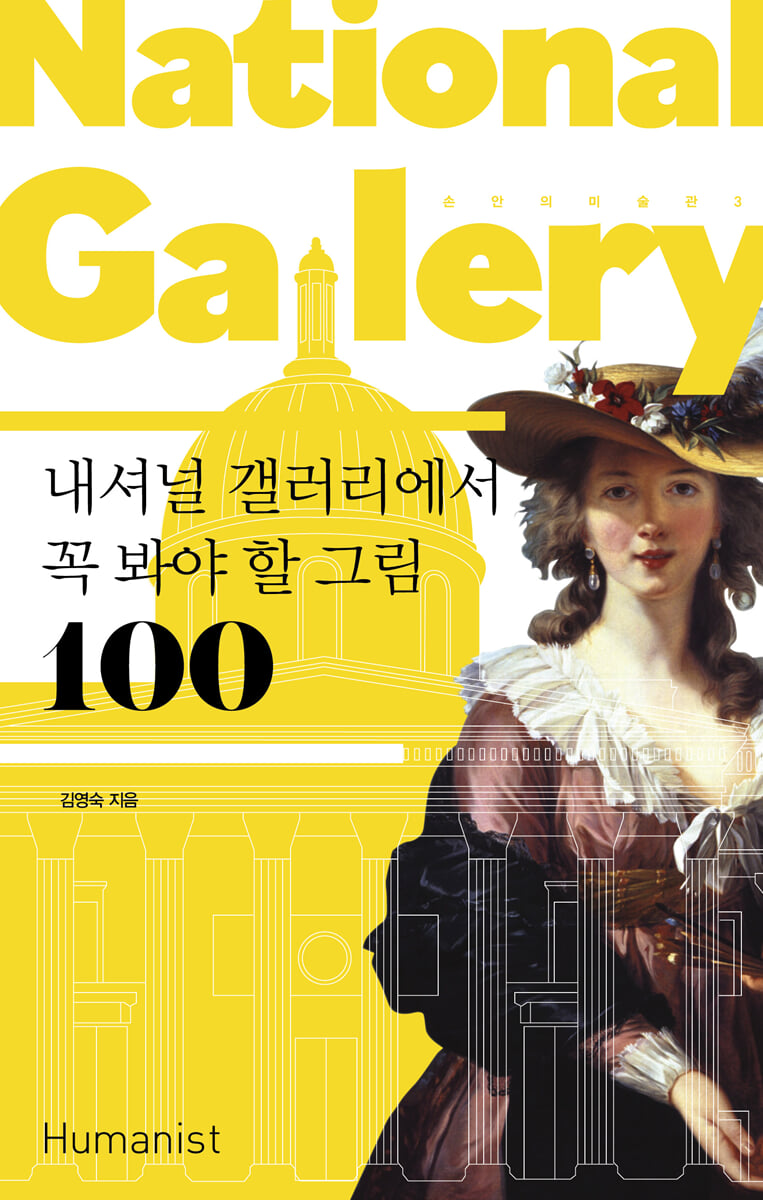
100 Must-See Paintings at the National Gallery
 |
Description
Book Introduction
Art Museum in Your Hand, Volume 3.
Kim Young-sook, the best art storyteller who has taught us how to read paintings in an exciting way through “Art Books That Make You Want to Go to an Art Museum” and “1 Page Art 365,” points out 100 “must-see paintings” for travelers who are pressed for time and cannot properly see the paintings.
In the hope that travelers can easily view the paintings in European art museums as if looking into the palm of their hand, we recommend works that are easily digestible.
The third place visited by the 'Museum in Your Hand' series, following the Louvre and the Orsay Museum, was the National Gallery.
The National Gallery is a world-renowned art museum specializing in paintings, housing over 2,000 European paintings from the late Middle Ages and the Renaissance to the late 19th century.
If you were to tour the entire exhibition hall, it would be equivalent to going around six soccer fields.
The National Gallery houses a comprehensive collection of major Western paintings from the late Middle Ages through the Renaissance and Baroque periods, and works by artists from the early 1900s.
《100 Must-See Paintings at the National Gallery》 showcases 100 must-see paintings from the National Gallery's 2,000-plus works.
This book offers a renewed enjoyment of paintings to those interested in European painting.
For those who have not yet been to the National Gallery, it is also a gallery where you can open it and appreciate the paintings at any time.
Above all, it will be an essential guide when traveling through the National Gallery of Art, and a small album to remember the place when you return to your daily life.
Kim Young-sook, the best art storyteller who has taught us how to read paintings in an exciting way through “Art Books That Make You Want to Go to an Art Museum” and “1 Page Art 365,” points out 100 “must-see paintings” for travelers who are pressed for time and cannot properly see the paintings.
In the hope that travelers can easily view the paintings in European art museums as if looking into the palm of their hand, we recommend works that are easily digestible.
The third place visited by the 'Museum in Your Hand' series, following the Louvre and the Orsay Museum, was the National Gallery.
The National Gallery is a world-renowned art museum specializing in paintings, housing over 2,000 European paintings from the late Middle Ages and the Renaissance to the late 19th century.
If you were to tour the entire exhibition hall, it would be equivalent to going around six soccer fields.
The National Gallery houses a comprehensive collection of major Western paintings from the late Middle Ages through the Renaissance and Baroque periods, and works by artists from the early 1900s.
《100 Must-See Paintings at the National Gallery》 showcases 100 must-see paintings from the National Gallery's 2,000-plus works.
This book offers a renewed enjoyment of paintings to those interested in European painting.
For those who have not yet been to the National Gallery, it is also a gallery where you can open it and appreciate the paintings at any time.
Above all, it will be an essential guide when traveling through the National Gallery of Art, and a small album to remember the place when you return to your daily life.
- You can preview some of the book's contents.
Preview
index
First, for those who want to go to European art museums
Things to know before going to the National Gallery
Paintings Gallery at the National Gallery
Sainsbury's Hall (1250-1500)
Margarito d'Arezzo, Madonna and Child Seated on a Throne with Scenes from the Nativity and the Lives of the Saints
Unknown author, "Wilton Diptych"
Masaccio, Madonna and Child
Paolo Uccello, The Battle of San Romano
Robert Campin, Madonna and Child in Front of the Fireplace
Jan van Eyck, Portrait of the Arnolfini Couple
Robert Campin, Portrait of a Man and Portrait of a Woman, Jan van Eyck, Portrait of a Man (Self-Portrait)
Petrus Christus, Portrait of a Young Man, Rogier van der Weyden, Portrait of a Lady
Sandro Botticelli's "Mysterious Birth"
Leonardo da Vinci's "Madonna of the Rocks"
Alesso Baldovinetti, Portrait of a Lady in Yellow
Sandro Botticelli's Venus and Mars
Carlo Crivelli, Saint Michael, Saint Jerome, Saint Peter the Martyr, Saint Lucy
Giovanni Bellini, The Agony in the Garden of Gethsemane
Andrea Mantegna, The Agony in the Garden of Gethsemane
Giovanni Bellini, Portrait of the Doge of Loredan
Piero della Francesca, The Baptism of Christ
Seogwan (1500-1600)
Parmigianino, Vision of St. Jerome
Hans Holbein the Younger
Quentin Massy's "The Strange Old Lady"
Michelangelo, Madonna and Child of Manchester, Burial
Raphael Sanzio, Pope Julius II
Raphael Sanzio, Madonna and Child, Madonna and Child with John the Baptist
Agnolo Bronzino, Allegory of Venus and Cupid
Tintoretto, The Origin of the Milky Way
Paolo Veronese, The Family of Darius
Titian Vecellio, "The Vendramin Family" and "Allegory of Time"
Joachim Beckerar, Air, Earth, Water, Fire
Titian Vecellio, "Man in Blue Sleeves," "Portrait of a Lady," "Bacchus and Ariadne"
Pieter Bruegel the Elder, Adoration of the Magi
Bukgwan (1600-1700)
Joseph Mullord William Turner, Dido Founding Carthage; Sun Rising Through the Clouds; Claude Lorrain, Scene with the Marriage of Isaac and Rebecca; Embarkation of the Queen of Sheba
Mindert Hobbema, "The Middelharnis Road"
Ambrosius Bosshard, Still Life with Flowers on Chinese Porcelain
Philippe de Champagne, Portrait of Cardinal Richelieu
Le Nain Brothers, Four People at the Table
Nicolas Poussin, The Finding of Moses
Nicolas Poussin, The Rite of Bacchus before a Faun, The Adoration of the Golden Calf
Claude Lorrain, The Embarkation of Saint Ursula
Rembrandt Harmans van Rijn, Bather, Adulteress, Self-Portrait at Age 63
Rembrandt Harmans van Rijn, The Banquet at Belshazzar
Pieter de Hooch, "Inner Courtyard of a House in Delft" and "Two Men and a Drinking Woman"
Johannes Vermeer, Woman Before a Virgin
Peter Paul Rubens, Minerva Defending Peace Against Mars
Peter Paul Rubens, Samson and Delilah, The Judgment of Paris
Diego Velázquez, Christ in the House of Martha and Mary
Diego Velázquez, Venus in Her Mirror
Anthony van Dyck, Portrait of Charles I on Horseback
Caravaggio, Salome Receiving the Head of John the Baptist
Caravaggio's "The Supper at Emmaus"
Guido Reni, Susanna and the Elders; Ludovico Carracci, Susanna and the Elders
Annibale Carracci, Christ Appearing to Saint Peter on the Appian Way (Quo Vadis Domine)
Dongguan (1700-1900)
Jean-Honoré Fragonard, Psyche Showing Off to Her Sister the Gift She Received from Cupid
John Constable, Hay Wagon
Joseph Mullord William Turner, Rain, Steam, and Speed (Great Western Railway) and The Battleship Temeraire
Thomas Gainsborough, Portrait of Mr. and Mrs. Andrews
William Hogarth's "Marriage According to Fashion" series
Joshua Reynolds, General Benastre Turton
Giovanni Antonio Canal, The Stonemason's Workshop
Jean-Auguste-Dominique Ingres, Madame Moatsier Seated; Eugène Delacroix, Christ on the Cross
Paul Delaroche, The Execution of Jane Grey
Edouard Manet, Concert in the Tuileries Garden, At the Cafe Concert, The Execution of Maximilian
Claude Oscar Monet, Pond with Water Lilies
Claude Oscar Monet, The Thames Below Westminster Abbey, The Grand Canal, Venice, The History of Saint-Lazare
Auguste Renoir, "At the Theatre (First Outing)" and "Women with Umbrellas"
Georges-Pierre Seurat, The Bathers at Asnières
Paul Cézanne, "A Road on a Hill in Provence" and "The Bathers"
Vincent van Gogh, "Van Gogh's Chair" and "Sunflowers"
Edgar Degas, Lara at the Circus Fernando
Figure annotations
Things to know before going to the National Gallery
Paintings Gallery at the National Gallery
Sainsbury's Hall (1250-1500)
Margarito d'Arezzo, Madonna and Child Seated on a Throne with Scenes from the Nativity and the Lives of the Saints
Unknown author, "Wilton Diptych"
Masaccio, Madonna and Child
Paolo Uccello, The Battle of San Romano
Robert Campin, Madonna and Child in Front of the Fireplace
Jan van Eyck, Portrait of the Arnolfini Couple
Robert Campin, Portrait of a Man and Portrait of a Woman, Jan van Eyck, Portrait of a Man (Self-Portrait)
Petrus Christus, Portrait of a Young Man, Rogier van der Weyden, Portrait of a Lady
Sandro Botticelli's "Mysterious Birth"
Leonardo da Vinci's "Madonna of the Rocks"
Alesso Baldovinetti, Portrait of a Lady in Yellow
Sandro Botticelli's Venus and Mars
Carlo Crivelli, Saint Michael, Saint Jerome, Saint Peter the Martyr, Saint Lucy
Giovanni Bellini, The Agony in the Garden of Gethsemane
Andrea Mantegna, The Agony in the Garden of Gethsemane
Giovanni Bellini, Portrait of the Doge of Loredan
Piero della Francesca, The Baptism of Christ
Seogwan (1500-1600)
Parmigianino, Vision of St. Jerome
Hans Holbein the Younger
Quentin Massy's "The Strange Old Lady"
Michelangelo, Madonna and Child of Manchester, Burial
Raphael Sanzio, Pope Julius II
Raphael Sanzio, Madonna and Child, Madonna and Child with John the Baptist
Agnolo Bronzino, Allegory of Venus and Cupid
Tintoretto, The Origin of the Milky Way
Paolo Veronese, The Family of Darius
Titian Vecellio, "The Vendramin Family" and "Allegory of Time"
Joachim Beckerar, Air, Earth, Water, Fire
Titian Vecellio, "Man in Blue Sleeves," "Portrait of a Lady," "Bacchus and Ariadne"
Pieter Bruegel the Elder, Adoration of the Magi
Bukgwan (1600-1700)
Joseph Mullord William Turner, Dido Founding Carthage; Sun Rising Through the Clouds; Claude Lorrain, Scene with the Marriage of Isaac and Rebecca; Embarkation of the Queen of Sheba
Mindert Hobbema, "The Middelharnis Road"
Ambrosius Bosshard, Still Life with Flowers on Chinese Porcelain
Philippe de Champagne, Portrait of Cardinal Richelieu
Le Nain Brothers, Four People at the Table
Nicolas Poussin, The Finding of Moses
Nicolas Poussin, The Rite of Bacchus before a Faun, The Adoration of the Golden Calf
Claude Lorrain, The Embarkation of Saint Ursula
Rembrandt Harmans van Rijn, Bather, Adulteress, Self-Portrait at Age 63
Rembrandt Harmans van Rijn, The Banquet at Belshazzar
Pieter de Hooch, "Inner Courtyard of a House in Delft" and "Two Men and a Drinking Woman"
Johannes Vermeer, Woman Before a Virgin
Peter Paul Rubens, Minerva Defending Peace Against Mars
Peter Paul Rubens, Samson and Delilah, The Judgment of Paris
Diego Velázquez, Christ in the House of Martha and Mary
Diego Velázquez, Venus in Her Mirror
Anthony van Dyck, Portrait of Charles I on Horseback
Caravaggio, Salome Receiving the Head of John the Baptist
Caravaggio's "The Supper at Emmaus"
Guido Reni, Susanna and the Elders; Ludovico Carracci, Susanna and the Elders
Annibale Carracci, Christ Appearing to Saint Peter on the Appian Way (Quo Vadis Domine)
Dongguan (1700-1900)
Jean-Honoré Fragonard, Psyche Showing Off to Her Sister the Gift She Received from Cupid
John Constable, Hay Wagon
Joseph Mullord William Turner, Rain, Steam, and Speed (Great Western Railway) and The Battleship Temeraire
Thomas Gainsborough, Portrait of Mr. and Mrs. Andrews
William Hogarth's "Marriage According to Fashion" series
Joshua Reynolds, General Benastre Turton
Giovanni Antonio Canal, The Stonemason's Workshop
Jean-Auguste-Dominique Ingres, Madame Moatsier Seated; Eugène Delacroix, Christ on the Cross
Paul Delaroche, The Execution of Jane Grey
Edouard Manet, Concert in the Tuileries Garden, At the Cafe Concert, The Execution of Maximilian
Claude Oscar Monet, Pond with Water Lilies
Claude Oscar Monet, The Thames Below Westminster Abbey, The Grand Canal, Venice, The History of Saint-Lazare
Auguste Renoir, "At the Theatre (First Outing)" and "Women with Umbrellas"
Georges-Pierre Seurat, The Bathers at Asnières
Paul Cézanne, "A Road on a Hill in Provence" and "The Bathers"
Vincent van Gogh, "Van Gogh's Chair" and "Sunflowers"
Edgar Degas, Lara at the Circus Fernando
Figure annotations
Detailed image

Publisher's Review
Welcoming those who love art
National Gallery, a world-renowned art museum
The third place visited by the 'Museum in Your Hand' series, following the Louvre and the Orsay Museum, was the National Gallery.
The National Gallery is a world-renowned art museum specializing in paintings, housing over 2,000 European paintings from the late Middle Ages and the Renaissance to the late 19th century.
If you were to tour the entire exhibition hall, it would be equivalent to going around six soccer fields.
The National Gallery was founded in response to the growing consensus among many in the British art community that a national art gallery focused on paintings was needed to further the development of British art.
The National Gallery, which began in 1824 in the private residence of the wealthy John Julius Angerstein, moved to a new building in Trafalgar Square in 1838. As the collection continued to grow, the museum building was expanded and renovated, and it took on its current appearance around 2003.
Admission is free to anyone visiting London, in line with the aim of providing an opportunity to enjoy art even for those who would otherwise not be able to own one.
The National Gallery is open year-round, allowing visitors to comfortably appreciate their favorite paintings at any time. Furthermore, it operates art education programs led by professional curators, enabling people of all ages to experience art in their daily lives.
The National Gallery houses a comprehensive collection of major Western paintings from the late Middle Ages through the Renaissance and Baroque periods, and works by artists from the early 1900s.
《100 Must-See Paintings at the National Gallery》 showcases 100 must-see paintings from the National Gallery's 2,000-plus collection.
This book offers a renewed enjoyment of paintings to those interested in European painting.
For those who have not yet been to the National Gallery, it is also a gallery where you can open it and appreciate the paintings at any time.
Above all, it will be an essential guide when traveling to the National Gallery of Art, and a small album to remember the place when you return to your daily life.
A glance at the history of painting from medieval religious paintings to modern impressionism
What paintings should I see at the National Gallery?
The exhibition hall on the second floor of the National Gallery can be broadly divided into four sections.
The Sainsbury's, renovated in 1991 in a postmodern style, displays works from 1250 to 1500.
Moving to the main building, the west wing exhibits paintings from 1500 to 1600, the north wing from 1600 to 1700, and the east wing from 1700 to 1900.
Beginning your tour at the Sainsbury's, you'll be able to appreciate some of the most important works in Western art history in chronological order, which will also be a great help in learning about the evolution of Western painting.
《100 Must-See Paintings at the National Gallery》 is divided into four sections: 〈Sainsbury Wing〉, 〈West Wing〉, 〈North Wing〉, and 〈East Wing〉, following the route taken by the visitor.
One or two or three works are explained in a simple, clear, yet interesting way on one page, and works that would be helpful to read together are included in the 'illustrated footnotes' to help readers understand.
The first chapter, "The Sainsbury's Hall," covers major works of medieval art that emphasized allegory and Renaissance art that adhered to the principles of perspective.
You can appreciate works by Margarito d'Arezzo and Masaccio, as well as Jan van Eyck's Portrait of the Arnolfini, a masterpiece of the Northern Renaissance and a depiction of the rise of the bourgeoisie, Leonardo da Vinci's Madonna of the Rocks, a masterpiece of painting technique at its peak, and Alesso Baldovinetti's Portrait of a Lady in Yellow, a painting that exudes charm in its own right.
In the second chapter, “West Wing,” you can see through pictures the process of High Renaissance art, during which artists such as Raphael and Michelangelo were active, spreading to various regions north of the Alps.
Representative works of the West Wing include Hans Holbein's "The Ambassadors," which captures the meaning of death through a play of gaze while elaborately depicting modern knowledge, Agnolo Bronzino's "Allegory of Venus and Cupid," Tintoretto's "The Origin of the Milky Way," and Pieter Bruegel's "Adoration of the Magi."
In the third chapter, “Northern Pavilion,” we examine the stylistic characteristics of Baroque works, such as strong light and shade and dynamic composition, and through various works from the Netherlands, we can see how social aspects that change according to religious differences are reflected in art.
Romantic paintings by Nicolas Poussin, Claude Lorrain, and William Turner, as well as Baroque works such as Rembrandt Harmans van Rijn's The Feast at Belshazzar and Caravaggio's The Supper at Emmaus, offer stunning visual impact and profound emotion.
In works such as Ambrosius Bosschaert's "Still Life with Flowers on Chinese Porcelain," Pieter de Hooch's "Delft Courtyard," and Johannes Vermeer's "Woman Before a Virginal," one can sense the aesthetic sensibilities of the Dutch people of the time and the changes in society.
Lastly, “East Hall” unfolds the process of changing the history of painting through the conflict between conservative art and the new generation of art, based on the academies of each country.
You can appreciate at a glance various works from the pre- and post-impressionist period that capture the changes in light, such as John Constable's "Hay Wagon," William Turner's "The Battleship Temeraire" who was called the pioneer of Impressionism, Manet's "Concert in the Tuileries Garden," Claude Oscar Monet's "Water Lilies Pond," Georges-Pierre Seurat's "The Bathers at Asnières," Paul Cézanne's "Roads on the Hills in Provence," and Vincent van Gogh's "Sunflowers."
After a tour of the National Gallery with 100 paintings, you will be deeply moved as you reflect on the magnificent world that pulsates on the canvas and the evolution of painting.
《100 Must-See Paintings at the National Gallery》 carefully selects the National Gallery's must-see paintings, and guides readers on a journey through the gallery through refreshing illustrations and brief, detailed explanations.
For those reminiscing about their visits to the National Gallery, or for those eagerly anticipating their next visit, this book will be an invaluable guide.
* The revised edition of “100 Must-See Paintings from the National Gallery” offers even greater enjoyment of viewing the paintings with clearer picture quality and a more sophisticated layout than the previous edition.
We have also increased the font size of the image captions and simplified the content to greatly improve readability.
The figure annotations have also been refined to help you understand the figures more easily.
National Gallery, a world-renowned art museum
The third place visited by the 'Museum in Your Hand' series, following the Louvre and the Orsay Museum, was the National Gallery.
The National Gallery is a world-renowned art museum specializing in paintings, housing over 2,000 European paintings from the late Middle Ages and the Renaissance to the late 19th century.
If you were to tour the entire exhibition hall, it would be equivalent to going around six soccer fields.
The National Gallery was founded in response to the growing consensus among many in the British art community that a national art gallery focused on paintings was needed to further the development of British art.
The National Gallery, which began in 1824 in the private residence of the wealthy John Julius Angerstein, moved to a new building in Trafalgar Square in 1838. As the collection continued to grow, the museum building was expanded and renovated, and it took on its current appearance around 2003.
Admission is free to anyone visiting London, in line with the aim of providing an opportunity to enjoy art even for those who would otherwise not be able to own one.
The National Gallery is open year-round, allowing visitors to comfortably appreciate their favorite paintings at any time. Furthermore, it operates art education programs led by professional curators, enabling people of all ages to experience art in their daily lives.
The National Gallery houses a comprehensive collection of major Western paintings from the late Middle Ages through the Renaissance and Baroque periods, and works by artists from the early 1900s.
《100 Must-See Paintings at the National Gallery》 showcases 100 must-see paintings from the National Gallery's 2,000-plus collection.
This book offers a renewed enjoyment of paintings to those interested in European painting.
For those who have not yet been to the National Gallery, it is also a gallery where you can open it and appreciate the paintings at any time.
Above all, it will be an essential guide when traveling to the National Gallery of Art, and a small album to remember the place when you return to your daily life.
A glance at the history of painting from medieval religious paintings to modern impressionism
What paintings should I see at the National Gallery?
The exhibition hall on the second floor of the National Gallery can be broadly divided into four sections.
The Sainsbury's, renovated in 1991 in a postmodern style, displays works from 1250 to 1500.
Moving to the main building, the west wing exhibits paintings from 1500 to 1600, the north wing from 1600 to 1700, and the east wing from 1700 to 1900.
Beginning your tour at the Sainsbury's, you'll be able to appreciate some of the most important works in Western art history in chronological order, which will also be a great help in learning about the evolution of Western painting.
《100 Must-See Paintings at the National Gallery》 is divided into four sections: 〈Sainsbury Wing〉, 〈West Wing〉, 〈North Wing〉, and 〈East Wing〉, following the route taken by the visitor.
One or two or three works are explained in a simple, clear, yet interesting way on one page, and works that would be helpful to read together are included in the 'illustrated footnotes' to help readers understand.
The first chapter, "The Sainsbury's Hall," covers major works of medieval art that emphasized allegory and Renaissance art that adhered to the principles of perspective.
You can appreciate works by Margarito d'Arezzo and Masaccio, as well as Jan van Eyck's Portrait of the Arnolfini, a masterpiece of the Northern Renaissance and a depiction of the rise of the bourgeoisie, Leonardo da Vinci's Madonna of the Rocks, a masterpiece of painting technique at its peak, and Alesso Baldovinetti's Portrait of a Lady in Yellow, a painting that exudes charm in its own right.
In the second chapter, “West Wing,” you can see through pictures the process of High Renaissance art, during which artists such as Raphael and Michelangelo were active, spreading to various regions north of the Alps.
Representative works of the West Wing include Hans Holbein's "The Ambassadors," which captures the meaning of death through a play of gaze while elaborately depicting modern knowledge, Agnolo Bronzino's "Allegory of Venus and Cupid," Tintoretto's "The Origin of the Milky Way," and Pieter Bruegel's "Adoration of the Magi."
In the third chapter, “Northern Pavilion,” we examine the stylistic characteristics of Baroque works, such as strong light and shade and dynamic composition, and through various works from the Netherlands, we can see how social aspects that change according to religious differences are reflected in art.
Romantic paintings by Nicolas Poussin, Claude Lorrain, and William Turner, as well as Baroque works such as Rembrandt Harmans van Rijn's The Feast at Belshazzar and Caravaggio's The Supper at Emmaus, offer stunning visual impact and profound emotion.
In works such as Ambrosius Bosschaert's "Still Life with Flowers on Chinese Porcelain," Pieter de Hooch's "Delft Courtyard," and Johannes Vermeer's "Woman Before a Virginal," one can sense the aesthetic sensibilities of the Dutch people of the time and the changes in society.
Lastly, “East Hall” unfolds the process of changing the history of painting through the conflict between conservative art and the new generation of art, based on the academies of each country.
You can appreciate at a glance various works from the pre- and post-impressionist period that capture the changes in light, such as John Constable's "Hay Wagon," William Turner's "The Battleship Temeraire" who was called the pioneer of Impressionism, Manet's "Concert in the Tuileries Garden," Claude Oscar Monet's "Water Lilies Pond," Georges-Pierre Seurat's "The Bathers at Asnières," Paul Cézanne's "Roads on the Hills in Provence," and Vincent van Gogh's "Sunflowers."
After a tour of the National Gallery with 100 paintings, you will be deeply moved as you reflect on the magnificent world that pulsates on the canvas and the evolution of painting.
《100 Must-See Paintings at the National Gallery》 carefully selects the National Gallery's must-see paintings, and guides readers on a journey through the gallery through refreshing illustrations and brief, detailed explanations.
For those reminiscing about their visits to the National Gallery, or for those eagerly anticipating their next visit, this book will be an invaluable guide.
* The revised edition of “100 Must-See Paintings from the National Gallery” offers even greater enjoyment of viewing the paintings with clearer picture quality and a more sophisticated layout than the previous edition.
We have also increased the font size of the image captions and simplified the content to greatly improve readability.
The figure annotations have also been refined to help you understand the figures more easily.
GOODS SPECIFICS
- Date of issue: April 11, 2022
- Page count, weight, size: 208 pages | 370g | 140*220*20mm
- ISBN13: 9791160808216
- ISBN10: 116080821X
You may also like
카테고리
korean


korean

![GQ KOREA Mark (Monthly): December [2025]](http://librairie.coreenne.fr/cdn/shop/files/8ef265dbbfbf186523ed75ba7319009d.jpg?v=1765340328&width=3840)


