

Nonviolent communication through picture books
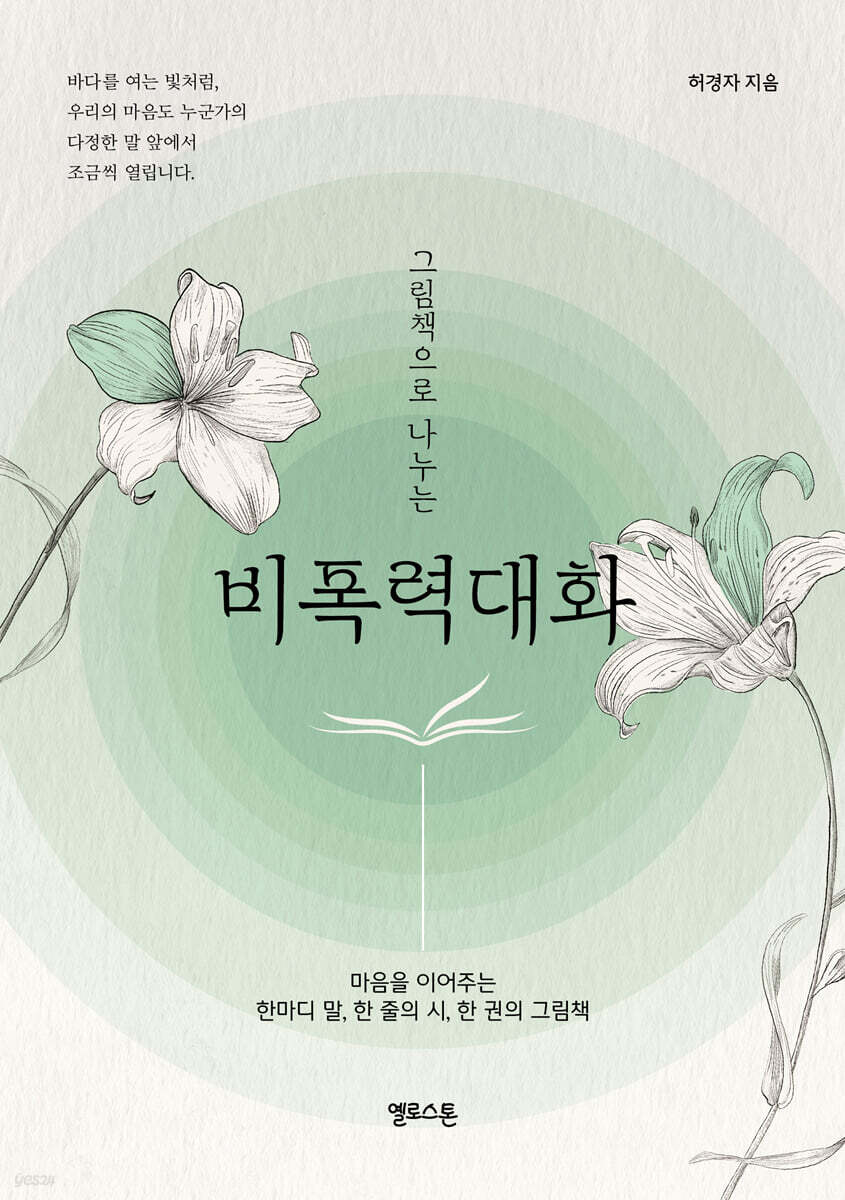 |
Description
Book Introduction
★ A conversation method of empathy discovered in picture books
★ A book that covers conversation methods that go beyond simple communication and connect hearts.
★ A guide for picture book activists, nonviolent communication experts, and practitioners in education, counseling, and civic activities.
★ Practical practice using picture books for children and adults, classrooms and homes, and even counseling sessions.
How can I express my feelings honestly without hurting others?
As you follow the words and actions of the characters in the picture book, you will gradually discover points that touch your heart.
The moment we encounter the character and the other self, the self within us, we come to understand others while also understanding ourselves more deeply.
In this sense, picture books are a very useful tool for observing and understanding emotions and desires.
-From the prologue
★ A book that covers conversation methods that go beyond simple communication and connect hearts.
★ A guide for picture book activists, nonviolent communication experts, and practitioners in education, counseling, and civic activities.
★ Practical practice using picture books for children and adults, classrooms and homes, and even counseling sessions.
How can I express my feelings honestly without hurting others?
As you follow the words and actions of the characters in the picture book, you will gradually discover points that touch your heart.
The moment we encounter the character and the other self, the self within us, we come to understand others while also understanding ourselves more deeply.
In this sense, picture books are a very useful tool for observing and understanding emotions and desires.
-From the prologue
- You can preview some of the book's contents.
Preview
index
Prologue: A First Greeting to the Reader
1.
A conversation between the heart and mind
Colorful horse experience - horse form
Nonviolent communication
The Language of Giraffes and Jackals
Words that block true communication
2. The First Step to NVC
As seen, as heard - observation
The Power of Observation Discovered in Picture Books - Haru Street
Find out important facts about yourself - Important Facts
3. NVC's Compass - Feeling
Signals from the body and mind - feelings
Emotions, a guide to life - Emotion Hotel
4. NVC's Flower - Desire
What do you really want? - Desire
The Voice Within Me - My True Wish
A Desire I Didn't Know I Had - The Thorn Boy
5. The Key to NVC - Request
Conversations for a Rich Life - Asking
Can I Be Honest? - The Flying Lion / 104
6.
Rejecting and Hearing Rejection
Why Saying No Is Hard - Saying No and Hearing No
Between Kindness and Rejection - Mr. Bear's Chair
7.
Empathize
Listening with Empathy - Being with One Another
The power of listening - I listened quietly
Obstacles to Empathy
8.
Uncomfortable Words and Four Choices
Choices Matter! - When You Hear Uncomfortable Words
Sophie, the tree is wrong! - When Sophie is upset, when she is really upset
9.
Expressing anger fully
How to Express Anger - Expressing Anger
What should I do when I get angry? - When Sophie gets angry, really, really angry
10.
Self-Empathy - Practicing Caring for Myself
Caring for Myself - Self-Empathy
Flowing with the Emotions - When the Waves Crash in My Heart
Facing Regret and Guilt - It's Okay, My Toad
11.
Gratitude - The Language of Connection
A heartfelt message - gratitude
The Meaning and Power of Gratitude - I Speak Like a River
Epilogue: What I Discovered While Writing the Book
1.
A conversation between the heart and mind
Colorful horse experience - horse form
Nonviolent communication
The Language of Giraffes and Jackals
Words that block true communication
2. The First Step to NVC
As seen, as heard - observation
The Power of Observation Discovered in Picture Books - Haru Street
Find out important facts about yourself - Important Facts
3. NVC's Compass - Feeling
Signals from the body and mind - feelings
Emotions, a guide to life - Emotion Hotel
4. NVC's Flower - Desire
What do you really want? - Desire
The Voice Within Me - My True Wish
A Desire I Didn't Know I Had - The Thorn Boy
5. The Key to NVC - Request
Conversations for a Rich Life - Asking
Can I Be Honest? - The Flying Lion / 104
6.
Rejecting and Hearing Rejection
Why Saying No Is Hard - Saying No and Hearing No
Between Kindness and Rejection - Mr. Bear's Chair
7.
Empathize
Listening with Empathy - Being with One Another
The power of listening - I listened quietly
Obstacles to Empathy
8.
Uncomfortable Words and Four Choices
Choices Matter! - When You Hear Uncomfortable Words
Sophie, the tree is wrong! - When Sophie is upset, when she is really upset
9.
Expressing anger fully
How to Express Anger - Expressing Anger
What should I do when I get angry? - When Sophie gets angry, really, really angry
10.
Self-Empathy - Practicing Caring for Myself
Caring for Myself - Self-Empathy
Flowing with the Emotions - When the Waves Crash in My Heart
Facing Regret and Guilt - It's Okay, My Toad
11.
Gratitude - The Language of Connection
A heartfelt message - gratitude
The Meaning and Power of Gratitude - I Speak Like a River
Epilogue: What I Discovered While Writing the Book
Detailed image
.jpg)
Publisher's Review
The Encounter of Picture Books and Nonviolent Communication
Many people today experience recurring misunderstandings, hurt feelings, and difficulties in speaking and listening in their relationships.
No matter how hard you try to communicate well, your feelings are not conveyed as intended.
More and more people are looking for 'new ways' to overcome and recover from this lack of communication.
The combination of picture books and Nonviolent Communication (NVC) goes beyond a simple educational tool; it becomes the gentlest and safest pathway into the essence of emotions, needs, and relationships.
Yellowstone's new book, "Nonviolent Communication Through Picture Books," is a book that easily approaches and gently responds to the needs of people who have difficulty communicating. It presents a new horizon of practice for activists who utilize picture books, practitioners of nonviolent communication, and readers who seek to connect these two fields.
The power of picture books to help people naturally express and recover their inner selves.
The author of this book, Heo Gyeong-ja, has been running the "Clear Forest of Writing" essay writing academy in a small provincial city for nearly 20 years, helping children recover on their own by expressing their emotions and desires in writing.
These experiences naturally led to an encounter with Nonviolent Communication (NVC), and over the past decade, the author has repeatedly learned and practiced NVC, embodying it not as a mere theory but as a "language of life."
In this process, picture books have become a special tool that helps us get to the heart of our emotions and desires.
Beyond simply imparting knowledge or serving as a tool for psychological education, the narratives and images in picture books have the power to naturally move people's inner selves.
As you follow the characters' words and actions, at some point you will come face to face with yourself, and at this time, the core elements of nonviolent communication—the language of observation, feeling, desire, and request—will begin to come alive in real-life relationships.
Concrete and practical guidelines using 14 picture books.
The greatest strength of "Nonviolent Communication through Picture Books" is that, based on 14 picture books, it explains in very specific yet warm language how the core elements of NVC can be applied in real life and in educational and counseling settings.
For example, "A Day's Walk" shows 'observation with a warm gaze', "Emotional Hotel" shows 'practice in accepting various emotions', "The Flying Lion" shows 'courage to ask honestly', and "Mr. Bear's Chair" shows 'expression of a kind yet clear boundary'.
Also, picture books that deal with the expression of negative emotions, such as "When Sophie Gets Angry, Really, Really Angry," present a new NVC approach that looks into the hidden desires within anger rather than suppressing or exploding it.
Additionally, “When Waves Crash in My Heart” and “It’s Okay, My Toad” guide readers to deeply explore the various layers of self-empathy.
Below are 14 picture books that cover the core elements of nonviolent communication covered in this book.
√ Conversation
The Shape of Words: An Eye for Seeing the Emotions and Desires Hidden in Words
√ Observation
《One Day》: A warm gaze that looks on without judgment
The Important Fact: Finding the Most Important Fact About Yourself
√ Feeling
《Emotional Hotel》: The practice of inviting emotions rather than chasing them away
√ Desire
《My True Wish》: Listening to the True Voice Within Me
The Thorn Boy: Discovering the Roots of Repressed Desires and Wounds
√ Please
The Flying Lion: The Line Between Honest Request and Coercion
√ Reject
Mr. Bear's Chair: How to Decline Clearly Without Losing Kindness
√ Empathy
《Listened Quietly》: The Power of Listening by Staying Next to Us
√ Select
"If Sophie is upset, if she's really upset": 4 options when you hear uncomfortable words.
√ Anger
When Sophie Gets Angry, Really, Really Angry: The Courage to Look Behind Anger
√ Self-empathy
When the Waves Crash in My Heart: Embracing the Flow of Emotions
It's Okay, My Toad: A Language of Self-Comfort in the Face of Regret and Guilt
√ Thanks
"I Speak Like a River": A Heartfelt Expression of Gratitude
A guide for all practitioners who want to engage in deep conversations using picture books.
This book is a book for adults who read picture books and a book for activists and professionals who are learning how to communicate.
Each chapter focuses on a key scene from the picture book, detailing how emotions and desires are expressed and how they can be interpreted and practiced within the linguistic structure of nonviolent communication.
Additionally, it naturally incorporates questions, conversation scenarios, and program composition ideas that can be used in actual fields, making it practical for use in picture book reading programs, civic education, counseling and coaching sessions, and parent and teacher training.
In particular, this book does not deal with the topic of 'relationship recovery' at the level of simple techniques or tips.
The author emphasizes that nonviolent communication is not simply a matter of learning how to speak, but a lifelong practice that gradually changes the patterns and familiar ways in which we live.
Breaking free from the familiar patterns of suppressing emotions or blaming others requires a meticulous process of listening to your true inner voice, understanding the needs behind others' words, and choosing the right expression for each situation.
This process is a significant challenge even for experts, and it is an area that requires repeated learning.
This book honestly reveals the very process of walking, and offers realistic guidance to those on the path of practice.
《Sharing Nonviolent Communication through Picture Books》 provides a 'model' for new program planning for picture book activists, a 'visual tool' for exploring emotions and desires for nonviolent communication practitioners, and an 'opportunity for reflection' that allows readers interested in both fields to reexamine relationships.
The content of this book can be immediately applied to children and adults, homes and classrooms, counseling spaces and civic education settings. It will be a particularly helpful guide for all practitioners seeking to engage in deep conversations with adults using picture books.
Many people today experience recurring misunderstandings, hurt feelings, and difficulties in speaking and listening in their relationships.
No matter how hard you try to communicate well, your feelings are not conveyed as intended.
More and more people are looking for 'new ways' to overcome and recover from this lack of communication.
The combination of picture books and Nonviolent Communication (NVC) goes beyond a simple educational tool; it becomes the gentlest and safest pathway into the essence of emotions, needs, and relationships.
Yellowstone's new book, "Nonviolent Communication Through Picture Books," is a book that easily approaches and gently responds to the needs of people who have difficulty communicating. It presents a new horizon of practice for activists who utilize picture books, practitioners of nonviolent communication, and readers who seek to connect these two fields.
The power of picture books to help people naturally express and recover their inner selves.
The author of this book, Heo Gyeong-ja, has been running the "Clear Forest of Writing" essay writing academy in a small provincial city for nearly 20 years, helping children recover on their own by expressing their emotions and desires in writing.
These experiences naturally led to an encounter with Nonviolent Communication (NVC), and over the past decade, the author has repeatedly learned and practiced NVC, embodying it not as a mere theory but as a "language of life."
In this process, picture books have become a special tool that helps us get to the heart of our emotions and desires.
Beyond simply imparting knowledge or serving as a tool for psychological education, the narratives and images in picture books have the power to naturally move people's inner selves.
As you follow the characters' words and actions, at some point you will come face to face with yourself, and at this time, the core elements of nonviolent communication—the language of observation, feeling, desire, and request—will begin to come alive in real-life relationships.
Concrete and practical guidelines using 14 picture books.
The greatest strength of "Nonviolent Communication through Picture Books" is that, based on 14 picture books, it explains in very specific yet warm language how the core elements of NVC can be applied in real life and in educational and counseling settings.
For example, "A Day's Walk" shows 'observation with a warm gaze', "Emotional Hotel" shows 'practice in accepting various emotions', "The Flying Lion" shows 'courage to ask honestly', and "Mr. Bear's Chair" shows 'expression of a kind yet clear boundary'.
Also, picture books that deal with the expression of negative emotions, such as "When Sophie Gets Angry, Really, Really Angry," present a new NVC approach that looks into the hidden desires within anger rather than suppressing or exploding it.
Additionally, “When Waves Crash in My Heart” and “It’s Okay, My Toad” guide readers to deeply explore the various layers of self-empathy.
Below are 14 picture books that cover the core elements of nonviolent communication covered in this book.
√ Conversation
The Shape of Words: An Eye for Seeing the Emotions and Desires Hidden in Words
√ Observation
《One Day》: A warm gaze that looks on without judgment
The Important Fact: Finding the Most Important Fact About Yourself
√ Feeling
《Emotional Hotel》: The practice of inviting emotions rather than chasing them away
√ Desire
《My True Wish》: Listening to the True Voice Within Me
The Thorn Boy: Discovering the Roots of Repressed Desires and Wounds
√ Please
The Flying Lion: The Line Between Honest Request and Coercion
√ Reject
Mr. Bear's Chair: How to Decline Clearly Without Losing Kindness
√ Empathy
《Listened Quietly》: The Power of Listening by Staying Next to Us
√ Select
"If Sophie is upset, if she's really upset": 4 options when you hear uncomfortable words.
√ Anger
When Sophie Gets Angry, Really, Really Angry: The Courage to Look Behind Anger
√ Self-empathy
When the Waves Crash in My Heart: Embracing the Flow of Emotions
It's Okay, My Toad: A Language of Self-Comfort in the Face of Regret and Guilt
√ Thanks
"I Speak Like a River": A Heartfelt Expression of Gratitude
A guide for all practitioners who want to engage in deep conversations using picture books.
This book is a book for adults who read picture books and a book for activists and professionals who are learning how to communicate.
Each chapter focuses on a key scene from the picture book, detailing how emotions and desires are expressed and how they can be interpreted and practiced within the linguistic structure of nonviolent communication.
Additionally, it naturally incorporates questions, conversation scenarios, and program composition ideas that can be used in actual fields, making it practical for use in picture book reading programs, civic education, counseling and coaching sessions, and parent and teacher training.
In particular, this book does not deal with the topic of 'relationship recovery' at the level of simple techniques or tips.
The author emphasizes that nonviolent communication is not simply a matter of learning how to speak, but a lifelong practice that gradually changes the patterns and familiar ways in which we live.
Breaking free from the familiar patterns of suppressing emotions or blaming others requires a meticulous process of listening to your true inner voice, understanding the needs behind others' words, and choosing the right expression for each situation.
This process is a significant challenge even for experts, and it is an area that requires repeated learning.
This book honestly reveals the very process of walking, and offers realistic guidance to those on the path of practice.
《Sharing Nonviolent Communication through Picture Books》 provides a 'model' for new program planning for picture book activists, a 'visual tool' for exploring emotions and desires for nonviolent communication practitioners, and an 'opportunity for reflection' that allows readers interested in both fields to reexamine relationships.
The content of this book can be immediately applied to children and adults, homes and classrooms, counseling spaces and civic education settings. It will be a particularly helpful guide for all practitioners seeking to engage in deep conversations with adults using picture books.
GOODS SPECIFICS
- Date of issue: November 24, 2025
- Page count, weight, size: 232 pages | 324g | 148*210*15mm
- ISBN13: 9791187079668
- ISBN10: 1187079669
You may also like
카테고리
korean


korean

![ELLE 엘르 스페셜 에디션 A형 : 12월 [2025]](http://librairie.coreenne.fr/cdn/shop/files/b8e27a3de6c9538896439686c6b0e8fb.jpg?v=1766436872&width=3840)


