

A patterned journey to the palace
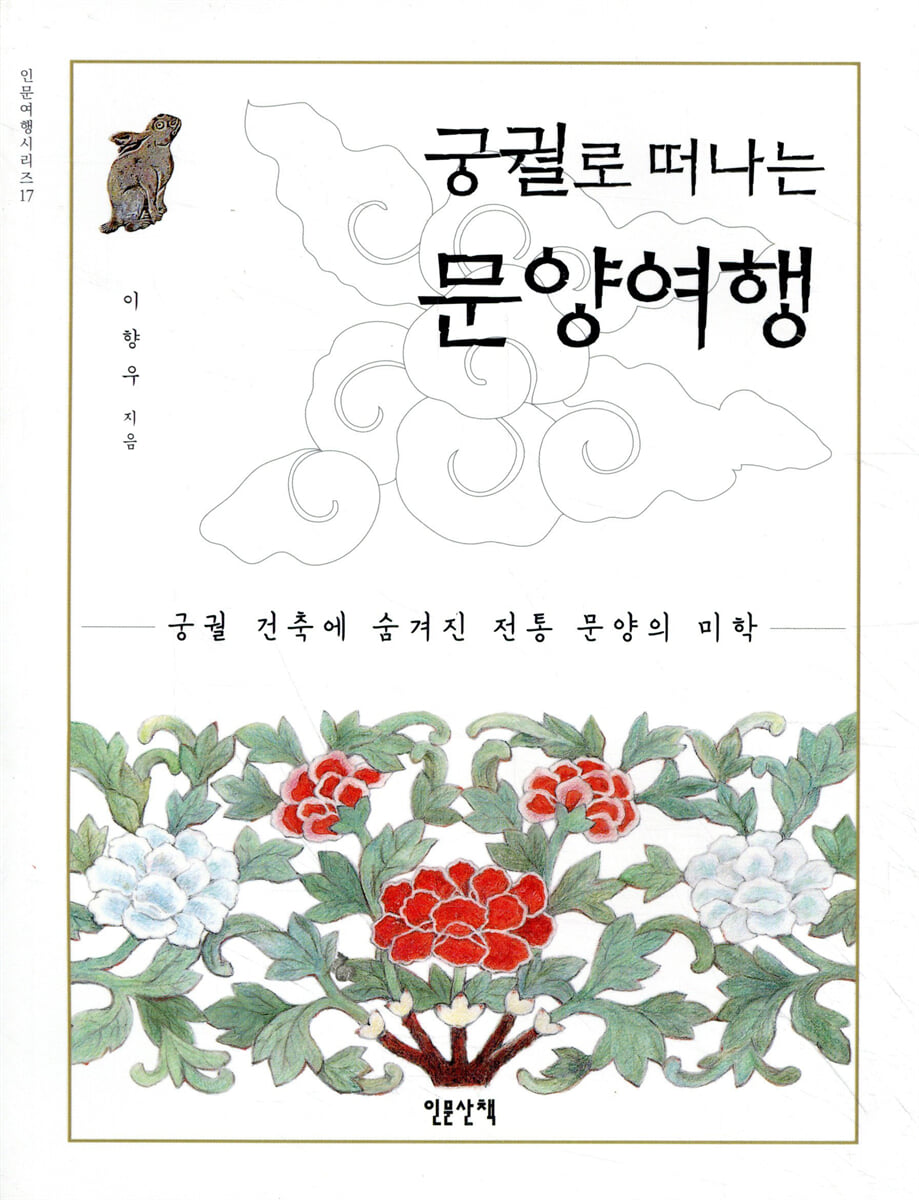 |
Description
Book Introduction
The author, who has been writing the 'Healing Journey to the Palaces' series, starting with Gyeongbokgung Palace in 2013 and ending with Jongmyo Shrine in 2016, now sets out to discover the beauty of the palaces through stories about patterns.
While the series of books in the 'Healing Journey to the Palace' series primarily aimed to introduce and inform readers about the palace, this book provides a more in-depth look at the palace through explanations that help readers understand and interpret the decorations of its architecture.
The way to tour a palace is as diverse as people's tastes.
You can examine the palace from a historical perspective, or you can focus on its architectural perspective, spatial divisions, or the lifestyles of the people at the time.
But there is one element that all these perspectives have in common: the concept of palace decoration.
Understanding the meaning of the shapes, patterns, and auspicious symbols seen throughout the palace architecture is very important for understanding the thoughts of the people who lived in the palaces in the past and the aesthetic concepts of our ancestors.
In that sense, this book helps us to comprehensively understand the meaning and symbolism of patterns that we have only known fragmentarily so far.
While the series of books in the 'Healing Journey to the Palace' series primarily aimed to introduce and inform readers about the palace, this book provides a more in-depth look at the palace through explanations that help readers understand and interpret the decorations of its architecture.
The way to tour a palace is as diverse as people's tastes.
You can examine the palace from a historical perspective, or you can focus on its architectural perspective, spatial divisions, or the lifestyles of the people at the time.
But there is one element that all these perspectives have in common: the concept of palace decoration.
Understanding the meaning of the shapes, patterns, and auspicious symbols seen throughout the palace architecture is very important for understanding the thoughts of the people who lived in the palaces in the past and the aesthetic concepts of our ancestors.
In that sense, this book helps us to comprehensively understand the meaning and symbolism of patterns that we have only known fragmentarily so far.
- You can preview some of the book's contents.
Preview
index
Author's Note: An Aesthetic Journey Through the Patterns and Symbols of the Palace
1.
Korean aesthetics and aesthetic consciousness
2.
Symbols and meanings of Joseon palaces
3.
Palace ordinal sculptures and decorations
4.
Patterns and metaphors of palace flower walls
5.
The language of color, Dancheong
6.
Traditional patterns on palace plaques
References
1.
Korean aesthetics and aesthetic consciousness
2.
Symbols and meanings of Joseon palaces
3.
Palace ordinal sculptures and decorations
4.
Patterns and metaphors of palace flower walls
5.
The language of color, Dancheong
6.
Traditional patterns on palace plaques
References
Detailed image
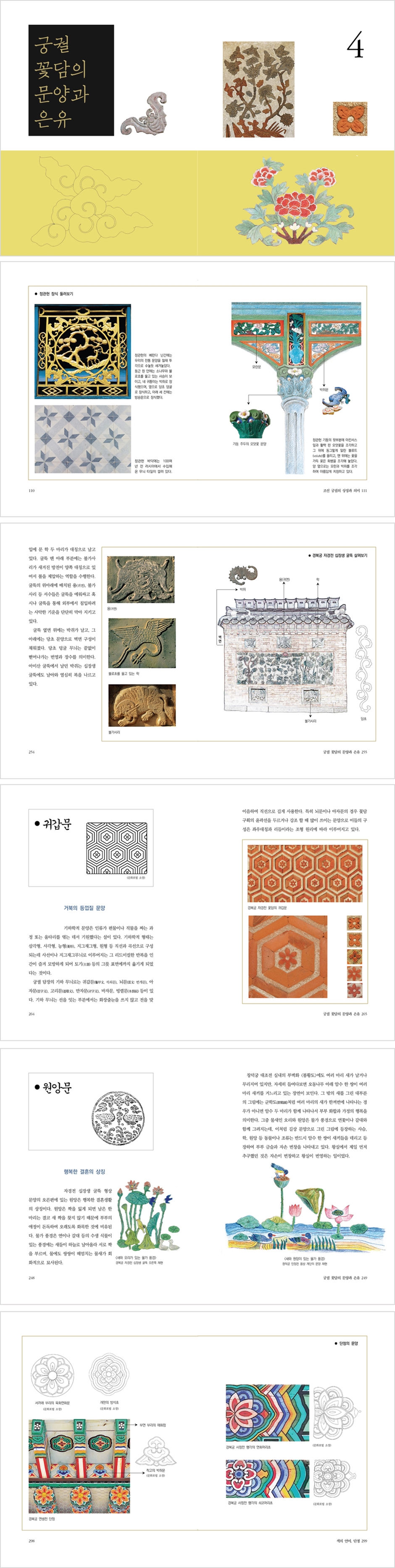
Into the book
Although there may be differences in trends and perceptions over time, it is natural that all humans have had a basic desire for beauty from ancient times to the present.
The aesthetic sensibility of Koreans pursues beauty, but it lies in a refined simplicity that is not overly flashy.
--- p.11
When talking about the architecture of the Joseon Dynasty palaces, their names and arrangements are closely related to symbolic meaning.
For example, the directionality of Gwanghwamun, the main gate of Gyeongbokgung Palace, the connection of the central axis leading to Geunjeongjeon, and the arrangement of each pavilion centered around Geunjeongjeon also have ideological intentions.
The Joseon Dynasty thoroughly adopted Confucianism as the basis of national governance.
Therefore, the Confucian ideology that revered civility can be seen in the spatial arrangement of the palace, and various elements reflected in the construction of Gyeongbokgung Palace, the first palace of the dynasty, can be confirmed.
--- p.27
Dragons, which have been revered as sacred and important animals that cannot be left out in the daily life of Oriental people, are likened to emperors and kings, symbolizing royal authority, and are also depicted in forms with different personalities and abilities.
The dragon of Eastern culture is an animal that does not exist in reality, but rather has the ability to transform into a myriad of forms through the endless imagination of humans.
Therefore, dragons were placed in places where the king was located, such as the answering platform of Jeongjeon Woldae or the Soranbanja inside Jeongjeon, to symbolize royal authority.
--- p.50
The dance of the dragon and phoenix is the most beautiful and auspicious dance in the world, knocking on the gates of heaven and announcing the beginning of an era of peace.
A pair of phoenixes are flying on a treasure installed in the center of the ceiling of Myeongjeongjeon Hall in Changgyeonggung Palace.
Every half of the ceiling of the faded blue-green Myeongjeongjeon Hall is painted with a lotus pattern, and if you look at the ceiling installed in the center of the ceiling, you can see a phoenix flying and dancing among five-colored clouds, which is particularly beautiful.
The supple form of the phoenixes in Myeongjeongjeon flying between the clouds while looking at each other is the highlight of the phoenix dance.
--- p.69
However, the meaning of the cloud pattern carved on the stone face of the fish ladder where the fish ladder connects among these stairs is the divinity of the king passing above the clouds.
Although the clouds float high in the sky, the cloud patterns decorating the lower steps on the ground are borrowed to symbolize the space above as a house above the clouds, or Unsanggak (雲上閣).
It means that the king passes above the clouds and reaches the heavenly world, where he carries out heavenly politics.
--- p.86~87
The strange stone tomb next to the stone lotus pond has a lion and dog carved on the front, and peonies and phoenixes carved on the sides.
While appreciating the strange rocks and enjoying nature, we added auspicious signs and fortunes to their decoration.
The lion dog, which can be seen in paintings and sculptures, is a mythical animal that is very brave and is said to ward off evil spirits.
However, there is a bell necklace around the dog's neck that appears to have been worn by its owner.
People of old believed that the sound of metal bells could ward off evil spirits.
The humans who domesticated dogs as livestock are also demanding that the dogs they brought in for the mission of a wall guardian wear bells and be loyal to their masters.
--- p.164~165
The plum blossoms on the chimney of Amisan Mountain in Gyeongbokgung Palace are a painting of flowers and birds, with several plum blossoms painted on each side, and the songs of birds announcing the arrival of spring.
When spring comes, the plum blossoms on the Amisan chimney fill the backyard of Gyo Tae-jeon with their fragrance, along with the flowers in the orchard. Those who see this also hope that the queen will enjoy the plum-scented spring days and stay healthy.
--- p.187
The lotus flower grows in the mud, but it is not contaminated and always retains its clear nature, so it symbolizes cleanliness, innocence, and purity.
The lotus was considered a symbol of abundance because both its flowers and fruits possessed vigorous vitality, and it was loved by people for its nobility in blooming elegant flowers even in dirty mud.
The lotus is commonly known as a Buddhist flower, but in Confucianism, the blooming lotus flower also symbolizes a gentleman or noble scholar who is not tainted by the world.
The aesthetic sensibility of Koreans pursues beauty, but it lies in a refined simplicity that is not overly flashy.
--- p.11
When talking about the architecture of the Joseon Dynasty palaces, their names and arrangements are closely related to symbolic meaning.
For example, the directionality of Gwanghwamun, the main gate of Gyeongbokgung Palace, the connection of the central axis leading to Geunjeongjeon, and the arrangement of each pavilion centered around Geunjeongjeon also have ideological intentions.
The Joseon Dynasty thoroughly adopted Confucianism as the basis of national governance.
Therefore, the Confucian ideology that revered civility can be seen in the spatial arrangement of the palace, and various elements reflected in the construction of Gyeongbokgung Palace, the first palace of the dynasty, can be confirmed.
--- p.27
Dragons, which have been revered as sacred and important animals that cannot be left out in the daily life of Oriental people, are likened to emperors and kings, symbolizing royal authority, and are also depicted in forms with different personalities and abilities.
The dragon of Eastern culture is an animal that does not exist in reality, but rather has the ability to transform into a myriad of forms through the endless imagination of humans.
Therefore, dragons were placed in places where the king was located, such as the answering platform of Jeongjeon Woldae or the Soranbanja inside Jeongjeon, to symbolize royal authority.
--- p.50
The dance of the dragon and phoenix is the most beautiful and auspicious dance in the world, knocking on the gates of heaven and announcing the beginning of an era of peace.
A pair of phoenixes are flying on a treasure installed in the center of the ceiling of Myeongjeongjeon Hall in Changgyeonggung Palace.
Every half of the ceiling of the faded blue-green Myeongjeongjeon Hall is painted with a lotus pattern, and if you look at the ceiling installed in the center of the ceiling, you can see a phoenix flying and dancing among five-colored clouds, which is particularly beautiful.
The supple form of the phoenixes in Myeongjeongjeon flying between the clouds while looking at each other is the highlight of the phoenix dance.
--- p.69
However, the meaning of the cloud pattern carved on the stone face of the fish ladder where the fish ladder connects among these stairs is the divinity of the king passing above the clouds.
Although the clouds float high in the sky, the cloud patterns decorating the lower steps on the ground are borrowed to symbolize the space above as a house above the clouds, or Unsanggak (雲上閣).
It means that the king passes above the clouds and reaches the heavenly world, where he carries out heavenly politics.
--- p.86~87
The strange stone tomb next to the stone lotus pond has a lion and dog carved on the front, and peonies and phoenixes carved on the sides.
While appreciating the strange rocks and enjoying nature, we added auspicious signs and fortunes to their decoration.
The lion dog, which can be seen in paintings and sculptures, is a mythical animal that is very brave and is said to ward off evil spirits.
However, there is a bell necklace around the dog's neck that appears to have been worn by its owner.
People of old believed that the sound of metal bells could ward off evil spirits.
The humans who domesticated dogs as livestock are also demanding that the dogs they brought in for the mission of a wall guardian wear bells and be loyal to their masters.
--- p.164~165
The plum blossoms on the chimney of Amisan Mountain in Gyeongbokgung Palace are a painting of flowers and birds, with several plum blossoms painted on each side, and the songs of birds announcing the arrival of spring.
When spring comes, the plum blossoms on the Amisan chimney fill the backyard of Gyo Tae-jeon with their fragrance, along with the flowers in the orchard. Those who see this also hope that the queen will enjoy the plum-scented spring days and stay healthy.
--- p.187
The lotus flower grows in the mud, but it is not contaminated and always retains its clear nature, so it symbolizes cleanliness, innocence, and purity.
The lotus was considered a symbol of abundance because both its flowers and fruits possessed vigorous vitality, and it was loved by people for its nobility in blooming elegant flowers even in dirty mud.
The lotus is commonly known as a Buddhist flower, but in Confucianism, the blooming lotus flower also symbolizes a gentleman or noble scholar who is not tainted by the world.
--- p.209
Publisher's Review
1.
The beauty of our palaces is evident only when seen in detail.
The Joseon Dynasty palace architecture in Seoul, from its scale to its decoration, is a culmination of contemporary Korean culture, and the sculptures and patterns that appear in the palace architecture display the essence of restrained aesthetics.
In that respect, our palaces require a closer look to truly appreciate their true nature.
Readers who are unsure of what to see in a palace will follow the author's lead and see the rooftop sculptures, the unusual carvings on the chimneys, and the beautiful patterns carved into the various decorations and ornaments on the staircases.
If the books about palaces up to now have been taken with a telephoto lens, then to fully appreciate the beauty and charm of our palaces from a different perspective, you need to look at them with a close-up lens.
In other words, new cross-sections of the palace, enlarged through a microscopic lens, will be presented.
The sculptures of the Geumcheon Bridge leading to the palace astonish visitors with their dynamism and delicate expressions, and the imaginary animals such as dragons and phoenixes decorating the ceilings of the pavilions have symbolic meanings, and the colors and patterns of the Dancheong (painted blue and white) also contain the wishes and hopes of our ancestors.
Especially in the flower walls and roofs of the palace, you can feel the peak of its splendid aesthetics.
All kinds of symbolic animals and plants appear in the chimneys of Hwagye, stimulating the readers' imagination.
Such stimulation makes readers unconsciously realize that our palace was so beautiful.
This book guides you through the world of metaphors and symbols to discover the beauty of our palaces, which require a closer look.
2.
Types of patterns appearing in palace architecture
Since the Three Kingdoms period, Korean patterns have included elements of Confucianism and Taoism along with Buddhist tendencies.
The Joseon Dynasty, which revered civil administration, arranged the king's palaces based on astronomical concepts. By looking at the patterns and auspicious symbols used to decorate palace architecture, we can understand the thoughts and ideologies pursued by the Joseon Dynasty.
None of the shapes seen in the palace are meaningless.
You cannot understand the spirit of the times without knowing the symbolic meaning of each house name, door name, and pattern.
The decorative patterns used in palace architecture are broadly divided into figural and geometric patterns.
The figural patterns include animal patterns, plant patterns, and natural patterns, and the geometric patterns include triangles, squares, diamonds (rhombuses), zigzags, and circles, and are composed of straight and curved lines based on the principles of symmetry and rhythm.
If we look at them in more detail, the plant patterns include plum blossom pattern, peony pattern, orchid pattern, chrysanthemum pattern, bamboo pattern, peach pattern, lotus pattern, pomegranate pattern, grape pattern, Buddhist monk's mantra pattern, arabesque pattern, immortal herb pattern, gourd bottle pattern, grass flower pattern, plum blossom pattern, and peace flower pattern. The nature patterns include cloud pattern and Taegeuk pattern. The animal patterns include dragon pattern, phoenix pattern, bat pattern, toad pattern, starfish pattern, elephant pattern, giraffe pattern, academic pattern, mandarin duck pattern, and surplus pattern.
Geometric patterns include turtle shell patterns, brain patterns, ring patterns, swastika patterns, baja patterns, ice ridge patterns, and bangseung patterns.
Traditionally, auspicious patterns often appear, symbolizing the prosperity of descendants, such as dabok (many blessings), dasu (many longevity), dasonaeng (many sons), and dason (many grandchildren), and there are also patterns of characters such as gangnyeong (good luck), gippeul hee (pleasant joy), mannyeonjangchun (long life), and mansu mugang (mugang).
3.
In search of metaphors and symbolism hidden in the palace's decorations
Korean palaces were very vulnerable to fire due to their wooden construction. To prevent fire, they placed the Bagua on the roof, shaped the earthenware into fish shapes, painted lotus flowers and installed lotus lanterns in the main hall, and even erected a dam on the moon terrace.
Additionally, the area under the fireplace is decorated with a pattern of broken ice called the Bingryeolmun.
In this way, meaning was given to the patterns, and every corner of the palace was decorated in an extraordinary way.
Above all, this book shows how the ordinal numbers decorated on the stone steps of Geunjeongjeon Hall in Gyeongbokgung Palace were arranged based on facts revealed in the "Gyeongbokgung Yeonggeon Diary," which records the reconstruction process of Gyeongbokgung Palace. It also points out that a white tiger was drawn instead of a giraffe on the archway of Yeongchumun Gate. It also introduces the patterns that were lost due to the incorrect restoration of the flower wall of Jagyeongjeon Hall during the Japanese colonial period and what the letters mean.
The chimney of Amisan in Gyeongbokgung Palace, the chimney of the Ten Longevity Symbols in Jagyeongjeon Hall, and the chimney of Daejojeon Hall in Changdeokgung Palace also draw attention to a single flower and a single bird.
When you realize that not only the patterns but also the colors of Dancheong have language, and that nothing was painted carelessly, you will be amazed at how our palaces were truly a collection of metaphors and symbols.
The fun of reading the metaphors and symbols hidden in the patterns of palace architecture is revealed in this book along with many pattern images.
This is what makes a trip to the palace so interesting, so let's go on a trip to the palace to find out the meaning of the traditional patterns.
The more you know about it, the more beautiful our palace becomes.
This is a book suitable for exploring microhistory, which will greatly raise the aesthetic standards of readers.
The beauty of our palaces is evident only when seen in detail.
The Joseon Dynasty palace architecture in Seoul, from its scale to its decoration, is a culmination of contemporary Korean culture, and the sculptures and patterns that appear in the palace architecture display the essence of restrained aesthetics.
In that respect, our palaces require a closer look to truly appreciate their true nature.
Readers who are unsure of what to see in a palace will follow the author's lead and see the rooftop sculptures, the unusual carvings on the chimneys, and the beautiful patterns carved into the various decorations and ornaments on the staircases.
If the books about palaces up to now have been taken with a telephoto lens, then to fully appreciate the beauty and charm of our palaces from a different perspective, you need to look at them with a close-up lens.
In other words, new cross-sections of the palace, enlarged through a microscopic lens, will be presented.
The sculptures of the Geumcheon Bridge leading to the palace astonish visitors with their dynamism and delicate expressions, and the imaginary animals such as dragons and phoenixes decorating the ceilings of the pavilions have symbolic meanings, and the colors and patterns of the Dancheong (painted blue and white) also contain the wishes and hopes of our ancestors.
Especially in the flower walls and roofs of the palace, you can feel the peak of its splendid aesthetics.
All kinds of symbolic animals and plants appear in the chimneys of Hwagye, stimulating the readers' imagination.
Such stimulation makes readers unconsciously realize that our palace was so beautiful.
This book guides you through the world of metaphors and symbols to discover the beauty of our palaces, which require a closer look.
2.
Types of patterns appearing in palace architecture
Since the Three Kingdoms period, Korean patterns have included elements of Confucianism and Taoism along with Buddhist tendencies.
The Joseon Dynasty, which revered civil administration, arranged the king's palaces based on astronomical concepts. By looking at the patterns and auspicious symbols used to decorate palace architecture, we can understand the thoughts and ideologies pursued by the Joseon Dynasty.
None of the shapes seen in the palace are meaningless.
You cannot understand the spirit of the times without knowing the symbolic meaning of each house name, door name, and pattern.
The decorative patterns used in palace architecture are broadly divided into figural and geometric patterns.
The figural patterns include animal patterns, plant patterns, and natural patterns, and the geometric patterns include triangles, squares, diamonds (rhombuses), zigzags, and circles, and are composed of straight and curved lines based on the principles of symmetry and rhythm.
If we look at them in more detail, the plant patterns include plum blossom pattern, peony pattern, orchid pattern, chrysanthemum pattern, bamboo pattern, peach pattern, lotus pattern, pomegranate pattern, grape pattern, Buddhist monk's mantra pattern, arabesque pattern, immortal herb pattern, gourd bottle pattern, grass flower pattern, plum blossom pattern, and peace flower pattern. The nature patterns include cloud pattern and Taegeuk pattern. The animal patterns include dragon pattern, phoenix pattern, bat pattern, toad pattern, starfish pattern, elephant pattern, giraffe pattern, academic pattern, mandarin duck pattern, and surplus pattern.
Geometric patterns include turtle shell patterns, brain patterns, ring patterns, swastika patterns, baja patterns, ice ridge patterns, and bangseung patterns.
Traditionally, auspicious patterns often appear, symbolizing the prosperity of descendants, such as dabok (many blessings), dasu (many longevity), dasonaeng (many sons), and dason (many grandchildren), and there are also patterns of characters such as gangnyeong (good luck), gippeul hee (pleasant joy), mannyeonjangchun (long life), and mansu mugang (mugang).
3.
In search of metaphors and symbolism hidden in the palace's decorations
Korean palaces were very vulnerable to fire due to their wooden construction. To prevent fire, they placed the Bagua on the roof, shaped the earthenware into fish shapes, painted lotus flowers and installed lotus lanterns in the main hall, and even erected a dam on the moon terrace.
Additionally, the area under the fireplace is decorated with a pattern of broken ice called the Bingryeolmun.
In this way, meaning was given to the patterns, and every corner of the palace was decorated in an extraordinary way.
Above all, this book shows how the ordinal numbers decorated on the stone steps of Geunjeongjeon Hall in Gyeongbokgung Palace were arranged based on facts revealed in the "Gyeongbokgung Yeonggeon Diary," which records the reconstruction process of Gyeongbokgung Palace. It also points out that a white tiger was drawn instead of a giraffe on the archway of Yeongchumun Gate. It also introduces the patterns that were lost due to the incorrect restoration of the flower wall of Jagyeongjeon Hall during the Japanese colonial period and what the letters mean.
The chimney of Amisan in Gyeongbokgung Palace, the chimney of the Ten Longevity Symbols in Jagyeongjeon Hall, and the chimney of Daejojeon Hall in Changdeokgung Palace also draw attention to a single flower and a single bird.
When you realize that not only the patterns but also the colors of Dancheong have language, and that nothing was painted carelessly, you will be amazed at how our palaces were truly a collection of metaphors and symbols.
The fun of reading the metaphors and symbols hidden in the patterns of palace architecture is revealed in this book along with many pattern images.
This is what makes a trip to the palace so interesting, so let's go on a trip to the palace to find out the meaning of the traditional patterns.
The more you know about it, the more beautiful our palace becomes.
This is a book suitable for exploring microhistory, which will greatly raise the aesthetic standards of readers.
GOODS SPECIFICS
- Publication date: November 15, 2021
- Page count, weight, size: 320 pages | 424g | 153*200*30mm
- ISBN13: 9788998259341
- ISBN10: 8998259346
You may also like
카테고리
korean


korean

![GQ KOREA Mark (Monthly): December [2025]](http://librairie.coreenne.fr/cdn/shop/files/8ef265dbbfbf186523ed75ba7319009d.jpg?v=1765340328&width=3840)


