

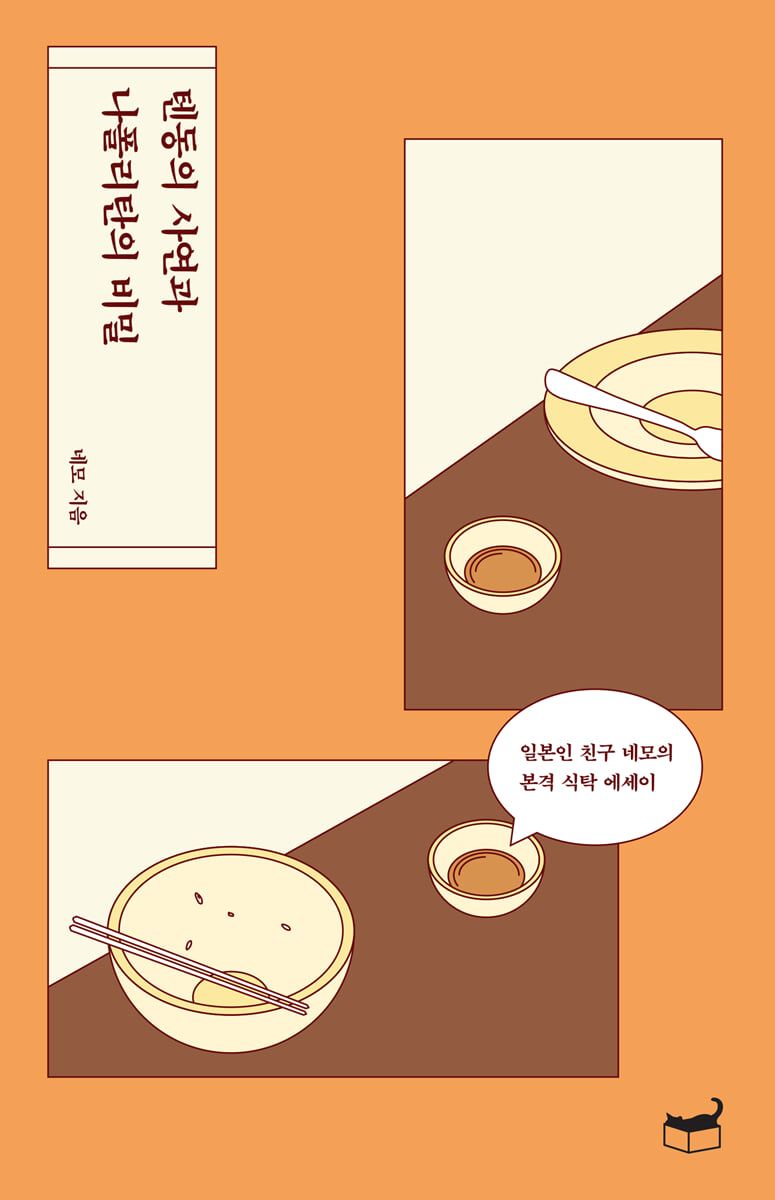
The Story of Tendon and the Secret of Neapolitan
 |
Description
Book Introduction
For those of you who are serious about eating
A full-fledged dining table essay from my Japanese friend, Nemo. It tastes better if you know what you're eating! This book contains the quiet story of tendon, the small secrets of Neapolitan, and stories about various Japanese foods. This is the second book by a Japanese author, following the popular Korean-language book, "I'll Tell You About Real Tokyo Restaurants." It is filled with information and stories that only a local can tell, from the history and culture contained in a single bowl to how to eat it properly. The author's recommendations for local restaurants, each with its own unique flavor, are a bonus! The book covers (almost) every Japanese food you've ever been curious about, so you can refer to the table of contents to pick and choose the dish you're craving at the time. A book that will be the best side dish and snack for you who are serious about eating. |
- You can preview some of the book's contents.
Preview
index
Prologue.
Hello, my name is Nemo.
Table no.1 Shall we start with rice?
Natto gohan / Tamago kake gohan / Onigiri / Ochazuke / Ekiben
Nemo's dessert dango
Table no.2 Rice, soup, side dishes = set meal
Miso soup / Tonjiru / Mentaiko / Tamagoyaki / Tsukemono
Nemo's dessert manju
Table No. 3: A Bowl of Joy, Donburi
Gyudon / Katsudon / Tendon / Oyakodon / Butadon / Kaisendon / Unadon
nemo's dessert daifuku
Table No. 4: Ramen, a genre that is worth waiting in line for.
Shoyu ramen, shio ramen, miso ramen / tonkotsu ramen / ieikei ramen / tsukemen / abura soba / mazesoba / tantanmen / hiyashi chuka / instant ramen
nemo's dessert taiyaki
Table No. 5: Eat traditional Japanese noodles, soba and udon
Morisoba / Tempura Soba / Kamonanban / Bukkake Udon / Kamaage Udon / Nikomi Udon
nemo's dessert dorayaki
Table No.6 Noodle Heaven Other noodle dishes to try in Japan!
Yakisoba / Nagasaki Champon / Sara Udon / Somen / Sokisoba / Neapolitan / Tarraco Spaghetti / Natto Spaghetti
Nemo's dessert
Table No. 7 The Sea with Fish Dishes
Yakisakana / Nizakana / Ajifuri / Sashimi / Sushi
nemo's dessert monaka
Table No. 8 A day when you crave meat dishes
Yakiniku / Sukiyaki / Shabu-shabu / Motsunabe / Shogayaki / Chicken Nanban / Mizutaki / Yakitori / Genghis Khan
nemo's dessert karinto
Table No. 9: Curious about other Japanese foods?
Okonomiyaki / Takoyaki / Tempura / Karaage / Oden
nemo's dessert yokan
Table No. 10: The taste of deep longing, curry
European Curry / Keema Curry / Soup Curry / Spicy Curry / Katsu Curry / Retort Curry
nemo's dessert anmitsu
Table No. 11 Do you like Western food?
Tonkatsu / Hamburger / Omelet / Croquette / Menchikatsu / Kakifuri
nemo's dessert kakigori
Table No. 12 Japanese-style Chinese cuisine
Chahang / Gyoza / Ankakeyakisoba / Nikuman / Subuta / Mabodofu / Wonton / Shrimp
nemo's dessert oshiruko
Special Table: Korean Food Loved in Japan
Kimchi / Naengmyeon / Whole chicken / Bibimbap / Jijimi
epilogue.
From your Japanese friend, Nemo
Hello, my name is Nemo.
Table no.1 Shall we start with rice?
Natto gohan / Tamago kake gohan / Onigiri / Ochazuke / Ekiben
Nemo's dessert dango
Table no.2 Rice, soup, side dishes = set meal
Miso soup / Tonjiru / Mentaiko / Tamagoyaki / Tsukemono
Nemo's dessert manju
Table No. 3: A Bowl of Joy, Donburi
Gyudon / Katsudon / Tendon / Oyakodon / Butadon / Kaisendon / Unadon
nemo's dessert daifuku
Table No. 4: Ramen, a genre that is worth waiting in line for.
Shoyu ramen, shio ramen, miso ramen / tonkotsu ramen / ieikei ramen / tsukemen / abura soba / mazesoba / tantanmen / hiyashi chuka / instant ramen
nemo's dessert taiyaki
Table No. 5: Eat traditional Japanese noodles, soba and udon
Morisoba / Tempura Soba / Kamonanban / Bukkake Udon / Kamaage Udon / Nikomi Udon
nemo's dessert dorayaki
Table No.6 Noodle Heaven Other noodle dishes to try in Japan!
Yakisoba / Nagasaki Champon / Sara Udon / Somen / Sokisoba / Neapolitan / Tarraco Spaghetti / Natto Spaghetti
Nemo's dessert
Table No. 7 The Sea with Fish Dishes
Yakisakana / Nizakana / Ajifuri / Sashimi / Sushi
nemo's dessert monaka
Table No. 8 A day when you crave meat dishes
Yakiniku / Sukiyaki / Shabu-shabu / Motsunabe / Shogayaki / Chicken Nanban / Mizutaki / Yakitori / Genghis Khan
nemo's dessert karinto
Table No. 9: Curious about other Japanese foods?
Okonomiyaki / Takoyaki / Tempura / Karaage / Oden
nemo's dessert yokan
Table No. 10: The taste of deep longing, curry
European Curry / Keema Curry / Soup Curry / Spicy Curry / Katsu Curry / Retort Curry
nemo's dessert anmitsu
Table No. 11 Do you like Western food?
Tonkatsu / Hamburger / Omelet / Croquette / Menchikatsu / Kakifuri
nemo's dessert kakigori
Table No. 12 Japanese-style Chinese cuisine
Chahang / Gyoza / Ankakeyakisoba / Nikuman / Subuta / Mabodofu / Wonton / Shrimp
nemo's dessert oshiruko
Special Table: Korean Food Loved in Japan
Kimchi / Naengmyeon / Whole chicken / Bibimbap / Jijimi
epilogue.
From your Japanese friend, Nemo
Detailed image

Into the book
“I wrote this book with the hope that it will serve as a ‘pre-reading guide to Japanese food’ to help you increase your anticipation and motivation for your next trip to Japan.
I've always thought, 'Food tastes better when you know what you're eating!' So, for Koreans who love Japanese food, and for those who want to go on a food tour to Japan someday, I'd like to tell you about Japanese food so that you can have a more delicious trip."
--- p.9
“Oh, right! In Japan, there’s a culture where people can remain friends without any pressure even if their age difference is large.
Even if there is a ten or twenty year age difference, if we understand each other, we are all 'friends'.
“I hope that you and I can become good friends through this book, even though we are different in age and taste.”
--- p.11
“For your information, if you want to eat delicious tonjiru, I recommend going to a restaurant that serves delicious tonkatsu (298p).
Tonkatsu restaurants often sell delicious tonjiru.
Tonkatsu is fried pork, and I think it's because the same good pork used to make tonkatsu is also used in tonjiru."
--- p.56
“In Japan, they teach from a young age that ‘you must hold your bowl and eat.’
When you eat Japanese food, you usually don't get a spoon with it.
So, you need to hold the bowl close to your mouth to eat comfortably.
Have you ever seen the popular mukbang drama [Solitary Gourmet] where the main character, Mr. Goro, brings the bowl close to his mouth and slurps down his food in one gulp? I recommend that you try that next time you eat donburi in Japan.”
--- p.74
“I think one of the charms of ramen is its scalability.
When I was young, I only knew about the local ramen shops, but as I grew up, I started to look for 'ramen I haven't tried yet'.
Back when I was a student and there was no social media, I used to read ramen magazines and visit many different shops.
“New ramen restaurants open every year, and ramen trends, like music or fashion, change from time to time… I always feel like the search for a great ramen restaurant feels like a never-ending journey.”
--- p.105
“Okinawa is famous for eating a lot of pork.
The broth for sokisoba is also mostly made by boiling pork and mixing it with bonito broth.
Sokisoba is a specialty of Okinawa, so it is commonly sold in any restaurant in Okinawa, even if it is not a specialty restaurant.
If you're dreaming of a trip to Okinawa, why not try a bowl of sokisoba with the locals?
--- p.185
“Another difference between Korean barbecue and Japanese yakiniku is that in Japan, the meat is already cut into bite-sized pieces.
So when Japanese people go to a Korean barbecue restaurant, they are often confused because they don't know how to cut the meat.
When I first started living in Korea, I once heard someone jokingly say, “If you can’t even cut meat, you can’t survive in Korea.”
I remember getting special training in cutting meat from a Korean friend at a pork belly restaurant.”
--- p.230
“There is an interesting story about sukiyaki.
In the 1960s, Japan's national singer Kyu Sakamoto released the song "Let's Walk Upward" and it became a huge hit.
It was so great that it even reached number one on the US Billboard charts.
The English title of this song, which was introduced on Billboard, was [SUKIYAKI].
The English title was changed to that because at the time, the American agent's favorite dish he ate in Japan was sukiyaki.
Since then, the Japanese have come to believe that sukiyaki is a representative Japanese dish, and this may have led them to love sukiyaki even more.
--- p.233
"Why do Japanese people love curry so much? I think it's because they grew up eating delicious curry from a young age.
Curry was the most frequently served menu item in elementary school lunches.
I've never heard anyone say that they didn't like the curry they got at school because it was bad.
Elementary school students look forward to 'Curry Day'.
When I ate curry during lunch, I used to compete with my friends to see who could eat more and faster, and when we were done, we would run to get refills.
"
--- p.276
“This book is a combination of what I can do (Korean) and what I want to do (help Korean people).
I hope that at least one more Korean person will read this book.
This time I told you about Japanese food, next time I want you to tell me about Korean food.
“Because I really love Korean food!”
I've always thought, 'Food tastes better when you know what you're eating!' So, for Koreans who love Japanese food, and for those who want to go on a food tour to Japan someday, I'd like to tell you about Japanese food so that you can have a more delicious trip."
--- p.9
“Oh, right! In Japan, there’s a culture where people can remain friends without any pressure even if their age difference is large.
Even if there is a ten or twenty year age difference, if we understand each other, we are all 'friends'.
“I hope that you and I can become good friends through this book, even though we are different in age and taste.”
--- p.11
“For your information, if you want to eat delicious tonjiru, I recommend going to a restaurant that serves delicious tonkatsu (298p).
Tonkatsu restaurants often sell delicious tonjiru.
Tonkatsu is fried pork, and I think it's because the same good pork used to make tonkatsu is also used in tonjiru."
--- p.56
“In Japan, they teach from a young age that ‘you must hold your bowl and eat.’
When you eat Japanese food, you usually don't get a spoon with it.
So, you need to hold the bowl close to your mouth to eat comfortably.
Have you ever seen the popular mukbang drama [Solitary Gourmet] where the main character, Mr. Goro, brings the bowl close to his mouth and slurps down his food in one gulp? I recommend that you try that next time you eat donburi in Japan.”
--- p.74
“I think one of the charms of ramen is its scalability.
When I was young, I only knew about the local ramen shops, but as I grew up, I started to look for 'ramen I haven't tried yet'.
Back when I was a student and there was no social media, I used to read ramen magazines and visit many different shops.
“New ramen restaurants open every year, and ramen trends, like music or fashion, change from time to time… I always feel like the search for a great ramen restaurant feels like a never-ending journey.”
--- p.105
“Okinawa is famous for eating a lot of pork.
The broth for sokisoba is also mostly made by boiling pork and mixing it with bonito broth.
Sokisoba is a specialty of Okinawa, so it is commonly sold in any restaurant in Okinawa, even if it is not a specialty restaurant.
If you're dreaming of a trip to Okinawa, why not try a bowl of sokisoba with the locals?
--- p.185
“Another difference between Korean barbecue and Japanese yakiniku is that in Japan, the meat is already cut into bite-sized pieces.
So when Japanese people go to a Korean barbecue restaurant, they are often confused because they don't know how to cut the meat.
When I first started living in Korea, I once heard someone jokingly say, “If you can’t even cut meat, you can’t survive in Korea.”
I remember getting special training in cutting meat from a Korean friend at a pork belly restaurant.”
--- p.230
“There is an interesting story about sukiyaki.
In the 1960s, Japan's national singer Kyu Sakamoto released the song "Let's Walk Upward" and it became a huge hit.
It was so great that it even reached number one on the US Billboard charts.
The English title of this song, which was introduced on Billboard, was [SUKIYAKI].
The English title was changed to that because at the time, the American agent's favorite dish he ate in Japan was sukiyaki.
Since then, the Japanese have come to believe that sukiyaki is a representative Japanese dish, and this may have led them to love sukiyaki even more.
--- p.233
"Why do Japanese people love curry so much? I think it's because they grew up eating delicious curry from a young age.
Curry was the most frequently served menu item in elementary school lunches.
I've never heard anyone say that they didn't like the curry they got at school because it was bad.
Elementary school students look forward to 'Curry Day'.
When I ate curry during lunch, I used to compete with my friends to see who could eat more and faster, and when we were done, we would run to get refills.
"
--- p.276
“This book is a combination of what I can do (Korean) and what I want to do (help Korean people).
I hope that at least one more Korean person will read this book.
This time I told you about Japanese food, next time I want you to tell me about Korean food.
“Because I really love Korean food!”
--- p.355
Publisher's Review
“I have a funny story about the Japanese food you just ordered.
“Is it okay if I tell you?”
My friend 'Nemo', a native Japanese person from Tokyo
Real Japanese food stories told in Korean!
The author of this book is a Japanese office worker in his 30s who was born in Tokyo and still lives there.
(It is said that Nemo's grandfather was a fisherman in Tokyo Port.) His hobby is searching for good restaurants.
I write articles in Korean introducing delicious restaurants in Tokyo, not only on weekends but also after work, and post them on Instagram.
Surprisingly, it's not in Japanese, but in Korean.
This book was also written in Korean.
What if your Japanese friend 'Nemo' talks to you from the table next to you?
Let me tell you these stories!
First, let me tell you the (gentle) story and (small) secrets of Japanese food.
Have you ever been to a Japanese home-style restaurant and seen the soup come out with a lid on it, or gone to eat katsudon and seen a note saying, "Donburi tastes better if you eat it as is, not mixed!"? Have you ever wondered, "Why?" What would the food ordered by Goro-san in the drama "Solitary Gourmet" taste like, or what everyday Japanese home-cooked meals are like?
Nemo will summarize the trivial things you've thought about at least once, the stories and secrets that never came up no matter how much you searched.
From the background and culture of Japanese food to the proper way to eat it! It's filled with stories that only a local friend can tell.
Among them, the story that is so amazing that (the editor) keeps talking about it every day is ‘Yokan (Yanggaeng)’.
It is said that in Japan, there is a custom of giving yokan as a gift when apologizing to a business partner.
Yanggaeng is made by solidifying liquid and making it chewy, which is in line with the meaning of solidifying (= resolving a situation).
Also, since Yanggaeng is heavy despite its small size, it can also convey the meaning of 'taking this situation seriously'.
Isn't it fascinating? After reading "The Story of Tendon and the Secret of Neapolitan," you'll find yourself chatting more and more around the dinner table.
two.
We will teach you almost everything about Japanese food.
Starting with the most basic of basics, rice, we have prepared a total of 97 Japanese dishes, including donburi, ramen, and Japanese-style Chinese cuisine.
It covers not only the sushi and udon that we love, but also menus that the author highly recommends, such as 'Soki Soba', a noodle dish made with short ribs that is only found in Okinawa, Japan's southern island, and 'Aji Fry', a fried fish that Japanese people enjoy as a side dish at home, which is less well-known in Korea.
It contains stories about (almost all) Japanese foods you've ever been curious about, so you can browse the table of contents and pick out the food you want to eat at the time.
This book is the best side dish and snack for those who are serious about eating!
Third, we will introduce you to the similar yet different tastes of Korea and Japan.
Korean barbecue and Japanese yakiniku, Korean buckwheat noodles and Japanese soba... There are many foods that are similar to those of our neighboring country, Japan.
Even if it's the same food, eating it in Korea is different from eating it in Japan.
The author, who fell in love with Korean food while living in Korea, said that he sought out delicious restaurants not only in Seoul but also in the provinces.
It was because I had experienced both countries that I was able to write about the differences.
(As an appendix, we have prepared a story about Korean food that is loved in Japan.)
Fourth, we will tell you about the restaurants recommended by Nemo for each food.
The author has carefully selected the restaurants where he enjoyed the most delicious food and introduced each dish.
A long-established tonkatsu restaurant in Ginza, Tokyo, that preserves tradition.
"A restaurant where you can enjoy Tokyo's best bukkake udon at an affordable price."
“A tantanmen restaurant with noodles reminiscent of the Japanese drama [The Lonely Gourmet]”
“A Tokyo restaurant that has recently become famous among yakiniku enthusiasts”…
It's full of information on authentic restaurants carefully selected and recommended by locals.
You can get more information by searching the hashtag nemo_food name (e.g. #nemo:tonkotsuramen #nemo:kaisendon #nemo:mazesoba) on Instagram.
What if you believed that happiness lies in a bite of delicious food?
Want to travel right now, but holding back on eating Japanese food?
A story told by my Japanese friend 'Nemo'
Check out the delicious table essay.
Your next Japanese meal will definitely be even more delicious!
“Is it okay if I tell you?”
My friend 'Nemo', a native Japanese person from Tokyo
Real Japanese food stories told in Korean!
The author of this book is a Japanese office worker in his 30s who was born in Tokyo and still lives there.
(It is said that Nemo's grandfather was a fisherman in Tokyo Port.) His hobby is searching for good restaurants.
I write articles in Korean introducing delicious restaurants in Tokyo, not only on weekends but also after work, and post them on Instagram.
Surprisingly, it's not in Japanese, but in Korean.
This book was also written in Korean.
What if your Japanese friend 'Nemo' talks to you from the table next to you?
Let me tell you these stories!
First, let me tell you the (gentle) story and (small) secrets of Japanese food.
Have you ever been to a Japanese home-style restaurant and seen the soup come out with a lid on it, or gone to eat katsudon and seen a note saying, "Donburi tastes better if you eat it as is, not mixed!"? Have you ever wondered, "Why?" What would the food ordered by Goro-san in the drama "Solitary Gourmet" taste like, or what everyday Japanese home-cooked meals are like?
Nemo will summarize the trivial things you've thought about at least once, the stories and secrets that never came up no matter how much you searched.
From the background and culture of Japanese food to the proper way to eat it! It's filled with stories that only a local friend can tell.
Among them, the story that is so amazing that (the editor) keeps talking about it every day is ‘Yokan (Yanggaeng)’.
It is said that in Japan, there is a custom of giving yokan as a gift when apologizing to a business partner.
Yanggaeng is made by solidifying liquid and making it chewy, which is in line with the meaning of solidifying (= resolving a situation).
Also, since Yanggaeng is heavy despite its small size, it can also convey the meaning of 'taking this situation seriously'.
Isn't it fascinating? After reading "The Story of Tendon and the Secret of Neapolitan," you'll find yourself chatting more and more around the dinner table.
two.
We will teach you almost everything about Japanese food.
Starting with the most basic of basics, rice, we have prepared a total of 97 Japanese dishes, including donburi, ramen, and Japanese-style Chinese cuisine.
It covers not only the sushi and udon that we love, but also menus that the author highly recommends, such as 'Soki Soba', a noodle dish made with short ribs that is only found in Okinawa, Japan's southern island, and 'Aji Fry', a fried fish that Japanese people enjoy as a side dish at home, which is less well-known in Korea.
It contains stories about (almost all) Japanese foods you've ever been curious about, so you can browse the table of contents and pick out the food you want to eat at the time.
This book is the best side dish and snack for those who are serious about eating!
Third, we will introduce you to the similar yet different tastes of Korea and Japan.
Korean barbecue and Japanese yakiniku, Korean buckwheat noodles and Japanese soba... There are many foods that are similar to those of our neighboring country, Japan.
Even if it's the same food, eating it in Korea is different from eating it in Japan.
The author, who fell in love with Korean food while living in Korea, said that he sought out delicious restaurants not only in Seoul but also in the provinces.
It was because I had experienced both countries that I was able to write about the differences.
(As an appendix, we have prepared a story about Korean food that is loved in Japan.)
Fourth, we will tell you about the restaurants recommended by Nemo for each food.
The author has carefully selected the restaurants where he enjoyed the most delicious food and introduced each dish.
A long-established tonkatsu restaurant in Ginza, Tokyo, that preserves tradition.
"A restaurant where you can enjoy Tokyo's best bukkake udon at an affordable price."
“A tantanmen restaurant with noodles reminiscent of the Japanese drama [The Lonely Gourmet]”
“A Tokyo restaurant that has recently become famous among yakiniku enthusiasts”…
It's full of information on authentic restaurants carefully selected and recommended by locals.
You can get more information by searching the hashtag nemo_food name (e.g. #nemo:tonkotsuramen #nemo:kaisendon #nemo:mazesoba) on Instagram.
What if you believed that happiness lies in a bite of delicious food?
Want to travel right now, but holding back on eating Japanese food?
A story told by my Japanese friend 'Nemo'
Check out the delicious table essay.
Your next Japanese meal will definitely be even more delicious!
GOODS SPECIFICS
- Publication date: September 14, 2021
- Page count, weight, size: 360 pages | 496g | 128*200*21mm
- ISBN13: 9791160807066
- ISBN10: 116080706X
You may also like
카테고리
korean


korean

![GQ KOREA Mark (Monthly): December [2025]](http://librairie.coreenne.fr/cdn/shop/files/8ef265dbbfbf186523ed75ba7319009d.jpg?v=1765340328&width=3840)


