

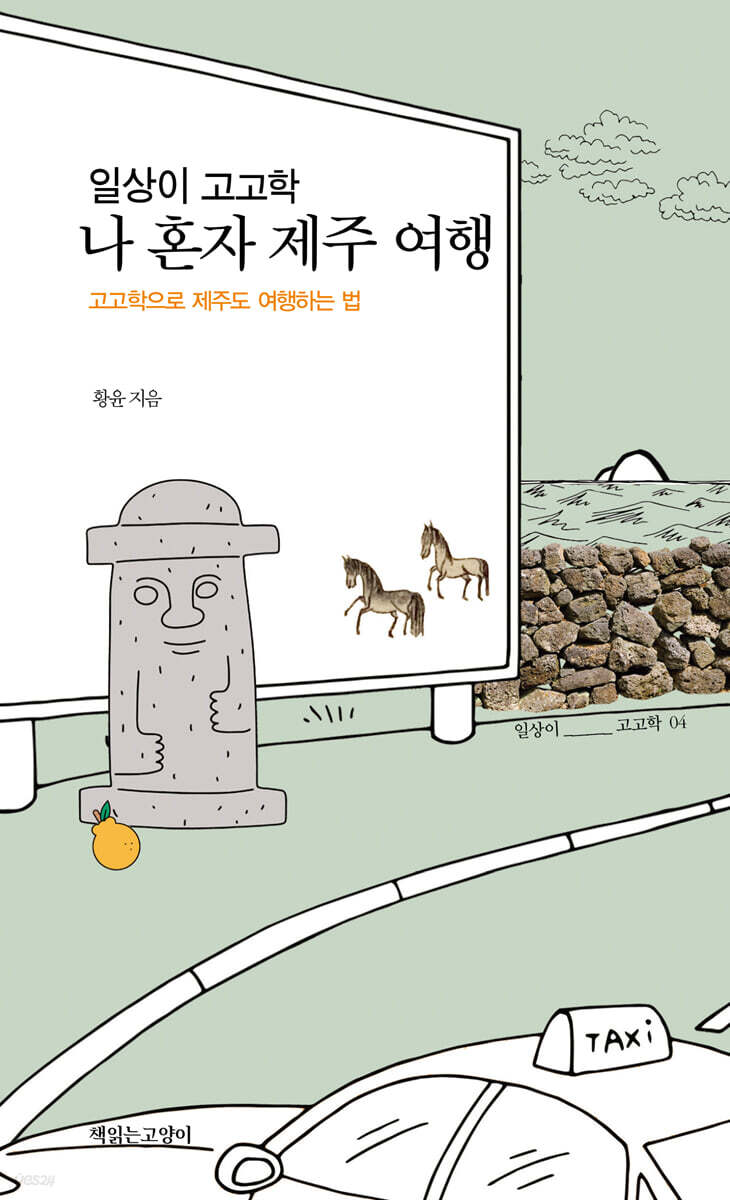
Archaeology in Everyday Life: My Solo Trip to Jeju
 |
Description
Book Introduction
Jeju Island travel that is not on tourist maps
A Whole New Jeju Experience Through Archaeology
"Daily Life as Archaeology, My Solo Jeju Trip" is a historical travel essay that breaks through the conventional notions of Jeju travel and encounters Jeju through the eyes of archaeology.
Jeju, a place that the locals called 'Tamna', but to the people on the mainland, it was just a town across the water.
A place where there were differences in feelings and positions as much as the distance of this name.
So, what kind of place is Jeju today? For those of us who often think of Jeju as an exotic vacation destination, author Hwang Yun presents a fascinating scene from its history.
At the end of the Goryeo Dynasty, he was drafted into the service of General Choi Young and was sent to Jeju Island. He took a boat instead of an airplane…
The author, a historian with a background in nerd history, presents an unbiased hypothesis, commentary on various documents, and diligent footwork that makes this Jeju exploration journey not only exciting but also thrilling, bordering on adventure.
According to the Honam Regional Statistics Office, Jeju Island has already become an explosively popular tourist destination, with over 15 million tourists annually (as of 2019) and with the number of tourists recovering to pre-COVID levels since April of this year. However, it is difficult to find historical travel books and products.
Therefore, this book can be said to be a completely new travel book about Jeju Island that we have been looking for.
Jeju Island, which has been limited to nature experiences and cultural heritage tourism, has recently become a popular destination for emotional travel, including restaurants, travel destinations, and cafes. However, this book provides an overview of Jeju Island's history, which has surprisingly been left out.
In particular, by looking into Jeju from ancient history, which we have never encountered before, to the Goryeo Dynasty, we can learn about the reason why Jeju has so many words, the origin of Jeju's symbol, Dolhareubang, how people in the past went to Jeju by boat, the origin of the names Tamna and Jeju Island, and Jeju's identity, etc., through verification of actual history that exists in the existing relics and historical sites and literature.
A Whole New Jeju Experience Through Archaeology
"Daily Life as Archaeology, My Solo Jeju Trip" is a historical travel essay that breaks through the conventional notions of Jeju travel and encounters Jeju through the eyes of archaeology.
Jeju, a place that the locals called 'Tamna', but to the people on the mainland, it was just a town across the water.
A place where there were differences in feelings and positions as much as the distance of this name.
So, what kind of place is Jeju today? For those of us who often think of Jeju as an exotic vacation destination, author Hwang Yun presents a fascinating scene from its history.
At the end of the Goryeo Dynasty, he was drafted into the service of General Choi Young and was sent to Jeju Island. He took a boat instead of an airplane…
The author, a historian with a background in nerd history, presents an unbiased hypothesis, commentary on various documents, and diligent footwork that makes this Jeju exploration journey not only exciting but also thrilling, bordering on adventure.
According to the Honam Regional Statistics Office, Jeju Island has already become an explosively popular tourist destination, with over 15 million tourists annually (as of 2019) and with the number of tourists recovering to pre-COVID levels since April of this year. However, it is difficult to find historical travel books and products.
Therefore, this book can be said to be a completely new travel book about Jeju Island that we have been looking for.
Jeju Island, which has been limited to nature experiences and cultural heritage tourism, has recently become a popular destination for emotional travel, including restaurants, travel destinations, and cafes. However, this book provides an overview of Jeju Island's history, which has surprisingly been left out.
In particular, by looking into Jeju from ancient history, which we have never encountered before, to the Goryeo Dynasty, we can learn about the reason why Jeju has so many words, the origin of Jeju's symbol, Dolhareubang, how people in the past went to Jeju by boat, the origin of the names Tamna and Jeju Island, and Jeju's identity, etc., through verification of actual history that exists in the existing relics and historical sites and literature.
- You can preview some of the book's contents.
Preview
index
prolog
1.
The beginning of the journey
KTX Gwangmyeong Station
Take the KTX
Tamna Kingdom of the Three Kingdoms Period
Arrive at Mokpo Station
Tamna Kingdom during the Unified Silla period
2.
National Maritime Museum
Museum Introduction
314 ships commanded by Choi Young
Chinese pear, Goryeo pear
The background of the birth of the sturdy Goryeo ship
3.
Take a boat to Jeju
Mokpo Port International Passenger Terminal
Jeju Island during the Goryeo Dynasty
Jeju Island between southern China and Japan
Haenam Woosuyeong Passenger Ship Terminal
Queen Star 2
4.
The Legend of Chujado
Sambyeolcho Rebellion
Sambyeolcho went to Jeju Island
Choi Young Shrine in Chujado
Arrived in Jeju Island
5.
One night stay in Jeju Island
Jeju Eupseong Fortress
Dongmun Traditional Market
Jeju Mok Government Office Gwandeokjeong
6.
Jeju National Museum
After eating breakfast
Museum Introduction
Lord Yangho met Kublai Khan
Goryeo Exhibition Hall
The road to Bultapsa Temple
7.
Symbols made of Jeju Island stones
Five-story stone pagoda of Bultapsa Temple
King Gongmin's counterattack
Origin of Dolhareubang
The hat of the Maitreya Buddha
Mongolians who migrated to Jeju Island
8.
A fierce battle with Choi Young's troops who landed
Anti-wave resistance
Choi Young's resume
Myeongwolpo and Myeongwolseong
Mokho's resistance
Saebyeol Oreum
9.
Relics left by Mongolia in southern Jeju Island
Jeju Jinmi Madonga
Chusa's place of exile
Beophwasa Temple, once the largest temple on Jeju Island
The area where the Mongolian people mainly lived
Tamna Prince's Tomb in Hawon-dong
Gangjeong-dong Palace Site
Beomseom Island
Epilogue
Gapin's Rebellion
References
1.
The beginning of the journey
KTX Gwangmyeong Station
Take the KTX
Tamna Kingdom of the Three Kingdoms Period
Arrive at Mokpo Station
Tamna Kingdom during the Unified Silla period
2.
National Maritime Museum
Museum Introduction
314 ships commanded by Choi Young
Chinese pear, Goryeo pear
The background of the birth of the sturdy Goryeo ship
3.
Take a boat to Jeju
Mokpo Port International Passenger Terminal
Jeju Island during the Goryeo Dynasty
Jeju Island between southern China and Japan
Haenam Woosuyeong Passenger Ship Terminal
Queen Star 2
4.
The Legend of Chujado
Sambyeolcho Rebellion
Sambyeolcho went to Jeju Island
Choi Young Shrine in Chujado
Arrived in Jeju Island
5.
One night stay in Jeju Island
Jeju Eupseong Fortress
Dongmun Traditional Market
Jeju Mok Government Office Gwandeokjeong
6.
Jeju National Museum
After eating breakfast
Museum Introduction
Lord Yangho met Kublai Khan
Goryeo Exhibition Hall
The road to Bultapsa Temple
7.
Symbols made of Jeju Island stones
Five-story stone pagoda of Bultapsa Temple
King Gongmin's counterattack
Origin of Dolhareubang
The hat of the Maitreya Buddha
Mongolians who migrated to Jeju Island
8.
A fierce battle with Choi Young's troops who landed
Anti-wave resistance
Choi Young's resume
Myeongwolpo and Myeongwolseong
Mokho's resistance
Saebyeol Oreum
9.
Relics left by Mongolia in southern Jeju Island
Jeju Jinmi Madonga
Chusa's place of exile
Beophwasa Temple, once the largest temple on Jeju Island
The area where the Mongolian people mainly lived
Tamna Prince's Tomb in Hawon-dong
Gangjeong-dong Palace Site
Beomseom Island
Epilogue
Gapin's Rebellion
References
Publisher's Review
Jeju in 1374
A tragic incident that occurred under the influence of the Yuanming period
This paper provides a literary overview of the 'Tamna Kingdom' mentioned in the historical records of neighboring countries, including the Samguk Sagi, Goryeosa, Book of the Later Han, Records of the Three Kingdoms, Book of Wei, Dongyi Jeon, Nihon Shoki, and Tang Huiyao, and examines the period from the Neolithic Age to the Goryeo Dynasty.
Among them, the author focuses on the incident in 1374 when General Choi Young, the greatest general of the time, was sent to Jeju Island with 25,605 troops on 314 ships to suppress the so-called 'Mokho Rebellion'.
The Mokho Rebellion was an incident in which the Mongols, who had been dispatched to Jeju Island by the Yuan government and had become accustomed to the island while raising horses, resisted fiercely when Goryeo was under the control of the Mongol-founded Yuan Dynasty and operated Jeju Island as an autonomous Mongol territory called Tamna General Government Office. When the Yuan Dynasty collapsed and Goryeo attempted to regain control of Jeju Island, the Mongols who had become accustomed to the island resisted.
The reason why Choi Young's 25,000-strong army went to Jeju
Become a Goryeo soldier and set sail on a ship
Considering that the population of Jeju Island at the time was around 30,000, General Choi Young's force was an enormous force.
So why was General Choi Young's military force so formidable? During the reign of King Gongmin (reigned 1351–1374), the Ming Dynasty, which had driven out the Mongol Yuan Dynasty and secured China, sent a letter directly criticizing King Gongmin of Goryeo.
The text mentions that Goryeo was unable to stop foreign invaders from invading at will, and the Ming Dynasty boasts that it captured 13 Japanese ships this time, urging Goryeo to quickly deal with them before the Japanese pirates and Jeju Island's Mokho join forces to fight back.
Emperor Zhu Yuanzhang also severely punished a Ming officer who failed to properly stop the invading Japanese pirates by beheading him, and instead captured a Japanese ship and killed it as an example, saying that the sea was calm and that the Goryeo king should do the same.
King Gongmin was angry and ordered Choi Young to prepare a plan in 1374. Choi Young was furious and built 2,000 ships to catch the Japanese pirates.
Using the 314 ships he built at this time, Choi Young suppressed the Mokho Rebellion that broke out on Jeju Island.
At that time, one horse was worth three men.
There were a total of 10,000 horses being raised in Jeju, which was enough to warrant Choi Young sending an army of 25,000.
Accordingly, the author Hwang Yun became a Goryeo Dynasty person living in Anyang who was drafted into General Choi Young's unit and decided to go to Jeju Island by boat. He went to Mokpo, took a boat, stopped by Chuja Island, and arrived at Jeju Island.
Upon arriving in Jeju, I diligently searched for traces of General Choi Young and Mokho, collecting vivid accounts of what I saw, heard, and felt. In the process, I learned that the influence Mongolia had on Jeju Island still remains even after hundreds of years.
After completing his travels, the author returns home and writes a historical novel based on what he has explored and researched.
The title is “Gapin’s Change”.
So this book is also a very unique book in the form of a book within a book.
A tragic incident that occurred under the influence of the Yuanming period
This paper provides a literary overview of the 'Tamna Kingdom' mentioned in the historical records of neighboring countries, including the Samguk Sagi, Goryeosa, Book of the Later Han, Records of the Three Kingdoms, Book of Wei, Dongyi Jeon, Nihon Shoki, and Tang Huiyao, and examines the period from the Neolithic Age to the Goryeo Dynasty.
Among them, the author focuses on the incident in 1374 when General Choi Young, the greatest general of the time, was sent to Jeju Island with 25,605 troops on 314 ships to suppress the so-called 'Mokho Rebellion'.
The Mokho Rebellion was an incident in which the Mongols, who had been dispatched to Jeju Island by the Yuan government and had become accustomed to the island while raising horses, resisted fiercely when Goryeo was under the control of the Mongol-founded Yuan Dynasty and operated Jeju Island as an autonomous Mongol territory called Tamna General Government Office. When the Yuan Dynasty collapsed and Goryeo attempted to regain control of Jeju Island, the Mongols who had become accustomed to the island resisted.
The reason why Choi Young's 25,000-strong army went to Jeju
Become a Goryeo soldier and set sail on a ship
Considering that the population of Jeju Island at the time was around 30,000, General Choi Young's force was an enormous force.
So why was General Choi Young's military force so formidable? During the reign of King Gongmin (reigned 1351–1374), the Ming Dynasty, which had driven out the Mongol Yuan Dynasty and secured China, sent a letter directly criticizing King Gongmin of Goryeo.
The text mentions that Goryeo was unable to stop foreign invaders from invading at will, and the Ming Dynasty boasts that it captured 13 Japanese ships this time, urging Goryeo to quickly deal with them before the Japanese pirates and Jeju Island's Mokho join forces to fight back.
Emperor Zhu Yuanzhang also severely punished a Ming officer who failed to properly stop the invading Japanese pirates by beheading him, and instead captured a Japanese ship and killed it as an example, saying that the sea was calm and that the Goryeo king should do the same.
King Gongmin was angry and ordered Choi Young to prepare a plan in 1374. Choi Young was furious and built 2,000 ships to catch the Japanese pirates.
Using the 314 ships he built at this time, Choi Young suppressed the Mokho Rebellion that broke out on Jeju Island.
At that time, one horse was worth three men.
There were a total of 10,000 horses being raised in Jeju, which was enough to warrant Choi Young sending an army of 25,000.
Accordingly, the author Hwang Yun became a Goryeo Dynasty person living in Anyang who was drafted into General Choi Young's unit and decided to go to Jeju Island by boat. He went to Mokpo, took a boat, stopped by Chuja Island, and arrived at Jeju Island.
Upon arriving in Jeju, I diligently searched for traces of General Choi Young and Mokho, collecting vivid accounts of what I saw, heard, and felt. In the process, I learned that the influence Mongolia had on Jeju Island still remains even after hundreds of years.
After completing his travels, the author returns home and writes a historical novel based on what he has explored and researched.
The title is “Gapin’s Change”.
So this book is also a very unique book in the form of a book within a book.
GOODS SPECIFICS
- Publication date: September 15, 2021
- Page count, weight, size: 416 pages | 350g | 112*184*30mm
- ISBN13: 9791186274873
- ISBN10: 1186274875
You may also like
카테고리
korean


korean

![GQ KOREA Mark (Monthly): December [2025]](http://librairie.coreenne.fr/cdn/shop/files/8ef265dbbfbf186523ed75ba7319009d.jpg?v=1765340328&width=3840)


