

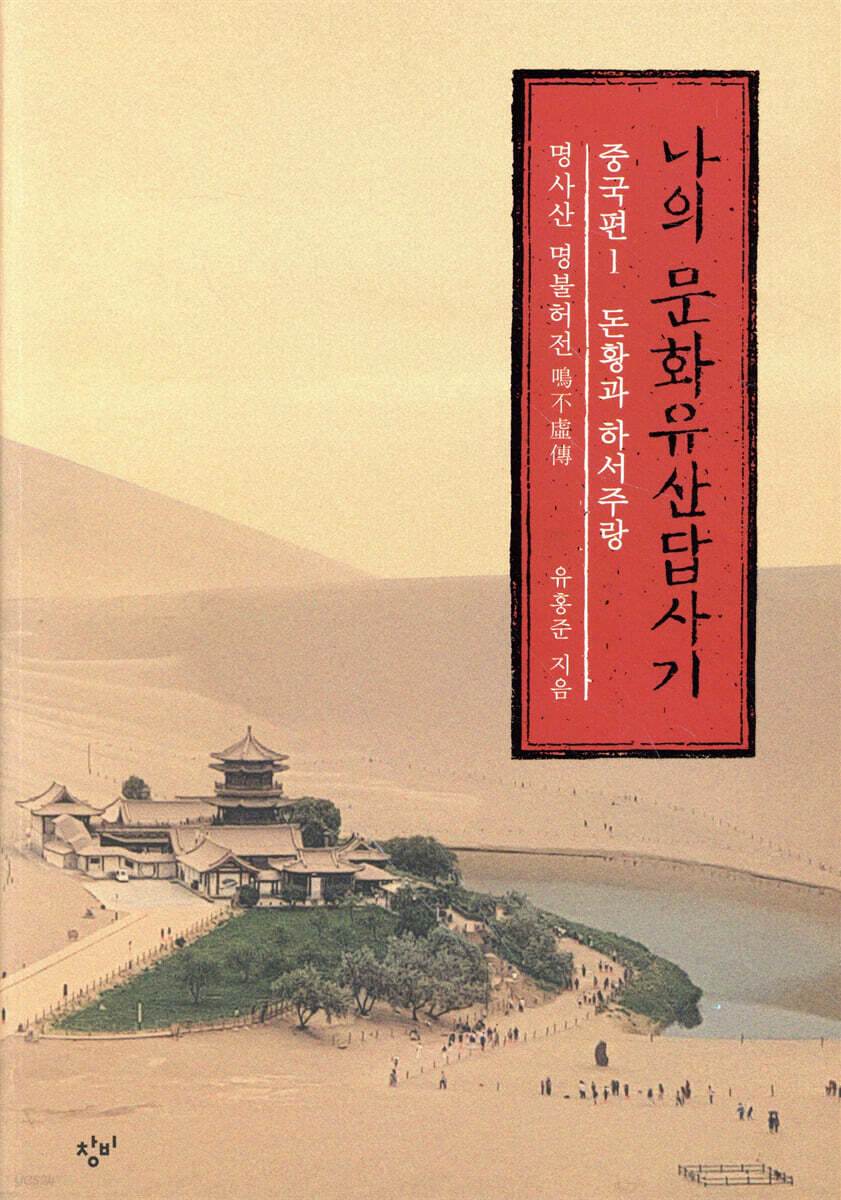
My Cultural Heritage Tour: China Part 1: Dunhuang and the Hexi Corridor
 |
Description
Book Introduction
Yoo Hong-jun's epic "China Travelogue" begins.
Dunhuang and the Silk Road: China's premier travel destination
"My Cultural Heritage Tour" finally sets foot on Chinese soil.
We embarked on a brisk journey to discover China's vast cultural heritage, created by the fusion of its vast land and diverse people.
The first place the author set foot on was Dunhuang and Hexi Corridor, places he had long cherished as his dream of visiting, and these can be found in the newly published volumes 1 and 2.
Just as the domestic section's 'Haenam and Gangjin' and the Japanese section's 'Kyushu' were unexpected destinations, this time too the author captures readers' interest with unexpected choices.
The Dunhuang and Silk Road journey, where you can encounter the desert, the oasis, the hidden treasures of Buddhist relics, and the sites of history, is truly a journey that lives up to its reputation.
The history of the Silk Road, which was not only the birthplace of ancient Chinese civilization but also served as a crossroads of civilizations as various ethnic groups fought against each other, is vividly recreated in the China section of the "Travelogue."
In addition to exploring the core of Chinese culture centered around China's eight ancient capitals, we are also planning field trips to major sites in the history of art, thought, and literature.
The history of cultural exchange between Korea and China, including the routes of envoys from ancient Goguryeo and Balhae, the Joseon Dynasty, and the Provisional Government of the Republic of Korea, cannot be left out here.
Dunhuang and the Silk Road are the beginning of this great journey.
China is rising to become a great power today thanks to its accumulated cultural confidence.
It has already emerged as the world's second largest economy, and its former diplomatic prowess is also being demonstrated.
Recently, through the Korean Wave and other factors, they have become closer to us culturally, and in terms of international politics, they are an essential partner for the unification of the Korean Peninsula.
Knowing China is no longer an option, but a necessity.
Through a cultural heritage tour with the China edition of "Trip Journal," we will be able to discover the true face of China and see at a glance its image as a partner leading East Asian culture.
Dunhuang and the Silk Road: China's premier travel destination
"My Cultural Heritage Tour" finally sets foot on Chinese soil.
We embarked on a brisk journey to discover China's vast cultural heritage, created by the fusion of its vast land and diverse people.
The first place the author set foot on was Dunhuang and Hexi Corridor, places he had long cherished as his dream of visiting, and these can be found in the newly published volumes 1 and 2.
Just as the domestic section's 'Haenam and Gangjin' and the Japanese section's 'Kyushu' were unexpected destinations, this time too the author captures readers' interest with unexpected choices.
The Dunhuang and Silk Road journey, where you can encounter the desert, the oasis, the hidden treasures of Buddhist relics, and the sites of history, is truly a journey that lives up to its reputation.
The history of the Silk Road, which was not only the birthplace of ancient Chinese civilization but also served as a crossroads of civilizations as various ethnic groups fought against each other, is vividly recreated in the China section of the "Travelogue."
In addition to exploring the core of Chinese culture centered around China's eight ancient capitals, we are also planning field trips to major sites in the history of art, thought, and literature.
The history of cultural exchange between Korea and China, including the routes of envoys from ancient Goguryeo and Balhae, the Joseon Dynasty, and the Provisional Government of the Republic of Korea, cannot be left out here.
Dunhuang and the Silk Road are the beginning of this great journey.
China is rising to become a great power today thanks to its accumulated cultural confidence.
It has already emerged as the world's second largest economy, and its former diplomatic prowess is also being demonstrated.
Recently, through the Korean Wave and other factors, they have become closer to us culturally, and in terms of international politics, they are an essential partner for the unification of the Korean Peninsula.
Knowing China is no longer an option, but a necessity.
Through a cultural heritage tour with the China edition of "Trip Journal," we will be able to discover the true face of China and see at a glance its image as a partner leading East Asian culture.
- You can preview some of the book's contents.
Preview
index
Beginning the China Travelogue: Our View of Chinese Culture as a Part of East Asia
Foreword to Volume 1: The Romance of Field Trips: Dunhuang and the Silk Road
Part 1: Audience Plains
Passing through the strongholds of the Zhou and Jin dynasties, beyond Shaanxi Province and into Gansu Province
Sarogunjosang / Hamyang Abanggung / Du Mokji's "Abanggungbu" / Jinryeong Mountain Range and Guanzhong Plain / Wiha /
Wang You's "Weixing Valley" / Emperor Wu of Han's Wuling / Zhuge Liang's Wuzhangyuan / Zhu Yuan Museum in Baoji
Li Ling and Sima Qian, as well as Li Bai and Du Fu, meet in Tianshui, the first city of Gansu Province.
History of Cheonsu / Han Dynasty's secret general Li Guang / Sima Qian's Records of the Grand Historian /
Du Fu in Cheonsu / Li Bai's Hometown / Seo Bong-ju and Li Bai's "Solo Work under the Moon"
Maekjeoksan Grottoes, an outdoor Buddhist statue museum built over a thousand years
The Origin of the Stone Grottoes / The Road to Maekjeoksan / The Zando Trail in China /
The Buddhist statues of the Maekjeoksan Grottoes / The history of the Maekjeoksan Grottoes / The ancestral monuments of Manbuldong
Part 2, Haseojurang
The Tang Dynasty Buddhist statues of the Nanju Bingling Temple Grottoes walk through the Yellow River Stone Forest.
The Road to Nanju / The Loess Plateau and the Yellow River / Yaodong Cave Houses /
Yugahyeop Dam and the Yellow River Stone Forest / Byeongnyeongsa Grottoes / Postures of the Three Grottoes / Buddha statues in Cave 169
The story of the Xiongnu and the Han blood horse of the Haseo Four Commanderies
Nanju's Madapbiyeonsang / Stories of the four commanderies of Haseo / Historic sites of Haseo Jurang /
History of the Xiongnu / Zhang Qian's Exploration of the Western Regions / Emperor Wu of Han and the Four Commanderies of Xiaxi / Wang Zhaojun and the Xiongnu
Great Wall of China, Jiayuguan This is the western end of the Great Wall of China.
History of the Gayogwan / Inertial structure of the Gayogwan / Cheonhaungwan Gayogwan /
Jeongseongjeon / Jangseong Museum / Gobi Desert / Wei and Jin Dynasty Painting Exhibition
Part 3 Dunhuang
Dunhuang Miscellaneous Affairs Sings of a Hundred-Year Life
Dunhuang Artifacts and Documents / Koreans in Dunhuang Murals / Dunhuang Studies in Korea / Dunhuang History /
Geographical Features of Dunhuang / The Fate of an Oasis City / The Life and Songs of the Dunhuang People
Myeongsasan Mountain, Wolacheon Myeongsasan Mountain lives up to its reputation
The Thousand Buddha Caves of the Mogao Grottoes / The novel Dunhuang / The evolution of the Buddhist statue style of the Mogao Grottoes / Tang Dynasty / Mingsha Mountain and the Yueya River
supplement
Tour Schedule / Chronology of Chinese Dynasties and Nomadic Peoples / List of Major People and Place Names
Foreword to Volume 1: The Romance of Field Trips: Dunhuang and the Silk Road
Part 1: Audience Plains
Passing through the strongholds of the Zhou and Jin dynasties, beyond Shaanxi Province and into Gansu Province
Sarogunjosang / Hamyang Abanggung / Du Mokji's "Abanggungbu" / Jinryeong Mountain Range and Guanzhong Plain / Wiha /
Wang You's "Weixing Valley" / Emperor Wu of Han's Wuling / Zhuge Liang's Wuzhangyuan / Zhu Yuan Museum in Baoji
Li Ling and Sima Qian, as well as Li Bai and Du Fu, meet in Tianshui, the first city of Gansu Province.
History of Cheonsu / Han Dynasty's secret general Li Guang / Sima Qian's Records of the Grand Historian /
Du Fu in Cheonsu / Li Bai's Hometown / Seo Bong-ju and Li Bai's "Solo Work under the Moon"
Maekjeoksan Grottoes, an outdoor Buddhist statue museum built over a thousand years
The Origin of the Stone Grottoes / The Road to Maekjeoksan / The Zando Trail in China /
The Buddhist statues of the Maekjeoksan Grottoes / The history of the Maekjeoksan Grottoes / The ancestral monuments of Manbuldong
Part 2, Haseojurang
The Tang Dynasty Buddhist statues of the Nanju Bingling Temple Grottoes walk through the Yellow River Stone Forest.
The Road to Nanju / The Loess Plateau and the Yellow River / Yaodong Cave Houses /
Yugahyeop Dam and the Yellow River Stone Forest / Byeongnyeongsa Grottoes / Postures of the Three Grottoes / Buddha statues in Cave 169
The story of the Xiongnu and the Han blood horse of the Haseo Four Commanderies
Nanju's Madapbiyeonsang / Stories of the four commanderies of Haseo / Historic sites of Haseo Jurang /
History of the Xiongnu / Zhang Qian's Exploration of the Western Regions / Emperor Wu of Han and the Four Commanderies of Xiaxi / Wang Zhaojun and the Xiongnu
Great Wall of China, Jiayuguan This is the western end of the Great Wall of China.
History of the Gayogwan / Inertial structure of the Gayogwan / Cheonhaungwan Gayogwan /
Jeongseongjeon / Jangseong Museum / Gobi Desert / Wei and Jin Dynasty Painting Exhibition
Part 3 Dunhuang
Dunhuang Miscellaneous Affairs Sings of a Hundred-Year Life
Dunhuang Artifacts and Documents / Koreans in Dunhuang Murals / Dunhuang Studies in Korea / Dunhuang History /
Geographical Features of Dunhuang / The Fate of an Oasis City / The Life and Songs of the Dunhuang People
Myeongsasan Mountain, Wolacheon Myeongsasan Mountain lives up to its reputation
The Thousand Buddha Caves of the Mogao Grottoes / The novel Dunhuang / The evolution of the Buddhist statue style of the Mogao Grottoes / Tang Dynasty / Mingsha Mountain and the Yueya River
supplement
Tour Schedule / Chronology of Chinese Dynasties and Nomadic Peoples / List of Major People and Place Names
Publisher's Review
Along the corridor of civilization, the Hexi Corridor, to Dunhuang
Volume 1 of the China edition, “Mingsha Mountain, a Story that Lives on,” contains a 2,000-kilometer journey that begins in the Guanzhong Plain, the home of ancient Chinese states and the setting for the Records of the Grand Historian and the Romance of the Three Kingdoms, and follows the Hexi Corridor to Mingsha Mountain in Dunhuang.
It is a long journey that covers the eastern third of the Silk Road, which is estimated to be about 6,000 kilometers long, and is a journey that allows you to truly feel the scale of the continent.
Buddhism entered China from the West through this route, and the struggle between the Han Chinese and nomadic tribes took place along this route.
The Guanzhong Plain is a basin surrounded by rugged mountain ranges and four pass areas, centered around Xi'an, Shaanxi Province.
Not only is it vast and has fertile soil, but it also forms a natural fortress, so people began living here early on, and many countries, including the Zhou, Qin, and Han dynasties that unified China, established their capitals here, playing a central role in Chinese history for a long time.
As the country has a long history, it also has a rich cultural heritage, and you can find relics, tombs, and literature left behind by Qin Shi Huang, Emperor Wu of Han, Li Ling, Sima Qian, Li Bai, and Du Fu everywhere.
The Maijishan Grottoes near Tianshui, considered one of the four major grotto temples in China, deeply impress those who see their exquisite appearance.
The Hexi Corridor, named for its long, stretched-out gorges that resemble a "running corridor" connecting continents, stretches for a total of 900 kilometers from Lanzhou, the capital of Gansu Province, through Wuwei, Zhangye, and Zhuquan to Dunhuang.
This is the place where Emperor Wu of the Han Dynasty drove out the Huns and established the Four Commanderies of Hexi. It also reminds us of our history, where the Four Commanderies of Han were established at the same time.
You can see the spectacular Bingling Temple Grottoes in Nanzhou, where splendid Buddhist statues are nestled in the bizarre Yellow River Stone Forest, and experience the leisurely flow of the Yellow River more realistically than anywhere else.
The Huns, who are said to have disappeared long ago after clashing with China, can only be traced through the statues and fragments of relics erected here and there, creating a sense of sorrow.
After passing through Jiayuguan at the western end of the Great Wall, you finally arrive at Dunhuang.
Dunhuang, an oasis city that many people consider a "dream of exploration," has become a tourist destination bustling with visitors who come to see its grotto temples and picturesque desert landscape.
In particular, the Mogao Grottoes, one of the best grotto temples in China, were not only the driving force behind Dunhuang's status as a center of trade on the Silk Road since ancient times, but are also a prominent Buddhist site that was the first UNESCO World Heritage site in China, along with the Great Wall of China.
High-quality Buddhist statues and paintings remain, and paintings that provide insight into the history and lifestyle of the region serve as valuable research materials.
Meanwhile, Myeongsa Mountain and Wolacheon are popular tourist destinations these days as natural landscapes that evoke romantic feelings befitting the word 'romance'.
When you step foot here, the shadows of merchants who traded across the desert in the past or monks who set out to seek asceticism seem to linger.
A refreshing first step toward discovering China's splendid cultural heritage!
In the preface to his travelogue to China, the author states, “China is not only a partner leading East Asian culture alongside us, but also a powerful neighbor who is still deeply involved in the fate of our people.
Given this situation, we need to know and understand China more deeply.
In that sense, for me, China has always been a playground for enjoyable travel, a place to learn about history and culture, and further, a stage in world history that makes me think about our coordinates in today's international society," he explains his reason for writing.
This is a proposal to provide an enjoyable and profound appreciation of Chinese cultural heritage while also gaining a deeper understanding of our own culture through connections and comparisons.
Furthermore, with the publication of the China edition of the 'Dapsagi', we can finally compare the cultural heritages of Korea, China, and Japan on one large table.
If you've been evaluating the cultural heritage of neighboring countries with a sense of inferiority or simple patriotism, Yoo Hong-jun's travelogue will allow you to truly appreciate cultural heritage with a broader perspective.
And in the process, you will be able to feel anew that the true value of our culture is something that we can boast about to the world.
Yoo Hong-jun's stories about China will make you yearn for places you haven't been to, and make you revisit places you've already been to with a new perspective.
The exhilarating journey of the China edition of 'Dapsagi' will continue to meet readers in the future.
Volume 1 of the China edition, “Mingsha Mountain, a Story that Lives on,” contains a 2,000-kilometer journey that begins in the Guanzhong Plain, the home of ancient Chinese states and the setting for the Records of the Grand Historian and the Romance of the Three Kingdoms, and follows the Hexi Corridor to Mingsha Mountain in Dunhuang.
It is a long journey that covers the eastern third of the Silk Road, which is estimated to be about 6,000 kilometers long, and is a journey that allows you to truly feel the scale of the continent.
Buddhism entered China from the West through this route, and the struggle between the Han Chinese and nomadic tribes took place along this route.
The Guanzhong Plain is a basin surrounded by rugged mountain ranges and four pass areas, centered around Xi'an, Shaanxi Province.
Not only is it vast and has fertile soil, but it also forms a natural fortress, so people began living here early on, and many countries, including the Zhou, Qin, and Han dynasties that unified China, established their capitals here, playing a central role in Chinese history for a long time.
As the country has a long history, it also has a rich cultural heritage, and you can find relics, tombs, and literature left behind by Qin Shi Huang, Emperor Wu of Han, Li Ling, Sima Qian, Li Bai, and Du Fu everywhere.
The Maijishan Grottoes near Tianshui, considered one of the four major grotto temples in China, deeply impress those who see their exquisite appearance.
The Hexi Corridor, named for its long, stretched-out gorges that resemble a "running corridor" connecting continents, stretches for a total of 900 kilometers from Lanzhou, the capital of Gansu Province, through Wuwei, Zhangye, and Zhuquan to Dunhuang.
This is the place where Emperor Wu of the Han Dynasty drove out the Huns and established the Four Commanderies of Hexi. It also reminds us of our history, where the Four Commanderies of Han were established at the same time.
You can see the spectacular Bingling Temple Grottoes in Nanzhou, where splendid Buddhist statues are nestled in the bizarre Yellow River Stone Forest, and experience the leisurely flow of the Yellow River more realistically than anywhere else.
The Huns, who are said to have disappeared long ago after clashing with China, can only be traced through the statues and fragments of relics erected here and there, creating a sense of sorrow.
After passing through Jiayuguan at the western end of the Great Wall, you finally arrive at Dunhuang.
Dunhuang, an oasis city that many people consider a "dream of exploration," has become a tourist destination bustling with visitors who come to see its grotto temples and picturesque desert landscape.
In particular, the Mogao Grottoes, one of the best grotto temples in China, were not only the driving force behind Dunhuang's status as a center of trade on the Silk Road since ancient times, but are also a prominent Buddhist site that was the first UNESCO World Heritage site in China, along with the Great Wall of China.
High-quality Buddhist statues and paintings remain, and paintings that provide insight into the history and lifestyle of the region serve as valuable research materials.
Meanwhile, Myeongsa Mountain and Wolacheon are popular tourist destinations these days as natural landscapes that evoke romantic feelings befitting the word 'romance'.
When you step foot here, the shadows of merchants who traded across the desert in the past or monks who set out to seek asceticism seem to linger.
A refreshing first step toward discovering China's splendid cultural heritage!
In the preface to his travelogue to China, the author states, “China is not only a partner leading East Asian culture alongside us, but also a powerful neighbor who is still deeply involved in the fate of our people.
Given this situation, we need to know and understand China more deeply.
In that sense, for me, China has always been a playground for enjoyable travel, a place to learn about history and culture, and further, a stage in world history that makes me think about our coordinates in today's international society," he explains his reason for writing.
This is a proposal to provide an enjoyable and profound appreciation of Chinese cultural heritage while also gaining a deeper understanding of our own culture through connections and comparisons.
Furthermore, with the publication of the China edition of the 'Dapsagi', we can finally compare the cultural heritages of Korea, China, and Japan on one large table.
If you've been evaluating the cultural heritage of neighboring countries with a sense of inferiority or simple patriotism, Yoo Hong-jun's travelogue will allow you to truly appreciate cultural heritage with a broader perspective.
And in the process, you will be able to feel anew that the true value of our culture is something that we can boast about to the world.
Yoo Hong-jun's stories about China will make you yearn for places you haven't been to, and make you revisit places you've already been to with a new perspective.
The exhilarating journey of the China edition of 'Dapsagi' will continue to meet readers in the future.
GOODS SPECIFICS
- Date of issue: April 29, 2019
- Format: Paperback book binding method guide
- Page count, weight, size: 352 pages | 548g | 142*208*30mm
- ISBN13: 9788936477127
- ISBN10: 8936477129
You may also like
카테고리
korean


korean

![GQ KOREA Mark (Monthly): December [2025]](http://librairie.coreenne.fr/cdn/shop/files/8ef265dbbfbf186523ed75ba7319009d.jpg?v=1765340328&width=3840)


