

Prague Story
 |
Description
Book Introduction
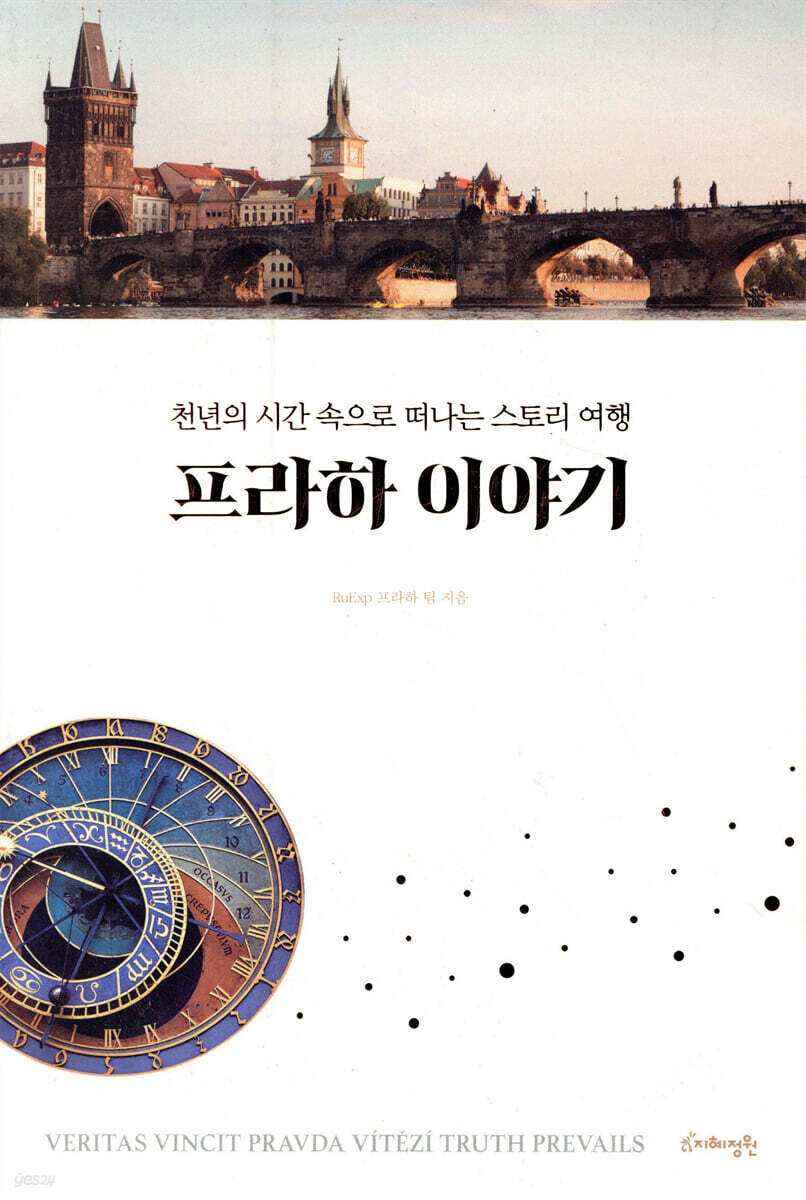
Discover Prague, a city steeped in history and legends! A must-read for travelers who want to truly understand Prague. "Prague Stories" is a revised edition of the book of the same name published in 2013. This book, which is still loved by travelers who want to know Prague properly, introduces Prague through stories that encompass the long history of the historic city of Prague and legends and unofficial history passed down by word of mouth. Let's listen to the stories breathing in every corner of Prague through this book written by the 'Tip Tour' guides, who are famous among Prague travelers, to tell the stories they couldn't tell on their tours. Why is there a 'John Lennon Wall' in Prague, Czech Republic? What are the bullet holes in the Church of Saints Cyril and Methodius? What is the story behind the reliefs of saints that are said to bring you back to Prague if you touch them? What do the reliefs with names and dates on the walls all over Prague mean? If you want to know all about Prague, a city you can't truly understand without exploring, and a city that becomes even more beautiful the more you know about it, this book is a choice you won't regret. |
- You can preview some of the book's contents.
Preview
index
· Prague map
· Czech ancient history and the main historical thread
· Czech history timeline
· Pronunciation and spelling of Czech
1.
Republic Square
1) Ovechny Doom (Citizen's Hall)
2) Powder Tower
3) Czech National Bank & Hybernia Theatre
4) Palladium Department Store & Kotba Department Store
2.
Around the Old Town Square
1) Old Town Square
2) Romanesque Palace of the Lords of Kunstadt
3) Tyn Cathedral
4) Tin Square
5) St. Nicholas Cathedral
6) Goltzkinsky Palace
7) Astronomical clock
8) Old City Hall
9) Jan Huss Group
3.
Old Town
1) Charles University (University of Prague)
2) Stavovske Theater
3) Havel Market
4) Jewish Quarter
4.
New city center
1) Wenceslas Square
2) Dancing House & Cyril and Methodius Cathedral
5.
Around Charles Bridge and Kampa District
1) Rudolphinum
2) Charles Bridge
3) Kampa District
4) John Lennon's Wall
6.
Mala Strana & Hradčany
1) Mala Strana (Sausage District)
2) Wallenstein Palace
3) Nerudova Street
4) Strahov Monastery
5) Chernin Palace
6) Loreta Cathedral
7) Hradcany Square
7.
Prague Castle Complex
1) Overview of the Prague Castle complex
2) Titan statue at the main gate
3) First Garden
4) Second Garden
5) Royal Garden
6) Third Garden
7) St. Vitus Cathedral
8) Old Royal Palace
9) Basilica of St. George
10) Golden Lane
11) Dalibor Tower
12) Other accessible areas within Prague Castle
8.
Uyezd & Vysehrad
1) Memorial Statue for Victims of the Communist Regime & Hunger Wall
2) Vysehrad
· Czech ancient history and the main historical thread
· Czech history timeline
· Pronunciation and spelling of Czech
1.
Republic Square
1) Ovechny Doom (Citizen's Hall)
2) Powder Tower
3) Czech National Bank & Hybernia Theatre
4) Palladium Department Store & Kotba Department Store
2.
Around the Old Town Square
1) Old Town Square
2) Romanesque Palace of the Lords of Kunstadt
3) Tyn Cathedral
4) Tin Square
5) St. Nicholas Cathedral
6) Goltzkinsky Palace
7) Astronomical clock
8) Old City Hall
9) Jan Huss Group
3.
Old Town
1) Charles University (University of Prague)
2) Stavovske Theater
3) Havel Market
4) Jewish Quarter
4.
New city center
1) Wenceslas Square
2) Dancing House & Cyril and Methodius Cathedral
5.
Around Charles Bridge and Kampa District
1) Rudolphinum
2) Charles Bridge
3) Kampa District
4) John Lennon's Wall
6.
Mala Strana & Hradčany
1) Mala Strana (Sausage District)
2) Wallenstein Palace
3) Nerudova Street
4) Strahov Monastery
5) Chernin Palace
6) Loreta Cathedral
7) Hradcany Square
7.
Prague Castle Complex
1) Overview of the Prague Castle complex
2) Titan statue at the main gate
3) First Garden
4) Second Garden
5) Royal Garden
6) Third Garden
7) St. Vitus Cathedral
8) Old Royal Palace
9) Basilica of St. George
10) Golden Lane
11) Dalibor Tower
12) Other accessible areas within Prague Castle
8.
Uyezd & Vysehrad
1) Memorial Statue for Victims of the Communist Regime & Hunger Wall
2) Vysehrad
Detailed image
Into the book
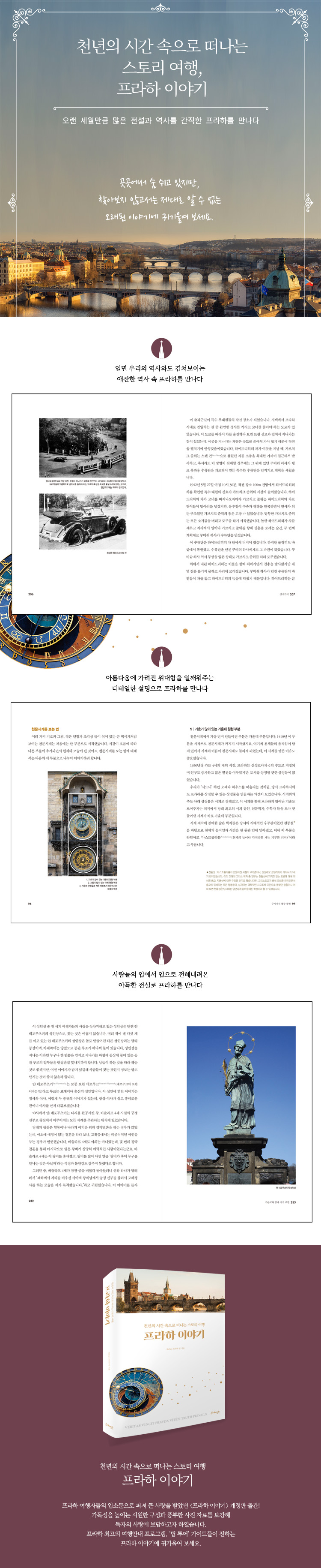
Hanush's astronomical clock was truly magnificent.
Word of Prague's unparalleled astronomical clock spread rapidly throughout Europe.
This left the city council in a dilemma.
What if Hanush were to build an astronomical clock like this one, or even better, for another city?
If that happened, I was afraid that the greatness of the astronomical clock would be tarnished.
The city council has come up with a plan.
One day, after sending the servants home early, there was a knock on the door of Hanush's house.
As Hanush opened the door, three masked, muscular men appeared.
A startled Hanush backed away, but was soon caught by two masked men, his arms held by his hands, and he was forced to kneel by the fireplace.
The remaining assailant approached the stove, picked up a red-hot poker, and burned both of Hanush's eyes.
The three assailants left, leaving Hanush groaning in pain.
The city council's worries were completely resolved, as the blind watchmaker would be of no use anywhere.
-From the "Astronomical Clock" section
The Prague Spring had failed, but a few students thought that this was just one failure and that they should wake up the people again. They planned to wake up the people by doing the same action in the same place every month.
The first student to put the plan into action was a 20-year-old student at Charles University named Jan Palach.
On January 16, 1969, Jan Palach came out in front of the Central Museum and boldly put his plan into action.
Jan Palach poured gasoline on himself, struck a match, and set himself on fire. He collapsed on the spot, engulfed in flames, and was taken to the hospital, but died three days later on January 19.
Those who witnessed this sight were shocked, and soon the news spread throughout Czechoslovakia.
This was just the beginning.
The following month, on February 25th, at the very spot where Jan Palach had attempted self-immolation, an 18-year-old student named Jan Zajic attempted self-immolation and died at the scene.
Realizing the gravity of the situation, the Czechoslovak government at the time immediately imposed complete control over the area around the Central Museum, making it impossible for anyone to approach.
But this wasn't the end.
Czechoslovakians were shocked when on April 4th, three people, including 38-year-old Evšen Plocek, set themselves on fire in Jihlava, a provincial Czech town, not in Prague, hoping to give support to the actions of Jan Palach and Jan Zajc.
There must have been many who wanted to take action immediately and wipe out the righteous blood they shed, but the times were not on Czechoslovakia's side.
-From the "Wenceslas Square" section
On December 8, 1980, news of John Lennon's death reached Prague.
The news came as a great shock to the young people in Prague who had long been followers of John Lennon.
While 'normalization' is still in progress, young people who feel sad that there is no one in this world to speak for them or comfort them anymore have gathered on this wall, which is hard to find unless you look for it, and have started writing messages of remembrance in the hopes of comforting John Lennon on his final journey.
Because many students felt the same way, the wall was soon filled with tributes, and young people began calling it the "John Lennon Wall."
Most of the writings that initially filled this wall were memorials.
Then, in early 1981, someone wrote the lyrics to John Lennon's song [Imagine] on one side of this wall.
-From "John Lennon's Wall"
The following year, on May 23, 1618, the second incident of throwing stones from the window of the Old Royal Palace in Prague Castle occurred, and many European countries with intertwined interests joined the war, which also affected Wallenstein.
In the early stages of the war, the Protestants often won, and in the process, many of his fiefs fell into the hands of the Protestant nobles.
Wallenstein, who wanted to reclaim his lands, joined forces with the Austrian Empire and Count Charles of Bucquoy, a nobleman, to raise an army and waged a large-scale war to eradicate Protestantism throughout Bohemia and Moravia.
Among them, the war that made him famous relatively early on was the Battle of Villa Hora. In addition to this war, he participated in the form of a volunteer unit on the side of the imperial army and continued to lead the army to victory in the large and small wars that followed.
By 1622, he had acquired more lands than he had lost, and, symbolizing his expanded position, he was given the title of Count Palatine.
In 1623, during the war, another stroke of luck came to Count Wallenstein.
He had another political marriage with the first daughter of the Duke of Harrach, who was renowned as a wealthy man at the time.
His fortunes grew explosively, he was given the title of heir to the House of Palatine, and two years later, in 1625, he was given the title of Duke of Friedland.
Wallenstein, a wealthy man with the greatest wealth among the nobles of Bohemia through two political marriages, was the Count of the House of Wallenstein, the heir to the House of Palatine, and the Duke of Friedland. To show off his elevated status, he had a magnificent palace built right below Prague Castle.
This is the Wallenstein Palace.
-From the "Wallenstein Palace" section
Word of Prague's unparalleled astronomical clock spread rapidly throughout Europe.
This left the city council in a dilemma.
What if Hanush were to build an astronomical clock like this one, or even better, for another city?
If that happened, I was afraid that the greatness of the astronomical clock would be tarnished.
The city council has come up with a plan.
One day, after sending the servants home early, there was a knock on the door of Hanush's house.
As Hanush opened the door, three masked, muscular men appeared.
A startled Hanush backed away, but was soon caught by two masked men, his arms held by his hands, and he was forced to kneel by the fireplace.
The remaining assailant approached the stove, picked up a red-hot poker, and burned both of Hanush's eyes.
The three assailants left, leaving Hanush groaning in pain.
The city council's worries were completely resolved, as the blind watchmaker would be of no use anywhere.
-From the "Astronomical Clock" section
The Prague Spring had failed, but a few students thought that this was just one failure and that they should wake up the people again. They planned to wake up the people by doing the same action in the same place every month.
The first student to put the plan into action was a 20-year-old student at Charles University named Jan Palach.
On January 16, 1969, Jan Palach came out in front of the Central Museum and boldly put his plan into action.
Jan Palach poured gasoline on himself, struck a match, and set himself on fire. He collapsed on the spot, engulfed in flames, and was taken to the hospital, but died three days later on January 19.
Those who witnessed this sight were shocked, and soon the news spread throughout Czechoslovakia.
This was just the beginning.
The following month, on February 25th, at the very spot where Jan Palach had attempted self-immolation, an 18-year-old student named Jan Zajic attempted self-immolation and died at the scene.
Realizing the gravity of the situation, the Czechoslovak government at the time immediately imposed complete control over the area around the Central Museum, making it impossible for anyone to approach.
But this wasn't the end.
Czechoslovakians were shocked when on April 4th, three people, including 38-year-old Evšen Plocek, set themselves on fire in Jihlava, a provincial Czech town, not in Prague, hoping to give support to the actions of Jan Palach and Jan Zajc.
There must have been many who wanted to take action immediately and wipe out the righteous blood they shed, but the times were not on Czechoslovakia's side.
-From the "Wenceslas Square" section
On December 8, 1980, news of John Lennon's death reached Prague.
The news came as a great shock to the young people in Prague who had long been followers of John Lennon.
While 'normalization' is still in progress, young people who feel sad that there is no one in this world to speak for them or comfort them anymore have gathered on this wall, which is hard to find unless you look for it, and have started writing messages of remembrance in the hopes of comforting John Lennon on his final journey.
Because many students felt the same way, the wall was soon filled with tributes, and young people began calling it the "John Lennon Wall."
Most of the writings that initially filled this wall were memorials.
Then, in early 1981, someone wrote the lyrics to John Lennon's song [Imagine] on one side of this wall.
-From "John Lennon's Wall"
The following year, on May 23, 1618, the second incident of throwing stones from the window of the Old Royal Palace in Prague Castle occurred, and many European countries with intertwined interests joined the war, which also affected Wallenstein.
In the early stages of the war, the Protestants often won, and in the process, many of his fiefs fell into the hands of the Protestant nobles.
Wallenstein, who wanted to reclaim his lands, joined forces with the Austrian Empire and Count Charles of Bucquoy, a nobleman, to raise an army and waged a large-scale war to eradicate Protestantism throughout Bohemia and Moravia.
Among them, the war that made him famous relatively early on was the Battle of Villa Hora. In addition to this war, he participated in the form of a volunteer unit on the side of the imperial army and continued to lead the army to victory in the large and small wars that followed.
By 1622, he had acquired more lands than he had lost, and, symbolizing his expanded position, he was given the title of Count Palatine.
In 1623, during the war, another stroke of luck came to Count Wallenstein.
He had another political marriage with the first daughter of the Duke of Harrach, who was renowned as a wealthy man at the time.
His fortunes grew explosively, he was given the title of heir to the House of Palatine, and two years later, in 1625, he was given the title of Duke of Friedland.
Wallenstein, a wealthy man with the greatest wealth among the nobles of Bohemia through two political marriages, was the Count of the House of Wallenstein, the heir to the House of Palatine, and the Duke of Friedland. To show off his elevated status, he had a magnificent palace built right below Prague Castle.
This is the Wallenstein Palace.
-From the "Wallenstein Palace" section
--- From the text
Publisher's Review
Discover Prague, a city steeped in history and legends!
The beautiful 14th-century stone bridge spanning the Vltava River between the Old Town and Prague Castle is enhanced by the 30 or so statues of saints that adorn it, and the romantic atmosphere is further enhanced by the presence of anonymous painters and impoverished musicians.
There is a statue of a saint here that is very popular with tourists.
Anyone who passes by here has touched it at least once, so some of the copper reliefs attached to the statue are shiny.
Why do people touch this relief?
As you walk down Reslová Street after seeing the Dancing House, one of Prague's landmarks for its unique appearance, you will come across a small cathedral with clear bullet holes on one wall.
Beneath the bullet-riddled walls are candles and sometimes bouquets of flowers. What is the story behind this place?
Why is there a 'John Lennon Wall' in Prague, Czech Republic? What do the relief plaques with names and dates found on walls all over Prague mean? What is the large cross in front of the Central Museum at the end of Wenceslas Square?
Any traveler who has visited Prague has probably asked these questions at least once.
There are stories hidden throughout Prague that are not easily discovered unless you look for them.
Famous buildings and structures, as well as relief plaques found on the streets, patterns found on manhole covers, and decorations on building walls that are easily overlooked, all become the subject of this book, whispering the stories they hold.
This book is full of historical stories and legends passed down orally from various places in Prague.
Prague, Czech Republic, once the largest city in Central Europe, the capital of the Holy Roman Empire, the birthplace of Jan Hus, the first practical religious reformer, and the starting point of the Thirty Years' War, which involved nearly all of Europe, cannot be properly explained without talking about its history.
During the period of conflict between communism and capitalism, Czechs experienced that era firsthand, with events such as the 'Prague Spring' and the 'Velvet Revolution'.
The Cold War was a harsh time for us as well, and the years of humiliation the Czechs endured under Nazi Germany are reminiscent of our Japanese colonial period.
Although the Czech Republic has no similarities in race or language, this may be the reason why I feel a sense of kinship.
[Prague Story] was first published in 2013 by Prague 'Tip Tour' guides who came together with the desire to properly inform people about Prague, and has now been revised and published for travelers to Prague.
My first book, which I started with the thought of wanting to tell stories that I couldn't fully tell due to time constraints, was widely loved by travelers to Prague through word of mouth, and the readers' reviews, tips, and words of gratitude and encouragement from tour participants gave me the strength to publish a revised edition.
A book that will help you see and understand Prague properly.
A book recommended by an acquaintance
A must-read for your trip to Prague
"This book was incredibly helpful for studying, something that was limited by internet searches."
'I feel like I've done a proper preliminary survey'
Prague was even more beautiful after reading this book.
A choice without regrets
As the above reviews left by readers of [Prague Stories] show, this book has become a must-read for those who want to know more about Prague, both among travelers to Prague and those who are preparing for a trip or have been there.
As a city steeped in history, Prague holds a wealth of legends and history. Traveling through Prague with this book will double the fun with its storytelling of legends and unofficial history, and leave you deeply moved by its age-old historical tales.
And the heart that was only lightly excited will be filled with calm by the dignity of the city and the weight of its history.
If you know it, you will see it properly and it will look more beautiful.
The beautiful 14th-century stone bridge spanning the Vltava River between the Old Town and Prague Castle is enhanced by the 30 or so statues of saints that adorn it, and the romantic atmosphere is further enhanced by the presence of anonymous painters and impoverished musicians.
There is a statue of a saint here that is very popular with tourists.
Anyone who passes by here has touched it at least once, so some of the copper reliefs attached to the statue are shiny.
Why do people touch this relief?
As you walk down Reslová Street after seeing the Dancing House, one of Prague's landmarks for its unique appearance, you will come across a small cathedral with clear bullet holes on one wall.
Beneath the bullet-riddled walls are candles and sometimes bouquets of flowers. What is the story behind this place?
Why is there a 'John Lennon Wall' in Prague, Czech Republic? What do the relief plaques with names and dates found on walls all over Prague mean? What is the large cross in front of the Central Museum at the end of Wenceslas Square?
Any traveler who has visited Prague has probably asked these questions at least once.
There are stories hidden throughout Prague that are not easily discovered unless you look for them.
Famous buildings and structures, as well as relief plaques found on the streets, patterns found on manhole covers, and decorations on building walls that are easily overlooked, all become the subject of this book, whispering the stories they hold.
This book is full of historical stories and legends passed down orally from various places in Prague.
Prague, Czech Republic, once the largest city in Central Europe, the capital of the Holy Roman Empire, the birthplace of Jan Hus, the first practical religious reformer, and the starting point of the Thirty Years' War, which involved nearly all of Europe, cannot be properly explained without talking about its history.
During the period of conflict between communism and capitalism, Czechs experienced that era firsthand, with events such as the 'Prague Spring' and the 'Velvet Revolution'.
The Cold War was a harsh time for us as well, and the years of humiliation the Czechs endured under Nazi Germany are reminiscent of our Japanese colonial period.
Although the Czech Republic has no similarities in race or language, this may be the reason why I feel a sense of kinship.
[Prague Story] was first published in 2013 by Prague 'Tip Tour' guides who came together with the desire to properly inform people about Prague, and has now been revised and published for travelers to Prague.
My first book, which I started with the thought of wanting to tell stories that I couldn't fully tell due to time constraints, was widely loved by travelers to Prague through word of mouth, and the readers' reviews, tips, and words of gratitude and encouragement from tour participants gave me the strength to publish a revised edition.
A book that will help you see and understand Prague properly.
A book recommended by an acquaintance
A must-read for your trip to Prague
"This book was incredibly helpful for studying, something that was limited by internet searches."
'I feel like I've done a proper preliminary survey'
Prague was even more beautiful after reading this book.
A choice without regrets
As the above reviews left by readers of [Prague Stories] show, this book has become a must-read for those who want to know more about Prague, both among travelers to Prague and those who are preparing for a trip or have been there.
As a city steeped in history, Prague holds a wealth of legends and history. Traveling through Prague with this book will double the fun with its storytelling of legends and unofficial history, and leave you deeply moved by its age-old historical tales.
And the heart that was only lightly excited will be filled with calm by the dignity of the city and the weight of its history.
If you know it, you will see it properly and it will look more beautiful.
GOODS SPECIFICS
- Date of issue: January 30, 2019
- Page count, weight, size: 504 pages | 898g | 152*225*26mm
- ISBN13: 9791187616511
- ISBN10: 1187616516
You may also like
카테고리
korean


korean

![GQ KOREA Mark (Monthly): December [2025]](http://librairie.coreenne.fr/cdn/shop/files/8ef265dbbfbf186523ed75ba7319009d.jpg?v=1765340328&width=3840)


