

Masan, Jinhae, Changwon
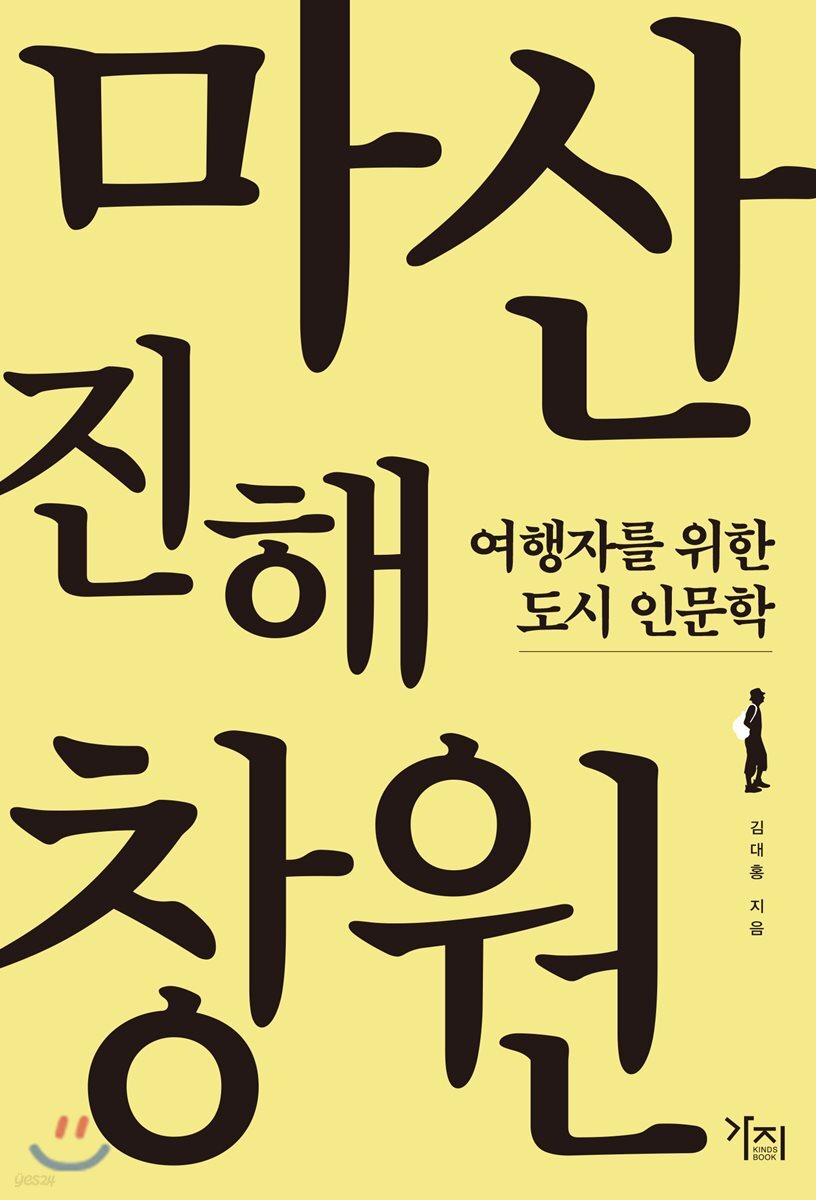 |
Description
Book Introduction
Changwon City, an integrated city connecting the three major cities on the southern coast,
The charm of a three-color city, enjoyed with knowledge of its origins
Masan, the sixth port opened on the Korean Peninsula and a representative city of Gyeongnam, was at the forefront of 'Korea's exports' in the 1970s.
Jinhae, a romantic city on the southern coast symbolized by the navy and cherry blossoms.
Changwon was designed as Korea's first planned city, modeled after Canberra, Australia.
What do these three cities have in common? They're all coastal, relatively young cities that emerged after the Japanese colonial period, and they're all brother cities that experienced their heydays during the economic boom of the 1970s and 1980s, but now live together as one unified city under the name of "Integrated Changwon City."
The author, who attended elementary, middle, and high school in Masan and also lived in Jinhae and Changwon, wrote these stories of three cities from memory.
This is a valuable result in that it goes beyond the memoirs of a single person and delves into the origins and cultural history of the three cities by analyzing various records about the region and collecting interviews with numerous people.
This book is probably the first opportunity to read the entirety of Changwon City in one volume.
The charm of a three-color city, enjoyed with knowledge of its origins
Masan, the sixth port opened on the Korean Peninsula and a representative city of Gyeongnam, was at the forefront of 'Korea's exports' in the 1970s.
Jinhae, a romantic city on the southern coast symbolized by the navy and cherry blossoms.
Changwon was designed as Korea's first planned city, modeled after Canberra, Australia.
What do these three cities have in common? They're all coastal, relatively young cities that emerged after the Japanese colonial period, and they're all brother cities that experienced their heydays during the economic boom of the 1970s and 1980s, but now live together as one unified city under the name of "Integrated Changwon City."
The author, who attended elementary, middle, and high school in Masan and also lived in Jinhae and Changwon, wrote these stories of three cities from memory.
This is a valuable result in that it goes beyond the memoirs of a single person and delves into the origins and cultural history of the three cities by analyzing various records about the region and collecting interviews with numerous people.
This book is probably the first opportunity to read the entirety of Changwon City in one volume.
- You can preview some of the book's contents.
Preview
Detailed image

Into the book
The old name of Muhaksan, Ducheoksan, is related to Jochang and Seokduchang, which were established during the reign of King Seongjong of Goryeo.
'Duchuk' comes from the Chinese characters du (斗) and cheok (尺), which are used to measure rice (one mal, two mal).
The origin of the name Masan (馬山) is that in the process of transcribing it, the word came to be written as ‘馬’, which has the same sound.
--- p.19 Muhaksan Mountain
Even though large corporations in the Masan area are closing or leaving one by one, the fish market still attracts people to its place.
That's why the fish market is called Masan's last pride.
My mother also said, “If there were no fish market, Masan would have died long ago.”
It may be an exaggeration, but there are probably few people in Masan who would deny that the fish market is the pride of Masan.
--- p.39 Masan Fish Market
The area around Woryeong-dong, part of Sinmasan, was a representative concession area during the Japanese colonial period.
'Concession' refers to a leased territory where foreigners resided with administrative autonomy or extraterritoriality.
Extraterritoriality was recognized and trade was free, so the Japanese were the first to come and live there.
The place where the Russian consulate was located at the time is now Wolpo Elementary School.
Gapo, on the outskirts of Shinmasan, was named Chiba Village because fishermen from Chiba Prefecture, Japan, moved there.
--- p.110 Shinmasan
The city that once smelled strongly of Cheongju has now become a city of beer and soju.
In addition, there are many local drinking streets where you can get a glimpse of the region's unique drinking culture.
Is there another city in Korea where a brewery and a local liquor street coexist? Probably not.
Masan is that kind of place.
--- p.117 City of Alcohol
Every big story begins with a very small story.
If we trace back the steps of how we were given the rest, leisure, and peace we enjoy today, we cannot help but come across the democratic spirit of April 19 and March 15.
The problem is imagination and interest in history.
Monuments symbolizing March 15th still remain throughout Masan, but they stand alone.
… --- p.123 3.15
When cooking dried fish, it must be soaked in water for several more days.
Add soybean paste here and season, then add various seasonings to make steamed food.
Through this long process, Masan's famous dried pollack stew is made.
It is characterized by a certain amount of broth and a clean taste because it does not use starch.
--- p.152 Masan Aguijjim
Some say that 'Ung' is related to a bear, and others say that it comes from the word 'Geom' (儉=君) and 'Gom' (神), which mean a leader.
In any case, the name 'Jinhae', which is only about 100 years old, has pushed out 'Ungcheon', which has always referred to this region.
Jinhae before Jinhae, the oldest Jinhae is in Ungcheon.
--- p.178 Ungcheon
In 1912, Japan, which had taken over Joseon, made Jinhae the first radially planned city in the country.
First, I drew three circles in the city.
In the center is Jungwon (中苑), to the north is Bukwon (北苑), and to the south is Namwon (南苑).
At that time, they were called Jungsip (中?), Buksip (北?), and Namsip (南?).
The number ten means 'intersection, main road'.
The road extending from the central plains had eight intersections, and the roads extending from the northern and southern plains had five intersections, and this framework is still maintained to this day.
--- p.209 Radial City
There are two places where cod caught in Jinhae Bay are auctioned: Geoje Oepo Port and Jinhae Yongwon Port.
Yongwon is located in the easternmost part of Jinhae, bordering western Busan.
It is the departure point for Busan city buses and is located near Busan New Port and Renault Samsung Motors Busan plant.
It's like Jinhae, like Busan.
--- p.227 Gadeok Daegu and Yongwon Fish Market
Changwon, built as Korea's first planned city in the 1970s, was modeled after the Australian capital Canberra.
The goal was to create a city where industry, administration, housing, and green space were all combined.
To create a clean cityscape, all electrical and communication facilities were buried underground, making it the first city in Korea to be free of utility poles.
--- p.238 Korea's first planned city
Changwon Sangnam-dong is as splendid as its nickname, ‘Gyeongnam’s most bustling district.’
There are many shops in the area surrounded by tall buildings.
Outsiders are captivated by the neighborhood's dazzling scenery that becomes even more splendid at night.
There is a dolmen in the middle of this village.
This is Sangnam Jiseongmyo.
In 1999, dolmens and relics were discovered in Sangnam Market, which was undergoing redevelopment.
The well-formed tomb was found to be from the Bronze Age.
--- p.304 Humanities Journey #5, Sangnam-dong + Yongji-dong
'Duchuk' comes from the Chinese characters du (斗) and cheok (尺), which are used to measure rice (one mal, two mal).
The origin of the name Masan (馬山) is that in the process of transcribing it, the word came to be written as ‘馬’, which has the same sound.
--- p.19 Muhaksan Mountain
Even though large corporations in the Masan area are closing or leaving one by one, the fish market still attracts people to its place.
That's why the fish market is called Masan's last pride.
My mother also said, “If there were no fish market, Masan would have died long ago.”
It may be an exaggeration, but there are probably few people in Masan who would deny that the fish market is the pride of Masan.
--- p.39 Masan Fish Market
The area around Woryeong-dong, part of Sinmasan, was a representative concession area during the Japanese colonial period.
'Concession' refers to a leased territory where foreigners resided with administrative autonomy or extraterritoriality.
Extraterritoriality was recognized and trade was free, so the Japanese were the first to come and live there.
The place where the Russian consulate was located at the time is now Wolpo Elementary School.
Gapo, on the outskirts of Shinmasan, was named Chiba Village because fishermen from Chiba Prefecture, Japan, moved there.
--- p.110 Shinmasan
The city that once smelled strongly of Cheongju has now become a city of beer and soju.
In addition, there are many local drinking streets where you can get a glimpse of the region's unique drinking culture.
Is there another city in Korea where a brewery and a local liquor street coexist? Probably not.
Masan is that kind of place.
--- p.117 City of Alcohol
Every big story begins with a very small story.
If we trace back the steps of how we were given the rest, leisure, and peace we enjoy today, we cannot help but come across the democratic spirit of April 19 and March 15.
The problem is imagination and interest in history.
Monuments symbolizing March 15th still remain throughout Masan, but they stand alone.
… --- p.123 3.15
When cooking dried fish, it must be soaked in water for several more days.
Add soybean paste here and season, then add various seasonings to make steamed food.
Through this long process, Masan's famous dried pollack stew is made.
It is characterized by a certain amount of broth and a clean taste because it does not use starch.
--- p.152 Masan Aguijjim
Some say that 'Ung' is related to a bear, and others say that it comes from the word 'Geom' (儉=君) and 'Gom' (神), which mean a leader.
In any case, the name 'Jinhae', which is only about 100 years old, has pushed out 'Ungcheon', which has always referred to this region.
Jinhae before Jinhae, the oldest Jinhae is in Ungcheon.
--- p.178 Ungcheon
In 1912, Japan, which had taken over Joseon, made Jinhae the first radially planned city in the country.
First, I drew three circles in the city.
In the center is Jungwon (中苑), to the north is Bukwon (北苑), and to the south is Namwon (南苑).
At that time, they were called Jungsip (中?), Buksip (北?), and Namsip (南?).
The number ten means 'intersection, main road'.
The road extending from the central plains had eight intersections, and the roads extending from the northern and southern plains had five intersections, and this framework is still maintained to this day.
--- p.209 Radial City
There are two places where cod caught in Jinhae Bay are auctioned: Geoje Oepo Port and Jinhae Yongwon Port.
Yongwon is located in the easternmost part of Jinhae, bordering western Busan.
It is the departure point for Busan city buses and is located near Busan New Port and Renault Samsung Motors Busan plant.
It's like Jinhae, like Busan.
--- p.227 Gadeok Daegu and Yongwon Fish Market
Changwon, built as Korea's first planned city in the 1970s, was modeled after the Australian capital Canberra.
The goal was to create a city where industry, administration, housing, and green space were all combined.
To create a clean cityscape, all electrical and communication facilities were buried underground, making it the first city in Korea to be free of utility poles.
--- p.238 Korea's first planned city
Changwon Sangnam-dong is as splendid as its nickname, ‘Gyeongnam’s most bustling district.’
There are many shops in the area surrounded by tall buildings.
Outsiders are captivated by the neighborhood's dazzling scenery that becomes even more splendid at night.
There is a dolmen in the middle of this village.
This is Sangnam Jiseongmyo.
In 1999, dolmens and relics were discovered in Sangnam Market, which was undergoing redevelopment.
The well-formed tomb was found to be from the Bronze Age.
--- p.304 Humanities Journey #5, Sangnam-dong + Yongji-dong
--- From the text
Publisher's Review
[Urban Humanities for Travelers] About the "Yedoin" Series
Rediscovering local culture that you'll love even more the more you know about it
[Urban Humanities for Travelers], abbreviated as 'Yedoin', is a cultural guidebook that takes a deeper look at cities across the country loved by domestic travelers through a humanistic perspective, and reads the roots and spirit behind the scenery.
Authors who were born in the city or have stayed there for a long time for various reasons and have witnessed the flow and changes of culture draw stories from the region's major historical and geographical backgrounds, unique foods and festivals, architecture and residential culture, local language and representative figures, and various customs and lifestyles, allowing readers to understand the uniqueness and differences of the region.
It was planned to provide the information necessary to discover and understand the narrative of space to those who enjoy slow city travel in search of humanistic stories, those who plan to live in or move to the city at least once, and today's young generation who are attempting to 'rediscover the local'.
The three major port cities of Gyeongnam, living under one roof like three brothers,
Reading Masan-Jinhae-Changwon as a whole
In the urban humanities travel series for discerning domestic travelers, [Urban Humanities for Travelers], the stories of the three major port cities of Gyeongnam, Masan, Jinhae, and Changwon, which have been called together by the abbreviations 'Majinchang' or 'Machangjin' since ancient times, are compiled into one book.
The reason why the names 'Masan, Jinhae, and Changwon' are included in the book title instead of 'Changwon City', which was launched in 2010 through integration, is because the cultural identity of the people who were born and raised here or have lived in this land for a long time is still more strongly connected to the memories of the old city.
2018 was the 'Year to Visit Changwon'.
Although the integrated Changwon City may have spent a lot of money on promotion to attract domestic travelers to Changwon City, people from other cities were a bit unfamiliar with it.
“Changwon? What’s in Changwon?” Then, when I say, “There’s Jinhae and Masan!”, everyone’s eyes open.
“Oh, Masan and Jinhae are part of Changwon City?” That’s right.
Changwon, Masan, and Jinhae are neighboring cities that grew up in similar environments in close proximity, but for a long time they have been known by different names, with different personalities and feelings.
This book divides the historical and cultural colors of each region, which cannot be completely integrated and discussed as one, into sections for each city.
Masan: The pride of Gyeongnam, once second only to Busan
The order in which books are placed follows the history of the city's growth.
Masan, the sixth port opened during the Japanese colonial period (1899), is the first city to rapidly absorb the waves of modernity and grow.
Masan, the first free export zone in Korea, served as the engine of South Korea's economic growth during the 1970s and 1980s, and enjoyed its heyday, rising to the ranks of the nation's seven most populous cities.
The story of this period, when the city was at its most splendid, is included at the very beginning of the book.
From the ancient records proven by Jindong-ri relics and other sites to the modern history leading to the Masan March 15 Uprising and the Buma Uprising, the history rooted in this land, the stories engraved in each space such as Shinmasan, Changdong, Masan Fish Market, and Imhangseon Railroad Park, and cultural stories that will add flavor to your trip such as the Cheonhajangsa Ssireum Competition, Masan High School and Jungang High School, Mideodeok, Aguijjim, and Masan Tongsul are all covered in detail.
The vivid testimonies of the lives of the author and interviewees who actually lived in this city are scattered throughout the book, making you feel as if you are watching the drama series [Reply].
Jinhae: A Journey to a Modern City Where the Wind Blows Through Flowers
The second city is Jinhae.
The Jinhae we see today began in 1905 when the Japanese built a military port.
Because of its location, which is optimized as a military fortress, the Korean Navy continued to station there and use it as a naval base even after liberation.
Jinhae, which was a 'planned city designed by the Japanese', has maintained its radial urban layout centered around three circles - Jungwon, Bukwon, and Namwon - almost as it was until 2018.
Many of the modern buildings, including government offices, Japanese-style houses, and shops that were built around the three rotary circles at the time, as well as buildings built immediately after liberation, remain, so just walking around the old city center is like traveling back in time 100 years.
This book also reveals that the local festival "Gunhangje," which attracts huge crowds every year during cherry blossom season, actually began not because of the cherry blossoms, but to commemorate Admiral Yi Sun-sin, who stands proudly at the Jungwon Rotary.
The Changwon Marine Park (located off the coast of Jinhae) with the largest solar power plant in the country, Sosa Village, the Gadeok cod sold at Yongwon Fish Market, and the story of Jinhae Bay's blood cockles are also interesting.
Changwon: Korea's first planned city and bicycle city
The last city to be introduced is Changwon.
The reason there is no clear symbol that comes to mind when thinking of Changwon is because it is a planned city that was built relatively recently in the 1970s.
Changwon, which was designed with Canberra, Australia as a benchmark and with each building's color carefully designed to create a harmonious atmosphere, has a strong new city feel overall, and there is Changwon Plaza, which is more than twice as large as Seoul Plaza, right in the center of the city.
However, if you follow the author's story and stroll through Sangnam-dong, the center of Changwon, and nearby Yongji-dong, you will find that there are quite a few historical traces left in this land.
Some of the places worth visiting in the city include the Sangnamji Dolmen, which stands in the middle of the bustling Sangnam-dong area; Yongji Park, a rest area for citizens; and Changwon Garosu-gil, a popular photo spot for photographers these days.
And if you look further out, you will find Junam Reservoir, the largest migratory bird sanctuary in East Asia and a beautiful natural ecological park; Seongsan Shell Mound, which offers a glimpse into Changwon's history as the "City of Iron"; the old Saseol Seongjusa Temple; and Magumsan Hot Springs.
Lastly, at the very back of the book, the author suggests seven 'Changwon City Walking Cultural Tour Courses', which are places that readers can visit in one day.
#1 'Imhangseon Greenway', a summary of Masan's history, #2 'Masan Old City Center Stroll', where you can catch a glimpse of 100 years of rise and fall and new wings, #3 'Jinhae Rotary Tour', where you can meet Korea's first radial planned city, #4 'Sosa Village', where you can see another side of Jinhae, a military port, #5 'Sangnam-dong + Yongji-dong Alley Tour', where you can feel Changwon's past and present, #6 'Changwon Ecological Road', where you can see the inside of Changwon, #7 'Changwon City Bus Tour', where you can see the famous places of Masan, Jinhae, and Changwon at a glance.
I sincerely hope that this book will help someone rediscover the charm of Masan, Jinhae, and Changwon, the cities that once dominated the Gyeongnam coast, and that it will serve as a guide to the cities, full of human touch, for those who actually visit them.
Rediscovering local culture that you'll love even more the more you know about it
[Urban Humanities for Travelers], abbreviated as 'Yedoin', is a cultural guidebook that takes a deeper look at cities across the country loved by domestic travelers through a humanistic perspective, and reads the roots and spirit behind the scenery.
Authors who were born in the city or have stayed there for a long time for various reasons and have witnessed the flow and changes of culture draw stories from the region's major historical and geographical backgrounds, unique foods and festivals, architecture and residential culture, local language and representative figures, and various customs and lifestyles, allowing readers to understand the uniqueness and differences of the region.
It was planned to provide the information necessary to discover and understand the narrative of space to those who enjoy slow city travel in search of humanistic stories, those who plan to live in or move to the city at least once, and today's young generation who are attempting to 'rediscover the local'.
The three major port cities of Gyeongnam, living under one roof like three brothers,
Reading Masan-Jinhae-Changwon as a whole
In the urban humanities travel series for discerning domestic travelers, [Urban Humanities for Travelers], the stories of the three major port cities of Gyeongnam, Masan, Jinhae, and Changwon, which have been called together by the abbreviations 'Majinchang' or 'Machangjin' since ancient times, are compiled into one book.
The reason why the names 'Masan, Jinhae, and Changwon' are included in the book title instead of 'Changwon City', which was launched in 2010 through integration, is because the cultural identity of the people who were born and raised here or have lived in this land for a long time is still more strongly connected to the memories of the old city.
2018 was the 'Year to Visit Changwon'.
Although the integrated Changwon City may have spent a lot of money on promotion to attract domestic travelers to Changwon City, people from other cities were a bit unfamiliar with it.
“Changwon? What’s in Changwon?” Then, when I say, “There’s Jinhae and Masan!”, everyone’s eyes open.
“Oh, Masan and Jinhae are part of Changwon City?” That’s right.
Changwon, Masan, and Jinhae are neighboring cities that grew up in similar environments in close proximity, but for a long time they have been known by different names, with different personalities and feelings.
This book divides the historical and cultural colors of each region, which cannot be completely integrated and discussed as one, into sections for each city.
Masan: The pride of Gyeongnam, once second only to Busan
The order in which books are placed follows the history of the city's growth.
Masan, the sixth port opened during the Japanese colonial period (1899), is the first city to rapidly absorb the waves of modernity and grow.
Masan, the first free export zone in Korea, served as the engine of South Korea's economic growth during the 1970s and 1980s, and enjoyed its heyday, rising to the ranks of the nation's seven most populous cities.
The story of this period, when the city was at its most splendid, is included at the very beginning of the book.
From the ancient records proven by Jindong-ri relics and other sites to the modern history leading to the Masan March 15 Uprising and the Buma Uprising, the history rooted in this land, the stories engraved in each space such as Shinmasan, Changdong, Masan Fish Market, and Imhangseon Railroad Park, and cultural stories that will add flavor to your trip such as the Cheonhajangsa Ssireum Competition, Masan High School and Jungang High School, Mideodeok, Aguijjim, and Masan Tongsul are all covered in detail.
The vivid testimonies of the lives of the author and interviewees who actually lived in this city are scattered throughout the book, making you feel as if you are watching the drama series [Reply].
Jinhae: A Journey to a Modern City Where the Wind Blows Through Flowers
The second city is Jinhae.
The Jinhae we see today began in 1905 when the Japanese built a military port.
Because of its location, which is optimized as a military fortress, the Korean Navy continued to station there and use it as a naval base even after liberation.
Jinhae, which was a 'planned city designed by the Japanese', has maintained its radial urban layout centered around three circles - Jungwon, Bukwon, and Namwon - almost as it was until 2018.
Many of the modern buildings, including government offices, Japanese-style houses, and shops that were built around the three rotary circles at the time, as well as buildings built immediately after liberation, remain, so just walking around the old city center is like traveling back in time 100 years.
This book also reveals that the local festival "Gunhangje," which attracts huge crowds every year during cherry blossom season, actually began not because of the cherry blossoms, but to commemorate Admiral Yi Sun-sin, who stands proudly at the Jungwon Rotary.
The Changwon Marine Park (located off the coast of Jinhae) with the largest solar power plant in the country, Sosa Village, the Gadeok cod sold at Yongwon Fish Market, and the story of Jinhae Bay's blood cockles are also interesting.
Changwon: Korea's first planned city and bicycle city
The last city to be introduced is Changwon.
The reason there is no clear symbol that comes to mind when thinking of Changwon is because it is a planned city that was built relatively recently in the 1970s.
Changwon, which was designed with Canberra, Australia as a benchmark and with each building's color carefully designed to create a harmonious atmosphere, has a strong new city feel overall, and there is Changwon Plaza, which is more than twice as large as Seoul Plaza, right in the center of the city.
However, if you follow the author's story and stroll through Sangnam-dong, the center of Changwon, and nearby Yongji-dong, you will find that there are quite a few historical traces left in this land.
Some of the places worth visiting in the city include the Sangnamji Dolmen, which stands in the middle of the bustling Sangnam-dong area; Yongji Park, a rest area for citizens; and Changwon Garosu-gil, a popular photo spot for photographers these days.
And if you look further out, you will find Junam Reservoir, the largest migratory bird sanctuary in East Asia and a beautiful natural ecological park; Seongsan Shell Mound, which offers a glimpse into Changwon's history as the "City of Iron"; the old Saseol Seongjusa Temple; and Magumsan Hot Springs.
Lastly, at the very back of the book, the author suggests seven 'Changwon City Walking Cultural Tour Courses', which are places that readers can visit in one day.
#1 'Imhangseon Greenway', a summary of Masan's history, #2 'Masan Old City Center Stroll', where you can catch a glimpse of 100 years of rise and fall and new wings, #3 'Jinhae Rotary Tour', where you can meet Korea's first radial planned city, #4 'Sosa Village', where you can see another side of Jinhae, a military port, #5 'Sangnam-dong + Yongji-dong Alley Tour', where you can feel Changwon's past and present, #6 'Changwon Ecological Road', where you can see the inside of Changwon, #7 'Changwon City Bus Tour', where you can see the famous places of Masan, Jinhae, and Changwon at a glance.
I sincerely hope that this book will help someone rediscover the charm of Masan, Jinhae, and Changwon, the cities that once dominated the Gyeongnam coast, and that it will serve as a guide to the cities, full of human touch, for those who actually visit them.
GOODS SPECIFICS
- Publication date: November 30, 2018
- Page count, weight, size: 264 pages | 345g | 128*188*17mm
- ISBN13: 9791186440384
- ISBN10: 1186440384
You may also like
카테고리
korean


korean

![GQ KOREA Mark (Monthly): December [2025]](http://librairie.coreenne.fr/cdn/shop/files/8ef265dbbfbf186523ed75ba7319009d.jpg?v=1765340328&width=3840)


