

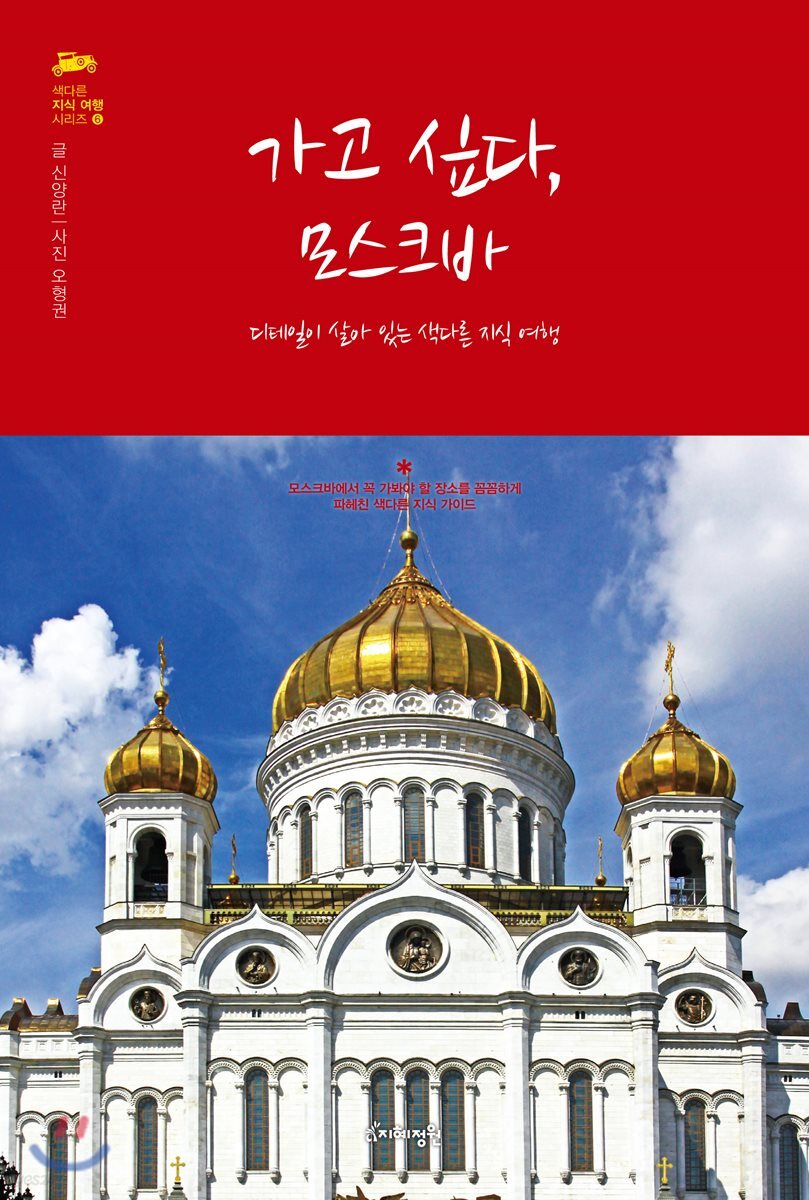
I want to go to Moscow
 |
Description
Book Introduction
An in-depth travel guide that delves into all of Moscow's culture and history!
This is a friendly and detailed travel guide introducing Moscow, a city still somewhat unfamiliar to us.
Everyone who thinks of Moscow thinks of St. Basil's Cathedral with its vibrant colors and onion-shaped domes, the Pushkin Museum of Fine Arts with its world-class collection, the Tretyakov Gallery where you can feel Russian colors more deeply, and even the Kremlin and Red Square, which can be called the heart of Moscow, so you can understand the culture and history of Russia and Moscow by exploring every nook and cranny.
When traveling to Moscow, the political center of Russia, the country's most populous city, a center of industry, culture, science, and education, and the spiritual center of the Russian Orthodox Church for over 600 years, this book will provide you with an excellent, knowledgeable travel guide that will help you fully understand and see what you see.
This is a friendly and detailed travel guide introducing Moscow, a city still somewhat unfamiliar to us.
Everyone who thinks of Moscow thinks of St. Basil's Cathedral with its vibrant colors and onion-shaped domes, the Pushkin Museum of Fine Arts with its world-class collection, the Tretyakov Gallery where you can feel Russian colors more deeply, and even the Kremlin and Red Square, which can be called the heart of Moscow, so you can understand the culture and history of Russia and Moscow by exploring every nook and cranny.
When traveling to Moscow, the political center of Russia, the country's most populous city, a center of industry, culture, science, and education, and the spiritual center of the Russian Orthodox Church for over 600 years, this book will provide you with an excellent, knowledgeable travel guide that will help you fully understand and see what you see.
- You can preview some of the book's contents.
Preview
index
Understanding Cyrillic
〈Reading History Stories First 1〉 The Principality of Kyiv and the Grand Duchy of Moscow
〈Reading History Stories First 2〉 The Rise and Fall of the Russian Empire
I.
Moscow Kremlin
Chapter 1.
Cathedral of the Assumption of the Virgin Mary
1.
Cathedral of the Assumption of the Virgin Mary, where the coronations of Russian emperors took place
2.
The exterior of the Cathedral of the Assumption of the Virgin Mary
3.
The sanctuary and iconostasis of the Cathedral of the Assumption of the Virgin Mary
4.
Holy fire around the King's Gate
- Icon of Our Lady of Vladimir
- Icon of the Holy Trinity
- Icon of the Assumption of the Virgin
〈Knowledge Charge〉The Eastern and Western Churches' Representation of the Virgin Mary
5.
Holy paintings on the south and north walls
- Paintings related to the birth of Mary
- Pictures related to Jesus
- Iconography of the World Council
- Icon of St. George
6.
Fresco on the west wall
7.
Holy painting on the ceiling
8.
Prayer stones of the Emperor, Empress and Patriarch
9.
Cemeteries and graves of the Patriarchs and Archbishops of the Russian Orthodox Church
〈Knowledge Charge〉 The Coronation of Emperors at the Cathedral of the Assumption of the Virgin Mary
Chapter 2.
Cathedral of the Annunciation
1.
The Imperial Family's Place of Worship, the Cathedral of the Annunciation
2.
The iconostasis of the Cathedral of the Annunciation
- Characters in the Old Testament, the Virgin Mary, and the prophets
- The life of Jesus
- Daisy
- Icons revered by Russian people
3.
Ceiling and murals of the Cathedral of the Annunciation
4.
Works of art housed in the Seonghwa Exhibition Hall
〈Knowledge Charge〉 What is the Annunciation?
Chapter 3.
Archangel Cathedral
1.
Archangel Cathedral, where the royal family rests
2.
Exterior of the Archangel Cathedral
3.
The iconostasis of the Archangel Cathedral
- The Virgin Mary, David and Solomon, and the prophets
- Daisy
- The life of Jesus
- King's Gate
- The holy icon worshipped by the Russian people
4.
Frescoes in the Archangel Cathedral
- Holy painting on the western wall, The Last Judgment
- Mural on the south wall, Michael leading the war to victory
- Murals on the north wall, two events in which Michael was active
5.
The four pillars of the Archangel Cathedral
〈Knowledge Charge〉 Grand Duke Vladimir's Embracing of the Russian Orthodox Church
6.
Holy fire on the dome and ceiling
〈Knowledge Charge〉 Who is the Archangel?
〈Knowledge Charge〉St. George and Archangel Michael
7.
Tombs inside the Archangel Cathedral
〈Knowledge Charge〉 The Tatar Yoke
Chapter 4.
Other buildings in the Kremlin
1.
Patriarchal Palace and the Cathedral of the Twelve Apostles
2.
Tsar's Cannon
3.
Ivan the Great's Bell Tower
4.
Emperor's servant
5.
Kremlin watchtowers
II.
Cathedrals in Moscow
Chapter 1.
Cathedral of Christ the Savior
1.
History of the Cathedral of Christ the Savior
2.
Relief on the exterior wall of the Cathedral of Christ the Savior
3.
Inside the Cathedral of Christ the Savior
Chapter 2.
St. Basil's Cathedral
1.
The most beautiful building, St. Basil's Cathedral
2.
Churches of St. Basil's Cathedral
- Church dedicated to Blessed Saint Basil
- A church dedicated to Our Lady with the protective veil
- Church dedicated to the three Patriarchs of Constantinople
- Holy Trinity Church
- Church dedicated to Alexander Svirsky
- Bell tower
- Church for the icon of St. Nicholas
- Church dedicated to Saint Balaam of Kutin
- Church commemorating Jesus' entry into Jerusalem
- Church dedicated to Saint Gregory of Armenia
- Church dedicated to Saints Cyprian and Justina
"Knowledge Recharge" by Kuzma Minin and Dmitry Pozharsky
Chapter 3.
Kazan Cathedral
1.
Kazan Cathedral, dedicated to Our Lady of Kazan
〈Knowledge Charge〉 Icon of Our Lady of Kazan
2.
Facade of Kazan Cathedral
3.
Inside Kazan Cathedral
Novodevichy Convent, "Knowledge Recharge"
III.
Art museums in Moscow
Chapter 1.
Tretyakov Gallery
ROOM 2_Celebration of the Marriage Contract
ROOM 2_The Coronation of Catherine II
ROOM 16_An Unsuitable Marriage
ROOM 16_Princess Tarakanova
ROOM 17_Debate on the Confession of Faith
ROOM 20_Christ in the Wilderness
ROOM 22_St. Bartholomew's Day Massacre
ROOM 24_French troops retreating from Moscow
ROOM 26_Prince Ivan Riding the Gray Wolf
ROOM 26_Igor Svyatoslavich's Polovtsian Expedition
ROOM 27_Fyodor Godunov, assassinated by False Dmitry I
ROOM 27_Marfa Boretskaya and the Destruction of the Novgorod Veche
ROOM 28_Menshikov in Berezovo
ROOM 28_The morning of the Streltsy execution day
〈Knowledge Charge〉 Princess Sophia, imprisoned in the Novodevichy Convent
ROOM 29_Religious Procession in the Kursk Region
ROOM 30_Nobody Waited
ROOM 31_Peter the Great interrogating Tsarevich Alexei
ROOM 39_Young Bartholomew's Fantasy
ROOM 44_Maslenitsa, the Spring Festival
ROOM 47_Grand Duke Vladimir Attacks Korsun
ROOM 47_The Beginning of Ruth
Chapter 2.
Pushkin Museum of Fine Arts
〈Knowledge Charge〉 Who is Pushkin?
ROOM 3_Priamos' Treasure
ROOM 9_Odysseus in the Cave of Polyphemus
ROOM 10_Lot and His Daughters
ROOM 17_The Death of Queen Dido
ROOM 21_Rinaldo and Armida
ROOM 22_Jupiter and Callisto
ROOM 22_Hercules and Omphale
ROOM 23_Aurora and Cephalus
ROOM 23_Andromache mourning Hector's death
ROOM 24_Apollo the Lizard Hunter
ROOM 24_Aphrodite of Knidos
ROOM 25_Agrippina the Younger
IV.
A good place to see together
Chapter 1.
Red Square and its surroundings
1.
Red Square
2.
Gate of Resurrection
3.
Lenin's Mausoleum and the Kremlin Wall Cemetery
4.
Museums in Red Square
〈Knowledge Charging〉 Great Patriotic War Museum
Chapter 2.
Other places to visit
1.
Arbat Street
2.
Moscow State University
〈Knowledge Charge〉 The Stalin Sisters: A Legacy of the Stalin Era
〈Reading History Stories First 1〉 The Principality of Kyiv and the Grand Duchy of Moscow
〈Reading History Stories First 2〉 The Rise and Fall of the Russian Empire
I.
Moscow Kremlin
Chapter 1.
Cathedral of the Assumption of the Virgin Mary
1.
Cathedral of the Assumption of the Virgin Mary, where the coronations of Russian emperors took place
2.
The exterior of the Cathedral of the Assumption of the Virgin Mary
3.
The sanctuary and iconostasis of the Cathedral of the Assumption of the Virgin Mary
4.
Holy fire around the King's Gate
- Icon of Our Lady of Vladimir
- Icon of the Holy Trinity
- Icon of the Assumption of the Virgin
〈Knowledge Charge〉The Eastern and Western Churches' Representation of the Virgin Mary
5.
Holy paintings on the south and north walls
- Paintings related to the birth of Mary
- Pictures related to Jesus
- Iconography of the World Council
- Icon of St. George
6.
Fresco on the west wall
7.
Holy painting on the ceiling
8.
Prayer stones of the Emperor, Empress and Patriarch
9.
Cemeteries and graves of the Patriarchs and Archbishops of the Russian Orthodox Church
〈Knowledge Charge〉 The Coronation of Emperors at the Cathedral of the Assumption of the Virgin Mary
Chapter 2.
Cathedral of the Annunciation
1.
The Imperial Family's Place of Worship, the Cathedral of the Annunciation
2.
The iconostasis of the Cathedral of the Annunciation
- Characters in the Old Testament, the Virgin Mary, and the prophets
- The life of Jesus
- Daisy
- Icons revered by Russian people
3.
Ceiling and murals of the Cathedral of the Annunciation
4.
Works of art housed in the Seonghwa Exhibition Hall
〈Knowledge Charge〉 What is the Annunciation?
Chapter 3.
Archangel Cathedral
1.
Archangel Cathedral, where the royal family rests
2.
Exterior of the Archangel Cathedral
3.
The iconostasis of the Archangel Cathedral
- The Virgin Mary, David and Solomon, and the prophets
- Daisy
- The life of Jesus
- King's Gate
- The holy icon worshipped by the Russian people
4.
Frescoes in the Archangel Cathedral
- Holy painting on the western wall, The Last Judgment
- Mural on the south wall, Michael leading the war to victory
- Murals on the north wall, two events in which Michael was active
5.
The four pillars of the Archangel Cathedral
〈Knowledge Charge〉 Grand Duke Vladimir's Embracing of the Russian Orthodox Church
6.
Holy fire on the dome and ceiling
〈Knowledge Charge〉 Who is the Archangel?
〈Knowledge Charge〉St. George and Archangel Michael
7.
Tombs inside the Archangel Cathedral
〈Knowledge Charge〉 The Tatar Yoke
Chapter 4.
Other buildings in the Kremlin
1.
Patriarchal Palace and the Cathedral of the Twelve Apostles
2.
Tsar's Cannon
3.
Ivan the Great's Bell Tower
4.
Emperor's servant
5.
Kremlin watchtowers
II.
Cathedrals in Moscow
Chapter 1.
Cathedral of Christ the Savior
1.
History of the Cathedral of Christ the Savior
2.
Relief on the exterior wall of the Cathedral of Christ the Savior
3.
Inside the Cathedral of Christ the Savior
Chapter 2.
St. Basil's Cathedral
1.
The most beautiful building, St. Basil's Cathedral
2.
Churches of St. Basil's Cathedral
- Church dedicated to Blessed Saint Basil
- A church dedicated to Our Lady with the protective veil
- Church dedicated to the three Patriarchs of Constantinople
- Holy Trinity Church
- Church dedicated to Alexander Svirsky
- Bell tower
- Church for the icon of St. Nicholas
- Church dedicated to Saint Balaam of Kutin
- Church commemorating Jesus' entry into Jerusalem
- Church dedicated to Saint Gregory of Armenia
- Church dedicated to Saints Cyprian and Justina
"Knowledge Recharge" by Kuzma Minin and Dmitry Pozharsky
Chapter 3.
Kazan Cathedral
1.
Kazan Cathedral, dedicated to Our Lady of Kazan
〈Knowledge Charge〉 Icon of Our Lady of Kazan
2.
Facade of Kazan Cathedral
3.
Inside Kazan Cathedral
Novodevichy Convent, "Knowledge Recharge"
III.
Art museums in Moscow
Chapter 1.
Tretyakov Gallery
ROOM 2_Celebration of the Marriage Contract
ROOM 2_The Coronation of Catherine II
ROOM 16_An Unsuitable Marriage
ROOM 16_Princess Tarakanova
ROOM 17_Debate on the Confession of Faith
ROOM 20_Christ in the Wilderness
ROOM 22_St. Bartholomew's Day Massacre
ROOM 24_French troops retreating from Moscow
ROOM 26_Prince Ivan Riding the Gray Wolf
ROOM 26_Igor Svyatoslavich's Polovtsian Expedition
ROOM 27_Fyodor Godunov, assassinated by False Dmitry I
ROOM 27_Marfa Boretskaya and the Destruction of the Novgorod Veche
ROOM 28_Menshikov in Berezovo
ROOM 28_The morning of the Streltsy execution day
〈Knowledge Charge〉 Princess Sophia, imprisoned in the Novodevichy Convent
ROOM 29_Religious Procession in the Kursk Region
ROOM 30_Nobody Waited
ROOM 31_Peter the Great interrogating Tsarevich Alexei
ROOM 39_Young Bartholomew's Fantasy
ROOM 44_Maslenitsa, the Spring Festival
ROOM 47_Grand Duke Vladimir Attacks Korsun
ROOM 47_The Beginning of Ruth
Chapter 2.
Pushkin Museum of Fine Arts
〈Knowledge Charge〉 Who is Pushkin?
ROOM 3_Priamos' Treasure
ROOM 9_Odysseus in the Cave of Polyphemus
ROOM 10_Lot and His Daughters
ROOM 17_The Death of Queen Dido
ROOM 21_Rinaldo and Armida
ROOM 22_Jupiter and Callisto
ROOM 22_Hercules and Omphale
ROOM 23_Aurora and Cephalus
ROOM 23_Andromache mourning Hector's death
ROOM 24_Apollo the Lizard Hunter
ROOM 24_Aphrodite of Knidos
ROOM 25_Agrippina the Younger
IV.
A good place to see together
Chapter 1.
Red Square and its surroundings
1.
Red Square
2.
Gate of Resurrection
3.
Lenin's Mausoleum and the Kremlin Wall Cemetery
4.
Museums in Red Square
〈Knowledge Charging〉 Great Patriotic War Museum
Chapter 2.
Other places to visit
1.
Arbat Street
2.
Moscow State University
〈Knowledge Charge〉 The Stalin Sisters: A Legacy of the Stalin Era
Into the book
Moscow, which would later grow into the Grand Duchy of Moscow and become the center of Russian history, was originally nothing more than a small village.
In the early days of Russian history, when several principalities developed and competed with each other, centered around the Principality of Kiev.
When the Kievan Rus' power was exhausted by power struggles between brothers and uncles and nephews, Vladimir Monomakh (Vladimir II) ascended to the throne.
It is said that during his reign, when he was known for his gentle nature and valued principles, the country was relatively peaceful.
That is probably why he is evaluated as 'the last leader who dreamed of restoring the Kievan Rus'.
The hat (crown) he received from his maternal grandfather, the Byzantine Emperor Constantine IX Monomakh, is a treasure that past emperors wore only during their coronations, and is currently kept in the Armory in the Moscow Kremlin.
--- p.15 From “The Principality of Kyiv and the Grand Duchy of Moscow”
The east side of the Basilica of the Assumption, the first thing you encounter, is lined with three golden cupolas, each with a painting on its upper wall protected by a round arch below.
The east side is where the altar is installed, so there are no doors and therefore no ornate decorations like those around the south and north doors. However, the three frescoes have special meaning and are worth looking at carefully.
Of the three frescoes, let's first look at the painting in the middle.
The one sitting on the right is God the Father, the one sitting on the left is Jesus the Son, and the white bird in the middle is a dove symbolizing the Holy Spirit.
This expresses the doctrine of the Trinity, which states that the Father, the Son, and the Holy Spirit have the same hypostasis.
Since it is an important concept in Christianity, it can be said to be the most important of the three paintings, and it is the most common composition among paintings expressing the Trinity.
The blue round object placed between God and Jesus, depicting the sun, moon, and stars, symbolizes the universe and tells us that they are the rulers of the universe.
The mural on the left is titled 'The Eulogy of the Virgin' and depicts Christian saints adoring the Virgin Mary and Child on either side.
A common type of icon depicting the Virgin Mary sitting on a throne holding the baby Jesus, flanked by archangels and saints.
The mural on the right depicts 'Sophia, the Holy Wisdom'.
'Sophia' is a word that refers to the sacred wisdom that comes from God himself, and we are familiar with it through the Hagia Sophia (Hagia Sophia) in Istanbul.
--- p.30~31 From “Exterior of the Cathedral of the Assumption of the Virgin Mary”
Okay, now we've entered the cathedral.
The space is not very large, and the ceiling, the walls, and even the four circular pillars are covered with icons, making it feel suffocating.
In any cathedral, the side where the altar is installed (usually the east) is the center.
However, all the Russian Orthodox churches I saw in Moscow and St. Petersburg had their altars covered by iconostasis.
The iconostasis is also called a sacred wall or a sacred screen, and the interior of the Assumption Cathedral, which is filled with icons, also has an iconostasis.
-syncopation-
The iconostasis of the Cathedral of the Assumption of the Virgin was created in 1653 by order of Patriarch Nikon.
It consists of four levels and 69 icons, so it is difficult to examine them all carefully. However, since it is the most important space in the cathedral, let's take a closer look at it as much as possible.
Let's take a look at the first tier, which depicts God holding the baby Jesus and the 16 Jewish patriarchs; the second tier, which depicts the Virgin Mary and the prophets; the third tier, which depicts the life of Jesus; the fourth tier, which depicts Deisis and Jesus' disciples; and the gate leading to the Holy of Holies (the King's Gate) at the very bottom center, and the surrounding sacred paintings.
--- p.39 From “The Sanctuary and the Holy Wall of the Cathedral of the Assumption of the Virgin Mary”
Russia, which had accepted Greek Orthodoxy through the Byzantine Empire at the end of the 10th century, fell into great turmoil over the issue of religious reform in the mid-17th century.
Patriarch Nikon, the newly installed Patriarch, established a new liturgy (religious rite) for the Russian Orthodox Church.
Patriarch Nikon advocated religious reform with the intention of returning the Orthodox liturgy to its original form, combining it with the indigenous Russian faith, breaking away from the original form of Christianity, but many clergy and believers rejected it and tried to cling to the old ways.
They resisted Nikon's religious reforms because they saw them as politically motivated attempts to take control of the religious order.
At this time, Tsar Alexei Romanov supported Nikon, giving the reformists strength, while the separatists (conservatives who opposed Nikon's religious reforms and insisted on preserving the traditions of the Russian Orthodox Church) who opposed the reforms were crushed.
The tragic event occurred when Archbishop Avvakum Petrovich, the leader of the schismatics, was burned at the stake, and numerous believers committed suicide by burning themselves in protest.
The reformists and separatists clashed fiercely over issues that seemed trivial to modern eyes.
For example, when making the sign of the cross, Orthodox Christians make it with three fingers to symbolize the Trinity, but in the Russian Orthodox Church, it has changed to making it with two fingers.
Nikon demanded that it be made with three fingers, a practice the Separatists ultimately refused to accept.
--- p.343 From “Controversy on the Confession of Faith”
The king, the owner of the golden-maned horse, tells Ivan, “I will forgive your sins if you bring me the beautiful princess Elena from a neighboring country.”
Ivan tells the Gray Wolf, and the Wolf decides to help Ivan once again.
With the help of the wolf, Ivan meets Princess Elena and takes her to the king, but he suddenly falls in love with the princess.
So, as he was saddened by the separation from the princess, the wolf said, “Run away with the princess while I transform into Princess Elena and deceive the king.”
Ivan gave the fake Princess Elena, who had been transformed into a wolf, to the king and received a golden horse in return, and they escaped from the palace. The gray wolf fooled the king for a while and then ran back to Ivan.
But the main reason Ivan went on this adventure was to obtain the Phoenix.
So, Ivan had to give the golden horse to the king who had the phoenix in exchange for the phoenix, but Ivan also wanted the horse.
So I poured out my heart to the wolf.
Then the wolf said that he would turn into a horse with a golden mane and deceive the king, and that he should take the firebird and run away with Princess Elena.
Ivan did as the wolf told him and was able to take possession of Princess Elena, the golden-maned horse, and even the Firebird.
After saying goodbye to the gray wolf who helped him, Ivan heads to his father's palace.
Perhaps he was filled with joy at the anticipation of his father's praise and the words of praise that would be bestowed upon him.
But unfortunately, before he could reach the palace, he met his two older brothers, and they, consumed by jealousy, took everything he had.
Even life itself.
The gray wolf happens to see crows pecking at Ivan's abandoned body, and threatens the mother crow to get the Water of Life, which he uses to revive Ivan.
And he goes to the palace with Ivan and kills his brothers who have committed evil deeds.
What follows is an ending that everyone can predict.
Ivan married Princess Elena and lived happily ever after, and of course, after his father passed away, he inherited the kingdom and became a great king.
Viktor Vasnetsov's "Prince Ivan Rides the Gray Wolf" depicts Ivan and Princess Elena riding through the forest on the gray wolf that helped them.
I'm not sure exactly which part of the overall plot this is referring to, but judging by the tense expression on Prince Ivan's face, it's either when he takes Princess Elena out of her kingdom, or when the Gray Wolf transforms into Princess Elena, tricks the King, and then rejoins them to run away.
--- p.359~360 From “Prince Ivan Riding the Gray Wolf”
Fyodor II reigned as Tsar for only 49 days, making him the shortest reign in Russian history.
The reason he reigned for such a short period was because he was assassinated by False Dmitry I (June 10, 1605).
The picture we saw earlier depicts what happened at that very moment.
Boris Godunov's lust for power ultimately led to the downfall of his family, with his entire family except for his sister Ksenia being annihilated.
False Dmitry I, who assassinated Fyodor II in June 1605 and took the throne, ruled Russia until May of the following year.
So what was his end, and in what direction did Russian history flow?
Although he ascended the throne on the back of opposition to the Godunov dynasty, False Dmitry I quickly lost the trust of the people.
The main reason appears to be his actions, such as marrying a Catholic, which offends Russian Orthodox believers.
At dawn on May 17, 1606, when rebels stormed the Kremlin, False Dmitry I resisted with a sword and then tried to escape through a window.
It is said that he was captured by the rebels and killed after suffering serious injuries, and his body was left in Red Square for three days to be displayed to the public.
He was a man of great fortune in history who appeared like the wind and then disappeared like a light.
After the death of False Dmitry I, two more pretenders to be Dmitry, but they all met tragic ends, and the throne of Russia eventually went to a 16-year-old boy named Mikhail Romanov.
This was in 1613, and the last dynasty of Russia, the Romanov dynasty, began.
In the early days of Russian history, when several principalities developed and competed with each other, centered around the Principality of Kiev.
When the Kievan Rus' power was exhausted by power struggles between brothers and uncles and nephews, Vladimir Monomakh (Vladimir II) ascended to the throne.
It is said that during his reign, when he was known for his gentle nature and valued principles, the country was relatively peaceful.
That is probably why he is evaluated as 'the last leader who dreamed of restoring the Kievan Rus'.
The hat (crown) he received from his maternal grandfather, the Byzantine Emperor Constantine IX Monomakh, is a treasure that past emperors wore only during their coronations, and is currently kept in the Armory in the Moscow Kremlin.
--- p.15 From “The Principality of Kyiv and the Grand Duchy of Moscow”
The east side of the Basilica of the Assumption, the first thing you encounter, is lined with three golden cupolas, each with a painting on its upper wall protected by a round arch below.
The east side is where the altar is installed, so there are no doors and therefore no ornate decorations like those around the south and north doors. However, the three frescoes have special meaning and are worth looking at carefully.
Of the three frescoes, let's first look at the painting in the middle.
The one sitting on the right is God the Father, the one sitting on the left is Jesus the Son, and the white bird in the middle is a dove symbolizing the Holy Spirit.
This expresses the doctrine of the Trinity, which states that the Father, the Son, and the Holy Spirit have the same hypostasis.
Since it is an important concept in Christianity, it can be said to be the most important of the three paintings, and it is the most common composition among paintings expressing the Trinity.
The blue round object placed between God and Jesus, depicting the sun, moon, and stars, symbolizes the universe and tells us that they are the rulers of the universe.
The mural on the left is titled 'The Eulogy of the Virgin' and depicts Christian saints adoring the Virgin Mary and Child on either side.
A common type of icon depicting the Virgin Mary sitting on a throne holding the baby Jesus, flanked by archangels and saints.
The mural on the right depicts 'Sophia, the Holy Wisdom'.
'Sophia' is a word that refers to the sacred wisdom that comes from God himself, and we are familiar with it through the Hagia Sophia (Hagia Sophia) in Istanbul.
--- p.30~31 From “Exterior of the Cathedral of the Assumption of the Virgin Mary”
Okay, now we've entered the cathedral.
The space is not very large, and the ceiling, the walls, and even the four circular pillars are covered with icons, making it feel suffocating.
In any cathedral, the side where the altar is installed (usually the east) is the center.
However, all the Russian Orthodox churches I saw in Moscow and St. Petersburg had their altars covered by iconostasis.
The iconostasis is also called a sacred wall or a sacred screen, and the interior of the Assumption Cathedral, which is filled with icons, also has an iconostasis.
-syncopation-
The iconostasis of the Cathedral of the Assumption of the Virgin was created in 1653 by order of Patriarch Nikon.
It consists of four levels and 69 icons, so it is difficult to examine them all carefully. However, since it is the most important space in the cathedral, let's take a closer look at it as much as possible.
Let's take a look at the first tier, which depicts God holding the baby Jesus and the 16 Jewish patriarchs; the second tier, which depicts the Virgin Mary and the prophets; the third tier, which depicts the life of Jesus; the fourth tier, which depicts Deisis and Jesus' disciples; and the gate leading to the Holy of Holies (the King's Gate) at the very bottom center, and the surrounding sacred paintings.
--- p.39 From “The Sanctuary and the Holy Wall of the Cathedral of the Assumption of the Virgin Mary”
Russia, which had accepted Greek Orthodoxy through the Byzantine Empire at the end of the 10th century, fell into great turmoil over the issue of religious reform in the mid-17th century.
Patriarch Nikon, the newly installed Patriarch, established a new liturgy (religious rite) for the Russian Orthodox Church.
Patriarch Nikon advocated religious reform with the intention of returning the Orthodox liturgy to its original form, combining it with the indigenous Russian faith, breaking away from the original form of Christianity, but many clergy and believers rejected it and tried to cling to the old ways.
They resisted Nikon's religious reforms because they saw them as politically motivated attempts to take control of the religious order.
At this time, Tsar Alexei Romanov supported Nikon, giving the reformists strength, while the separatists (conservatives who opposed Nikon's religious reforms and insisted on preserving the traditions of the Russian Orthodox Church) who opposed the reforms were crushed.
The tragic event occurred when Archbishop Avvakum Petrovich, the leader of the schismatics, was burned at the stake, and numerous believers committed suicide by burning themselves in protest.
The reformists and separatists clashed fiercely over issues that seemed trivial to modern eyes.
For example, when making the sign of the cross, Orthodox Christians make it with three fingers to symbolize the Trinity, but in the Russian Orthodox Church, it has changed to making it with two fingers.
Nikon demanded that it be made with three fingers, a practice the Separatists ultimately refused to accept.
--- p.343 From “Controversy on the Confession of Faith”
The king, the owner of the golden-maned horse, tells Ivan, “I will forgive your sins if you bring me the beautiful princess Elena from a neighboring country.”
Ivan tells the Gray Wolf, and the Wolf decides to help Ivan once again.
With the help of the wolf, Ivan meets Princess Elena and takes her to the king, but he suddenly falls in love with the princess.
So, as he was saddened by the separation from the princess, the wolf said, “Run away with the princess while I transform into Princess Elena and deceive the king.”
Ivan gave the fake Princess Elena, who had been transformed into a wolf, to the king and received a golden horse in return, and they escaped from the palace. The gray wolf fooled the king for a while and then ran back to Ivan.
But the main reason Ivan went on this adventure was to obtain the Phoenix.
So, Ivan had to give the golden horse to the king who had the phoenix in exchange for the phoenix, but Ivan also wanted the horse.
So I poured out my heart to the wolf.
Then the wolf said that he would turn into a horse with a golden mane and deceive the king, and that he should take the firebird and run away with Princess Elena.
Ivan did as the wolf told him and was able to take possession of Princess Elena, the golden-maned horse, and even the Firebird.
After saying goodbye to the gray wolf who helped him, Ivan heads to his father's palace.
Perhaps he was filled with joy at the anticipation of his father's praise and the words of praise that would be bestowed upon him.
But unfortunately, before he could reach the palace, he met his two older brothers, and they, consumed by jealousy, took everything he had.
Even life itself.
The gray wolf happens to see crows pecking at Ivan's abandoned body, and threatens the mother crow to get the Water of Life, which he uses to revive Ivan.
And he goes to the palace with Ivan and kills his brothers who have committed evil deeds.
What follows is an ending that everyone can predict.
Ivan married Princess Elena and lived happily ever after, and of course, after his father passed away, he inherited the kingdom and became a great king.
Viktor Vasnetsov's "Prince Ivan Rides the Gray Wolf" depicts Ivan and Princess Elena riding through the forest on the gray wolf that helped them.
I'm not sure exactly which part of the overall plot this is referring to, but judging by the tense expression on Prince Ivan's face, it's either when he takes Princess Elena out of her kingdom, or when the Gray Wolf transforms into Princess Elena, tricks the King, and then rejoins them to run away.
--- p.359~360 From “Prince Ivan Riding the Gray Wolf”
Fyodor II reigned as Tsar for only 49 days, making him the shortest reign in Russian history.
The reason he reigned for such a short period was because he was assassinated by False Dmitry I (June 10, 1605).
The picture we saw earlier depicts what happened at that very moment.
Boris Godunov's lust for power ultimately led to the downfall of his family, with his entire family except for his sister Ksenia being annihilated.
False Dmitry I, who assassinated Fyodor II in June 1605 and took the throne, ruled Russia until May of the following year.
So what was his end, and in what direction did Russian history flow?
Although he ascended the throne on the back of opposition to the Godunov dynasty, False Dmitry I quickly lost the trust of the people.
The main reason appears to be his actions, such as marrying a Catholic, which offends Russian Orthodox believers.
At dawn on May 17, 1606, when rebels stormed the Kremlin, False Dmitry I resisted with a sword and then tried to escape through a window.
It is said that he was captured by the rebels and killed after suffering serious injuries, and his body was left in Red Square for three days to be displayed to the public.
He was a man of great fortune in history who appeared like the wind and then disappeared like a light.
After the death of False Dmitry I, two more pretenders to be Dmitry, but they all met tragic ends, and the throne of Russia eventually went to a 16-year-old boy named Mikhail Romanov.
This was in 1613, and the last dynasty of Russia, the Romanov dynasty, began.
--- p.365~366 From “Fyodor Godunov, Assassinated by False Dmitry I”
Publisher's Review
A unique, knowledgeable guide that meticulously explores the must-see places in Moscow!
The "Unique Knowledge Travel" series is designed to help travelers experience the "joy of knowledge" by acquiring new knowledge through travel and integrating it with existing knowledge by providing detailed explanations of must-see attractions in cities around the world along a route.
Everyone has been there, and everyone thinks they know, but the depth of knowledge varies depending on how you see it.
Covering a wide range of topics, including mythology, history, art, and the Bible, which serve as background knowledge for European travel, the book is written in a natural, flowing style, as if told by a witty storyteller, capturing the reader's heart without being boring or difficult.
In the "I Want to Go" series of unique knowledge travel articles, "I Want to Go, Moscow," we begin with the Kremlin, the heart of Moscow, and visit historic cathedrals and museums located throughout Moscow.
The Kremlin, which refers to a fortress wall built for defensive purposes, has 20 towers, a fortress wall that stretches 2,235 meters, and buildings of rich historical value within it.
Here, you will visit the Cathedral of the Assumption, where the coronations of Russian emperors took place; the Cathedral of the Annunciation, the place of worship of the imperial family; and the Cathedral of the Archangel, where the royal family is buried. You will also learn about the structure of Russian Orthodox churches by examining the numerous icons and portraits of great Russian figures painted there.
Revisit Russian history while exploring other structures within the Kremlin, including the Patriarchal Palace, the Cathedral of the Twelve Apostles, and the Tsar's Cannon.
As the Russian Orthodox Church is the state religion, there are numerous Orthodox churches in Moscow.
The Cathedral of Christ the Savior, with its eye-catching golden dome, was first built to commemorate the victory in the Patriotic War over the French army that invaded Moscow.
Although it was suppressed by Stalin during the Soviet era, it was rebuilt and now stands tall on the banks of the Moscow River to the west of the Kremlin, boasting its magnificent appearance.
The four outer walls are adorned with reliefs depicting figures from Russian and Orthodox history, making them fun to look at one by one.
St. Basil's Cathedral is so beautiful in appearance that it is said that Ivan IV, who ordered its construction, ordered the architect to gouge out his eyes because he did not want another building as beautiful as this one to be built.
It is a unique architectural structure in which the 'Church dedicated to Our Lady with the Protective Veil', located in the center, is surrounded by eight smaller churches, and these independent small churches come together to form a single cathedral.
There are countless cathedrals in Russia named 'Kazan Cathedral'.
There are also many cathedrals with the same name in former Soviet Union-ruled countries such as Belarus, Estonia, and Ukraine, all of which are dedicated to Our Lady of Kazan.
Located on Red Square, Kazan Cathedral in Moscow is a must-see for any traveler visiting Moscow. Learn about the icon of Our Lady of Kazan, which has given names to many cathedrals.
If I had to pick two of Moscow's most representative art museums, they would be the Tretyakov Gallery and the Pushkin Museum of Fine Arts.
If St. Petersburg has the State Russian Museum, Moscow has the Tretyakov Gallery.
The two museums are like twins in that they mainly house works by Russian artists.
As there are many Russian works in the collection, there are many paintings that reflect the times of Russia and provide a glimpse into its history, so you can hear stories of Russian history in an interesting way here.
The Pushkin Museum of Fine Arts has many similarities to the Hermitage Museum in St. Petersburg.
This is because it focuses on exhibiting works by foreign authors rather than Russian authors, or artifacts from countries other than Russia.
Of course, the Hermitage Museum has the upper hand in terms of its reputation, the quality of its collection, and the historical value of its building, but the Pushkin Museum of Fine Arts also demonstrates considerable potential.
Every traveler visiting Moscow flocks to Red Square.
When you first enter Red Square, your eyes are immediately drawn to the red walls of the Kremlin, the red stone Lenin's Mausoleum, and the striking red buildings that make you wonder if the name comes from the red building of the State Historical Museum.
Red Square is a must-see destination for any trip to Moscow.
The Kremlin, which is the first place any traveler visiting Moscow will visit, is located right next to it, and other attractions such as Lenin's Mausoleum, the Kremlin Wall Cemetery, St. Basil's Cathedral, Kazan Cathedral, the Resurrection Gate, the State Russian Historical Museum, the Museum of the Patriotic War, the GUM Department Store, and Alexandrovsky Park are also located around the square.
If you just look around Red Square, you can say that you have seen most of Moscow's key attractions.
Arbat Street is also a youth street where Moscow's young people gather, and a street for travelers that is constantly visited by travelers.
As you walk along this street, you will find statues and memorials to great Russian writers, musicians, and others.
As we pass through here, let's meet artists loved by the Russian people.
At the end of Arbat Street you will find the Russian Foreign Ministry.
One of the 'Stalin Sisters', seven unique buildings built under Stalin's command, it is a large, majestic structure with sharp, sky-piercing spires.
Moscow State University, with its strong academic tradition that has produced 12 Nobel Prize winners, is one such place, and through these buildings, you can feel the atmosphere of the former Soviet era when the greatness of communism was showcased.
Perhaps because it has been less than 30 years since our country established diplomatic relations, Russia still seems to be an unfamiliar country to many people.
Perhaps due to the unique nature of our country as a divided nation born from the Cold War, there have been few opportunities to properly learn about Russia (the former Soviet Union).
For travelers who feel embarrassed in front of an unfamiliar city like Moscow, "I Want to Go to Moscow" will be a great gift as a friendly and detailed travel guide.
The "Unique Knowledge Travel" series is designed to help travelers experience the "joy of knowledge" by acquiring new knowledge through travel and integrating it with existing knowledge by providing detailed explanations of must-see attractions in cities around the world along a route.
Everyone has been there, and everyone thinks they know, but the depth of knowledge varies depending on how you see it.
Covering a wide range of topics, including mythology, history, art, and the Bible, which serve as background knowledge for European travel, the book is written in a natural, flowing style, as if told by a witty storyteller, capturing the reader's heart without being boring or difficult.
In the "I Want to Go" series of unique knowledge travel articles, "I Want to Go, Moscow," we begin with the Kremlin, the heart of Moscow, and visit historic cathedrals and museums located throughout Moscow.
The Kremlin, which refers to a fortress wall built for defensive purposes, has 20 towers, a fortress wall that stretches 2,235 meters, and buildings of rich historical value within it.
Here, you will visit the Cathedral of the Assumption, where the coronations of Russian emperors took place; the Cathedral of the Annunciation, the place of worship of the imperial family; and the Cathedral of the Archangel, where the royal family is buried. You will also learn about the structure of Russian Orthodox churches by examining the numerous icons and portraits of great Russian figures painted there.
Revisit Russian history while exploring other structures within the Kremlin, including the Patriarchal Palace, the Cathedral of the Twelve Apostles, and the Tsar's Cannon.
As the Russian Orthodox Church is the state religion, there are numerous Orthodox churches in Moscow.
The Cathedral of Christ the Savior, with its eye-catching golden dome, was first built to commemorate the victory in the Patriotic War over the French army that invaded Moscow.
Although it was suppressed by Stalin during the Soviet era, it was rebuilt and now stands tall on the banks of the Moscow River to the west of the Kremlin, boasting its magnificent appearance.
The four outer walls are adorned with reliefs depicting figures from Russian and Orthodox history, making them fun to look at one by one.
St. Basil's Cathedral is so beautiful in appearance that it is said that Ivan IV, who ordered its construction, ordered the architect to gouge out his eyes because he did not want another building as beautiful as this one to be built.
It is a unique architectural structure in which the 'Church dedicated to Our Lady with the Protective Veil', located in the center, is surrounded by eight smaller churches, and these independent small churches come together to form a single cathedral.
There are countless cathedrals in Russia named 'Kazan Cathedral'.
There are also many cathedrals with the same name in former Soviet Union-ruled countries such as Belarus, Estonia, and Ukraine, all of which are dedicated to Our Lady of Kazan.
Located on Red Square, Kazan Cathedral in Moscow is a must-see for any traveler visiting Moscow. Learn about the icon of Our Lady of Kazan, which has given names to many cathedrals.
If I had to pick two of Moscow's most representative art museums, they would be the Tretyakov Gallery and the Pushkin Museum of Fine Arts.
If St. Petersburg has the State Russian Museum, Moscow has the Tretyakov Gallery.
The two museums are like twins in that they mainly house works by Russian artists.
As there are many Russian works in the collection, there are many paintings that reflect the times of Russia and provide a glimpse into its history, so you can hear stories of Russian history in an interesting way here.
The Pushkin Museum of Fine Arts has many similarities to the Hermitage Museum in St. Petersburg.
This is because it focuses on exhibiting works by foreign authors rather than Russian authors, or artifacts from countries other than Russia.
Of course, the Hermitage Museum has the upper hand in terms of its reputation, the quality of its collection, and the historical value of its building, but the Pushkin Museum of Fine Arts also demonstrates considerable potential.
Every traveler visiting Moscow flocks to Red Square.
When you first enter Red Square, your eyes are immediately drawn to the red walls of the Kremlin, the red stone Lenin's Mausoleum, and the striking red buildings that make you wonder if the name comes from the red building of the State Historical Museum.
Red Square is a must-see destination for any trip to Moscow.
The Kremlin, which is the first place any traveler visiting Moscow will visit, is located right next to it, and other attractions such as Lenin's Mausoleum, the Kremlin Wall Cemetery, St. Basil's Cathedral, Kazan Cathedral, the Resurrection Gate, the State Russian Historical Museum, the Museum of the Patriotic War, the GUM Department Store, and Alexandrovsky Park are also located around the square.
If you just look around Red Square, you can say that you have seen most of Moscow's key attractions.
Arbat Street is also a youth street where Moscow's young people gather, and a street for travelers that is constantly visited by travelers.
As you walk along this street, you will find statues and memorials to great Russian writers, musicians, and others.
As we pass through here, let's meet artists loved by the Russian people.
At the end of Arbat Street you will find the Russian Foreign Ministry.
One of the 'Stalin Sisters', seven unique buildings built under Stalin's command, it is a large, majestic structure with sharp, sky-piercing spires.
Moscow State University, with its strong academic tradition that has produced 12 Nobel Prize winners, is one such place, and through these buildings, you can feel the atmosphere of the former Soviet era when the greatness of communism was showcased.
Perhaps because it has been less than 30 years since our country established diplomatic relations, Russia still seems to be an unfamiliar country to many people.
Perhaps due to the unique nature of our country as a divided nation born from the Cold War, there have been few opportunities to properly learn about Russia (the former Soviet Union).
For travelers who feel embarrassed in front of an unfamiliar city like Moscow, "I Want to Go to Moscow" will be a great gift as a friendly and detailed travel guide.
GOODS SPECIFICS
- Date of issue: July 10, 2018
- Page count, weight, size: 480 pages | 799g | 152*225*24mm
- ISBN13: 9791187616412
- ISBN10: 1187616419
You may also like
카테고리
korean


korean

![GQ KOREA Mark (Monthly): December [2025]](http://librairie.coreenne.fr/cdn/shop/files/8ef265dbbfbf186523ed75ba7319009d.jpg?v=1765340328&width=3840)


