

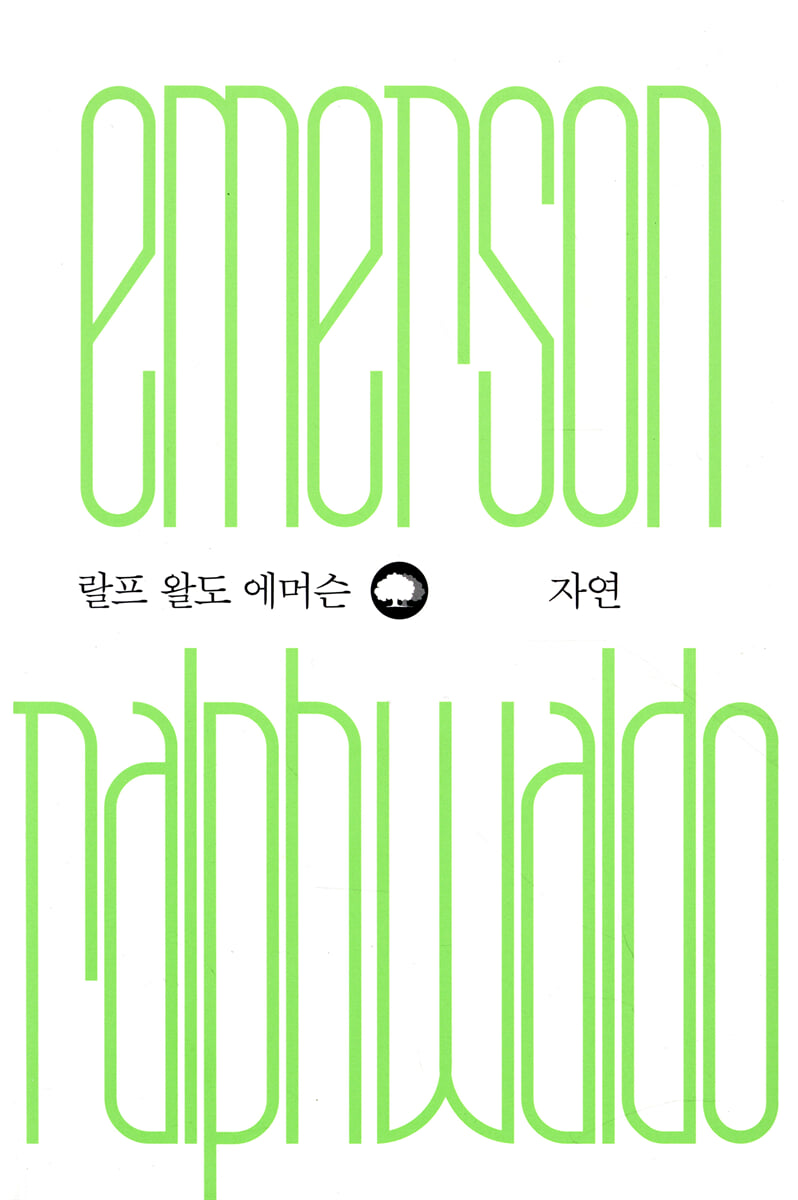
Ralph Waldo Emerson Nature
 |
Description
Book Introduction
This anthology, translated by Dong-seok Seo, an Emerson specialist who says that Emerson changed his life, is the first of its kind in Korea. It is a book that selects five essays that are the essence of the great thinker who has never been properly covered in Korea, but whose name, "Emerson," is something that anyone who has read English or American literature will have heard of.
Emerson was a figure who actively drew on Eastern philosophy and led the renaissance of 19th-century American literature. It is for this very reason that his thoughts have long drawn readers' attention, leading them to reexamine him in relation to their own lives.
Emerson was a figure who actively drew on Eastern philosophy and led the renaissance of 19th-century American literature. It is for this very reason that his thoughts have long drawn readers' attention, leading them to reexamine him in relation to their own lives.
- You can preview some of the book's contents.
Preview
index
Nature / Self-Reliance / Reward / Experience / Fate / Translator's Note - Emerson's Pragmatic Middle Way
Publisher's Review
The first anthology translated by an Emerson specialist in Korea!
A question mark to your metaphysics, your logic
This anthology, translated by Dong-seok Seo, an Emerson specialist who says that Emerson changed his life, is the first of its kind in Korea. It is a book that selects five essays that are the essence of the great thinker who has never been properly covered in Korea, but whose name, "Emerson," is something that anyone who has read English or American literature will have heard of.
The Great American Soul, or the Archetype of the American Imagination
It's a cliché, but I have to use this expression because it's most accurate to say that American literature cannot be discussed without Emerson.
He was a representative American thinker and poet, so much so that a biography of his life and writings was published even before his death.
Emerson, who was born the son of a minister and was himself a minister, was skeptical of the forms and doctrines of religion and refused to become a religious person. After losing his son and wandering mentally, he discovered a new order based on nature and established his cyclical worldview.
It is clear that the power that creates this joy does not exist in nature, but in humans, or in the harmony of the two.
…nature always has the color of the soul.
A person who is suffering from misfortune feels sorrow even in the warmth of his own fire.
And for someone who has just lost a close friend to death, there is a certain contempt for the landscape.
The sky is less magnificent when it is overlooked by those who do not appreciate its value.
-《Nature》, p. 17
The perception that a landscape may be nothing more than an illusion created by the viewer's perception and gaze.
To an unhappy person, everything in the world seems miserable, while to a happy person, every little thing seems to be a blessing.
Emerson constantly talks about things that seem ordinary but are not recognized, and advocates a harmonious life.
It is not just my imagination that Wonhyo's 'Ilcheyusimjo' comes to mind here, saying that everything is created solely by the mind.
Emerson was a figure who actively drew on Eastern philosophy and led the renaissance of 19th-century American literature. It is for this very reason that his thoughts have long inspired readers to reexamine him in relation to their own lives.
The most personal 21st century philosophy of life
Emerson's name is often associated with Thoreau, known for Walden, or Harold Bloom, or President Obama.
He was Thoreau's teacher, and President Obama has said that Emerson's books have given him "the greatest inspiration after the Bible."
But this great American soul, strangely unknown to the general public, or perhaps even a symbol of boredom, willingly allows itself to be misunderstood, willingly speaks the truth, and has, across the centuries, urged us to live a good life, a life of freedom.
A great soul has nothing to do with consistency.
…say what you are thinking at the moment in firm language.
Even if it contradicts everything you said today, tomorrow say again in firm language what you think tomorrow.
Oh, then you will surely be misunderstood.
Is being misunderstood really that bad? Pythagoras was misunderstood, as were Socrates, Jesus, Luther, Copernicus, Galileo, Newton—all pure and wise minds with bodies were misunderstood.
Great things are misunderstood.
-《Nature》, p. 102
In fact, when reading Emerson's writings, one wonders if the unfamiliar word "transcendentalism" has actually hindered our understanding of him.
His writings and messages are both practical and philosophical, direct and spiritual.
And Emerson was a poet and thinker who lived that 'middle way'.
Now, let's move beyond Emerson as a thinker who was impressed by someone famous and grandiose and meet Ralph Waldo Emerson, a great thinker who directly touches us, the readers of the 21st century.
A living classic for today's readers,
The Great Idea of the Ginkgo Tree
A classic non-fiction series presented for the first time in Korea
“Great Ideas,” published by Eunhaengnamu Publishing, is Korea’s first “classic non-fiction” series.
We introduce writings that contain the intense lives, honest emotions, and special thoughts of masters across various fields, including literature, art, and philosophy.
It avoids overly technical or difficult content and consists of works that can appeal to a wide range of readers.
Since we prioritize works that have significant meaning in the author's life, we recommend this book to readers who want to learn about the author.
Moreover, this series is a must-read for classic readers, as it is carefully selected with a focus on works that have never been translated in Korea, are partially translated, or are already out of print.
Additionally, specialists and professional translators participate in the translation, providing not only fluent text but also supplementary materials such as commentaries and illustrations that enable a deeper understanding of the work.
Due to the nature of nonfiction, reading it naturally provides a wealth of background knowledge about contemporary politics, economics, and culture.
Discover hidden masterpieces from familiar masters
I'm about to read Proust for the first time. What's the easiest and most engaging piece? How did Zola, a mediocre novelist, write "J'accuse...!", which became a symbol of "conscience in action"? Dickens, England's national author, first became famous as a journalist. What were the magazine articles he wrote like? These are stories that will surely captivate any fan of classic literature.
The idea that Proust is a 'novelist' and Baudelaire is a 'poet' is just a stereotype.
Readers who have only known one side of the masters so far will encounter a new side and a new voice through "Great Ideas."
A selection that will satisfy both classical literature and liberal arts readers.
《Great Ideas》 aims to be a series that is both continuity and current, and that can be read anew each time.
Baudelaire, 150 years ago, observed that the modernity of art cannot be evaluated solely on the basis of beauty, and that pure art and popular culture have equal status and value.
The writings of Emerson, the 'father of American philosophy,' contain clearer advice on life than any self-help book you can find in bookstores today.
Dickens and Zola's essays offer a broader perspective on the political and economic issues that still exist today.
The insights of masters that transcend time and space call forth new insights for us today, and lead to a continuous dialogue between them and us.
Combining a topic that remains relevant even today and the author's exceptional writing style, "Great Ideas" is a series that will satisfy both classical literature and liberal arts readers.
A question mark to your metaphysics, your logic
This anthology, translated by Dong-seok Seo, an Emerson specialist who says that Emerson changed his life, is the first of its kind in Korea. It is a book that selects five essays that are the essence of the great thinker who has never been properly covered in Korea, but whose name, "Emerson," is something that anyone who has read English or American literature will have heard of.
The Great American Soul, or the Archetype of the American Imagination
It's a cliché, but I have to use this expression because it's most accurate to say that American literature cannot be discussed without Emerson.
He was a representative American thinker and poet, so much so that a biography of his life and writings was published even before his death.
Emerson, who was born the son of a minister and was himself a minister, was skeptical of the forms and doctrines of religion and refused to become a religious person. After losing his son and wandering mentally, he discovered a new order based on nature and established his cyclical worldview.
It is clear that the power that creates this joy does not exist in nature, but in humans, or in the harmony of the two.
…nature always has the color of the soul.
A person who is suffering from misfortune feels sorrow even in the warmth of his own fire.
And for someone who has just lost a close friend to death, there is a certain contempt for the landscape.
The sky is less magnificent when it is overlooked by those who do not appreciate its value.
-《Nature》, p. 17
The perception that a landscape may be nothing more than an illusion created by the viewer's perception and gaze.
To an unhappy person, everything in the world seems miserable, while to a happy person, every little thing seems to be a blessing.
Emerson constantly talks about things that seem ordinary but are not recognized, and advocates a harmonious life.
It is not just my imagination that Wonhyo's 'Ilcheyusimjo' comes to mind here, saying that everything is created solely by the mind.
Emerson was a figure who actively drew on Eastern philosophy and led the renaissance of 19th-century American literature. It is for this very reason that his thoughts have long inspired readers to reexamine him in relation to their own lives.
The most personal 21st century philosophy of life
Emerson's name is often associated with Thoreau, known for Walden, or Harold Bloom, or President Obama.
He was Thoreau's teacher, and President Obama has said that Emerson's books have given him "the greatest inspiration after the Bible."
But this great American soul, strangely unknown to the general public, or perhaps even a symbol of boredom, willingly allows itself to be misunderstood, willingly speaks the truth, and has, across the centuries, urged us to live a good life, a life of freedom.
A great soul has nothing to do with consistency.
…say what you are thinking at the moment in firm language.
Even if it contradicts everything you said today, tomorrow say again in firm language what you think tomorrow.
Oh, then you will surely be misunderstood.
Is being misunderstood really that bad? Pythagoras was misunderstood, as were Socrates, Jesus, Luther, Copernicus, Galileo, Newton—all pure and wise minds with bodies were misunderstood.
Great things are misunderstood.
-《Nature》, p. 102
In fact, when reading Emerson's writings, one wonders if the unfamiliar word "transcendentalism" has actually hindered our understanding of him.
His writings and messages are both practical and philosophical, direct and spiritual.
And Emerson was a poet and thinker who lived that 'middle way'.
Now, let's move beyond Emerson as a thinker who was impressed by someone famous and grandiose and meet Ralph Waldo Emerson, a great thinker who directly touches us, the readers of the 21st century.
A living classic for today's readers,
The Great Idea of the Ginkgo Tree
A classic non-fiction series presented for the first time in Korea
“Great Ideas,” published by Eunhaengnamu Publishing, is Korea’s first “classic non-fiction” series.
We introduce writings that contain the intense lives, honest emotions, and special thoughts of masters across various fields, including literature, art, and philosophy.
It avoids overly technical or difficult content and consists of works that can appeal to a wide range of readers.
Since we prioritize works that have significant meaning in the author's life, we recommend this book to readers who want to learn about the author.
Moreover, this series is a must-read for classic readers, as it is carefully selected with a focus on works that have never been translated in Korea, are partially translated, or are already out of print.
Additionally, specialists and professional translators participate in the translation, providing not only fluent text but also supplementary materials such as commentaries and illustrations that enable a deeper understanding of the work.
Due to the nature of nonfiction, reading it naturally provides a wealth of background knowledge about contemporary politics, economics, and culture.
Discover hidden masterpieces from familiar masters
I'm about to read Proust for the first time. What's the easiest and most engaging piece? How did Zola, a mediocre novelist, write "J'accuse...!", which became a symbol of "conscience in action"? Dickens, England's national author, first became famous as a journalist. What were the magazine articles he wrote like? These are stories that will surely captivate any fan of classic literature.
The idea that Proust is a 'novelist' and Baudelaire is a 'poet' is just a stereotype.
Readers who have only known one side of the masters so far will encounter a new side and a new voice through "Great Ideas."
A selection that will satisfy both classical literature and liberal arts readers.
《Great Ideas》 aims to be a series that is both continuity and current, and that can be read anew each time.
Baudelaire, 150 years ago, observed that the modernity of art cannot be evaluated solely on the basis of beauty, and that pure art and popular culture have equal status and value.
The writings of Emerson, the 'father of American philosophy,' contain clearer advice on life than any self-help book you can find in bookstores today.
Dickens and Zola's essays offer a broader perspective on the political and economic issues that still exist today.
The insights of masters that transcend time and space call forth new insights for us today, and lead to a continuous dialogue between them and us.
Combining a topic that remains relevant even today and the author's exceptional writing style, "Great Ideas" is a series that will satisfy both classical literature and liberal arts readers.
GOODS SPECIFICS
- Date of issue: April 1, 2014
- Page count, weight, size: 280 pages | 372g | 140*210*20mm
- ISBN13: 9788956607641
- ISBN10: 8956607648
You may also like
카테고리
korean


korean

![GQ KOREA Mark (Monthly): December [2025]](http://librairie.coreenne.fr/cdn/shop/files/8ef265dbbfbf186523ed75ba7319009d.jpg?v=1765340328&width=3840)


