

The Way to Heaven or Paradise
 |
Description
Book Introduction
A 21st Century Silk Road journey with Korea's leading writers and painters!
The Silk Road was a road through the desert, a road of salvation, a road to heaven, a road to paradise, a road of language, and a road of humanity.
We are retracing the arduous journey of cultural exchange between the East and the West.
Five representative Korean writers and four painters teamed up to walk the vast Silk Road, which began in Gyeongju, Korea, and passed through China, Central Asia, and Iran to Istanbul, Turkey.
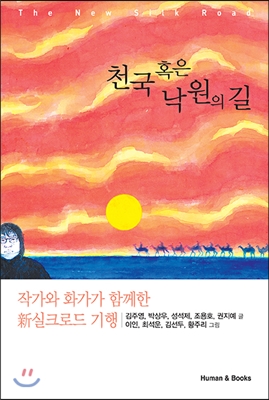
[The Road to Heaven or Paradise] is a travelogue that contains the author's writings while walking the Silk Road and the artist's drawings based on his own observations.
You can encounter the best of travel literature, a combination of insightful sentences and insightful pictures.
The authors' writings are vivid, as if they were personally traversing the Silk Road, and they offer moments of reflection born from deeply mature sentences. The artists' profound and captivating paintings, each depicting a section of the Silk Road with its own unique style, evoke profound insight and awe just by looking at them.
The history and cultural heritage of the road, and the stories of the people we met there, make the Silk Road feel not just a word, but a vivid place where people still live, walk, and enjoy life.
There is no better book to fully enjoy the Silk Road, which is emerging in the 21st century.
This book will make readers want to walk from Gyeongju to Istanbul like Cheoyong and Hyecho of old.
The Silk Road was a road through the desert, a road of salvation, a road to heaven, a road to paradise, a road of language, and a road of humanity.
We are retracing the arduous journey of cultural exchange between the East and the West.
Five representative Korean writers and four painters teamed up to walk the vast Silk Road, which began in Gyeongju, Korea, and passed through China, Central Asia, and Iran to Istanbul, Turkey.
[The Road to Heaven or Paradise] is a travelogue that contains the author's writings while walking the Silk Road and the artist's drawings based on his own observations.
You can encounter the best of travel literature, a combination of insightful sentences and insightful pictures.
The authors' writings are vivid, as if they were personally traversing the Silk Road, and they offer moments of reflection born from deeply mature sentences. The artists' profound and captivating paintings, each depicting a section of the Silk Road with its own unique style, evoke profound insight and awe just by looking at them.
The history and cultural heritage of the road, and the stories of the people we met there, make the Silk Road feel not just a word, but a vivid place where people still live, walk, and enjoy life.
There is no better book to fully enjoy the Silk Road, which is emerging in the 21st century.
This book will make readers want to walk from Gyeongju to Istanbul like Cheoyong and Hyecho of old.
- You can preview some of the book's contents.
Preview
index
Preface: Cheoyong, Traveling the Silk Road (written by Kim Joo-young)
The Beginning and End of the Gyeongju Silk Road (by Kim Joo-young)
Desert Road, Skull Road, and Path of Compassion (written by Park Sang-woo | illustrated by Lee In)
The Road to Heaven or Paradise (written by Seong Seok-je | illustrated by Choi Seok-un)
Walking through Persia, the Heart of the Silk Road (Written by Jo Yong-ho | Illustrated by Kim Seon-du)
Rediscovering the Silk Road (Written by Kwon Ji-ye | Illustrated by Hwang Ju-ri)
The Beginning and End of the Gyeongju Silk Road (by Kim Joo-young)
Desert Road, Skull Road, and Path of Compassion (written by Park Sang-woo | illustrated by Lee In)
The Road to Heaven or Paradise (written by Seong Seok-je | illustrated by Choi Seok-un)
Walking through Persia, the Heart of the Silk Road (Written by Jo Yong-ho | Illustrated by Kim Seon-du)
Rediscovering the Silk Road (Written by Kwon Ji-ye | Illustrated by Hwang Ju-ri)
Publisher's Review
A 21st Century Silk Road journey with Korea's leading writers and painters!
From the millennium-old capital of Gyeongju to Istanbul, Turkey, we retraced the Silk Road that Cheoyong and Hyecho walked.
The Silk Road was a road through the desert, a road of salvation, a road to heaven, a road to paradise, a road of language, and a road of humanity.
We are retracing the arduous journey of cultural exchange between the East and the West.
Five representative Korean writers and four painters teamed up to walk the vast Silk Road, which began in Gyeongju, Korea, and passed through China, Central Asia, and Iran to Istanbul, Turkey.
[The Road to Heaven or Paradise] is a travelogue that contains the author's writings while walking the Silk Road and the artist's drawings based on his own observations.
You can encounter the best of travel literature, a combination of insightful sentences and insightful pictures.
The claim that Cheoyong, the main character of the Cheoyong legend, was from the Western Regions has been around for a long time.
If Cheoyong really came from the West and settled in Silla, he would have traveled the Silk Road from the far West to Gyeongju, the eastern end of the Silk Road.
Hyecho, the first international scholar of our country, traveled to the Western Regions via the Silk Road from Silla and left behind [Wang Ocheonchukgukjeon].
Countless merchants and soldiers risked their lives on the epic journey between East and West along the Silk Road.
What does it mean to re-traverse the Silk Road in the 21st century? In a world where news travels between East and West in the blink of an eye with a single internet click and where cultures are shared almost in real time, what does it mean to retrace the Silk Road's journey on bare ground?
The answer is entirely contained in [The Path to Heaven or Paradise].
Author Kim Joo-young, who traveled the eastern end of the Silk Road, explores the courage of the people who walked that road and the cultural exchange; author Park Sang-woo and artist Lee In, who explored the Pamir Plateau from Xi'an, China, explore composition and reflection; author Seong Seok-je and artist Choi Seok-un, who walked the remote areas of Central Asia, explore freedom, paradise, and a return to childhood; author Cho Yong-ho and artist Kim Seon-du, who traveled through the Iranian region and found traces of old Persia, explore human traces that exist beyond the veils and prejudices of religion; author Kwon Ji-ye and artist Hwang Joo-ri, who examined Turkey, the western end of the Silk Road, in detail, rediscover the Silk Road as a path of culture and communication.
The authors' writings are vivid, as if they were personally traversing the Silk Road, and they offer moments of reflection born from deeply mature sentences. The artists' profound and captivating paintings, each depicting a section of the Silk Road with its own unique style, evoke profound insight and awe just by looking at them.
What's interesting is that the Korean Wave, represented by Psy's [Gangnam Style] and popular dramas, which can be felt everywhere along the Silk Road, is frequently mentioned.
It must have been a fascinating and interesting experience to witness the real-time spread and exchange of Eastern and Western cultures on an arduous journey thousands of years ago, from which even returning alive was not guaranteed.
The history and cultural heritage of the road, and the stories of the people we met there, make the Silk Road feel not just a word, but a vivid place where people still live, walk, and enjoy life.
There is no better book to fully enjoy the Silk Road, which is emerging in the 21st century.
This book will make readers want to walk from Gyeongju to Istanbul like Cheoyong and Hyecho of old.
From the millennium-old capital of Gyeongju to Istanbul, Turkey, we retraced the Silk Road that Cheoyong and Hyecho walked.
The Silk Road was a road through the desert, a road of salvation, a road to heaven, a road to paradise, a road of language, and a road of humanity.
We are retracing the arduous journey of cultural exchange between the East and the West.
Five representative Korean writers and four painters teamed up to walk the vast Silk Road, which began in Gyeongju, Korea, and passed through China, Central Asia, and Iran to Istanbul, Turkey.
[The Road to Heaven or Paradise] is a travelogue that contains the author's writings while walking the Silk Road and the artist's drawings based on his own observations.
You can encounter the best of travel literature, a combination of insightful sentences and insightful pictures.
The claim that Cheoyong, the main character of the Cheoyong legend, was from the Western Regions has been around for a long time.
If Cheoyong really came from the West and settled in Silla, he would have traveled the Silk Road from the far West to Gyeongju, the eastern end of the Silk Road.
Hyecho, the first international scholar of our country, traveled to the Western Regions via the Silk Road from Silla and left behind [Wang Ocheonchukgukjeon].
Countless merchants and soldiers risked their lives on the epic journey between East and West along the Silk Road.
What does it mean to re-traverse the Silk Road in the 21st century? In a world where news travels between East and West in the blink of an eye with a single internet click and where cultures are shared almost in real time, what does it mean to retrace the Silk Road's journey on bare ground?
The answer is entirely contained in [The Path to Heaven or Paradise].
Author Kim Joo-young, who traveled the eastern end of the Silk Road, explores the courage of the people who walked that road and the cultural exchange; author Park Sang-woo and artist Lee In, who explored the Pamir Plateau from Xi'an, China, explore composition and reflection; author Seong Seok-je and artist Choi Seok-un, who walked the remote areas of Central Asia, explore freedom, paradise, and a return to childhood; author Cho Yong-ho and artist Kim Seon-du, who traveled through the Iranian region and found traces of old Persia, explore human traces that exist beyond the veils and prejudices of religion; author Kwon Ji-ye and artist Hwang Joo-ri, who examined Turkey, the western end of the Silk Road, in detail, rediscover the Silk Road as a path of culture and communication.
The authors' writings are vivid, as if they were personally traversing the Silk Road, and they offer moments of reflection born from deeply mature sentences. The artists' profound and captivating paintings, each depicting a section of the Silk Road with its own unique style, evoke profound insight and awe just by looking at them.
What's interesting is that the Korean Wave, represented by Psy's [Gangnam Style] and popular dramas, which can be felt everywhere along the Silk Road, is frequently mentioned.
It must have been a fascinating and interesting experience to witness the real-time spread and exchange of Eastern and Western cultures on an arduous journey thousands of years ago, from which even returning alive was not guaranteed.
The history and cultural heritage of the road, and the stories of the people we met there, make the Silk Road feel not just a word, but a vivid place where people still live, walk, and enjoy life.
There is no better book to fully enjoy the Silk Road, which is emerging in the 21st century.
This book will make readers want to walk from Gyeongju to Istanbul like Cheoyong and Hyecho of old.
GOODS SPECIFICS
- Date of issue: November 11, 2013
- Page count, weight, size: 332 pages | 620g | 152*225*30mm
- ISBN13: 9788960781665
- ISBN10: 8960781665
You may also like
카테고리
korean


korean

![GQ KOREA Mark (Monthly): December [2025]](http://librairie.coreenne.fr/cdn/shop/files/8ef265dbbfbf186523ed75ba7319009d.jpg?v=1765340328&width=3840)


