

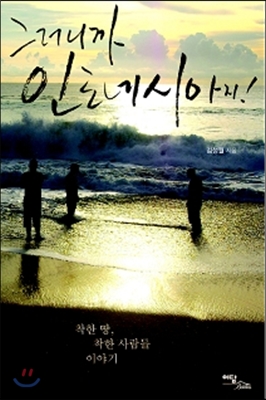
So it's Indonesia!
 |
Description
Book Introduction
When people think of Indonesia, many of them think of a poor country.
What comes to mind when you think of remote areas in Indonesia?
It seems like we need to start relief work right away.
But it is a misunderstanding.
The Gaai people, who cook rice in bamboo tubes and eat it, boast that they are the richest people in the world.
This is because bamboo tubes and banana leaves are disposable.
Are we happier than these people, even with our fancy cutlery and spoons?
If someone asked you if you were satisfied with your life right now.
A local coordinator who spent seven years traveling Indonesia has published "So, Indonesia," a book that reveals stories about Indonesian life and people we rarely knew about. Having appeared on programs like KBS VJ Special Forces, MBC TV's "Exclusive: Amazing World," and EBS's "World Theme Travel," the author has compiled the stories that couldn't be told on TV into a book.
If you feel disillusioned with life, try going to Indonesia.
What comes to mind when you think of remote areas in Indonesia?
It seems like we need to start relief work right away.
But it is a misunderstanding.
The Gaai people, who cook rice in bamboo tubes and eat it, boast that they are the richest people in the world.
This is because bamboo tubes and banana leaves are disposable.
Are we happier than these people, even with our fancy cutlery and spoons?
If someone asked you if you were satisfied with your life right now.
A local coordinator who spent seven years traveling Indonesia has published "So, Indonesia," a book that reveals stories about Indonesian life and people we rarely knew about. Having appeared on programs like KBS VJ Special Forces, MBC TV's "Exclusive: Amazing World," and EBS's "World Theme Travel," the author has compiled the stories that couldn't be told on TV into a book.
If you feel disillusioned with life, try going to Indonesia.
- You can preview some of the book's contents.
Preview
Detailed image
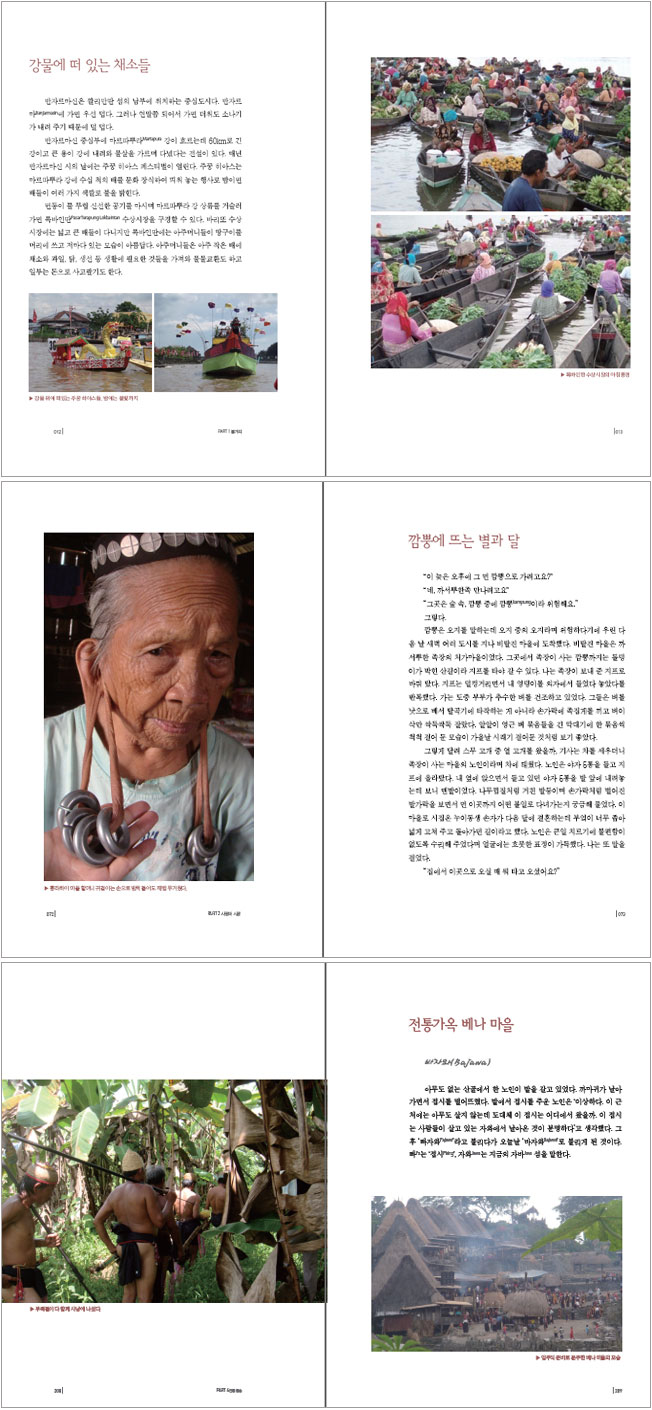
Into the book
Part 1.
Things to see
If you feel disillusioned with life and want to inject some vitality into it, I recommend visiting Kawaizen.
With the beautiful lake as a backdrop, the laborers climb up and down the cliffs carrying heavy loads of sulfur. Touching the calluses on their shoulders will make you appreciate your life.
And when you hear the creaking sound of the baskets containing a hundred kilograms of sulfur with each step they take, you can't help but praise the workers.
Even today, dozens of domestic and international tourists, captivated by the Kawaizen scenery, will be taking a walk up the 2,380-meter-high mountain, wiping their sweat away in the pine breeze.
Part 2.
People and people
“What did you ride when you came here from home?”
“I came on foot.”
I looked down once more as if checking the old man's bare feet.
“It takes about a few hours to walk.”
“We left at dawn and arrived during the day, so it took about half a day.”
The old man spoke nonchalantly about walking barefoot for half a day, not even wearing shoes, as if he were just going to the local supermarket.
I arrived at my destination, Kampoong, when smoke from cooking was rising from the chimneys of each house.
It was Ciptaglar, the home of Abah Ugi, the 9th chieftain of the kasepuhan, located within the Halimun National Park.
PD Kang, who came to Indonesia for the first time, was so amazed that he shouted and exclaimed in admiration while on the rubber boat.
“Oh my, that’s amazing.
“In the river, an old man washes his clothes, and over there, people are taking a dump and brushing their teeth.”
"What's so strange about that? Is it the old man doing the laundry? Or the dirty river water?"
“The dirty river water and the man doing the laundry are all fascinating.”
I've seen people admire beautiful scenery, but this is the first time I've seen someone admire dirty river water.
The rubber boat went near the people.
I spoke up.
“Sir, will I get clean if I wash in this water?”
“What’s wrong with this water? We even brush our teeth with this river water….”
The man squeezed toothpaste onto his toothbrush and brushed his teeth, then scooped up river water with both hands, put it in his mouth, rinsed it thoroughly, and then spat it out.
I felt something very special(?) when I saw the daily routine on the rubber boat.
Part 3.
Lifestyle and culture
2:15 AM!
While I was in a sweet sleep, there was a knock on the door from outside saying, 'It's time to go to the dawn market.'
Last night, they clearly said that a bus would come in front of the guesthouse around 3 o'clock.
But how desperate must this country bus driver, who has no concept of time, have been to be waiting at 2:30?
I really didn't want to get up, so I just scratched my arm, which had been bitten by a mosquito all night.
The people of Lamarera go to the seven-day market.
However, to purchase what they need in the middle, the women go out to the neighboring villages to sell.
Today is the day I go out peddling, and I promised yesterday that I would go with you.
The Palau people held the sea very sacred.
When a baby is born, the umbilical cord is cut and the baby is submerged in sea water.
When the baby came out after diving, if it didn't cry, it was destined to live as a Palau, so they lived together, but if it cried, they were sent to land.
When a person dies, he is not buried at sea, but on the beautiful island of Manimbara, where a ceremony is held every year to pray for his peace.
It is their custom to go into the sea after the funeral to wash away evil spirits and disasters.
Urinating directly into the sea is forbidden as it is disrespectful to the sea god.
The man lay on the railroad tracks, intending to commit suicide.
He might have comfortably laid down with his ankles on one side of the tracks and his neck on the other, staring at the blazing sun, lamenting the world and even complaining about his fate.
Now, as soon as the train passes, the man dies without a second thought.
How long have you been lying on the tracks?
The train didn't pass and the sun was hot.
Unable to bear it, the man gave up on suicide and got up from the railroad tracks.
But strangely, my paralyzed hands and feet started moving.
The story of this man's suicide spread like wildfire.
After that, the poor and the sick began to gather at the Rawa Station, hoping to be healed.
High blood pressure, diabetes, numbness in hands and feet, body aches, and even dieting for obese people… … .
On a cool, breezy afternoon, dozens of people would lie down on both sides of the railroad tracks until it got dark.
Part 4.
traditional customs
The wologai houses had roofs made of reeds and had a unique shape.
The shape of the roof looked like a large paintbrush standing upright.
It was also strange that each house had something strange carved on its front door.
Entering the house, the floor was engraved with fruit and animal shapes like a woodblock print, and the wooden door leading into the house was intricately carved with only the important parts of men and women.
The doorknob depicted a man's genitals, and the door leaf depicted a woman's breasts and even the secret parts of the womb.
The Dani men wore only kotekas, and the women wore Sali skirts with their breasts exposed.
Meeting people like this really made me feel like I was in another world.
Their first greeting is said to be a handshake and the women say 'Lauk' and the men say 'Nayak'.
He said that the word has many meanings, such as 'good,' 'nice,' and 'congratulations.'
They served us, their guests, water instead of coffee or tea.
I had walked a long way from the road to the village, so I got some water to drink.
There is no well near the house, so I asked where the water comes from, and he said it comes from the river I fell into.
Their culture is that only men can drink the water that men bring, and women cannot drink the water that women bring, and men can drink the water that women bring.
Moreover, it is said that it is also a culture for a man to bring water and serve it to guests.
One of the tribesmen said to me,
“Mrs. Kim, do you know which country the richest people in the world are from?”
“The richest… well.”
“We are the Gaai people who cook rice on bamboo sticks.”
“Why is it expensive to cook rice in bamboo? There are even restaurants in Korea that sell rice cooked in bamboo tubes.”
I didn't understand.
You are the richest people, who do not eat rice from a gold bowl with a silver spoon, but cook rice in a bamboo tube and eat it with your hands on a banana leaf.
“How did that happen?”
“No other country in the world uses disposable rice cookers and bowls like we do.”
“Oh, I see.
So, I dined with some of the richest people in the world today.”
Things to see
If you feel disillusioned with life and want to inject some vitality into it, I recommend visiting Kawaizen.
With the beautiful lake as a backdrop, the laborers climb up and down the cliffs carrying heavy loads of sulfur. Touching the calluses on their shoulders will make you appreciate your life.
And when you hear the creaking sound of the baskets containing a hundred kilograms of sulfur with each step they take, you can't help but praise the workers.
Even today, dozens of domestic and international tourists, captivated by the Kawaizen scenery, will be taking a walk up the 2,380-meter-high mountain, wiping their sweat away in the pine breeze.
Part 2.
People and people
“What did you ride when you came here from home?”
“I came on foot.”
I looked down once more as if checking the old man's bare feet.
“It takes about a few hours to walk.”
“We left at dawn and arrived during the day, so it took about half a day.”
The old man spoke nonchalantly about walking barefoot for half a day, not even wearing shoes, as if he were just going to the local supermarket.
I arrived at my destination, Kampoong, when smoke from cooking was rising from the chimneys of each house.
It was Ciptaglar, the home of Abah Ugi, the 9th chieftain of the kasepuhan, located within the Halimun National Park.
PD Kang, who came to Indonesia for the first time, was so amazed that he shouted and exclaimed in admiration while on the rubber boat.
“Oh my, that’s amazing.
“In the river, an old man washes his clothes, and over there, people are taking a dump and brushing their teeth.”
"What's so strange about that? Is it the old man doing the laundry? Or the dirty river water?"
“The dirty river water and the man doing the laundry are all fascinating.”
I've seen people admire beautiful scenery, but this is the first time I've seen someone admire dirty river water.
The rubber boat went near the people.
I spoke up.
“Sir, will I get clean if I wash in this water?”
“What’s wrong with this water? We even brush our teeth with this river water….”
The man squeezed toothpaste onto his toothbrush and brushed his teeth, then scooped up river water with both hands, put it in his mouth, rinsed it thoroughly, and then spat it out.
I felt something very special(?) when I saw the daily routine on the rubber boat.
Part 3.
Lifestyle and culture
2:15 AM!
While I was in a sweet sleep, there was a knock on the door from outside saying, 'It's time to go to the dawn market.'
Last night, they clearly said that a bus would come in front of the guesthouse around 3 o'clock.
But how desperate must this country bus driver, who has no concept of time, have been to be waiting at 2:30?
I really didn't want to get up, so I just scratched my arm, which had been bitten by a mosquito all night.
The people of Lamarera go to the seven-day market.
However, to purchase what they need in the middle, the women go out to the neighboring villages to sell.
Today is the day I go out peddling, and I promised yesterday that I would go with you.
The Palau people held the sea very sacred.
When a baby is born, the umbilical cord is cut and the baby is submerged in sea water.
When the baby came out after diving, if it didn't cry, it was destined to live as a Palau, so they lived together, but if it cried, they were sent to land.
When a person dies, he is not buried at sea, but on the beautiful island of Manimbara, where a ceremony is held every year to pray for his peace.
It is their custom to go into the sea after the funeral to wash away evil spirits and disasters.
Urinating directly into the sea is forbidden as it is disrespectful to the sea god.
The man lay on the railroad tracks, intending to commit suicide.
He might have comfortably laid down with his ankles on one side of the tracks and his neck on the other, staring at the blazing sun, lamenting the world and even complaining about his fate.
Now, as soon as the train passes, the man dies without a second thought.
How long have you been lying on the tracks?
The train didn't pass and the sun was hot.
Unable to bear it, the man gave up on suicide and got up from the railroad tracks.
But strangely, my paralyzed hands and feet started moving.
The story of this man's suicide spread like wildfire.
After that, the poor and the sick began to gather at the Rawa Station, hoping to be healed.
High blood pressure, diabetes, numbness in hands and feet, body aches, and even dieting for obese people… … .
On a cool, breezy afternoon, dozens of people would lie down on both sides of the railroad tracks until it got dark.
Part 4.
traditional customs
The wologai houses had roofs made of reeds and had a unique shape.
The shape of the roof looked like a large paintbrush standing upright.
It was also strange that each house had something strange carved on its front door.
Entering the house, the floor was engraved with fruit and animal shapes like a woodblock print, and the wooden door leading into the house was intricately carved with only the important parts of men and women.
The doorknob depicted a man's genitals, and the door leaf depicted a woman's breasts and even the secret parts of the womb.
The Dani men wore only kotekas, and the women wore Sali skirts with their breasts exposed.
Meeting people like this really made me feel like I was in another world.
Their first greeting is said to be a handshake and the women say 'Lauk' and the men say 'Nayak'.
He said that the word has many meanings, such as 'good,' 'nice,' and 'congratulations.'
They served us, their guests, water instead of coffee or tea.
I had walked a long way from the road to the village, so I got some water to drink.
There is no well near the house, so I asked where the water comes from, and he said it comes from the river I fell into.
Their culture is that only men can drink the water that men bring, and women cannot drink the water that women bring, and men can drink the water that women bring.
Moreover, it is said that it is also a culture for a man to bring water and serve it to guests.
One of the tribesmen said to me,
“Mrs. Kim, do you know which country the richest people in the world are from?”
“The richest… well.”
“We are the Gaai people who cook rice on bamboo sticks.”
“Why is it expensive to cook rice in bamboo? There are even restaurants in Korea that sell rice cooked in bamboo tubes.”
I didn't understand.
You are the richest people, who do not eat rice from a gold bowl with a silver spoon, but cook rice in a bamboo tube and eat it with your hands on a banana leaf.
“How did that happen?”
“No other country in the world uses disposable rice cookers and bowls like we do.”
“Oh, I see.
So, I dined with some of the richest people in the world today.”
---From the text
Publisher's Review
Indonesia, a poor country?
A local coordinator who has been working in Indonesia for 7 years
We covered the remote areas of Indonesia!
When people think of Indonesia, many of them think of a poor country.
What comes to mind when you think of remote areas in Indonesia?
It seems like we need to start relief work right away.
But it is a misunderstanding.
The Gaai people, who cook rice in bamboo tubes and eat it, boast that they are the richest people in the world.
This is because bamboo tubes and banana leaves are disposable.
Are we happier than these people, even with our fancy cutlery and spoons?
If someone asked you if you were satisfied with your life right now.
A local coordinator who spent seven years traveling Indonesia has published "So, Indonesia," a book that reveals stories about Indonesian life and people we rarely knew about. Having appeared on programs like KBS VJ Special Forces, MBC TV's "Exclusive: Amazing World," and EBS's "World Theme Travel," the author has compiled the stories that couldn't be told on TV into a book.
If you feel disillusioned with life, try going to Indonesia.
From Indonesian culture to life
A panoramic view of the daily life of a distant island nation
People lying on the railroad tracks with hope
A wooden gate carved with the private parts of men and women
The custom that only men drink the water they bring
Women wearing only skirts with their breasts exposed
People who are happy even when eating rice in a bamboo tube
Indonesia, a place where good people live.
Although they are not as affluent as us, their simple lives are filled with deep happiness.
This book is divided into four parts, providing a panoramic view of Indonesia's sights, people, lifestyle, and traditional customs.
Among the polygamous Sasak people, a man runs away with a woman and obtains her consent to marry him.
Polman, an uninhabited island in western Sulawesi, is beautiful, but be careful not to step on sea urchins or coral on the beach.
If you are planning to visit Madura Island, I recommend the bullfighting called Karapan Sapi.
It is forbidden to travel to Bali on a quiet day.
On New Year's Day, tourists are not allowed to leave their hotels all day.
Aren't you curious to know if the story in this book is true?
So, Indonesia!
A local coordinator who has been working in Indonesia for 7 years
We covered the remote areas of Indonesia!
When people think of Indonesia, many of them think of a poor country.
What comes to mind when you think of remote areas in Indonesia?
It seems like we need to start relief work right away.
But it is a misunderstanding.
The Gaai people, who cook rice in bamboo tubes and eat it, boast that they are the richest people in the world.
This is because bamboo tubes and banana leaves are disposable.
Are we happier than these people, even with our fancy cutlery and spoons?
If someone asked you if you were satisfied with your life right now.
A local coordinator who spent seven years traveling Indonesia has published "So, Indonesia," a book that reveals stories about Indonesian life and people we rarely knew about. Having appeared on programs like KBS VJ Special Forces, MBC TV's "Exclusive: Amazing World," and EBS's "World Theme Travel," the author has compiled the stories that couldn't be told on TV into a book.
If you feel disillusioned with life, try going to Indonesia.
From Indonesian culture to life
A panoramic view of the daily life of a distant island nation
People lying on the railroad tracks with hope
A wooden gate carved with the private parts of men and women
The custom that only men drink the water they bring
Women wearing only skirts with their breasts exposed
People who are happy even when eating rice in a bamboo tube
Indonesia, a place where good people live.
Although they are not as affluent as us, their simple lives are filled with deep happiness.
This book is divided into four parts, providing a panoramic view of Indonesia's sights, people, lifestyle, and traditional customs.
Among the polygamous Sasak people, a man runs away with a woman and obtains her consent to marry him.
Polman, an uninhabited island in western Sulawesi, is beautiful, but be careful not to step on sea urchins or coral on the beach.
If you are planning to visit Madura Island, I recommend the bullfighting called Karapan Sapi.
It is forbidden to travel to Bali on a quiet day.
On New Year's Day, tourists are not allowed to leave their hotels all day.
Aren't you curious to know if the story in this book is true?
So, Indonesia!
GOODS SPECIFICS
- Date of issue: October 5, 2012
- Page count, weight, size: 218 pages | 344g | 152*225*20mm
- ISBN13: 9788926838174
- ISBN10: 892683817X
You may also like
카테고리
korean


korean

![GQ KOREA Mark (Monthly): December [2025]](http://librairie.coreenne.fr/cdn/shop/files/8ef265dbbfbf186523ed75ba7319009d.jpg?v=1765340328&width=3840)


