

Special art museums in New York
 |
Description
Book Introduction
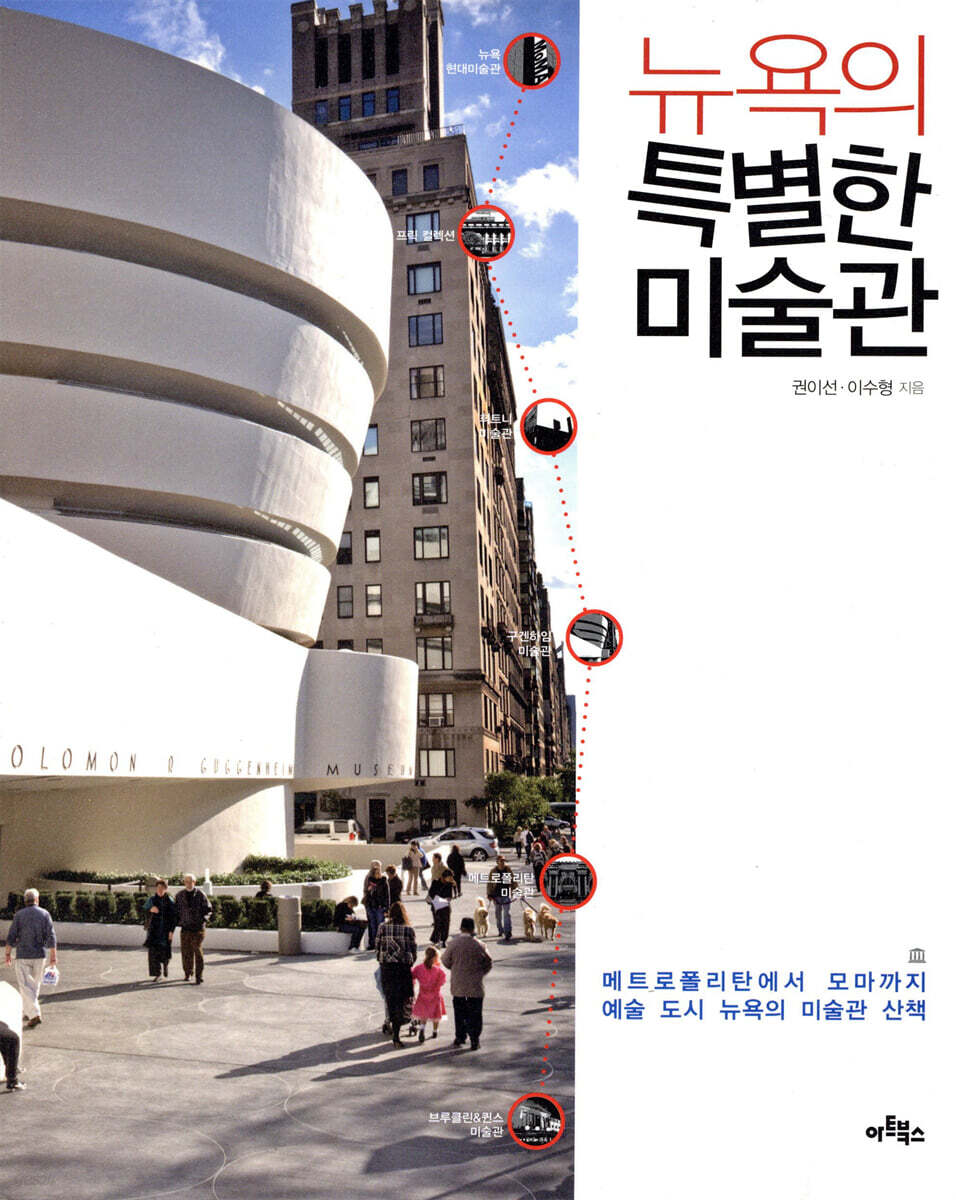
Experience vibrant New York modern art at 22 art museums that everyone wants to visit at least once!
The author, who works as a curator in New York and has published various works in the field of culture and arts, introduces seven representative art museums in New York City, the city of art, from the Museum of Modern Art to the Metropolitan Museum of Art, as well as smaller galleries and museums specializing in various fields.
Through the museums introduced by the authors, we can see how New York became the center of modern art and the capital of the art world.
Although each art museum in New York provides guide catalogs and audio services, there were limitations in conveying the diverse stories of the museum to visitors.
This book seeks to address this regret by selecting seven representative art museums in New York and introducing their history from their inception to the present.
From Soho to Harlem, from Manhattan to Brooklyn, the authors' extensive travels will provide a valuable opportunity to thoroughly explore New York's art museums, previously only introduced as part of a New York travel itinerary.
It examines the circumstances surrounding the acquisition of specific works by art museums, and also shows the development of New York art based on this.
Without understanding the hardware (the art museum), understanding the software (the collection and artists) is bound to be low.
If you learn about the development of art museums to reach their current state and the characteristics and systems by which they are currently structured and operated, your understanding of art history as well as the artwork itself will be greatly enhanced.
We can also consider the role of art museums as a hub for corporate social responsibility activities, which have recently become increasingly important, and gain insight into the present and future of the art world contained within them.
The author, who works as a curator in New York and has published various works in the field of culture and arts, introduces seven representative art museums in New York City, the city of art, from the Museum of Modern Art to the Metropolitan Museum of Art, as well as smaller galleries and museums specializing in various fields.
Through the museums introduced by the authors, we can see how New York became the center of modern art and the capital of the art world.
Although each art museum in New York provides guide catalogs and audio services, there were limitations in conveying the diverse stories of the museum to visitors.
This book seeks to address this regret by selecting seven representative art museums in New York and introducing their history from their inception to the present.
From Soho to Harlem, from Manhattan to Brooklyn, the authors' extensive travels will provide a valuable opportunity to thoroughly explore New York's art museums, previously only introduced as part of a New York travel itinerary.
It examines the circumstances surrounding the acquisition of specific works by art museums, and also shows the development of New York art based on this.
Without understanding the hardware (the art museum), understanding the software (the collection and artists) is bound to be low.
If you learn about the development of art museums to reach their current state and the characteristics and systems by which they are currently structured and operated, your understanding of art history as well as the artwork itself will be greatly enhanced.
We can also consider the role of art museums as a hub for corporate social responsibility activities, which have recently become increasingly important, and gain insight into the present and future of the art world contained within them.
- You can preview some of the book's contents.
Preview
index
Introduction_Starting a tour of New York's art museums
1.
The Museum of Modern Art, a cultural hub for New Yorkers
An art playground in the city center
Pursuing a Differentiated Collection | Experiments Under an Innovative System | The Concept of Modernity Reinterpreted by Yoshio Taniguchi | Controversy Over Exhibition Hall Changes and Admission Fee Increases | Breakthroughs in New Exhibition Forms
Art Story 01: The Architect of New York Architecture_Philip Johnson
Tour the Museum of Modern Art in New York
Art Story 02 Icon of Modern Art_Andy Warhol
Art Story 03: Master of Impressionism_Claude Monet
Highlights of the Museum of Modern Art Collection
New York Art Walk 01: Revealing Tradition_The American Folk Art Museum
New York Art Walk 02: Discovering the Value of Materials_Art & Design Museum
New York Art Walk 03: A Living Art Museum and Information Center_Rockefeller Center
2.
The Frick Collection, a Manhattan oasis for adults
The coexistence of quietness and freedom
Vermeer, who brilliantly captured the quiet moments of everyday life | The endless desire for wealth turned into a competition for charity and sharing | A quiet temple in the heart of Manhattan | The Frick, who built a collection of comfortable works | The Frick's unexpected acquisition of works by masters | Giving back to society the wealth he amassed through the American Dream
Art Story 04 A Midsummer Night's Festival_New York Museum of Art Festival
Browse the Freak Collection
Art Story 05: The Painter of Light Who Loved the Female Body_Pierre-Auguste Renoir
Freak Collection Highlights
New York Art Walk 04: A Treasure Trove of Innovative Design_Cooper-Hewitt, National Design Museum
New York Art Walk 05: A New Yorker's Knowledge Warehouse_Morgan Library & Art Museum
New York Art Walk 06 Manhattan's Gateway_Grand Central Terminal
New York Art Walk 07: Madison Square Garden: An Outdoor Exhibition Hall Where You Can Glimpse American Architectural History
3.
The Whitney Museum of American Art, a place of endless love for American art
The center of American modern art
The Whitney Club, the epicenter of American art | Beyond physical space, to a psychological sense of space | Modern American art developed with an awareness of European art | Georgia O'Keeffe, Edward Hopper, and Alexander Calder | The diverse evolution of American art | Diversity achieved within a broad spectrum
Art Story 06 Creating the World of America in New York_Edward Hopper
Art Story 07: Perfecting the Manga Technique_Roy Lichtenstein
Tour the Whitney Museum of American Art
Whitney Museum Collection Highlights
New York Art Walk 08: Newness, Beyond Value_New Museum
New York Art Walk 09: A Vivid Look at New York's Contemporary Art Scene_Chelsea Gallery
New York Art Walk 10: Encountering Books in New York_Exploring New York Bookstores
4.
Solomon R. Aiming for the Internationalization of Art Museums
Guggenheim Museum
An art museum that grew amid controversy
Bilbao Success Achieves Internationalization | Exhibitions Driven by a Strong Business Mind | Krens's Sudden Retirement | Wright's Innovation That Revolutionized Museum Architecture | Form and Function Must Not Be Separated | Featured Exhibitions Completed with Creative Approaches | Exploring New Developments in a Changing Environment
Art Story 08 Challenging the Taboo of Homosexuality_Robert Mapplethorpe
Art Story 09: Guggenheim's Growth: Wassily Kandinsky
Tour the Guggenheim Museum
Solomon R.
Guggenheim Museum Collection Highlights
New York Art Walk 11: Neue Galerie, a Hub of German and Austrian Art
New York Art Walk: 12 Colorful Caribbean Art Experiences_El Museo del Barrio
New York Art Walk 13: A Treasure Trove of Jewish History_The Jewish Museum
New York Art Walk 14: Made in Harlem, Made by Black_Harlem Studio Museum
5.
The Metropolitan Museum of Art, where all memories of human civilization are gathered in one place.
Providing a foundation for art studies and art education
A development plan built on solid leadership | Continuous expansion efforts reaffirmed as an Asian art museum | Uniqueness built on a diverse collection | Planning large-scale exhibitions and strengthening the contemporary art collection | A contemporary museum embodied in fashion, photography, and installation art | Making the return of artifacts a cornerstone of better international exchange | Quality educational facilities and diverse public programs
Tour the Metropolitan Museum of Art
Art Story 10: The Metropolitan Museum of Art's Greatest Patrons: The Rockefellers and Walter Annenberg
Metropolitan Museum of Art Collection Highlights
New York Art Walk 15: A Time Machine to Medieval Europe_The Cloisters
New York Art Walk 16: A Time Machine to Explore New York's Past_The Museum of the City of New York
6.
Another New York City museum in Brooklyn and Queens
A Look Inside America at the Brooklyn Museum
A peek inside the Brooklyn Museum
African, American, and Asian Art Gallery | Ancient Egyptian, European, and American Art Gallery
Enjoy ethnic culture at the Queen's Museum of Art
New York Art Walk 17: The Intersection of East and West, Where Naturalness Stands Out_Noguchi Museum
New York Art Walk 18: The Moving Image Museum: A Report on the American Film Industry
New York Art Walk 19: The Testing Grounds of Contemporary Art_PS1
New York Art Walk 20 Where Bridges and Art Meet_Brooklyn Bridge
Appendix: A Brief Reading of 70 Years of New York Art, 400
1.
The Museum of Modern Art, a cultural hub for New Yorkers
An art playground in the city center
Pursuing a Differentiated Collection | Experiments Under an Innovative System | The Concept of Modernity Reinterpreted by Yoshio Taniguchi | Controversy Over Exhibition Hall Changes and Admission Fee Increases | Breakthroughs in New Exhibition Forms
Art Story 01: The Architect of New York Architecture_Philip Johnson
Tour the Museum of Modern Art in New York
Art Story 02 Icon of Modern Art_Andy Warhol
Art Story 03: Master of Impressionism_Claude Monet
Highlights of the Museum of Modern Art Collection
New York Art Walk 01: Revealing Tradition_The American Folk Art Museum
New York Art Walk 02: Discovering the Value of Materials_Art & Design Museum
New York Art Walk 03: A Living Art Museum and Information Center_Rockefeller Center
2.
The Frick Collection, a Manhattan oasis for adults
The coexistence of quietness and freedom
Vermeer, who brilliantly captured the quiet moments of everyday life | The endless desire for wealth turned into a competition for charity and sharing | A quiet temple in the heart of Manhattan | The Frick, who built a collection of comfortable works | The Frick's unexpected acquisition of works by masters | Giving back to society the wealth he amassed through the American Dream
Art Story 04 A Midsummer Night's Festival_New York Museum of Art Festival
Browse the Freak Collection
Art Story 05: The Painter of Light Who Loved the Female Body_Pierre-Auguste Renoir
Freak Collection Highlights
New York Art Walk 04: A Treasure Trove of Innovative Design_Cooper-Hewitt, National Design Museum
New York Art Walk 05: A New Yorker's Knowledge Warehouse_Morgan Library & Art Museum
New York Art Walk 06 Manhattan's Gateway_Grand Central Terminal
New York Art Walk 07: Madison Square Garden: An Outdoor Exhibition Hall Where You Can Glimpse American Architectural History
3.
The Whitney Museum of American Art, a place of endless love for American art
The center of American modern art
The Whitney Club, the epicenter of American art | Beyond physical space, to a psychological sense of space | Modern American art developed with an awareness of European art | Georgia O'Keeffe, Edward Hopper, and Alexander Calder | The diverse evolution of American art | Diversity achieved within a broad spectrum
Art Story 06 Creating the World of America in New York_Edward Hopper
Art Story 07: Perfecting the Manga Technique_Roy Lichtenstein
Tour the Whitney Museum of American Art
Whitney Museum Collection Highlights
New York Art Walk 08: Newness, Beyond Value_New Museum
New York Art Walk 09: A Vivid Look at New York's Contemporary Art Scene_Chelsea Gallery
New York Art Walk 10: Encountering Books in New York_Exploring New York Bookstores
4.
Solomon R. Aiming for the Internationalization of Art Museums
Guggenheim Museum
An art museum that grew amid controversy
Bilbao Success Achieves Internationalization | Exhibitions Driven by a Strong Business Mind | Krens's Sudden Retirement | Wright's Innovation That Revolutionized Museum Architecture | Form and Function Must Not Be Separated | Featured Exhibitions Completed with Creative Approaches | Exploring New Developments in a Changing Environment
Art Story 08 Challenging the Taboo of Homosexuality_Robert Mapplethorpe
Art Story 09: Guggenheim's Growth: Wassily Kandinsky
Tour the Guggenheim Museum
Solomon R.
Guggenheim Museum Collection Highlights
New York Art Walk 11: Neue Galerie, a Hub of German and Austrian Art
New York Art Walk: 12 Colorful Caribbean Art Experiences_El Museo del Barrio
New York Art Walk 13: A Treasure Trove of Jewish History_The Jewish Museum
New York Art Walk 14: Made in Harlem, Made by Black_Harlem Studio Museum
5.
The Metropolitan Museum of Art, where all memories of human civilization are gathered in one place.
Providing a foundation for art studies and art education
A development plan built on solid leadership | Continuous expansion efforts reaffirmed as an Asian art museum | Uniqueness built on a diverse collection | Planning large-scale exhibitions and strengthening the contemporary art collection | A contemporary museum embodied in fashion, photography, and installation art | Making the return of artifacts a cornerstone of better international exchange | Quality educational facilities and diverse public programs
Tour the Metropolitan Museum of Art
Art Story 10: The Metropolitan Museum of Art's Greatest Patrons: The Rockefellers and Walter Annenberg
Metropolitan Museum of Art Collection Highlights
New York Art Walk 15: A Time Machine to Medieval Europe_The Cloisters
New York Art Walk 16: A Time Machine to Explore New York's Past_The Museum of the City of New York
6.
Another New York City museum in Brooklyn and Queens
A Look Inside America at the Brooklyn Museum
A peek inside the Brooklyn Museum
African, American, and Asian Art Gallery | Ancient Egyptian, European, and American Art Gallery
Enjoy ethnic culture at the Queen's Museum of Art
New York Art Walk 17: The Intersection of East and West, Where Naturalness Stands Out_Noguchi Museum
New York Art Walk 18: The Moving Image Museum: A Report on the American Film Industry
New York Art Walk 19: The Testing Grounds of Contemporary Art_PS1
New York Art Walk 20 Where Bridges and Art Meet_Brooklyn Bridge
Appendix: A Brief Reading of 70 Years of New York Art, 400
Detailed image
Into the book
Considered one of the world's top three modern art museums, along with the Pompidou Center in Paris and the Tate Modern in London, this is not just a place to appreciate paintings and sculptures.
Although contemporary art pieces form the centerpiece, works more closely related to everyday life, such as tables, chairs, photographs, and posters, are also included in the exhibition.
This place truly showcases a side of New York where art is woven into everyday life, and furthermore, it fulfills a cultural function that breathes life into the city.
Perhaps it would be more accurate to call it an urban playground for New Yorkers who come to buy functionally designed household goods or art books.
For those with a somewhat rigid perspective and concept of art itself, the Museum of Modern Art in New York offers a constant source of flexible thinking. ---The Museum of Modern Art, a cultural hangout for New Yorkers
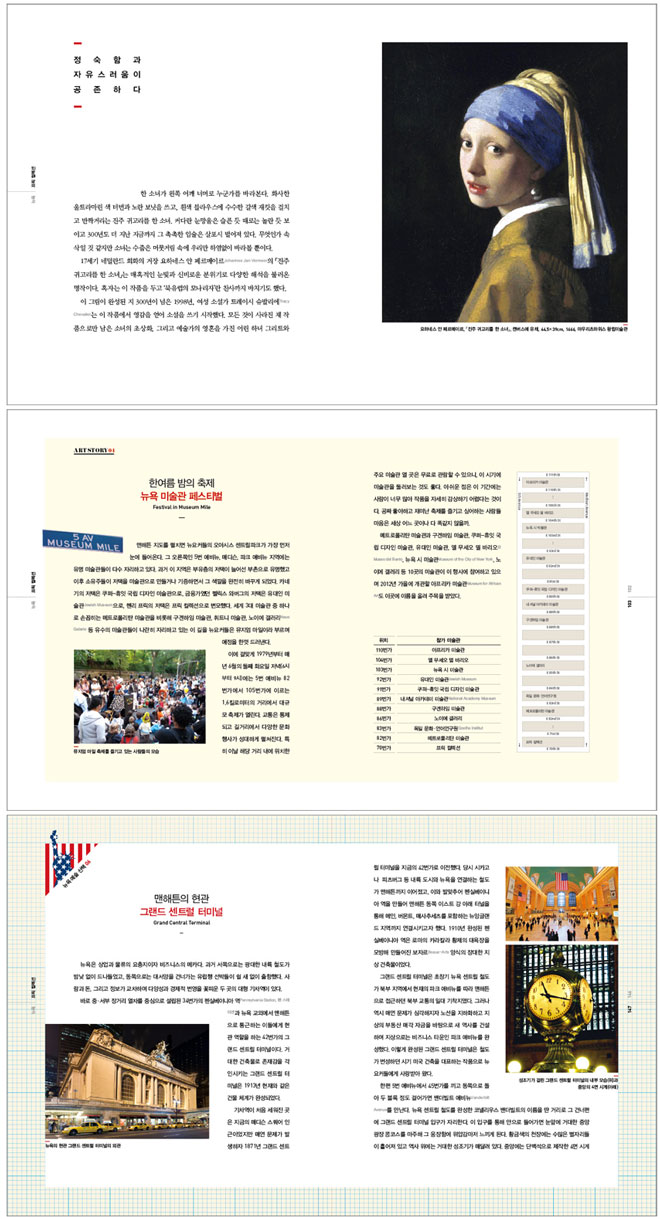
The golden ceiling decorated with colorful chairs is dazzling, and the bookshelves are filled with various ancient books.
The Morgan Library & Art Museum is a massive library boasting such a vast collection of books that book lovers will have no idea where to look.
This building was built in 1906 by John Piermont Morgan, a financier who amassed the wealthiest fortune in the United States, to house his library. It was a massive undertaking, costing $1.2 million at the time of its construction.
Morgan was a world-class art collector, donating Raphael's masterpieces to the Metropolitan Museum of Art and his jewelry collection to the Museum of Natural History.
However, he personally collected drawings, prints, rare books, and sheet music, which became the main collection of the museum.
It houses three copies of the Gutenberg Bible, drawings by Leonardo da Vinci and Michelangelo, manuscripts by Charles Dickens, and handwritten manuscripts by Beethoven and Mozart. ---The Morgan Library & Art Museum, a repository of New Yorkers' knowledge.
New York, the loudest and busiest city in the world! It's a place teeming with tourists year-round, where diverse people fight their own battles.
The world's most reckless taxis and the quick steps of New Yorkers ignoring traffic signals as they cross the street vividly portray the 24-hour energy of this city that never sleeps.
About a century ago, there was an artist who transformed this city into a world of perfect tranquility.
Edward Hopper, who ushered in a new era of realism in the American art world, created his own unique world of art with a calm and quiet atmosphere that belied the bustle of New York.
There are three main formulas in his paintings.
A large window, strong light, and a person who looks infinitely lonely.
The light and shadows in his work became the medium that brought out the strange balance between characters and themes. ---Edward Hopper, who created the world of America in New York
“Bilbao, Berlin, Salzburg, now Abu Dhabi and Guadalajara!” This isn’t the slogan of an ambitious entrepreneur looking to expand overseas.
Since its establishment in 1939, Solomon R. has held an important position in contemporary art.
The Guggenheim Foundation is opening art museums around the world under its macro strategy of internationalization.
Solomon R., who has brought remarkable growth to the art world over the decades,
The Guggenheim Museum boasts the broadest brand recognition and influence of any art museum in the world.
Of course, it remains debatable whether these strategies are artistic efforts to spread diverse cultures or part of a franchise-based expansion strategy.
---The Museum That Grew in Controversy, Solomon R.
Guggenheim Museum
Large art museums, which serve as treasure troves of knowledge and institutions of learning, sometimes face the inevitable task of returning artifacts due to unclear acquisition processes.
In 2006, a vase that was considered a highlight of the Greco-Roman Art Museum was officially returned to Italy.
The "krater" jar, used in ancient Greece to mix wine and water, was created by the Greek painter and potter Euphronios and has been one of the Metropolitan Museum of Art's most prized artifacts since its acquisition in 1972.
However, following Italian claims that the artifact was stolen from a tomb in northern Rome, the museum approved the return agreement and returned it along with other cultural artifacts.
Of course, in return, Italy also generously reciprocated the Metropolitan Museum's generosity by loaning the museum an indefinite number of ancient artifacts, including three ceramic pieces.
The Metropolitan Museum of Art has won praise both within and outside the art world for its flexible approach to using the potentially contentious and conflict-ridden issue of returning artifacts as a cornerstone of better international exchange.
Although contemporary art pieces form the centerpiece, works more closely related to everyday life, such as tables, chairs, photographs, and posters, are also included in the exhibition.
This place truly showcases a side of New York where art is woven into everyday life, and furthermore, it fulfills a cultural function that breathes life into the city.
Perhaps it would be more accurate to call it an urban playground for New Yorkers who come to buy functionally designed household goods or art books.
For those with a somewhat rigid perspective and concept of art itself, the Museum of Modern Art in New York offers a constant source of flexible thinking. ---The Museum of Modern Art, a cultural hangout for New Yorkers
The golden ceiling decorated with colorful chairs is dazzling, and the bookshelves are filled with various ancient books.
The Morgan Library & Art Museum is a massive library boasting such a vast collection of books that book lovers will have no idea where to look.
This building was built in 1906 by John Piermont Morgan, a financier who amassed the wealthiest fortune in the United States, to house his library. It was a massive undertaking, costing $1.2 million at the time of its construction.
Morgan was a world-class art collector, donating Raphael's masterpieces to the Metropolitan Museum of Art and his jewelry collection to the Museum of Natural History.
However, he personally collected drawings, prints, rare books, and sheet music, which became the main collection of the museum.
It houses three copies of the Gutenberg Bible, drawings by Leonardo da Vinci and Michelangelo, manuscripts by Charles Dickens, and handwritten manuscripts by Beethoven and Mozart. ---The Morgan Library & Art Museum, a repository of New Yorkers' knowledge.
New York, the loudest and busiest city in the world! It's a place teeming with tourists year-round, where diverse people fight their own battles.
The world's most reckless taxis and the quick steps of New Yorkers ignoring traffic signals as they cross the street vividly portray the 24-hour energy of this city that never sleeps.
About a century ago, there was an artist who transformed this city into a world of perfect tranquility.
Edward Hopper, who ushered in a new era of realism in the American art world, created his own unique world of art with a calm and quiet atmosphere that belied the bustle of New York.
There are three main formulas in his paintings.
A large window, strong light, and a person who looks infinitely lonely.
The light and shadows in his work became the medium that brought out the strange balance between characters and themes. ---Edward Hopper, who created the world of America in New York
“Bilbao, Berlin, Salzburg, now Abu Dhabi and Guadalajara!” This isn’t the slogan of an ambitious entrepreneur looking to expand overseas.
Since its establishment in 1939, Solomon R. has held an important position in contemporary art.
The Guggenheim Foundation is opening art museums around the world under its macro strategy of internationalization.
Solomon R., who has brought remarkable growth to the art world over the decades,
The Guggenheim Museum boasts the broadest brand recognition and influence of any art museum in the world.
Of course, it remains debatable whether these strategies are artistic efforts to spread diverse cultures or part of a franchise-based expansion strategy.
---The Museum That Grew in Controversy, Solomon R.
Guggenheim Museum
Large art museums, which serve as treasure troves of knowledge and institutions of learning, sometimes face the inevitable task of returning artifacts due to unclear acquisition processes.
In 2006, a vase that was considered a highlight of the Greco-Roman Art Museum was officially returned to Italy.
The "krater" jar, used in ancient Greece to mix wine and water, was created by the Greek painter and potter Euphronios and has been one of the Metropolitan Museum of Art's most prized artifacts since its acquisition in 1972.
However, following Italian claims that the artifact was stolen from a tomb in northern Rome, the museum approved the return agreement and returned it along with other cultural artifacts.
Of course, in return, Italy also generously reciprocated the Metropolitan Museum's generosity by loaning the museum an indefinite number of ancient artifacts, including three ceramic pieces.
The Metropolitan Museum of Art has won praise both within and outside the art world for its flexible approach to using the potentially contentious and conflict-ridden issue of returning artifacts as a cornerstone of better international exchange.
---The Metropolitan Museum of Art, where all the memories of human civilization are gathered in one place.
Publisher's Review
A city everyone wants to visit at least once
An art museum that everyone wants to visit at least once
Explore New York's art museums!
Vivid New York Modern Art Experience at 22 Art Museums
An art travel book that takes you to New York's representative art museums, "New York's Special Art Museums."
The author, who works as a curator in New York and has published various works in the field of culture and arts, introduces seven representative art museums in New York, a city of art, from the Museum of Modern Art to the Metropolitan Museum of Art, as well as smaller galleries and museums specializing in various fields.
Through the museums introduced by the authors, you can see how New York became the center of modern art and the capital of the art world.
From Soho to Harlem, from Manhattan to Brooklyn, the authors' extensive travels provide a valuable opportunity to explore New York's art museums, previously only introduced as part of a New York tour.
This book will serve as a valuable guidebook for travelers heading to New York, a resource for those dreaming of a trip to New York to prepare in advance, and a guide to exploring the flow of art for those curious about New York's cultural power and its foundation.
New York Museum Tours Recommended by Experts
"New York's Special Art Museums" is packed with valuable resources filled with expert insights on art travel in New York.
Although each art museum in New York provides guide catalogs and audio services, there were limitations in conveying the diverse stories of the museum to visitors.
To address this regret, this book selects seven representative art museums in New York and covers their history from their inception to the present.
We also provided an opportunity to gain a deeper understanding of New York art by examining the representative collections of each museum, learning about the history of the works acquired, the stories of the donors who helped build the representative collections, and even the current situation of each museum.
This book examines the circumstances surrounding the acquisition of specific works by art museums, and, based on this, aims to show the development of New York art.
Without understanding the hardware (the art museum), understanding the software (the collection and artists) is bound to be low.
If you learn about the development process of art museums to reach their current state and the characteristics and systems by which they are currently structured and operated, your understanding of art history as well as the artwork itself will be greatly enhanced.
We also considered the role of art museums as a hub for corporate social contribution activities, which have recently become increasingly important, and sought to understand the present and future of the art world contained within them.
_Introductory remarks
This book adds depth to New York art by including various information and stories, not just about art museums.
'Art Story' tells the story of the collections, the representative artists of the museums, and the architects who designed the museums, as many of the museums in New York were able to build their representative collections through donations from many collectors.
From the story of Philip Johnson, the designer of the Museum of Modern Art and a representative architect of New York, to Edward Hopper and Roy Lichtenstein, the representative artists of the Whitney Museum, Wassily Kandinsky, the representative artist of the Guggenheim, and the Rockefeller family and Walter Annenberg, the major donors of the Metropolitan Museum of Art, the art story is a small tip that allows you to learn about the art history of New York at a glance.
After the introduction of each art gallery, the 'Collection Highlights' section selects five representative works from each art gallery and provides detailed explanations of the period in which the works were created, the artistic trends, detailed explanations of the paintings, techniques used, motifs used, and points of appreciation.
For those who find art difficult, it provides key points to consider, deepening their understanding of art.
In 'Tour of the Art Museum', the origins of the names of the exhibition rooms engraved on each floor, from the first floor of each art museum to the rooftop garden, as well as viewing points and viewing order, are explained with a map.
Considering the visitors' movement and surrounding attractions, the guide also included directions to the museum, viewing hours, and times when donations are accepted.
'New York Art Walk' features galleries, museums, and New York landmarks near each museum, as most visitors visit nearby tourist attractions after visiting the museum.
For readers who want to enjoy an art tour of New York, there are many things to see, including famous tourist attractions such as Rockefeller Center, Grand Central Terminal, Madison Square Garden, and the Brooklyn Bridge, small but full of specialty and used bookstores, and the Harlem Museum of Art and the Moving Image Museum, where you can experience New York's diverse culture and history.
Finally, it also introduces recent New York art trends that are expanding beyond Manhattan and representative art museums in Brooklyn and Queens.
From Queens PS1, which invites New Yorkers to an art party every summer with warm-up parties, to the Moving Image Museum, which explores the history of New York cinema, and the Harlem Studio Museum, which provides a glimpse into the foundation of Harlem culture, it encompasses not only Manhattan but also Brooklyn and Queens, providing a comprehensive look at the overall art scene in New York.
7 of New York's Top Art Museums and Things to See Nearby
The Museum of Modern Art and its surroundings, a cultural hub for New Yorkers
The Museum of Modern Art in New York, nicknamed MoMA, was opened by three female collectors who loved modern art with only 84 works of art, and has been consistently introducing various modern art pieces.
Along with the Centre Pompidou in Paris and the Tate Modern in London, this place is considered one of the world's top three modern art museums, and exhibits representative works of Impressionist painters, including Vincent van Gogh's "Starry Night" and Claude Monet's "Water Lilies."
True to its name as a modern art museum, it also houses works by leading modern artists, including Jackson Pollock, creator of action paintings; Marcel Duchamp, founder of conceptual art; Andy Warhol, pioneer of pop art; and minimalist artists Donald Judd and Dan Flavin.
In addition, the Design Architecture Exhibition Hall on the 2nd and 3rd floors showcases the history of modern design through a variety of industrial design products, including Apple's early Macintosh computers and iPods, as well as sofas, lamps, keyboards, and Post-it notes.
The sculpture garden displays works by Max Ernst, Henry Moore, and others, and is beloved by many New Yorkers as a place where they can enjoy a moment of respite and a comfortable viewing of the works amidst the Manhattan skyscrapers.
After touring this area, you can visit nearby art galleries such as the Folk Art Museum, which exhibits American crafts, the Museum of Art & Design (MAD), and Rockefeller Center, one of the representative buildings of the Art Nouveau style.
Manhattan's art oasis: The Frick Collection and its surroundings
This private art museum was founded by Henry Clay Frick, an entrepreneur who monopolized wealth in the United States from the late 19th century to the early 20th century, and is famous for not lending its collection to outside parties even to this day.
As one of the representative art museums on Museum Mile, also known as Millionaire's Row, it is a museum that was renovated from a private residence, so you can see the representative works collected by Frick in a quiet and tranquil atmosphere.
Following his taste for collecting bright landscapes and portraits during his lifetime, you can appreciate a variety of works including El Greco's "The War of the Temple," Edgar Degas's "Rehearsal," Claude Monet's "Beautheil in Winter," and Vermeer's "The Girl Who Stopped Playing," as well as works by Renoir, James McNeill Whistler, Fragonard, and Boucher.
It is one of the museums where you can appreciate works of art up close, unprotected from the quiet collection.
Around the Frick Collection, we will guide you through the art galleries that were once the private residences of industrialists and have now been transformed into museums.
There is the Cooper-Hewitt National Design Museum, which was once Andrew Carnegie's residence and is now a national art museum under the Smithsonian Institution.
Although special exhibitions focusing on commercial art are mainly held here, you can also see various crafts such as wallpaper, textiles, lace, embroidery, and prints, allowing you to feel both history and contemporaneity.
The Morgan Library & Art Museum, which was once the mansion of financier John Piermont Morgan and has been transformed into an art museum, houses rare books and works of art, including first edition manuscripts and scores of writers and composers that are difficult to find, drawings by Michelangelo, Mesopotamian seals, and copies of the Gutenberg Bible, offering a different perspective from art museums that focus on sculpture and painting.
The Whitney Museum of American Art and its surroundings, which led the flow of American art
A modern art museum founded by Gertrude Whitney, the great-granddaughter of American railroad magnate Cornelius Vanderbilt.
This museum was created by a writer who was inspired by the artists of Montmartre she met while traveling in Europe and wanted to bring a new wind of change to New York art.
At the time, she believed that American art was lagging behind European art, so she planned and successfully organized the Armory Show with American art experts, and then supported emerging modern artists through the Whitney Studio.
Edward Hopper, Stuart Davis, Reginald Marsh and others held their first solo exhibitions here.
Representative artists include Edward Hopper, who created the image of America, and Georgia O'Keeffe, Mark Rothko, Roy Lichtenstein, Keith Haring, Jean-Michel Basquiat, and Jeff Koons, who painted flowers and natural objects, as well as artists who have consistently created new trends in various fields of contemporary art, including modern and commercial art.
After visiting the museum, nearby attractions include the New Museum, where Martha Tucker, the first female curator at the Whitney Museum, served as its first director, and Chelsea's leading galleries, which lead the flow of modern art and revitalize New York's art economy.
This book provides a brief overview of current art trends, introducing ten of the Chelsea area's leading galleries, including artists and curators currently working with them.
World-renowned art museum brand, Solomon R.
Guggenheim Museum and its surroundings
A modern art museum opened based on the art collection of American steel magnate Solomon Guggenheim.
The building's current unique appearance was designed by Frank Lloyd Wright.
It was praised for its spiral structure, allowing visitors to encounter the artwork from top to bottom, and is now considered one of New York's leading art museums. However, at the time of its establishment, it faced criticism for looking like an "upside-down oatmeal container."
The success of the Guggenheim Museum was due to its director, Thomas Krens, who had a brilliant business sense. He attracted the attention of the public and the media by presenting exhibitions that combined various commercial fields with art, such as the 'Harley-Davidson Motorcycle' exhibition and the 'Giorgio Armani' exhibition.
Building on the success of its exhibitions, the Solomon R. Guggenheim Museum has partnered with leading museums around the world, including the State Hermitage and the Kunsthistorisches Museum, Vienna, to share its diverse collections and solidify the Guggenheim brand's recognition.
The Guggenheim Museum's permanent exhibition hall, which offers a fun spiral view beneath a cool, open central space, displays works by leading Impressionist painters such as Vincent van Gogh, Camille Pissarro, and Édouard Manet, as well as works by various modern artists such as Wassily Kandinsky and Joan Miró, who are part of the Guggenheim Museum's representative collection.
At the same time, the central space and special exhibition halls consistently host design exhibitions that attract the attention of the general public and exhibitions by artists who have recently become popular, attracting visitors.
Some of the nearby art galleries and attractions worth seeing include the Neue Galerie, a gallery specializing in German and Austrian art; El Museo del Barrio, which offers a glimpse into the history and present of New York's Hispanic community with a Puerto Rican roots; the Jewish Museum, housed in the converted mansion of tycoon Felix Warburg; and the Harlem Studio Museum, located in Harlem, north of Central Park.
A textbook on human civilization, the Metropolitan Museum of Art and its surroundings
Among the many art museums in New York, this one boasts a unique scale and reputation.
With a collection of 2 million objects, the passion of many donors, comprehensive administrative support, and over 5 million visitors annually, the Metropolitan Museum of Art is considered "the textbook that most faithfully understands human civilization."
In addition, in order to change the perception that the city is relatively weak in the field of contemporary art, a separate contemporary art museum has been established to continuously introduce various works, and various contemporary art exhibitions, including installation art, are being presented in the rooftop garden.
Furthermore, by establishing a partnership with the City of New York, the museum not only receives financial and management support, but also has various research centers, educational facilities, and lecture halls, providing diverse research support, education, and learning materials. It also presents a robust educational curriculum and sets a precedent for successful museum operation.
The works here are so vast that no one can afford to neglect them all. From the Egyptian Gallery, which includes the Temple of Dendur, the largest structure in Egypt, and a tomb from the Fifth Dynasty of Egypt dating back to around 2,450 BC, to the Greek and Roman Art Gallery, the African Art Gallery, the European Painting Gallery, the Asian Art Gallery, the American Art Gallery, and the Modern Art Gallery, the museum is filled with a vast array of art.
This is a gathering place of Western civilization, a time machine of history that allows you to travel through world history, and a huge history textbook that allows you to grasp the flow of human civilization at a glance.
The Cloisters, a branch of the Metropolitan Museum of Art, houses the 13th-century Benedictine abbeys of Saint-Guillem-de-Déserre and Michel-de-Quixat, and features restored medieval churches and exhibition halls, showcasing the history and art of medieval temples.
Another New York within New York, the Brooklyn & Queens Museum of Art
Other nearby art galleries with a lively and vibrant atmosphere, a departure from the glitz and glamour of Manhattan, include Brooklyn, where Harlem culture thrives, and the Queens Museum of Art, where you can enjoy Hispanic culture.
Although located a little way from Manhattan, the Brooklyn Museum is the second largest art museum in New York and is called the "Million Museum" for its collection of over one million works of art.
The Egyptian and Coptic collections here are renowned for their integrity.
At the Queens Museum of Art, where you can experience a slightly different Hispanic culture, you can't miss the "New York City Panorama," a 1:1,200 scale replica of New York City.
This scale model of Manhattan's buildings, made up of over 840,000 pieces, is always popular with visitors.
The museum also features early 20th-century clothing and everyday items, such as Tiffany glass, that showcase New York's history, evoking nostalgia in New Yorkers.
Queens is also home to PS1, the Queens branch of the Museum of Modern Art.
Although there are limitations to reusing public school buildings, we are using these limitations to our advantage to hold unique and distinctive exhibitions.
Every year from July to September, a warm-up party is held in front of the museum, providing an opportunity to enjoy New Yorkers' party culture.
In this way, the book introduces not only art museums but also various art experiences that can be enjoyed in New York, allowing you to fully experience the charm of New York, the 'world's capital of art.'
An art museum that everyone wants to visit at least once
Explore New York's art museums!
Vivid New York Modern Art Experience at 22 Art Museums
An art travel book that takes you to New York's representative art museums, "New York's Special Art Museums."
The author, who works as a curator in New York and has published various works in the field of culture and arts, introduces seven representative art museums in New York, a city of art, from the Museum of Modern Art to the Metropolitan Museum of Art, as well as smaller galleries and museums specializing in various fields.
Through the museums introduced by the authors, you can see how New York became the center of modern art and the capital of the art world.
From Soho to Harlem, from Manhattan to Brooklyn, the authors' extensive travels provide a valuable opportunity to explore New York's art museums, previously only introduced as part of a New York tour.
This book will serve as a valuable guidebook for travelers heading to New York, a resource for those dreaming of a trip to New York to prepare in advance, and a guide to exploring the flow of art for those curious about New York's cultural power and its foundation.
New York Museum Tours Recommended by Experts
"New York's Special Art Museums" is packed with valuable resources filled with expert insights on art travel in New York.
Although each art museum in New York provides guide catalogs and audio services, there were limitations in conveying the diverse stories of the museum to visitors.
To address this regret, this book selects seven representative art museums in New York and covers their history from their inception to the present.
We also provided an opportunity to gain a deeper understanding of New York art by examining the representative collections of each museum, learning about the history of the works acquired, the stories of the donors who helped build the representative collections, and even the current situation of each museum.
This book examines the circumstances surrounding the acquisition of specific works by art museums, and, based on this, aims to show the development of New York art.
Without understanding the hardware (the art museum), understanding the software (the collection and artists) is bound to be low.
If you learn about the development process of art museums to reach their current state and the characteristics and systems by which they are currently structured and operated, your understanding of art history as well as the artwork itself will be greatly enhanced.
We also considered the role of art museums as a hub for corporate social contribution activities, which have recently become increasingly important, and sought to understand the present and future of the art world contained within them.
_Introductory remarks
This book adds depth to New York art by including various information and stories, not just about art museums.
'Art Story' tells the story of the collections, the representative artists of the museums, and the architects who designed the museums, as many of the museums in New York were able to build their representative collections through donations from many collectors.
From the story of Philip Johnson, the designer of the Museum of Modern Art and a representative architect of New York, to Edward Hopper and Roy Lichtenstein, the representative artists of the Whitney Museum, Wassily Kandinsky, the representative artist of the Guggenheim, and the Rockefeller family and Walter Annenberg, the major donors of the Metropolitan Museum of Art, the art story is a small tip that allows you to learn about the art history of New York at a glance.
After the introduction of each art gallery, the 'Collection Highlights' section selects five representative works from each art gallery and provides detailed explanations of the period in which the works were created, the artistic trends, detailed explanations of the paintings, techniques used, motifs used, and points of appreciation.
For those who find art difficult, it provides key points to consider, deepening their understanding of art.
In 'Tour of the Art Museum', the origins of the names of the exhibition rooms engraved on each floor, from the first floor of each art museum to the rooftop garden, as well as viewing points and viewing order, are explained with a map.
Considering the visitors' movement and surrounding attractions, the guide also included directions to the museum, viewing hours, and times when donations are accepted.
'New York Art Walk' features galleries, museums, and New York landmarks near each museum, as most visitors visit nearby tourist attractions after visiting the museum.
For readers who want to enjoy an art tour of New York, there are many things to see, including famous tourist attractions such as Rockefeller Center, Grand Central Terminal, Madison Square Garden, and the Brooklyn Bridge, small but full of specialty and used bookstores, and the Harlem Museum of Art and the Moving Image Museum, where you can experience New York's diverse culture and history.
Finally, it also introduces recent New York art trends that are expanding beyond Manhattan and representative art museums in Brooklyn and Queens.
From Queens PS1, which invites New Yorkers to an art party every summer with warm-up parties, to the Moving Image Museum, which explores the history of New York cinema, and the Harlem Studio Museum, which provides a glimpse into the foundation of Harlem culture, it encompasses not only Manhattan but also Brooklyn and Queens, providing a comprehensive look at the overall art scene in New York.
7 of New York's Top Art Museums and Things to See Nearby
The Museum of Modern Art and its surroundings, a cultural hub for New Yorkers
The Museum of Modern Art in New York, nicknamed MoMA, was opened by three female collectors who loved modern art with only 84 works of art, and has been consistently introducing various modern art pieces.
Along with the Centre Pompidou in Paris and the Tate Modern in London, this place is considered one of the world's top three modern art museums, and exhibits representative works of Impressionist painters, including Vincent van Gogh's "Starry Night" and Claude Monet's "Water Lilies."
True to its name as a modern art museum, it also houses works by leading modern artists, including Jackson Pollock, creator of action paintings; Marcel Duchamp, founder of conceptual art; Andy Warhol, pioneer of pop art; and minimalist artists Donald Judd and Dan Flavin.
In addition, the Design Architecture Exhibition Hall on the 2nd and 3rd floors showcases the history of modern design through a variety of industrial design products, including Apple's early Macintosh computers and iPods, as well as sofas, lamps, keyboards, and Post-it notes.
The sculpture garden displays works by Max Ernst, Henry Moore, and others, and is beloved by many New Yorkers as a place where they can enjoy a moment of respite and a comfortable viewing of the works amidst the Manhattan skyscrapers.
After touring this area, you can visit nearby art galleries such as the Folk Art Museum, which exhibits American crafts, the Museum of Art & Design (MAD), and Rockefeller Center, one of the representative buildings of the Art Nouveau style.
Manhattan's art oasis: The Frick Collection and its surroundings
This private art museum was founded by Henry Clay Frick, an entrepreneur who monopolized wealth in the United States from the late 19th century to the early 20th century, and is famous for not lending its collection to outside parties even to this day.
As one of the representative art museums on Museum Mile, also known as Millionaire's Row, it is a museum that was renovated from a private residence, so you can see the representative works collected by Frick in a quiet and tranquil atmosphere.
Following his taste for collecting bright landscapes and portraits during his lifetime, you can appreciate a variety of works including El Greco's "The War of the Temple," Edgar Degas's "Rehearsal," Claude Monet's "Beautheil in Winter," and Vermeer's "The Girl Who Stopped Playing," as well as works by Renoir, James McNeill Whistler, Fragonard, and Boucher.
It is one of the museums where you can appreciate works of art up close, unprotected from the quiet collection.
Around the Frick Collection, we will guide you through the art galleries that were once the private residences of industrialists and have now been transformed into museums.
There is the Cooper-Hewitt National Design Museum, which was once Andrew Carnegie's residence and is now a national art museum under the Smithsonian Institution.
Although special exhibitions focusing on commercial art are mainly held here, you can also see various crafts such as wallpaper, textiles, lace, embroidery, and prints, allowing you to feel both history and contemporaneity.
The Morgan Library & Art Museum, which was once the mansion of financier John Piermont Morgan and has been transformed into an art museum, houses rare books and works of art, including first edition manuscripts and scores of writers and composers that are difficult to find, drawings by Michelangelo, Mesopotamian seals, and copies of the Gutenberg Bible, offering a different perspective from art museums that focus on sculpture and painting.
The Whitney Museum of American Art and its surroundings, which led the flow of American art
A modern art museum founded by Gertrude Whitney, the great-granddaughter of American railroad magnate Cornelius Vanderbilt.
This museum was created by a writer who was inspired by the artists of Montmartre she met while traveling in Europe and wanted to bring a new wind of change to New York art.
At the time, she believed that American art was lagging behind European art, so she planned and successfully organized the Armory Show with American art experts, and then supported emerging modern artists through the Whitney Studio.
Edward Hopper, Stuart Davis, Reginald Marsh and others held their first solo exhibitions here.
Representative artists include Edward Hopper, who created the image of America, and Georgia O'Keeffe, Mark Rothko, Roy Lichtenstein, Keith Haring, Jean-Michel Basquiat, and Jeff Koons, who painted flowers and natural objects, as well as artists who have consistently created new trends in various fields of contemporary art, including modern and commercial art.
After visiting the museum, nearby attractions include the New Museum, where Martha Tucker, the first female curator at the Whitney Museum, served as its first director, and Chelsea's leading galleries, which lead the flow of modern art and revitalize New York's art economy.
This book provides a brief overview of current art trends, introducing ten of the Chelsea area's leading galleries, including artists and curators currently working with them.
World-renowned art museum brand, Solomon R.
Guggenheim Museum and its surroundings
A modern art museum opened based on the art collection of American steel magnate Solomon Guggenheim.
The building's current unique appearance was designed by Frank Lloyd Wright.
It was praised for its spiral structure, allowing visitors to encounter the artwork from top to bottom, and is now considered one of New York's leading art museums. However, at the time of its establishment, it faced criticism for looking like an "upside-down oatmeal container."
The success of the Guggenheim Museum was due to its director, Thomas Krens, who had a brilliant business sense. He attracted the attention of the public and the media by presenting exhibitions that combined various commercial fields with art, such as the 'Harley-Davidson Motorcycle' exhibition and the 'Giorgio Armani' exhibition.
Building on the success of its exhibitions, the Solomon R. Guggenheim Museum has partnered with leading museums around the world, including the State Hermitage and the Kunsthistorisches Museum, Vienna, to share its diverse collections and solidify the Guggenheim brand's recognition.
The Guggenheim Museum's permanent exhibition hall, which offers a fun spiral view beneath a cool, open central space, displays works by leading Impressionist painters such as Vincent van Gogh, Camille Pissarro, and Édouard Manet, as well as works by various modern artists such as Wassily Kandinsky and Joan Miró, who are part of the Guggenheim Museum's representative collection.
At the same time, the central space and special exhibition halls consistently host design exhibitions that attract the attention of the general public and exhibitions by artists who have recently become popular, attracting visitors.
Some of the nearby art galleries and attractions worth seeing include the Neue Galerie, a gallery specializing in German and Austrian art; El Museo del Barrio, which offers a glimpse into the history and present of New York's Hispanic community with a Puerto Rican roots; the Jewish Museum, housed in the converted mansion of tycoon Felix Warburg; and the Harlem Studio Museum, located in Harlem, north of Central Park.
A textbook on human civilization, the Metropolitan Museum of Art and its surroundings
Among the many art museums in New York, this one boasts a unique scale and reputation.
With a collection of 2 million objects, the passion of many donors, comprehensive administrative support, and over 5 million visitors annually, the Metropolitan Museum of Art is considered "the textbook that most faithfully understands human civilization."
In addition, in order to change the perception that the city is relatively weak in the field of contemporary art, a separate contemporary art museum has been established to continuously introduce various works, and various contemporary art exhibitions, including installation art, are being presented in the rooftop garden.
Furthermore, by establishing a partnership with the City of New York, the museum not only receives financial and management support, but also has various research centers, educational facilities, and lecture halls, providing diverse research support, education, and learning materials. It also presents a robust educational curriculum and sets a precedent for successful museum operation.
The works here are so vast that no one can afford to neglect them all. From the Egyptian Gallery, which includes the Temple of Dendur, the largest structure in Egypt, and a tomb from the Fifth Dynasty of Egypt dating back to around 2,450 BC, to the Greek and Roman Art Gallery, the African Art Gallery, the European Painting Gallery, the Asian Art Gallery, the American Art Gallery, and the Modern Art Gallery, the museum is filled with a vast array of art.
This is a gathering place of Western civilization, a time machine of history that allows you to travel through world history, and a huge history textbook that allows you to grasp the flow of human civilization at a glance.
The Cloisters, a branch of the Metropolitan Museum of Art, houses the 13th-century Benedictine abbeys of Saint-Guillem-de-Déserre and Michel-de-Quixat, and features restored medieval churches and exhibition halls, showcasing the history and art of medieval temples.
Another New York within New York, the Brooklyn & Queens Museum of Art
Other nearby art galleries with a lively and vibrant atmosphere, a departure from the glitz and glamour of Manhattan, include Brooklyn, where Harlem culture thrives, and the Queens Museum of Art, where you can enjoy Hispanic culture.
Although located a little way from Manhattan, the Brooklyn Museum is the second largest art museum in New York and is called the "Million Museum" for its collection of over one million works of art.
The Egyptian and Coptic collections here are renowned for their integrity.
At the Queens Museum of Art, where you can experience a slightly different Hispanic culture, you can't miss the "New York City Panorama," a 1:1,200 scale replica of New York City.
This scale model of Manhattan's buildings, made up of over 840,000 pieces, is always popular with visitors.
The museum also features early 20th-century clothing and everyday items, such as Tiffany glass, that showcase New York's history, evoking nostalgia in New Yorkers.
Queens is also home to PS1, the Queens branch of the Museum of Modern Art.
Although there are limitations to reusing public school buildings, we are using these limitations to our advantage to hold unique and distinctive exhibitions.
Every year from July to September, a warm-up party is held in front of the museum, providing an opportunity to enjoy New Yorkers' party culture.
In this way, the book introduces not only art museums but also various art experiences that can be enjoyed in New York, allowing you to fully experience the charm of New York, the 'world's capital of art.'
GOODS SPECIFICS
- Date of publication: April 23, 2012
- Page count, weight, size: 408 pages | 804g | 170*210*30mm
- ISBN13: 9788961961066
- ISBN10: 8961961063
You may also like
카테고리
korean


korean

![GQ KOREA Mark (Monthly): December [2025]](http://librairie.coreenne.fr/cdn/shop/files/8ef265dbbfbf186523ed75ba7319009d.jpg?v=1765340328&width=3840)


