

Theory of Government
 |
Description
Book Introduction
John Locke's classic work that had a profound influence on political philosophy
2nd edition published!
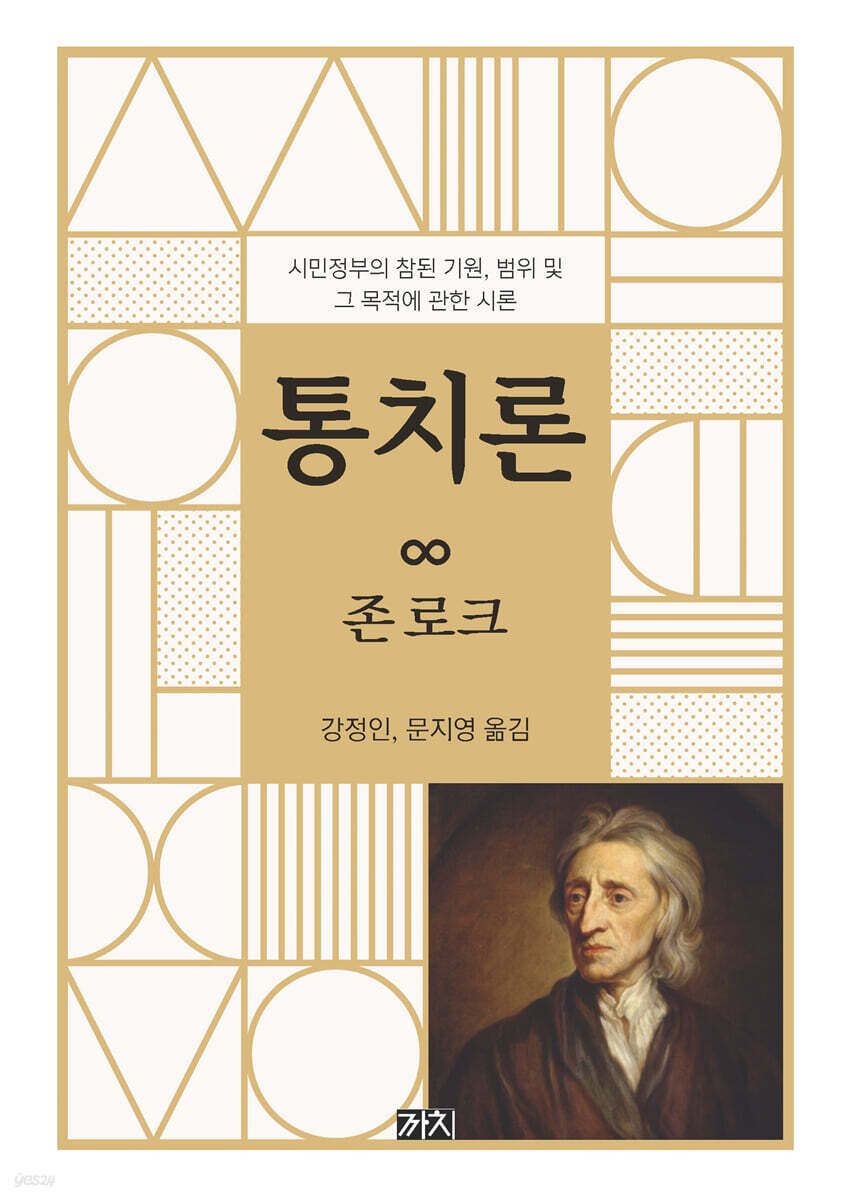
John Locke's Treatise on Government consists of two long essays written at different times. It is customary in Anglo-American academia to refer to the first essay as the "First Treatise" and the second as the "Second Treatise."
In addition, the "First Treatise" has the subtitle "An Inquiry into and Refutation of the False Principles and Grounds of Sir Robert Filmer and His Followers," and the "Second Treatise" has the subtitle "An Essay Concerning the True Origin, Extent, and End of Civil Government."
However, Locke's "First Treatise," which contains his criticism of Filmer, was quite destructive and hardly has any meaning on its own today.
Therefore, even in Locke's time, only the "Second Treatise" was translated and published mainly in continental Europe, including France, and even today, in the UK and the US, it is customary to use only the "Second Treatise" as a university textbook.
Accordingly, this book, excluding the "First Treatise," only translates the "Second Treatise," which contains Locke's constructive contributions to modern Western political thought.
2nd edition published!
John Locke's Treatise on Government consists of two long essays written at different times. It is customary in Anglo-American academia to refer to the first essay as the "First Treatise" and the second as the "Second Treatise."
In addition, the "First Treatise" has the subtitle "An Inquiry into and Refutation of the False Principles and Grounds of Sir Robert Filmer and His Followers," and the "Second Treatise" has the subtitle "An Essay Concerning the True Origin, Extent, and End of Civil Government."
However, Locke's "First Treatise," which contains his criticism of Filmer, was quite destructive and hardly has any meaning on its own today.
Therefore, even in Locke's time, only the "Second Treatise" was translated and published mainly in continental Europe, including France, and even today, in the UK and the US, it is customary to use only the "Second Treatise" as a university textbook.
Accordingly, this book, excluding the "First Treatise," only translates the "Second Treatise," which contains Locke's constructive contributions to modern Western political thought.
- You can preview some of the book's contents.
Preview
index
Chapter 1 Introduction
Chapter 2: On the State of Nature
Chapter 3: On the State of War
Chapter 4: On Slavery
Chapter 5 On Property
Chapter 6: On Patriarchy
Chapter 7: On the Origins of Political or Civil Society
Chapter 8: On the Origin of Political Society
Chapter 9: On the Purposes of Political Society and Government
Chapter 10: On the Form of the State
Chapter 11: On the Scope of Legislative Power
Chapter 12: On the Legislative, Executive, and Union Powers of the State
Chapter 13: On the Subordination of State Power
Chapter 14: On the Presidency
Chapter 15: A Comprehensive Study of Patriarchy, Political Power, and Absolute Power
Chapter 16: On Conquest
Chapter 17: On Usurpation
Chapter 18: On Tyranny
Chapter 19: On the Dissolution of the Government
Locke's Chronology
Translator's Note: The Life and Thought of John Locke: Focusing on His Treatise on Government
Translator's Note
Chapter 2: On the State of Nature
Chapter 3: On the State of War
Chapter 4: On Slavery
Chapter 5 On Property
Chapter 6: On Patriarchy
Chapter 7: On the Origins of Political or Civil Society
Chapter 8: On the Origin of Political Society
Chapter 9: On the Purposes of Political Society and Government
Chapter 10: On the Form of the State
Chapter 11: On the Scope of Legislative Power
Chapter 12: On the Legislative, Executive, and Union Powers of the State
Chapter 13: On the Subordination of State Power
Chapter 14: On the Presidency
Chapter 15: A Comprehensive Study of Patriarchy, Political Power, and Absolute Power
Chapter 16: On Conquest
Chapter 17: On Usurpation
Chapter 18: On Tyranny
Chapter 19: On the Dissolution of the Government
Locke's Chronology
Translator's Note: The Life and Thought of John Locke: Focusing on His Treatise on Government
Translator's Note
Into the book
Locke remains one of the most appealing figures among liberal and even democratic philosophers in the Anglo-American world.
Because he was getting to the heart of the matter.
“The end of government is the good of mankind.” (Section 229) “Whoever uses force without right… puts himself in a state of war against those who have used force… and every man has the right to defend himself against, and to resist, the aggressor.” (Section 232) Locke’s “Second Treatise” is the essence of Anglo-American liberalism, a distillation of the centuries-long struggle of the English people for liberty.
Because he was getting to the heart of the matter.
“The end of government is the good of mankind.” (Section 229) “Whoever uses force without right… puts himself in a state of war against those who have used force… and every man has the right to defend himself against, and to resist, the aggressor.” (Section 232) Locke’s “Second Treatise” is the essence of Anglo-American liberalism, a distillation of the centuries-long struggle of the English people for liberty.
---From the "Translator's Note"
GOODS SPECIFICS
- Publication date: September 15, 2022
- Page count, weight, size: 284 pages | 412g | 150*210*18mm
- ISBN13: 9788972917809
- ISBN10: 897291780X
You may also like
카테고리
korean


korean

![GQ KOREA Mark (Monthly): December [2025]](http://librairie.coreenne.fr/cdn/shop/files/8ef265dbbfbf186523ed75ba7319009d.jpg?v=1765340328&width=3840)


