

Tractatus Logico-Philosophicus
 |
Description
Book Introduction
Attempting a 'linguistic' shift in philosophy
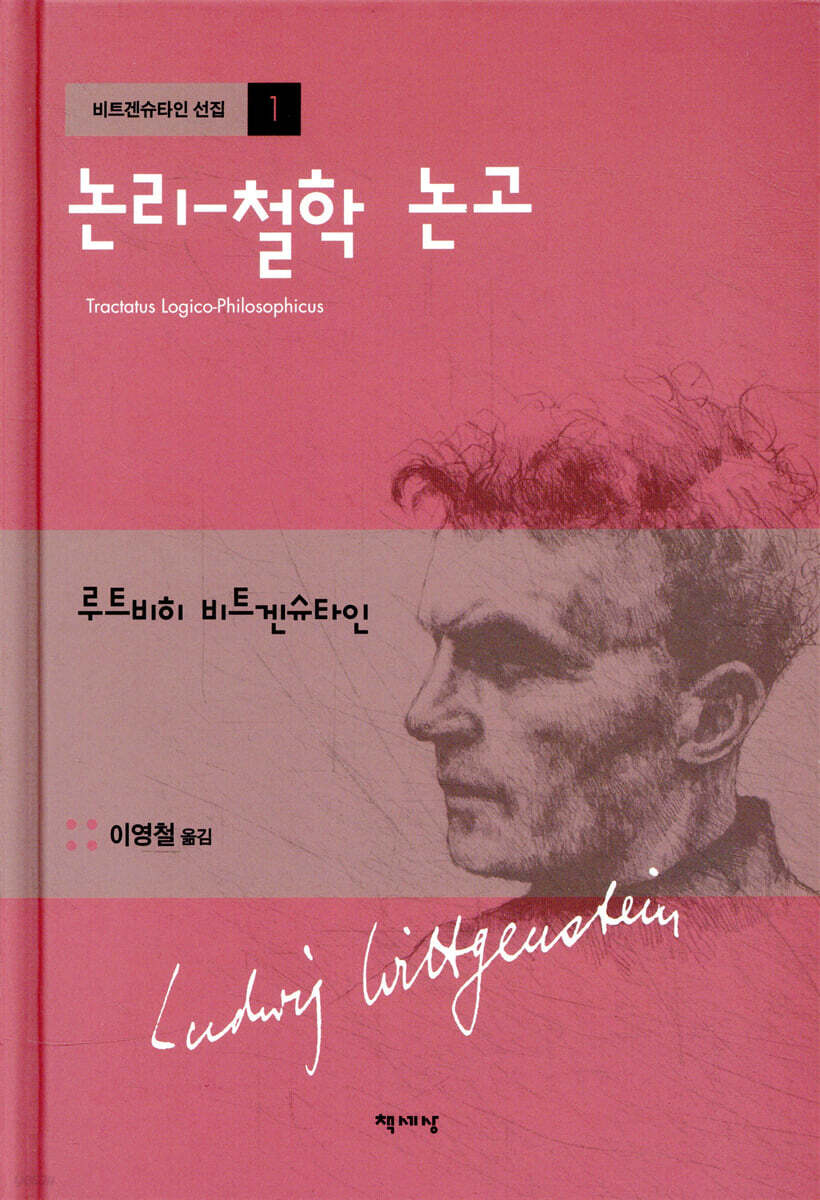
A classic of modern philosophy, Wittgenstein's Tractatus Logico-Philosophicus
This book is the first in the Wittgenstein Selected Works series, which introduces Wittgenstein's major philosophical works and includes his biographical thoughts.
There is an anecdote that Wittgenstein, who wrote this work during World War I, gave up philosophy because he thought he had solved all his problems with this short book.
Wittgenstein's philosophy is divided into early and late periods. In his early period, represented by the Tractatus Logico-Philosophicus, he explores the essence of language and demonstrates his clarification of the limits of the world and thought.
This book made a decisive contribution to establishing the so-called linguistic turn in modern philosophy from the perspective that 'all philosophy is a critique of language.'
According to this book, the problems of philosophy arise from misunderstandings about the logic of our language.
Therefore, a proper philosophy must reveal the limits of what can be said through a clear understanding of the logic of language.
Wittgenstein believed that the essence of our language and thought lies in the logical picture of things, that is, description.
Through discussions on the logical structure of propositions and the nature of logical inference, and the essence of psychology, mathematics, philosophy, and aesthetics, the book develops a discussion on the 'mysterious' and the 'unspeakable.'
In addition, an introduction by Bertrand Russell, who is considered his ideological comrade, is included as an appendix to aid understanding.
In this book, which has long been a classic of modern philosophy, Wittgenstein attempts to elucidate the limits of the world and thought through an exploration of the nature of language, and to reveal what is truly important in our lives.
This revised edition corrects and refines any inaccuracies or unnatural expressions or grammar found in the translation from the first edition, as well as any areas that could be improved.
A classic of modern philosophy, Wittgenstein's Tractatus Logico-Philosophicus
This book is the first in the Wittgenstein Selected Works series, which introduces Wittgenstein's major philosophical works and includes his biographical thoughts.
There is an anecdote that Wittgenstein, who wrote this work during World War I, gave up philosophy because he thought he had solved all his problems with this short book.
Wittgenstein's philosophy is divided into early and late periods. In his early period, represented by the Tractatus Logico-Philosophicus, he explores the essence of language and demonstrates his clarification of the limits of the world and thought.
This book made a decisive contribution to establishing the so-called linguistic turn in modern philosophy from the perspective that 'all philosophy is a critique of language.'
According to this book, the problems of philosophy arise from misunderstandings about the logic of our language.
Therefore, a proper philosophy must reveal the limits of what can be said through a clear understanding of the logic of language.
Wittgenstein believed that the essence of our language and thought lies in the logical picture of things, that is, description.
Through discussions on the logical structure of propositions and the nature of logical inference, and the essence of psychology, mathematics, philosophy, and aesthetics, the book develops a discussion on the 'mysterious' and the 'unspeakable.'
In addition, an introduction by Bertrand Russell, who is considered his ideological comrade, is included as an appendix to aid understanding.
In this book, which has long been a classic of modern philosophy, Wittgenstein attempts to elucidate the limits of the world and thought through an exploration of the nature of language, and to reveal what is truly important in our lives.
This revised edition corrects and refines any inaccuracies or unnatural expressions or grammar found in the translation from the first edition, as well as any areas that could be improved.
- You can preview some of the book's contents.
Preview
index
Translator's Note
Motto
preface
Tractatus Logico-Philosophicus
supplement
1.
Introduction by Bertrand Russell
2.
The Structure of the Tractatus Logico-Philosophicus
3.
Symbol Description
Wittgenstein chronology
Search
Motto
preface
Tractatus Logico-Philosophicus
supplement
1.
Introduction by Bertrand Russell
2.
The Structure of the Tractatus Logico-Philosophicus
3.
Symbol Description
Wittgenstein chronology
Search
Into the book
If things can appear in states of affairs, this point must already be present in those things.
(Something logical cannot be merely possible.
Logic deals with each and every possibility, and all possibilities are facts of logic.) Just as we can never think of spatial objects outside of space, nor temporal objects outside of time, so we can never think of any object apart from the possibility of its combination with other objects.
If I can think of an object within the association of states of affairs, I cannot think of it outside the possibility of this association.
--- p.21
Humans possess the ability to construct languages in which every meaning can be expressed without any knowledge of how or what each word means—just as we speak without knowing how the individual sounds are produced.
--- p.42
It seems possible to provide a description of any symbolic language's propositions so that every possible meaning can be expressed by a symbol appropriate to that description, and—if the meanings of the names are chosen appropriately—so that every symbol appropriate to that description can express its own meaning.
It is clear that in describing the most general propositional form, only its essentials need be described—otherwise it would not be the most general form.
--- p.68
Logic fills the world; the limits of the world are also the limits of logic.
Therefore, we cannot say in logic:
That is, this and this exist in the world, and that does not exist.
Because, on the face of it, it would presuppose that we rule out certain possibilities, which cannot be true.
For otherwise logic would have to transcend the limits of the world; that is, if logic could consider these limits from the other side.
We cannot think what we cannot think; therefore we cannot say what we cannot think.
--- p.100
There are several problems when it comes to language.
First, there is the question of what actually happens in our minds when we use language with the intention of meaning something.
This problem belongs to psychology.
Second, there is the question of what relationship there is between thoughts and words or sentences and what they refer to or signify.
This problem belongs to epistemology.
(Omitted) Fourthly, there is the question of what relationship they must have with each other in order for one fact (such as a sentence) to become a symbol of another fact.
This last problem is a logical one.
And this is the question that interests Mr. Wittgenstein.
(Something logical cannot be merely possible.
Logic deals with each and every possibility, and all possibilities are facts of logic.) Just as we can never think of spatial objects outside of space, nor temporal objects outside of time, so we can never think of any object apart from the possibility of its combination with other objects.
If I can think of an object within the association of states of affairs, I cannot think of it outside the possibility of this association.
--- p.21
Humans possess the ability to construct languages in which every meaning can be expressed without any knowledge of how or what each word means—just as we speak without knowing how the individual sounds are produced.
--- p.42
It seems possible to provide a description of any symbolic language's propositions so that every possible meaning can be expressed by a symbol appropriate to that description, and—if the meanings of the names are chosen appropriately—so that every symbol appropriate to that description can express its own meaning.
It is clear that in describing the most general propositional form, only its essentials need be described—otherwise it would not be the most general form.
--- p.68
Logic fills the world; the limits of the world are also the limits of logic.
Therefore, we cannot say in logic:
That is, this and this exist in the world, and that does not exist.
Because, on the face of it, it would presuppose that we rule out certain possibilities, which cannot be true.
For otherwise logic would have to transcend the limits of the world; that is, if logic could consider these limits from the other side.
We cannot think what we cannot think; therefore we cannot say what we cannot think.
--- p.100
There are several problems when it comes to language.
First, there is the question of what actually happens in our minds when we use language with the intention of meaning something.
This problem belongs to psychology.
Second, there is the question of what relationship there is between thoughts and words or sentences and what they refer to or signify.
This problem belongs to epistemology.
(Omitted) Fourthly, there is the question of what relationship they must have with each other in order for one fact (such as a sentence) to become a symbol of another fact.
This last problem is a logical one.
And this is the question that interests Mr. Wittgenstein.
--- p.132
Publisher's Review
- What about the Book World [Wittgenstein Selected Works] series?
Wittgenstein (1889-1951), a philosopher who changed the landscape of 20th-century philosophy with a single book published during his lifetime, with extremely concise sentences that were almost like proverbs, a life of simple and solitary life, and original thoughts that cannot be found in anyone else in the history of philosophy.
Despite his status in 20th-century philosophy, Wittgenstein's major works, whose thoughts and life are not well known to us, have been published in a seven-volume anthology for the first time in Korea by Book World.
Although Wittgenstein's main works have been translated intermittently in Korea and research papers on his influence on modern philosophy have been published here and there, this is the first time that an anthology has been published that comprehensively covers his main works and posthumous works, providing a glimpse into his thoughts.
In 1999, Wittgenstein was the only philosopher to be included in the list of the '100 most influential people of the 20th century' selected by the weekly magazine Time.
He is a philosopher who had the greatest influence on the formation and development of analytic philosophy and philosophy of language, two powerful philosophical trends of the 20th century. He is a thinker who simultaneously explored the possibilities and limitations of language and reflected on ways of life and things beyond philosophy.
This anthology, which encompasses his major works from his early to later years, reflections on various fields ranging from the philosophy of language and ethics to the philosophy of mind, philosophical reflections, reading notes, papers, lecture notes, and diaries, will allow us to see not only his side as a philosopher, but also as a thinker who contemplates life and the world.
- The composition and characteristics of [Wittgenstein Selected Works]
The Wittgenstein Selected Works series is a chronological list centered on his core works.
Among the seven volumes of the anthology, four volumes (On Certainty) (Seogwangsa, 1990), Culture and Values (Cheonji, 1990), Tractatus Logico-Philosophicus (Cheonji, 1991), and Philosophical Investigations (Seogwangsa, 1994)) were translated and published in the early 1990s by Professor Lee Young-cheol, the translator of this anthology, but two volumes, A Collection of Short Works and Notes, are the first translations in Korea, and The Blue Book and the Brown Book are the first translations by a Wittgenstein specialist.
Professor Lee Young-cheol, who has been consistently researching modern philosophy of language, including Wittgenstein, was the first to translate Wittgenstein's works in Korea, and his translations are still considered accurate and rigorous.
This enabled a consistent translation, and went beyond simply correcting errors in existing translations and refining the language. He rigorously compared foreign editions published after his own translation to select better translations and added detailed notes and appendices to aid readers' understanding, thereby reflecting recent international trends in Wittgenstein studies.
Wittgenstein (1889-1951), a philosopher who changed the landscape of 20th-century philosophy with a single book published during his lifetime, with extremely concise sentences that were almost like proverbs, a life of simple and solitary life, and original thoughts that cannot be found in anyone else in the history of philosophy.
Despite his status in 20th-century philosophy, Wittgenstein's major works, whose thoughts and life are not well known to us, have been published in a seven-volume anthology for the first time in Korea by Book World.
Although Wittgenstein's main works have been translated intermittently in Korea and research papers on his influence on modern philosophy have been published here and there, this is the first time that an anthology has been published that comprehensively covers his main works and posthumous works, providing a glimpse into his thoughts.
In 1999, Wittgenstein was the only philosopher to be included in the list of the '100 most influential people of the 20th century' selected by the weekly magazine Time.
He is a philosopher who had the greatest influence on the formation and development of analytic philosophy and philosophy of language, two powerful philosophical trends of the 20th century. He is a thinker who simultaneously explored the possibilities and limitations of language and reflected on ways of life and things beyond philosophy.
This anthology, which encompasses his major works from his early to later years, reflections on various fields ranging from the philosophy of language and ethics to the philosophy of mind, philosophical reflections, reading notes, papers, lecture notes, and diaries, will allow us to see not only his side as a philosopher, but also as a thinker who contemplates life and the world.
- The composition and characteristics of [Wittgenstein Selected Works]
The Wittgenstein Selected Works series is a chronological list centered on his core works.
Among the seven volumes of the anthology, four volumes (On Certainty) (Seogwangsa, 1990), Culture and Values (Cheonji, 1990), Tractatus Logico-Philosophicus (Cheonji, 1991), and Philosophical Investigations (Seogwangsa, 1994)) were translated and published in the early 1990s by Professor Lee Young-cheol, the translator of this anthology, but two volumes, A Collection of Short Works and Notes, are the first translations in Korea, and The Blue Book and the Brown Book are the first translations by a Wittgenstein specialist.
Professor Lee Young-cheol, who has been consistently researching modern philosophy of language, including Wittgenstein, was the first to translate Wittgenstein's works in Korea, and his translations are still considered accurate and rigorous.
This enabled a consistent translation, and went beyond simply correcting errors in existing translations and refining the language. He rigorously compared foreign editions published after his own translation to select better translations and added detailed notes and appendices to aid readers' understanding, thereby reflecting recent international trends in Wittgenstein studies.
GOODS SPECIFICS
- Date of issue: May 31, 2025
- Format: Hardcover book binding method guide
- Page count, weight, size: 212 pages | 438g | 152*224*20mm
- ISBN13: 9791159314940
- ISBN10: 1159314942
You may also like
카테고리
korean


korean

![GQ KOREA Mark (Monthly): December [2025]](http://librairie.coreenne.fr/cdn/shop/files/8ef265dbbfbf186523ed75ba7319009d.jpg?v=1765340328&width=3840)


