

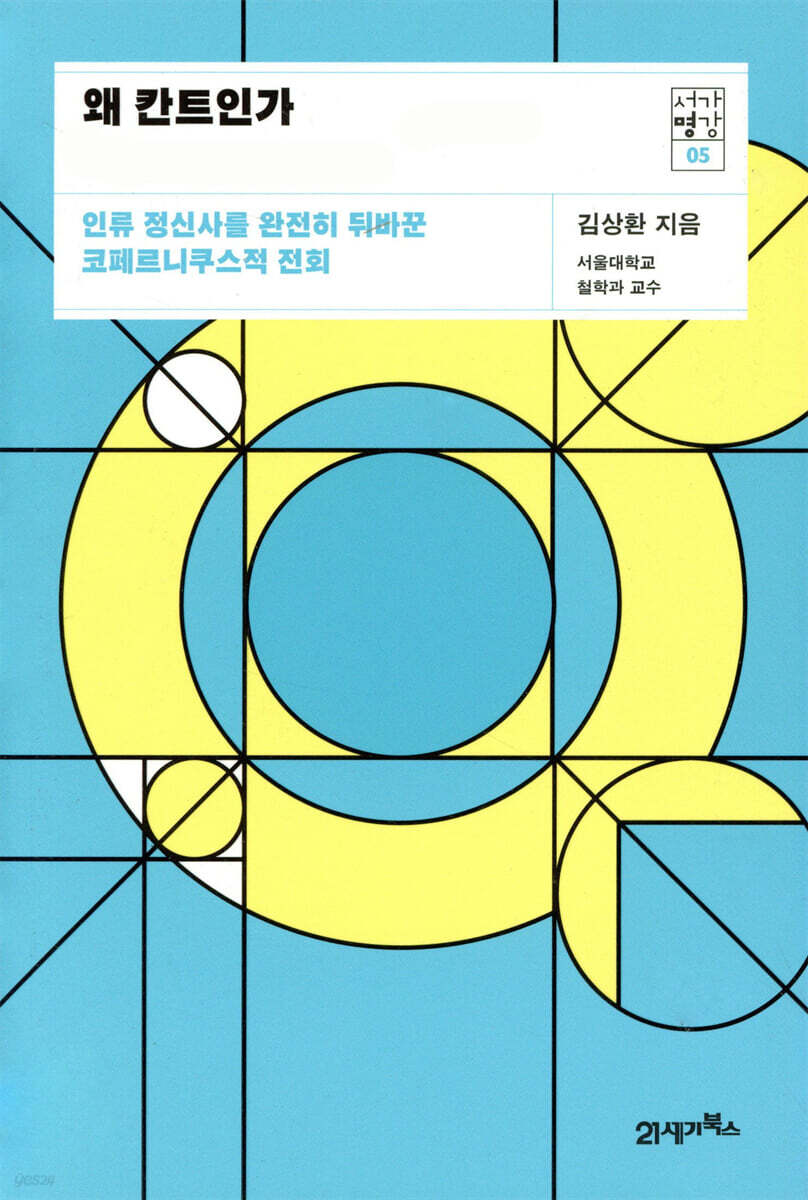
Why Kant?
 |
Description
Book Introduction
"Seogamyeonggang": A famous lecture you can attend without going to Seoul National University. The great philosophical revolution achieved through Kant's "Three Critiques" Discover Korea's finest lectures in book form! The fifth volume in the "Seogamyeonggang" series, featuring carefully curated lectures by current Seoul National University faculty, has been published. The Seoga Myunggang series, which transcribes the lectures of Seoul National University's top professors in various fields, including history, philosophy, science, medicine, and art, into books, provides readers with the expansion of knowledge and the joy of learning. "Why Kant?" is a popular educational book written by Professor Kim Sang-hwan of the Department of Philosophy at Seoul National University. Through Kant's great achievements, he meticulously examines what it means for humans to think and how philosophy can address the concerns of our time. Kant, who ranks among the highest peaks in the history of Western thought, is an icon of Western philosophy who brought about a great transformation in thinking while wrestling with the ultimate questions posed to modern people. Since the major trends that have shaped the history of philosophy to this day have been developed on the basis of the 'transcendental dimension' discovered by Kant, Kant can be said to be the Columbus of philosophy who discovered the continent of modern thought. Through this book, you will be able to get a concrete sense of what Kant's philosophy means to us today and how it can be applied to the future. |
- You can preview some of the book's contents.
Preview
index
Before reading this book
Introduction
Part 1: Kant's Cognitive Revolution: A Revolution in the Model of the Mind
Critique of Pure Reason
From object-centered philosophy to subject-centered philosophy
Dissecting the Human Mind
How to distinguish between perception and reasoning
A New World in Philosophy: The Discovery of the Transcendental Dimension
Q/A Ask and Answer
Part 2: Kant's Ethical Revolution - From Virtue Ethics to Duty Ethics
Critique of Practical Reason
Opening Modern Ethics
Liberty, the sacred and inviolable dignity of the human person
How are moral judgments made?
The Highest Good and the Call for Ethics
Q/A Ask and Answer
Part 3: Kant's Aesthetic Revolution - The Foundation of Modern Art
Critique of Judgment, Part 1
The starting point of modern aesthetics
Who is an artist?
The Four Faces of Hobby Judgment
Beauty, the Sublime, and Freedom
Q/A Ask and Answer
Part 4: Kant's Ecological Revolution - From Mechanism to Organismism
The latter part of the Critique of Judgment
How has nature been perceived?
Controversy surrounding organisms
Beautiful nature and living nature
Motives of Teleological Judgment
Q/A Ask and Answer
A great teacher who taught me how to think outside the box
annotation
References
Introduction
Part 1: Kant's Cognitive Revolution: A Revolution in the Model of the Mind
Critique of Pure Reason
From object-centered philosophy to subject-centered philosophy
Dissecting the Human Mind
How to distinguish between perception and reasoning
A New World in Philosophy: The Discovery of the Transcendental Dimension
Q/A Ask and Answer
Part 2: Kant's Ethical Revolution - From Virtue Ethics to Duty Ethics
Critique of Practical Reason
Opening Modern Ethics
Liberty, the sacred and inviolable dignity of the human person
How are moral judgments made?
The Highest Good and the Call for Ethics
Q/A Ask and Answer
Part 3: Kant's Aesthetic Revolution - The Foundation of Modern Art
Critique of Judgment, Part 1
The starting point of modern aesthetics
Who is an artist?
The Four Faces of Hobby Judgment
Beauty, the Sublime, and Freedom
Q/A Ask and Answer
Part 4: Kant's Ecological Revolution - From Mechanism to Organismism
The latter part of the Critique of Judgment
How has nature been perceived?
Controversy surrounding organisms
Beautiful nature and living nature
Motives of Teleological Judgment
Q/A Ask and Answer
A great teacher who taught me how to think outside the box
annotation
References
Detailed image

Into the book
If you were to name the greatest philosopher in the history of Western philosophy, you couldn't leave out Kant.
Kant is one of the five great philosophers of Western philosophy, along with Plato, Aristotle, Descartes, and Hegel.
If I had to pick just one of these five great kings, Kant would often come out on top, competing with Plato.
Kant occupies an important position in the history of Western thought.
We will now introduce the foundations of Kant's thought, focusing on the revolutionary changes he brought to the history of Western thought.
How did Kant change the history of Western philosophy? What contrasts exist between philosophy before and after Kant? This is the central question driving this lecture.
This is also a question about the threshold of modernity itself that Kant created in the history of Western thought.
--- pp.13-14
Most of the Critique of Pure Reason consists of the process of dissecting our minds and dissecting our consciousness.
So why do we teach and dissect? To uncover the cognitive faculties within consciousness and reveal their operating principles (a priori forms) and limitations.
Kant solves all questions related to cognition through the analysis of the mind.
If you listen to AI researchers these days, you'll find that there are two theories of mind that inspire them the most.
One is the Buddhist theory of consciousness-only, which states that everything is merely an image resulting from the workings of the mind, and the other is Kant's theory of consciousness.
To that extent, Kant's theory of consciousness still has great implications today.
--- p.38
Kant completely changes this relationship between good and law.
It places law in the position of the sun that gives meaning to the whole of ethics, and places good in a subordinate position.
In this way, Kant replaces good-centered ethics with law-centered ethics.
As the positions change, the meanings of law and good also change.
Law now becomes the minimum universal rule that members of society can agree on.
The rule must be absolutely binding and allow no exceptions.
And actions that conform to that absolute rule are said to be 'good', 'good', or 'kind', while actions that violate that rule are said to be 'evil', 'bad', or 'sinful'.
Good and evil no longer have independent meanings in themselves, but are merely predicates indicating conformity with the moral law.
--- pp.100-101
The sublime, along with beauty, constitutes one of the two major categories of classical aesthetics.
Artists have not only pursued beauty, but also the sublime.
Artists today seem to have little interest in making things look pretty.
It shows a tendency to move away from the aesthetics of beauty and rather get closer to the ‘aesthetics of ugliness’.17
If there is anything that supports this aesthetic of the uglier, it is the theory of the sublime.
In that sense, it can be said that the sublime, rather than beauty, is at the center of modern aesthetics.
However, when talking about the sublime, Kant says that the sublime of nature exists only to awaken the sublime within us.
The sublime experience that occurs in nature is only a prelude to the sublime experience that arises from the moral law.
--- pp.221-222
Kant waves his hand in opposition to the ontological absolutization of living beings.
Nevertheless, the various organic metaphysics that have decorated the history of philosophy since Kant would have been difficult to come into existence without the decisive turning point brought about by Kant.
After German Idealism, in the 20th century, philosophers such as Bergson, Whitehead, and Deleuze developed the ontology of life and the metaphysics of organisms.
Of course, those who have absorbed the fruits of new scientific discovery have each tried to present a different concept of life from that of the 19th-century scholars.
However, it cannot be denied that they are still indebted to the turning point that Kant brought about in the latter part of the Critique of Judgment.
We can sketch this transition, however imperfectly, according to the Copernican scheme as follows:
Kant is one of the five great philosophers of Western philosophy, along with Plato, Aristotle, Descartes, and Hegel.
If I had to pick just one of these five great kings, Kant would often come out on top, competing with Plato.
Kant occupies an important position in the history of Western thought.
We will now introduce the foundations of Kant's thought, focusing on the revolutionary changes he brought to the history of Western thought.
How did Kant change the history of Western philosophy? What contrasts exist between philosophy before and after Kant? This is the central question driving this lecture.
This is also a question about the threshold of modernity itself that Kant created in the history of Western thought.
--- pp.13-14
Most of the Critique of Pure Reason consists of the process of dissecting our minds and dissecting our consciousness.
So why do we teach and dissect? To uncover the cognitive faculties within consciousness and reveal their operating principles (a priori forms) and limitations.
Kant solves all questions related to cognition through the analysis of the mind.
If you listen to AI researchers these days, you'll find that there are two theories of mind that inspire them the most.
One is the Buddhist theory of consciousness-only, which states that everything is merely an image resulting from the workings of the mind, and the other is Kant's theory of consciousness.
To that extent, Kant's theory of consciousness still has great implications today.
--- p.38
Kant completely changes this relationship between good and law.
It places law in the position of the sun that gives meaning to the whole of ethics, and places good in a subordinate position.
In this way, Kant replaces good-centered ethics with law-centered ethics.
As the positions change, the meanings of law and good also change.
Law now becomes the minimum universal rule that members of society can agree on.
The rule must be absolutely binding and allow no exceptions.
And actions that conform to that absolute rule are said to be 'good', 'good', or 'kind', while actions that violate that rule are said to be 'evil', 'bad', or 'sinful'.
Good and evil no longer have independent meanings in themselves, but are merely predicates indicating conformity with the moral law.
--- pp.100-101
The sublime, along with beauty, constitutes one of the two major categories of classical aesthetics.
Artists have not only pursued beauty, but also the sublime.
Artists today seem to have little interest in making things look pretty.
It shows a tendency to move away from the aesthetics of beauty and rather get closer to the ‘aesthetics of ugliness’.17
If there is anything that supports this aesthetic of the uglier, it is the theory of the sublime.
In that sense, it can be said that the sublime, rather than beauty, is at the center of modern aesthetics.
However, when talking about the sublime, Kant says that the sublime of nature exists only to awaken the sublime within us.
The sublime experience that occurs in nature is only a prelude to the sublime experience that arises from the moral law.
--- pp.221-222
Kant waves his hand in opposition to the ontological absolutization of living beings.
Nevertheless, the various organic metaphysics that have decorated the history of philosophy since Kant would have been difficult to come into existence without the decisive turning point brought about by Kant.
After German Idealism, in the 20th century, philosophers such as Bergson, Whitehead, and Deleuze developed the ontology of life and the metaphysics of organisms.
Of course, those who have absorbed the fruits of new scientific discovery have each tried to present a different concept of life from that of the 19th-century scholars.
However, it cannot be denied that they are still indebted to the turning point that Kant brought about in the latter part of the Critique of Judgment.
We can sketch this transition, however imperfectly, according to the Copernican scheme as follows:
--- p.243
Publisher's Review
To think is to draw!
The core concepts of Kant's philosophy condensed into one volume!
"Why Kant?" is a book based on philosophy lectures by Professor Kim Sang-hwan, a professor of philosophy at Seoul National University and an advisor to Naver's Open Forum "Inside and Outside Culture."
In an introductory philosophy course taught by Professor Kim Sang-hwan at Seoul National University, students showed the most enthusiastic response to the section on Kant.
The author, who has taught that anyone studying modern philosophy, even if not a Kant specialist, must read and understand Kant, introduces Kant's philosophy and the innovative changes it brought about in this book.
And the author summarizes Kant's philosophy in various diagrams to illuminate Kant, who taught us what it means to think while analyzing the various layers of human thought.
The author says about this, “Sometimes thinking is like drawing a picture, like making a diagram.”
In other words, philosophy emphasizes that it teaches thinking rather than teaching knowledge.
Why is philosophy divided into before and after Kant?
Kant's three major critiques that changed the course of human thought
Among the many philosophers who have made important achievements, Kant's status is special.
In particular, if we were to name the greatest philosopher in the history of Western philosophy, we cannot leave out Kant.
It is no exaggeration to say that Kant's philosophy brought about a revolutionary change that changed the intellectual history of mankind.
This book, "Why Kant?", introduces the foundation of Kant's philosophy through the three major critiques he left behind: "Critique of Pure Reason," "Critique of Practical Reason," and "Critique of Judgment," and focuses on how philosophy before and after Kant has changed.
So what did Kant accomplish that makes him so special? Kant's philosophy brought about profound changes in epistemology, ethics, aesthetics, and the view of nature.
The change is often likened to the Copernican revolution in astronomy.
Just as Copernicus, through his heliocentric theory, argued for a completely different perspective on the relationship between the sun and the earth, Kant completely reversed the relationship between subject and object by discovering and elucidating the transcendental dimension.
Kant's epistemology is called the 'Copernican turn' because before Kant, the starting point of cognition was the object, and the subject was considered a mirror that passively reflected the object.
In this book, "Why Kant?", the author details the multiple transformations that Kant brought about through each of the three major critiques, along with the innovations in epistemology.
The author compares Kant, who discovered a new territory that could be called the New World of philosophy, to the 'Columbus of philosophy.'
It can be said that most of the significant ideas that have shaped the history of philosophy since Kant to this day have developed on the foundation discovered by Kant.
Of course, this kind of preaching existed even before Kant.
Descartes first discussed the thinking subject.
However, Kant is the person who established the modern status and identity of philosophy by giving epistemology a complete form.
Among the many expressions that express Kant's enormous position in the history of Western philosophy and the great changes he brought about, the most representative is the metaphor of the lake.
“All philosophy before Kant flows into the great lake called Kant, and all philosophy after Kant is a stream that began with Kant.” German idealism, which developed starting with Kant, became one of the mainstreams of Western philosophy and still forms the basis of modern thought.
Model answers to almost every problem addressed in philosophy
Kant, the great teacher who taught us how to think
The author says that the reason for revisiting each of Kant's transformations in epistemology, ethics, aesthetics, and view of nature in this book, "Why Kant," is not for philosophical debate.
The author reveals that he wrote this book to highlight Kant's modern meaning.
In this book, the author devotes most of his space to explaining Kant as the philosopher who established the modern identity of philosophy, but ultimately highlights him as a great teacher who taught modern people how to think.
Kant was a philosopher who presented his own position on almost every issue addressed by Western philosophy at the time.
The author states that Kant precisely formulated the philosophical questions raised in modern society and presented his analysis and conclusions as a 'model answer.'
Although Kant's thought may not provide us with the right answers today, for those struggling with the philosophical questions raised in his time, Kant is at least the philosopher who provided the most balanced answers for them to refer to.
Through this book, you will be able to experience the innovation brought about by the philosophy of Kant, a great teacher who taught modern people what it means to think, while analyzing the various layers of human thought.
Seoga Myunggang, a knowledge archive that adds sophistication and elegance to your life.
What if the general public could also attend and learn from the popular lectures taken by Seoul National University students?
★★★ It was great to be able to listen to lectures given by Seoul National University students!
★★★ It's like a gift to me who is tired of work life!
★★★ It was a study that was really necessary for living!
Seoga Myunggang (famous lectures you can listen to without going to Seoul National University) is a series of lectures from Seoul National University, the most prestigious university in Korea. It reconstructs the informative and interesting lectures of current Seoul National University professors and puts them into a book.
Since the summer of 2017, Seoul National University's top professors in their respective fields have been giving lectures on different topics every month under the name of "Seo Ga-myeong-gang." Each lecture drew an audience of approximately 100, who were deeply moved and enthralled by the feast of these renowned lectures.
Seogamaeunggang's diverse humanities content is available not only through books but also through live lectures and podcasts. It covers young and innovative topics, from popular lectures selected directly by Seoul National University students, to interdisciplinary lectures, and practical knowledge incorporating trends.
This program provides an opportunity for working professionals seeking to acquire general knowledge during their commute, young people exploring career paths, and all educated individuals in Korea who always harbor a passion for learning to easily watch, listen to, and learn from Korea's best lectures.
* Book21's offline lecture www.book21.com/lecture
* Seo Ga-myeong's podcast audioclip.naver.com/channels/345
The core concepts of Kant's philosophy condensed into one volume!
"Why Kant?" is a book based on philosophy lectures by Professor Kim Sang-hwan, a professor of philosophy at Seoul National University and an advisor to Naver's Open Forum "Inside and Outside Culture."
In an introductory philosophy course taught by Professor Kim Sang-hwan at Seoul National University, students showed the most enthusiastic response to the section on Kant.
The author, who has taught that anyone studying modern philosophy, even if not a Kant specialist, must read and understand Kant, introduces Kant's philosophy and the innovative changes it brought about in this book.
And the author summarizes Kant's philosophy in various diagrams to illuminate Kant, who taught us what it means to think while analyzing the various layers of human thought.
The author says about this, “Sometimes thinking is like drawing a picture, like making a diagram.”
In other words, philosophy emphasizes that it teaches thinking rather than teaching knowledge.
Why is philosophy divided into before and after Kant?
Kant's three major critiques that changed the course of human thought
Among the many philosophers who have made important achievements, Kant's status is special.
In particular, if we were to name the greatest philosopher in the history of Western philosophy, we cannot leave out Kant.
It is no exaggeration to say that Kant's philosophy brought about a revolutionary change that changed the intellectual history of mankind.
This book, "Why Kant?", introduces the foundation of Kant's philosophy through the three major critiques he left behind: "Critique of Pure Reason," "Critique of Practical Reason," and "Critique of Judgment," and focuses on how philosophy before and after Kant has changed.
So what did Kant accomplish that makes him so special? Kant's philosophy brought about profound changes in epistemology, ethics, aesthetics, and the view of nature.
The change is often likened to the Copernican revolution in astronomy.
Just as Copernicus, through his heliocentric theory, argued for a completely different perspective on the relationship between the sun and the earth, Kant completely reversed the relationship between subject and object by discovering and elucidating the transcendental dimension.
Kant's epistemology is called the 'Copernican turn' because before Kant, the starting point of cognition was the object, and the subject was considered a mirror that passively reflected the object.
In this book, "Why Kant?", the author details the multiple transformations that Kant brought about through each of the three major critiques, along with the innovations in epistemology.
The author compares Kant, who discovered a new territory that could be called the New World of philosophy, to the 'Columbus of philosophy.'
It can be said that most of the significant ideas that have shaped the history of philosophy since Kant to this day have developed on the foundation discovered by Kant.
Of course, this kind of preaching existed even before Kant.
Descartes first discussed the thinking subject.
However, Kant is the person who established the modern status and identity of philosophy by giving epistemology a complete form.
Among the many expressions that express Kant's enormous position in the history of Western philosophy and the great changes he brought about, the most representative is the metaphor of the lake.
“All philosophy before Kant flows into the great lake called Kant, and all philosophy after Kant is a stream that began with Kant.” German idealism, which developed starting with Kant, became one of the mainstreams of Western philosophy and still forms the basis of modern thought.
Model answers to almost every problem addressed in philosophy
Kant, the great teacher who taught us how to think
The author says that the reason for revisiting each of Kant's transformations in epistemology, ethics, aesthetics, and view of nature in this book, "Why Kant," is not for philosophical debate.
The author reveals that he wrote this book to highlight Kant's modern meaning.
In this book, the author devotes most of his space to explaining Kant as the philosopher who established the modern identity of philosophy, but ultimately highlights him as a great teacher who taught modern people how to think.
Kant was a philosopher who presented his own position on almost every issue addressed by Western philosophy at the time.
The author states that Kant precisely formulated the philosophical questions raised in modern society and presented his analysis and conclusions as a 'model answer.'
Although Kant's thought may not provide us with the right answers today, for those struggling with the philosophical questions raised in his time, Kant is at least the philosopher who provided the most balanced answers for them to refer to.
Through this book, you will be able to experience the innovation brought about by the philosophy of Kant, a great teacher who taught modern people what it means to think, while analyzing the various layers of human thought.
Seoga Myunggang, a knowledge archive that adds sophistication and elegance to your life.
What if the general public could also attend and learn from the popular lectures taken by Seoul National University students?
★★★ It was great to be able to listen to lectures given by Seoul National University students!
★★★ It's like a gift to me who is tired of work life!
★★★ It was a study that was really necessary for living!
Seoga Myunggang (famous lectures you can listen to without going to Seoul National University) is a series of lectures from Seoul National University, the most prestigious university in Korea. It reconstructs the informative and interesting lectures of current Seoul National University professors and puts them into a book.
Since the summer of 2017, Seoul National University's top professors in their respective fields have been giving lectures on different topics every month under the name of "Seo Ga-myeong-gang." Each lecture drew an audience of approximately 100, who were deeply moved and enthralled by the feast of these renowned lectures.
Seogamaeunggang's diverse humanities content is available not only through books but also through live lectures and podcasts. It covers young and innovative topics, from popular lectures selected directly by Seoul National University students, to interdisciplinary lectures, and practical knowledge incorporating trends.
This program provides an opportunity for working professionals seeking to acquire general knowledge during their commute, young people exploring career paths, and all educated individuals in Korea who always harbor a passion for learning to easily watch, listen to, and learn from Korea's best lectures.
* Book21's offline lecture www.book21.com/lecture
* Seo Ga-myeong's podcast audioclip.naver.com/channels/345
GOODS SPECIFICS
- Date of publication: June 26, 2019
- Page count, weight, size: 316 pages | 390g | 128*188*19mm
- ISBN13: 9788950981785
- ISBN10: 8950981785
You may also like
카테고리
korean


korean

![GQ KOREA Mark (Monthly): December [2025]](http://librairie.coreenne.fr/cdn/shop/files/8ef265dbbfbf186523ed75ba7319009d.jpg?v=1765340328&width=3840)


