

What makes a city live?
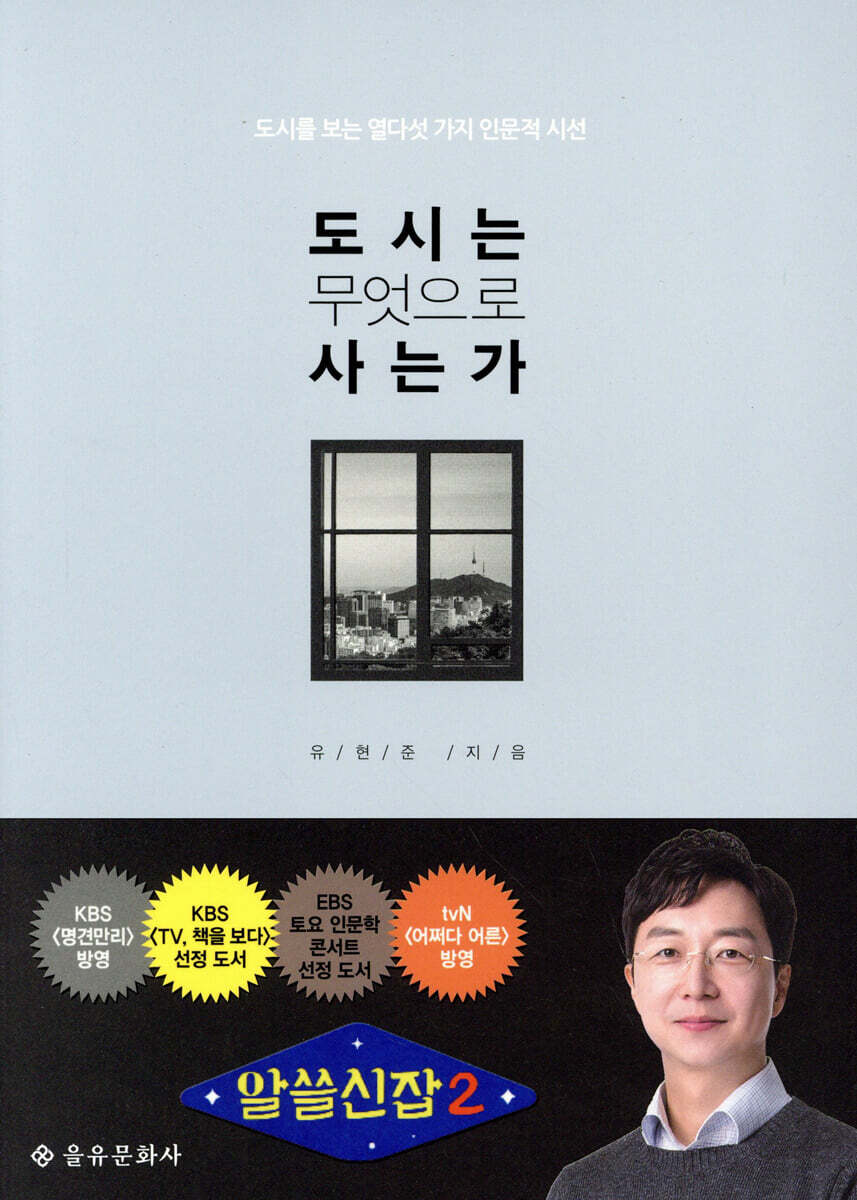 |
Description
Book Introduction
A city resembles the people who live in it.
A city is not simply a collection of buildings or spaces.
Because cities reflect human life, they reveal human pursuits and desires.
This book tells us how the cities they create affect human life, and whether they are becoming happier or more impoverished.
What is the city talking about?
A city is not simply a collection of buildings or spaces.
Because cities reflect human life, they reveal human pursuits and desires.
This book tells us how the cities they create affect human life, and whether they are becoming happier or more impoverished.
What is the city talking about?
- You can preview some of the book's contents.
Preview
index
Recommendation
preface
Chapter 1: Why Do I Want to Walk Some Streets?
Why is Gangnam so unpleasant to walk on? / Why are there so many walkers in Myeongdong? / The speed of space / Why do decks in front of cafes make streets more pleasant?
Chapter 2: Why Modern Cities Aren't Beautiful
Human-scale, chaotic city, signage / Old city: diverse forms tailored to unified materials and terrain / No alleys, only corridors / A city robbed of the sky above / A city without laundry / Skyline / Emotional market
Chapter 3: Why Penthouses Are Expensive
A Surveillance Society / Space and Power / Why Penthouses Are Expensive / Why Do Clubs Have Doorman? /
Is Surveillance All Bad?: Between Plazas and Playgrounds / Hotels and Motels / Area vs. Volume
Chapter 4: What Cities Live By: The New York Story
Lofts, Artists, and Real Estate / The Broken Window Theory / Refrigerators and Architecture / The Urban Developer's Secret Weapon / Urban Regeneration, the Cycle of Life / Resurrection of a Dead Institution: The High Line / How Did the Boring Grid City of New York Succeed? / What Makes Namdaemun Different from Goryeo Celadon?
Chapter 5: How Gangnam Has Survived: A City Made by People, and a City Made by People
Cities are organisms / From amoebas to vertebrates / Evolving cities: Rome, Paris, New York / Architects in currency / Gangnam and North Korea
Chapter 6: Why Are the Roads in Gangbuk Winding?: Architecture Like Wine
A Layered History of Life / The Architecture of Soju and Wine / Complex Life, Unique Land, and Wise Solutions / Vietnam Memorial: A Masterpiece of Design Utilizing History, Land, and People
Chapter 7: Why Is It Difficult to Enter the Church?
Inconvenient Church, Comfortable Temple / The Interrelationship Between Spatial Structure and Religious Activities: From Judaism to Christianity / Buddhist Temple, Islamic Mosque
Chapter 8: Why We Say We Have a Park Shortage
History of the Park / Living Rooms and Alleyways / Why We Watch So Much TV / Namsan and Central Park / Han River and Gosu Park
Chapter 9: Open Space and Its Enemies: How Offices Are Made
The Birth and Secrets of Workspaces / Sodom and Gomorrah / The Clock Tower / The Secret of Seating: The Manager's Seat
Public Enemy: Fluorescent Lights / Why Buying a Car Before a House
Chapter 10: The Society of Dead Apartments
Why There Are So Many Cafes and Motels / The Great Wall of China on the Han River / Apartments and Pigs / Apartments and Redevelopment / House Size / Creating Apartment Floor Plans for Family Love / Stem Cell Housing
Chapter 11: Why People Love Las Vegas' Neon Signs
Decoding Symbols / Architecture as Information / Why Call the Internet "Space"? / Humans as Animals, Humans More Than Animals / Clubs and Facebook / Body, Psychology, and Architecture
Chapter 12: The Law of Floating Distance
COEX Plaza is empty / The limitations of underground shopping malls / Revitalizing a dead plaza / Garosu-gil in Sinsa-dong /
Seun Shopping Mall and the Champs-Élysées: Two Common Mistakes Architects Make / Time is Space / Deoksugung Stone Wall Road
Chapter 13: Product Design vs. Architectural Design
Products and Architecture / Automobiles and Architecture / "Roaring Currents" and Architecture / Architecture Like Yoo Jae-suk / Topology and Dongdaemun Design Plaza / Gravity
Chapter 14: East and West: The Origins of Different Ideas
The Spatial Aesthetics of Baduk and Chess / The Alphabet and Chinese Characters / Relative Values in the East / Absolute Values in the West /
Anthills and Beehives / Space and Space / Korean Tables and Course Meals / Tables and Floors / Rainy Season and Architecture
Chapter 15: How Architecture Relates to Nature
St. Benedict's Chapel: A Building in Conversation with Nature / Two Houses / Asahiyama Zoo / A Submersible Bridge Yielding to Nature / The Name of Time / The History of Retaining Walls / Retaining Walls and Bronze / Invisible Walls / Fences /
Korean Pavilions: Architecture in Conversation with Nature / What is Korean?
Conclusion
Americas
Source of the illustration
preface
Chapter 1: Why Do I Want to Walk Some Streets?
Why is Gangnam so unpleasant to walk on? / Why are there so many walkers in Myeongdong? / The speed of space / Why do decks in front of cafes make streets more pleasant?
Chapter 2: Why Modern Cities Aren't Beautiful
Human-scale, chaotic city, signage / Old city: diverse forms tailored to unified materials and terrain / No alleys, only corridors / A city robbed of the sky above / A city without laundry / Skyline / Emotional market
Chapter 3: Why Penthouses Are Expensive
A Surveillance Society / Space and Power / Why Penthouses Are Expensive / Why Do Clubs Have Doorman? /
Is Surveillance All Bad?: Between Plazas and Playgrounds / Hotels and Motels / Area vs. Volume
Chapter 4: What Cities Live By: The New York Story
Lofts, Artists, and Real Estate / The Broken Window Theory / Refrigerators and Architecture / The Urban Developer's Secret Weapon / Urban Regeneration, the Cycle of Life / Resurrection of a Dead Institution: The High Line / How Did the Boring Grid City of New York Succeed? / What Makes Namdaemun Different from Goryeo Celadon?
Chapter 5: How Gangnam Has Survived: A City Made by People, and a City Made by People
Cities are organisms / From amoebas to vertebrates / Evolving cities: Rome, Paris, New York / Architects in currency / Gangnam and North Korea
Chapter 6: Why Are the Roads in Gangbuk Winding?: Architecture Like Wine
A Layered History of Life / The Architecture of Soju and Wine / Complex Life, Unique Land, and Wise Solutions / Vietnam Memorial: A Masterpiece of Design Utilizing History, Land, and People
Chapter 7: Why Is It Difficult to Enter the Church?
Inconvenient Church, Comfortable Temple / The Interrelationship Between Spatial Structure and Religious Activities: From Judaism to Christianity / Buddhist Temple, Islamic Mosque
Chapter 8: Why We Say We Have a Park Shortage
History of the Park / Living Rooms and Alleyways / Why We Watch So Much TV / Namsan and Central Park / Han River and Gosu Park
Chapter 9: Open Space and Its Enemies: How Offices Are Made
The Birth and Secrets of Workspaces / Sodom and Gomorrah / The Clock Tower / The Secret of Seating: The Manager's Seat
Public Enemy: Fluorescent Lights / Why Buying a Car Before a House
Chapter 10: The Society of Dead Apartments
Why There Are So Many Cafes and Motels / The Great Wall of China on the Han River / Apartments and Pigs / Apartments and Redevelopment / House Size / Creating Apartment Floor Plans for Family Love / Stem Cell Housing
Chapter 11: Why People Love Las Vegas' Neon Signs
Decoding Symbols / Architecture as Information / Why Call the Internet "Space"? / Humans as Animals, Humans More Than Animals / Clubs and Facebook / Body, Psychology, and Architecture
Chapter 12: The Law of Floating Distance
COEX Plaza is empty / The limitations of underground shopping malls / Revitalizing a dead plaza / Garosu-gil in Sinsa-dong /
Seun Shopping Mall and the Champs-Élysées: Two Common Mistakes Architects Make / Time is Space / Deoksugung Stone Wall Road
Chapter 13: Product Design vs. Architectural Design
Products and Architecture / Automobiles and Architecture / "Roaring Currents" and Architecture / Architecture Like Yoo Jae-suk / Topology and Dongdaemun Design Plaza / Gravity
Chapter 14: East and West: The Origins of Different Ideas
The Spatial Aesthetics of Baduk and Chess / The Alphabet and Chinese Characters / Relative Values in the East / Absolute Values in the West /
Anthills and Beehives / Space and Space / Korean Tables and Course Meals / Tables and Floors / Rainy Season and Architecture
Chapter 15: How Architecture Relates to Nature
St. Benedict's Chapel: A Building in Conversation with Nature / Two Houses / Asahiyama Zoo / A Submersible Bridge Yielding to Nature / The Name of Time / The History of Retaining Walls / Retaining Walls and Bronze / Invisible Walls / Fences /
Korean Pavilions: Architecture in Conversation with Nature / What is Korean?
Conclusion
Americas
Source of the illustration
Detailed image

Into the book
Until the modern era, buildings were symbols of show, showcasing a country's technological prowess and financial power.
Because it involves a lot of money, it is also a decision that gathers and reflects the opinions of more and more people.
So, architecture is people.
And architecture is a picture that shows a cross-section of the country and the era.
These architectural features are not limited to landmark buildings.
The typical buildings that reflect the geographical and climatic characteristics of the region are also a result of the cultural DNA of the local people.
This is why, when we understand architecture, we can understand the culture behind it, and its political, economic, social, technological, artistic, and cultural anthropological backgrounds.
- p16
School playgrounds in our country are not closely connected to the community, and are just places for early morning soccer games.
School playgrounds are a great resource for providing a break from the high-density city center.
Without exception, there are cafes and restaurants around the squares of Europe.
If such stores were built around school playgrounds in our country, it would kill two birds with one stone: creating a school-centered community and addressing school security issues by using the playgrounds as plazas.
This is something that must be taken into consideration from the early stages of urban planning when establishing land use plans.
It is difficult to create it with the current urban design or complex planning method.
Neighborhood facilities and schools have a symbiotic relationship, like crocodiles and alligators.
A city where you can elegantly sip tea while looking out at a school playground where children are running and playing—don't you think that's a happy cityscape? - p85
We've been saying that we've gained a lot from economic development, but in reality, we've only been buying things by selling quality space around us.
Through the 70s and 80s, more than half of the population sold their homes with yards and moved to apartments with good hot water.
Living in an apartment, we got a large parking lot instead of a yard.
But with the yard gone, they were anxious to expand the house to include a balcony.
The absence of yards and alleyways has led to a desperate need for larger apartments.
A house with a small yard tends to feel more spacious than a 100-pyeong apartment complex.
A small yard just one step ahead or a charming alleyway ten steps away is better than a 10,000-square-foot park that takes an hour to reach by car.
So now we are going on a trip to Gangbuk Dal-dong, a European alleyway.
- p193
There are many reasons why our country is so behind in construction, but I think apartments are the biggest reason.
Japan experiences many earthquakes, so when building high-rise buildings, they must be designed to withstand earthquakes.
That's why the construction cost is higher when building high-rise apartments than in our country.
So the reason for the need to supply housing in large quantities before and after the war was the same, but in our country, more than half of the population currently lives in apartments, and in Japan, many people still live in houses.
Even when our people go to a restaurant, they all order the same thing.
On the other hand, Japanese people eat alone.
While Koreans tend to follow what others around them do, Japanese people seem to be accustomed to doing things on their own.
So when people started living in apartments, everyone moved into apartments.
On the other hand, Japanese people have been living alone in houses.
An apartment complex with thousands of households can be designed by a few architects at a large design firm.
But if thousands of households need to be supplied with housing, hundreds of architects can be involved.
Small houses are not economically viable for the organization of large offices.
Therefore, the design of houses is mainly handled by small design firms.
In Japan, where demand for housing is high, a market in which small architectural design firms can survive may be formed.
- p245
Because it involves a lot of money, it is also a decision that gathers and reflects the opinions of more and more people.
So, architecture is people.
And architecture is a picture that shows a cross-section of the country and the era.
These architectural features are not limited to landmark buildings.
The typical buildings that reflect the geographical and climatic characteristics of the region are also a result of the cultural DNA of the local people.
This is why, when we understand architecture, we can understand the culture behind it, and its political, economic, social, technological, artistic, and cultural anthropological backgrounds.
- p16
School playgrounds in our country are not closely connected to the community, and are just places for early morning soccer games.
School playgrounds are a great resource for providing a break from the high-density city center.
Without exception, there are cafes and restaurants around the squares of Europe.
If such stores were built around school playgrounds in our country, it would kill two birds with one stone: creating a school-centered community and addressing school security issues by using the playgrounds as plazas.
This is something that must be taken into consideration from the early stages of urban planning when establishing land use plans.
It is difficult to create it with the current urban design or complex planning method.
Neighborhood facilities and schools have a symbiotic relationship, like crocodiles and alligators.
A city where you can elegantly sip tea while looking out at a school playground where children are running and playing—don't you think that's a happy cityscape? - p85
We've been saying that we've gained a lot from economic development, but in reality, we've only been buying things by selling quality space around us.
Through the 70s and 80s, more than half of the population sold their homes with yards and moved to apartments with good hot water.
Living in an apartment, we got a large parking lot instead of a yard.
But with the yard gone, they were anxious to expand the house to include a balcony.
The absence of yards and alleyways has led to a desperate need for larger apartments.
A house with a small yard tends to feel more spacious than a 100-pyeong apartment complex.
A small yard just one step ahead or a charming alleyway ten steps away is better than a 10,000-square-foot park that takes an hour to reach by car.
So now we are going on a trip to Gangbuk Dal-dong, a European alleyway.
- p193
There are many reasons why our country is so behind in construction, but I think apartments are the biggest reason.
Japan experiences many earthquakes, so when building high-rise buildings, they must be designed to withstand earthquakes.
That's why the construction cost is higher when building high-rise apartments than in our country.
So the reason for the need to supply housing in large quantities before and after the war was the same, but in our country, more than half of the population currently lives in apartments, and in Japan, many people still live in houses.
Even when our people go to a restaurant, they all order the same thing.
On the other hand, Japanese people eat alone.
While Koreans tend to follow what others around them do, Japanese people seem to be accustomed to doing things on their own.
So when people started living in apartments, everyone moved into apartments.
On the other hand, Japanese people have been living alone in houses.
An apartment complex with thousands of households can be designed by a few architects at a large design firm.
But if thousands of households need to be supplied with housing, hundreds of architects can be involved.
Small houses are not economically viable for the organization of large offices.
Therefore, the design of houses is mainly handled by small design firms.
In Japan, where demand for housing is high, a market in which small architectural design firms can survive may be formed.
- p245
--- From the text
Publisher's Review
1. The Law of Walking Distance and Floating Distance
Why is Teheran-ro, lined with high-rise buildings, so rarely visited by strollers or couples on dates, while Garosu-gil, Myeongdong, and Hongik University are teeming with people, and the winding alleyways of Gangbuk are attracting more and more visitors? Let's first look at Teheran-ro.
All you see are high-rise buildings packed with offices.
I have no reason to go there unless it's work or I have something special to do.
Because there is nothing to see or buy.
Then let's look at Myeongdong or Hongdae.
First of all, there are many different shops, so there is a lot to see.
If you get hungry while walking around, there are many places to eat, and there are also theaters and performance halls.
The event elements are diverse.
While older European cities are focused on walking, with plenty to see and organized into short, pedestrian-friendly blocks, cities like New York, built primarily for cars, are laid out in a boring grid pattern and have relatively few events, with large blocks.
Old European cities are bound to be much better for walking and sightseeing.
2 Why are old cities beautiful, but modern cities are not?
Let's continue the story of the old European cities and modern New York that I mentioned a little while ago.
Old cities are built on a human scale.
Since the ingredients used are easily available in the area, it naturally has its own unique characteristics.
The local culture is added here to create the color of each region.
These cities have distinctive skylines that are in harmony with nature.
It is a stark contrast to the similar skylines of modern cities where high-rise buildings tower over each other.
Old and modern cities also show differences in the way they construct buildings.
Unlike the old buildings that were built in harmony with nature and in compliance with it, modern buildings are built with nature in mind as an object to be overcome.
The method is to build a retaining wall on a slope to level the ground, then build standardized apartments on top of it.
Some buildings were built in harmony with nature, but they are literally few.
It is truly a pity when we think about how our old buildings were built in a way that interacted with nature (even pavilions were built for the purpose of interacting with nature).
Of course, this does not mean that old architectural styles are always good or correct.
Because the demands and limitations of that era were different from those of today.
However, modern architecture leaves much to be desired in its approach to nature.
Introducing a uniform style to a different environment fails to capitalize on the strengths of the region or cover up its shortcomings.
And wherever you go, the boring scenery of similar appearances unfolds.
3.
A city where power is revealed
A city reveals the lives and desires of the people who live in it.
That is why in the city, you can see the face of power.
The radial road network of Paris, which resembles a panopticon that monitors prisoners from the center, the penthouse that looks down on others without revealing itself, the seating arrangement where the manager can see his subordinates but the employees have to turn their heads to see him (and his back is to the window, so he has a halo).
On the other hand, places where you pay a lot of money, such as hotels, sometimes intentionally make themselves visible to users.
And even in apartments in the same area, people draw lines based on their floor space or whether or not they are rented, or they show off their wealth by living in luxurious houses and live together, creating invisible walls.
But we can't just look at luxury homes as expensive.
Just as the thatched-roof houses of the common people during the Joseon Dynasty were not considered a tradition to be passed down, but the hanoks of the nobility became the tradition, it is possible that in the future, the luxurious houses of the chairman will be recognized as a tradition for future generations.
4.
The appearance of a modern city
Unlike the ancient cities of the East and the West, which had different architectural styles and philosophies, modern cities are becoming more homogenized.
But there are also efforts of their own.
In the case of New York, mentioned earlier, to break the monotony of the grid, Broadway was created, which runs diagonally across the city, creating Times Square, a unique triangular spatial structure that forms where the grid and diagonal lines meet. In addition, landmarks such as the Empire State Building and resting places such as Central Park were created to relieve boredom.
The city is constantly changing.
Artists came together to create a unique Hongdae culture, but now that land prices have risen, artists are moving to other areas, and similar events have occurred all over the world.
Cities have changed for various reasons.
However, modern cities are losing cultural diversity as different cultures mix, and the introduction of superficial philosophy and humanities has also had the negative effect of damaging the essential value of architecture.
5.
The city is an organism
The complex artificial ecosystems of large cities and modern architecture, full of change and chaos, are not easy to read.
But this phenomenon may be a transitional phenomenon that will lead to the birth of something better.
This is why we need a better understanding of the cities that surround us.
If so, we need to think more deeply about cities.
The author of this book says that cities are organisms.
Because once a city plan leaves the hands of a designer, it begins to evolve.
A city changes according to the lives of the people who live in it.
It's like wine, the taste of which changes depending on the seeds, soil, climate, and even the person who makes it.
6.
What Modern Cities Are Losing
Let's look at Seoul.
What has changed most from the past? Perhaps it's the disappearance of the front yard, where you could cultivate your own garden and experience the changing seasons, and the alleyways where neighbors chatted and children played.
This signifies a disconnection between nature and humans, and between people.
Instead of playing in the dirt in the front yard or chatting with neighbors, modern people's daily lives have become spent flipping through channels on the TV or glued to their smartphones.
That may be why the saying, 'It gets more and more desolate as time goes by' comes about.
The laundry that was a characteristic of each house also disappeared.
Things that smell like people are disappearing (even people themselves are disappearing, with unmanned security systems replacing apartment security guards).
Perhaps what the city is losing is the warmth of people.
Is a hotel and a motel just a window away? | Is there a hidden secret in office layout? | Why is Boston Common crowded at night but Central Park empty? | Why is it easy to enter a temple but difficult to enter a church? | Why did bankers move with artists? | Why do people hate the neon signs in Seoul but love the neon signs in Las Vegas?
Why is Teheran-ro, lined with high-rise buildings, so rarely visited by strollers or couples on dates, while Garosu-gil, Myeongdong, and Hongik University are teeming with people, and the winding alleyways of Gangbuk are attracting more and more visitors? Let's first look at Teheran-ro.
All you see are high-rise buildings packed with offices.
I have no reason to go there unless it's work or I have something special to do.
Because there is nothing to see or buy.
Then let's look at Myeongdong or Hongdae.
First of all, there are many different shops, so there is a lot to see.
If you get hungry while walking around, there are many places to eat, and there are also theaters and performance halls.
The event elements are diverse.
While older European cities are focused on walking, with plenty to see and organized into short, pedestrian-friendly blocks, cities like New York, built primarily for cars, are laid out in a boring grid pattern and have relatively few events, with large blocks.
Old European cities are bound to be much better for walking and sightseeing.
2 Why are old cities beautiful, but modern cities are not?
Let's continue the story of the old European cities and modern New York that I mentioned a little while ago.
Old cities are built on a human scale.
Since the ingredients used are easily available in the area, it naturally has its own unique characteristics.
The local culture is added here to create the color of each region.
These cities have distinctive skylines that are in harmony with nature.
It is a stark contrast to the similar skylines of modern cities where high-rise buildings tower over each other.
Old and modern cities also show differences in the way they construct buildings.
Unlike the old buildings that were built in harmony with nature and in compliance with it, modern buildings are built with nature in mind as an object to be overcome.
The method is to build a retaining wall on a slope to level the ground, then build standardized apartments on top of it.
Some buildings were built in harmony with nature, but they are literally few.
It is truly a pity when we think about how our old buildings were built in a way that interacted with nature (even pavilions were built for the purpose of interacting with nature).
Of course, this does not mean that old architectural styles are always good or correct.
Because the demands and limitations of that era were different from those of today.
However, modern architecture leaves much to be desired in its approach to nature.
Introducing a uniform style to a different environment fails to capitalize on the strengths of the region or cover up its shortcomings.
And wherever you go, the boring scenery of similar appearances unfolds.
3.
A city where power is revealed
A city reveals the lives and desires of the people who live in it.
That is why in the city, you can see the face of power.
The radial road network of Paris, which resembles a panopticon that monitors prisoners from the center, the penthouse that looks down on others without revealing itself, the seating arrangement where the manager can see his subordinates but the employees have to turn their heads to see him (and his back is to the window, so he has a halo).
On the other hand, places where you pay a lot of money, such as hotels, sometimes intentionally make themselves visible to users.
And even in apartments in the same area, people draw lines based on their floor space or whether or not they are rented, or they show off their wealth by living in luxurious houses and live together, creating invisible walls.
But we can't just look at luxury homes as expensive.
Just as the thatched-roof houses of the common people during the Joseon Dynasty were not considered a tradition to be passed down, but the hanoks of the nobility became the tradition, it is possible that in the future, the luxurious houses of the chairman will be recognized as a tradition for future generations.
4.
The appearance of a modern city
Unlike the ancient cities of the East and the West, which had different architectural styles and philosophies, modern cities are becoming more homogenized.
But there are also efforts of their own.
In the case of New York, mentioned earlier, to break the monotony of the grid, Broadway was created, which runs diagonally across the city, creating Times Square, a unique triangular spatial structure that forms where the grid and diagonal lines meet. In addition, landmarks such as the Empire State Building and resting places such as Central Park were created to relieve boredom.
The city is constantly changing.
Artists came together to create a unique Hongdae culture, but now that land prices have risen, artists are moving to other areas, and similar events have occurred all over the world.
Cities have changed for various reasons.
However, modern cities are losing cultural diversity as different cultures mix, and the introduction of superficial philosophy and humanities has also had the negative effect of damaging the essential value of architecture.
5.
The city is an organism
The complex artificial ecosystems of large cities and modern architecture, full of change and chaos, are not easy to read.
But this phenomenon may be a transitional phenomenon that will lead to the birth of something better.
This is why we need a better understanding of the cities that surround us.
If so, we need to think more deeply about cities.
The author of this book says that cities are organisms.
Because once a city plan leaves the hands of a designer, it begins to evolve.
A city changes according to the lives of the people who live in it.
It's like wine, the taste of which changes depending on the seeds, soil, climate, and even the person who makes it.
6.
What Modern Cities Are Losing
Let's look at Seoul.
What has changed most from the past? Perhaps it's the disappearance of the front yard, where you could cultivate your own garden and experience the changing seasons, and the alleyways where neighbors chatted and children played.
This signifies a disconnection between nature and humans, and between people.
Instead of playing in the dirt in the front yard or chatting with neighbors, modern people's daily lives have become spent flipping through channels on the TV or glued to their smartphones.
That may be why the saying, 'It gets more and more desolate as time goes by' comes about.
The laundry that was a characteristic of each house also disappeared.
Things that smell like people are disappearing (even people themselves are disappearing, with unmanned security systems replacing apartment security guards).
Perhaps what the city is losing is the warmth of people.
Is a hotel and a motel just a window away? | Is there a hidden secret in office layout? | Why is Boston Common crowded at night but Central Park empty? | Why is it easy to enter a temple but difficult to enter a church? | Why did bankers move with artists? | Why do people hate the neon signs in Seoul but love the neon signs in Las Vegas?
GOODS SPECIFICS
- Date of issue: March 25, 2015
- Page count, weight, size: 391 pages | 660g | 153*224*30mm
- ISBN13: 9788932472959
- ISBN10: 8932472955
You may also like
카테고리
korean


korean

![GQ KOREA Mark (Monthly): December [2025]](http://librairie.coreenne.fr/cdn/shop/files/8ef265dbbfbf186523ed75ba7319009d.jpg?v=1765340328&width=3840)


