

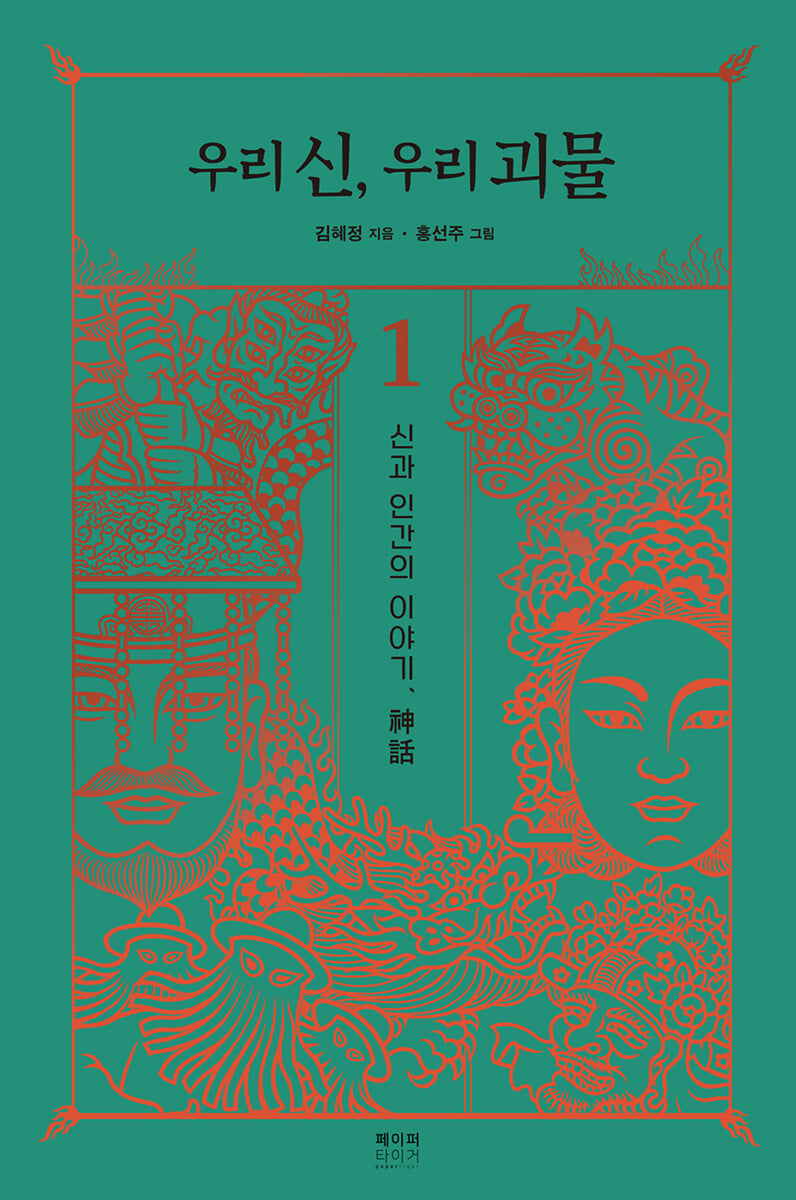
Our God, Our Monster 1
 |
Description
Book Introduction
The breath of Korean mythology revived by a young researcher!
A world where gods and humans breathe together
People of old felt that God was not a distant being in the sky, but rather a neighbor with whom they ate meals and shared their worries.
When the farming season began, they bowed to the village god, and when a child was born, they offered a blessing to the household god.
When someone passed away, the grief of those left behind was consoled by a shaman.
These beliefs and customs have been passed down through generations and have shaped the emotions and worldview of Koreans.
Professor Kim Hye-jeong (Deoksung Women's University), author of "Our God, Our Monster 1," rereads the relationship between gods and humans in ancient tales from a modern perspective.
A new story begins with an attitude of viewing myths not as a legacy of the past but as a reflection of today's life.
A world where gods and humans breathe together
People of old felt that God was not a distant being in the sky, but rather a neighbor with whom they ate meals and shared their worries.
When the farming season began, they bowed to the village god, and when a child was born, they offered a blessing to the household god.
When someone passed away, the grief of those left behind was consoled by a shaman.
These beliefs and customs have been passed down through generations and have shaped the emotions and worldview of Koreans.
Professor Kim Hye-jeong (Deoksung Women's University), author of "Our God, Our Monster 1," rereads the relationship between gods and humans in ancient tales from a modern perspective.
A new story begins with an attitude of viewing myths not as a legacy of the past but as a reflection of today's life.
- You can preview some of the book's contents.
Preview
index
Our Gods, Our Monsters 1: The Story of Gods and Humans
Author's Note
Chapter 1.
To all of you who have come to our world of God
① Mysterious stories, myths
Things to know before reading Korean mythology - The current state of Korean mythology
② Characteristics of Korean mythology
- A story where reality and romance coexist
③ Various branches of our old stories
What are myths, legends, and folktales? Korean mythology: Dividing it like this reveals the path.
Chapter 2.
Vinaida, Vinaida - A folk god accompanying our daily lives
① Even if you don't know the folk gods, you know the gods of heaven and earth.
-Which god is a folk god?
② Sky, wind, stars, and nature gods
-What kind of nature gods are there? -Gungsan Scholar and Myeongwol Gaksi who became the sun and moon gods -My brother will be the sun, and I will be the moon to illuminate the world -The daughter and daughter-in-law of Yeongdeung Halmeoni, the wind god -Yeongdeunggut, the time when the wind god briefly stays in this world -Why did the tiger leave and only the bear remain? -How is a god who lost in a power struggle remembered? -The snake god who crossed the sea following grain -The power of the snake god that collapsed in the face of environmental change
Column 1) Symbols Hidden in Our Numbers
③ The guardian deity of our house
-Blessings run away just because you stepped on the threshold! -Blessings abound in the house where the Seongjusin resides -The two pillars that support the family, Seongjusin and Teojusin -How a family and a wicked woman became vassals -Cheoyong, the most famous tattoo in Korea -The true meaning of tolerance hidden behind dance and song -The fate of the three gods that began with a single grain of rice -Jejudo Samsin Halmang, please grant one more wish
④ A village god who helps everyone live well
- From earning a living to major and minor matters, the village god's hand - The reason why a daughter-in-law who broke a taboo is worshipped as a village god - Hooray! A gift-giving ceremony for the gods - Im Gyeong-eop, the god of generals while alive and early birds after death - The only condition for the village god to continue
⑤ The creator god who created the world and established order
- When heaven, earth, and people were created, there was a grandmother goddess. - Mago Halmi, who could truly be called a goddess. - Seolmundae Halmang, the giant who created Jeju. - Why did the goddess of creation become a laughing stock?
⑥ The Roots of Power and Bloodline: The Founding God and the Progenitor God
- An ordinary person cannot establish a country - If Jumong were a god, this much would be basic - All these signs are a performance for the gods - The story of the 'three living together' in the Samsung myth of Jeju Island
Column 2) If I knew this pattern, I could write a myth too.
Chapter 3.
A god who is worshipped in a laughter-filled ritual
-Until a good game is played
① A ritual to comfort the dead and the living together
- The path to the afterlife is made in this world - An abandoned child becomes a being who cares for the dead - The path of a shaman chosen after abandoning the throne - A woman who did 'this' for reunion - Gut, the path that begins with hope and returns to reality - A rich man who saved his life with a single meal - Gut stage, a place where Confucianism and Buddhism permeate
② The god of the disease ritual that removes pain
-Sometimes gut is the medicine -Guests are happier when they leave than when they come -The smallpox god you can hate, but you can't keep by your side either -When gut makes you see the world again -I can't stand Simcheong gut!
③ Another name for good luck, Jaesugut
- Come in, blessings - Flowers picked while waiting for a baby - Hallakgung, the manager of the Seocheon Flower Garden - If you ask who is blessings - Gam Eun-jae, the goddess who reorganizes the board of life
④ When the whole village calls out to God
- When a god comes, the village becomes abuzz - What remains where the old man Bangin rolled - If you please the god, great fortune will come - General Nami, who was reborn as the village guardian deity - The secret to the survival of the village ritual is 'the power of divine fusion'
Column 3) How do shamans convey the will of the gods?
Chapter 4.
Buddhist and Taoist gods that took root in Korea
① The Buddhist god who designed the afterlife
- A landscape of Korean mythology infused with Buddhism and Taoism - Ten judges who rule the underworld, the King of Hell - The judgment of the underworld that questions the morality of this world - A god who seems to embrace even my mistakes - Ksitigarbha Bodhisattva, the last hope on humanity's side
Column 4) Low-level civil servants in the afterlife, grim reapers
② Taoist god who embraces nature
- The intersection of Taoism and Korean folk beliefs - The Jade Emperor, the god who rules the sky - The Big Dipper, who rules destiny through the flow of stars - The belief in the Seven Stars, which has permeated other religions - The Dragon King, the ruler of all waterways - The hope that flows along the waterways: The meaning of the Dragon King custom
Column 5) Korean mythology: Where should I start studying it?
Appendix) Information on national gut performances where you can see gut and eat rice cakes
Editor's Note
Author's Note
Chapter 1.
To all of you who have come to our world of God
① Mysterious stories, myths
Things to know before reading Korean mythology - The current state of Korean mythology
② Characteristics of Korean mythology
- A story where reality and romance coexist
③ Various branches of our old stories
What are myths, legends, and folktales? Korean mythology: Dividing it like this reveals the path.
Chapter 2.
Vinaida, Vinaida - A folk god accompanying our daily lives
① Even if you don't know the folk gods, you know the gods of heaven and earth.
-Which god is a folk god?
② Sky, wind, stars, and nature gods
-What kind of nature gods are there? -Gungsan Scholar and Myeongwol Gaksi who became the sun and moon gods -My brother will be the sun, and I will be the moon to illuminate the world -The daughter and daughter-in-law of Yeongdeung Halmeoni, the wind god -Yeongdeunggut, the time when the wind god briefly stays in this world -Why did the tiger leave and only the bear remain? -How is a god who lost in a power struggle remembered? -The snake god who crossed the sea following grain -The power of the snake god that collapsed in the face of environmental change
Column 1) Symbols Hidden in Our Numbers
③ The guardian deity of our house
-Blessings run away just because you stepped on the threshold! -Blessings abound in the house where the Seongjusin resides -The two pillars that support the family, Seongjusin and Teojusin -How a family and a wicked woman became vassals -Cheoyong, the most famous tattoo in Korea -The true meaning of tolerance hidden behind dance and song -The fate of the three gods that began with a single grain of rice -Jejudo Samsin Halmang, please grant one more wish
④ A village god who helps everyone live well
- From earning a living to major and minor matters, the village god's hand - The reason why a daughter-in-law who broke a taboo is worshipped as a village god - Hooray! A gift-giving ceremony for the gods - Im Gyeong-eop, the god of generals while alive and early birds after death - The only condition for the village god to continue
⑤ The creator god who created the world and established order
- When heaven, earth, and people were created, there was a grandmother goddess. - Mago Halmi, who could truly be called a goddess. - Seolmundae Halmang, the giant who created Jeju. - Why did the goddess of creation become a laughing stock?
⑥ The Roots of Power and Bloodline: The Founding God and the Progenitor God
- An ordinary person cannot establish a country - If Jumong were a god, this much would be basic - All these signs are a performance for the gods - The story of the 'three living together' in the Samsung myth of Jeju Island
Column 2) If I knew this pattern, I could write a myth too.
Chapter 3.
A god who is worshipped in a laughter-filled ritual
-Until a good game is played
① A ritual to comfort the dead and the living together
- The path to the afterlife is made in this world - An abandoned child becomes a being who cares for the dead - The path of a shaman chosen after abandoning the throne - A woman who did 'this' for reunion - Gut, the path that begins with hope and returns to reality - A rich man who saved his life with a single meal - Gut stage, a place where Confucianism and Buddhism permeate
② The god of the disease ritual that removes pain
-Sometimes gut is the medicine -Guests are happier when they leave than when they come -The smallpox god you can hate, but you can't keep by your side either -When gut makes you see the world again -I can't stand Simcheong gut!
③ Another name for good luck, Jaesugut
- Come in, blessings - Flowers picked while waiting for a baby - Hallakgung, the manager of the Seocheon Flower Garden - If you ask who is blessings - Gam Eun-jae, the goddess who reorganizes the board of life
④ When the whole village calls out to God
- When a god comes, the village becomes abuzz - What remains where the old man Bangin rolled - If you please the god, great fortune will come - General Nami, who was reborn as the village guardian deity - The secret to the survival of the village ritual is 'the power of divine fusion'
Column 3) How do shamans convey the will of the gods?
Chapter 4.
Buddhist and Taoist gods that took root in Korea
① The Buddhist god who designed the afterlife
- A landscape of Korean mythology infused with Buddhism and Taoism - Ten judges who rule the underworld, the King of Hell - The judgment of the underworld that questions the morality of this world - A god who seems to embrace even my mistakes - Ksitigarbha Bodhisattva, the last hope on humanity's side
Column 4) Low-level civil servants in the afterlife, grim reapers
② Taoist god who embraces nature
- The intersection of Taoism and Korean folk beliefs - The Jade Emperor, the god who rules the sky - The Big Dipper, who rules destiny through the flow of stars - The belief in the Seven Stars, which has permeated other religions - The Dragon King, the ruler of all waterways - The hope that flows along the waterways: The meaning of the Dragon King custom
Column 5) Korean mythology: Where should I start studying it?
Appendix) Information on national gut performances where you can see gut and eat rice cakes
Editor's Note
Detailed image

Into the book
Wouldn't it be tricky? Not at all.
The path we take step by step into our mythology will be both pleasant and touching.
Because our gods will watch over us.
--- p.28
The saying, 'There is no eternal power' applies even to God.
As people's living environments change and their desires change, they naturally seek out other gods.
The old gods that were once held in high esteem are now considered to be out of the public eye, and even worse, are considered to be objects to be expelled.
This is a natural phenomenon that occurs when a new god and his followers take over a territory.
Because two suns cannot rise in the sky at the same time.
--- p.55
In fact, the name Mago (麻姑) contains a hint that can be used to infer her abilities.
The character 'ma' (麻) means hemp, but in many documents it is also used interchangeably with the meaning of measles.
In 『Magwahoetong』 compiled by Jeong Yak-yong (1762-1836), measles is called Majin (痲疹), and people with wrinkled faces after suffering from this disease are called Maja (麻子).
--- p.130
In the past, there were no hospitals or medicines, so people's hearts were completely turned to God.
Among them, the three gods that govern life were the first gods that came to mind for those who wanted a baby.
However, when a baby did not come even after pouring water and praying for a long time, they would visit a shaman and hold a ritual.
This ritual called Buldo Maji is sometimes performed alone, or is sometimes called one of the parts of a fortune ritual.
--- p.214
The moment Gam Eun-jae answers without hesitation, her life begins to flow in a completely different direction.
Although her life was one of following the roles assigned to her within the patriarchal order, she is now moving towards becoming a person who makes her own choices, makes her own judgments, and bears the consequences.
--- p.222
However, with the introduction of Buddhism, the face of our afterlife changed significantly.
The concept of gods who deal with death, such as the King of Hell or the Grim Reaper, was introduced, and along with it, the imagination of hell and paradise where they reside, and the boundaries between them, was also transmitted.
The path we take step by step into our mythology will be both pleasant and touching.
Because our gods will watch over us.
--- p.28
The saying, 'There is no eternal power' applies even to God.
As people's living environments change and their desires change, they naturally seek out other gods.
The old gods that were once held in high esteem are now considered to be out of the public eye, and even worse, are considered to be objects to be expelled.
This is a natural phenomenon that occurs when a new god and his followers take over a territory.
Because two suns cannot rise in the sky at the same time.
--- p.55
In fact, the name Mago (麻姑) contains a hint that can be used to infer her abilities.
The character 'ma' (麻) means hemp, but in many documents it is also used interchangeably with the meaning of measles.
In 『Magwahoetong』 compiled by Jeong Yak-yong (1762-1836), measles is called Majin (痲疹), and people with wrinkled faces after suffering from this disease are called Maja (麻子).
--- p.130
In the past, there were no hospitals or medicines, so people's hearts were completely turned to God.
Among them, the three gods that govern life were the first gods that came to mind for those who wanted a baby.
However, when a baby did not come even after pouring water and praying for a long time, they would visit a shaman and hold a ritual.
This ritual called Buldo Maji is sometimes performed alone, or is sometimes called one of the parts of a fortune ritual.
--- p.214
The moment Gam Eun-jae answers without hesitation, her life begins to flow in a completely different direction.
Although her life was one of following the roles assigned to her within the patriarchal order, she is now moving towards becoming a person who makes her own choices, makes her own judgments, and bears the consequences.
--- p.222
However, with the introduction of Buddhism, the face of our afterlife changed significantly.
The concept of gods who deal with death, such as the King of Hell or the Grim Reaper, was introduced, and along with it, the imagination of hell and paradise where they reside, and the boundaries between them, was also transmitted.
--- p.261
Publisher's Review
The series “Our God, Our Monster” began when three people who were studying classical literature at the Graduate School of Korean Literature at Korea University met again.
These individuals, who have spent a long time going back and forth between research and the field, each accumulated their own expertise and experience, and came together with the intention of retelling Korean myths and monster stories in modern language.
The two professors in charge of writing the book and the publisher in charge of planning and editing put their heads together.
This series does not only cover our old stories through papers or materials.
Each person adds a sense of life to the knowledge they have studied, reinterpreting the human mind and world order in Korean mythology from a modern perspective.
As we revisited stories from hundreds of years ago, we discovered questions and emotions that still resonate with us today.
They each contributed to the perfection of the book from their respective positions, from the planning stage to writing, reviewing materials, composing, and creating visual images.
Countless discussions were held to achieve both academic depth and popularity, and through this process, 《Our God, Our Monster》 was solidly completed.
This is the most contemporary classic literature book, created by people who wanted to revive tradition.
This book conveys not only the knowledge of old myths, but also the emotions of the ancient people who embraced the stories.
It will serve as a friendly introduction for readers new to mythology, and a solid source of inspiration for creators seeking Korean material.
Read with your eyes and feel with your heart
This book categorizes stories according to the god's personality and worldview.
Village gods, nature gods, household gods, folk gods, and even national founding gods—if you follow the stories of each god, the system and flow of Korean faith will come into view.
Moreover, the rich illustrations and delicate drawings by illustrator Hong Seon-ju make the world of mythology even more vivid.
At the end of the book are columns and appendices.
It provides interesting answers to questions such as 'low-level civil servants in the other world, grim reapers' and 'symbols hidden in numbers', combining academic evidence with the imagination of the story.
If the main text is a map of God's world, the columns and appendix are like lenses that allow us to look deeper into that map.
As you read, becoming immersed in the story, the stories of the gods become connected, and within them, the structure of the mind that moved Korean faith becomes clear.
Books chosen first by 970 people
《Our God, Our Monster 1》 is a book that was first selected by 970 Tumblbug supporters even before its official release.
Rather than simply interpreting myths, they wanted to properly understand the origins of Korean stories.
Artists and writers who wanted to use Korean mythology as creative material, teachers and parents who wanted to tell accurate old stories to children, and readers who loved old stories came together.
Responses continued, such as “The content is rich and warm” and “It’s been a long time since I read a good book.”
This book, which combines academic depth and narrative warmth, shows that ancient myths are stories that still recur in our lives today.
This is a book of 'Korean mythology of today' that anyone can read with interest.
These individuals, who have spent a long time going back and forth between research and the field, each accumulated their own expertise and experience, and came together with the intention of retelling Korean myths and monster stories in modern language.
The two professors in charge of writing the book and the publisher in charge of planning and editing put their heads together.
This series does not only cover our old stories through papers or materials.
Each person adds a sense of life to the knowledge they have studied, reinterpreting the human mind and world order in Korean mythology from a modern perspective.
As we revisited stories from hundreds of years ago, we discovered questions and emotions that still resonate with us today.
They each contributed to the perfection of the book from their respective positions, from the planning stage to writing, reviewing materials, composing, and creating visual images.
Countless discussions were held to achieve both academic depth and popularity, and through this process, 《Our God, Our Monster》 was solidly completed.
This is the most contemporary classic literature book, created by people who wanted to revive tradition.
This book conveys not only the knowledge of old myths, but also the emotions of the ancient people who embraced the stories.
It will serve as a friendly introduction for readers new to mythology, and a solid source of inspiration for creators seeking Korean material.
Read with your eyes and feel with your heart
This book categorizes stories according to the god's personality and worldview.
Village gods, nature gods, household gods, folk gods, and even national founding gods—if you follow the stories of each god, the system and flow of Korean faith will come into view.
Moreover, the rich illustrations and delicate drawings by illustrator Hong Seon-ju make the world of mythology even more vivid.
At the end of the book are columns and appendices.
It provides interesting answers to questions such as 'low-level civil servants in the other world, grim reapers' and 'symbols hidden in numbers', combining academic evidence with the imagination of the story.
If the main text is a map of God's world, the columns and appendix are like lenses that allow us to look deeper into that map.
As you read, becoming immersed in the story, the stories of the gods become connected, and within them, the structure of the mind that moved Korean faith becomes clear.
Books chosen first by 970 people
《Our God, Our Monster 1》 is a book that was first selected by 970 Tumblbug supporters even before its official release.
Rather than simply interpreting myths, they wanted to properly understand the origins of Korean stories.
Artists and writers who wanted to use Korean mythology as creative material, teachers and parents who wanted to tell accurate old stories to children, and readers who loved old stories came together.
Responses continued, such as “The content is rich and warm” and “It’s been a long time since I read a good book.”
This book, which combines academic depth and narrative warmth, shows that ancient myths are stories that still recur in our lives today.
This is a book of 'Korean mythology of today' that anyone can read with interest.
GOODS SPECIFICS
- Date of issue: September 26, 2025
- Page count, weight, size: 336 pages | 430g | 140*210*17mm
- ISBN13: 9791190466097
- ISBN10: 1190466090
You may also like
카테고리
korean


korean

![GQ KOREA Mark (Monthly): December [2025]](http://librairie.coreenne.fr/cdn/shop/files/8ef265dbbfbf186523ed75ba7319009d.jpg?v=1765340328&width=3840)


