

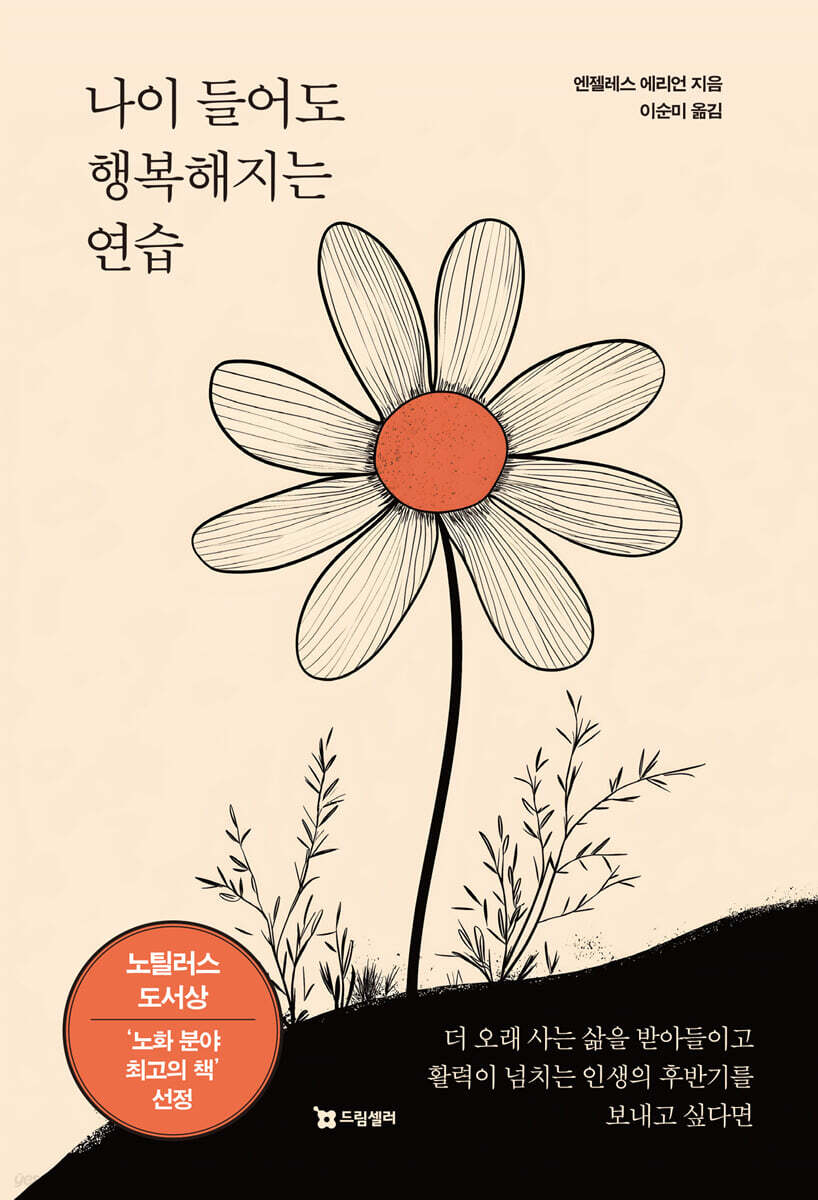
Practice being happy as you age
 |
Description
Book Introduction
Do you want to live a happy old age?
If you want to embrace a longer life and enjoy the second half of your life full of vitality,
Change your perspective on the second half of life
Break free from negative stereotypes about aging!
If you're halfway through your life, this is a must-read book about "aging"!
For the remaining half of your life, prepare thoroughly and enter the second half of your life with a proper mindset. Meet the eight doors that signal the beginning of a new life! As you pass through each door, you'll have the opportunity to see things with a new perspective, confront your inner self, and reflect!
By introducing the attitude toward aging through eight doors, we provide information, comfort, and a time of reflection for those who wish to understand more deeply and experience the mystery of the second half of life.
If you want to embrace a longer life and enjoy the second half of your life full of vitality,
Change your perspective on the second half of life
Break free from negative stereotypes about aging!
If you're halfway through your life, this is a must-read book about "aging"!
For the remaining half of your life, prepare thoroughly and enter the second half of your life with a proper mindset. Meet the eight doors that signal the beginning of a new life! As you pass through each door, you'll have the opportunity to see things with a new perspective, confront your inner self, and reflect!
By introducing the attitude toward aging through eight doors, we provide information, comfort, and a time of reflection for those who wish to understand more deeply and experience the mystery of the second half of life.
- You can preview some of the book's contents.
Preview
index
To the readers of this book - Preparing for a happy old age
prolog
Eight gates and threshing
Eight Gates: A Rite of Passage in the Second Half of Life
Silver Gate
The Gate of White Pickets
Clay Gate
Black and White Door
The Door of Power
Gate of Bone
Nature's Gate
The Gate of Gold
Epilogue - Eight Doors and Beyond
prolog
Eight gates and threshing
Eight Gates: A Rite of Passage in the Second Half of Life
Silver Gate
The Gate of White Pickets
Clay Gate
Black and White Door
The Door of Power
Gate of Bone
Nature's Gate
The Gate of Gold
Epilogue - Eight Doors and Beyond
Detailed image
.jpg)
Into the book
More people than ever are entering the second half of their lives.
This is because the average life expectancy is steadily increasing.
We will live much longer than our parents and grandparents.
As life's opportunities increase by a few years, or even by a few decades, so do the blessings of life.
But we don't seem ready to live faithfully through this extended time.
There is a lack of tolerance to respect and value the elderly.
As we grow older, we don't have many opportunities to learn how to become wise, actively participate in society, and live a fulfilling life.
So even if life expectancy increases, we may end up spending the latter half of our lives thinking only about aging, disease, despair, and death.
If we want to embrace a longer life and live a vibrant second half of our lives, we must consciously shift our perspective on the latter half of life.
Now is the time.
Even seeing the rising suicide rate among seniors makes us realize the need for change.
As life gets more challenging, we need to learn from older people and share their life lessons to elevate our lives.
--- From the "Prologue"
Historically, thresholds and doors have served as symbolic passageways to new worlds.
They are imprinted on the human psyche, signaling the possibility of new lives, new experiences, or new identities.
It also provides an opportunity for communication between different worlds, such as the secular and the sacred, the inner and the outer, the subject and the object, the visible and the invisible, the real world and the world of dreams.
There is a symbolic difference between a threshold and a door.
The threshold suggests a time and place where change, learning, and integration occur, while the door signifies the verification that must be done before working on the threshold and the device that guards the inside and outside of the door.
A door is sometimes perceived as a place for rituals, a sacred place, a sacred ground, or a passageway to spiritually significant change.
When we reach that “door,” the deepest archetypal emotions rise to the surface.
We instinctively know that we must let go of the familiar, prepare to step through the door, and open our hearts to the unknown.
Once you pass through the door, there is no going back.
Once you open the door and stand on the threshold, you must begin to change.
--- p.27∼28
At the end of each question, there are reflections and practices to help you stay true to the fairy's words.
Reflection is a common way of gaining reflective wisdom used around the world.
When you reflect, you will gain new insights that will allow you to learn from your experiences, question them, and reevaluate them, allowing you to make choices you hadn't considered before.
Journaling is a time-honored method of reflection and a wonderful tool for noticing what's happening in the moment.
You may find it quite helpful to keep brief notes or records of any insights that come to you during your reflection.
According to world spiritual traditions, practice expands our consciousness and facilitates transformation by enabling us to develop, transform, strengthen, and focus our practice.
Whenever you want to learn something new or make a change, you must practice it consciously and consistently.
Just as you learned to walk, write, and speak through practice, you can transform yourself at any time through the power of change.
Practice must be active, dynamic and rigorous.
When you consistently practice based on reflection and can distinguish between what works and what doesn't, your practice becomes more than just a reflection or an exercise in intellectual understanding.
Practice refers to the daily actions that support change and provide discipline to integrate and strengthen new values, skills, and character.
In this way, reflection and practice are essential elements for cultivating and embodying wisdom in the second half of life.
--- p.51∼53
The Silver Gate heralds the mystery of new beginnings and adventure.
We have come to this door many times throughout our lives.
The silver gate, shining and reflecting things, reveals the luminous, spiritual, and fascinating nature of all the experiences we have yet to experience.
Even if you arrive at this door later in life, if you only associate old age with illness, loss, depression, despair, and death, you will inevitably turn back.
In fact, this period is a new opportunity to look back on the knowledge and wisdom we have accumulated over time.
This mystical silver door, shining like a mirror, invites us to reflect on our own nature as we already know it and pushes us to embark on a long journey toward our true selves.
--- p.57
The white picket gate you encounter in the second half of your life is the gate of organization.
Our values and identities move from doing to being, from preparation to harvest, from acquisition to inheritance, from ambition to meaning, from 'I' to 'we.'
Here, we must shatter the empty peace that our previous roles have given us and reveal our true faces, so that we can integrate and express the faces of children, youth, middle-aged people, and old people, as well as our true, original faces.
Experiencing childlike wonder, awe, and curiosity can help you maintain a childlike appearance, no matter your age.
When we have the face of a young man, our face glows with the appearance of a boy or girl.
Young people are fascinated by the fire of creation and the spirit of adventure.
Also, the body is very sensual and sexually interested.
Meanwhile, a middle-aged face can appear in someone who is experienced, trustworthy, and responsible.
And the face of old age contains a beauty engraved over a long period of time, revealing a mysterious and rich wisdom.
Furthermore, it represents a grandeur that combines strength, softness, and delicacy.
We often find in the face of a newborn the wisdom that can be seen in the face of an old man.
This shows that the original face is existence itself and the original spiritual nature.
--- p.85∼86
Many traditional cultures teach that forming meaningful relationships with others is the most rigorous spiritual practice we can undertake.
In human relationships, we face both easy-to-accept natures and difficult-to-accept natures.
Through this, we learn the ability to love, forgive, and respect others.
At the door of black and white, you are faced with both positive and negative shadows.
A positive shadow is made up of positive aspects and talents that have not yet been fully revealed.
Negative shadows are those that judge or acknowledge themselves negatively.
It is made up of the appearance of not trying to do something.
What are the positive and negative aspects of yourself that you're reluctant to accept? What are the positive aspects of others you wish you could emulate, and what are the negative aspects you wish others had? As we age, we must embrace both these negative and positive aspects of ourselves.
Carl Jung said that every relationship is a crucible of trials that reveal the light and dark sides of ourselves to each other and illuminate the gifts of learning and practice.
He also said in “Memory, Dream, Thought” that “to face a person with a shadow is to show that person light.”
Connecting with each other like this gives us the opportunity to shine our light on each other.
The second half of life requires different love depending on the relationship.
This love should not control or possess others, nor should it allow itself to be controlled or possessed.
--- p.127∼128
The eight doors emphasize the sharpness of time and the need to integrate all of our life's experiences.
At each door, we went through a process of specific tasks, challenges, gifts, reflections, and practices.
They provided us with the structure we need to identify and reevaluate what and whom we value, and what truly matters to us.
And it showed us what we have tried to fix, re-try, and make right in life, and what longings we have yet to fulfill.
What door has evoked unexpected emotions, dreams, memories, longings, or a sense of calling in you? Which door has been the most inspiring, challenging, or surprising? Perhaps there are some that you would like to return to for greater inspiration or deeper work.
You may want to experience each door with friends or family.
As you experience each door, what changes or actions do you want to take based on the results you encounter? How can you live a meaningful life in the time you have left? What important things can you still do for others? What is the most important thing we should remember at the end of this journey? The philosopher Emerson said:
Whether it's giving birth to a healthy child, leaving a small garden, or a better social environment, leaving this world a little better place.
If you can make one person breathe a little easier, that's true success.
This is because the average life expectancy is steadily increasing.
We will live much longer than our parents and grandparents.
As life's opportunities increase by a few years, or even by a few decades, so do the blessings of life.
But we don't seem ready to live faithfully through this extended time.
There is a lack of tolerance to respect and value the elderly.
As we grow older, we don't have many opportunities to learn how to become wise, actively participate in society, and live a fulfilling life.
So even if life expectancy increases, we may end up spending the latter half of our lives thinking only about aging, disease, despair, and death.
If we want to embrace a longer life and live a vibrant second half of our lives, we must consciously shift our perspective on the latter half of life.
Now is the time.
Even seeing the rising suicide rate among seniors makes us realize the need for change.
As life gets more challenging, we need to learn from older people and share their life lessons to elevate our lives.
--- From the "Prologue"
Historically, thresholds and doors have served as symbolic passageways to new worlds.
They are imprinted on the human psyche, signaling the possibility of new lives, new experiences, or new identities.
It also provides an opportunity for communication between different worlds, such as the secular and the sacred, the inner and the outer, the subject and the object, the visible and the invisible, the real world and the world of dreams.
There is a symbolic difference between a threshold and a door.
The threshold suggests a time and place where change, learning, and integration occur, while the door signifies the verification that must be done before working on the threshold and the device that guards the inside and outside of the door.
A door is sometimes perceived as a place for rituals, a sacred place, a sacred ground, or a passageway to spiritually significant change.
When we reach that “door,” the deepest archetypal emotions rise to the surface.
We instinctively know that we must let go of the familiar, prepare to step through the door, and open our hearts to the unknown.
Once you pass through the door, there is no going back.
Once you open the door and stand on the threshold, you must begin to change.
--- p.27∼28
At the end of each question, there are reflections and practices to help you stay true to the fairy's words.
Reflection is a common way of gaining reflective wisdom used around the world.
When you reflect, you will gain new insights that will allow you to learn from your experiences, question them, and reevaluate them, allowing you to make choices you hadn't considered before.
Journaling is a time-honored method of reflection and a wonderful tool for noticing what's happening in the moment.
You may find it quite helpful to keep brief notes or records of any insights that come to you during your reflection.
According to world spiritual traditions, practice expands our consciousness and facilitates transformation by enabling us to develop, transform, strengthen, and focus our practice.
Whenever you want to learn something new or make a change, you must practice it consciously and consistently.
Just as you learned to walk, write, and speak through practice, you can transform yourself at any time through the power of change.
Practice must be active, dynamic and rigorous.
When you consistently practice based on reflection and can distinguish between what works and what doesn't, your practice becomes more than just a reflection or an exercise in intellectual understanding.
Practice refers to the daily actions that support change and provide discipline to integrate and strengthen new values, skills, and character.
In this way, reflection and practice are essential elements for cultivating and embodying wisdom in the second half of life.
--- p.51∼53
The Silver Gate heralds the mystery of new beginnings and adventure.
We have come to this door many times throughout our lives.
The silver gate, shining and reflecting things, reveals the luminous, spiritual, and fascinating nature of all the experiences we have yet to experience.
Even if you arrive at this door later in life, if you only associate old age with illness, loss, depression, despair, and death, you will inevitably turn back.
In fact, this period is a new opportunity to look back on the knowledge and wisdom we have accumulated over time.
This mystical silver door, shining like a mirror, invites us to reflect on our own nature as we already know it and pushes us to embark on a long journey toward our true selves.
--- p.57
The white picket gate you encounter in the second half of your life is the gate of organization.
Our values and identities move from doing to being, from preparation to harvest, from acquisition to inheritance, from ambition to meaning, from 'I' to 'we.'
Here, we must shatter the empty peace that our previous roles have given us and reveal our true faces, so that we can integrate and express the faces of children, youth, middle-aged people, and old people, as well as our true, original faces.
Experiencing childlike wonder, awe, and curiosity can help you maintain a childlike appearance, no matter your age.
When we have the face of a young man, our face glows with the appearance of a boy or girl.
Young people are fascinated by the fire of creation and the spirit of adventure.
Also, the body is very sensual and sexually interested.
Meanwhile, a middle-aged face can appear in someone who is experienced, trustworthy, and responsible.
And the face of old age contains a beauty engraved over a long period of time, revealing a mysterious and rich wisdom.
Furthermore, it represents a grandeur that combines strength, softness, and delicacy.
We often find in the face of a newborn the wisdom that can be seen in the face of an old man.
This shows that the original face is existence itself and the original spiritual nature.
--- p.85∼86
Many traditional cultures teach that forming meaningful relationships with others is the most rigorous spiritual practice we can undertake.
In human relationships, we face both easy-to-accept natures and difficult-to-accept natures.
Through this, we learn the ability to love, forgive, and respect others.
At the door of black and white, you are faced with both positive and negative shadows.
A positive shadow is made up of positive aspects and talents that have not yet been fully revealed.
Negative shadows are those that judge or acknowledge themselves negatively.
It is made up of the appearance of not trying to do something.
What are the positive and negative aspects of yourself that you're reluctant to accept? What are the positive aspects of others you wish you could emulate, and what are the negative aspects you wish others had? As we age, we must embrace both these negative and positive aspects of ourselves.
Carl Jung said that every relationship is a crucible of trials that reveal the light and dark sides of ourselves to each other and illuminate the gifts of learning and practice.
He also said in “Memory, Dream, Thought” that “to face a person with a shadow is to show that person light.”
Connecting with each other like this gives us the opportunity to shine our light on each other.
The second half of life requires different love depending on the relationship.
This love should not control or possess others, nor should it allow itself to be controlled or possessed.
--- p.127∼128
The eight doors emphasize the sharpness of time and the need to integrate all of our life's experiences.
At each door, we went through a process of specific tasks, challenges, gifts, reflections, and practices.
They provided us with the structure we need to identify and reevaluate what and whom we value, and what truly matters to us.
And it showed us what we have tried to fix, re-try, and make right in life, and what longings we have yet to fulfill.
What door has evoked unexpected emotions, dreams, memories, longings, or a sense of calling in you? Which door has been the most inspiring, challenging, or surprising? Perhaps there are some that you would like to return to for greater inspiration or deeper work.
You may want to experience each door with friends or family.
As you experience each door, what changes or actions do you want to take based on the results you encounter? How can you live a meaningful life in the time you have left? What important things can you still do for others? What is the most important thing we should remember at the end of this journey? The philosopher Emerson said:
Whether it's giving birth to a healthy child, leaving a small garden, or a better social environment, leaving this world a little better place.
If you can make one person breathe a little easier, that's true success.
--- From "Epilogue"
Publisher's Review
When your inner self crumbles, your life crumbles too!
Embracing aging and living a long life
A Guide to Helping You Embrace the Second Half of Your Life Positively
More people are entering the second half of their lives than ever before.
This is because the average life expectancy continues to increase.
As life opportunities increase by several years, or even decades, the blessings of life should also increase, but the reality is that more people are worried and anxious about their extended old age.
Even as I grow older, I want to become a wise person, not a dork, actively participate in society, and live a fulfilling life, but it is not as easy as I wish.
But can we not live the long latter half of our lives thinking only about aging, disease, despair, and death?
As we near the end of the first half of our hectic life, there comes a time when we have to think about aging and our later years.
If you want to embrace a longer life and enjoy a happy and enjoyable second half of your life, you must consciously change your perspective on the second half of your life.
Perhaps living life on this earth is the greatest adventure of all.
Because we can have everything we want, and possibilities are always open.
Above all, the greatest mystery exists within the human mind.
That is why it is essential to look within yourself to immerse yourself in your true self and understand it more deeply.
Everyone's life from birth to the age of 40 or 50 is almost similar.
We go to school, go to work, meet a spouse, start a family, build a career, save money, and live.
However, the second half of life is not enough with just the skills accumulated in the first half.
This is because the tasks and requirements required for growth and change in the second half of life are completely different.
That's why we should read this book.
Eight doors that provide deep experiences in the second half of life.
How should we deal with this opportunity and crisis that comes about halfway through our lives?
The author, a psychologist and cultural anthropologist, explains the attitude toward aging not in an abstract or theoretical way, but in a clear and easy-to-understand intuitive way, explaining that to grow into a wise elder, one must pass through eight symbolic doors.
He sees human life as a series of thresholds, showing eight major gates.
Each door is a passageway that provides a deeper experience in the second half of life.
We have to go through many things as we pass through this gate.
We may go back to school, retire, divorce or remarry, or care for children and grandchildren.
You may also lose friends and family to illness or death, or you may have an accident and be traumatized by it.
You may become successful in your field and travel or move to a better place.
As we go through these life experiences, the eight doors help us discover our true selves, so if we master the lessons presented in the eight doors, we can enter the second half of our lives thoroughly prepared for it.
As you pass through the door, you learn to see things with new eyes and have the opportunity to face and reflect on your inner self.
Through this, you will gain a deeper understanding of life and develop a positive attitude toward accepting life in old age.
The Silver Gate heralds new beginnings, adventures, and mysteries.
It reveals the luminous, spiritual, and fascinating nature of all experiences yet to be experienced.
It is a time of new opportunity to reflect on the knowledge and wisdom we have accumulated over the years, to reflect on our own nature, and to embark on a long journey toward our true selves.
'The White Stake Gate' examines the state of excessive identification that we have with the position or job we achieved in our youth.
We become increasingly aware that the roles, skills, and professional reputations we have assumed were the very real selves we have been mistaken for.
Through this door, you take off your mask and rediscover your true self.
The 'Clay Gate' is a gate that has no set form and continuously changes shape.
It reminds us of the transience of the body and the changes that occur in our daily lives.
Clay, made of moist, fine soil that is strong yet fragile like earth and constantly transforming and reconstructing itself, reminds us of our bodies.
As our concept of physical relationships, sexuality, and sensuality changes, it emphasizes the need for self-care.
The 'Black and White Door' is a double door that requires two people to pass through.
Here, you overcome the isolation you created for yourself and drive out the cynicism that has been eating away at your relationships with those around you.
As we pass through this door with others, we learn about loyalty and betrayal, forgiveness and tolerance, and, more broadly, love in a variety of relationships.
The 'Door of the Country' is a door made of weathered wood that explores the realms of meaningful work, service, and creation.
As we reevaluate our calling in life, we rediscover our interests and passions for work and service—whether we are serving others or leaving a meaningful legacy, or what we want to contribute to the world.
The 'Door of Bones' reveals our true selves.
At this gate, we must cast away the pretense within our nature, burn away the impure residue, and harmonize all aspects of our true self.
Here, we become free from the negativity and indulgence, the competition and comparison, the temptations and schemes of selfishness that prevent us from finding our true self.
The 'Gate of Nature' is a gate located in a deep, dark forest surrounded by a beautiful desert.
Here we can find deep satisfaction and fulfillment.
In this door, bathed in natural light, we discover all the happy moments of life and meditate on ways to experience profound peace, balance, and tranquility in life.
Through silence, contemplation, and reflection, we embrace solitude and experience spiritual solace, creating a sanctuary where the wellspring of contentment and peace overflows.
The Golden Gate opens our eyes to the deepest essence of our true selves, and allows us to trust and liberate our own spirituality.
It is a place where we learn to distance ourselves before we begin anew or move forward, where we can come to terms with physical death, ending relationships, health, work, callings, disappointments, and lifelong dreams.
Each door we pass through illuminates our lives, helping us see our surroundings clearly.
The tasks, challenges, gifts, reflections, and practices you encounter as you pass through each door will help you work toward awareness and transformation of aging, and will be a loving companion on the journey of all who are interested in soul integration, transformation, and creation.
"The Practice of Being Happy as You Age" helps us, living in an age of approaching anxiety and despair, find the missing bridge between our inner lives and the outer world, and use our remaining time wisely and joyfully.
Above all, it gives us the opportunity to prioritize doing things that are moving and meaningful to us, and to reassess and reevaluate what and who we value and what truly matters to us.
This helps them live out their old age as more mature and wise adults.
Nautilus Award-winning book selected as 'Best Book on Aging'
The Nautilus Book Awards, which champion “Better Books for a Better World,” celebrate books that promote conscious living and environmental values, and explore well-being, social change, social justice, and spiritual growth.
The reason "Practicing Being Happy as You Age" was selected as the "Best Book on Aging" in 2007 is because it deeply connected with readers and made a meaningful contribution to the discussion about aging and life transitions by addressing topics related to spiritual growth, well-being, or the social impact of aging.
I hope that through this book, you will achieve positive self-change and awareness, develop a proper attitude toward aging, and achieve a happy life in your later years.
Embracing aging and living a long life
A Guide to Helping You Embrace the Second Half of Your Life Positively
More people are entering the second half of their lives than ever before.
This is because the average life expectancy continues to increase.
As life opportunities increase by several years, or even decades, the blessings of life should also increase, but the reality is that more people are worried and anxious about their extended old age.
Even as I grow older, I want to become a wise person, not a dork, actively participate in society, and live a fulfilling life, but it is not as easy as I wish.
But can we not live the long latter half of our lives thinking only about aging, disease, despair, and death?
As we near the end of the first half of our hectic life, there comes a time when we have to think about aging and our later years.
If you want to embrace a longer life and enjoy a happy and enjoyable second half of your life, you must consciously change your perspective on the second half of your life.
Perhaps living life on this earth is the greatest adventure of all.
Because we can have everything we want, and possibilities are always open.
Above all, the greatest mystery exists within the human mind.
That is why it is essential to look within yourself to immerse yourself in your true self and understand it more deeply.
Everyone's life from birth to the age of 40 or 50 is almost similar.
We go to school, go to work, meet a spouse, start a family, build a career, save money, and live.
However, the second half of life is not enough with just the skills accumulated in the first half.
This is because the tasks and requirements required for growth and change in the second half of life are completely different.
That's why we should read this book.
Eight doors that provide deep experiences in the second half of life.
How should we deal with this opportunity and crisis that comes about halfway through our lives?
The author, a psychologist and cultural anthropologist, explains the attitude toward aging not in an abstract or theoretical way, but in a clear and easy-to-understand intuitive way, explaining that to grow into a wise elder, one must pass through eight symbolic doors.
He sees human life as a series of thresholds, showing eight major gates.
Each door is a passageway that provides a deeper experience in the second half of life.
We have to go through many things as we pass through this gate.
We may go back to school, retire, divorce or remarry, or care for children and grandchildren.
You may also lose friends and family to illness or death, or you may have an accident and be traumatized by it.
You may become successful in your field and travel or move to a better place.
As we go through these life experiences, the eight doors help us discover our true selves, so if we master the lessons presented in the eight doors, we can enter the second half of our lives thoroughly prepared for it.
As you pass through the door, you learn to see things with new eyes and have the opportunity to face and reflect on your inner self.
Through this, you will gain a deeper understanding of life and develop a positive attitude toward accepting life in old age.
The Silver Gate heralds new beginnings, adventures, and mysteries.
It reveals the luminous, spiritual, and fascinating nature of all experiences yet to be experienced.
It is a time of new opportunity to reflect on the knowledge and wisdom we have accumulated over the years, to reflect on our own nature, and to embark on a long journey toward our true selves.
'The White Stake Gate' examines the state of excessive identification that we have with the position or job we achieved in our youth.
We become increasingly aware that the roles, skills, and professional reputations we have assumed were the very real selves we have been mistaken for.
Through this door, you take off your mask and rediscover your true self.
The 'Clay Gate' is a gate that has no set form and continuously changes shape.
It reminds us of the transience of the body and the changes that occur in our daily lives.
Clay, made of moist, fine soil that is strong yet fragile like earth and constantly transforming and reconstructing itself, reminds us of our bodies.
As our concept of physical relationships, sexuality, and sensuality changes, it emphasizes the need for self-care.
The 'Black and White Door' is a double door that requires two people to pass through.
Here, you overcome the isolation you created for yourself and drive out the cynicism that has been eating away at your relationships with those around you.
As we pass through this door with others, we learn about loyalty and betrayal, forgiveness and tolerance, and, more broadly, love in a variety of relationships.
The 'Door of the Country' is a door made of weathered wood that explores the realms of meaningful work, service, and creation.
As we reevaluate our calling in life, we rediscover our interests and passions for work and service—whether we are serving others or leaving a meaningful legacy, or what we want to contribute to the world.
The 'Door of Bones' reveals our true selves.
At this gate, we must cast away the pretense within our nature, burn away the impure residue, and harmonize all aspects of our true self.
Here, we become free from the negativity and indulgence, the competition and comparison, the temptations and schemes of selfishness that prevent us from finding our true self.
The 'Gate of Nature' is a gate located in a deep, dark forest surrounded by a beautiful desert.
Here we can find deep satisfaction and fulfillment.
In this door, bathed in natural light, we discover all the happy moments of life and meditate on ways to experience profound peace, balance, and tranquility in life.
Through silence, contemplation, and reflection, we embrace solitude and experience spiritual solace, creating a sanctuary where the wellspring of contentment and peace overflows.
The Golden Gate opens our eyes to the deepest essence of our true selves, and allows us to trust and liberate our own spirituality.
It is a place where we learn to distance ourselves before we begin anew or move forward, where we can come to terms with physical death, ending relationships, health, work, callings, disappointments, and lifelong dreams.
Each door we pass through illuminates our lives, helping us see our surroundings clearly.
The tasks, challenges, gifts, reflections, and practices you encounter as you pass through each door will help you work toward awareness and transformation of aging, and will be a loving companion on the journey of all who are interested in soul integration, transformation, and creation.
"The Practice of Being Happy as You Age" helps us, living in an age of approaching anxiety and despair, find the missing bridge between our inner lives and the outer world, and use our remaining time wisely and joyfully.
Above all, it gives us the opportunity to prioritize doing things that are moving and meaningful to us, and to reassess and reevaluate what and who we value and what truly matters to us.
This helps them live out their old age as more mature and wise adults.
Nautilus Award-winning book selected as 'Best Book on Aging'
The Nautilus Book Awards, which champion “Better Books for a Better World,” celebrate books that promote conscious living and environmental values, and explore well-being, social change, social justice, and spiritual growth.
The reason "Practicing Being Happy as You Age" was selected as the "Best Book on Aging" in 2007 is because it deeply connected with readers and made a meaningful contribution to the discussion about aging and life transitions by addressing topics related to spiritual growth, well-being, or the social impact of aging.
I hope that through this book, you will achieve positive self-change and awareness, develop a proper attitude toward aging, and achieve a happy life in your later years.
GOODS SPECIFICS
- Date of issue: February 24, 2025
- Page count, weight, size: 240 pages | 326g | 128*188*20mm
- ISBN13: 9791192788364
- ISBN10: 1192788362
You may also like
카테고리
korean


korean

![GQ KOREA Mark (Monthly): December [2025]](http://librairie.coreenne.fr/cdn/shop/files/8ef265dbbfbf186523ed75ba7319009d.jpg?v=1765340328&width=3840)


