

Usefulness of Chinese characters
 |
Description
Book Introduction
"The limits of my language are the limits of my world!" - Wittgenstein
A must-read for developing a worldly perspective and a linguistic understanding.
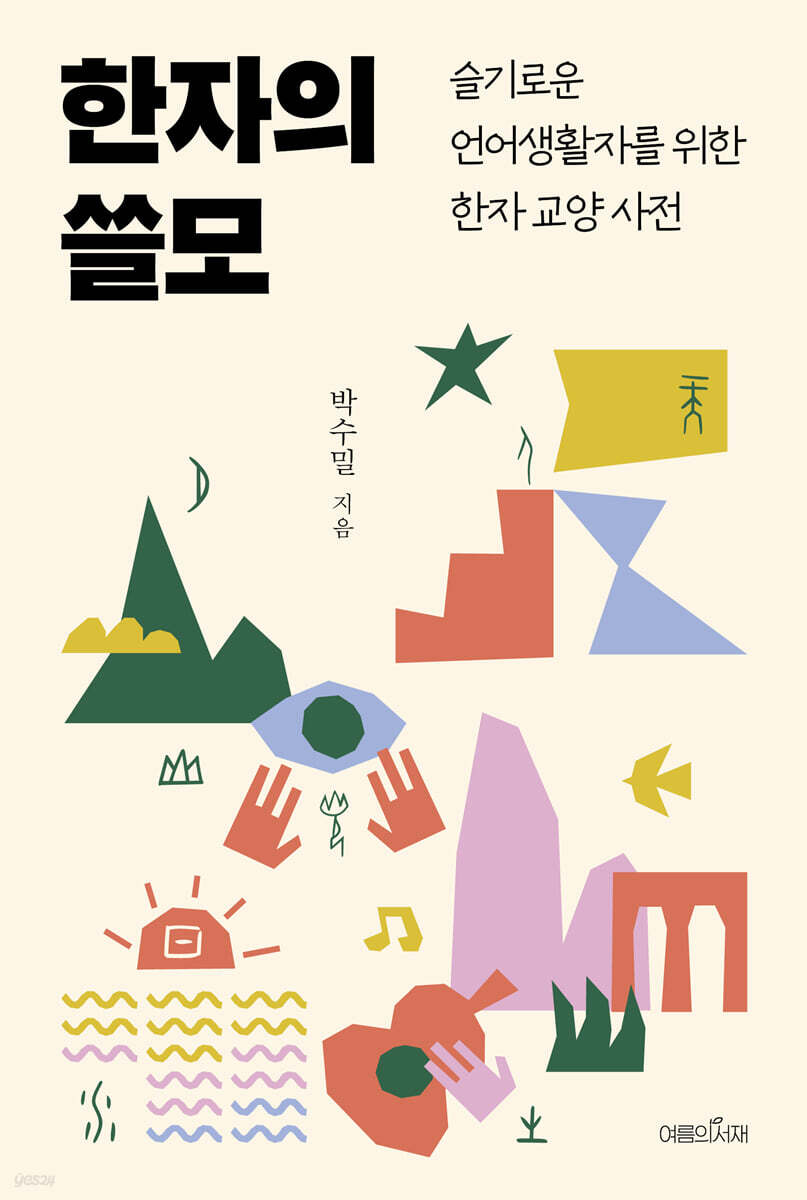
This book is a Chinese character dictionary written by Professor Park Su-mil, who has written best-selling books on Chinese characters, including “Living Chinese Character Textbook” and “Miracle Chinese Character Learning,” and taught students at university for decades.
The author, who has been consistently working on Chinese character-related projects, meticulously researched the materials to present the origins of Chinese character words and provided examples of their use in everyday life, making it easy for anyone to understand.
It is also significant in that it goes beyond a simple explanation of words and attempts a humanistic reflection on the meaning contained in Chinese characters.
In these days of constant enthusiasm for speaking and writing, to explore the world of our language more accurately, it is essential to have a thorough understanding of Chinese characters.
To read, write, and speak our language properly.
This book explains Chinese characters in the easiest and most practical way possible by finding the 'usefulness and meaning of Chinese characters' in our daily lives and culture.
It also conveys the value of the classics as well as similar Chinese characters, Chinese characters with different pronunciations, and roots.
Let's take a look at the 'Minimum Chinese Character Dictionary' to properly understand the meaning of the words and writing we use.
A must-read for developing a worldly perspective and a linguistic understanding.
This book is a Chinese character dictionary written by Professor Park Su-mil, who has written best-selling books on Chinese characters, including “Living Chinese Character Textbook” and “Miracle Chinese Character Learning,” and taught students at university for decades.
The author, who has been consistently working on Chinese character-related projects, meticulously researched the materials to present the origins of Chinese character words and provided examples of their use in everyday life, making it easy for anyone to understand.
It is also significant in that it goes beyond a simple explanation of words and attempts a humanistic reflection on the meaning contained in Chinese characters.
In these days of constant enthusiasm for speaking and writing, to explore the world of our language more accurately, it is essential to have a thorough understanding of Chinese characters.
To read, write, and speak our language properly.
This book explains Chinese characters in the easiest and most practical way possible by finding the 'usefulness and meaning of Chinese characters' in our daily lives and culture.
It also conveys the value of the classics as well as similar Chinese characters, Chinese characters with different pronunciations, and roots.
Let's take a look at the 'Minimum Chinese Character Dictionary' to properly understand the meaning of the words and writing we use.
- You can preview some of the book's contents.
Preview
index
Author's Note
Part 1: The Roots and Uses of Chinese Characters
Chapter 1: Similar but different Chinese characters
The difference between 'seeing'
A letter with two names
Ahn Jung-geun and Yu Gwan-sun
The difference between 'sa (師)' and 'sa (士)' in occupation
The difference between the kings of Joseon and the ancestors
The various names of home, a place of rest for the soul
The virtuous man loves the mountains, the difference between mountains
The difference between disease and illness
Similar but different words
Words derived from the unique characteristics of animals
Words from imaginary animals: wolf and prophecy
The difference between condemnation and criticism, rejection and orientation
The difference between discussion and debate, classification and analysis
Same sound, different meaning
The difference between ocean, sea, and bay
Chapter 2: The Roots of Our Language
Each language has its own story and history.
Korean words that are easy to misspell
A word that absolutely needs 'nothing'
A word whose original meaning and usage have changed
Words that express crime and punishment
A start that requires a good first button
Chinese characters created by the usefulness of things
Words that originated from war
Korean words related to hair
Idioms used in everyday life
Letters modeled after the shapes of objects
It sounds like pure Korean, but it's a Chinese character
Japanese words that are often misused
A word derived from Buddhism
Chapter 3: Chinese characters with contrasting meanings
Above and below, there is no one above people
Left and right [left and right], birds fly with their left and right wings
Inside and outside [inside and outside], inside and outside are connected
East and West [東西], why did Dharma go east and Sun Wukong go west?
Spring and Autumn [春秋], the excitement of spring and the calmness of autumn
Gold, silver, copper [gold, silver, copper], the same weight of sweat on silver and copper
Long and short [長短], you have to try to know whether it is long or short.
Wisdom of going out and entering
Which is longer: inch (寸), foot (尺), or length (丈)?
White and black [黑白], distinguishing right from wrong
Hands and feet [手足], no matter what, your hands and feet must match
Ears and eyes [耳目], ears that hear and eyes that see
Part 2: Stories of Life and Culture Told Through Chinese Characters
Chapter 1: Chinese Characters Containing the Wisdom of Life
A friend, someone you keep close to and have known for a long time
From marriage, meeting to honeymoon
Old age is not a number
Memento mori! Remember death.
Words that indicate a short period of time
A lifelong study
Words from past exams
Everyday expressions related to energy
I am the master of my own life, my own story
Proverbs that are used without knowing their meaning
Three-inch weapon, tongue
Alcohol can be both poison and medicine
Clothes that bring out a person's individuality
Life lessons from Baduk
Chapter 2: Cultural Stories Learned Through Chinese Characters
Old Future, Lessons from History
Kimchi, Korea's representative food
A better day because it's twice, Seollal
The story of tea, a drink we enjoy every day
The palace, the house where the king lived
Chinese characters derived from fish
Symbolism in numbers
Bird, a symbol of freedom and hope
From Baekdu Mountain to Hallasan Mountain
An island of peace and relaxation
A healthy body leads to a happy mind.
A law that must protect the weak
The economy that governs the country and saves the people
Search
Helpful literature
Part 1: The Roots and Uses of Chinese Characters
Chapter 1: Similar but different Chinese characters
The difference between 'seeing'
A letter with two names
Ahn Jung-geun and Yu Gwan-sun
The difference between 'sa (師)' and 'sa (士)' in occupation
The difference between the kings of Joseon and the ancestors
The various names of home, a place of rest for the soul
The virtuous man loves the mountains, the difference between mountains
The difference between disease and illness
Similar but different words
Words derived from the unique characteristics of animals
Words from imaginary animals: wolf and prophecy
The difference between condemnation and criticism, rejection and orientation
The difference between discussion and debate, classification and analysis
Same sound, different meaning
The difference between ocean, sea, and bay
Chapter 2: The Roots of Our Language
Each language has its own story and history.
Korean words that are easy to misspell
A word that absolutely needs 'nothing'
A word whose original meaning and usage have changed
Words that express crime and punishment
A start that requires a good first button
Chinese characters created by the usefulness of things
Words that originated from war
Korean words related to hair
Idioms used in everyday life
Letters modeled after the shapes of objects
It sounds like pure Korean, but it's a Chinese character
Japanese words that are often misused
A word derived from Buddhism
Chapter 3: Chinese characters with contrasting meanings
Above and below, there is no one above people
Left and right [left and right], birds fly with their left and right wings
Inside and outside [inside and outside], inside and outside are connected
East and West [東西], why did Dharma go east and Sun Wukong go west?
Spring and Autumn [春秋], the excitement of spring and the calmness of autumn
Gold, silver, copper [gold, silver, copper], the same weight of sweat on silver and copper
Long and short [長短], you have to try to know whether it is long or short.
Wisdom of going out and entering
Which is longer: inch (寸), foot (尺), or length (丈)?
White and black [黑白], distinguishing right from wrong
Hands and feet [手足], no matter what, your hands and feet must match
Ears and eyes [耳目], ears that hear and eyes that see
Part 2: Stories of Life and Culture Told Through Chinese Characters
Chapter 1: Chinese Characters Containing the Wisdom of Life
A friend, someone you keep close to and have known for a long time
From marriage, meeting to honeymoon
Old age is not a number
Memento mori! Remember death.
Words that indicate a short period of time
A lifelong study
Words from past exams
Everyday expressions related to energy
I am the master of my own life, my own story
Proverbs that are used without knowing their meaning
Three-inch weapon, tongue
Alcohol can be both poison and medicine
Clothes that bring out a person's individuality
Life lessons from Baduk
Chapter 2: Cultural Stories Learned Through Chinese Characters
Old Future, Lessons from History
Kimchi, Korea's representative food
A better day because it's twice, Seollal
The story of tea, a drink we enjoy every day
The palace, the house where the king lived
Chinese characters derived from fish
Symbolism in numbers
Bird, a symbol of freedom and hope
From Baekdu Mountain to Hallasan Mountain
An island of peace and relaxation
A healthy body leads to a happy mind.
A law that must protect the weak
The economy that governs the country and saves the people
Search
Helpful literature
Detailed image

Into the book
Our lives and culture are embedded in Chinese characters.
Through the medium of Chinese characters, we can broaden our knowledge and common sense about our culture and gain insight into our lifestyle and habits.
Therefore, this book aims to examine the roots and background of Chinese characters to help us use our language correctly and to reveal the meaning contained in Chinese characters, thereby deeply understanding our daily lives and culture.
--- From the author's note
Our hearts and thoughts change depending on where our eyes look and how we look.
If you only look at one side, you will only believe one side of the truth.
If we only look at the superficial phenomena, it is easy to miss the hidden truth.
A crescent moon is not a crescent moon because it is half, but because only half of it is visible.
Only by having eyes that see the other half that is invisible can one know the complete reality.
We must not overlook the world and things in a superficial manner, but rather have the eyes of reflection to examine them carefully.
--- From "The Meaning of 'Seeing'"
The character 'Gyeong' (更) also has two names: 'Gyeong' and 'Gang'.
When read as ‘경’, it means ‘to fix’, and when read as ‘강’, it means ‘again’.
Renewing means fixing something that already existed and making it new.
It includes the meaning of breaking the previous record and setting a better record.
On the other hand, renewal means making something new again, or changing, adding, or deleting existing content according to changes.
So, how should we read "Kim Yuna broke her own figure skating record"? It should be read as "renewed," meaning she broke her own previous record.
What if I said, "I renewed my driver's license this time?" It should be read as "renewal."
Because it is replacing an existing driver's license.
--- From "Characters with Two Names"
Rumination is associated with animals that chew the cud.
Cows, horses, goats, etc. cannot swallow food right away, but spit it back into their mouths, chew it well, and then swallow it again.
This stomach is called a rumination stomach, and in Chinese characters it is written as rumen stomach (反芻胃).
Ban (反) means to return, and chu (芻) refers to fodder, that is, the feed of cattle or horses.
Rumination means 'the act of cows or goats turning over and chewing fodder [芻] before swallowing it.'
From this, the act of repetitively savoring something is called rumination.
“I thought deeply about what he said.”
--- From "Words that originated from the unique characteristics of animals"
There are also words that came out in the process of translating Indian words, regardless of the meaning of the letters.
A very noisy or messy scene is called a 'chaos scene'.
In Asurajang (阿修羅場), Asura (阿修羅) is a phonetic translation of the Indian word 'Asura', which means 'ugly.'
Asura is a bad god that appears in ancient Indian mythology.
It is said that he was a person who liked to fight, so he would often get into fights.
If Asura wins the fight against the heavens, poverty and disaster will come.
When humans do good deeds, the power of heaven becomes stronger, and when humans do bad deeds, the power of Asura becomes stronger.
If the world becomes filled with injustice, it will become a real battlefield where Asuras rule.
--- From "Words Originating from Buddhism"
When we say, “That person can’t use his legs if it’s free,” the legs are written as “사족 (四足).”
Sajok (四足) means four feet, and in the case of humans, it refers to two arms and two legs, or four limbs (四肢).
How good would it be if you couldn't even move your arms or legs?
Thus, it came to mean that one is so fond of something or a hobby that one cannot move.
The word ‘jok’ (足) also means ‘sufficient’ or ‘enough’.
Being sufficient without any lack is satisfaction, and not reaching a certain amount is insufficiency.
Being satisfied with oneself is self-sufficiency.
If satisfaction is being satisfied only when what you want is achieved, then being content in any situation is being self-sufficient.
If I can be content with what I have, happiness is always close by.
--- From "It's Okay If Things Don't Go Your Way"
The term “seungbusu” (勝負手) also comes from the game of baduk.
In Baduk, a winning move is a move made as a final decision to determine the outcome of a game.
It means the number of victories and burdens.
Thus, the act of making a decision to determine the success or failure of an undertaking or to decide the outcome is called 'throwing a decisive move.'
It is written as 'He threw the last move in that match.'
Through the medium of Chinese characters, we can broaden our knowledge and common sense about our culture and gain insight into our lifestyle and habits.
Therefore, this book aims to examine the roots and background of Chinese characters to help us use our language correctly and to reveal the meaning contained in Chinese characters, thereby deeply understanding our daily lives and culture.
--- From the author's note
Our hearts and thoughts change depending on where our eyes look and how we look.
If you only look at one side, you will only believe one side of the truth.
If we only look at the superficial phenomena, it is easy to miss the hidden truth.
A crescent moon is not a crescent moon because it is half, but because only half of it is visible.
Only by having eyes that see the other half that is invisible can one know the complete reality.
We must not overlook the world and things in a superficial manner, but rather have the eyes of reflection to examine them carefully.
--- From "The Meaning of 'Seeing'"
The character 'Gyeong' (更) also has two names: 'Gyeong' and 'Gang'.
When read as ‘경’, it means ‘to fix’, and when read as ‘강’, it means ‘again’.
Renewing means fixing something that already existed and making it new.
It includes the meaning of breaking the previous record and setting a better record.
On the other hand, renewal means making something new again, or changing, adding, or deleting existing content according to changes.
So, how should we read "Kim Yuna broke her own figure skating record"? It should be read as "renewed," meaning she broke her own previous record.
What if I said, "I renewed my driver's license this time?" It should be read as "renewal."
Because it is replacing an existing driver's license.
--- From "Characters with Two Names"
Rumination is associated with animals that chew the cud.
Cows, horses, goats, etc. cannot swallow food right away, but spit it back into their mouths, chew it well, and then swallow it again.
This stomach is called a rumination stomach, and in Chinese characters it is written as rumen stomach (反芻胃).
Ban (反) means to return, and chu (芻) refers to fodder, that is, the feed of cattle or horses.
Rumination means 'the act of cows or goats turning over and chewing fodder [芻] before swallowing it.'
From this, the act of repetitively savoring something is called rumination.
“I thought deeply about what he said.”
--- From "Words that originated from the unique characteristics of animals"
There are also words that came out in the process of translating Indian words, regardless of the meaning of the letters.
A very noisy or messy scene is called a 'chaos scene'.
In Asurajang (阿修羅場), Asura (阿修羅) is a phonetic translation of the Indian word 'Asura', which means 'ugly.'
Asura is a bad god that appears in ancient Indian mythology.
It is said that he was a person who liked to fight, so he would often get into fights.
If Asura wins the fight against the heavens, poverty and disaster will come.
When humans do good deeds, the power of heaven becomes stronger, and when humans do bad deeds, the power of Asura becomes stronger.
If the world becomes filled with injustice, it will become a real battlefield where Asuras rule.
--- From "Words Originating from Buddhism"
When we say, “That person can’t use his legs if it’s free,” the legs are written as “사족 (四足).”
Sajok (四足) means four feet, and in the case of humans, it refers to two arms and two legs, or four limbs (四肢).
How good would it be if you couldn't even move your arms or legs?
Thus, it came to mean that one is so fond of something or a hobby that one cannot move.
The word ‘jok’ (足) also means ‘sufficient’ or ‘enough’.
Being sufficient without any lack is satisfaction, and not reaching a certain amount is insufficiency.
Being satisfied with oneself is self-sufficiency.
If satisfaction is being satisfied only when what you want is achieved, then being content in any situation is being self-sufficient.
If I can be content with what I have, happiness is always close by.
--- From "It's Okay If Things Don't Go Your Way"
The term “seungbusu” (勝負手) also comes from the game of baduk.
In Baduk, a winning move is a move made as a final decision to determine the outcome of a game.
It means the number of victories and burdens.
Thus, the act of making a decision to determine the success or failure of an undertaking or to decide the outcome is called 'throwing a decisive move.'
It is written as 'He threw the last move in that match.'
--- From "Learning Life from Baduk"
Publisher's Review
The Usefulness of Chinese Characters, a Living Language
The ability to read and understand text is literacy.
Chinese characters are a 'living language' and a 'useful tool' that will improve literacy.
However, many people turn away from it, saying, “Chinese characters are only used by old farts to show off.” or “I’m so busy, why are we using Chinese characters instead of English?”
『The Usefulness of Chinese Characters』 is a book that clearly states that Chinese characters are not a 'useless language' in this trend.
In Korean, where more than 60% of words are Chinese characters, you can deeply understand the meaning of words just by knowing the meaning of the Chinese characters.
Therefore, Chinese characters are essential to properly understand our thoughts and culture.
In particular, due to the nature of Chinese characters as ideographic characters, Chinese character vocabulary is conceptual and implicit.
Often times, you can only know the true meaning of a word if you know its meaning and origin.
Most of our classical literature and cultural heritage was written in Chinese characters, so Chinese characters are not just a means of writing; they are the roots of our language and the foundation of our everyday language.
This is proof that Chinese characters are a living language and a useful tool for life.
Vocabulary building with Chinese characters
A Wise Language Life Completed with Chinese Characters
The author conducted extensive research and refined the content before completing this book.
Every time I wrote a subheading, I consulted books on related topics and sometimes consulted with scholars in the field to make sure the content was correct.
Based on reading dozens of materials, I have selected content that is suitable for the general public.
I made it so that anyone can read and write easily.
The quantity and quality of vocabulary in this book is by no means simple or light.
『The Usefulness of Chinese Characters』 contains Chinese characters that are similar but different, Chinese characters that are the roots of our language, Chinese characters with contrasting meanings, and Chinese characters that embody our lives and culture.
Part 1 examines the origins and origins of our language and discusses the power of vocabulary that comes from the difference of a single letter.
Just as humans have a genealogy, letters also have roots that lead to their origins.
Why is a sled called a sled, and why is a drawer called a drawer? If you knew the origin of "yukshilal," you'd never use it. If you knew the word "waiting room" originated from Japan, you'd strive to find an appropriate word.
Additionally, I wanted to tell the story of the humanistic spirit contained in the letters by putting contrasting letters together.
Different doesn't mean wrong.
Differences illuminate each other and make us look back at each other.
The same goes for letters.
Contrasting letters illuminate each other and deepen each other's meaning.
In Part 2, we connected the use of Chinese characters to our lives and culture.
We looked at the Chinese characters we commonly use, divided by topic.
It covers the usage of everyday vocabulary such as marriage, death, time, age, friends, alcohol, etc. and talks about the realization of life.
Each Chinese character has an individual meaning, and sometimes multiple meanings.
If you know the origins of Chinese characters and the differences between them, you can expand your vocabulary and use accurate and correct language.
This book will guide you to true communication by reading, writing, and speaking Korean properly.
The power that makes me grow
This book goes beyond the limitations of existing books on Chinese characters that focus on functional explanations, and aims to combine language and humanities knowledge.
Additionally, we examined the meanings of vocabulary commonly used in our daily lives and living culture to reveal that Chinese characters are symbols and meanings that decipher our lives and culture.
Rather than just explaining Chinese characters, we attempted a humanistic reflection on the meaning they contain.
"The Usefulness of Chinese Characters" will serve as a stepping stone for those who are wise in their language use and who accurately understand and use Korean concept words.
Moreover, it will help you look into the human heart contained in the letters and reflect on yourself and your life.
Let us not forget that knowing and using our language properly is the first step toward our growth.
The ability to read and understand text is literacy.
Chinese characters are a 'living language' and a 'useful tool' that will improve literacy.
However, many people turn away from it, saying, “Chinese characters are only used by old farts to show off.” or “I’m so busy, why are we using Chinese characters instead of English?”
『The Usefulness of Chinese Characters』 is a book that clearly states that Chinese characters are not a 'useless language' in this trend.
In Korean, where more than 60% of words are Chinese characters, you can deeply understand the meaning of words just by knowing the meaning of the Chinese characters.
Therefore, Chinese characters are essential to properly understand our thoughts and culture.
In particular, due to the nature of Chinese characters as ideographic characters, Chinese character vocabulary is conceptual and implicit.
Often times, you can only know the true meaning of a word if you know its meaning and origin.
Most of our classical literature and cultural heritage was written in Chinese characters, so Chinese characters are not just a means of writing; they are the roots of our language and the foundation of our everyday language.
This is proof that Chinese characters are a living language and a useful tool for life.
Vocabulary building with Chinese characters
A Wise Language Life Completed with Chinese Characters
The author conducted extensive research and refined the content before completing this book.
Every time I wrote a subheading, I consulted books on related topics and sometimes consulted with scholars in the field to make sure the content was correct.
Based on reading dozens of materials, I have selected content that is suitable for the general public.
I made it so that anyone can read and write easily.
The quantity and quality of vocabulary in this book is by no means simple or light.
『The Usefulness of Chinese Characters』 contains Chinese characters that are similar but different, Chinese characters that are the roots of our language, Chinese characters with contrasting meanings, and Chinese characters that embody our lives and culture.
Part 1 examines the origins and origins of our language and discusses the power of vocabulary that comes from the difference of a single letter.
Just as humans have a genealogy, letters also have roots that lead to their origins.
Why is a sled called a sled, and why is a drawer called a drawer? If you knew the origin of "yukshilal," you'd never use it. If you knew the word "waiting room" originated from Japan, you'd strive to find an appropriate word.
Additionally, I wanted to tell the story of the humanistic spirit contained in the letters by putting contrasting letters together.
Different doesn't mean wrong.
Differences illuminate each other and make us look back at each other.
The same goes for letters.
Contrasting letters illuminate each other and deepen each other's meaning.
In Part 2, we connected the use of Chinese characters to our lives and culture.
We looked at the Chinese characters we commonly use, divided by topic.
It covers the usage of everyday vocabulary such as marriage, death, time, age, friends, alcohol, etc. and talks about the realization of life.
Each Chinese character has an individual meaning, and sometimes multiple meanings.
If you know the origins of Chinese characters and the differences between them, you can expand your vocabulary and use accurate and correct language.
This book will guide you to true communication by reading, writing, and speaking Korean properly.
The power that makes me grow
This book goes beyond the limitations of existing books on Chinese characters that focus on functional explanations, and aims to combine language and humanities knowledge.
Additionally, we examined the meanings of vocabulary commonly used in our daily lives and living culture to reveal that Chinese characters are symbols and meanings that decipher our lives and culture.
Rather than just explaining Chinese characters, we attempted a humanistic reflection on the meaning they contain.
"The Usefulness of Chinese Characters" will serve as a stepping stone for those who are wise in their language use and who accurately understand and use Korean concept words.
Moreover, it will help you look into the human heart contained in the letters and reflect on yourself and your life.
Let us not forget that knowing and using our language properly is the first step toward our growth.
GOODS SPECIFICS
- Date of issue: December 10, 2024
- Page count, weight, size: 344 pages | 526g | 140*210*20mm
- ISBN13: 9791198984814
- ISBN10: 1198984813
You may also like
카테고리
korean


korean

![GQ KOREA Mark (Monthly): December [2025]](http://librairie.coreenne.fr/cdn/shop/files/8ef265dbbfbf186523ed75ba7319009d.jpg?v=1765340328&width=3840)


