

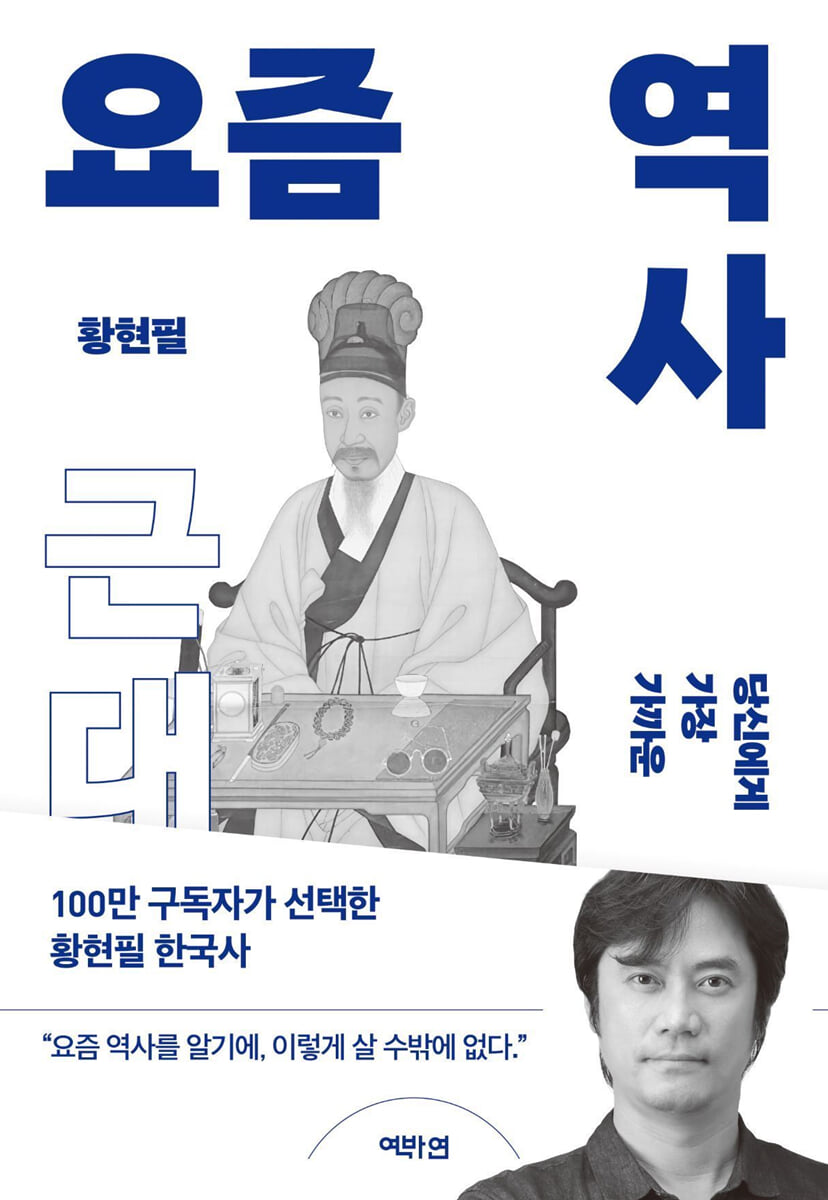
Modern History: Modern
 |
Description
Book Introduction
The history closest to you “Knowing what we know about history these days, we have no choice but to live like this.” The reason we must learn history is to study the past and learn from it so that we can correctly set the direction for our present and future. Therefore, we must be able to understand and interpret history well according to the circumstances of the times. Only then can our history advance further. But these days, people don't approach history closely. We do not look deeply into our history, but only look at it with a cynical and distorted gaze. Thus, history these days is shrouded in distortion and increasingly distant from us. Author Hwang Hyeon-pil argues that modern and contemporary history is the "history of today," the closest thing we need to know. The modern history section of 『History Today』 is an easy-to-read and fun read that explains the history from 1863, when Heungseon Daewongun began to rule, to the Gyeongsul Treaty in 1910, when the Korean Empire lost its sovereignty. And Hwang Hyeon-pil explained why history these days cannot help but be complicated and noisy. If you want to know the history closest to you, the history of today, read this book. These days, history can help us set the right direction for our lives. |
- You can preview some of the book's contents.
Preview
index
Author's Note
1.
The Dog of the Sanggatjip Rise to Power: The Age of Sedo Politics and the Rise of Heungseon Daewongun
History Today ① - If Daewongun had been born 300 years earlier, would Joseon's history have changed?
2.
Daewongun was also a murderer - Byeongin Persecution (1866)
3.
Royal Protocols and the Gyeongbu High-Speed Railway - The Byeong-in Yangyo (1866)
History Today ② - The Relationship Between KTX and the Royal Protocols
4.
Kim Il-sung's Great-Grandfather's Heroic Story? - The General Sherman Incident (1866)
5.
Oppert, Who Loved Joseon? - The Attempted Grave Robbery of Oppert (1868)
6.
The power of Joseon that forced the United States to withdraw - Shinmiyangyo (1871)
7.
The Andong Kim clan was better than the Yeoheung Min clan - Prince Daewongun's resignation and Emperor Gojong's establishment of a personal government (1873)
8.
The Harm of Unequal Treaties on the Nation and Its People - The Treaty of Ganghwa and the Establishment of Diplomatic Relations with Other Countries (1876)
Modern History ③ - How Yi Sun-sin Changed Japanese History
9.
The Coolness of Old-Fashioned Soldiers - The Im-o Incident (1882)
History Today ④ - Is it wrong to call Empress Myeongseong Queen Min?
10.
Joseon's Diamond Spoons Dream of Reform - The Gapsin Coup (1884)
History Today ⑤ - Was Kim Ok-gyun a pro-Japanese collaborator or a revolutionary?
Current History ⑥ - The President of the Republic of Korea Visits Keio University
11.
Only the bear's cry lives, the shell disappears - Donghak Peasant Revolution (1894)
12.
The True Beginning of Modernity - The Gabo Reforms (1894)
13.
The Wounded Pride of Joseon - The Eulmi Incident (1895)
History Today ⑦ - Why Queen Min is the Worst Woman in Our History
14.
The King Flees His Palace - The Eulmi Reforms (1895) and the Agwan Rebellion (1896)
15.
The people are ignorant, so enlighten them - Independence Association (1896-1898)
History Today ⑧ - Does Seo Jae-pil deserve to be buried in a national cemetery?
16.
The birth of an imperial state during the most vulnerable times - the Korean Empire (1897-1910)
17.
How much did he hate losing his country that he took up arms? - Anti-Japanese Righteous Army Movement (1895/1905/1907)
History Today ⑨ - Conservative Icon Choi Ik-hyeon
18.
The Patriotic Enlightenment Movement, which valued the power of the pen over the sword and gun
19.
Japan defeated Russia and received support from the United States - the Russo-Japanese War (1904) and the Katsura-Taft Agreement (1905)
20.
Those subjects, worse than pigs, in one night - the Eulsa Treaty of 1905
History Today ⑩ - Was Ahn Jung-geun's killing of Ito Hirobumi a historical mistake?
History Today ⑪ - How Tyrannical Was Gojong?
21.
The beginning of the island nation's rule - the Gyeongsul Treaty (1910)
History Today ⑫ - Why Yi Wan-yong is a Triple Crown Traitor
History Today ⑬ - Japan never fought a war with the Joseon Dynasty?
History Today ⑭ - Let's cast off the self-deprecating and pro-Japanese mindset that makes Joseon no longer proud.
1.
The Dog of the Sanggatjip Rise to Power: The Age of Sedo Politics and the Rise of Heungseon Daewongun
History Today ① - If Daewongun had been born 300 years earlier, would Joseon's history have changed?
2.
Daewongun was also a murderer - Byeongin Persecution (1866)
3.
Royal Protocols and the Gyeongbu High-Speed Railway - The Byeong-in Yangyo (1866)
History Today ② - The Relationship Between KTX and the Royal Protocols
4.
Kim Il-sung's Great-Grandfather's Heroic Story? - The General Sherman Incident (1866)
5.
Oppert, Who Loved Joseon? - The Attempted Grave Robbery of Oppert (1868)
6.
The power of Joseon that forced the United States to withdraw - Shinmiyangyo (1871)
7.
The Andong Kim clan was better than the Yeoheung Min clan - Prince Daewongun's resignation and Emperor Gojong's establishment of a personal government (1873)
8.
The Harm of Unequal Treaties on the Nation and Its People - The Treaty of Ganghwa and the Establishment of Diplomatic Relations with Other Countries (1876)
Modern History ③ - How Yi Sun-sin Changed Japanese History
9.
The Coolness of Old-Fashioned Soldiers - The Im-o Incident (1882)
History Today ④ - Is it wrong to call Empress Myeongseong Queen Min?
10.
Joseon's Diamond Spoons Dream of Reform - The Gapsin Coup (1884)
History Today ⑤ - Was Kim Ok-gyun a pro-Japanese collaborator or a revolutionary?
Current History ⑥ - The President of the Republic of Korea Visits Keio University
11.
Only the bear's cry lives, the shell disappears - Donghak Peasant Revolution (1894)
12.
The True Beginning of Modernity - The Gabo Reforms (1894)
13.
The Wounded Pride of Joseon - The Eulmi Incident (1895)
History Today ⑦ - Why Queen Min is the Worst Woman in Our History
14.
The King Flees His Palace - The Eulmi Reforms (1895) and the Agwan Rebellion (1896)
15.
The people are ignorant, so enlighten them - Independence Association (1896-1898)
History Today ⑧ - Does Seo Jae-pil deserve to be buried in a national cemetery?
16.
The birth of an imperial state during the most vulnerable times - the Korean Empire (1897-1910)
17.
How much did he hate losing his country that he took up arms? - Anti-Japanese Righteous Army Movement (1895/1905/1907)
History Today ⑨ - Conservative Icon Choi Ik-hyeon
18.
The Patriotic Enlightenment Movement, which valued the power of the pen over the sword and gun
19.
Japan defeated Russia and received support from the United States - the Russo-Japanese War (1904) and the Katsura-Taft Agreement (1905)
20.
Those subjects, worse than pigs, in one night - the Eulsa Treaty of 1905
History Today ⑩ - Was Ahn Jung-geun's killing of Ito Hirobumi a historical mistake?
History Today ⑪ - How Tyrannical Was Gojong?
21.
The beginning of the island nation's rule - the Gyeongsul Treaty (1910)
History Today ⑫ - Why Yi Wan-yong is a Triple Crown Traitor
History Today ⑬ - Japan never fought a war with the Joseon Dynasty?
History Today ⑭ - Let's cast off the self-deprecating and pro-Japanese mindset that makes Joseon no longer proud.
Detailed image

Into the book
Look at the powerful leadership of Prince Daewongun, who, while pursuing a policy of national isolation, managed to repel invasions from France and the United States and unite the people.
If he had been an open monarch who could have listened to the ideas of enlightenment after establishing a stable royal authority and people's livelihood, our 19th century could have been recorded differently.
---「If Daewongun had been born 300 years earlier, would Joseon's history have changed?」
The Donghak Peasant Revolution failed.
During the first uprising, the Donghak Peasant Army occupied Jeonju Castle, but showed generosity by voluntarily disbanding to allow the withdrawal of foreign troops.
During the second uprising, they were defeated by the Japanese army at Ugeumchi, Gongju.
Even if the Donghak Peasant Army had advanced beyond Ugeumchi and reached Gyeongbokgung Palace, driving out the Japanese army, they failed to present a vision for what kind of nation they would create.
However, the anti-feudal spirit of the Donghak Peasant Movement was reflected in the Gabo Reforms and had a great influence on the abolition of the caste system, and the anti-foreign spirit of Donghak became the foundation of the anti-Japanese volunteer army movement that followed.
The Donghak Peasant Revolution was neither a coup nor a simple struggle for survival to solve the problem of making a living.
The Donghak Peasant Revolution was a beautiful peasant movement that held the great values of love for the country and love for the people.
So my cell phone number is from the year of Gap-o (1894) for 30 years.
---From "Only the bear's scream lives, and the shell goes away"
The Eulmi Incident was not just the death of a woman; it was a major incident that wounded Joseon's pride.
Why didn't the Joseon scholars, known for their spirit, sneak into the Japanese palace and kill the Japanese king's wife to avenge the Eulmi Incident? I once visited Edo Castle in Tokyo, the capital of Japan.
The king and queen live there.
I have imagined the sight of Koreans crossing the Edo Castle and the Japanese king and his wife being dragged out by Koreans.
---「From "Why Queen Min is the Worst Woman in Our History"
Yi Wan-yong had always wanted to make Joseon's Changdeokgung Palace a villa for the Japanese emperor.
After the Imjin War, Changdeokgung Palace was practically the royal palace of Joseon and the home of the kings.
Although Heungseon Daewongun attempted to rebuild Gyeongbokgung Palace, the spirit of the Joseon Dynasty was still more deeply rooted in Changdeokgung Palace.
It was unfair that Changgyeonggung Palace, which was close to Changdeokgung Palace, became a zoo, but Yi Wan-yong tried to make Changgyeonggung Palace a royal villa for the Japanese king through flattery.
It's so frustrating.
During the 35 years of Japanese colonial rule, the Japanese emperor never visited Joseon territory.
But why would he make Changdeokgung Palace the Japanese king's second palace? Why would Yi Wan-yong sell Changdeokgung Palace to bring the Japanese king to Joseon and meet him?
---「The reason why Lee Wan-yong is a traitor and a triple crown」
Although the 16th century saw a series of incompetent kings and the great crises of the Imjin War and the Byeongja War, the Joseon Dynasty was able to last for 500 years because our ancestors possessed the DNA to be the first to rise when the country was in crisis, even without receiving anything from the state.
Isn't it worthy of a high score?
If he had been an open monarch who could have listened to the ideas of enlightenment after establishing a stable royal authority and people's livelihood, our 19th century could have been recorded differently.
---「If Daewongun had been born 300 years earlier, would Joseon's history have changed?」
The Donghak Peasant Revolution failed.
During the first uprising, the Donghak Peasant Army occupied Jeonju Castle, but showed generosity by voluntarily disbanding to allow the withdrawal of foreign troops.
During the second uprising, they were defeated by the Japanese army at Ugeumchi, Gongju.
Even if the Donghak Peasant Army had advanced beyond Ugeumchi and reached Gyeongbokgung Palace, driving out the Japanese army, they failed to present a vision for what kind of nation they would create.
However, the anti-feudal spirit of the Donghak Peasant Movement was reflected in the Gabo Reforms and had a great influence on the abolition of the caste system, and the anti-foreign spirit of Donghak became the foundation of the anti-Japanese volunteer army movement that followed.
The Donghak Peasant Revolution was neither a coup nor a simple struggle for survival to solve the problem of making a living.
The Donghak Peasant Revolution was a beautiful peasant movement that held the great values of love for the country and love for the people.
So my cell phone number is from the year of Gap-o (1894) for 30 years.
---From "Only the bear's scream lives, and the shell goes away"
The Eulmi Incident was not just the death of a woman; it was a major incident that wounded Joseon's pride.
Why didn't the Joseon scholars, known for their spirit, sneak into the Japanese palace and kill the Japanese king's wife to avenge the Eulmi Incident? I once visited Edo Castle in Tokyo, the capital of Japan.
The king and queen live there.
I have imagined the sight of Koreans crossing the Edo Castle and the Japanese king and his wife being dragged out by Koreans.
---「From "Why Queen Min is the Worst Woman in Our History"
Yi Wan-yong had always wanted to make Joseon's Changdeokgung Palace a villa for the Japanese emperor.
After the Imjin War, Changdeokgung Palace was practically the royal palace of Joseon and the home of the kings.
Although Heungseon Daewongun attempted to rebuild Gyeongbokgung Palace, the spirit of the Joseon Dynasty was still more deeply rooted in Changdeokgung Palace.
It was unfair that Changgyeonggung Palace, which was close to Changdeokgung Palace, became a zoo, but Yi Wan-yong tried to make Changgyeonggung Palace a royal villa for the Japanese king through flattery.
It's so frustrating.
During the 35 years of Japanese colonial rule, the Japanese emperor never visited Joseon territory.
But why would he make Changdeokgung Palace the Japanese king's second palace? Why would Yi Wan-yong sell Changdeokgung Palace to bring the Japanese king to Joseon and meet him?
---「The reason why Lee Wan-yong is a traitor and a triple crown」
Although the 16th century saw a series of incompetent kings and the great crises of the Imjin War and the Byeongja War, the Joseon Dynasty was able to last for 500 years because our ancestors possessed the DNA to be the first to rise when the country was in crisis, even without receiving anything from the state.
Isn't it worthy of a high score?
---「From "Let's throw away the self-deprecating and pro-Japanese mindset that makes Joseon not proud"
Publisher's Review
The history of these days that no one talks about
Hwang Hyeon-pil's modern and contemporary history series, "History Today," published in the modern era.
Among the books published about Yi Sun-sin, 『Yi Sun-sin's Sea』 became a bestseller, and 『Hwang Hyeon-pil's Lifetime Calendar of Korean History』 introduced today's history for 365 days.
This week's topic is modern and contemporary history.
Why modern and contemporary history, rather than the consistently popular Joseon history?
‘Modern history’ is literally history that is close to us, close to the ‘modern’ era in which we live now.
Hwang Hyeon-pil says that this modern and contemporary history is the history that we must know these days.
Perhaps it is a vivid history that has been directly experienced by people living in this era, and remains as living witnesses to history.
History we were wrong about
You were right, these are the people being re-evaluated these days.
When talking about Heungseon Daewongun and Empress Myeongseong, the conflict between them often comes to mind.
The father-in-law, blinded by power, did not treat his daughter-in-law kindly, and the daughter-in-law, who was interfered with by her father-in-law in every move and died a pitiful death while shouting for a national reunion of Joseon in front of the Japanese army.
But we are mistaken.
Empress Myeongseong lived a life solely focused on her own interests, neglecting the country and its people.
In response to recent calls for a reevaluation of historical figures, attempts are being made to shed new light on several figures.
As we look back at the characters we misunderstood, the process of understanding the situation at the time and finding hidden meanings is something that deserves praise and encouragement.
On the other hand, there are those who, under the guise of reevaluation, misinterpret things or try to hide and even distort the truth.
People who don't know history in detail nod their heads to their words and accept the wrong history.
Why do they deny our history? If you want to learn about a history you may have been unaware of or perhaps misunderstood, I recommend this book.
Before you get distorted without even knowing it.
The history closest to us: 'History of Today'
『History Today』 consists of four volumes.
Volume 1, Modern History, covers the period from the reign of Heungseon Daewongun to the annexation by Japan; Volume 2, Japanese Colonial Period, covers the Japanese colonial period; Volume 3, Liberation Period, covers the period from the liberation in 1945 to the establishment of the government; and the final volume, Volume 4, covers modern history from the reign of Syngman Rhee.
The history closest to us is ‘modern history.’
As a human being, it is essential to know the history of the country in which you live.
If you want to decide how to live by looking at the future through past and present history, read this book.
You will be able to live a more advanced life through 『History Today』.
Hwang Hyeon-pil's modern and contemporary history series, "History Today," published in the modern era.
Among the books published about Yi Sun-sin, 『Yi Sun-sin's Sea』 became a bestseller, and 『Hwang Hyeon-pil's Lifetime Calendar of Korean History』 introduced today's history for 365 days.
This week's topic is modern and contemporary history.
Why modern and contemporary history, rather than the consistently popular Joseon history?
‘Modern history’ is literally history that is close to us, close to the ‘modern’ era in which we live now.
Hwang Hyeon-pil says that this modern and contemporary history is the history that we must know these days.
Perhaps it is a vivid history that has been directly experienced by people living in this era, and remains as living witnesses to history.
History we were wrong about
You were right, these are the people being re-evaluated these days.
When talking about Heungseon Daewongun and Empress Myeongseong, the conflict between them often comes to mind.
The father-in-law, blinded by power, did not treat his daughter-in-law kindly, and the daughter-in-law, who was interfered with by her father-in-law in every move and died a pitiful death while shouting for a national reunion of Joseon in front of the Japanese army.
But we are mistaken.
Empress Myeongseong lived a life solely focused on her own interests, neglecting the country and its people.
In response to recent calls for a reevaluation of historical figures, attempts are being made to shed new light on several figures.
As we look back at the characters we misunderstood, the process of understanding the situation at the time and finding hidden meanings is something that deserves praise and encouragement.
On the other hand, there are those who, under the guise of reevaluation, misinterpret things or try to hide and even distort the truth.
People who don't know history in detail nod their heads to their words and accept the wrong history.
Why do they deny our history? If you want to learn about a history you may have been unaware of or perhaps misunderstood, I recommend this book.
Before you get distorted without even knowing it.
The history closest to us: 'History of Today'
『History Today』 consists of four volumes.
Volume 1, Modern History, covers the period from the reign of Heungseon Daewongun to the annexation by Japan; Volume 2, Japanese Colonial Period, covers the Japanese colonial period; Volume 3, Liberation Period, covers the period from the liberation in 1945 to the establishment of the government; and the final volume, Volume 4, covers modern history from the reign of Syngman Rhee.
The history closest to us is ‘modern history.’
As a human being, it is essential to know the history of the country in which you live.
If you want to decide how to live by looking at the future through past and present history, read this book.
You will be able to live a more advanced life through 『History Today』.
GOODS SPECIFICS
- Date of issue: March 26, 2024
- Page count, weight, size: 280 pages | 145*210*25mm
- ISBN13: 9791198593276
- ISBN10: 119859327X
You may also like
카테고리
korean


korean

![GQ KOREA Mark (Monthly): December [2025]](http://librairie.coreenne.fr/cdn/shop/files/8ef265dbbfbf186523ed75ba7319009d.jpg?v=1765340328&width=3840)


