

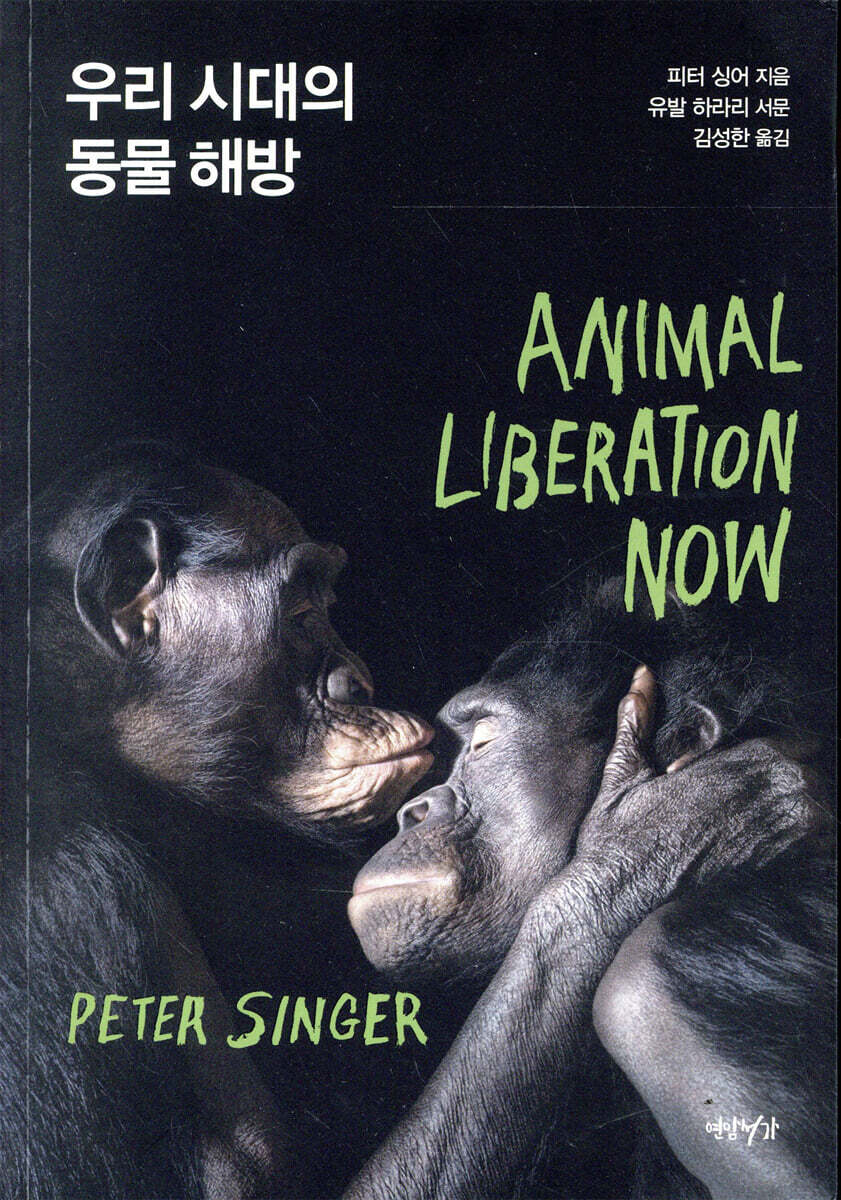
Animal Liberation in Our Time
 |
Description
Book Introduction
Recommended by Jane Goodall, Richard Dawkins, John Coetzee, and Joaquin Phoenix
The Bible of the Animal Liberation Movement
The definitive edition of 50 years of research by Berggruen Prize-winning author Peter Singer.
The Bible of the Animal Liberation Movement, the Book That Sparked Revolution
Animal Liberation, a representative work by practical ethicist Peter Singer, who advocates for animal liberation based on utilitarianism.
A completely revised edition of 『Animal Liberation Now』, which faithfully reflects the changes and research achievements that this book has brought to academia and related industries since its publication in 1990, has been translated and published by Yeonam Publishing under the title 『Animal Liberation of Our Time』 to commemorate the 50th anniversary of the first edition.
This book includes a preface by Yuval Harari and a recipe book from Peter Singer's "Vegetarian Recipes" as an appendix.
This pioneering work, which has been a huge hit since its first publication in 1975 and is often called the bible of the animal liberation movement, has called for a shift in our attitudes towards animals and has sparked a global movement to end cruelty to them.
This book offers a surprising and fresh look at ethical violations like factory farming and animal testing, vexing issues of our time.
Singer argues against meat consumption by showing that the current practice of growing crops to feed animals crammed into cramped indoor or caged environments is grossly wasteful, and that animal production can have a catastrophic impact on the climate and risk giving rise to new viruses more deadly than COVID-19.
While the book highlights the progress animal rights have made in recent decades, including significant reforms in the European Union, California, and other US states, it also acknowledges some backward steps, such as the recent construction of large-scale, multi-story animal factories.
Animal Liberation in Our Time challenges us to reconsider our attitudes toward animals, reminding us that we are failing to fulfill our ethical responsibilities toward animals outside our own species.
The Bible of the Animal Liberation Movement
The definitive edition of 50 years of research by Berggruen Prize-winning author Peter Singer.
The Bible of the Animal Liberation Movement, the Book That Sparked Revolution
Animal Liberation, a representative work by practical ethicist Peter Singer, who advocates for animal liberation based on utilitarianism.
A completely revised edition of 『Animal Liberation Now』, which faithfully reflects the changes and research achievements that this book has brought to academia and related industries since its publication in 1990, has been translated and published by Yeonam Publishing under the title 『Animal Liberation of Our Time』 to commemorate the 50th anniversary of the first edition.
This book includes a preface by Yuval Harari and a recipe book from Peter Singer's "Vegetarian Recipes" as an appendix.
This pioneering work, which has been a huge hit since its first publication in 1975 and is often called the bible of the animal liberation movement, has called for a shift in our attitudes towards animals and has sparked a global movement to end cruelty to them.
This book offers a surprising and fresh look at ethical violations like factory farming and animal testing, vexing issues of our time.
Singer argues against meat consumption by showing that the current practice of growing crops to feed animals crammed into cramped indoor or caged environments is grossly wasteful, and that animal production can have a catastrophic impact on the climate and risk giving rise to new viruses more deadly than COVID-19.
While the book highlights the progress animal rights have made in recent decades, including significant reforms in the European Union, California, and other US states, it also acknowledges some backward steps, such as the recent construction of large-scale, multi-story animal factories.
Animal Liberation in Our Time challenges us to reconsider our attitudes toward animals, reminding us that we are failing to fulfill our ethical responsibilities toward animals outside our own species.
- You can preview some of the book's contents.
Preview
index
Foreword_Yuval Noah Harari
Preface to the 2023 Revised Edition
Chapter 1: All animals are equal
Why should we extend the ethical principles that underpin human equality to animals?
The Basis of Equality | Bentham's Question | Who Can Suffer? | Drawing the Line | The Implications of Saying Animals Feel Pain | When Is It Wrong to Kill? | Thinking Ahead
Chapter 2 Tools for Research
Animal testing isn't just about saving human lives.
About this chapter | Turning monkeys into psychopaths | Ethical dilemmas for psychologists | Learned helplessness | Addiction, blindness, and other animal testing methods | Medical experimentation | Conditioned ethical blindness | Is this science good science? | Ineffective regulation | When is animal testing justified? | The way forward?
Chapter 3: What Happens in Factory Farms
What happened when your dinner was still an animal?
How US Vets Deliberately Raised Indoor Temperatures to Kill 243,016 Pigs |
Intensive animal production | Chickens produced using industrial farming methods | Layers confined in wire cages | Pigs | Calves raised for veal | Dairy cows raised for milk | Cattle raised for meat | Fish | Painful procedures | Slaughter
Chapter 4: Living Without Discrimination
Fighting climate change and living a healthier life…
Effective Altruism for Animals | Ethical Eating | The Truth About the World's Food Supply | Conscientious Omnivores | Climate Change | Drawing the Line in Everyday Life | From Thought to Action
Chapter 5: Human Domination
A Brief History of Speciesism
Pre-Christianity | Christian Thought | Enlightenment | Modernity | Beyond Speciesism
Chapter 6: Speciesism Today
Progress made in overcoming objections and counterarguments to animal liberation
If you leave your child with us until he or she is seven years old… … | Continued ignorance | “Humans come first” | Deliberately ignoring animals | Animals kill each other, so why shouldn’t we? | The suffering of wild animals | Are farmed chickens better than wild ones? | A critique of inconsistency | How should plants think? | The philosophy of speciesism | The revival of philosophy | Making progress | Alternative strategies | What’s next?
Acknowledgements
Vegetarian Recipes
main
Translator's Note
Search
Preface to the 2023 Revised Edition
Chapter 1: All animals are equal
Why should we extend the ethical principles that underpin human equality to animals?
The Basis of Equality | Bentham's Question | Who Can Suffer? | Drawing the Line | The Implications of Saying Animals Feel Pain | When Is It Wrong to Kill? | Thinking Ahead
Chapter 2 Tools for Research
Animal testing isn't just about saving human lives.
About this chapter | Turning monkeys into psychopaths | Ethical dilemmas for psychologists | Learned helplessness | Addiction, blindness, and other animal testing methods | Medical experimentation | Conditioned ethical blindness | Is this science good science? | Ineffective regulation | When is animal testing justified? | The way forward?
Chapter 3: What Happens in Factory Farms
What happened when your dinner was still an animal?
How US Vets Deliberately Raised Indoor Temperatures to Kill 243,016 Pigs |
Intensive animal production | Chickens produced using industrial farming methods | Layers confined in wire cages | Pigs | Calves raised for veal | Dairy cows raised for milk | Cattle raised for meat | Fish | Painful procedures | Slaughter
Chapter 4: Living Without Discrimination
Fighting climate change and living a healthier life…
Effective Altruism for Animals | Ethical Eating | The Truth About the World's Food Supply | Conscientious Omnivores | Climate Change | Drawing the Line in Everyday Life | From Thought to Action
Chapter 5: Human Domination
A Brief History of Speciesism
Pre-Christianity | Christian Thought | Enlightenment | Modernity | Beyond Speciesism
Chapter 6: Speciesism Today
Progress made in overcoming objections and counterarguments to animal liberation
If you leave your child with us until he or she is seven years old… … | Continued ignorance | “Humans come first” | Deliberately ignoring animals | Animals kill each other, so why shouldn’t we? | The suffering of wild animals | Are farmed chickens better than wild ones? | A critique of inconsistency | How should plants think? | The philosophy of speciesism | The revival of philosophy | Making progress | Alternative strategies | What’s next?
Acknowledgements
Vegetarian Recipes
main
Translator's Note
Search
Into the book
In the decades since the publication of Animal Liberation, scientists have become increasingly interested in studying animal cognitive abilities, behavior, and the relationship between humans and animals.
What they found largely confirmed Singer's key insights.
In other words, humanity's march toward progress was littered with dead animals.
Even tens of thousands of years ago, our Stone Age ancestors caused a series of ecological disasters.
When the first humans arrived in Australia about 45,000 years ago, they quickly wiped out 90% of the large animals.
This was the first significant impact that Homo sapiens had on the Earth's ecosystem.
That wasn't the end, it was the beginning.
--- From the "Preface"
Compared to when Animal Liberation was first published, we now know much more about animal consciousness and their physical and psychological needs.
From orangutans to octopuses, we've come to understand the amazing lives of other animals we share the planet with.
Rigorous scientific research has confirmed that the ability to feel pain is not limited to mammals and birds, but extends to fish, octopuses, and even some invertebrates, such as lobsters and crabs.
This new knowledge reminds us that we urgently need to broaden our scope of interest.
Because we currently raise and kill far more fish and other aquatic animals than we do mammals and birds.
Moreover, we know that greenhouse gas emissions are changing our planet's climate, causing unprecedented heat waves, wildfires, and floods, endangering all sentient beings, including ourselves.
The meat and dairy industries are impacted by these catastrophic changes on a scale comparable to that of the entire transportation sector.
This is another powerful reason to make the changes in eating habits that animal rights advocates have long been calling for.
Ending factory farming would also have other environmental benefits.
For example, it can purify polluted rivers and improve the quality of air that many rural residents breathe.
In addition, it can dramatically reduce deaths from heart disease and digestive cancers.
--- p.20
One difference between humans and non-human animals is that humans, even after a certain age and without significant cognitive impairment, can use language and thus verbalize their pain.
On the other hand, non-human animals cannot use language, except in some exceptional cases, or at least do not use language that we can understand.
So, we can argue like this:
“The surest evidence that another being is suffering is that they say they are, and since animals cannot speak, we must continue to doubt whether they are suffering.” But as Jane Goodall points out in her pioneering study of chimpanzees, In the Shadow of Man, nonverbal communication, such as a pat on the back, a hug, or a clap, is more important than words when it comes to expressing feelings and emotions.
The basic gestures we use to convey pain, fear, anger, love, joy, surprise, sexual arousal, and many other emotional states are not unique to the human species.
The linguistic expression 'I'm sick' may be one piece of evidence to conclude that the speaker is sick, but it is not the only piece of evidence.
Language is not the most reliable evidence, as people sometimes lie and even robots can say "I'm sick."
--- p.36
Steven Pinker, a psychology professor at Harvard University, tells a similar story about ethical blindness.
It was during his summer job as a research assistant in an animal behavior lab while he was a student.
One evening, the professor in charge told Pinker to try a new experiment on mice.
Pinker was instructed to place the rat in a box with an electric current running through the floor and a timer installed that would deliver a shock every six seconds if the lever was not pressed and stop the shock for 10 seconds if the lever was pressed.
He was told that the rat would quickly understand the situation and learn to press the lever in time to avoid the shock.
So all Pinker had to do was put the mouse in the box, start the timer, and go home.
But when Pinker arrived at the lab the next morning, “the rat’s spine was bizarrely curved, it was shaking uncontrollably,” and within seconds it was shocked and jumped up.
Pinker was able to determine that the rats had not learned to press the lever, and were shocked every six seconds throughout the night.
He took the rat out of the box and took it to the lab vet, but it soon died.
To paraphrase Pinker, “I tortured an animal to death.” Pinker called it “the worst thing I’ve ever done,” and said he sensed something was wrong when he heard the explanation of the experiment.
--- p.114
The United States, which currently lacks proper control over experiments, still allows the type of experiments described above.
Therefore, in the United States, a requirement should be created that no experiment can be conducted without prior approval from an ethics committee with the power to veto the experiment, unless the potential benefit, at least as a first step, can be deemed to outweigh the harm to the animals.
As we have seen, this type of system already exists in Australia, Sweden, and other countries, and is recognized as fair and reasonable by the scientific community as well as the general public.
Of course, based on the ethical discussion in this book, this system is far from ideal.
Typically, animal welfare representatives on these committees come from groups with diverse views.
But for obvious reasons, those who are invited to join animal experimentation ethics committees and accept the invitation often belong to less radical groups within the animal welfare movement.
They may not consider the interests of non-human animals and humans to be equal.
Even if they believe that the interests of both parties are equal, they may find it difficult to push their convictions forward when reviewing animal testing applications because they cannot persuade other committee members to agree.
They may therefore limit themselves to suggesting that alternatives be considered appropriately or that genuine efforts be made to minimize suffering, and may limit themselves to demanding that the experiment demonstrate that it will produce significant benefits that outweigh any pain or suffering that cannot be eliminated.
Most of the current animal experiment ethics committees apply the same standards as just mentioned in a speciesist manner, downplaying the suffering of animals over potential human benefits.
Even so, if the committee were to emphasize these standards, it could eliminate many of the painful experiments currently tolerated and reduce the suffering caused by other experiments.
--- p.140
Anyone who has experienced the COVID-19 pandemic knows that there were supply chain issues at the time.
But the industry we're interested in here isn't producing toilet paper, it's producing animals with a high sensitivity to pain.
When the life and death of an animal is in the hands of a producer, the producer must take full responsibility for all matters related to the animal.
Consider a scenario where a cruise ship sank during an unusually severe storm and the shipowner failed to provide lifeboats, causing all passengers to drown.
In this case, the shipowner cannot escape responsibility for not having anticipated such a severe storm.
Likewise, it is wrong for producers raising hundreds of thousands of animals to not prepare for the possibility that something could go wrong.
It is also wrong to not have trained staff, equipment, and materials to address the problem, whether it is finding alternative housing for pigs or a humane way to slaughter them.
What happened to these pigs can illuminate our attitudes toward the animals that form the basis of animal production today.
As we will see in this chapter, companies that operate factory farms slaughtered millions of animals at high temperatures, both before the COVID-19 pandemic and after, when slaughterhouses were operating normally.
The animal production industry, which produces animals without any emergency preparedness, has demonstrated in several cases that it has virtually no interest in the welfare of the sentient beings it produces.
--- p.151
To understand the lives of laying hens confined in wire cages in modern egg factories, a world filled with nothing but profound frustration, perhaps the best way to understand them is to briefly observe a henhouse full of them.
They are unable to stand or sit comfortably.
Even if one or two chickens settle down satisfactorily, they must follow suit when the other chickens in the coop move.
It's like three people trying to get a comfortable night's sleep in one bed.
The only difference is that laying hens struggle for a whole year, not just one night.
Finally, most chicken coops have at least one chicken that loses the will to fight and gets pushed aside, only to be trampled by the other chickens.
In larger coops, there may be more than one.
In a typical farmyard, that chicken would be low on the pecking order.
Under normal circumstances, being low in rank isn't a big deal.
But inside a chicken coop, these chickens usually have no choice but to huddle in a corner near the sloping floor.
As a result, chickens living together sometimes get together and approach the water tank, trampling on them.
--- p.185
Whether through modern or traditional farming practices, humans have been inflicting suffering on animals for thousands of years for their own benefit.
As the authors of the international study, which focused on cattle, sheep and pigs, write, “People still ignore and fail to recognize the suffering of farm animals.
They don't even treat them properly.” These authors discuss the painful procedures animals routinely undergo, including:
Castration of boars, bulls and rams; mulesing (cutting off the wrinkled skin of sheep to prevent maggots); heat branding or freeze branding, mainly on cattle; ear notching (cropping or tagging ears) on calves, lambs and piglets; tail docking (docking tails) on pigs and sheep; dehorning (cutting off the horn buds) on calves and goats; and putting metal nose rings on the noses of bulls and sows.
This entire procedure can cause extreme physical pain and can last for hours.
--- p.223
Today's fishing fleets systematically trawle fish using fine nets to ensure that not a single fish entering the fishing grounds is missed.
Bottom trawl fishing damages fragile marine ecosystems by dragging huge nets along previously untouched ocean floors.
All this overfishing is not only destroying marine ecosystems, but is also having tragic consequences for humans.
In many small coastal villages in impoverished countries where fishing has been a livelihood for thousands of years, fisheries, a traditional source of protein and income, are disappearing.
This situation has pushed West Africa into crisis, where coastal fisheries have collapsed due to rampant illegal and unregulated fishing.
The crisis has also impacted the number of Africans desperately trying to reach Europe, where, ironically, much of the fish caught by the trawlers that destroy local African fishing grounds is sold.
In these developed countries, fishing is causing another form of redistribution from poor to rich.
This redistribution phenomenon becomes even more pronounced when fish caught off the coasts of poor countries are fed to carnivorous fish like farmed salmon, transforming them into a commodity enjoyed only by the wealthy.
--- p.248
There is no doubt that climate change is the biggest environmental problem we face today.
But climate change is not the only environmental problem.
Looking at environmental issues from a broader perspective provides more reasons to favor a plant-based diet.
Clearing and burning the Amazon rainforest not only means releasing carbon from trees and other plants into the atmosphere, but also potentially leading to the extinction of countless, as-yet-undocumented, plant and animal species.
This destruction is largely due to the enormous appetite for meat in wealthy countries.
Clearing the forest for this appetite might seem like a bigger benefit than preserving the forest for the indigenous people living in the Amazon, attracting ecotourism, protecting the region's biodiversity, and using the forest to store carbon.
But by doing this, we are literally gambling the future of the planet for a hamburger.
--- p.263
Many people report that after switching to a vegetarian diet, they feel lighter, healthier, and more energetic than when they consumed animal products.
I had that experience too.
Nutrition experts no longer debate whether we must eat animal products to be healthy.
Because there is clear evidence that this is not the case.
The Lancet, one of the world's leading medical journals, launched the EAT-p.Lancet Commission to propose science-based goals for "healthy and sustainable diets for a world of 10 billion people."
The committee included 37 experts in human health, agriculture, politics, and environmental sustainability.
The committee summarized its research findings on two key dietary factors that promote human health.
One study, a prospective study in North America, followed more than 70,000 people who followed vegan, vegetarian, pescatarian, semi-vegetarian, and omnivorous diets for about six years.
As a result, they confirmed that the mortality rate of people who ate little or no meat was 12% lower than that of omnivores.
Mortality rates declined more sharply among vegans, vegetarians, and pescatarians than among semi-vegetarians, and overall, the decline was greater in men than in women.
Another study found that eating more plant-based foods was associated with a lower risk of type 2 diabetes and coronary heart disease.
The committee explained that the study results show that “even if you don’t necessarily become a strict vegan, it is beneficial to switch to a diet rich in whole grains, fruits, vegetables, nuts, and legumes.”
--- p.273
The views held today about the place of man in the world are vastly different from all the previous views we have considered.
But in practical terms, our attitudes toward other animals have changed little.
Animals can no longer remain completely outside the realm of morality.
But they still reside in a special zone, separate from humans, near the edge of the moral realm.
Their interests can only be taken into consideration when they do not conflict with human interests.
If a conflict arises, the interests of non-human animals are ignored, even when the suffering an animal experiences throughout its life conflicts with human taste preferences.
Past moral attitudes are so deeply ingrained in our thinking and behavior that changes in our knowledge of other animals alone will not change the situation.
--- p.314
In the West, there is reason to believe that the dominance of speciesism as an ideology has ended, at least in terms of ethical thinking.
It remains to be seen how much this shift in ethical thinking will ultimately impact how we treat animals.
Today, people's treatment of animals is sufficiently compassionate (on very selective grounds) to allow them to improve their circumstances to some extent without challenging their fundamental attitudes toward animals.
Yet, building a solid foundation for a world without speciesism requires a fundamental break with over 2,000 years of Western thinking about animals.
It is important to remember that this chapter focuses solely on Western notions of animals.
What's interesting is that the East doesn't seem to differ much from the West in terms of attitudes toward animals.
For example, we believe that Chinese thinkers are influenced by the Buddhist tradition, and that their baptism into this tradition will make them more concerned with the issue of meat consumption.
However, their interest in this issue seems to be less than that of Western thinkers.
--- p.320
The feminist movement of the 1970s had some success in spurring the growth of new children's literature.
In these literary genres, brave princesses rescue helpless princes, and girls sometimes take on active and central roles previously monopolized by boys.
It would be even more difficult to reflect today's realities to any degree in the animal stories we read to our children.
Because cruelty is not an ideal topic for stories to tell children.
Still, we could provide children with picture books, stories, and videos that encourage them to respect animals as independent beings, not as cute little objects for our amusement or dinner, without going into too much gruesome detail.
Then, as the children grow older, you can introduce them to the real-world environments in which most farm animals live.
The problem is that in meat-eating households, parents may be reluctant to tell their children the truth, fearing that their children's love of animals will ruin the family meal.
Even today, we often hear from friends that their children began to refuse to eat meat after learning where it came from.
Such instinctive rebellion is likely to meet with strong resistance.
And most children would find it impossible to continue to refuse meat when their parents, who serve them food, tell them that they will not grow tall and healthy if they do not eat meat.
Let me give you an example that might help.
Lawrence Kohlberg was a Harvard University psychology professor famous for his research on moral development.
In one essay, he tells how his four-year-old son made his first moral decision.
According to Kohlberg, his son refused to eat meat because he thought "killing animals is wrong," and it took him six months to change his mind.
Kohlberg says that his son's thinking is due to his inability to properly distinguish between justifiable and unjustifiable killing, and that this indicates that his son is still in the most rudimentary stage of moral development.
--- p.324
In any case, the idea that "humans come first" is often used as an excuse for doing nothing, whether for humans or non-human animals, rather than as a true choice between incompatible options.
In fact, human problems and animal problems are not incompatible.
Of course, everyone has a limited amount of time and energy available.
Also, as you actively work to achieve a certain goal, you tend to have less time to use for other goals.
But there's nothing stopping people who dedicate time and effort to human issues from boycotting products produced as a result of the abuses that occur in corporate agriculture.
In other words, becoming a vegetarian or vegan and not eating animal meat does not require more time or effort.
In fact, as we saw in Chapter 4, anyone who claims to care about human well-being, climate, and environmental conservation should be vegan simply for saying so.
This would reduce greenhouse gas emissions and other forms of pollution, conserve water and energy, free up vast tracts of land for reforestation, and remove the primary incentive to clear the Amazon and other forests.
I don't doubt the sincerity of vegetarians who have other priorities and are not particularly interested in animal liberation.
But if meat-eaters claim that "humans come first," one cannot help but wonder what exactly they are doing for humans while allowing the ruthless exploitation of farmed animals.
--- p.328
When we think of the animal world, we often think of bloody battles, overlooking the fact that animals lead complex social lives, recognizing other members of their own species as individuals and forming close relationships with one another.
When people get married, they think that the two people have become close because of love, and they feel the pain of the person who lost their spouse as if it were their own pain.
On the other hand, when other animals mate for life, we simply dismiss it as instinct.
Also, when hunters or trappers kill or capture animals for transport to laboratories or zoos, we are not uncomfortable with the thought that the animals might have partners who would suffer the loss of their mates.
Similarly, we know that separating a human baby from its mother is a tragedy for both parties.
However, breeders of pets, research animals, and food animals, who routinely separate their young from their mothers, have no regard for the feelings of non-human mothers and their young.
People who treat animals this way often dismiss criticism by saying, in essence, "Animals should not be anthropomorphized."
Of course, we cannot assume that non-human animals feel the way we do in these situations.
However, the evidence is clear that many species of animals feel emotions similar to those felt by humans: love, fear, boredom, loneliness, sadness, and so on.
If this is true, the dangers of emotional anthropomorphism are less serious than the dangers of the convenient view that animals are mindless machines without any feelings.
--- p.332
What we must realize is that the appeal to the inherent dignity of human beings appears to solve the problem of the egalitarian philosopher only when it is unchallenged.
If someone were to ask why all humans, from anencephalics to psychopaths to mass murderers like Hitler and Stalin, possess dignity or worth that chimpanzees, dogs, elephants, horses, and whales cannot, the question would be difficult to answer.
This is as difficult to answer as the original question of what adequate facts justify the superior moral status of humans.
But these two questions are actually one question.
Talking about inherent dignity or moral worth here is not helpful.
For to satisfactorily defend the claim that all human beings, and only human beings, have intrinsic dignity or worth, one must ground such a claim in some relevant capacity or characteristic that only human beings possess and that no nonhuman animal possesses.
It is not very satisfying to draw upon dignity and worth rather than other characteristics to distinguish humans from animals.
Such grandiose phrases are merely the last resort of those who have run out of arguments.
What they found largely confirmed Singer's key insights.
In other words, humanity's march toward progress was littered with dead animals.
Even tens of thousands of years ago, our Stone Age ancestors caused a series of ecological disasters.
When the first humans arrived in Australia about 45,000 years ago, they quickly wiped out 90% of the large animals.
This was the first significant impact that Homo sapiens had on the Earth's ecosystem.
That wasn't the end, it was the beginning.
--- From the "Preface"
Compared to when Animal Liberation was first published, we now know much more about animal consciousness and their physical and psychological needs.
From orangutans to octopuses, we've come to understand the amazing lives of other animals we share the planet with.
Rigorous scientific research has confirmed that the ability to feel pain is not limited to mammals and birds, but extends to fish, octopuses, and even some invertebrates, such as lobsters and crabs.
This new knowledge reminds us that we urgently need to broaden our scope of interest.
Because we currently raise and kill far more fish and other aquatic animals than we do mammals and birds.
Moreover, we know that greenhouse gas emissions are changing our planet's climate, causing unprecedented heat waves, wildfires, and floods, endangering all sentient beings, including ourselves.
The meat and dairy industries are impacted by these catastrophic changes on a scale comparable to that of the entire transportation sector.
This is another powerful reason to make the changes in eating habits that animal rights advocates have long been calling for.
Ending factory farming would also have other environmental benefits.
For example, it can purify polluted rivers and improve the quality of air that many rural residents breathe.
In addition, it can dramatically reduce deaths from heart disease and digestive cancers.
--- p.20
One difference between humans and non-human animals is that humans, even after a certain age and without significant cognitive impairment, can use language and thus verbalize their pain.
On the other hand, non-human animals cannot use language, except in some exceptional cases, or at least do not use language that we can understand.
So, we can argue like this:
“The surest evidence that another being is suffering is that they say they are, and since animals cannot speak, we must continue to doubt whether they are suffering.” But as Jane Goodall points out in her pioneering study of chimpanzees, In the Shadow of Man, nonverbal communication, such as a pat on the back, a hug, or a clap, is more important than words when it comes to expressing feelings and emotions.
The basic gestures we use to convey pain, fear, anger, love, joy, surprise, sexual arousal, and many other emotional states are not unique to the human species.
The linguistic expression 'I'm sick' may be one piece of evidence to conclude that the speaker is sick, but it is not the only piece of evidence.
Language is not the most reliable evidence, as people sometimes lie and even robots can say "I'm sick."
--- p.36
Steven Pinker, a psychology professor at Harvard University, tells a similar story about ethical blindness.
It was during his summer job as a research assistant in an animal behavior lab while he was a student.
One evening, the professor in charge told Pinker to try a new experiment on mice.
Pinker was instructed to place the rat in a box with an electric current running through the floor and a timer installed that would deliver a shock every six seconds if the lever was not pressed and stop the shock for 10 seconds if the lever was pressed.
He was told that the rat would quickly understand the situation and learn to press the lever in time to avoid the shock.
So all Pinker had to do was put the mouse in the box, start the timer, and go home.
But when Pinker arrived at the lab the next morning, “the rat’s spine was bizarrely curved, it was shaking uncontrollably,” and within seconds it was shocked and jumped up.
Pinker was able to determine that the rats had not learned to press the lever, and were shocked every six seconds throughout the night.
He took the rat out of the box and took it to the lab vet, but it soon died.
To paraphrase Pinker, “I tortured an animal to death.” Pinker called it “the worst thing I’ve ever done,” and said he sensed something was wrong when he heard the explanation of the experiment.
--- p.114
The United States, which currently lacks proper control over experiments, still allows the type of experiments described above.
Therefore, in the United States, a requirement should be created that no experiment can be conducted without prior approval from an ethics committee with the power to veto the experiment, unless the potential benefit, at least as a first step, can be deemed to outweigh the harm to the animals.
As we have seen, this type of system already exists in Australia, Sweden, and other countries, and is recognized as fair and reasonable by the scientific community as well as the general public.
Of course, based on the ethical discussion in this book, this system is far from ideal.
Typically, animal welfare representatives on these committees come from groups with diverse views.
But for obvious reasons, those who are invited to join animal experimentation ethics committees and accept the invitation often belong to less radical groups within the animal welfare movement.
They may not consider the interests of non-human animals and humans to be equal.
Even if they believe that the interests of both parties are equal, they may find it difficult to push their convictions forward when reviewing animal testing applications because they cannot persuade other committee members to agree.
They may therefore limit themselves to suggesting that alternatives be considered appropriately or that genuine efforts be made to minimize suffering, and may limit themselves to demanding that the experiment demonstrate that it will produce significant benefits that outweigh any pain or suffering that cannot be eliminated.
Most of the current animal experiment ethics committees apply the same standards as just mentioned in a speciesist manner, downplaying the suffering of animals over potential human benefits.
Even so, if the committee were to emphasize these standards, it could eliminate many of the painful experiments currently tolerated and reduce the suffering caused by other experiments.
--- p.140
Anyone who has experienced the COVID-19 pandemic knows that there were supply chain issues at the time.
But the industry we're interested in here isn't producing toilet paper, it's producing animals with a high sensitivity to pain.
When the life and death of an animal is in the hands of a producer, the producer must take full responsibility for all matters related to the animal.
Consider a scenario where a cruise ship sank during an unusually severe storm and the shipowner failed to provide lifeboats, causing all passengers to drown.
In this case, the shipowner cannot escape responsibility for not having anticipated such a severe storm.
Likewise, it is wrong for producers raising hundreds of thousands of animals to not prepare for the possibility that something could go wrong.
It is also wrong to not have trained staff, equipment, and materials to address the problem, whether it is finding alternative housing for pigs or a humane way to slaughter them.
What happened to these pigs can illuminate our attitudes toward the animals that form the basis of animal production today.
As we will see in this chapter, companies that operate factory farms slaughtered millions of animals at high temperatures, both before the COVID-19 pandemic and after, when slaughterhouses were operating normally.
The animal production industry, which produces animals without any emergency preparedness, has demonstrated in several cases that it has virtually no interest in the welfare of the sentient beings it produces.
--- p.151
To understand the lives of laying hens confined in wire cages in modern egg factories, a world filled with nothing but profound frustration, perhaps the best way to understand them is to briefly observe a henhouse full of them.
They are unable to stand or sit comfortably.
Even if one or two chickens settle down satisfactorily, they must follow suit when the other chickens in the coop move.
It's like three people trying to get a comfortable night's sleep in one bed.
The only difference is that laying hens struggle for a whole year, not just one night.
Finally, most chicken coops have at least one chicken that loses the will to fight and gets pushed aside, only to be trampled by the other chickens.
In larger coops, there may be more than one.
In a typical farmyard, that chicken would be low on the pecking order.
Under normal circumstances, being low in rank isn't a big deal.
But inside a chicken coop, these chickens usually have no choice but to huddle in a corner near the sloping floor.
As a result, chickens living together sometimes get together and approach the water tank, trampling on them.
--- p.185
Whether through modern or traditional farming practices, humans have been inflicting suffering on animals for thousands of years for their own benefit.
As the authors of the international study, which focused on cattle, sheep and pigs, write, “People still ignore and fail to recognize the suffering of farm animals.
They don't even treat them properly.” These authors discuss the painful procedures animals routinely undergo, including:
Castration of boars, bulls and rams; mulesing (cutting off the wrinkled skin of sheep to prevent maggots); heat branding or freeze branding, mainly on cattle; ear notching (cropping or tagging ears) on calves, lambs and piglets; tail docking (docking tails) on pigs and sheep; dehorning (cutting off the horn buds) on calves and goats; and putting metal nose rings on the noses of bulls and sows.
This entire procedure can cause extreme physical pain and can last for hours.
--- p.223
Today's fishing fleets systematically trawle fish using fine nets to ensure that not a single fish entering the fishing grounds is missed.
Bottom trawl fishing damages fragile marine ecosystems by dragging huge nets along previously untouched ocean floors.
All this overfishing is not only destroying marine ecosystems, but is also having tragic consequences for humans.
In many small coastal villages in impoverished countries where fishing has been a livelihood for thousands of years, fisheries, a traditional source of protein and income, are disappearing.
This situation has pushed West Africa into crisis, where coastal fisheries have collapsed due to rampant illegal and unregulated fishing.
The crisis has also impacted the number of Africans desperately trying to reach Europe, where, ironically, much of the fish caught by the trawlers that destroy local African fishing grounds is sold.
In these developed countries, fishing is causing another form of redistribution from poor to rich.
This redistribution phenomenon becomes even more pronounced when fish caught off the coasts of poor countries are fed to carnivorous fish like farmed salmon, transforming them into a commodity enjoyed only by the wealthy.
--- p.248
There is no doubt that climate change is the biggest environmental problem we face today.
But climate change is not the only environmental problem.
Looking at environmental issues from a broader perspective provides more reasons to favor a plant-based diet.
Clearing and burning the Amazon rainforest not only means releasing carbon from trees and other plants into the atmosphere, but also potentially leading to the extinction of countless, as-yet-undocumented, plant and animal species.
This destruction is largely due to the enormous appetite for meat in wealthy countries.
Clearing the forest for this appetite might seem like a bigger benefit than preserving the forest for the indigenous people living in the Amazon, attracting ecotourism, protecting the region's biodiversity, and using the forest to store carbon.
But by doing this, we are literally gambling the future of the planet for a hamburger.
--- p.263
Many people report that after switching to a vegetarian diet, they feel lighter, healthier, and more energetic than when they consumed animal products.
I had that experience too.
Nutrition experts no longer debate whether we must eat animal products to be healthy.
Because there is clear evidence that this is not the case.
The Lancet, one of the world's leading medical journals, launched the EAT-p.Lancet Commission to propose science-based goals for "healthy and sustainable diets for a world of 10 billion people."
The committee included 37 experts in human health, agriculture, politics, and environmental sustainability.
The committee summarized its research findings on two key dietary factors that promote human health.
One study, a prospective study in North America, followed more than 70,000 people who followed vegan, vegetarian, pescatarian, semi-vegetarian, and omnivorous diets for about six years.
As a result, they confirmed that the mortality rate of people who ate little or no meat was 12% lower than that of omnivores.
Mortality rates declined more sharply among vegans, vegetarians, and pescatarians than among semi-vegetarians, and overall, the decline was greater in men than in women.
Another study found that eating more plant-based foods was associated with a lower risk of type 2 diabetes and coronary heart disease.
The committee explained that the study results show that “even if you don’t necessarily become a strict vegan, it is beneficial to switch to a diet rich in whole grains, fruits, vegetables, nuts, and legumes.”
--- p.273
The views held today about the place of man in the world are vastly different from all the previous views we have considered.
But in practical terms, our attitudes toward other animals have changed little.
Animals can no longer remain completely outside the realm of morality.
But they still reside in a special zone, separate from humans, near the edge of the moral realm.
Their interests can only be taken into consideration when they do not conflict with human interests.
If a conflict arises, the interests of non-human animals are ignored, even when the suffering an animal experiences throughout its life conflicts with human taste preferences.
Past moral attitudes are so deeply ingrained in our thinking and behavior that changes in our knowledge of other animals alone will not change the situation.
--- p.314
In the West, there is reason to believe that the dominance of speciesism as an ideology has ended, at least in terms of ethical thinking.
It remains to be seen how much this shift in ethical thinking will ultimately impact how we treat animals.
Today, people's treatment of animals is sufficiently compassionate (on very selective grounds) to allow them to improve their circumstances to some extent without challenging their fundamental attitudes toward animals.
Yet, building a solid foundation for a world without speciesism requires a fundamental break with over 2,000 years of Western thinking about animals.
It is important to remember that this chapter focuses solely on Western notions of animals.
What's interesting is that the East doesn't seem to differ much from the West in terms of attitudes toward animals.
For example, we believe that Chinese thinkers are influenced by the Buddhist tradition, and that their baptism into this tradition will make them more concerned with the issue of meat consumption.
However, their interest in this issue seems to be less than that of Western thinkers.
--- p.320
The feminist movement of the 1970s had some success in spurring the growth of new children's literature.
In these literary genres, brave princesses rescue helpless princes, and girls sometimes take on active and central roles previously monopolized by boys.
It would be even more difficult to reflect today's realities to any degree in the animal stories we read to our children.
Because cruelty is not an ideal topic for stories to tell children.
Still, we could provide children with picture books, stories, and videos that encourage them to respect animals as independent beings, not as cute little objects for our amusement or dinner, without going into too much gruesome detail.
Then, as the children grow older, you can introduce them to the real-world environments in which most farm animals live.
The problem is that in meat-eating households, parents may be reluctant to tell their children the truth, fearing that their children's love of animals will ruin the family meal.
Even today, we often hear from friends that their children began to refuse to eat meat after learning where it came from.
Such instinctive rebellion is likely to meet with strong resistance.
And most children would find it impossible to continue to refuse meat when their parents, who serve them food, tell them that they will not grow tall and healthy if they do not eat meat.
Let me give you an example that might help.
Lawrence Kohlberg was a Harvard University psychology professor famous for his research on moral development.
In one essay, he tells how his four-year-old son made his first moral decision.
According to Kohlberg, his son refused to eat meat because he thought "killing animals is wrong," and it took him six months to change his mind.
Kohlberg says that his son's thinking is due to his inability to properly distinguish between justifiable and unjustifiable killing, and that this indicates that his son is still in the most rudimentary stage of moral development.
--- p.324
In any case, the idea that "humans come first" is often used as an excuse for doing nothing, whether for humans or non-human animals, rather than as a true choice between incompatible options.
In fact, human problems and animal problems are not incompatible.
Of course, everyone has a limited amount of time and energy available.
Also, as you actively work to achieve a certain goal, you tend to have less time to use for other goals.
But there's nothing stopping people who dedicate time and effort to human issues from boycotting products produced as a result of the abuses that occur in corporate agriculture.
In other words, becoming a vegetarian or vegan and not eating animal meat does not require more time or effort.
In fact, as we saw in Chapter 4, anyone who claims to care about human well-being, climate, and environmental conservation should be vegan simply for saying so.
This would reduce greenhouse gas emissions and other forms of pollution, conserve water and energy, free up vast tracts of land for reforestation, and remove the primary incentive to clear the Amazon and other forests.
I don't doubt the sincerity of vegetarians who have other priorities and are not particularly interested in animal liberation.
But if meat-eaters claim that "humans come first," one cannot help but wonder what exactly they are doing for humans while allowing the ruthless exploitation of farmed animals.
--- p.328
When we think of the animal world, we often think of bloody battles, overlooking the fact that animals lead complex social lives, recognizing other members of their own species as individuals and forming close relationships with one another.
When people get married, they think that the two people have become close because of love, and they feel the pain of the person who lost their spouse as if it were their own pain.
On the other hand, when other animals mate for life, we simply dismiss it as instinct.
Also, when hunters or trappers kill or capture animals for transport to laboratories or zoos, we are not uncomfortable with the thought that the animals might have partners who would suffer the loss of their mates.
Similarly, we know that separating a human baby from its mother is a tragedy for both parties.
However, breeders of pets, research animals, and food animals, who routinely separate their young from their mothers, have no regard for the feelings of non-human mothers and their young.
People who treat animals this way often dismiss criticism by saying, in essence, "Animals should not be anthropomorphized."
Of course, we cannot assume that non-human animals feel the way we do in these situations.
However, the evidence is clear that many species of animals feel emotions similar to those felt by humans: love, fear, boredom, loneliness, sadness, and so on.
If this is true, the dangers of emotional anthropomorphism are less serious than the dangers of the convenient view that animals are mindless machines without any feelings.
--- p.332
What we must realize is that the appeal to the inherent dignity of human beings appears to solve the problem of the egalitarian philosopher only when it is unchallenged.
If someone were to ask why all humans, from anencephalics to psychopaths to mass murderers like Hitler and Stalin, possess dignity or worth that chimpanzees, dogs, elephants, horses, and whales cannot, the question would be difficult to answer.
This is as difficult to answer as the original question of what adequate facts justify the superior moral status of humans.
But these two questions are actually one question.
Talking about inherent dignity or moral worth here is not helpful.
For to satisfactorily defend the claim that all human beings, and only human beings, have intrinsic dignity or worth, one must ground such a claim in some relevant capacity or characteristic that only human beings possess and that no nonhuman animal possesses.
It is not very satisfying to draw upon dignity and worth rather than other characteristics to distinguish humans from animals.
Such grandiose phrases are merely the last resort of those who have run out of arguments.
--- p.355
GOODS SPECIFICS
- Date of issue: October 30, 2024
- Page count, weight, size: 456 pages | 153*224*30mm
- ISBN13: 9791160871296
- ISBN10: 1160871299
You may also like
카테고리
korean


korean

![GQ KOREA Mark (Monthly): December [2025]](http://librairie.coreenne.fr/cdn/shop/files/8ef265dbbfbf186523ed75ba7319009d.jpg?v=1765340328&width=3840)


