

50 Stories of Ships That Changed World History
 |
Description
Book Introduction
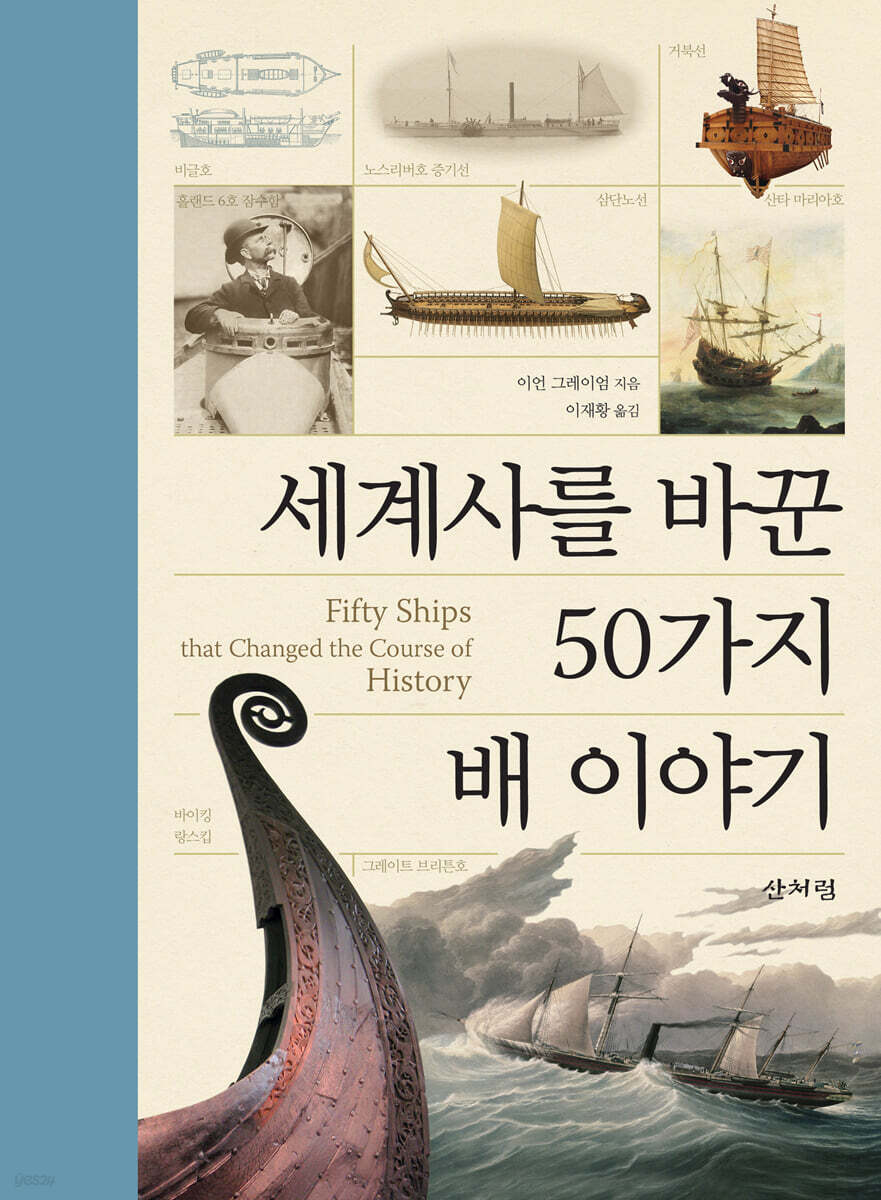
50 ships that created decisive moments in the flow of human history and the development of civilization!
From the solar ships of ancient Egyptian pharaohs to modern nuclear submarines and large cruise ships.
Discover the history of ships, which have shared humanity's joys and frustrations, navigating the rough waves and reefs of the sea.
From the sun ship, the funeral boat of the Egyptian Pharaoh Khufu around 2550 BC, to the modern-day mega-luxury passenger ships, this exhibition introduces 50 ships that have played a significant role in history and had a profound impact on human civilization.
From ancient times to the present day, nothing has had as great an impact on humanity as transportation by sea or river.
Thanks to the many different types of ships, mankind was able to reach, settle, and conquer unknown worlds.
Ships have played a crucial role in determining the winners of wars that changed history and in the spread of new philosophies, technologies, and religions.
Even today, we rely heavily on maritime trade for almost everything we buy and consume: oil, appliances, clothing, food, and more.
This book explores the role of ships from ancient times to the present, the various forms of ships that evolved with technological advancements, and the exhilarating drama of the challenges faced by humans on the sea. It examines the hardships and obstacles that humanity has overcome to survive by venturing out to sea or traveling along rivers.
Full-color visual materials, including historically significant paintings and photographs, elaborate drawings and sketches, striking posters, and maps showing the voyage's path, are neatly arranged to create dynamic scenes that will thrill readers who love the open sea and the adventures of various ships.
In addition to introducing 50 ships that were active in exploration, war, trade, science, migration, entertainment, and sports in the maritime world in chronological order, this book also describes notable ships related to the times and circumstances, making a total of over 100 ships.
From the solar ships of ancient Egyptian pharaohs to modern nuclear submarines and large cruise ships.
Discover the history of ships, which have shared humanity's joys and frustrations, navigating the rough waves and reefs of the sea.
From the sun ship, the funeral boat of the Egyptian Pharaoh Khufu around 2550 BC, to the modern-day mega-luxury passenger ships, this exhibition introduces 50 ships that have played a significant role in history and had a profound impact on human civilization.
From ancient times to the present day, nothing has had as great an impact on humanity as transportation by sea or river.
Thanks to the many different types of ships, mankind was able to reach, settle, and conquer unknown worlds.
Ships have played a crucial role in determining the winners of wars that changed history and in the spread of new philosophies, technologies, and religions.
Even today, we rely heavily on maritime trade for almost everything we buy and consume: oil, appliances, clothing, food, and more.
This book explores the role of ships from ancient times to the present, the various forms of ships that evolved with technological advancements, and the exhilarating drama of the challenges faced by humans on the sea. It examines the hardships and obstacles that humanity has overcome to survive by venturing out to sea or traveling along rivers.
Full-color visual materials, including historically significant paintings and photographs, elaborate drawings and sketches, striking posters, and maps showing the voyage's path, are neatly arranged to create dynamic scenes that will thrill readers who love the open sea and the adventures of various ships.
In addition to introducing 50 ships that were active in exploration, war, trade, science, migration, entertainment, and sports in the maritime world in chronological order, this book also describes notable ships related to the times and circumstances, making a total of over 100 ships.
index
introduction
Khufu's solar barque
Three-stage route
Nuitam pear
Isis
Moraho
Jeonghwa's by-election
Santa Maria
Mary Rose
Lake Victoria
Mayflower
Endeavour
Victory
Sirius
Clermont (North River Steamship)
Savannah
Beagle
Amistad
Great Britain
Rattler
America
Challenger
Gloire Lake
Monitor
Cutty Sark
Fram
Spray hose
Oregon Lake
Holland
Potemkin
Dreadnought
Lusitania
Titanic
U-21
Normandy
Bismarck
Illustrious
Patrick Henry
Yamato
Calypso
Missouri
Kontiki
Ideal X
Nautilus
Rainbow Warrior
Lenin Lake
Torrey Canyon Lake
Enterprise
Alvin Ho
Glomar Explorer
Allure of the Seahorse
More books to read
Search
About image copyright/ship tonnage
Khufu's solar barque
Three-stage route
Nuitam pear
Isis
Moraho
Jeonghwa's by-election
Santa Maria
Mary Rose
Lake Victoria
Mayflower
Endeavour
Victory
Sirius
Clermont (North River Steamship)
Savannah
Beagle
Amistad
Great Britain
Rattler
America
Challenger
Gloire Lake
Monitor
Cutty Sark
Fram
Spray hose
Oregon Lake
Holland
Potemkin
Dreadnought
Lusitania
Titanic
U-21
Normandy
Bismarck
Illustrious
Patrick Henry
Yamato
Calypso
Missouri
Kontiki
Ideal X
Nautilus
Rainbow Warrior
Lenin Lake
Torrey Canyon Lake
Enterprise
Alvin Ho
Glomar Explorer
Allure of the Seahorse
More books to read
Search
About image copyright/ship tonnage
Publisher's Review
The contents of this book are
Khufu's Sun Boat A rare ship built in 2550 BC to carry the body of the Egyptian Pharaoh Khufu to his final resting place.
Trireme A warship used by both Persia and Greece in the Battle of Salamis, one of the most important naval battles of the ancient world.
The Nydam ship is the oldest known rowing ship in Northern Europe and represents the evolution of the Viking ship, the Langskip.
The Isis is an ancient shipwreck discovered on the Mediterranean Sea floor, a typical Roman cargo ship carrying 3,000 amphorae, storage containers.
The flagship of William II, Duke of Normandy, when he invaded England, was a drakar, the largest and fastest type of langskip.
Zheng He's Ship: A large ship that crossed the Indian Ocean and reached Africa during the seven expeditions led by Admiral Zheng He, a eunuch during the Ming Dynasty of China, with a large fleet.
The Santa Maria, the flagship that Columbus rode on when he crossed the Atlantic Ocean to the American continent in search of Asia with the support of Spain.
The Mary Rose, a large warship built during the reign of Henry VIII of England, sank during the first battle with France, but became famous when its wreck was discovered.
Victoria, the only ship among Magellan's fleet that sailed to find a sea route between Europe and the Spice Islands to complete a circumnavigation of the world.
The ship that the Pilgrims boarded when they went to North America in search of religious freedom in England, where it was illegal to abstain from Anglican services.
The ship that sailed on the expedition led by Captain James Cook of the Endeavour, an expedition in which scientists measured the distance between the Earth and the Sun and searched for the southern continent in the South Pacific.
HMS Victory, the oldest warship in the world, still in service with the Royal Navy, and the one that Admiral Nelson sailed on during the Battle of Trafalgar, the most famous battle in British history.
Sirius, the flagship of Admiral Arthur Phillip, who commanded the First Fleet fleet that transported criminals to Australia.
The Clermont (North River Steamship) was the world's first commercially successful steamship, freeing us from dependence on the wind for navigation.
Unlike sailing ships, steamships could go wherever they wanted at any time, but had never crossed the Atlantic before. This steamship took on the challenge and successfully crossed the Atlantic.
The British warship that Charles Darwin sailed on during the British Navy's expedition to explore and map South America, which helped him develop his theory of evolution.
The slave transport ship on which the Amistad mutiny occurred, which attracted international attention and advanced the slave abolition movement, as the slaves on board were tried in the United States.
At the time of her launch, the Great Britain was the largest iron-hulled ship, the widest ship, the first large screw-propeller ship, and the first ocean liner.
Rattler, a warship in the British Royal Navy that began using a steam engine with a screw propeller instead of a paddle wheel, proving its superior performance.
America's Cup: The yacht that won the first international yacht race held in England, with an American participant, leading to the race and the trophy being called the "America's Cup."
Challenger, a converted British warship, was an oceanographic research vessel that conducted the first scientific studies of the world's oceans and laid the foundation for new oceanographic research.
The Gloire was the first battleship built by France among the European maritime powers to introduce new features to large warships, sparking an arms race.
Monitor, an ironclad ship used by the Union Army in the Battle of Hampton Roads during the American Civil War, which drew international attention when both the Confederate and Union armies clashed using ironclad ships.
The Cutty Sark was the most luxurious and elegant ship of the 19th century, a popular star of the maritime world, and the fastest ship of its time, dominating the wool trade between Australia and Britain.
Fram: A ship built specifically for polar expeditions in the late 19th and early 20th centuries, the largest unexplored region on Earth.
A converted fishing boat that arrived in Newport in 1898, three years after the departure of the Spray, and was used by Joshua Slocum, who successfully completed the first solo circumnavigation of the world.
Oregon: The first new generation battleship built by the United States after the American Civil War, when South American nations acquired modern European battleships.
The Holland VI, built by John Philip Holland, who had successfully transformed the Holland submarine into a practical military submarine, was purchased by the U.S. Navy and commissioned as the first modern military submarine.
Potemkin A Russian warship that spread revolutionary fervor after a mutiny on board 12 years before the Russian Revolution, and became famous through director Eisenstein's silent film "Battleship Potemkin."
Dreadnought: A new battleship of the early 20th century that brought about a dramatic change in naval warfare tactics, and subsequently triggered an arms race among navies in battleship construction and armament.
The Lusitania, sunk by a German submarine U-boat during World War I, was the fastest and most luxurious ocean liner of its time and led to the United States' decision to enter the war.
The Titanic, the largest ship at the time, set out on its maiden voyage in 1912, but collided with an iceberg and sank, making its name recorded in history as a symbol of disaster.
U-21 The first U-boat developed by Germany during World War I to sink a ship, and the first submarine to sink a ship with its own torpedoes.
Normandie, a new generation of transatlantic liners built in the United States in 1921, set a new standard for ocean shipping with its revolutionary hull and state-of-the-art turbine-electric engines.
Bismarck One of the most powerful German battleships of World War II, so dangerous that it was hunted down and destroyed by the Royal Navy.
The Illustrious, the ship that launched the first full-scale naval attack during the Battle of Taranto in 1940, demonstrated just how powerful an aircraft carrier could be.
The Patrick Henry was the first of the Liberty ships, built quickly and cheaply with a simple design to transport supplies, food, and vehicles by sea during World War II.
Yamato was the heaviest and most powerfully armed battleship built by Japan during World War II, but was vulnerable to attacks from submarines and aircraft, making it the last battleship of the era of giant battleships.
Calypso, a marine research vessel that was as popular as French underwater explorer Jacques Cousteau when he was making the documentary 'Jacques Cousteau and the Underwater World'.
Missouri was the last battleship of the U.S. Navy, active in Operation Desert Storm during the Korean War and the Gulf War, and was also the ship that held the ceremony marking the end of World War II.
Kon-Tiki: A raft built by Norwegian explorer Heyerdahl by restoring an ancient Peruvian ship to cross the Pacific Ocean and test his ideas about human migration.
Ideal X A ship that revolutionized world trade in the 1950s when an American businessman created a shipping container to improve the existing way of handling international cargo.
Nautilus, the world's first American nuclear submarine launched in 1951, broke records for diving time and speed of existing submarines.
The Rainbow Warrior, a symbol of the environmental movement, has been used by Greenpeace UK for 30 years to criticize environmental damage and wildlife threats around the world.
Lenin, the first nuclear-powered icebreaker of the Soviet Union, built to navigate the Northern Sea Route, the shortest route between the east and west of the Soviet Union, even in the icy winter.
The Torrey Canyon, a ship that made headlines around the world on March 18, 1967, when it struck a reef and ran aground, causing the world's first major oil spill.
The USS Enterprise, a nuclear-powered super-large aircraft carrier that served in combat for over 50 years, from the Cuban Missile Crisis of 1960 to the Iraq and Afghanistan Wars of the early 2000s.
The Alvin, a small submersible that explored the ocean floor over 4,700 dives over 50 years, revolutionizing ocean exploration.
Glomar Explorer: A specially built excavator used in a secret American operation to salvage the sunken Soviet ballistic missile submarine K-129.
Allure of the Seas: A powerful ocean liner, comparable in size and weight to an aircraft carrier among the increasingly large ocean liners, propelled by Azipods.
Khufu's Sun Boat A rare ship built in 2550 BC to carry the body of the Egyptian Pharaoh Khufu to his final resting place.
Trireme A warship used by both Persia and Greece in the Battle of Salamis, one of the most important naval battles of the ancient world.
The Nydam ship is the oldest known rowing ship in Northern Europe and represents the evolution of the Viking ship, the Langskip.
The Isis is an ancient shipwreck discovered on the Mediterranean Sea floor, a typical Roman cargo ship carrying 3,000 amphorae, storage containers.
The flagship of William II, Duke of Normandy, when he invaded England, was a drakar, the largest and fastest type of langskip.
Zheng He's Ship: A large ship that crossed the Indian Ocean and reached Africa during the seven expeditions led by Admiral Zheng He, a eunuch during the Ming Dynasty of China, with a large fleet.
The Santa Maria, the flagship that Columbus rode on when he crossed the Atlantic Ocean to the American continent in search of Asia with the support of Spain.
The Mary Rose, a large warship built during the reign of Henry VIII of England, sank during the first battle with France, but became famous when its wreck was discovered.
Victoria, the only ship among Magellan's fleet that sailed to find a sea route between Europe and the Spice Islands to complete a circumnavigation of the world.
The ship that the Pilgrims boarded when they went to North America in search of religious freedom in England, where it was illegal to abstain from Anglican services.
The ship that sailed on the expedition led by Captain James Cook of the Endeavour, an expedition in which scientists measured the distance between the Earth and the Sun and searched for the southern continent in the South Pacific.
HMS Victory, the oldest warship in the world, still in service with the Royal Navy, and the one that Admiral Nelson sailed on during the Battle of Trafalgar, the most famous battle in British history.
Sirius, the flagship of Admiral Arthur Phillip, who commanded the First Fleet fleet that transported criminals to Australia.
The Clermont (North River Steamship) was the world's first commercially successful steamship, freeing us from dependence on the wind for navigation.
Unlike sailing ships, steamships could go wherever they wanted at any time, but had never crossed the Atlantic before. This steamship took on the challenge and successfully crossed the Atlantic.
The British warship that Charles Darwin sailed on during the British Navy's expedition to explore and map South America, which helped him develop his theory of evolution.
The slave transport ship on which the Amistad mutiny occurred, which attracted international attention and advanced the slave abolition movement, as the slaves on board were tried in the United States.
At the time of her launch, the Great Britain was the largest iron-hulled ship, the widest ship, the first large screw-propeller ship, and the first ocean liner.
Rattler, a warship in the British Royal Navy that began using a steam engine with a screw propeller instead of a paddle wheel, proving its superior performance.
America's Cup: The yacht that won the first international yacht race held in England, with an American participant, leading to the race and the trophy being called the "America's Cup."
Challenger, a converted British warship, was an oceanographic research vessel that conducted the first scientific studies of the world's oceans and laid the foundation for new oceanographic research.
The Gloire was the first battleship built by France among the European maritime powers to introduce new features to large warships, sparking an arms race.
Monitor, an ironclad ship used by the Union Army in the Battle of Hampton Roads during the American Civil War, which drew international attention when both the Confederate and Union armies clashed using ironclad ships.
The Cutty Sark was the most luxurious and elegant ship of the 19th century, a popular star of the maritime world, and the fastest ship of its time, dominating the wool trade between Australia and Britain.
Fram: A ship built specifically for polar expeditions in the late 19th and early 20th centuries, the largest unexplored region on Earth.
A converted fishing boat that arrived in Newport in 1898, three years after the departure of the Spray, and was used by Joshua Slocum, who successfully completed the first solo circumnavigation of the world.
Oregon: The first new generation battleship built by the United States after the American Civil War, when South American nations acquired modern European battleships.
The Holland VI, built by John Philip Holland, who had successfully transformed the Holland submarine into a practical military submarine, was purchased by the U.S. Navy and commissioned as the first modern military submarine.
Potemkin A Russian warship that spread revolutionary fervor after a mutiny on board 12 years before the Russian Revolution, and became famous through director Eisenstein's silent film "Battleship Potemkin."
Dreadnought: A new battleship of the early 20th century that brought about a dramatic change in naval warfare tactics, and subsequently triggered an arms race among navies in battleship construction and armament.
The Lusitania, sunk by a German submarine U-boat during World War I, was the fastest and most luxurious ocean liner of its time and led to the United States' decision to enter the war.
The Titanic, the largest ship at the time, set out on its maiden voyage in 1912, but collided with an iceberg and sank, making its name recorded in history as a symbol of disaster.
U-21 The first U-boat developed by Germany during World War I to sink a ship, and the first submarine to sink a ship with its own torpedoes.
Normandie, a new generation of transatlantic liners built in the United States in 1921, set a new standard for ocean shipping with its revolutionary hull and state-of-the-art turbine-electric engines.
Bismarck One of the most powerful German battleships of World War II, so dangerous that it was hunted down and destroyed by the Royal Navy.
The Illustrious, the ship that launched the first full-scale naval attack during the Battle of Taranto in 1940, demonstrated just how powerful an aircraft carrier could be.
The Patrick Henry was the first of the Liberty ships, built quickly and cheaply with a simple design to transport supplies, food, and vehicles by sea during World War II.
Yamato was the heaviest and most powerfully armed battleship built by Japan during World War II, but was vulnerable to attacks from submarines and aircraft, making it the last battleship of the era of giant battleships.
Calypso, a marine research vessel that was as popular as French underwater explorer Jacques Cousteau when he was making the documentary 'Jacques Cousteau and the Underwater World'.
Missouri was the last battleship of the U.S. Navy, active in Operation Desert Storm during the Korean War and the Gulf War, and was also the ship that held the ceremony marking the end of World War II.
Kon-Tiki: A raft built by Norwegian explorer Heyerdahl by restoring an ancient Peruvian ship to cross the Pacific Ocean and test his ideas about human migration.
Ideal X A ship that revolutionized world trade in the 1950s when an American businessman created a shipping container to improve the existing way of handling international cargo.
Nautilus, the world's first American nuclear submarine launched in 1951, broke records for diving time and speed of existing submarines.
The Rainbow Warrior, a symbol of the environmental movement, has been used by Greenpeace UK for 30 years to criticize environmental damage and wildlife threats around the world.
Lenin, the first nuclear-powered icebreaker of the Soviet Union, built to navigate the Northern Sea Route, the shortest route between the east and west of the Soviet Union, even in the icy winter.
The Torrey Canyon, a ship that made headlines around the world on March 18, 1967, when it struck a reef and ran aground, causing the world's first major oil spill.
The USS Enterprise, a nuclear-powered super-large aircraft carrier that served in combat for over 50 years, from the Cuban Missile Crisis of 1960 to the Iraq and Afghanistan Wars of the early 2000s.
The Alvin, a small submersible that explored the ocean floor over 4,700 dives over 50 years, revolutionizing ocean exploration.
Glomar Explorer: A specially built excavator used in a secret American operation to salvage the sunken Soviet ballistic missile submarine K-129.
Allure of the Seas: A powerful ocean liner, comparable in size and weight to an aircraft carrier among the increasingly large ocean liners, propelled by Azipods.
GOODS SPECIFICS
- Date of issue: November 10, 2025
- Format: Hardcover book binding method guide
- Page count, weight, size: 228 pages | 610g | 175*235*18mm
- ISBN13: 9791191400236
- ISBN10: 1191400239
You may also like
카테고리
korean


korean

![ELLE 엘르 스페셜 에디션 A형 : 12월 [2025]](http://librairie.coreenne.fr/cdn/shop/files/b8e27a3de6c9538896439686c6b0e8fb.jpg?v=1766436872&width=3840)


